
 (800) 949-0401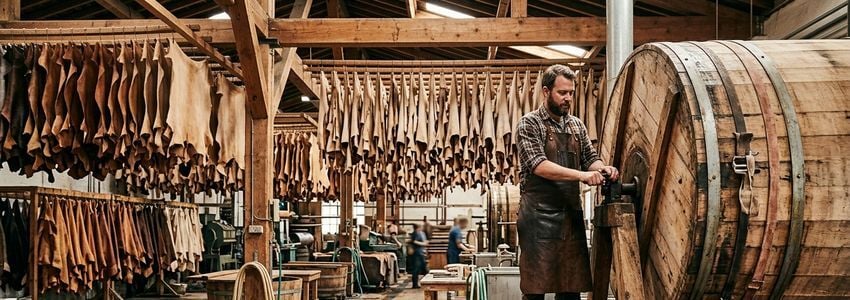
Leather Tanning Equipment Financing: The Complete Guide for Tannery Owners
Leather tanning equipment financing gives tannery owners and leather processors a way to acquire tanning drums, splitting machines, staking equipment, dyeing systems, and finishing presses without tying up the working capital a tannery needs for hides, chemicals, payroll, and day-to-day operations. Tanning machinery is capital-intensive and highly specialized, and few independent tanneries can pay cash for a new drum system or a full finishing line without disrupting cash flow elsewhere in the business.
This guide covers everything a tannery owner needs to know about financing tanning equipment: what qualifies, how the approval process works, typical rates and terms, and how to structure funding whether you are opening a small craft tannery or expanding an established commercial operation.
Key Stat: The number of large U.S. tanning facilities has declined sharply over the past three decades, from roughly 384 plants in the mid-1980s to a much smaller, more specialized base today. That consolidation has pushed remaining tanneries toward premium, artisanal, and performance leather segments, where modern equipment is often the difference between winning a contract and losing it to overseas competition.
In This Article
What Is Leather Tanning Equipment Financing?
Leather tanning equipment financing is a business funding arrangement that lets tannery owners acquire the machinery used to convert raw or salted hides into finished leather, through structured monthly payments instead of a single large cash outlay. This includes tanning drums, wet-blue processing equipment, splitting and shaving machines, staking machines, dyeing and fatliquoring drums, vacuum drying tables, toggle and paste dryers, embossing presses, and finishing and buffing equipment.
Tanning machinery ranges enormously in cost. A used manual splitting machine can run a few hundred dollars, while an industrial-grade tanning drum system, a full wet-end processing line, or an automated finishing line can run well into six figures. Rather than depleting cash reserves on a single drum purchase, a tannery spreads that cost over a repayment term, typically 24 to 84 months, while the equipment generates revenue from the first hide it processes.
Two structures dominate this space: equipment loans and equipment leases. With an equipment loan, the tannery borrows the purchase price and owns the machine once it is repaid in full, often with a $1 buyout at the end of the term. With a lease, the tannery pays for the use of the equipment over a set term, with options to buy it out at fair market value, return it, or upgrade to newer machinery when the lease ends. Because the equipment itself typically serves as collateral, approval is often faster and terms more competitive than an unsecured business loan of the same size.
Note: Tanning falls under the manufacturing classifications tracked by the U.S. Census Bureau's Statistics of U.S. Businesses, which groups leather and allied product manufacturing among the specialized manufacturing sectors that rely heavily on durable capital equipment relative to their revenue size, a profile that makes equipment-specific financing a natural fit compared to general working capital loans.
Key Benefits of Financing Leather Tanning Equipment
- Preserve working capital. Keep cash available for hide purchases, chemicals, dyes, tannins, and payroll instead of tying it up in a single equipment purchase.
- Increase production capacity. A second tanning drum or an automated finishing line lets a tannery take on larger orders and shorten turnaround time for customers.
- Improve consistency and quality. Modern drums, dosing systems, and finishing equipment produce more consistent hides than aging or manual equipment, which matters directly to buyers in footwear, automotive, and upholstery leather.
- Predictable monthly payments. A fixed payment schedule makes budgeting simple and avoids the cash-flow shock of a large one-time purchase.
- Potential tax advantages. Depending on the financing structure, tanneries may be able to depreciate or expense qualifying equipment, though every business should confirm specifics with its own accountant.
- Stay competitive with imports. Efficient, modern equipment helps domestic tanneries compete on speed and quality against lower-cost overseas processors.
- Financing for new and used equipment. Many lenders finance both new machinery and well-maintained used equipment, which widens the options for tanneries working with a tighter budget.
Ready to Upgrade Your Tannery's Equipment?
Get fast, flexible financing from the #1 business lender in the U.S. No obligation, apply in minutes.
Apply Now →How Leather Tanning Equipment Financing Works
The process is more straightforward than most tannery owners expect, especially compared to a traditional bank term loan. Here is the general path from application to installed equipment.
- Identify the equipment and vendor. Decide whether you are purchasing a new tanning drum, a used splitting machine, or a full finishing line, and get a vendor quote. Many lenders can finance both new and used equipment, and some allow financing for equipment already purchased within the last 90 to 180 days through a sale-leaseback structure.
- Submit an application. Most equipment lenders require basic business financials: a few months of bank statements, a business tax return or two, and the equipment quote or invoice. Many transactions under $150,000 to $250,000 can be approved with limited documentation.
- Underwriting review. The lender evaluates time in business, revenue trends, and credit profile. Because the equipment itself serves as collateral, approval is often faster and terms more flexible than with unsecured financing.
- Approval and terms. You will receive an approved amount, term length (commonly 24 to 84 months for tanning machinery), and payment structure. Some lenders offer seasonal or step-up payment structures for tanneries with variable order volume.
- Documentation and funding. Once you sign the financing agreement, funds are typically disbursed directly to the equipment vendor, or to your business if it is a reimbursement structure, often within a few business days.
- Installation and use. The vendor installs and commissions the equipment. Payments begin per the agreed schedule, usually 30 to 45 days after funding.
Quick Guide
How Leather Tanning Equipment Financing Works
Select your tanning drum, splitting machine, or finishing line and get pricing.
Bank statements, tax returns, and the equipment quote are usually sufficient.
Review term length, payment structure, and total cost before signing.
Funds go to the vendor, equipment is installed, and payments begin on schedule.
Types of Leather Tanning Equipment You Can Finance
Financing is available for the full range of machinery used across the tanning and leather finishing process. Common categories include:
Tanning and Wet-End Equipment
Tanning drums (wood, stainless steel, or fiberglass), paddle vats, and wet-blue processing systems represent the core capital investment for most tanneries. These are the machines that convert raw or salted hides into stable, tanned leather through chrome, vegetable, or alternative tanning processes.
Splitting and Shaving Equipment
Splitting machines reduce hide thickness to a uniform, usable gauge, while shaving machines fine-tune thickness on the flesh side after tanning. These range from manual band-knife splitters for small operations to fully automated industrial splitting lines for high-volume tanneries.
Staking and Softening Machines
Staking machines physically work leather to break down fibers and produce the soft hand-feel required for garment, upholstery, and glove leather. This equipment is essential for any tannery producing soft or full-grain finished leather.
Dyeing and Fatliquoring Equipment
Dyeing drums, fatliquoring systems, and dosing equipment control the color, oil content, and feel of the finished leather. Precision dosing systems reduce chemical waste and improve batch-to-batch consistency, an increasingly important factor for tanneries selling to brand customers with strict specifications.
Drying Equipment
Vacuum drying tables, toggle dryers, and paste (pasting) dryers remove moisture from wet leather before finishing. Modern vacuum and toggle systems dry hides faster and more evenly than air drying, shortening production cycles.
Finishing and Embossing Equipment
Spray finishing lines, roller coaters, embossing presses, and buffing machines apply the surface finish, texture, and grain pattern that determine a hide's final market value. Embossing presses in particular represent a significant capital investment but open access to higher-margin decorative and exotic-look leather segments.
Effluent Treatment and Environmental Compliance Equipment
Wastewater treatment systems, chrome recovery units, and effluent monitoring equipment are increasingly required for tanneries to meet environmental regulations. This equipment can often be financed alongside production machinery, and some lenders and government programs specifically support environmental compliance upgrades.
Pro Tip: Ask your equipment vendor whether they offer a trade-in credit for older drums or splitting machines being replaced. Some manufacturers apply trade-in value directly against the new equipment quote, which reduces the amount you need to finance.
Who Leather Tanning Equipment Financing Is Best For
Financing tanning equipment makes the most sense for specific situations. Consider this option if you fall into one of these categories:
- New tannery owners building out a small or craft tannery and needing core processing equipment from day one without depleting startup capital.
- Established tanneries replacing aging drums or finishing lines that are becoming unreliable, difficult to service, or too slow to meet current order volume.
- Tanneries expanding into higher-margin segments, such as full-grain, exotic, or specialty leather, that require embossing, precision dyeing, or additional finishing capacity.
- Tanneries responding to demand shifts away from mass-market volume production toward premium, artisanal, or performance leather, where quality equipment is a competitive differentiator.
- Operations upgrading for environmental compliance that need to finance wastewater treatment or chrome recovery equipment alongside production upgrades.
It is generally a poor fit for a business that is brand new with no revenue history and no ability to demonstrate cash flow, since even secured equipment financing typically requires at least a few months of business banking history or a strong personal credit profile to support approval.
Financing vs. Leasing vs. Cash vs. Other Options
| Option | Best For | Ownership | Typical Term |
|---|---|---|---|
| Equipment Financing (Loan) | Long-term equipment use, wanting ownership | Owns equipment at term end | 24-84 months |
| Equipment Leasing | Lower monthly payments, planned upgrades | Buy out, return, or renew | 24-60 months |
| Cash Purchase | Businesses with excess reserves | Immediate, full ownership | N/A |
| Sale-Leaseback / Refinance | Recouping cash from a recent purchase | Retains ownership | 24-72 months |
| SBA Loan | Larger, bundled projects (equipment + facility) | Owns equipment/property at term end | Up to 10 years (equipment), 25 years (real estate) |
| Business Line of Credit | Flexible, smaller or ongoing purchases | Owns equipment once purchased | Revolving |
How Crestmont Capital Helps Tannery Owners
Crestmont Capital works with manufacturers and processors across the leather and textile supply chain to structure financing that matches how tanneries actually operate. Our equipment financing programs cover new and used tanning drums, splitting machines, dyeing systems, and finishing equipment, with terms structured around the useful life of the machinery rather than a one-size-fits-all schedule.
For tanneries purchasing used or refurbished equipment to control costs, our used equipment financing program provides the same structured payment approach as new-equipment financing, often with faster underwriting since transaction sizes tend to be smaller. Tanneries planning a larger expansion, such as a new finishing line paired with facility upgrades, may also want to review our broader manufacturing equipment financing options, which are built for capital-intensive production businesses.
Tanneries that need working capital for hides, chemicals, or payroll alongside an equipment purchase can pair equipment financing with a business line of credit, giving the business flexibility to manage seasonal order volume without a second lengthy application process. For larger, bundled projects, such as a new tanning line combined with facility renovation, an SBA loan can offer longer terms and lower rates, though the underwriting timeline is typically longer than dedicated equipment financing.
Tanneries producing finished leather for downstream manufacturers may also find it useful to see how equipment financing works on the manufacturing side of the leather supply chain in our guide to leather goods manufacturing equipment financing, which covers cutting, sewing, and finishing equipment used by leather product makers who purchase finished hides from tanneries.
Get Financing Built Around Your Tannery's Production Cycle
Crestmont Capital works with manufacturers and processors nationwide. Get competitive rates and flexible terms, apply in minutes.
Apply Now →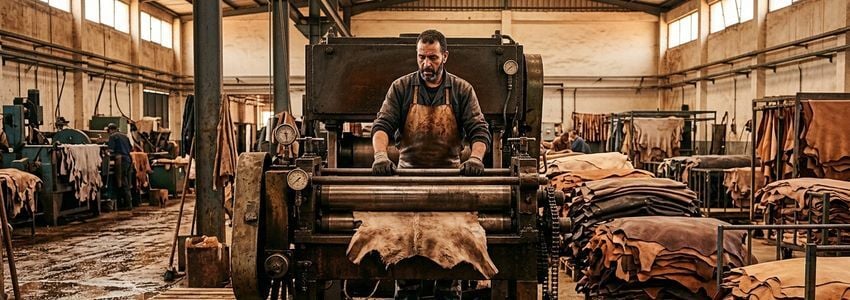
Real-World Leather Tanning Financing Scenarios
Understanding how different tanneries structure their equipment financing helps illustrate the options available at various stages of growth:
Scenario 1: Small Craft Tannery Startup
A vegetable-tanning craft operation in Oregon is expanding from a hobby workshop into a commercial tannery supplying leather to local bootmakers and bag makers. Total equipment needs, including a small tanning drum, staking machine, and drying racks, total approximately $65,000. With strong personal credit and two years of related craft experience, the owner qualifies for a $65,000 equipment loan over 60 months, keeping monthly payments manageable while the business builds its customer base.
Scenario 2: Established Tannery Replacing an Aging Drum
A family-owned chrome tannery in Wisconsin has operated for over 20 years but is running production on a 30-year-old tanning drum that increasingly requires costly repairs and unplanned downtime. The owner finances a new stainless steel drum system for $180,000 through a 72-month equipment loan. With strong revenue history and consistent bank statements, the tannery secures a competitive rate and eliminates the downtime that was costing them rush orders.
Scenario 3: Expansion Into Premium Finished Leather
A mid-size tannery in North Carolina has historically produced commodity-grade wet-blue leather for export but wants to capture more margin by finishing leather in-house for domestic footwear brands. The expansion requires a $340,000 investment in dyeing, finishing, and embossing equipment. With three years of tax returns showing consistent profitability, the tannery secures an SBA 7(a) loan for the full project, structured over 10 years to match the useful life of the equipment.
Scenario 4: Used Equipment Purchase to Control Costs
A newer tannery in Texas needs a splitting machine and additional staking equipment but wants to preserve cash for hide inventory during a period of rising raw material costs. The owner sources well-maintained used equipment from a closing tannery and finances the $42,000 purchase through a used equipment financing program, receiving funding within a week and preserving working capital for hide purchases during peak season.
Key Stat: According to the U.S. Small Business Administration, access to affordable financing remains one of the most cited growth barriers for small manufacturers, which is part of why equipment-specific financing has grown in popularity: it targets a single, well-defined need rather than requiring a broader, harder-to-qualify-for general business loan.
Leather Tanning Industry and Financing Statistics
By the Numbers
Leather Tanning Equipment Financing - Key Statistics
24-84 Mo.
Typical repayment term for tanning equipment financing
$5M
Maximum SBA 7(a) loan available for tannery expansion
24-72 Hrs
Typical funding time with alternative equipment lenders
75-85%
Portion of an SBA loan guaranteed by the government
7-10 Yrs
Typical useful life of a commercial tanning drum system
100+
Active commercial tanning facilities remaining in the U.S.
The U.S. tanning industry has consolidated significantly over the past several decades as manufacturing capacity for commodity leather has shifted overseas, but the tanneries that remain have increasingly moved toward premium, technical, and specialty leather segments where quality and consistency command a price premium. Coverage from Forbes on the state of American manufacturing has repeatedly noted that domestic producers competing on quality and speed, rather than volume, are among the segments best positioned to survive import competition, a dynamic that applies directly to the modern U.S. tannery.
Common Financing Mistakes Tannery Owners Make
1. Underestimating Total Project Cost
Tannery owners frequently budget for the core drum or finishing machine but overlook installation, electrical or plumbing modifications, effluent handling upgrades, and operator training. Building these costs into the financed amount upfront avoids a cash-flow gap mid-installation.
2. Matching the Wrong Term to the Equipment
Financing a long-lived asset like a tanning drum with a short-term working capital loan creates unnecessarily high monthly payments. Match your financing term to the expected useful life of the equipment, typically 5 to 10 years for major tanning machinery.
3. Skipping Used Equipment Options
Some owners assume financing is only available for new machinery. Many lenders, including Crestmont Capital, finance well-maintained used equipment, which can significantly reduce the total capital needed for a comparable production upgrade.
4. Not Accounting for Environmental Compliance Costs
Wastewater treatment and chrome recovery requirements vary by state and municipality. Failing to budget for compliance equipment alongside a production upgrade can delay a new equipment installation or trigger regulatory issues after the fact.
5. Applying With Incomplete Financial Documentation
Incomplete applications slow down approval and reduce lender confidence. Gather bank statements, tax returns, and a clear equipment quote before applying to keep the process moving quickly.
Frequently Asked Questions About Leather Tanning Equipment Financing
Take the Next Step Toward a More Productive Tannery
Get fast, flexible financing built for manufacturers. No obligation, see your options today.
Check Your Options →How to Get Started
Get a firm quote from your equipment vendor, including installation, delivery, and any facility modifications required.
Pull together recent bank statements, business tax returns, and business registration paperwork so your application moves quickly.
Complete our quick application at offers.crestmontcapital.com/apply-now, it takes just a few minutes and our specialists will match you with the right financing structure for your tannery.
Once approved, funds are typically disbursed to your vendor within days, and installation can begin on your timeline.
Building a More Competitive Tannery With the Right Financing
The U.S. tanning industry has changed significantly over the past several decades, and the tanneries that continue to thrive are the ones that have invested in modern, efficient equipment to compete on quality, speed, and specialization rather than volume alone. Whether you are opening a small craft tannery, replacing an aging drum system, or expanding into premium finished leather, leather tanning equipment financing gives you a way to make that investment without disrupting the cash flow your business needs to operate day to day.
The right financing structure depends on your equipment needs, your operating history, and the scale of your project. Equipment loans and leases work well for single, well-defined purchases, sale-leasebacks can free up capital already spent on recent equipment, and SBA loans suit larger, bundled projects that combine machinery with facility improvements. Comparing your options before committing to a single lender ensures you get terms that fit your tannery's production cycle and cash flow.
For more on financing production equipment, explore our guides to equipment financing and leather goods manufacturing equipment financing for businesses further down the leather supply chain.
Disclaimer: The information provided in this article is for general educational purposes only and is not financial, legal, or tax advice. Funding terms, qualifications, and product availability may vary and are subject to change without notice. Crestmont Capital does not guarantee approval, rates, or specific outcomes. For personalized information about your business funding options, contact our team directly.








