
 (800) 949-0401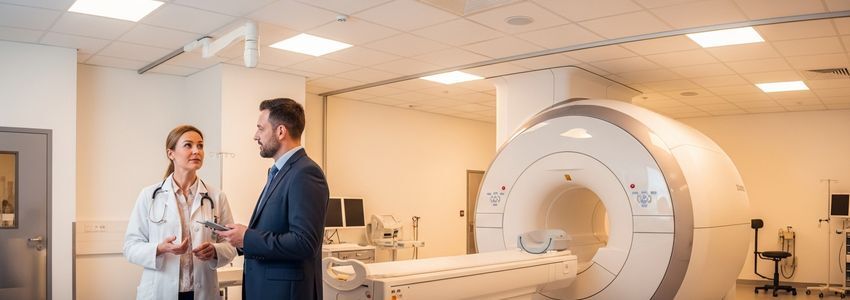
Leasing vs. Buying Diagnostic Equipment: The Complete Guide for Medical Practices
When it comes to leasing vs. buying diagnostic equipment, the decision can shape your medical practice's financial trajectory for years. Diagnostic equipment - MRI machines, CT scanners, ultrasound systems, X-ray units, and advanced lab analyzers - represents some of the most significant capital investments in healthcare. Making the wrong choice between leasing and buying can drain cash reserves, limit operational flexibility, or leave you locked into obsolete technology.
This guide breaks down every dimension of the lease-versus-buy decision for medical practice owners, hospital administrators, imaging center operators, and diagnostic lab managers. Whether you run a solo family medicine clinic or a multi-specialty group practice, understanding the financial mechanics, tax implications, and strategic trade-offs will help you allocate capital more intelligently.
In This Article
- What Is Diagnostic Equipment Financing?
- Leasing vs. Buying: Key Differences
- Benefits of Leasing Diagnostic Equipment
- Benefits of Buying Diagnostic Equipment
- Cost Comparison: Leasing vs. Buying
- Types of Diagnostic Equipment You Can Finance
- How Crestmont Capital Can Help
- Real-World Scenarios
- Who Qualifies for Diagnostic Equipment Financing?
- Leasing vs. Buying Comparison Table
- Frequently Asked Questions
- How to Get Started
What Is Diagnostic Equipment Financing?
Diagnostic equipment financing refers to any structured financial arrangement that allows a medical practice to acquire equipment needed for patient diagnosis without paying the full cost upfront. This encompasses both equipment leases and equipment purchase loans, each structured differently in terms of ownership rights, monthly obligations, and long-term costs.
For most medical practices, outright cash purchases of high-cost diagnostic tools are neither practical nor financially prudent. An MRI machine can cost $1 million to $3 million. A digital X-ray system runs $100,000 to $300,000. Even a mid-range ultrasound unit carries a $50,000 to $200,000 price tag. Equipment financing bridges the gap between the cost of essential diagnostic tools and the capital available to a practice at any given time.
Key Stat: According to the Medical Group Management Association (MGMA), equipment costs represent one of the top three operational expenditures for group medical practices. Strategic financing decisions can save practices tens of thousands of dollars annually.
The two primary financing paths are leasing (where the equipment company retains ownership and you pay periodic lease payments) and buying via equipment loans (where you eventually own the equipment outright). Each path has distinct advantages depending on the type of equipment, your practice's growth trajectory, available capital, and technology cycle considerations.
Ready to Finance Your Diagnostic Equipment?
Get fast, flexible financing from the #1 business lender in the U.S. Compare lease and loan options - no obligation.
Apply Now →Leasing vs. Buying: Key Differences
Before diving into specific benefits and drawbacks, it helps to understand the structural differences between leasing and purchasing diagnostic equipment. These differences touch on cash flow, balance sheet treatment, ownership rights, and exit options.
Leasing is a contractual arrangement in which a leasing company (the lessor) purchases the diagnostic equipment and rents it to your practice (the lessee) over a defined period, typically two to five years. At the end of the lease term, you generally have the option to return the equipment, renew the lease, upgrade to newer technology, or purchase the equipment at fair market value or a predetermined price (in a $1 buyout lease).
Buying through an equipment loan means your practice borrows funds from a lender to purchase the equipment outright. You own the equipment from day one (or once the loan is paid off), carry it as an asset on your balance sheet, and build equity as you make payments. When the loan is retired, the equipment is yours free and clear - no further payments, no return obligations.
The choice isn't binary. Many practices use a hybrid approach - leasing rapidly evolving equipment like ultrasound or CT technology while purchasing more stable assets like patient chairs or sterilization equipment. Understanding which category each piece falls into is crucial to an optimal equipment strategy.
Benefits of Leasing Diagnostic Equipment
Leasing has emerged as the dominant financing model for high-technology diagnostic equipment in medical settings, and for good reason. The advantages are substantial, particularly for practices navigating fast-evolving technology landscapes.
Preserve Cash and Working Capital
Perhaps the most immediate benefit of leasing is the preservation of cash. Rather than deploying $500,000 or more in a lump sum for an imaging system, a lease spreads costs over monthly payments, often with little or no money down. This freed-up capital can fund hiring, renovation, marketing, additional services, or emergency reserves - all of which contribute more directly to practice growth than owning a depreciating machine outright.
Stay Current With Technology
Medical imaging technology advances rapidly. A 1.5T MRI system purchased in 2019 may be significantly outperformed by 2026 models. When you lease diagnostic equipment on a three-year cycle, you can upgrade to the latest generation at the end of each term. This keeps your practice competitive, improves diagnostic accuracy, and enhances the patient experience - outcomes that directly affect revenue and reputation.
Predictable Monthly Budgeting
Equipment leases typically come with fixed monthly payments over the entire term. This predictability makes budgeting straightforward. You know exactly what you owe each month, which simplifies cash flow planning and financial projections for your practice.
Off-Balance-Sheet Treatment (Operating Leases)
Depending on how a lease is structured, it may qualify for off-balance-sheet treatment under accounting standards. This can improve certain financial ratios important to lenders when evaluating your practice's creditworthiness. Note: FASB's ASC 842 standard, which took effect for most entities by 2022, now requires most leases to be recognized on the balance sheet, though operating lease liabilities are classified differently than debt.
Potential Maintenance Inclusion
Many equipment leases, particularly from equipment manufacturers, include maintenance agreements. This means repairs, calibration, and software updates are covered under the lease terms - eliminating unexpected maintenance expenses that can disrupt a practice's budget.
By the Numbers
Diagnostic Equipment Financing - Key Statistics
72%
Of healthcare businesses use equipment financing rather than cash purchases
$3M+
Typical cost of a top-tier MRI machine - making financing critical
3-5 Yrs
Typical lease term for diagnostic imaging equipment
24 Hrs
Average approval time for equipment financing through Crestmont Capital
Benefits of Buying Diagnostic Equipment
Purchasing diagnostic equipment is not always the right move, but for the right scenarios it offers compelling advantages that leasing cannot match. Understanding these benefits helps you make a properly informed comparison.
Build Equity and Own the Asset
When you finance a purchase, every payment builds toward ownership. Once the loan is paid, the equipment belongs to the practice - an asset on your balance sheet with real resale or collateral value. This equity can be leveraged later to secure additional financing or liquidated if circumstances change.
Lower Long-Term Total Cost
For equipment with a long, stable useful life - think dental panoramic X-ray units, basic patient monitoring systems, or established lab analyzers - purchasing typically costs less over a 10-year horizon than perpetual leasing. The monthly payments eventually stop, whereas a lease requires continuous payment to maintain access to the equipment.
No Use Restrictions or Return Conditions
Leases often carry restrictions on modifications, usage limits, or return conditions (with fees for excessive wear). Owned equipment can be modified, extended, repurposed, or sold at your discretion - complete operational flexibility.
Depreciation Benefits
Owned equipment can be depreciated over its useful life according to IRS guidelines, providing a recurring tax deduction. Additionally, practices may be eligible for accelerated depreciation strategies depending on their tax situation. (Consult your tax advisor for specific guidance.)
Pro Tip: Practices with strong, stable revenue and a long-term facility commitment tend to benefit more from purchasing equipment that has a long useful life. High-growth practices or those in leased facilities often benefit more from equipment leasing's flexibility.
Cost Comparison: Leasing vs. Buying
Let's examine a concrete cost comparison using a digital ultrasound system priced at $150,000 to illustrate the true financial differences between leasing and buying.
Buying scenario: A 60-month equipment loan at 8% interest with 10% down payment ($15,000). Monthly payment: approximately $2,703. Total cost over 5 years: $15,000 down + $162,180 in payments = $177,180. After year 5, the equipment is owned outright.
Leasing scenario (Fair Market Value lease): A 60-month operating lease at $2,400/month. Total payments: $144,000 over 5 years. At lease end, you may return the equipment or purchase it at fair market value (typically 10-20% of original cost, so $15,000-$30,000). Total if you purchase at end: up to $174,000.
On a 5-year horizon, the costs are surprisingly close. The difference emerges over longer time frames - continued ownership costs nothing after year 5, while leasing means recurring payments forever (though you also get refreshed technology). The key is matching the financing structure to the equipment's role in your practice strategy.
Types of Diagnostic Equipment You Can Finance
Both leasing and purchasing options are available across virtually every category of diagnostic equipment used in modern medical practices. Here is a representative overview of what can be financed through programs like those offered by Crestmont Capital:
Imaging Systems
MRI machines (open and closed bore), CT scanners, PET scanners, fluoroscopy units, digital X-ray and radiography systems, mammography equipment, and ultrasound machines (portable and fixed) represent the most commonly financed imaging assets. These systems range from $50,000 for basic digital X-ray to $3 million or more for advanced MRI technology.
Cardiac and Vascular Diagnostics
Echocardiography systems, electrocardiogram (ECG/EKG) machines, Holter monitors, stress testing systems, and vascular Doppler units are increasingly common in cardiology practices, internal medicine offices, and urgent care centers.
Laboratory and Pathology Equipment
Hematology analyzers, chemistry analyzers, urinalysis systems, centrifuges, microscopes, PCR systems, flow cytometers, and point-of-care testing devices can all be financed through equipment loans or leases - enabling in-house lab capabilities that generate additional revenue for practices.
Endoscopy and Surgical Diagnostic Equipment
Video endoscope towers, colonoscopy and bronchoscopy systems, laparoscopic cameras, and intraoperative imaging systems are high-cost, high-value diagnostic assets that many GI specialists and surgical practices finance rather than purchase outright.
Ophthalmology and Audiology Diagnostic Equipment
Optical coherence tomography (OCT) systems, slit lamps, fundus cameras, automated visual field analyzers, audiometers, and tympanometers represent important diagnostic tools in specialized practices that benefit from equipment financing arrangements.
Finance Any Type of Diagnostic Equipment
From MRI machines to lab analyzers, Crestmont Capital has flexible financing solutions for medical practices of every size.
Apply Now →
How Crestmont Capital Can Help
Crestmont Capital has established itself as a leading equipment financing partner for medical practices across the United States. As the #1 business lender in the country, Crestmont offers both equipment leases and equipment purchase loans - giving your practice access to the right financing structure for every diagnostic equipment need.
Working with a financing partner like Crestmont provides advantages that direct manufacturer financing often cannot match. Crestmont operates independently of equipment brands, meaning the financing terms are competitive across all manufacturers - you choose the best equipment for clinical outcomes, and Crestmont handles the capital side.
Crestmont's medical equipment financing programs include fixed-rate loans with terms from 24 to 84 months, operating leases with upgrade options at term end, capital leases ($1 buyout structures) for practices intending to retain equipment long-term, and working capital supplements to cover installation, training, and integration costs alongside the equipment itself.
For practices considering MRI or CT scanner financing specifically, Crestmont's imaging equipment financing program is designed to accommodate the scale of these investments, with loan amounts up to $5 million and flexible structures that align with revenue cycles common in imaging practices.
Additionally, practices that are still building credit can explore Crestmont's bad credit equipment financing options - a lifeline for newer practices or those that have faced financial challenges. The application process is streamlined, and many decisions can be delivered within 24 hours of a completed application.
For practices looking beyond equipment to broader capital needs - renovations, staffing, marketing, technology infrastructure - Crestmont's healthcare equipment financing and working capital loans can be structured in combination to address multiple needs through a single financing relationship.
Real-World Scenarios
Abstract comparisons only go so far. Let's walk through several realistic scenarios that illustrate how the lease-versus-buy decision plays out differently depending on practice type and circumstances.
Scenario 1: Solo Radiologist Opening an Imaging Center
Dr. Marcus Chen is opening a freestanding imaging center in a leased commercial space. His flagship investment is a 1.5T MRI system priced at $1.2 million. Since he is launching a new business with limited capital reserves and wants to preserve cash for operating expenses during the ramp-up period, Dr. Chen chooses an equipment lease with a 48-month term. Monthly payments of approximately $22,000 are offset almost immediately by revenue from imaging services. At the end of the lease, if the technology has held up well and volume is sufficient, he can negotiate a buyout. If better 3T technology is available at a compelling price, he can upgrade.
Scenario 2: Established Orthopedic Group Adding In-Office MRI
A five-physician orthopedic group with strong cash flow and an owned facility decides to bring MRI services in-house. They have used leased equipment for 12 years and are confident the specific open MRI configuration they are purchasing will serve their patient population for 10+ years. They finance the $700,000 purchase via a 60-month equipment loan at 7.5%. At the end of the loan term, the fully paid-off MRI contributes pure margin to the practice - no equipment payments, no return obligations.
Scenario 3: Urgent Care Chain Standardizing Across Multiple Locations
A regional urgent care operator with 12 locations needs to standardize digital X-ray across all sites. They lease 12 identical units on a 36-month operating lease, enabling technology refreshment every three years as imaging software and sensor technology improves. The lease structure simplifies accounting, allows the operator to negotiate volume pricing, and ensures all locations are always operating current-generation equipment - a key factor in reimbursement and patient perception.
Scenario 4: Rural Family Practice Adding Ultrasound
A rural family medicine practice in a medically underserved area needs a portable ultrasound unit to reduce the number of specialist referrals their patients must travel hours to complete. The $75,000 unit is financed via a 36-month equipment loan because the physician expects to own and operate the unit for 10+ years. The practice qualifies for SBA loan terms through Crestmont's SBA loan program, reducing the interest rate and extending favorable terms. The monthly payment is covered by just a handful of additional ultrasound-guided procedures per month.
Scenario 5: Hospital-Employed Physician Group Modernizing Lab
A physician group employed by a regional hospital system needs to upgrade its in-office lab equipment across 8 locations. The group finances new hematology and chemistry analyzers under an equipment lease, allowing the hospital system's finance team to treat the equipment as an operating expense rather than capital expenditure - an important distinction for their budget and capital allocation process.
Who Qualifies for Diagnostic Equipment Financing?
One of the most common misconceptions about equipment financing is that it requires excellent credit and many years in business. While those factors help secure the best rates, a much broader range of practices can qualify for meaningful financing.
Strong qualifiers: Practices with 2+ years of operation, healthy revenue, strong credit (personal and/or business), and existing patient volume typically qualify for the most favorable rates - often in the 5-9% range for purchase financing, and competitive lease rates for premium leasing structures.
Newer practices: Practices with 1-2 years of history may still qualify for equipment financing, particularly through lenders like Crestmont who specialize in healthcare. Startups with strong physician personal credit and a solid business plan may qualify for startup equipment financing structures.
Practices with credit challenges: Revenue-generating practices with imperfect credit can often access equipment financing through programs designed for non-prime borrowers. Collateral value (the equipment itself), strong cash flow, and personal guarantees can offset credit score limitations.
Non-physician healthcare entities: Imaging centers, diagnostic laboratories, outpatient surgery centers, and other healthcare entities - not just physician-owned practices - typically qualify for equipment financing through the same channels available to medical practices.
To apply, most lenders require recent business tax returns or financial statements, a completed application, and sometimes equipment quotes or invoices. Crestmont's streamlined application can often deliver a credit decision within 24 hours.
Leasing vs. Buying Diagnostic Equipment: Side-by-Side Comparison
| Factor | Leasing | Buying (Equipment Loan) |
|---|---|---|
| Upfront Cost | Low or none (first/last payment) | Typically 10-20% down payment |
| Ownership | Lessor retains ownership (FMV lease) or you own at end ($1 buyout) | Your practice owns the equipment |
| Monthly Payment | Typically lower than loan payments | Higher than lease (building equity) |
| Technology Upgrade | Easy - upgrade at end of term | Must sell/trade existing equipment |
| Balance Sheet Impact | Operating lease = right-of-use asset and liability (ASC 842) | Asset + liability appear on balance sheet |
| Long-Term Cost | Higher if perpetually leasing same type of equipment | Lower after loan is paid off |
| Maintenance | Often included in lease agreement | Practice responsible for maintenance costs |
| Early Termination | Usually penalized; terms vary | Prepayment allowed; may have penalties |
| Best For | Fast-evolving technology, cash conservation, newer practices | Stable technology, long-term use, established practices |
Expert Insight: The most sophisticated medical practices don't make a blanket decision to lease or buy - they make asset-by-asset decisions based on technology cycle, expected useful life, cash flow considerations, and strategic objectives. A combination approach often produces the best outcomes.
Making the Right Decision for Your Practice
The optimal choice between leasing and buying diagnostic equipment comes down to evaluating several interconnected factors specific to your practice's situation. Working through this framework methodically will produce a much better outcome than making the decision based on a single factor like monthly payment amount.
Technology Lifecycle Assessment
Start by asking how rapidly the technology in question evolves. Diagnostic imaging technology - particularly MRI, CT, and ultrasound - advances significantly every three to five years. For these asset classes, leasing often makes sense because you can upgrade at each term end. Conversely, basic lab equipment or patient monitoring devices may function effectively for 10-15 years without meaningful technological obsolescence, making ownership more attractive.
Cash Flow and Capital Allocation
Examine your practice's current cash position and anticipated cash flow over the next three to five years. If capital is tight or you are in a growth phase requiring investment across multiple fronts, leasing's lower upfront requirements and monthly payments preserve flexibility. If the practice is mature and cash-rich, purchasing may produce a better return on capital than leaving money in lower-yield instruments while paying ongoing lease costs.
Practice Facility Situation
Do you own your facility or lease it? Practices in leased spaces have less certainty about long-term occupancy and may therefore prefer the exit flexibility of equipment leases. Practices in owned facilities with a long-term commitment to a specific location often justify equipment ownership more easily - the equipment is designed around the space and won't need to be relocated or returned.
Accounting and Financial Reporting Goals
Work with your practice's accountant to understand the specific accounting implications of each option under current standards. Operating leases and capital leases have different balance sheet impacts, and the right structure depends on how your practice manages financial ratios important to future financing or partnership discussions.
Residual Value and Resale Market
Some diagnostic equipment retains significant residual value - refurbished ultrasound units and certain imaging systems have active secondary markets. If you purchase equipment with good resale value, a future sale can recover meaningful capital. Equipment with poor resale prospects argues for leasing, where residual value risk falls on the lessor.
Frequently Asked Questions
How to Get Started
Complete our quick application at offers.crestmontcapital.com/apply-now - it takes just a few minutes and gets you started with no obligation.
A Crestmont Capital advisor with healthcare financing experience will review your needs, evaluate your options, and present lease and loan structures tailored to your practice's situation.
Once approved, funding is typically available within days. You can then proceed with your equipment vendor to schedule delivery, installation, and training - putting your diagnostic capability to work for patients right away.
Conclusion
The decision between leasing vs. buying diagnostic equipment is one of the most consequential financial choices your medical practice will make. There is no single correct answer that applies universally - the best choice is the one that aligns with your practice's specific financial position, growth objectives, technology strategy, and operational needs.
Leasing offers flexibility, lower upfront costs, and technology upgrade rights that are particularly valuable for rapidly evolving imaging and diagnostic technology. Buying delivers long-term cost advantages, equity building, and operational freedom that benefit practices with stable long-term needs and strong capital positions.
The most successful practices approach this decision systematically - evaluating each asset class on its merits, modeling the actual total cost of ownership versus leasing over relevant time horizons, and working with experienced financing partners who can structure both options competitively.
Crestmont Capital has helped hundreds of medical practices navigate exactly these decisions. Whether you need an equipment lease for a new imaging system, a purchase loan for expanding your diagnostic laboratory, or a combination of financing solutions to support a broader growth initiative, Crestmont's team of specialists can help you find the right path.
Disclaimer: The information provided in this article is for general educational purposes only and is not financial, legal, or tax advice. Funding terms, qualifications, and product availability may vary and are subject to change without notice. Crestmont Capital does not guarantee approval, rates, or specific outcomes. For personalized information about your business funding options, contact our team directly.








