For small fabrication shops, custom woodworkers, and manufacturing startups, acquiring the right equipment is the most critical step toward growth and profitability. High-precision tools like laser cutters and Computer Numerical Control (CNC) machines can unlock new capabilities, improve efficiency, and expand product offerings. However, the substantial upfront cost of this technology often creates a significant barrier, tying up capital that is vital for operations, marketing, and payroll. This is where a strategic financial tool, laser cutter and CNC tool leasing, provides a powerful solution, enabling shops to access state-of-the-art equipment without depleting their cash reserves.
In This Article
- What Is Equipment Leasing for Fabrication Tools?
- Why Small Shops Are Choosing to Lease
- Types of Laser Cutters and CNC Tools You Can Lease
- How Equipment Leasing Works: Step by Step
- Key Benefits of Leasing vs. Buying
- How Crestmont Capital Helps Small Shops Get Leased
- Comparison Table: Leasing vs. Buying
- Who Qualifies for Equipment Leasing?
- Real-World Scenarios: How Shops Use Laser and CNC Leasing
- How to Get Started
- Frequently Asked Questions
- Conclusion
What Is Equipment Leasing for Fabrication Tools?
Equipment leasing is a financial arrangement where a business owner (the lessee) rents a piece of equipment, such as a laser cutter or CNC mill, from a leasing company (the lessor) for a specific period. In exchange for using the equipment, the business makes fixed monthly payments. Unlike a traditional loan where the business borrows money to purchase and own the asset, a lease is essentially a long-term rental agreement. At the end of the lease term, the business typically has several options: purchase the equipment, renew the lease, upgrade to newer technology, or simply return it.
This financial structure is fundamentally different from a purchase. When you buy a CNC machine outright, you own it. It becomes a fixed asset on your balance sheet, and you are responsible for its entire lifecycle, including maintenance, repairs, and eventual disposal. While ownership has its advantages, it requires a massive initial cash outlay or a significant loan that adds debt to your books.
Equipment leasing, on the other hand, is an operating expense. It allows you to gain the productive use of an asset without the burdens of ownership. The leasing company purchases the equipment you select from the vendor you choose. They retain legal ownership, while you get the full operational benefit of the machine. This arrangement is particularly beneficial for technology that evolves rapidly, like high-power fiber lasers or multi-axis CNC machines, as it mitigates the risk of being stuck with obsolete equipment.
There are two primary types of leases that small shops should understand:
- Capital Lease (or Finance Lease): This type of lease is more like a loan. The terms are structured so that the lessee effectively assumes many of the risks and rewards of ownership. The lease term often covers the majority of the equipment's useful life. At the end of the term, there is typically a bargain purchase option, such as a $1 buyout, and the asset is recorded on the lessee's balance sheet.
- Operating Lease: This is a true lease or rental. The lease term is shorter than the equipment's economic life, and the monthly payments are lower. At the end of the term, the lessee can return the equipment, renew the lease, or purchase it at its fair market value (FMV). Operating leases are attractive for businesses that want to use equipment without owning it and prefer to keep the asset and corresponding liability off their balance sheet.
For small shops, the choice between these lease types depends on long-term strategy. If you intend to own the machine eventually and want to build equity, a capital lease might be suitable. If you prioritize lower monthly payments, flexibility, and the ability to upgrade to newer technology every few years, an operating lease is often the superior choice.
Why Small Shops Are Choosing to Lease
The decision to lease rather than buy is a strategic one, driven by a desire for financial flexibility, technological agility, and predictable costs. Small fabrication and machine shops operate on tight margins, and managing cash flow is paramount. Leasing directly addresses this core challenge and offers several compelling advantages that are fueling its popularity.
1. Preservation of Working Capital: This is the single most important benefit for most small businesses. A new industrial-grade CNC router or fiber laser can cost anywhere from $50,000 to over $250,000. Purchasing this equipment outright or making a large down payment (typically 10-20% for a loan) can drain a company's cash reserves. Leasing often requires little to no money down, sometimes just the first and last month's payment. This keeps your cash free for other critical business needs like hiring skilled operators, purchasing raw materials, marketing, or covering unexpected expenses.
2. Predictable, Fixed Monthly Payments: Leasing structures your equipment costs into a fixed, manageable monthly payment over a set term (e.g., 24, 36, 48, or 60 months). This makes budgeting and financial forecasting much simpler and more accurate. You know exactly what your equipment will cost each month, eliminating the volatility associated with variable-rate loans or the large, unpredictable costs of major repairs on owned equipment.
3. Access to Better, More Advanced Equipment: Leasing allows a small shop to acquire a higher-end, more capable machine than it could afford to purchase. Instead of settling for a smaller, less efficient base model, you can lease a state-of-the-art 5-axis CNC mill or a high-wattage fiber laser that can handle more complex jobs, work with a wider range of materials, and operate faster. This technological advantage translates directly into a competitive edge, allowing you to bid on more lucrative contracts and produce higher-quality products.
4. Mitigating Technology Obsolescence: The world of fabrication technology moves quickly. A top-of-the-line machine today could be standard or even outdated in five years. When you buy, you are locked into that technology. If a newer, faster, or more efficient model comes out, you are stuck with your older asset, which may be losing value and efficiency. Leasing solves this problem. With an operating lease, you can simply upgrade to the latest model at the end of your term, ensuring your shop always has access to modern, productive tools.
5. Potential Tax Advantages: Lease payments are often treated as operating expenses and can be fully tax-deductible. This can lower your overall tax burden. In contrast, when you purchase an asset, you depreciate its value over several years. While Section 179 of the IRS tax code allows for accelerated depreciation on purchased equipment, leasing provides a more straightforward, consistent deduction. Always consult with a tax professional to understand the specific implications for your business.
Key Insight: According to the Equipment Leasing and Finance Association, approximately 8 out of 10 U.S. companies use some form of financing when acquiring equipment, with leasing being a primary method for preserving capital and managing technology cycles.
6. Easier and Faster Approval Process: Equipment financing through a lease is often faster and requires less documentation than a traditional bank loan. Lenders like Crestmont Capital specialize in equipment and can often provide approvals in hours, not weeks. Because the equipment itself serves as collateral for the lease, the credit requirements can be more flexible than those for an unsecured business loan.
7. Bundled Costs and Soft Costs: Many leasing agreements allow you to bundle "soft costs" into the monthly payment. This can include shipping, installation, software, and initial training. Instead of paying for these necessary expenses out of pocket, they are financed as part of the total lease package, further preserving your working capital.
Types of Laser Cutters and CNC Tools You Can Lease
The range of fabrication equipment available for lease is extensive, covering virtually every need of a modern small shop. Understanding the different types of machines and their applications can help you select the right tool to lease for your specific business goals. Lenders who specialize in manufacturing equipment financing understand the value and lifecycle of these assets.
Laser Cutters
Laser cutters use a high-powered, focused beam of light to cut, engrave, or mark materials with extreme precision. The type of laser determines the materials it can process effectively.
- CO2 Lasers: These are the most common type of laser in small shops. They are ideal for working with organic materials like wood, acrylic, leather, paper, and fabric. They are also used for engraving on glass and anodized aluminum. A typical 60-100 watt CO2 laser for a small shop can range from $15,000 to $40,000, making leasing an attractive option.
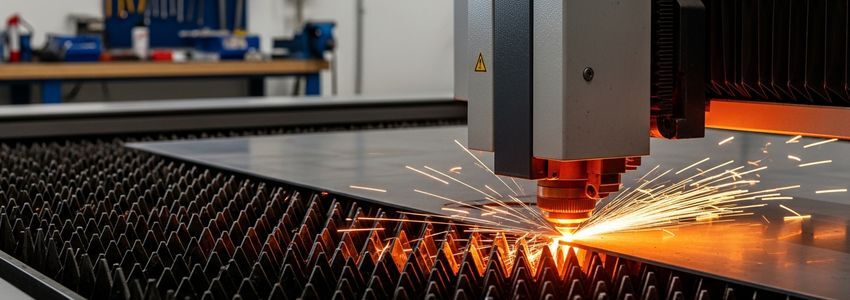
- Fiber Lasers: Fiber lasers are designed for cutting and marking metals, including steel, stainless steel, aluminum, brass, and copper. They are significantly more powerful and efficient for metal processing than CO2 lasers. A small-format fiber laser for metal cutting can start around $40,000 and go well over $150,000, placing it firmly in the category of equipment that benefits from leasing.
- Galvo (Galvanometer) Lasers: These lasers use mirrors to move the beam at incredibly high speeds, making them perfect for high-speed marking and engraving rather than deep cutting. They are used for serial number marking, branding, and detailed engraving on metals and plastics.
CNC (Computer Numerical Control) Tools
CNC machines use computer programming to control the movement of a cutting tool, enabling automated, repeatable, and highly precise fabrication.
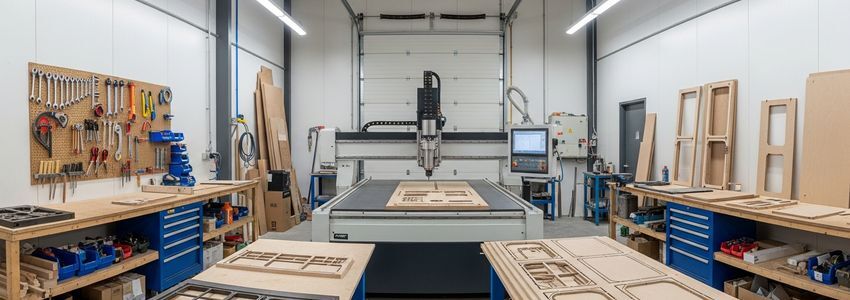
- CNC Routers: These are essential for woodworking, sign making, and plastics fabrication. They use a rotating cutting bit (a router) to carve materials. A 4x8 foot CNC router, a common size for small shops, can cost between $20,000 and $70,000 depending on the spindle, gantry, and vacuum table features. Leasing allows a shop to get a machine with a tool changer and more robust components.
- CNC Mills (Milling Machines): Mills are primarily used for metalworking. They use a rotating multi-point cutting tool to remove material from a stationary workpiece. They come in various configurations, with 3-axis mills being the standard and 4-axis or 5-axis mills offering the ability to create highly complex, multi-sided parts. A new 3-axis vertical mill can cost $60,000 to $120,000, while 5-axis machines can exceed $300,000. CNC machine financing is almost a necessity for acquiring these advanced tools.
- CNC Lathes: Lathes shape parts by rotating a workpiece against a stationary cutting tool. They are used to create cylindrical components like shafts, pins, and custom fittings. A small shop CNC lathe can range from $35,000 to $90,000.
- CNC Plasma and Waterjet Cutters: These machines are used for cutting 2D shapes out of large sheets of metal. Plasma cutters use a high-velocity jet of ionized gas, while waterjet cutters use a high-pressure stream of water mixed with an abrasive. Both are mainstays in metal fabrication shops, with costs typically starting at $50,000 and increasing with table size and power.
How Equipment Leasing Works: Step by Step
The process of leasing a laser cutter or CNC machine is designed to be straightforward and efficient, allowing you to get the equipment you need into your shop and generating revenue as quickly as possible. While specifics can vary slightly between lenders, the core steps are generally consistent.
Step 1: Identify Your Equipment and Vendor
Before you approach a lender, you need to know exactly what you want. Research different brands (like Haas, Mazak, Tormach for CNC, or Epilog, Trotec, Boss Laser for lasers), compare specifications, and get a formal quote from the vendor of your choice. This quote should include the base price of the machine, as well as any necessary accessories, software, shipping costs, and installation fees. Having a specific quote is crucial for the application process.
Step 2: Complete a Simple Application
The next step is to fill out a credit application with a leasing company like Crestmont Capital. Our application is typically a one-page form that asks for basic information about your business, such as its legal name, address, time in business, and annual revenue. You will also provide details about the equipment you wish to lease and its total cost.
Step 3: Undergo Credit Review and Approval
Once the application is submitted, the leasing company's underwriting team will review your business's credit profile. For equipment under $250,000, this is often an automated or expedited process that can result in an approval within a few hours. For larger amounts or more complex situations (like startups), additional financial documents like bank statements or tax returns may be requested. The lender is assessing the risk and determining your creditworthiness to establish the lease terms.
Step 4: Receive and Review Lease Terms
Upon approval, you will receive a proposal outlining the specific terms of the lease. This document will detail the monthly payment, the lease term (e.g., 36, 48, or 60 months), any upfront payments required (like first and last month's payment), and the end-of-term options (e.g., $1 buyout, Fair Market Value purchase, or return). It is vital to review these terms carefully and ask your financing advisor any questions you may have.
Step 5: Sign Lease Documents
If you agree to the terms, you will sign the official lease agreement. In today's digital environment, this is almost always done electronically, making the process fast and convenient. This legally binding contract formalizes the arrangement between your business (the lessee) and the leasing company (the lessor).
Step 6: Vendor Is Paid and Equipment Is Delivered
After the documents are signed, the leasing company issues a purchase order to your chosen equipment vendor and pays them directly for the full cost of the machine. The vendor then coordinates with you to schedule shipping and delivery. Once the equipment arrives at your shop and is installed, you will sign an "Acceptance Certificate," confirming that you have received the machine in good working order. This certificate triggers the official start of the lease term and your monthly payments.
Step 7: Make Regular Payments and Use Your Equipment
You can now put your new laser cutter or CNC tool to work, generating revenue for your business. You will make the agreed-upon fixed monthly payments to the leasing company for the duration of the term. At the end of the term, you will execute your chosen end-of-term option.
Ready to Acquire Your Next Machine?
Get a no-obligation quote in minutes. See how affordable your monthly payment could be.
Apply NowKey Benefits of Leasing vs. Buying
The choice between leasing and buying fabrication equipment is one of the most significant financial decisions a small shop owner will make. While owning an asset has a traditional appeal, a detailed analysis often reveals that the strategic benefits of leasing provide a more substantial advantage for growth-oriented businesses. Let's explore these benefits in greater depth.
Financial Flexibility and Cash Flow Management
Cash is the lifeblood of any small business. Leasing is fundamentally designed to protect it. A direct purchase of a $100,000 CNC mill requires $100,000 of cash or a loan with a 20% down payment ($20,000). This is a massive capital expenditure. A lease, however, might only require the first and last month's payment upfront, perhaps $5,000 total. This leaves $95,000 (or $15,000 compared to the loan) in your bank account. This retained capital can be used to hire a skilled programmer, invest in a marketing campaign to attract new clients, or build up a safety net for slow periods. The equipment pays for itself over time with the revenue it generates, rather than requiring a huge upfront investment before it produces a single part.
Technological Advantage and Competitiveness
In manufacturing and fabrication, technology equals capability. A 5-axis CNC machine can produce complex parts that a 3-axis machine cannot, opening up lucrative aerospace or medical contracts. A high-power fiber laser cuts metal faster and cleaner than older technologies, increasing throughput and reducing finishing time. By leasing, you can afford this superior technology. Instead of being limited by your cash on hand, you are limited only by what you can budget for a monthly payment. This allows you to compete with larger, more established shops on quality, speed, and capability. Furthermore, the ability to upgrade at the end of the lease term ensures you never fall behind the technology curve.
Simplified Budgeting and Expense Planning
Leasing converts a large, unpredictable capital expense into a predictable operating expense. Your monthly payment is fixed for the entire term of the lease. You know that for the next 48 months, your CNC router will cost exactly $1,250 per month. This simplifies financial planning, forecasting, and job costing. You can confidently bid on long-term projects knowing exactly what your machine overhead will be. This predictability is a stark contrast to the financial uncertainty of ownership, which includes potential surprise costs for major repairs and maintenance once the warranty expires.
Risk Mitigation
Ownership comes with risks. The primary risk is obsolescence. If you buy a machine for $80,000, and in three years a new technology makes it 50% less efficient, its resale value plummets. You are stuck with an underperforming, depreciated asset. With an operating lease, the leasing company assumes this risk of obsolescence. At the end of your term, you can simply return the machine and lease the new, more efficient model. Another risk is unforeseen business changes. If a major client leaves or the market shifts, being locked into a large loan for an owned asset can be a heavy burden. A lease offers more flexibility and a clearer path to exit the obligation if necessary.
Tax Efficiency
The tax treatment of leases can be highly advantageous. For an operating lease, the entire monthly payment can often be deducted as a business expense from your corporate income. This is a direct, dollar-for-dollar reduction in your taxable income. For example, a $2,000 monthly lease payment over 12 months results in a $24,000 deduction. While Section 179 allows for a significant one-time deduction for purchased equipment in the year it's placed in service, this may not be optimal for every business, especially newer companies with lower initial profits. Spreading the deduction over the lease term can provide a more consistent tax benefit. As always, consulting a tax advisor is essential to determine the best strategy for your specific financial situation.
By the Numbers
CNC and Laser Equipment Leasing - Key Statistics
$1.16 Trillion
The projected value of new business volume for the U.S. equipment finance industry, indicating massive reliance on financing and leasing. (Source: ELFA)
98.5%
The percentage of all manufacturing firms in the United States that are classified as small businesses, highlighting their critical need for accessible capital. (Source: SBA.gov)
79%
The percentage of U.S. companies that use some form of financing, such as loans or leases, to acquire business equipment. (Source: Equipment Leasing and Finance Foundation)
$250,000
The threshold up to which many lenders, including Crestmont Capital, offer streamlined, application-only financing programs for faster approvals. (Source: Internal Data)
How Crestmont Capital Helps Small Shops Get Leased
Navigating the world of equipment financing can be daunting, but at Crestmont Capital, we specialize in simplifying the process for small business owners. We understand the unique challenges and opportunities within the fabrication and manufacturing sectors. Our approach is built on speed, flexibility, and a deep understanding of the assets you need to grow your shop.
Industry Expertise: We are not generalist lenders. Our team has extensive experience financing CNC machines, laser cutters, press brakes, and other essential manufacturing tools. We understand the value of a Haas VF-2 versus a Tormach 1100MX, and we know the revenue-generating potential of a high-speed fiber laser. This expertise allows us to make faster, more informed credit decisions and structure financing that makes sense for your specific business model.
Speed and Efficiency: We know that in business, time is money. A delay in acquiring a new machine can mean losing out on a valuable contract. Our streamlined application process and advanced underwriting technology enable us to provide credit decisions in as little as two hours. For equipment costing up to $250,000, our application-only program means most businesses can get approved without needing to submit extensive financial statements or tax returns.
Flexible and Customized Terms: Every small shop is different. A startup prototyping firm has different cash flow patterns than an established woodworking business. We work with you to structure a lease that aligns with your financial situation. We offer a variety of terms, from 24 to 72 months, and flexible end-of-term options, including $1 Buyout, Fair Market Value (FMV), and fixed-price purchase options. We can also create custom payment plans, such as seasonal or deferred payments, to match your business's revenue cycles.
Vendor Independence: We empower you to choose the best equipment from any vendor, manufacturer, or private seller in the country. We are not tied to any specific brand. Once you've selected the machine that's right for your shop, we handle the payment to the vendor directly. This allows you to negotiate the best possible price for your equipment, knowing the financing is already secured.
Dedicated Support: When you work with Crestmont Capital, you are assigned a dedicated financing advisor who will guide you through the entire process, from application to funding. They are your single point of contact, ready to answer your questions and ensure a smooth, transparent experience. We believe in building long-term relationships, helping our clients not just with their first machine, but with every equipment acquisition as their business grows.
Partner with the Experts in Fabrication Financing
Let our team build a custom leasing solution for your new laser cutter or CNC tool. Approval in hours.
Get Started TodayComparison Table: Leasing vs. Buying
To make an informed decision, it's helpful to see a direct, side-by-side comparison of leasing and buying. This table breaks down the key differences across several critical business factors.
| Factor | Leasing | Buying (with Cash or Loan) |
|---|---|---|
| Initial Cost | Very low. Typically first and last month's payment. Preserves working capital. | Very high. Requires 100% of the purchase price or a significant down payment (10-20%) for a loan. |
| Ownership | The leasing company owns the equipment. You have the right to use it for the lease term. | You own the equipment outright (or the bank has a lien on it until the loan is paid off). |
| Monthly Payments | Generally lower than loan payments because you are only paying for the depreciation during the term, not the full asset value. | Higher than lease payments as you are financing the entire cost of the equipment to build equity. |
| Technology Upgrades | Simple. At the end of the term, you can easily upgrade to a newer, more advanced model. | Difficult. You must sell the old equipment (often at a loss) before you can buy a new one. |
| Tax Implications | Operating lease payments are typically 100% tax-deductible as an operating expense. | The asset is depreciated over its useful life. Section 179 may allow for an accelerated deduction. |
| Balance Sheet Impact | Operating leases are kept off the balance sheet, which can improve certain financial ratios. | The asset (equipment) and liability (loan) are recorded on the balance sheet. |
| Maintenance & Repairs | Typically the lessee's responsibility during the term, but you are often using the equipment during its most reliable years (under warranty). | You are responsible for all maintenance and repairs for the entire life of the machine, including costly out-of-warranty failures. |
| End of Term | Flexible options: purchase the equipment, renew the lease, upgrade, or return it. | You own a depreciated asset that you must continue to use, sell, or dispose of. |
Who Qualifies for Equipment Leasing?
One of the most appealing aspects of equipment leasing is its accessibility. The qualification criteria are often more flexible than those for traditional bank loans, making it a viable option for a wide range of businesses, from established shops to recent startups. Here are the key factors lenders consider:
1. Credit Score: While requirements vary, many lenders look for a personal credit score of 620 or higher from the business owner(s). Stronger credit scores (700+) will typically result in better rates and terms. However, some specialized lenders, including Crestmont Capital, have programs available for business owners with lower credit scores, especially if other factors are strong.
2. Time in Business: Most lenders prefer to work with businesses that have been in operation for at least two years. This history demonstrates stability and a track record of revenue. However, there are specific programs designed for newer businesses. Crestmont Capital offers startup financing for companies with as little as 6 months in business, recognizing that new shops need equipment to get off the ground.
3. Annual Revenue: Lenders want to see that your business has sufficient cash flow to comfortably handle the monthly lease payments. There isn't always a strict minimum, but a healthy and consistent revenue stream is a positive factor. For application-only programs, lenders may verify revenue through bank statements.
4. Industry and Equipment Type: The type of equipment you are leasing plays a significant role. Laser cutters and CNC machines are considered "hard assets" with good resale value. This makes them less risky for lenders to finance, as the equipment itself serves as strong collateral. Lenders with experience in the manufacturing industry are more comfortable financing these assets.
Pro Tip: Even if you think you might not qualify, it's always worth applying. Lenders can often find a solution by adjusting terms, requiring a slightly larger initial payment, or considering additional collateral. Don't self-disqualify before speaking with a financing professional.
5. Documentation: For leases under $250,000, the process is often "application-only." This means you only need to complete the application form. For larger transactions or for businesses with more complex credit profiles, you may be asked to provide:
- 3-6 months of business bank statements
- Recent business tax returns
- A formal quote for the equipment from the vendor
The goal for lenders is to build a complete picture of your business's financial health. By providing clear and accurate information, you increase your chances of a fast and favorable approval.
Real-World Scenarios: How Shops Use Laser and CNC Leasing
Theory is helpful, but seeing how leasing works in practice provides the clearest picture of its value. Here are a few common scenarios where small shops leverage laser cutter and CNC tool leasing to achieve their goals.
Scenario 1: The Custom Woodworking Shop
The Business: "Oak & Anvil," a two-person woodworking shop specializing in custom cabinetry and high-end furniture. They do great work but are limited by manual processes, turning away larger, more complex jobs.
The Challenge: To compete for larger kitchen remodel contracts and intricate furniture designs, they need a 4x8 CNC router with an automatic tool changer. The machine they want costs $65,000. Paying cash would wipe out their savings, and their local bank was slow to respond to a loan application.
The Solution: They apply for an equipment lease with Crestmont Capital. They are approved within four hours for a 60-month lease with a $1 buyout option. Their upfront cost is just the first and last month's payment, around $2,800. The monthly payment is a manageable $1,395.
The Outcome: With the new CNC router, Oak & Anvil can produce cabinet components three times faster and with perfect precision. They land a large contract for a commercial office build-out that they previously would have passed on. The revenue from that single job covers their lease payments for more than a year. At the end of the term, they will own a valuable asset for just $1.
Scenario 2: The Metal Fabrication Startup
The Business: "Apex Metal Works," a startup founded by an experienced welder. The shop has been open for 10 months and is building a client base for custom gates, railings, and metal art.
The Challenge: They are outsourcing all their precision metal cutting to a larger shop, which eats into their profit margins and creates production delays. They need an entry-level 4kW fiber laser to bring this work in-house, but the $120,000 price tag is impossible for a new business to purchase.
The Solution: They work with a lender that has a startup program. They provide their application, six months of bank statements showing steady revenue, and a solid business plan. They are approved for a 48-month Fair Market Value (FMV) lease. The lower monthly payments of an FMV lease are crucial for their tight cash flow.
The Outcome: Apex Metal Works immediately improves its profitability by eliminating outsourcing costs. They gain full control over their production schedule, allowing them to offer faster turnaround times. This new capability attracts more customers, and their revenue doubles in the first year with the laser. At the end of the 48 months, they can choose to buy the laser at its market value or, more likely, upgrade to a newer, more powerful model to continue their growth.
Scenario 3: The Prototyping and Engineering Firm
The Business: "Innovate Proto," a small engineering firm that designs and prototypes parts for the medical device industry. Precision and speed are critical.
The Challenge: Their existing 3-axis CNC mill is limiting the complexity of the prototypes they can create. To win a major new contract, they need a 5-axis CNC machine, which costs $225,000. They know this technology is constantly evolving and don't want to be stuck with an outdated machine in a few years.
The Solution: They opt for a 36-month operating lease. This short term allows them to align the equipment cost directly with the length of their new client contract. The lease structure keeps the significant asset off their balance sheet and provides a clear path to upgrade to the next generation of 5-axis technology in just three years.
The Outcome: The firm wins the contract and successfully produces the complex prototypes. The lease payments are easily covered by the project's revenue. After three years, they return the machine and lease a brand new, even more advanced model, ensuring they remain at the cutting edge of their industry and can continue to serve high-tech clients.
How to Get Started
Taking the next step toward acquiring your new laser cutter or CNC machine through leasing is a simple, three-step process designed to get you from planning to production as quickly as possible.
Get Your Quote
Contact the equipment vendor of your choice and get a detailed, formal quote for the exact machine and accessories you need. This document is essential for the application process.
Complete a Simple Application
Fill out our secure, one-page online application. It takes less than five minutes and provides us with the basic information we need to start the approval process. You can apply now directly on our website.
Review Your Terms
Once approved, your dedicated financing advisor will contact you to discuss the available terms and help you select the best option for your business. After you sign the documents, we pay your vendor, and your new equipment is on its way.
Frequently Asked Questions
1. What is equipment leasing?
Equipment leasing is a financial agreement where a business (the lessee) pays a leasing company (the lessor) a fixed monthly fee to use a specific piece of equipment for a set period. It's similar to renting, but over a longer term (typically 2-5 years). The lessor owns the equipment, and the lessee gets the full use of it to generate revenue without the high upfront cost of purchase.
2. How does laser cutter and CNC tool leasing work?
The process is simple. First, you select the laser cutter or CNC machine you want from any vendor. Then, you apply for a lease with a financing company like Crestmont Capital. Once approved, we purchase the equipment from your chosen vendor and pay them directly. The equipment is delivered to your shop, and you begin making fixed monthly payments to us for the agreed-upon term.
3. What types of CNC machines and laser cutters can be leased?
Virtually any new or used commercial-grade equipment can be leased. This includes CNC mills (3-axis, 4-axis, and 5-axis), CNC routers, CNC lathes, plasma cutters, and waterjets. For lasers, you can lease CO2 lasers, fiber lasers for metal cutting, and Galvo lasers for engraving. You can also bundle soft costs like software, shipping, and installation into the lease.
4. What are the typical lease terms?
Lease terms are flexible to match your budget and business needs. The most common terms are 24, 36, 48, and 60 months. Some programs may offer terms up to 72 months. Shorter terms mean higher monthly payments but lower overall interest costs, while longer terms provide a lower, more manageable monthly payment.
5. What are the general qualification requirements?
Lenders typically look for a personal credit score of 620+, at least 6-12 months in business, and consistent revenue. However, requirements are flexible. Strong revenue or collateral can help offset a lower credit score or shorter time in business. We offer programs for a wide range of credit profiles, including startups.
6. How does leasing compare to buying with a traditional bank loan?
Leasing typically requires less money down, has a faster and easier approval process, and offers more flexibility at the end of the term (like upgrading technology). Bank loans usually require a significant down payment (10-20%), have a more stringent application process, and result in you owning a depreciating asset. Leasing preserves cash flow and protects against technology obsolescence.
7. Can I lease equipment with bad credit?
Yes, it is possible. While a strong credit score leads to the best rates, we have programs designed for business owners with challenged credit. In these cases, we may look at other factors like recent business performance, cash flow, and the value of the equipment itself. A larger down payment or a shorter term might be required, but financing is often still achievable.
8. What is the minimum credit score for equipment leasing?
For the most competitive programs, lenders generally look for a FICO score of 650 or higher. However, many programs are available for scores in the 600-650 range. For scores below 600, approvals are still possible but are evaluated on a case-by-case basis, often requiring strong supporting factors like high revenue or significant time in business.
9. How fast can I get approved and receive my equipment?
The approval process is very fast. For transactions under $250,000, credit decisions are often made within 2-4 hours. Once you sign the lease documents, funding is typically sent to the vendor within 24 hours. The total time to receive your equipment then depends on the vendor's inventory and shipping schedule.
10. What happens at the end of the lease term?
You have several options depending on your lease structure. The most common are: (1) Purchase the equipment for a pre-determined price (such as a $1 buyout) or its Fair Market Value (FMV). (2) Renew the lease and continue using the equipment at a reduced monthly payment. (3) Return the equipment to the leasing company and walk away with no further obligation. (4) Upgrade by returning the old machine and leasing a new one.
11. Can I upgrade my equipment in the middle of a lease?
Yes, many leasing companies offer upgrade options. Typically, the remaining balance on your current lease can be rolled into a new lease for a more advanced piece of equipment. This allows your business to stay current with the latest technology without waiting for the original lease term to end.
12. Are lease payments tax-deductible?
In many cases, yes. For a true operating lease (with an FMV purchase option), the entire monthly lease payment can typically be deducted as a business operating expense. For capital leases (like a $1 buyout lease), you may depreciate the asset similar to a purchase. We strongly recommend consulting with your tax advisor to understand the specific tax implications for your business.
13. How much does it cost to lease a laser cutter or CNC machine?
The cost depends on several factors: the total price of the equipment, the length of the lease term, and your business's credit profile. A rough estimate for a monthly payment is typically around $20-$40 per $1,000 financed for a 60-month term. For example, a $50,000 machine might have a monthly payment between $1,000 and $2,000. The best way to know for sure is to get a free, no-obligation quote.
14. Does Crestmont Capital offer leasing for fabrication equipment?
Yes, absolutely. Crestmont Capital is a leading provider of small business financing and specializes in equipment leasing for the manufacturing and fabrication industries. We finance all types of laser cutters, CNC tools, and other essential shop equipment for businesses nationwide.
15. How do I apply for a lease with Crestmont Capital?
Applying is fast and easy. You can complete our secure online application in just a few minutes. All you need is basic information about your business and the equipment you want to lease. A dedicated financing advisor will contact you shortly after to discuss your approval and terms. Click here to apply now.
Find Out What Your Shop Qualifies For
Our simple application has no impact on your credit score. Get your custom lease quote today.
Apply in 60 SecondsConclusion
For small shops in the competitive fabrication and manufacturing landscape, strategic equipment acquisition is not just an operational decision; it's a financial one. Laser cutter and CNC tool leasing offers a powerful alternative to traditional purchasing, enabling businesses to conserve precious capital, access state-of-the-art technology, and maintain predictable monthly costs. By mitigating the risks of ownership and technology obsolescence, leasing empowers shop owners to focus on what they do best: producing high-quality work, serving their clients, and growing their business. Whether you are a startup needing your first machine or an established shop looking to expand your capabilities, exploring a leasing solution is a critical step toward a more flexible, efficient, and profitable future.
Disclaimer: The information provided in this article is for general educational purposes only and is not financial, legal, or tax advice. Funding terms, qualifications, and product availability may vary and are subject to change without notice. Crestmont Capital does not guarantee approval, rates, or specific outcomes. For personalized information about your business funding options, contact our team directly.