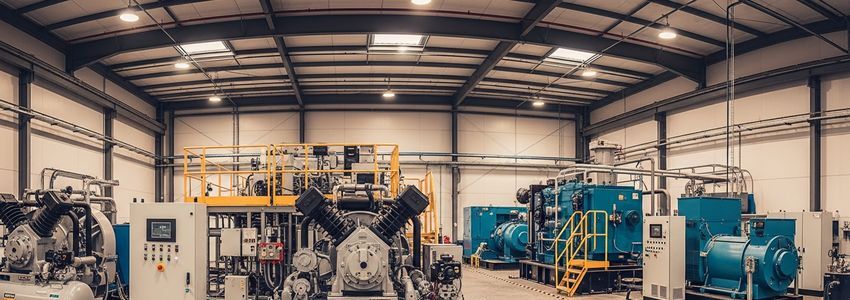
Air compressors and industrial generators are the backbone of countless business operations, from construction sites and manufacturing facilities to auto repair shops and event production companies. These machines keep production lines moving, power essential tools, and ensure your business never goes dark during a power disruption. But purchasing this equipment outright can cost tens of thousands of dollars, straining cash reserves and tying up capital that could fuel growth elsewhere.
Leasing air compressors and industrial generators has become one of the smartest financing strategies available to business owners today. Instead of a large upfront investment, you make predictable monthly payments, preserve working capital, and gain access to the latest equipment. When the lease ends, you can upgrade to newer technology rather than holding aging assets on your balance sheet.
This guide covers everything you need to know about leasing air compressors and industrial generators, including the benefits, types of equipment available, how the process works, and how Crestmont Capital can help you get the right financing for your specific situation.
In This Article
- What Is Air Compressor and Generator Leasing?
- Key Benefits of Leasing vs. Buying
- Types of Equipment You Can Lease
- How the Leasing Process Works
- Leasing vs. Buying vs. Financing Compared
- Who Should Consider Equipment Leasing?
- Real-World Business Scenarios
- How Crestmont Capital Helps
- Common Mistakes to Avoid
- How to Get Started
- Frequently Asked Questions
What Is Air Compressor and Generator Leasing?
Equipment leasing is a financing arrangement in which a business uses equipment for a defined period in exchange for regular payments to a lender or leasing company. At the end of the lease term, the business typically has the option to purchase the equipment at fair market value or a predetermined price, renew the lease, or return the equipment and upgrade to newer models.
For air compressors and industrial generators specifically, leasing allows companies to access high-powered, industrial-grade equipment without the full capital outlay that purchasing requires. Air compressors used in manufacturing, construction, or automotive settings can range from $5,000 for a small reciprocating compressor to well over $100,000 for large rotary screw or centrifugal systems. Industrial generators with backup power capabilities for hospitals, data centers, or construction sites can run from $15,000 to $500,000 or more depending on capacity and fuel type.
These price points make leasing a natural fit for businesses that need the power and reliability of commercial-grade equipment but want to maintain financial flexibility. Leasing air compressors and industrial generators is particularly common in industries where equipment is used heavily for project-based work, where technology upgrades frequently, or where cash flow is seasonal and unpredictable.
Industry Insight: According to the Equipment Leasing and Finance Association (ELFA), approximately 80% of U.S. businesses use some form of equipment financing. Industrial equipment such as compressors and generators represent billions in annual leased assets across construction, manufacturing, and utilities sectors.
Need to Power Your Business?
Access industrial-grade air compressors and generators through flexible lease financing. Apply in minutes with no obligation.
Apply Now →Key Benefits of Leasing Air Compressors and Industrial Generators
Understanding why leasing often outperforms outright purchase requires looking at both the financial and operational dimensions of equipment management. Businesses that lease industrial equipment consistently report stronger cash flow, more predictable budgeting, and greater operational flexibility compared to those that buy equipment outright.
Preserve Working Capital
When you buy an air compressor or generator outright, you deplete cash reserves that could be deployed for hiring, inventory, marketing, or other revenue-generating activities. Leasing eliminates that capital drain. Monthly lease payments are often a fraction of the equipment's total cost, allowing you to put dollars to work in higher-return areas of your business while still accessing the equipment you need.
Predictable Monthly Payments
Lease payments are fixed, making it easy to budget accurately. You know exactly what you will pay each month for the duration of the term, without worrying about unexpected repair costs, parts replacements, or depreciation management. This predictability is especially valuable for businesses operating on tight margins or managing project-based cash flows.
Access to Better Equipment
Leasing lets you access higher-capacity, more efficient equipment than you might otherwise be able to afford purchasing outright. A construction company might be able to purchase a basic portable compressor but could lease a large variable-speed rotary screw compressor that dramatically improves productivity. The improved performance often more than offsets the lease cost.
Equipment Upgrades at Lease End
Technology in industrial equipment evolves quickly. Modern generators are quieter, more fuel-efficient, and include sophisticated remote monitoring capabilities. Advanced air compressors now feature variable frequency drives that reduce energy consumption by 30-50% compared to older fixed-speed models. Leasing allows you to upgrade to the latest technology at the end of each term rather than being locked into aging equipment for a decade.
Potential Financial Benefits
Lease payments are typically treated as operating expenses, which can reduce your taxable income. Additionally, since leased equipment does not appear as a depreciating asset on your balance sheet in the same way purchased equipment does, leasing can improve key financial ratios. Always consult with your accountant or tax advisor regarding the specific financial and tax treatment for your situation.
Flexible End-of-Lease Options
At lease maturity, you typically have three paths: purchase the equipment at the agreed residual value, renew the lease (often at a lower payment for older equipment), or return the equipment and upgrade. This flexibility gives you options that outright ownership never provides.
Pro Tip: Many businesses use equipment leasing as a cash flow management tool - leasing expensive power equipment while using freed-up capital to fund payroll, materials, and business growth initiatives that generate immediate revenue.
Types of Air Compressors and Generators You Can Lease
Both air compressors and industrial generators come in a wide range of configurations, each suited to specific applications and industries. Understanding the different types helps you identify what equipment makes sense for your operation and what lease structure will best fit your usage patterns.
Air Compressor Types Available for Lease
Reciprocating (Piston) Compressors: These are the most common type for small to mid-size operations. They work by using pistons to compress air and are well-suited for auto repair shops, small manufacturing facilities, and light construction applications. Single-stage reciprocating compressors handle pressures up to 150 PSI, while two-stage models reach 175 PSI and beyond. Lease costs for commercial reciprocating compressors typically range from $200 to $800 per month depending on capacity.
Rotary Screw Compressors: These are the workhorses of industrial applications. Using two interlocking helical screws, rotary screw compressors deliver a continuous supply of compressed air at high volumes, making them ideal for manufacturing, food processing, woodworking, and any operation requiring a constant air supply. They are more energy-efficient than reciprocating compressors for continuous-duty applications. Lease costs for mid-size rotary screw compressors typically range from $500 to $2,500 per month.
Centrifugal Compressors: Used in large-scale industrial operations such as chemical plants, refineries, and large manufacturing facilities, centrifugal compressors can deliver hundreds to thousands of horsepower. These are significant capital expenditures when purchased, making leasing especially attractive. Lease terms on large centrifugal systems often range from 36 to 84 months with payments starting in the thousands per month.
Portable Air Compressors: Construction companies, contractors, and rental businesses frequently lease portable air compressors that can be transported from job site to job site. These diesel or electric-powered units provide compressed air for pneumatic tools, concrete work, and site utilities.
Industrial Generator Types Available for Lease
Diesel Generators: The most common type for industrial and commercial backup power, diesel generators are durable, fuel-efficient, and available in capacities from 20 kW to several megawatts. Construction sites, data centers, hospitals, and industrial facilities often rely on diesel gensets. Lease costs vary significantly by capacity, with smaller units (50-100 kW) leasing for $500 to $1,500 per month and larger industrial units running considerably more.
Natural Gas Generators: Increasingly popular for facilities with access to natural gas infrastructure, these generators offer lower fuel costs and cleaner emissions compared to diesel. Manufacturing plants, hospitals, and commercial buildings frequently use natural gas generators for both standby and prime power applications.
Propane Generators: Used where diesel or natural gas is not readily available, propane generators are common in rural construction projects, agricultural operations, and remote facilities. Lease arrangements for propane generators are similar in structure to diesel units.
Portable Event Generators: Production companies, concert promoters, outdoor event organizers, and film crews regularly lease portable generators rated from 20 kW to 500 kW or more to power temporary facilities where utility power is unavailable.
Standby Generators: Purpose-built for backup power applications, standby generators automatically start within seconds of a utility outage and can power an entire facility for hours or days. Hospitals, data centers, and financial institutions with strict uptime requirements often lease standby systems rather than purchasing them outright.
By the Numbers
Air Compressor and Generator Leasing - Key Statistics
80%
of U.S. businesses use some form of equipment financing
$1T+
In equipment financed annually in the U.S. market
30-50%
Energy savings from modern VFD compressors vs. older fixed-speed models
24-84
Typical lease term range in months for industrial equipment
How the Leasing Process Works
Understanding the leasing process from application to equipment delivery helps you plan your timeline and gather the right information upfront. The process for leasing air compressors and industrial generators is generally straightforward, especially when working with an experienced equipment financing company like Crestmont Capital.
Step 1: Identify Your Equipment Needs
Before applying, clarify what you need: the type of equipment, the required capacity (CFM for compressors, kW for generators), whether you need portable or stationary units, and how long you expect to need the equipment. Having this information ready speeds up the application process significantly.
Step 2: Choose a Lease Structure
There are two primary lease structures for industrial equipment:
- Operating Lease (Fair Market Value Lease): Monthly payments are generally lower, and at lease end you can purchase at fair market value, return, or renew. This structure is common for businesses that plan to upgrade equipment regularly.
- Finance Lease (Capital Lease or $1 Buyout): Payments are slightly higher, but you own the equipment at lease end for a nominal cost (often $1). This works well when you need the equipment long-term and want to build equity.
Step 3: Apply for Financing
The application typically requires basic business information, a few months of bank statements, and financial documentation depending on the loan size. Smaller lease amounts (under $150,000) often require minimal documentation and can be approved within 24-48 hours. Larger commercial leases may require full financial statements and take slightly longer.
Step 4: Review and Accept Terms
Once approved, you will receive a lease agreement outlining the payment amount, term length, end-of-lease options, and any maintenance or insurance requirements. Review the terms carefully before signing, paying particular attention to end-of-lease buyout provisions and early termination clauses.
Step 5: Equipment Delivery and Installation
After the lease is signed, you work with your equipment vendor or the leasing company to arrange delivery. For large stationary equipment like industrial air compressors or standby generators, installation may require coordination with electricians, utility providers, or specialized contractors.
Step 6: Ongoing Use and End-of-Lease Decision
Throughout the lease term, you use the equipment normally. As the lease end approaches, you evaluate your options: purchase, renew, or return and upgrade. The best choice depends on the equipment's condition, your future needs, and what newer technology is available.
Ready to Lease Industrial Equipment?
Crestmont Capital specializes in equipment leasing for businesses of all sizes. Get pre-qualified in minutes - no obligation to proceed.
Start Your Application →
Leasing vs. Buying vs. Financing Compared
Many business owners struggle to choose between leasing, purchasing outright, or taking a traditional equipment loan. Each option has distinct advantages and drawbacks depending on your financial situation, tax position, and long-term equipment needs.
| Factor | Equipment Lease | Outright Purchase | Equipment Loan |
|---|---|---|---|
| Upfront Cost | Low (1st payment, deposit) | Full purchase price | Down payment (10-20%) |
| Monthly Payments | Lower | None | Higher |
| Ownership | No (option to buy at end) | Yes immediately | Yes (after payoff) |
| Technology Upgrade | Easy at lease end | Must sell old equipment | Must sell or trade in |
| Balance Sheet Impact | Off-balance (operating lease) | On-balance (depreciating asset) | On-balance (asset + liability) |
| Cash Flow | Best preserved | Large initial outflow | Moderate monthly outflow |
| Best For | Frequent upgraders, cash-flow-focused | Long-term stable use, cash-rich | Ownership-focused, moderate capital |
The right choice depends heavily on your business model and financial priorities. A construction company running equipment hard on projects for 2-3 years then replacing it often benefits most from operating leases. A manufacturing plant using the same compressor for 15+ years may prefer ownership. Most businesses fall somewhere in between, and equipment loans or finance leases with buyout options can split the difference effectively.
Who Should Consider Leasing Air Compressors and Industrial Generators?
Equipment leasing works across virtually every industry that uses air compressors or generators regularly, but it offers the greatest advantage in specific situations.
Construction and Contracting Businesses
Construction companies frequently move between projects, use equipment intensively for finite periods, and need to scale their equipment fleet up and down with workload. Leasing portable air compressors and portable generators gives contractors the power they need on each job site without long-term ownership commitments. It also allows them to access larger, more capable equipment than their capital base might otherwise support.
Manufacturing and Industrial Operations
Manufacturers rely on compressed air for everything from pneumatic assembly tools and spray painting to conveyor systems and CNC machining. Industrial air compressors in manufacturing environments run continuously, and technology changes fast. Leasing allows manufacturers to access the most energy-efficient compressor technology, reducing operating costs while avoiding large capital expenditures.
Auto Repair Shops and Automotive Businesses
Auto repair shops, body shops, and tire centers use compressed air constantly for impact wrenches, lifts, spray guns, and diagnostic equipment. Leasing a commercial-grade rotary screw compressor instead of purchasing a smaller reciprocating unit can dramatically improve workflow efficiency, and the lease payment often offsets the savings in technician productivity within the first few months.
Event Production and Entertainment
Concert tours, film productions, outdoor festivals, and corporate events require temporary power solutions that leasing accommodates perfectly. Leasing event-scale generators for 30, 60, or 90-day projects aligns perfectly with the project-based nature of this industry, eliminating storage and maintenance costs between events.
Healthcare and Data Centers
Hospitals, medical facilities, and data centers require reliable standby generator systems that must meet strict performance specifications. These facilities often lease rather than purchase backup generators because it ensures they always have the newest, most reliable equipment under warranty, with service agreements included in the lease structure.
Startups and Growing Businesses
Young companies with limited capital histories may find it easier to qualify for equipment leases than for large traditional bank loans. Because the equipment itself serves as collateral, many lessors are more flexible on credit requirements. This makes leasing a practical entry point for businesses that need industrial equipment but lack the credit profile for traditional financing.
Good Candidate Profile: Most businesses with at least 1 year in operation, $100,000+ in annual revenue, and reasonable credit history qualify for equipment leases in the $10,000-$500,000 range. Crestmont Capital works with businesses across the credit spectrum to find workable solutions.
Real-World Business Scenarios
Understanding how leasing air compressors and industrial generators plays out in practice helps illustrate when this strategy creates real value.
Scenario 1: The Growing Auto Shop
Mike runs a busy automotive repair shop that has grown from 3 to 8 bays over five years. His aging reciprocating compressor can barely keep up with demand during peak hours, causing technicians to wait on tools. Purchasing a new 25-HP rotary screw compressor would cost $22,000, which would drain his operating reserve right before his busiest season. Instead, Mike leases the compressor for $380 per month on a 60-month term. The improved air pressure and volume allows his technicians to work without delays, adding an estimated 12 additional service hours per week at an average of $75 per hour. The $900 per week in added revenue easily justifies the $380 lease payment.
Scenario 2: The Construction Contractor
A mid-size general contractor lands a large commercial build-out project in a location without reliable utility power. They need a 200 kW diesel generator for the 18-month project, but purchasing the $90,000 unit doesn't make sense when they have no confirmed use for it after the project ends. They lease the generator for $2,200 per month on an 18-month operating lease, then return it at project completion. Total cost: $39,600 versus $90,000+ in purchase and ownership costs. The savings funded equipment for the next project.
Scenario 3: The Manufacturer Upgrading Efficiency
A furniture manufacturer runs four aging fixed-speed air compressors that consume enormous amounts of electricity. Energy bills from compressed air alone exceed $8,000 per month. Their equipment consultant recommends replacing all four units with two modern variable-frequency-drive (VFD) rotary screw compressors that would reduce energy consumption by 40%. The new equipment costs $180,000 to purchase. Instead, they lease on a 48-month finance lease for $4,200 per month. The energy savings of approximately $3,200 per month means their net additional cost is just $1,000 per month during the lease term, and they own the equipment outright at the end.
Scenario 4: The Event Production Company
A regional event production company handles 40-50 events per year ranging from corporate meetings to outdoor concerts. Generator rental costs from third parties have been running $15,000 to $25,000 annually. By leasing two 100 kW portable generators for $1,100 per month combined on a 60-month term, they eliminate rental costs, have guaranteed availability for every event, and generate additional revenue by sub-leasing to clients on smaller jobs. After 60 months they own the equipment with significant remaining useful life.
Scenario 5: The Healthcare Facility
A regional urgent care clinic expanding to three locations needs standby generator systems at each new site to meet healthcare facility regulations and patient safety requirements. Each 150 kW standby unit would cost $75,000 to purchase and install, totaling $225,000 in capital expenditure. Instead, they structure operating leases for all three units at $1,800 per month per location ($5,400 combined). The equipment vendor provides full service and maintenance as part of the lease, ensuring code compliance and reliable backup power without the clinic's internal team managing generator maintenance.
Scenario 6: The Food Processing Plant
A regional food processor requires a large-volume rotary screw compressor system to operate pneumatic conveying, packaging equipment, and cleaning systems. The facility runs 16 hours per day, 6 days per week. Their existing 50 HP compressor is undersized and near end-of-life. A new 100 HP variable-speed compressor system would cost $65,000 but would reduce compressed air energy costs significantly. They lease for $1,450 per month over 60 months, with the energy savings largely offsetting the lease payment from month one.
How Crestmont Capital Helps with Equipment Leasing
Crestmont Capital has helped thousands of business owners across the United States access equipment financing and equipment leasing solutions tailored to their specific needs. As the #1 rated business lender in the country, Crestmont Capital brings deep expertise and a network of funding sources to every deal.
For businesses seeking manufacturing equipment financing or construction equipment financing, Crestmont's specialists understand the specific requirements of industrial-grade equipment and can structure lease terms that align with your project timelines and cash flow patterns.
Here is what sets Crestmont Capital apart when it comes to leasing air compressors and industrial generators:
- Fast approvals: Many equipment leases under $150,000 receive same-day or next-day decisions with minimal documentation.
- Flexible structures: Operating leases, finance leases, and lease-to-own options are all available to match your financial goals.
- Broad credit spectrum: Whether you have excellent credit or have faced challenges in the past, Crestmont works with a wide range of lending partners to find solutions.
- Industry expertise: Advisors understand the specific needs of construction, manufacturing, healthcare, food service, and other industries that rely on air compressors and generators.
- New and used equipment: Crestmont finances both new and used industrial equipment, giving you more purchasing options.
- Higher loan amounts: For large commercial generator or compressor systems, Crestmont has access to commercial financing resources that can handle multi-million dollar equipment transactions.
Get Your Equipment Lease Approved Today
Fast decisions, flexible terms, and expert guidance from the #1 business lender in the U.S. Apply now and get funded fast.
Apply Now →Common Mistakes to Avoid When Leasing Industrial Equipment
While equipment leasing offers significant advantages, there are pitfalls that business owners should avoid to get the most value from their lease agreements.
Not Comparing Lease Structures
Many business owners accept the first lease offer without comparing operating leases to finance leases or $1 buyout arrangements. The right structure depends on your long-term plans for the equipment and your tax situation. Always discuss options with your accountant before signing.
Underestimating Your Equipment Needs
Leasing equipment that is undersized for your actual requirements is a common and costly mistake. If you size your compressor too small, you'll face pressure drops, equipment overheating, and shortened maintenance cycles. Take time to accurately calculate your compressed air demand (in CFM) or power requirements (in kW) before selecting equipment, and build in 20-30% headroom for future growth.
Ignoring the Total Cost of the Lease
Monthly payment is not the only cost to evaluate. Factor in any upfront fees, maintenance requirements, insurance obligations, and the end-of-lease buyout price if you plan to purchase. A lease with a slightly higher monthly payment but a favorable $1 buyout option may cost less over the full lifecycle than one with a lower payment and a 20% fair market value buyout at the end.
Not Reading the Early Termination Clause
Business circumstances change. If you need to return equipment before the lease ends, early termination penalties can be significant, sometimes equal to all remaining payments. Understand the early termination terms before committing to a long lease term on equipment whose need may change.
Skipping the Maintenance Review
Industrial air compressors and generators require regular maintenance to perform reliably. Confirm whether the lease includes any service agreements, or whether you are responsible for all maintenance. Factor maintenance costs into your total cost of ownership calculation.
Choosing the Wrong Lease Term
Matching the lease term to the useful life and your planned use period is critical. A 60-month lease on a portable generator you only need for an 18-month project creates unnecessary financial commitment. Conversely, too short a term on equipment you plan to use for years means higher monthly payments and more frequent refinancing.
How to Get Started
Complete our quick application at offers.crestmontcapital.com/apply-now - takes just a few minutes. Have your basic business information and recent bank statements ready.
A Crestmont Capital equipment financing advisor will review your needs, discuss equipment specifications, and present lease structures that fit your budget and goals.
Once approved, review your lease terms carefully with your accountant if needed, then sign electronically. Most leases can be completed entirely online.
Crestmont coordinates funding directly with your equipment vendor. In most cases, you'll have your air compressor or generator on-site and operational within days of approval.
Frequently Asked Questions
What is the minimum credit score required to lease industrial equipment?
Most equipment lessors look for a personal credit score of 600 or higher for standard commercial leases. However, because the equipment itself serves as collateral, some lenders will approve leases for applicants with scores in the 550-599 range if the business demonstrates strong cash flow and revenue. Crestmont Capital works with a wide network of funding sources to accommodate different credit profiles and can often find solutions for businesses that have been declined elsewhere.
How long are typical lease terms for air compressors and generators?
Lease terms for industrial air compressors and generators typically range from 24 to 84 months (2-7 years). The most common terms are 36, 48, and 60 months. Shorter terms (24-36 months) are often used for portable equipment or project-specific needs, while longer terms (60-84 months) work well for large stationary installations where the equipment will remain in place for many years. The right term depends on your planned use duration and desired monthly payment level.
Can I lease used or refurbished air compressors and generators?
Yes, many equipment leasing companies including Crestmont Capital can finance both new and used industrial equipment. Used equipment leases typically require documentation that the equipment is in good working condition, and lenders may require a higher percentage of the equipment's value upfront or a shorter maximum lease term. Used equipment leasing can significantly reduce monthly payments while still giving you access to reliable industrial-grade machines that would be expensive to purchase outright.
What is the difference between an operating lease and a finance lease?
An operating lease (also called a fair market value lease) gives you the right to use the equipment for a defined period with the option to purchase at fair market value at the end, renew the lease, or return the equipment. Monthly payments are lower because you are not paying off the full equipment value. A finance lease (or capital lease) is structured so that payments cover the full value of the equipment over the term, and you typically purchase the equipment for a nominal amount (such as $1) at lease end. Finance leases result in higher monthly payments but give you full ownership at the end of the term.
Do I need to insure leased air compressors and generators?
Yes, virtually all equipment lease agreements require the lessee to maintain insurance on the leased equipment for its replacement value throughout the lease term. Most standard business property insurance policies cover leased equipment, but you should confirm coverage with your insurance provider before signing. The leasing company will typically be listed as an additional insured or loss payee on the policy. Some lessors also offer equipment protection programs that can be rolled into the monthly lease payment.
How quickly can I get approved for an equipment lease?
Approval timelines depend on the lease amount and lender requirements. For equipment leases under $150,000, approvals are often issued within 24-48 hours with minimal documentation - typically just a completed application and a few months of bank statements. For larger lease transactions ($150,000 and above), lenders usually require full financial statements (2 years of tax returns, balance sheets, and income statements) and the approval process may take 3-7 business days. Crestmont Capital's advisors can expedite the process by identifying the right lending programs for your profile upfront.
What happens if the equipment breaks down during the lease?
Responsibility for maintenance and repairs during the lease term varies by lease structure. In most standard equipment leases, the lessee (you) is responsible for routine maintenance and repairs. Many lease agreements specify that you must maintain the equipment per manufacturer recommendations. Some lessors, particularly for high-value generator systems used in healthcare or data center applications, offer service agreements that can be bundled into the lease payment. If the equipment suffers a major failure beyond normal wear and tear, your equipment insurance should cover replacement or repair costs.
Can I add equipment to an existing lease?
Some lease structures allow for master lease agreements or equipment additions that let you add equipment to an existing lease facility without starting the approval process from scratch. This can be useful for growing businesses that anticipate adding compressors or generators over time. Master leases are particularly common in manufacturing and construction, where equipment needs evolve with business growth. Ask your Crestmont Capital advisor whether a master lease structure makes sense for your situation.
What documentation do I need to apply for an equipment lease?
For smaller leases (under $100,000), you typically need a completed application with basic business information, 3-6 months of business bank statements, and a vendor quote for the equipment you plan to lease. For larger transactions, lenders will also request 2 years of business tax returns, current financial statements (profit and loss and balance sheet), and information about existing debt obligations. Having these documents ready before you apply can significantly speed up the approval process. Crestmont Capital's advisors will tell you exactly what you need based on the specific programs you qualify for.
Is leasing better than renting air compressors and generators?
It depends on how long you need the equipment. Short-term rentals (days to a few weeks) from equipment rental companies make sense for one-time projects. But for ongoing business needs spanning months or years, leasing almost always results in lower total cost than renting. A generator that rents for $2,000 per week might be leased for $2,500 per month - if you need it for 6 months, renting costs $48,000+ while leasing costs approximately $15,000. Beyond cost, leasing gives you dedicated equipment that is always available when you need it, rather than depending on rental company inventory.
What types of businesses typically lease industrial generators?
Industrial generators are leased across a wide range of industries. Construction contractors lease portable generators for project power. Hospitals and medical facilities lease standby generators for backup power compliance. Data centers and financial institutions lease UPS and generator systems for continuous uptime. Event production companies lease portable generators for outdoor events, concerts, and film productions. Manufacturing plants lease prime power generators for remote facilities or backup systems. Agricultural operations lease generators for irrigation, processing, and remote facilities. Any business with critical power needs or operating in locations with unreliable utility service has strong reasons to consider generator leasing.
How do lease payments compare to purchase loan payments?
Operating lease payments are typically 20-30% lower than equivalent equipment loan payments for the same term length, because the lease payment does not need to cover the full equipment value - only the depreciation over the lease term plus the lessor's profit and financing cost. A $100,000 air compressor system on a 60-month operating lease might have payments of $1,800-$2,200 per month, while an equipment loan for the same amount over 60 months might run $2,100-$2,500 per month. However, at the end of the lease you do not own the equipment (unless you exercise a buyout option), while at the end of a loan you own it outright.
Can a startup lease industrial equipment?
Yes, startups can often qualify for equipment leases even without an established business credit history. Because the leased equipment serves as collateral, many lessors are more flexible on business tenure requirements than traditional lenders. A startup with a strong personal credit score (680+), a detailed business plan, and demonstrated industry experience has a reasonable chance of approval. Some lessors require startups to provide a personal guarantee or a first and last payment upfront as additional security. Crestmont Capital works with startup equipment lessees and can advise on how to structure your application for the best chance of approval.
What is a fair market value buyout option?
A fair market value (FMV) buyout option, included in most operating leases, gives you the right to purchase the leased equipment at its fair market value at the end of the lease term. The FMV is determined at the time of purchase based on comparable equipment prices in the secondary market. This option is beneficial if you find that the equipment is still performing well and is worth keeping, but you want to evaluate the decision at lease maturity rather than committing to ownership upfront. The advantage of the FMV buyout over a $1 buyout lease is lower monthly payments throughout the lease term.
How does leasing affect my ability to get other business financing?
Operating leases, when structured properly, often have a lighter impact on your balance sheet debt ratios compared to equipment loans, which can preserve your capacity to obtain other forms of financing such as business lines of credit or working capital loans. Finance leases are treated more similarly to loans on the balance sheet under current accounting standards (ASC 842). In either case, timely lease payments demonstrate creditworthiness and can strengthen your overall financing profile over time. Consult with your accountant regarding the specific balance sheet treatment for your lease type.
Leasing air compressors and industrial generators is one of the most effective strategies available to business owners who need powerful, reliable industrial equipment without sacrificing financial flexibility. Whether you run a construction company, a manufacturing operation, an auto shop, or a healthcare facility, the right equipment lease can give you access to better technology, preserve working capital, and keep your operation running at peak performance.
Crestmont Capital specializes in helping businesses across all industries structure equipment leasing solutions that align with their operational needs and financial goals. With fast approvals, flexible terms, and access to a broad network of funding sources, Crestmont makes the process of leasing air compressors and industrial generators simple and straightforward. Take the first step today and discover what your business qualifies for.
Disclaimer: The information provided in this article is for general educational purposes only and is not financial, legal, or tax advice. Funding terms, qualifications, and product availability may vary and are subject to change without notice. Crestmont Capital does not guarantee approval, rates, or specific outcomes. For personalized information about your business funding options, contact our team directly.