
 (800) 949-0401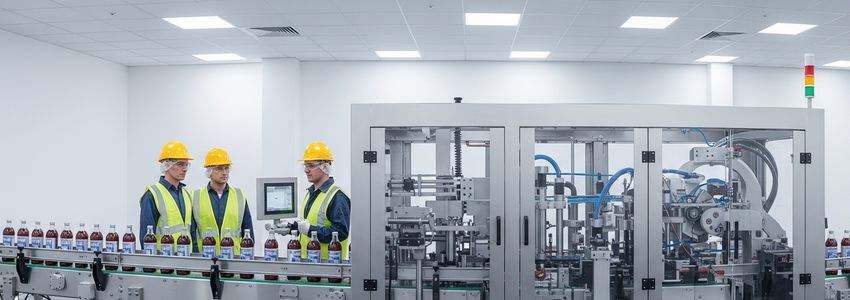
Labeling Equipment Financing and Leasing: The Complete Guide for Business Owners
Labeling equipment financing and leasing gives businesses a practical path to acquiring the high-performance labeling systems they need - without draining working capital or taking on excessive upfront costs. Whether you run a food and beverage operation, a pharmaceutical facility, a manufacturing plant, or a retail distribution center, your labeling equipment is mission-critical. It is also expensive. The right financing strategy can help you get the machinery you need today, preserve cash flow, and keep your production lines running at full capacity.
In This Article
- What Is Labeling Equipment Financing and Leasing?
- Types of Labeling Equipment You Can Finance
- Key Benefits of Financing vs. Buying Outright
- How Labeling Equipment Financing Works
- Financing vs. Leasing: Which Is Right for You?
- Who Qualifies for Labeling Equipment Financing?
- Industries That Use Labeling Equipment Financing
- How Crestmont Capital Can Help
- Real-World Scenarios
- Financing Options Compared
- How to Get Started
- Frequently Asked Questions
What Is Labeling Equipment Financing and Leasing?
Labeling equipment financing is a business funding solution that allows companies to acquire labeling machines, automated label applicators, print-and-apply systems, and related equipment through a loan or lease structure rather than paying the full purchase price upfront. The lender or leasing company pays for the equipment, and your business repays through scheduled monthly payments over a fixed term - typically 24 to 84 months depending on the equipment cost and your credit profile.
Leasing, on the other hand, is a rental arrangement where you use the equipment for a set period and return it at the end, or exercise an option to purchase it. Both financing and leasing serve different operational and financial objectives, and the best choice depends on your specific business goals, cash flow situation, and equipment needs.
Labeling machines range widely in price. Entry-level semi-automatic label applicators may cost a few thousand dollars, while fully automated, high-speed print-and-apply systems for pharmaceutical or food processing operations can run from $50,000 to well over $300,000. Financing makes it feasible for businesses of any size to access top-tier labeling technology without exhausting their cash reserves.
Key Stat: According to industry research, the global labeling equipment market is projected to exceed $6 billion by 2027, driven by demand from food and beverage, pharma, and e-commerce sectors - making smart equipment financing decisions more critical than ever for competitive businesses.
Types of Labeling Equipment You Can Finance
The term "labeling equipment" covers a broad spectrum of machines and systems. Understanding what is available - and what is financeable - helps you make the right investment decision for your operation.
Pressure-Sensitive Label Applicators
These are among the most commonly financed pieces of labeling equipment. They apply pre-printed labels to products, bottles, bags, or containers using a peel-and-stick mechanism. They range from manual tabletop units to fully automated inline systems capable of applying thousands of labels per hour. Many beverage, cosmetic, and food companies rely on these machines daily.
Print-and-Apply Systems
Print-and-apply systems combine a thermal transfer or direct thermal printer with an automated applicator. These systems print unique barcodes, shipping labels, lot numbers, or compliance labels on demand and immediately apply them to products or cartons. They are widely used in warehousing, distribution, and pharmaceutical manufacturing where variable data labeling is required.
Wrap-Around Labelers
Wrap-around labelers apply a single label that wraps 360 degrees around cylindrical containers such as bottles, jars, and cans. These are standard equipment in food and beverage production, personal care products, and industrial chemical packaging. High-speed wrap-around labelers can process hundreds of containers per minute.
Sleeve Labeling Machines
Sleeve labelers apply heat-shrink or stretch-sleeve labels over products or containers. They provide full-body graphics coverage and tamper-evidence sealing, making them popular in bottled water, beverage, and specialty food industries. Full-body sleeve lines are capital-intensive and particularly well-suited for equipment financing.
RFID Labeling Equipment
RFID (Radio Frequency Identification) labeling systems encode, print, and apply RFID smart labels to products and pallets. These systems are required by major retailers and defense contractors for supply chain compliance. The technology is expensive but increasingly mandatory, making financing an attractive option for suppliers who need to comply with RFID mandates.
Labeling Software and Compliance Systems
Many labeling financing programs can include software licenses, integration costs, and compliance management platforms as part of the total financed amount. This allows businesses to bundle the entire labeling ecosystem into a single monthly payment.
By the Numbers
Labeling Equipment Financing - Key Statistics
$6B+
Global labeling equipment market projected value by 2027
80%
Of businesses use financing or leasing for equipment purchases over $25K
2-5 Days
Typical approval-to-funding time with alternative lenders
100%
Of equipment cost can be financed with no down payment (qualified borrowers)
Key Benefits of Financing vs. Buying Outright
Many business owners default to purchasing equipment outright when cash allows, assuming it is the most cost-effective approach. But for labeling equipment - which depreciates, becomes obsolete, and often requires replacement within 5 to 10 years - financing frequently makes more financial sense. Here is why.
Preserve Working Capital
A $150,000 labeling system purchased outright eliminates a significant portion of your liquid cash reserves. That same $150,000 in the bank could fund payroll for months, cover seasonal inventory purchases, or serve as a buffer during slow periods. Financing lets you acquire the equipment while keeping cash in the business where it can generate returns.
Predictable Monthly Expenses
Equipment financing converts a large, unpredictable capital expense into a fixed, manageable monthly payment. This makes budgeting and forecasting significantly easier, especially for businesses with seasonal or variable revenue streams.
Faster Equipment Access
Waiting until you have enough cash to buy equipment outright can mean months or years of lost productivity. Financing allows you to acquire the equipment immediately, capture revenue faster, and let the equipment pay for itself through production.
Technology Flexibility
Labeling technology evolves rapidly. Leasing in particular allows you to upgrade to newer, more efficient equipment at the end of the lease term rather than being stuck with aging machinery that costs more to maintain than it is worth.
Pro Tip: Many businesses use equipment financing alongside a business line of credit - the financing handles the equipment purchase while the line of credit provides flexible access to cash for operations, maintenance, and unexpected expenses.
Potential Interest Deductibility
Interest paid on business equipment loans may be deductible as a business expense, reducing your effective cost of financing. Consult your accountant or CPA for guidance specific to your situation and business structure.
Need Labeling Equipment Now?
Get fast, flexible equipment financing from the #1 business lender in the U.S. Terms from 24 to 84 months - apply in minutes.
Apply Now →How Labeling Equipment Financing Works
Understanding the mechanics of equipment financing removes the mystery and helps you prepare a stronger application. Here is a step-by-step walkthrough of how the process typically unfolds.
Quick Guide
How Labeling Equipment Financing Works - At a Glance
Identify the labeling equipment you need and get a vendor quote. Know the total cost including installation, software, and delivery.
Submit your application with basic business information, bank statements, and equipment details. Many lenders provide same-day decisions.
Your lender presents loan or lease terms including monthly payment, term length, rate, and end-of-term options. Review carefully and ask questions before signing.
The lender pays your equipment vendor directly. Your labeling equipment is delivered, installed, and put into production - often within days of approval.
What Lenders Look For
Equipment financing lenders assess several factors when reviewing your application. Your business credit score, time in business, annual revenue, and cash flow are all considered. Unlike traditional bank loans, many alternative lenders focus heavily on your business revenue and cash flow rather than personal credit alone. This makes equipment financing accessible even for businesses that have been operating for less than two years.
The equipment itself serves as collateral for most equipment loans, which means lenders may be more flexible on credit requirements than they would be for an unsecured business loan. The stronger the equipment's resale value, the more favorable your financing terms are likely to be.
Financing vs. Leasing: Which Is Right for You?
This is the question most business owners ask first - and the answer depends on your specific situation. Both options have distinct advantages, and neither is universally superior.
| Factor | Equipment Loan (Financing) | Equipment Lease |
|---|---|---|
| Ownership | You own the equipment outright after payoff | Lender owns it; you return or buy at end of term |
| Monthly Payments | Typically higher (building toward ownership) | Typically lower (not buying equity) |
| Upgrade Flexibility | Less flexible; you keep the equipment until sold | Easy upgrade at end of term |
| Best For | Long-lasting, stable-value equipment | Rapidly evolving technology |
| Down Payment | Often 0-20% | First and last payment typically required |
| Balance Sheet Impact | Asset and liability appear on balance sheet | May be off-balance-sheet (operating lease) |
| End-of-Term Options | Equipment is yours - keep, sell, or trade | Return, renew, or purchase at residual value |
For most labeling equipment applications, a loan (financing) makes sense when you plan to use the equipment for 7+ years and it has strong long-term residual value. Leasing is often the smarter choice when you operate in an industry where labeling technology evolves rapidly, or when preserving lower monthly payments is a priority.
Industry Insight: Pharmaceutical and food manufacturers tend to favor equipment loans for compliance-critical labeling systems because they need full control over the equipment and modifications. E-commerce fulfillment centers often prefer operating leases to maintain the flexibility to upgrade print-and-apply systems as shipping carrier requirements change.
Who Qualifies for Labeling Equipment Financing?
One of the most common concerns business owners have is whether they will qualify. The good news: labeling equipment financing is more accessible than most traditional bank loans, and lenders have a wide range of credit programs to accommodate different business profiles.
Minimum Requirements (Typical)
- Time in business: 6 months or more (some lenders require 1-2 years)
- Annual revenue: $100,000+ (some programs start at $50,000)
- Credit score: 580+ personal FICO (580-649 may have higher rates; 650+ opens more programs)
- Equipment cost: Typically $5,000 to $5 million+
Startups and New Businesses
Businesses with less than one year of operating history can still qualify for startup equipment financing. Lenders in this space assess the owner's personal credit, industry experience, and business plan more heavily. A down payment of 10-20% may be required, and rates may be higher than for established businesses.
Bad Credit Applicants
If your personal credit score is below 600, you may still qualify through specialty programs. Because labeling equipment serves as collateral, lenders take on less risk than with unsecured loans. Additional documentation, a co-signer, or a larger down payment may help offset a weaker credit profile. If you need more guidance, explore bad credit equipment financing options designed specifically for businesses in this situation.
Industries That Use Labeling Equipment Financing
Virtually every sector that produces, packages, or distributes physical goods needs labeling equipment. Here are the industries that most commonly rely on financing to acquire these critical machines.
Food and Beverage Manufacturing
Food processors, beverage producers, breweries, and wineries all rely heavily on high-speed labeling equipment. FDA labeling requirements for nutritional information, allergens, and ingredient disclosures make accurate labeling systems a compliance necessity, not just a convenience. A craft brewery scaling from local to regional distribution might need to upgrade from manual labeling to an automated wrap-around labeler - equipment that can easily cost $80,000 to $200,000.
Pharmaceutical and Life Sciences
Pharmaceutical manufacturers face some of the most rigorous labeling compliance requirements in any industry. Track-and-trace serialization, DSCSA compliance, and FDA 21 CFR Part 11 requirements demand specialized labeling systems. These systems are expensive - often $200,000 to $500,000+ for a complete serialization line - making financing almost universally necessary. Many pharma companies also lease to maintain flexibility as regulatory requirements evolve.
E-Commerce and Fulfillment Centers
The explosion of e-commerce has driven massive demand for high-throughput print-and-apply labeling systems in fulfillment centers. Amazon FBA sellers, third-party logistics providers, and direct-to-consumer brands need fast, accurate, and reliable label printing and application to meet carrier and retailer requirements. Financing allows fulfillment operations to scale their labeling capacity alongside order volume without large capital outlays.
Retail and Consumer Goods
Consumer packaged goods companies, cosmetics brands, and specialty retailers use labeling equipment for primary product labels, promotional stickers, and anti-counterfeiting labels. The ongoing demand for limited-edition packaging and frequent SKU refreshes means these businesses benefit from leasing arrangements that allow regular equipment upgrades.
Chemical and Industrial Manufacturers
Industrial chemical producers, lubricant companies, and hazardous materials handlers must comply with GHS labeling standards. High-resolution color label printers and durable label applicators are essential for compliance. These specialized systems are ideal candidates for equipment financing given their cost and industry-specific nature.
How Crestmont Capital Can Help
Crestmont Capital is a U.S.-based business lender specializing in equipment financing, commercial lending, and working capital solutions for small and mid-sized businesses across every industry. As the #1 rated business lender in the country, Crestmont provides fast approvals, flexible terms, and a relationship-based approach that puts your business's actual needs first.
When it comes to labeling equipment financing, Crestmont offers:
- Financing from $5,000 to $5 million+ for labeling equipment of all types
- Terms from 24 to 84 months to match your cash flow and equipment lifecycle
- Both loans and leases - you choose the structure that fits your goals
- Same-day credit decisions for qualified applicants
- Funding in as few as 2-5 business days after approval
- Programs for startups and businesses with less-than-perfect credit
- No prepayment penalties on most programs
Beyond labeling equipment specifically, Crestmont provides comprehensive capital equipment financing for the full range of production and manufacturing equipment. If your business needs working capital to complement equipment financing, Crestmont also offers unsecured working capital loans and business lines of credit to cover operational needs alongside your equipment investment.
Ready to Finance Your Labeling Equipment?
Crestmont Capital offers fast, flexible equipment financing built for businesses like yours. Apply in minutes and get funded fast.
Apply Now →Real-World Scenarios: How Businesses Use Labeling Equipment Financing
The most effective way to understand the value of equipment financing is to see it in action across real business situations. Here are six scenarios that reflect the types of businesses Crestmont Capital works with every day.
Scenario 1: Regional Beverage Brand Scaling Production
A regional craft soda company in Texas had been applying labels manually - a slow, expensive, and inconsistent process that was limiting their ability to grow. When a large regional grocery chain offered them a distribution deal that required 50,000 units per month, they needed an automated labeling line immediately. Manual production could not meet the volume. They financed a $120,000 automated pressure-sensitive labeling system over 60 months. The monthly payment fit comfortably within their margins, and the grocery contract's revenue more than covered the financing cost. Within 18 months, they had recouped the cost of the machine in new revenue.
Scenario 2: Pharmaceutical Contract Manufacturer Achieving Compliance
A contract pharmaceutical manufacturer in New Jersey needed to upgrade to a fully compliant serialization and track-and-trace labeling system to retain a major pharma client. The system cost $380,000. A bank loan would have taken months and required extensive collateral beyond the equipment. Crestmont provided equipment financing within five business days, the client retained the contract, and the business avoided losing its largest revenue source.
Scenario 3: E-Commerce Fulfillment Center Handling Holiday Volume
An Ohio-based third-party logistics company saw their order volume triple during Q4 each year, consistently causing labeling backlogs. They leased three additional print-and-apply systems for $85,000 total on a 36-month operating lease. Because they operated on a lease rather than a purchase, they could upgrade all three units at the end of the term to handle even greater future volume.
Scenario 4: Small Food Manufacturer Entering Retail
A family-owned hot sauce company in Louisiana had been selling direct-to-consumer online for three years. When their products were accepted into a national specialty food retail chain, they needed proper label applicators to meet retailer specifications. They financed a semi-automatic tabletop labeler for $18,000 over 36 months. The payment was under $600/month and the retail revenue generated was many times that amount.
Scenario 5: Chemical Distributor Achieving GHS Compliance
A chemical distributor in Georgia faced an OSHA GHS compliance deadline that required them to update their entire labeling infrastructure. Their existing equipment could not produce the required label format, size, or durability. They financed a complete GHS-compliant label printing and application system for $65,000 over 48 months, avoiding potential fines that could have far exceeded the cost of the equipment.
Scenario 6: Startup Cosmetics Brand Building a Label Line
A startup cosmetics brand with 14 months of operating history needed labeling equipment to bring production in-house and reduce their reliance on a contract manufacturer. Despite being a relatively new business, they qualified for a startup equipment loan through Crestmont with a modest down payment. The in-house labeling capability cut their per-unit production cost by 30%, improving margins dramatically.

How to Get Started
Complete our quick application at offers.crestmontcapital.com/apply-now - takes just a few minutes. Have your business information and equipment quote ready.
A Crestmont Capital equipment financing advisor will review your application, discuss your options, and match you with the loan or lease structure that best fits your goals. You can also contact us directly for personalized guidance.
Once approved, funds are released to your equipment vendor and your labeling system is ordered, delivered, and installed. Most businesses are up and running within one to two weeks of approval.
Frequently Asked Questions
Disclaimer: The information provided in this article is for general educational purposes only and is not financial, legal, or tax advice. Funding terms, qualifications, and product availability may vary and are subject to change without notice. Crestmont Capital does not guarantee approval, rates, or specific outcomes. For personalized information about your business funding options, contact our team directly.








