
 (800) 949-0401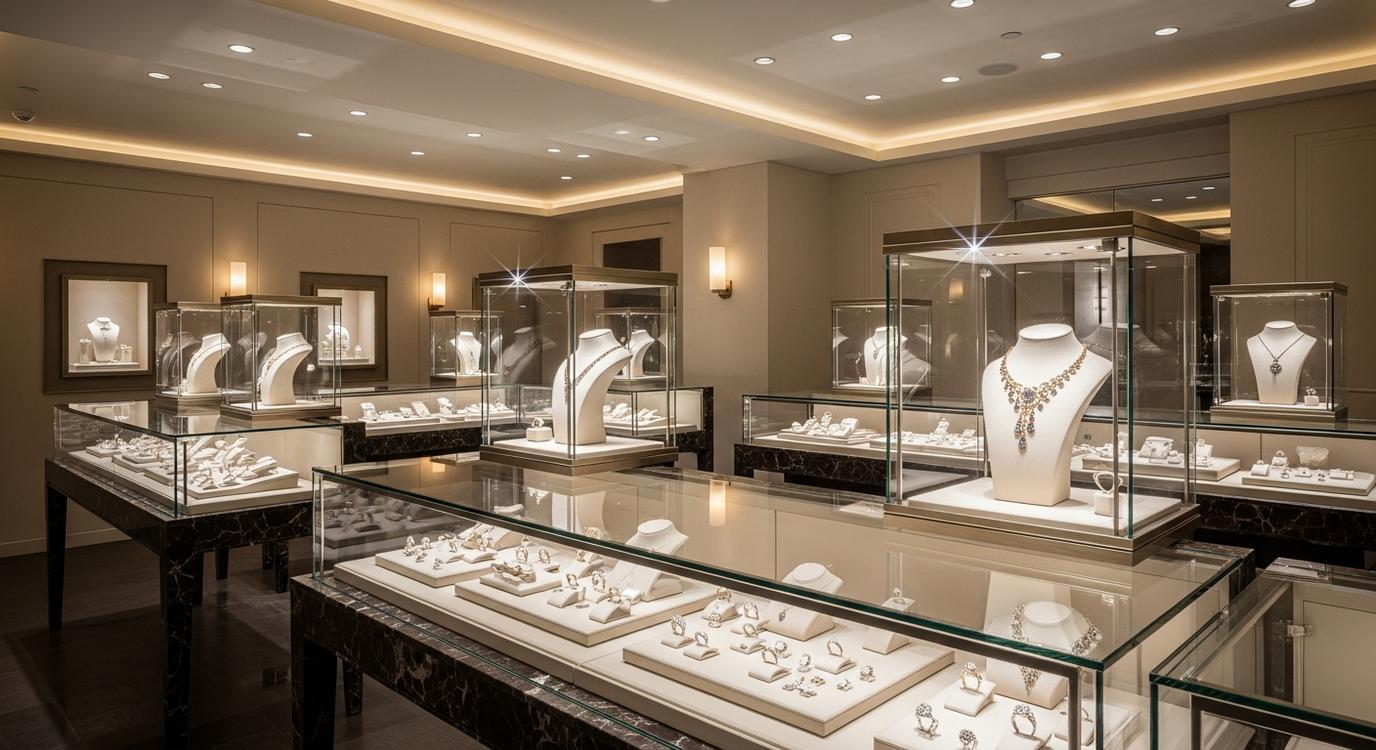
Jewelry Store Business Loans: The Complete Financing Guide for Jewelers
Running a jewelry store is one of the most capital-intensive retail businesses you can own. From stocking high-value inventory to renovating your showroom and managing seasonal cash flow swings, the financial demands are real and constant. Jewelry store business loans give you the capital you need to grow, stock up, and compete without draining your personal savings. This complete guide breaks down every financing option available to jewelers in 2026, from SBA loans to working capital lines of credit.
What Are Jewelry Store Loans?
Jewelry store loans are business financing products specifically suited to the needs of jewelers, gem dealers, and fine jewelry retailers. While these are not always a niche product sold only to jewelers, lenders who understand the industry know that jewelry businesses carry unique financial characteristics: high-value inventory with strong collateral potential, seasonal spikes around holidays and engagement season, and a customer base that often purchases on layaway or financing plans themselves.
Whether you are financing a new showcase display, purchasing a batch of diamond engagement rings ahead of Valentine's Day, or funding a store expansion, small business financing can be structured to match your business cycle. The term "jewelry store loan" broadly covers any business loan, line of credit, or alternative financing product used by a jewelry retailer.
According to the U.S. Census Bureau, specialty retail jewelry stores generate tens of billions in annual sales, making jewelry one of the most resilient high-margin retail segments in the country. That underlying strength is what makes jewelers a favorable borrower profile for many lenders.
For jewelers, access to business credit is not just about covering a slow month. It is a strategic tool. Buying in bulk when wholesale prices are favorable, expanding into a second location, or upgrading to better security and display infrastructure can all require capital that your daily cash flow cannot readily provide.
Key Benefits of Financing for Jewelers
Most jewelry store owners understand intuitively that the right financing can transform their business. But the specific advantages are worth spelling out in detail:
1. Inventory Stocking at Scale
Jewelry inventory is expensive. A modest ring collection can represent $50,000 or more in wholesale cost. With financing, you can afford to stock the right inventory ahead of peak seasons rather than scrambling to reorder at higher prices. Check out our comprehensive inventory financing guide for a deeper look at this strategy.
2. Cash Flow Stability
Jewelry retail is highly seasonal. The weeks leading up to Christmas, Valentine's Day, and Mother's Day can represent a disproportionate share of annual sales. A business line of credit gives you a revolving cushion to handle the slow months without reducing staff or cutting corners on inventory.
3. Store Renovations and Upgrades
In fine jewelry retail, the environment is everything. Upscale lighting, polished display cases, secure vaults, and elegant decor are not luxuries: they are part of the product presentation. Capital investment in your showroom pays off in customer trust and higher average transaction values.
4. Marketing and Advertising Investment
Digital advertising, bridal show sponsorships, and local TV spots can dramatically accelerate store traffic. Financing lets you run campaigns at scale rather than only when you happen to have surplus cash.
5. Equipment and Security
High-grade safes, gemological equipment (including GIA-certified appraisal tools), and surveillance systems represent significant capital outlays. Equipment financing can spread those costs over time while keeping you current on security standards.
6. Business Acquisitions and Expansions
Many independent jewelers grow by acquiring competitor stores or opening additional locations. Commercial financing enables these strategic moves without forcing you to liquidate assets or seek outside investors.
Ready to Explore Financing for Your Jewelry Store?
Crestmont Capital works with jewelry retailers across the country to structure fast, flexible business funding. Get a no-obligation quote today.
Apply Now - It Takes 5 MinutesHow Jewelry Store Financing Works
Understanding how jewelry store financing works helps you approach the process with confidence and realistic expectations. Here is a step-by-step overview of what the process typically looks like:
Step 1: Identify Your Funding Need
Before you apply for any loan, get clear on what you need the capital for and how much you need. Are you stocking up for a holiday rush? Renovating your showroom? Covering payroll during a slow quarter? Each use case may point to a different loan product.
Step 2: Assess Your Qualifications
Most lenders look at three core factors: your personal credit score, your business's time in operation, and your annual revenue. Jewelers with solid books and a few years of history generally qualify for a wide range of products. Even businesses with lower credit scores have options through alternative lenders.
Step 3: Gather Documentation
Typical documentation includes: bank statements (3-6 months), business tax returns, a business license, proof of ownership, and sometimes inventory records. The more organized your financials, the faster you will get an approval.
Step 4: Compare Lenders and Products
From traditional banks to online lenders like Crestmont Capital, the market offers a wide range of products. As reported by Forbes Advisor, small business owners today have more loan options than ever, but comparison shopping is essential to avoid unfavorable terms.
Step 5: Apply and Review Offers
Most alternative lenders offer same-day or next-day approvals. Review your offer carefully, including the factor rate or APR, repayment schedule, prepayment penalties, and any fees. Do not just look at the monthly payment: understand the total cost of capital.
Step 6: Receive Funds and Execute
Once approved, funds can arrive in as little as 24-72 hours with alternative lenders. From there, deploy the capital according to your plan and track the return on that investment over the coming months.
Types of Financing Available for Jewelry Stores
Jewelry store owners have access to a wide range of business financing products. The table below compares the most common options:
| Loan Type | Best For | Typical Amount | Speed | Key Requirement |
|---|---|---|---|---|
| SBA 7(a) Loan | Long-term growth, acquisition | Up to $5M | 30-90 days | Good credit, 2+ years |
| Traditional Term Loan | Expansion, renovation | $50K-$500K | 1-2 weeks | Strong financials |
| Business Line of Credit | Cash flow, seasonal needs | $10K-$250K | 1-5 days | 600+ credit score |
| Working Capital Loan | Day-to-day operations | $10K-$300K | 24-72 hours | 3+ months revenue |
| Equipment Financing | Safes, display cases, tools | Up to 100% of equipment cost | 2-5 days | Equipment as collateral |
| Merchant Cash Advance | Urgent short-term needs | $5K-$250K | 24-48 hours | Consistent card sales |
| Inventory Financing | Pre-season stocking | 50-80% of inventory value | 1-2 weeks | Verifiable inventory |
For a broader overview of financing options tailored to retail, see our retail business loans complete financing guide.
SBA Loans for Jewelry Stores
The Small Business Administration's flagship SBA loan programs offer some of the most favorable terms available to small business owners. The SBA 7(a) program, for instance, can provide up to $5 million with interest rates tied to the prime rate. For a jewelry store owner looking to buy a building, acquire a competitor, or fund a major renovation, SBA financing is often the most affordable long-term option.
The trade-off is time and paperwork. SBA loans typically take 30-90 days to close, require extensive documentation, and demand strong credit. But for the right borrower, the savings in interest over the life of the loan can be substantial. The SBA's official loan programs page outlines eligibility requirements in detail.
Traditional Term Loans
Traditional term loans offer a lump sum of capital repaid over a set period, typically with fixed monthly payments. They work well for jewelry store owners who have a specific, defined need (like a $150,000 renovation) and want predictable repayment terms.
Business Line of Credit
A revolving line of credit is arguably the most versatile tool a jeweler can have. You draw what you need, when you need it, and only pay interest on what you use. This is ideal for managing seasonal inventory purchases, covering payroll gaps, or handling unexpected expenses like a broken showcase or security system upgrade.
Unsecured Working Capital Loans
Unsecured working capital loans require no collateral, making them accessible even for jewelers who prefer not to pledge inventory or personal assets. Approval is based primarily on cash flow and business performance, and funding can arrive within 24-72 hours.

Who Qualifies for Jewelry Store Financing?
Lender requirements vary significantly depending on the product and the lender. Here is what most lenders evaluate when considering a jewelry store loan application:
Time in Business
Most lenders want to see at least 6 months of operating history, with 1-2 years preferred. Established stores with multi-year track records qualify for the widest range of products at the best rates.
Annual Revenue
Most alternative lenders require minimum annual revenue of $100,000-$150,000. SBA lenders and traditional banks often prefer $250,000 or more. Jewelry stores generating $500K+ annually typically have access to the best rates and terms.
Credit Score
Personal credit scores matter significantly, especially for smaller operations where the business and owner finances are closely intertwined. Most alternative lenders work with scores as low as 550-580, while SBA and bank products typically require 650-700+.
Cash Flow
Lenders want to see that your store generates enough consistent revenue to service the debt. Bank statements are the primary tool for this analysis. Steady, recurring deposits are more favorable than inconsistent spikes.
Industry Risk Profile
Jewelry is generally considered a relatively stable retail category with strong collateral (inventory). This generally works in jewelers' favor, though lenders may look more carefully at high-end stores with very concentrated top-customer revenue.
How Crestmont Capital Helps Jewelry Retailers
Crestmont Capital is one of the most trusted names in small business lending, rated #1 in the country for small business financing. We work with jewelry store owners at every stage of business: from a startup jeweler who just signed their first lease, to an established multi-location operation looking to expand their diamond inventory ahead of the holiday season.
Here is what sets Crestmont Capital apart for jewelry retailers:
- Fast Approvals: Many of our jewelry store clients receive a decision within hours, not weeks. We know your business cannot wait months for capital.
- Flexible Products: We offer term loans, lines of credit, equipment financing, working capital loans, and SBA products, all under one roof.
- Industry Knowledge: Our advisors understand the jewelry business, including seasonal cash flow patterns, inventory dynamics, and the capital needs unique to fine jewelry retail.
- No-Obligation Quotes: You can explore your options without any commitment. We provide transparent offers with full cost disclosure before you decide.
- High Approval Rates: Our lending network includes dozens of capital partners, which means we can often find a fit even for borrowers who have been turned down elsewhere.
Whether you need $25,000 to restock ahead of Valentine's Day or $500,000 to open your second location, our small business financing programs are built around your actual needs.
Get Your Personalized Jewelry Store Loan Quote
Tell us about your store and we will match you with the best financing option. No impact to your credit score for pre-qualification.
See My OptionsReal-World Financing Scenarios for Jewelry Store Owners
Abstract financing concepts become clearer when you see how they play out in real business situations. Here are four realistic scenarios that illustrate how jewelry store loans work in practice:
Scenario 1: Seasonal Inventory Surge (Line of Credit)
Maria owns a fine jewelry boutique in Phoenix, Arizona. Each year, the six weeks before Christmas account for nearly 40% of her annual revenue. But to hit those numbers, she needs to triple her ring inventory by early November. Her typical cash position in October is not enough to buy that inventory outright.
Maria uses a $120,000 revolving business line of credit to purchase inventory in October, repays the draws as Christmas sales come in, and ends the season with the line back to zero. She pays interest only on what she draws, and the line is ready to use again the following year. The cost of the credit line is more than offset by the additional margin she earns from the holiday surge.
Scenario 2: Showroom Renovation (Term Loan)
David's jewelry store in Atlanta has been in business for 12 years, but the showroom looks dated. He knows from customer feedback that the layout and lighting are costing him sales. A full renovation will cost $200,000. He does not want to drain his operating reserves, and the renovation will take six weeks to complete.
David secures a 48-month term loan for $200,000 at a competitive rate. The fixed monthly payment fits comfortably within his budget, and within three months of reopening, his average transaction value has increased by 18%. The loan pays for itself through improved sales performance.
Scenario 3: Second Location Expansion (SBA 7(a) Loan)
Susan has operated her bridal jewelry store in Denver for nine years and has built a strong reputation. A second location in a nearby suburb recently became available at an attractive lease rate. Seizing the opportunity requires $350,000 for leasehold improvements, initial inventory, and operating reserves.
As reported by CNBC's small business coverage, SBA loans remain one of the most cost-effective ways for established small businesses to fund major expansions. Susan qualifies for an SBA 7(a) loan with a 10-year term at a rate well below what she would pay for a short-term alternative. The lower monthly payment gives her the runway to build the new location's revenue without straining her original store.
Scenario 4: Emergency Cash Flow Bridge (Working Capital Loan)
James operates a jewelry repair and retail shop in Chicago. A burst pipe damaged part of his showroom in January, his slowest month. Insurance will eventually cover the repair costs, but not for six to eight weeks. Meanwhile, he needs to cover payroll, rent, and supplier invoices.
James applies for a $40,000 unsecured working capital loan and receives approval the same day, with funds in his account the next morning. He bridges the gap, keeps his staff paid, and repays the loan when the insurance settlement arrives. Without fast-access financing, he would have faced layoffs or defaulted on vendor payments.
Frequently Asked Questions About Jewelry Store Loans
What types of loans are best for jewelry stores?
The best loan type depends on your specific need. A business line of credit works well for seasonal inventory and cash flow management. Term loans are ideal for renovations or equipment purchases. SBA loans are best for large-scale expansions or acquisitions. Working capital loans are fastest for urgent operational needs.
How much can a jewelry store borrow?
Loan amounts vary widely based on your revenue, credit history, and the lender. Alternative lenders typically offer $10,000 to $500,000. SBA loans can go up to $5 million. The amount you qualify for is usually based on a multiple of your monthly revenue, typically 1-1.5x your monthly gross revenue for short-term products.
What credit score do I need to get a jewelry store loan?
Requirements vary by lender and product. Many alternative lenders work with personal credit scores as low as 550-580. For SBA loans and traditional bank products, you will typically need 650 or higher. A higher credit score unlocks better rates and terms across all product types.
Can I get a jewelry store loan with bad credit?
Yes, it is possible to secure financing with imperfect credit. Alternative lenders place more weight on your cash flow and business performance than your credit score alone. Providing strong bank statements and demonstrating consistent revenue can often overcome a lower credit score. Secured options, where inventory or equipment serves as collateral, also expand your access.
How quickly can I get funding for my jewelry store?
With alternative lenders like Crestmont Capital, approvals can come within hours and funds can arrive within 24-72 hours of approval. SBA loans take considerably longer, typically 30-90 days. Traditional bank loans usually take 1-3 weeks. If you have an urgent need, an alternative lender or working capital product is your fastest path to capital.
Can jewelry store inventory be used as collateral?
Yes. High-value jewelry inventory is often recognized as collateral by lenders, particularly for inventory financing products. The lender will typically lend 50-80% of the verified wholesale value of your inventory. This can significantly increase the amount you qualify for compared to unsecured options.
What documents do I need to apply for a jewelry store loan?
Most lenders will request 3-6 months of business bank statements, a copy of your business license, personal and business tax returns (typically 1-2 years), a government-issued ID, and sometimes profit and loss statements. Alternative lenders often require far less documentation than traditional banks.
Are there SBA loan programs specifically for jewelry retailers?
There are no SBA programs exclusively for jewelry stores, but jewelry retailers are eligible for the standard SBA 7(a), 504, and microloan programs. The SBA 7(a) is the most versatile for general business purposes. The 504 is ideal for real estate or major equipment. Microloans serve newer or smaller jewelry businesses with needs under $50,000.
How do I use a business line of credit for my jewelry store?
A business line of credit works like a credit card with a higher limit and lower rates. You draw funds when needed, repay them, and the credit becomes available again. Jewelers typically use lines of credit to pre-buy inventory before peak seasons, cover payroll during slow months, or handle unexpected expenses. You only pay interest on the outstanding balance.
What interest rates should I expect on a jewelry store loan?
Interest rates vary considerably by product and borrower profile. SBA loans typically carry rates of 7-11% (prime + margin). Traditional term loans from banks run 6-15%. Alternative lenders may charge higher effective rates (15-40%+ APR) in exchange for speed and flexibility. Always compare APR across options, not just the stated monthly fee or factor rate.
Can I use a business loan to buy jewelry inventory?
Absolutely. Inventory purchasing is one of the most common uses for jewelry store business loans. Whether you are restocking after a busy season, buying a wholesale lot at a favorable price, or pre-loading ahead of the holidays, a term loan, line of credit, or inventory financing product can all serve this purpose effectively.
How does inventory financing differ from a standard business loan for jewelers?
Inventory financing is secured specifically by the inventory you are purchasing. The inventory itself acts as the collateral, which often allows you to borrow a higher percentage of the purchase cost with fewer other assets pledged. A standard unsecured business loan is not tied to specific assets and relies more on creditworthiness and cash flow for qualification.
What happens if my jewelry store has seasonal revenue dips?
Seasonal dips are normal in jewelry retail and most experienced lenders account for them. Some lenders offer seasonal payment structures or flexible repayment tied to revenue. A line of credit is particularly well-suited for seasonal businesses because you can draw during slow months and repay during peak periods without a fixed monthly payment obligation when sales are low.
Is equipment financing available for jewelry store display cases and safes?
Yes. Equipment financing covers a wide range of jewelry store assets including display cases, safes and vaults, gemological tools, engraving machines, and point-of-sale systems. The equipment itself typically serves as collateral, which makes approval easier and rates more favorable than unsecured alternatives. Terms usually range from 24 to 72 months.
How do I choose the right lender for my jewelry store?
Look for a lender who understands your industry, offers multiple product types, provides transparent pricing, and has a track record of serving small retail businesses. Ask about approval timelines, prepayment policies, and what happens if your revenue fluctuates. Crestmont Capital specializes in working with independent retailers like jewelry stores and can walk you through all available options without obligation.
Next Steps: How to Get Your Jewelry Store Loan
Before you apply, write down exactly what you need the capital for, how much you need, and how quickly you need it. This clarity will help you select the right product and communicate confidently with lenders.
Gather 3-6 months of business bank statements, your most recent tax returns, your business license, and a voided business check. Having these ready dramatically speeds up the application process.
Know your personal credit score before you apply. If it needs work, even a few weeks of proactive management (paying down balances, correcting errors) can make a meaningful difference in your rate and approval odds.
Submit your application online in minutes. Our advisors review your profile, match you with the best available product, and present a transparent offer. No hidden fees, no surprises.
Once approved, review all terms carefully. Understand your repayment schedule, total cost of capital, and any early payoff options. Ask questions before you sign.
Once funds arrive, execute your plan. Whether you are buying inventory, renovating, or expanding, track the results so you can make data-driven decisions about future financing.
Take the First Step Today
Jewelry store owners across the country trust Crestmont Capital for fast, flexible business financing. Apply in minutes and get a decision today.
Start My ApplicationConclusion
Jewelry store business loans are not just for emergencies. The most successful jewelry retailers use financing proactively as a growth strategy: buying inventory at the right time, investing in the store environment that converts browsers into buyers, expanding into new markets, and weathering the inevitable seasonal slowdowns without sacrificing quality or staff.
As The Wall Street Journal and other leading financial outlets have noted, access to capital remains one of the most critical differentiators between small businesses that scale and those that plateau. For jewelry store owners, the good news is that your inventory-rich, high-margin business model is genuinely attractive to lenders.
Whether you are exploring financing for the first time or looking to upgrade your current lending relationship, Crestmont Capital offers the expertise, product range, and speed that jewelry retailers need. Apply today and see what you qualify for without any commitment or impact to your credit score.
For more on financing strategies tailored to retail businesses, visit our business line of credit page or explore all small business financing options we offer.
Disclaimer: The information provided in this article is for general educational purposes only and is not financial, legal, or tax advice. Funding terms, qualifications, and product availability may vary and are subject to change without notice. Crestmont Capital does not guarantee approval, rates, or specific outcomes. For personalized information about your business funding options, contact our team directly.








