For any business owner, acquiring the right equipment is not just an operational necessity-it is a critical step towards growth, efficiency, and competitive advantage. Whether you run a construction company needing a new excavator or a restaurant upgrading its kitchen, the high cost of essential machinery can be a significant barrier. This is where equipment financing for small business emerges as a powerful strategic tool, allowing you to obtain the assets you need now without depleting your vital cash reserves.
In This Article
- What Is Equipment Financing?
- Key Benefits of Equipment Financing
- How Equipment Financing Works
- Types of Equipment Financing
- Is Equipment Financing Right for Your Business?
- Equipment You Can Finance
- Equipment Financing vs. Other Funding Options
- How to Qualify for Equipment Financing
- How Crestmont Capital Helps
- Real-World Scenarios
- How to Get Started
- Frequently Asked Questions
What Is Equipment Financing?
Equipment financing is a specific type of business funding designed solely for the purpose of acquiring new or used business equipment. It functions as a loan or lease where the equipment being purchased serves as its own collateral. This self-collateralizing nature is a key feature that distinguishes it from many other types of business loans, which often require you to pledge other business or personal assets, such as real estate or inventory, to secure the funding.
In a typical equipment financing agreement, a lender provides you with up to 100% of the funds needed to buy the machinery, vehicle, or technology. In return, you make regular payments-usually monthly-over a predetermined term. These payments consist of both principal and interest. Once the loan term is complete and all payments have been made, you own the equipment outright. This structure allows businesses to immediately put new assets to work, generating revenue that can help cover the cost of the financing itself.
This funding method is exceptionally versatile and is used by businesses across nearly every industry, from manufacturing and healthcare to transportation and hospitality. The core principle remains the same: it provides a direct path to acquiring essential tools for growth without a crippling upfront capital outlay. By spreading the cost over the useful life of the asset, equipment financing aligns your expenses with the revenue the equipment helps generate, creating a more sustainable financial model for scaling your operations. It is a targeted solution for a specific business need, making it one of the most efficient and popular forms of capital for asset acquisition.
Key Benefits of Equipment Financing
Opting for equipment financing offers numerous strategic advantages that can significantly impact a company's financial health and operational capabilities. For small and growing businesses, these benefits are particularly crucial for maintaining a competitive edge. Here are the primary reasons why business owners choose this funding route:
- Preservation of Working Capital: This is arguably the most significant benefit. Instead of tying up a large sum of cash in a single purchase, financing allows you to keep your capital liquid. This cash can then be used for other critical business needs, such as marketing, hiring new employees, managing inventory, or covering unexpected expenses. Maintaining a healthy cash flow is vital for day-to-day operations and long-term stability.
- 100% Financing Available: Many equipment financing agreements can cover the total cost of the asset, including taxes, shipping, and installation fees. This means you may be able to acquire necessary equipment with little to no down payment, removing a major financial hurdle for many businesses.
- The Equipment is the Collateral: Unlike traditional bank loans that may require a lien on your business property or personal assets, equipment loans are self-secured. The equipment you are financing is the only collateral needed. This reduces the risk to your other assets and can make the approval process simpler and faster.
- Predictable, Fixed Payments: Equipment loans typically come with fixed interest rates and a set repayment schedule. This results in consistent monthly payments that do not fluctuate, making it easy to budget and forecast your expenses accurately. This predictability is invaluable for financial planning.
- Potential Tax Advantages: The IRS Section 179 deduction allows businesses to deduct the full purchase price of qualifying new or used equipment in the year it is placed into service. This can lead to substantial tax savings. Additionally, the interest paid on an equipment loan is typically tax-deductible as a business expense. (Always consult with a tax professional to understand the specific benefits for your business).
- Builds Business Credit: Making timely payments on an equipment loan helps build a positive credit history for your business. A strong business credit profile can make it easier and more affordable to secure other types of financing in the future.
- Fast Funding and Approval: Compared to traditional bank loans or SBA loans, the application and approval process for equipment financing is often much faster. Lenders specializing in this area, like Crestmont Capital, can often provide a decision within hours and funding in as little as 24-48 hours. This speed is critical when you need to replace a broken piece of machinery or seize a new business opportunity quickly.
- Keeps You Competitive: Access to the latest technology and machinery can be a game-changer. Financing allows you to acquire state-of-the-art equipment that can improve efficiency, increase output, and enhance the quality of your products or services, helping you stay ahead of the competition without breaking the bank.
Find Out If Equipment Financing Is Right for You
Get a fast, no-obligation quote from the #1 business lender in the U.S. Apply in minutes.
Apply Now →How Equipment Financing Works
The process of securing equipment financing is designed to be straightforward and efficient, focusing on the asset being acquired. While specific steps can vary slightly between lenders, the general workflow follows a clear and logical path from application to ownership. Understanding this process can demystify the experience and help you prepare for a smooth transaction.
Step 1: Identify the Equipment and Get a Quote
The first step is to determine the exact piece of equipment your business needs. This includes specifying the make, model, and condition (new or used). Once you have identified the equipment, you will obtain a formal quote or invoice from the vendor or seller. This document is crucial as it details the total cost of the asset, including any taxes, delivery charges, and installation fees. This invoice will be a core part of your financing application.
Step 2: Apply for Financing
With the equipment quote in hand, you can apply for financing. Most modern lenders, including Crestmont Capital, offer a simple online application that can be completed in minutes. You will need to provide basic information about your business, such as your company name, time in business, and annual revenue. You will also submit personal information as the business owner and upload the equipment invoice. For larger loan amounts, you may be asked for additional documentation like bank statements or financial statements.
Step 3: Underwriting and Approval
Once your application is submitted, it goes into underwriting. The lender will review your business's financial health, your personal credit score, and the value of the equipment you wish to purchase. Because the equipment itself serves as collateral, the underwriting process for equipment financing is often less stringent and much faster than for unsecured loans. Lenders are primarily concerned with your ability to make the monthly payments and the resale value of the asset. A decision can often be reached within a few hours.
Step 4: Review and Sign the Agreement
If your application is approved, the lender will present you with a financing agreement. This document will outline all the critical terms of the loan: the total amount financed, the interest rate, the repayment term (e.g., 36, 48, or 60 months), and the fixed monthly payment amount. It is vital to review this document carefully to ensure you understand all terms and conditions before signing. A dedicated funding specialist can walk you through the details and answer any questions.
Step 5: Funding the Purchase
After you have signed the agreement, the lender will coordinate the funding. In most cases, the lender pays the equipment vendor directly on your behalf. This simplifies the process for you, as you do not have to handle the large cash transaction yourself. Once the vendor confirms receipt of payment, they will release the equipment for delivery and installation at your business location.
Step 6: Make Payments and Own the Equipment
With the new equipment installed and operational, you will begin making your regular monthly payments to the lender as outlined in your agreement. You will continue to make these payments for the duration of the loan term. Once the final payment is made, the lender releases their lien on the equipment, and you become the full, unencumbered owner of the asset.
Types of Equipment Financing
When seeking to acquire equipment, businesses have several financing structures to choose from. The best option depends on your long-term goals, financial situation, and whether you prioritize ownership or simply access to the equipment. The primary categories are equipment loans, equipment leasing, and using a business line of credit.
1. Equipment Loans
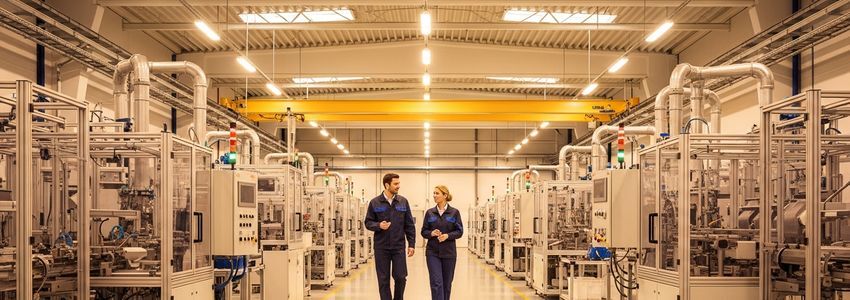
An equipment loan is the most direct form of equipment financing for small business. It is a term loan where a lender provides the capital to purchase a piece of equipment, and you repay that amount plus interest over a set period. The equipment itself serves as collateral for the loan.
- Ownership: You own the equipment from day one. Once the loan is fully paid off, you own it free and clear.
- Best For: Businesses that intend to use the equipment for its entire useful life and want to build equity in their assets. This is ideal for long-lasting, durable machinery like CNC machines, heavy construction vehicles, or core medical diagnostic tools.
- Financial Impact: The equipment is listed as an asset on your balance sheet, and the loan is a liability. You can also benefit from depreciation and potential Section 179 tax deductions.
2. Equipment Leasing
Equipment leasing is similar to renting an apartment or a car. You pay a monthly fee to use the equipment for a specified period. At the end of the lease term, you typically have several options: return the equipment, renew the lease, or purchase the equipment at a predetermined price. There are two main types of leases:
Capital Leases (or Finance Leases)
A capital lease functions more like a loan. The terms are structured in a way that you are essentially financing the purchase of the asset over the lease period. It is treated as a purchase for accounting purposes, meaning the asset and liability appear on your balance sheet. At the end of the term, you will typically have a buyout option for a nominal amount (often just $1), and ownership transfers to you.
- Best For: Businesses that want the benefits of ownership and tax deductions associated with a purchase but prefer the payment structure of a lease.
Operating Leases
An operating lease is a true rental agreement. The lease payments are treated as an operational expense, and the equipment does not appear on your balance sheet. This can be advantageous for companies concerned about their debt-to-asset ratios. At the end of the term, you simply return the equipment. This is a common choice for technology and equipment that quickly becomes obsolete, like computers, servers, or certain types of medical devices.
- Best For: Businesses that need access to the latest technology without the commitment of ownership, or those that need equipment for a specific, short-term project. It offers lower monthly payments and flexibility.
3. Business Line of Credit
A business line of credit is a flexible form of financing that gives you access to a set amount of capital that you can draw from as needed. While not exclusively for equipment, it can be an excellent tool for purchasing smaller pieces of equipment or for businesses that have ongoing equipment needs.
- How it Works for Equipment: You can draw from your line of credit to pay the equipment vendor. You only pay interest on the amount you have drawn, not the total credit limit. As you repay the drawn amount, your available credit is replenished, making it a reusable resource.
- Best For: Purchasing less expensive equipment, covering repair costs for existing machinery, or for businesses that need the flexibility to make multiple equipment purchases over time without having to apply for a new loan each time.
- Flexibility: This option offers the most flexibility but may come with variable interest rates and might not be suitable for very large, single-asset purchases where a dedicated term loan would offer a better rate and structure.
Key Fact: According to the Equipment Leasing and Finance Association (ELFA), nearly 8 out of 10 U.S. companies use some form of financing when acquiring equipment, demonstrating its critical role in business investment and growth.
By the Numbers
Equipment Financing in America - Key Statistics
$1.8 Trillion
The approximate annual investment in equipment and software by U.S. businesses, with a significant portion being financed.
79%
Percentage of U.S. companies that use financing, such as loans or leases, to acquire business equipment. (Source: ELFA)
24-48 Hours
Typical time to funding for equipment financing from alternative lenders, compared to weeks or months for traditional banks.
5.4 Million
Number of new business applications filed in 2021 alone, highlighting a massive and ongoing need for startup capital and equipment. (Source: U.S. Census Bureau)
Is Equipment Financing Right for Your Business?
Equipment financing is a versatile tool, but it is most beneficial for certain types of businesses and specific situations. Determining if it is the right fit for you involves evaluating your business's needs, financial standing, and long-term objectives. Here is a breakdown of who qualifies and who stands to benefit the most.
Businesses That Benefit Most:
- Asset-Heavy Industries: Companies in sectors like construction, manufacturing, transportation, agriculture, and healthcare rely heavily on expensive machinery. For these businesses, equipment financing is not just an option-it is a standard and essential practice for growth and operation.
- Startups and Early-Stage Companies: New businesses often lack the extensive financial history required for traditional loans. Because equipment financing is secured by the asset itself, lenders are often more willing to work with startups, provided the owner has a solid personal credit score and a strong business plan.
- Businesses Focused on Cash Flow Preservation: Any company that prioritizes maintaining liquidity will find equipment financing attractive. Instead of a massive cash outlay, you get a predictable monthly expense, freeing up capital for marketing, payroll, and other growth initiatives.
- Companies Needing a Competitive Edge: In industries where technology evolves rapidly, financing allows businesses to regularly upgrade to the latest equipment. This ensures they remain efficient, innovative, and competitive without having to purchase new assets outright every few years. An operating lease is particularly useful here.
- Businesses Experiencing Rapid Growth: When a company scales quickly, the demand for more equipment can outpace its available cash. Financing provides the means to acquire the necessary assets to meet rising customer demand without slowing down momentum.
Key Qualifying Factors Lenders Consider:
While requirements vary, lenders generally look at a combination of factors to assess your application. Stronger qualifications typically lead to better rates and terms.
- Credit Score: Both personal and business credit scores are important. While some lenders can work with scores in the low 600s, a score of 650 or higher will open up more favorable options.
- Time in Business: Most lenders prefer to see at least one to two years of operational history. However, specialized programs exist for startups, especially if the owner has strong industry experience and good personal credit.
- Annual Revenue: Lenders need to see that your business generates enough consistent revenue to comfortably handle the monthly loan payments. A minimum annual revenue threshold (e.g., $100,000 or more) is common.
- The Equipment Itself: The type, age, and expected value of the equipment play a role. Equipment that holds its value well (like a popular model of construction vehicle) is less risky for a lender than highly specialized or rapidly depreciating technology.
Ultimately, if your business needs a physical asset to operate or grow, and you want to do so in a financially sustainable way, exploring equipment financing is a prudent step. For a deeper analysis, check out our complete equipment financing guide for more details.
Equipment You Can Finance
One of the greatest strengths of equipment financing is its incredible versatility. Almost any tangible asset with a predictable useful life and resale value can be financed. This spans a vast range of industries and business types. If a piece of equipment helps your business generate revenue, there is a high probability you can secure financing for it. Below is a comprehensive, though not exhaustive, list of eligible equipment categorized by industry.
Construction and Heavy Machinery
- Excavators, Bulldozers, and Loaders
- Cranes and Lifts
- Backhoes and Skid Steers
- Dump Trucks and Cement Mixers
- Graders and Scrapers
- Asphalt Paving and Compaction Equipment
Transportation and Logistics
- Semi-Trucks and Tractor-Trailers
- Box Trucks and Delivery Vans
- Flatbed and Refrigerated Trailers
- Tow Trucks and Wreckers
- Buses and Commercial Vehicles
- Forklifts and Warehouse Equipment
Medical and Healthcare
- MRI Machines, CT Scanners, and X-Ray Equipment
- Ultrasound and Diagnostic Imaging Devices
- Dental Chairs and Sterilization Equipment
- Surgical Tools and Anesthesia Machines
- Hospital Beds and Patient Monitoring Systems
- Laboratory and Research Equipment
Restaurant and Hospitality
- Commercial Ovens, Grills, and Fryers
- Walk-in Coolers and Freezers
- Point-of-Sale (POS) Systems and Software
- Dishwashers and Ice Machines
- Espresso Machines and Brewing Systems
- Tables, Chairs, and Dining Room Furniture
Manufacturing and Industrial
- CNC Machines and Lathes
- 3D Printers and Additive Manufacturing Systems
- Welding Equipment and Plasma Cutters
- Assembly Line and Conveyor Systems
- Packaging and Labeling Machinery
- Robotics and Automation Technology
IT and Office Technology
- Servers and Data Storage Systems
- Computers, Laptops, and Workstations
- Networking Hardware (Routers, Switches)
- High-Volume Printers and Copiers
- Telecommunications and VoIP Phone Systems
- Audiovisual and Conference Room Equipment
Agriculture and Farming
- Tractors and Combines
- Plows, Tillers, and Cultivators
- Harvesters and Balers
- Irrigation Systems
- Grain Bins and Storage Silos
This list illustrates the broad applicability of equipment financing. Whether you are purchasing a brand-new piece of machinery directly from the manufacturer or acquiring a reliable used asset from a reputable dealer, financing can make it possible. The key is that the asset is identifiable, holds value, and is essential to your business operations.
Finance the Equipment Your Business Needs
From construction machinery to restaurant equipment to medical devices - Crestmont Capital funds it all.
Check Your Options →Equipment Financing vs. Other Funding Options
Choosing the right funding solution is critical. While equipment financing is a powerful tool, it is important to understand how it stacks up against other common business financing options. Each has its own strengths and is suited for different scenarios. The table below provides a clear comparison to help you make an informed decision.
| Feature | Equipment Financing | SBA Loans | Business Line of Credit | Equipment Leasing |
|---|---|---|---|---|
| Best For | Acquiring specific, long-term assets with a clear ROI. | Large, long-term investments; business acquisition; real estate. | Managing cash flow, short-term needs, smaller or multiple purchases. | Short-term use of equipment or assets that quickly become obsolete. |
| Funding Speed | Very Fast (1-3 days) | Slow (30-90+ days) | Fast (1-7 days for approval; instant access after) | Very Fast (1-3 days) |
| Down Payment | Low to none (0-20%) | Often required (10-20%) | None (for access to the line) | Typically first and last month's payment |
| Ownership | You own the equipment at the end of the term. | You own the asset purchased with the loan funds. | N/A (used to purchase assets you then own) | Lessor owns the equipment; you may have a buyout option. |
| Credit Requirements | Flexible (620+ often accepted) | Strict (680+ usually required) | Moderate to High (650+) | Flexible (often similar to financing) |
| Loan Amount Ranges | $5,000 - $5 Million+ | Up to $5 Million | $10,000 - $250,000+ | Varies based on equipment cost |
As the comparison shows, equipment financing shines when your goal is to acquire a specific piece of equipment quickly and efficiently, using the asset itself as collateral. While SBA loans offer excellent rates, their lengthy application process makes them unsuitable for urgent needs. A line of credit provides flexibility but may not be structured for a single, large purchase. Finally, leasing is perfect for avoiding the burdens of ownership, especially with technology. Each tool has its place, and the best choice depends entirely on your business's immediate and long-term strategy.
How to Qualify for Equipment Financing
Qualifying for equipment financing is generally more accessible than for other types of business loans, thanks to the self-collateralizing nature of the agreement. However, lenders still need to be confident in your ability to repay the loan. To position your business for a successful application and the best possible terms, focus on the following key areas.
1. Credit Score
Your personal credit score is a primary factor, especially for newer businesses. Lenders view it as an indicator of your financial responsibility.
- Excellent Credit (720+): You will likely qualify for the lowest interest rates, longest repayment terms, and highest funding amounts. The application process will be very smooth.
- Good Credit (670-719): You are a strong candidate and can expect competitive rates and favorable terms from a wide range of lenders.
- Fair Credit (620-669): You can still qualify for equipment financing, though rates may be slightly higher. Lenders will place more weight on your business's revenue and time in business.
- Poor Credit (Below 620): Qualification is more challenging but not impossible. Some lenders specialize in working with business owners with bad credit, but you should expect higher interest rates and may need to provide a larger down payment.
2. Time in Business
The longer your business has been operating, the more stable it appears to lenders. A proven track record reduces perceived risk.
- 2+ Years: This is the gold standard. Businesses with at least two years of history have access to the best financing products and terms.
- 6 Months - 2 Years: Many alternative lenders are very willing to work with businesses in this range, provided they show consistent revenue and the owner has a good credit score.
- Startups (Under 6 Months): While more difficult, financing is available. Lenders will heavily scrutinize your business plan, industry experience, and personal credit. Startup equipment financing programs often exist to meet this need.
3. Annual Revenue
Lenders need to see that your business has sufficient and consistent cash flow to cover the new monthly loan payment. While there is no universal number, most lenders look for a minimum annual revenue, often starting around $100,000 to $150,000. Higher revenues demonstrate a greater capacity to take on debt and can lead to larger loan approvals.
4. Documentation
Being prepared with the right documents will expedite the application process significantly. What you need will depend on the loan size.
- For amounts under $150,000: A simple, one-page application and the invoice for the equipment are often all that is required.
- For amounts over $150,000: Be prepared to provide more detailed documentation, which may include:
- 3-6 months of recent business bank statements
- Business and personal tax returns
- Financial statements (Profit & Loss, Balance Sheet)
- A detailed business plan (for startups)
By understanding these four pillars of qualification, you can assess your business's strengths and weaknesses before you apply. This allows you to gather necessary documents and address any potential red flags, increasing your chances of a fast and successful approval.
Pro Tip: An equipment financing application is generally a "soft pull" on your credit, meaning it won't affect your credit score. This allows you to explore your options risk-free. A "hard pull" is typically only performed once you decide to move forward with a specific offer.
How Crestmont Capital Helps Business Owners
Navigating the world of business financing can be complex, but you do not have to do it alone. At Crestmont Capital, we specialize in simplifying the process and connecting business owners with the capital they need to succeed. Our approach is built on speed, expertise, and a deep commitment to finding the right solution for your unique situation.
We understand that when it comes to equipment, timing is everything. A broken-down truck or an outdated server can bring your operations to a halt. That is why we have streamlined our process to deliver funding in as little as 24 hours. Our extensive network of lending partners allows us to offer a wide spectrum of financing products, ensuring we can find competitive rates and terms even for those with less-than-perfect credit or a short time in business.
Our dedicated funding specialists work with you one-on-one to understand your goals. We offer more than just a single product; we provide a suite of solutions tailored to your needs:
- Equipment Financing and Leasing: Our core service provides fast, flexible funding for nearly any type of new or used equipment, with options for both direct ownership and leasing.
- Business Lines of Credit: For ongoing capital needs and smaller purchases, a flexible line of credit offers a revolving source of funds.
- Working Capital Loans: When you need cash for more than just equipment, such as inventory or marketing, our working capital solutions provide quick, unsecured funding.
- SBA Loans: For larger, long-term projects, we can help you navigate the SBA loan process to secure some of the most favorable terms on the market.
By partnering with Crestmont Capital, you gain an advocate dedicated to your business's growth. We handle the complexities of financing so you can focus on what you do best: running your business. To learn more about the fundamentals, read our blog post that answers the question, what is equipment financing?
Real-World Scenarios
To better understand the practical application of equipment financing, let's explore a few real-world scenarios where businesses leverage this tool for growth and stability.
1. The Expanding Construction Company
Scenario: A mid-sized construction firm wins a major new contract that requires an additional bulldozer. The project starts in two weeks.
Challenge: The company's cash is tied up in payroll and materials for existing projects. Buying a $150,000 bulldozer outright would strain their cash flow to the breaking point.
Solution: The owner applies for equipment financing. With a strong business history and credit, they are approved within hours for 100% financing. The lender pays the equipment dealer directly, and the bulldozer is delivered to the job site within the week.
Outcome: The company starts the new project on time, generating revenue immediately. The fixed monthly payment for the loan is easily covered by the income from the new contract, and the company now owns a valuable asset that will serve them for years.
2. The Modern Medical Clinic
Scenario: A private dental practice wants to offer advanced services by acquiring a new 3D dental imaging machine costing $85,000.
Challenge: The technology in this field evolves quickly. The practice owner is hesitant to make a large capital investment in a machine that might be outdated in five years.
Solution: The practice opts for an equipment lease, specifically an operating lease, for a 48-month term. The monthly payments are lower than a loan payment and are treated as a simple operating expense.
Outcome: The clinic gets access to state-of-the-art technology, attracting new patients and increasing revenue. At the end of the four-year term, they can simply return the machine and lease the newest model, ensuring they always remain at the cutting edge of dental care without the burden of owning depreciating technology.
3. The Startup Food Truck Business
Scenario: An entrepreneur with extensive culinary experience is launching a gourmet food truck. They have a solid business plan but limited capital and no business history.
Challenge: A fully-equipped food truck costs $75,000. Traditional banks are unwilling to lend to a brand-new business with no revenue history.
Solution: The owner applies for a startup equipment loan through a lender specializing in new businesses. Based on the owner's strong personal credit score (750+), industry experience, and the intrinsic value of the truck, they are approved.
Outcome: The entrepreneur secures the funding needed to purchase the food truck and launch their business. The financing allows them to conserve their personal savings for initial inventory and marketing. The truck begins generating revenue from day one, covering its own financing costs.
4. The Upgrading Manufacturing Plant
Scenario: A manufacturing plant needs to replace an aging, inefficient CNC machine with a new, automated model costing $250,000. The new machine will increase production by 30% and reduce waste.
Challenge: The purchase is large and requires a significant financial commitment. The plant manager needs to ensure the financing structure makes long-term financial sense.
Solution: The company secures an equipment loan with a five-year term. They work with their accountant to leverage the Section 179 tax deduction, allowing them to deduct the full $250,000 purchase price from their taxable income in the same year.
Outcome: The plant's productivity and profitability increase immediately. The substantial tax savings from the Section 179 deduction effectively reduce the net cost of the new machine, making the investment even more lucrative. At the end of the term, they own a highly valuable, revenue-generating asset.
How to Get Started
Ready to take the next step and secure the equipment your business needs? At Crestmont Capital, we've made the process as simple and transparent as possible. You can get from application to funded in just three easy steps.
Apply Online in Minutes
Fill out our secure, one-page online application. It takes less than five minutes and won't impact your credit score. Just tell us about your business and the equipment you need.
Speak with a Specialist
A dedicated funding specialist will contact you to review your options. We'll work to find the best possible rates and terms that align with your business goals.
Get Funded
Once you approve an offer and sign the documents, we work fast. Funds are often sent directly to the vendor, and you can get your equipment in as little as 24 hours.
Ready to Get Started?
Join thousands of business owners who have grown with Crestmont Capital. Fast approvals, flexible terms.
Apply Now →Frequently Asked Questions
1. What is equipment financing?
Equipment financing is a type of loan or lease used specifically to purchase business equipment. The equipment itself acts as the collateral for the loan, which makes it easier to qualify for than many other types of business funding. You receive funds to buy the asset and repay the lender in fixed installments over a set term.
2. How does the equipment financing process work?
The process is simple: 1) You identify the equipment you need and get a quote from the seller. 2) You submit a short application to a lender like Crestmont Capital along with the quote. 3) The lender reviews your application and provides an offer. 4) You sign the agreement, and the lender pays the vendor directly. 5) You receive your equipment and begin making regular payments.
3. What are the typical interest rates and terms?
Interest rates for equipment financing can range from 6% to 30% or more, depending on your credit score, time in business, and the type of equipment. Repayment terms typically range from 2 to 7 years (24 to 84 months). Stronger credentials will result in lower rates and more flexible terms.
4. Can I get equipment financing with bad credit?
Yes, it is possible. Because the equipment secures the loan, lenders are often more flexible with credit requirements. While a strong credit score (670+) will get you the best terms, some lenders specialize in working with business owners with scores as low as 600. You may face higher interest rates or be asked for a down payment.
5. What kind of equipment can I finance?
You can finance almost any type of tangible business equipment. This includes heavy machinery for construction, commercial vehicles for transportation, medical and dental devices, restaurant kitchen appliances, manufacturing tools, and IT hardware like computers and servers. Both new and used equipment are eligible.
6. What is the difference between an equipment loan and an equipment lease?
With an equipment loan, you are borrowing money to purchase the asset, and you own it at the end of the loan term. With an equipment lease, you are essentially renting the equipment for a set period. At the end of the lease, you can typically return it, renew the lease, or purchase it. Loans are for building equity, while leases are for access and flexibility.
7. Is a down payment required?
Often, no down payment is required. Many lenders offer 100% financing, which covers the full cost of the equipment, including taxes and shipping. However, for businesses with weaker credit or for very large purchases, a down payment of 10-20% may be requested to reduce the lender's risk.
8. How long does it take to get funded?
Equipment financing is one of the fastest forms of business funding. After submitting a simple application, you can often receive an approval within a few hours. Funding can be completed in as little as 24 to 48 hours, allowing you to acquire your needed equipment without delay.
9. Are there tax benefits to equipment financing?
Yes. The IRS Section 179 deduction may allow you to deduct the full purchase price of qualifying equipment from your gross income in the year it's put into service. Additionally, the interest paid on an equipment loan is typically a tax-deductible business expense. Always consult with a tax advisor for details specific to your business.
10. Can startups get equipment financing?
Yes, startups can qualify for equipment financing. Lenders will place a heavy emphasis on the owner's personal credit score, industry experience, and a detailed business plan. Because the equipment itself provides security, it's one of the more accessible forms of funding for new businesses.
11. Will applying for equipment financing affect my credit score?
Most initial applications for equipment financing result in a "soft" credit pull, which does not affect your credit score. This allows you to see what rates and terms you qualify for without any negative impact. A "hard" credit pull, which can slightly lower your score, is typically only performed after you have reviewed and decided to accept a specific financing offer.
12. What happens if I want to pay off the loan early?
This depends on the lender and the specific loan agreement. Some equipment loans have no prepayment penalties, allowing you to pay them off early and save on future interest. Others may have a prepayment penalty. It is important to clarify this term before signing your financing agreement.
13. Can I finance used equipment?
Absolutely. Both new and used equipment can be financed. Lenders will assess the value and expected useful life of the used equipment when determining the loan terms. Financing used equipment can be a cost-effective way to acquire necessary assets at a lower price point.
14. What makes Crestmont Capital different from a bank?
Crestmont Capital offers significant advantages in speed, flexibility, and approval rates. Unlike traditional banks, which have slow processes and strict requirements, we can provide funding in as little as 24 hours. We work with a wide network of lenders, allowing us to find solutions for various credit profiles and business types, including those that banks might turn away.
15. What documents do I need to apply?
For most applications under $150,000, all you need is a completed one-page application and the invoice or quote for the equipment you wish to purchase. For larger amounts, you may be asked to provide 3-6 months of business bank statements and basic financial documents. The process is designed to be as simple as possible.
Disclaimer: The information provided in this article is for general educational purposes only and is not financial, legal, or tax advice. Funding terms, qualifications, and product availability may vary and are subject to change without notice. Crestmont Capital does not guarantee approval, rates, or specific outcomes. For personalized information about your business funding options, contact our team directly.