
 (800) 949-0401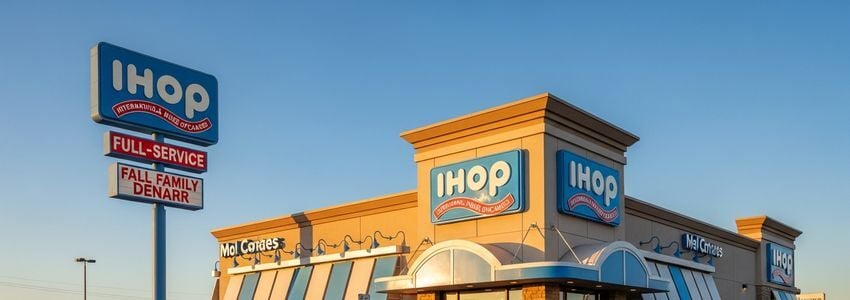
IHOP Franchise Loan: The Complete Financing Guide for IHOP Franchise Owners
Owning an IHOP franchise means joining one of the most recognized breakfast and family dining brands in the United States, but turning that opportunity into a reality requires serious capital planning. This complete guide walks you through every financing option available to IHOP franchise owners - from SBA loans and equipment financing to alternative lending programs - so you can move forward with confidence and the right funding structure in place.
In This Article
- What Is an IHOP Franchise?
- IHOP Franchise Costs and Investment Required
- How to Finance an IHOP Franchise
- Types of Loans for IHOP Franchise Owners
- How to Qualify for an IHOP Franchise Loan
- How Crestmont Capital Helps IHOP Franchise Owners
- Real-World Financing Scenarios
- Frequently Asked Questions
- How to Get Started
- Conclusion
What Is an IHOP Franchise?
IHOP - the International House of Pancakes - is one of America's most iconic full-service restaurant brands, known for its expansive breakfast and brunch menu, family-friendly atmosphere, and 24-hour service at many locations. Founded in 1958 in Toluca Lake, California, IHOP has grown to more than 1,700 locations across the United States and additional international markets. The brand is owned and operated by Dine Brands Global, one of the largest full-service restaurant franchisors in the world, which also manages the Applebee's and Fuzzy's Taco Shop brands.
For entrepreneurs interested in restaurant franchise ownership, IHOP represents a well-established system with decades of brand recognition, a loyal customer base, and a proven operational model. The brand's focus on breakfast and brunch positions it in a growing segment of the restaurant industry - morning dining has expanded significantly as consumers shift away from traditional fast food toward sit-down breakfast experiences. IHOP's average unit volumes and performance data - disclosed in the Franchise Disclosure Document (FDD) - give prospective franchisees and lenders a clear picture of what a well-run location can generate.
Because IHOP is a registered franchise brand listed in the SBA Franchise Directory, franchisees benefit from streamlined SBA loan processing. Lenders familiar with the IHOP system can underwrite franchise loans faster and with greater confidence than they could for an untested independent restaurant concept. This SBA eligibility is a significant financial advantage for qualified buyers, unlocking access to longer repayment terms and lower interest rates.
Becoming an IHOP franchisee requires meeting the franchisor's financial requirements, completing a thorough application and interview process, participating in training, and signing a franchise agreement with Dine Brands. The process from initial inquiry to opening can take 12 to 24 months or longer depending on real estate, construction, and local permitting. Securing financing early in the process is critical because lenders often require a signed franchise agreement or letter of intent before committing to a loan.
Brand Strength Matters: Dine Brands Global operates more than 3,500 restaurant locations across its portfolio. Lenders see IHOP's brand recognition and franchise track record as risk-reducing factors that improve loan approval odds for qualified applicants compared to independent restaurant startups.
IHOP Franchise Costs and Investment Required
Before applying for an IHOP franchise loan, you need a clear picture of the total capital required to open and operate a location successfully. IHOP's Franchise Disclosure Document outlines estimated startup costs, and these figures vary considerably depending on location type, market, real estate strategy, and construction scope.
Initial Investment Breakdown
The estimated total investment to open a new IHOP franchise ranges from approximately $481,000 to more than $4,000,000. This wide range reflects the difference between converting an existing restaurant space versus building a brand-new freestanding location in a high-cost market. Key cost components include:
- Initial franchise fee: $40,000 for a traditional IHOP location
- Leasehold improvements and construction: Often the largest variable cost, ranging from under $200,000 for a conversion to more than $1,500,000 for a ground-up build
- Commercial kitchen equipment: Approximately $150,000 to $400,000 depending on the size and format of the location
- Furniture, fixtures, and decor: Including dining room furniture, booth seating, signage, and branded interior elements
- Point-of-sale systems and technology: Required by Dine Brands to meet system standards
- Pre-opening training and staffing: IHOP requires franchisees to attend and complete corporate training before opening, and pre-opening labor costs add up quickly
- Opening inventory: Initial food and beverage inventory, disposables, and cleaning supplies
- Working capital reserve: IHOP and most lenders recommend 3 to 6 months of operating expenses held in reserve to cover the ramp-up period before the location reaches steady-state revenue
- Architectural, engineering, and permitting fees: Required for new construction and major renovations
- Insurance and professional fees: Legal, accounting, and insurance costs incurred before opening
Ongoing Fees to Factor Into Loan Projections
Beyond the initial investment, IHOP franchisees pay ongoing fees that directly affect cash flow and loan repayment capacity. These include a royalty fee of 4.5% of gross sales and advertising fund contributions totaling approximately 3.5% of gross sales, split between national brand advertising and local market funds. Together, these fees represent approximately 8% of revenue off the top - a significant obligation that your financial projections and loan application must account for.
Financial Thresholds Required by IHOP
IHOP requires prospective franchisees to demonstrate a minimum of $500,000 in liquid capital and a net worth of at least $1,000,000. These thresholds are set by the franchisor to ensure new owners have the financial cushion to operate through the inevitable revenue ramp-up period of a new restaurant. Lenders evaluate these same metrics when underwriting an IHOP franchise loan - your personal financial statement is one of the most important documents in your loan package.
Smart Planning Tip: Understand the difference between your total investment cost and the amount you need to finance. Lenders typically require a 10% to 20% down payment on the financed portion, and that equity contribution must come from your own liquid assets - not borrowed funds.
Ready to Finance Your IHOP Franchise?
Get fast, flexible financing from the #1 business lender in the U.S. No obligation - apply in minutes.
Apply Now ->How to Finance an IHOP Franchise
Financing an IHOP franchise is not a single transaction - it is a structured process that typically involves combining multiple loan products to cover different cost categories at different stages of your project. Understanding how the financing process works helps you build the right capital stack and avoid costly delays.
Step 1: Review the IHOP Franchise Disclosure Document
The FDD is a legally required document that IHOP must provide to prospective franchisees at least 14 days before you sign any agreement or pay any fee. It contains detailed financial performance data, all ongoing fee obligations, Item 19 financial disclosures (average unit volumes and operating results for existing locations), and estimates of the full investment range. Lenders require the FDD as part of their due diligence package because it allows them to independently verify your revenue projections and understand the cost structure of the business model.
Step 2: Develop a Detailed Business Plan and Financial Projections
Before approaching any lender, build a comprehensive business plan that includes a 3-to-5-year revenue projection based on IHOP's disclosed Average Unit Volume data, a break-even analysis showing when the location will cover all operating costs including debt service, a market analysis for the specific location you are targeting, and an operations plan that demonstrates your management capacity and staffing strategy. According to Forbes, a strong business plan is one of the most important factors in getting a franchise loan approved - it shows lenders that you understand the business you are entering and have modeled realistic outcomes.
Step 3: Gather Your Financial Documentation
Lenders evaluating an IHOP franchise loan will request personal tax returns for the last 2 to 3 years, business tax returns if applicable, a personal financial statement listing all assets and liabilities, 3 to 6 months of bank and investment account statements to verify liquid capital, the signed franchise agreement or letter of intent from Dine Brands, itemized construction and equipment quotes from contractors, and a detailed use-of-funds breakdown. Having these documents organized and ready before you submit an application saves significant time and signals to lenders that you are a serious, prepared borrower.
Step 4: Apply Through the Right Lending Channel
Not all lenders are created equal for franchise financing. SBA lenders with experience in restaurant franchise underwriting can process your application more efficiently than a generalist bank. Alternative lenders like Crestmont Capital offer faster approvals and more flexible qualification criteria. Applying through a lender who understands the IHOP business model means fewer questions, less back-and-forth, and a faster path to funding.
Step 5: Close and Deploy Capital Strategically
Once your loan is approved and closed, deploy capital according to your pre-approved use-of-funds plan. Some lenders require that draws occur in stages tied to construction milestones. Others fund in a lump sum. Understanding your disbursement terms upfront prevents cash flow gaps during construction and pre-opening that could derail your timeline.
Types of Loans for IHOP Franchise Owners
IHOP franchisees typically use a combination of loan products to cover different cost categories. Here is a breakdown of the primary financing options available:
SBA 7(a) Loans
The SBA 7(a) loan program is the most widely used financing vehicle for franchise restaurant purchases. The federal government partially guarantees these loans, which reduces lender risk and allows borrowers to access lower interest rates and longer repayment terms than conventional financing. SBA 7(a) loans can fund franchise fees, leasehold improvements, commercial kitchen equipment, working capital, and business acquisition costs up to $5 million. Repayment terms extend up to 10 years for working capital and equipment, and up to 25 years for real estate. Because IHOP is on the SBA Franchise Directory, lenders can process IHOP franchise applications without requiring custom franchisor analysis, which shortens timelines.
For more information on SBA programs, visit our dedicated SBA loan guide or explore the Small Business Administration's official loan programs page.
SBA 504 Loans
The SBA 504 program is designed specifically for major fixed assets including commercial real estate and heavy equipment. If you plan to purchase the property where your IHOP will operate rather than leasing, the 504 program can be highly cost-effective. It requires only a 10% down payment compared to the 20% to 30% typical of conventional commercial real estate loans, and it offers long fixed-rate terms that provide payment predictability. The 504 program funds through a combination of a bank or credit union loan (50% of project cost) and a Certified Development Company loan (40%), with the borrower covering the remaining 10%.
Equipment Financing
Commercial kitchen equipment represents one of the largest single cost categories for any IHOP build-out. Industrial-grade griddles, pancake stations, refrigeration units, fryers, commercial dishwashers, and point-of-sale systems can add up to several hundred thousand dollars. Equipment financing allows you to spread these costs over the useful life of the assets (typically 2 to 7 years) while the equipment itself serves as collateral for the loan. This structure typically covers 80% to 100% of equipment cost and carries lower interest rates than unsecured financing because the equipment secures the debt.
Conventional Business Term Loans
Alternative lenders and non-bank lenders offer conventional term loans that can fund faster than SBA programs - sometimes within 1 to 5 business days. These loans are useful for covering costs that fall outside SBA eligibility, filling gaps in your capital stack, or meeting urgent funding needs during pre-opening. The tradeoff is typically a higher interest rate and shorter repayment term. For IHOP franchisees who need speed over cost minimization, a conventional small business loan from an alternative lender can provide the flexibility that bank timelines cannot.
Fast Business Loans
When speed is a priority - for example, when you need to move quickly on a lease opportunity or cover an unexpected cost during construction - fast business loans can provide capital within 24 to 48 hours. These are shorter-term products with higher rates, best used strategically for specific needs rather than as primary franchise financing.
Business Line of Credit
A revolving line of credit is one of the most valuable tools available to a new IHOP franchisee. During the pre-opening period and early months of operation when cash flow is irregular, a line of credit provides a safety net that can cover payroll fluctuations, unexpected maintenance needs, seasonal inventory purchases, and marketing expenses without requiring you to draw a new loan each time. Lines of credit are typically approved for 12-month revolving periods and can be renewed annually.
By the Numbers
IHOP Franchise Financing - Key Statistics
$40K
Initial franchise fee for traditional IHOP locations
$4M+
Maximum total estimated investment for new IHOP builds
1,700+
IHOP locations operating across the United States
$5M
Maximum SBA 7(a) loan amount for franchise financing
How to Qualify for an IHOP Franchise Loan
Lender qualification requirements for IHOP franchise loans vary by loan type, but most lenders evaluate applicants across the same core criteria. Understanding these factors before you apply helps you identify and address any weaknesses in your profile before they become loan denial reasons.
Personal Credit Score
For SBA loans, most lenders prefer a minimum personal credit score of 680 to 700. Higher scores unlock better interest rates and faster approvals. Alternative and conventional lenders may approve franchise loans for borrowers with scores as low as 620, though at higher interest rates. If your score is in the 600 to 650 range, working with a lender experienced in bad credit business loans may provide a viable path to funding while you work on improving your score.
Liquid Capital and Net Worth
IHOP's franchisor requirements are $500,000 in liquid capital and $1,000,000 in net worth. These are minimums - lenders want to see that your reserves comfortably exceed these thresholds. Liquid capital includes cash, checking and savings account balances, money market funds, and liquid investment accounts. Real estate equity, retirement accounts, and business equity may count toward net worth but are not considered liquid.
Restaurant and Business Experience
While lenders do not require prior restaurant experience as an absolute rule, it significantly strengthens your application. IHOP itself evaluates franchisees on their management and operational capacity. Prior ownership or senior management experience in food service, multi-unit retail, or hospitality is treated as a major positive by underwriters because it signals that you understand the operational demands of running a full-service restaurant.
Time in Business
For existing business owners seeking a second or third franchise location, 2 or more years of business tax returns demonstrating positive performance are highly favorable. First-time franchise buyers are evaluated primarily on personal financials and management experience.
Collateral
SBA loans require that available business assets be pledged as collateral. For franchise loans, this typically includes the equipment, leasehold improvements, and any real estate involved in the transaction. If business assets are insufficient to fully collateralize the loan, lenders may require a personal guarantee and additional collateral such as real estate equity or investment accounts.
The Franchise Agreement
Having a signed franchise agreement or a formal letter of intent from Dine Brands is essential for most lenders. This document validates that you have been approved by the franchisor as a qualified candidate and that the loan proceeds will be used for a legitimate IHOP franchise investment.
Qualification Tip: Getting pre-qualified by a franchise lender before you sign your franchise agreement gives you a clearer picture of your borrowing capacity. It also signals to Dine Brands that you are a financially serious candidate, which can strengthen your franchisee application.
How Crestmont Capital Helps IHOP Franchise Owners
At Crestmont Capital, we specialize in helping restaurant franchise investors access the capital they need to open, expand, and succeed. As the #1-rated business lender in the U.S., we bring deep experience in franchise financing and understand the unique demands of IHOP franchise investments - from the high equipment costs to the pre-opening timeline and the ongoing royalty obligations that affect cash flow.
We offer a full range of loan products relevant to IHOP franchise buyers including conventional term loans, equipment financing, business lines of credit, and SBA-aligned programs. Whether you are financing your first IHOP location or adding to an existing multi-unit portfolio, our team works with you to identify the right combination of products for your specific investment structure and timeline.
One key advantage of working with Crestmont is our ability to serve borrowers who fall outside traditional bank criteria. If your credit score is below the SBA threshold, if you are a first-time franchise buyer without an existing business track record, or if you need capital faster than a 60-to-90-day SBA process allows, we can often provide solutions that traditional banks cannot. Our application process is fully online, most borrowers receive a decision within 24 to 48 hours, and funding for conventional loans can occur in as little as 1 to 5 business days.
We also provide broader resources for franchise restaurant investors. If you are evaluating multiple franchise concepts, our financing guides for similar opportunities - like our Five Guys franchise loan guide and Jack in the Box franchise loan guide - can help you understand how financing terms vary across different brands and investment levels.
According to CNBC, working with a lender who has franchise-specific experience reduces the risk of delays, documentation issues, and miscommunication that can derail a deal during the critical window between franchise approval and location opening.
Talk to a Franchise Lending Specialist Today
Our team understands the IHOP capital stack inside and out. Get matched with the right loan product in minutes - no commitment required.
Apply Now ->Real-World Financing Scenarios
Understanding how IHOP franchise financing works in practice helps you anticipate what lenders will require and what your capital structure might look like. Here are several realistic scenarios based on different buyer profiles:
Scenario 1: First-Time Franchisee Converting an Existing Restaurant Space
A buyer with $650,000 in liquid assets, a 715 personal credit score, and 12 years of restaurant management experience negotiates a lease on an existing restaurant space with much of the buildout infrastructure already in place. The total estimated investment is $900,000 - lower than a ground-up build because the plumbing, HVAC, and electrical systems already meet commercial standards. The buyer secures an SBA 7(a) loan for $720,000 (80% of total project cost) and covers the remaining $180,000 from liquid assets. The 10-year repayment term keeps monthly debt service manageable during the ramp-up period.
Scenario 2: Experienced Multi-Unit Operator Adding IHOP to Their Portfolio
An operator who already owns two casual dining franchise locations applies for franchise financing to add IHOP as a third brand. With existing business tax returns showing strong performance, business credit established, and documented management systems already in place, this borrower qualifies for a conventional term loan from an alternative lender. Funding occurs within 10 business days - much faster than SBA timelines - allowing the operator to meet the construction start deadline in their Dine Brands letter of intent. Equipment for the new IHOP kitchen is financed separately through an equipment loan, isolating that cost at a lower interest rate.
Scenario 3: Purchasing Real Estate with an SBA 504 Loan
A franchisee in a growing suburban market identifies a commercially zoned property and decides to buy rather than lease, recognizing the long-term wealth-building potential of property ownership. The property purchase price is $1.4 million. Using an SBA 504 loan, the franchisee finances 90% of the purchase through a combination of bank and CDC financing at a 25-year fixed rate. The restaurant buildout and kitchen equipment are financed separately through a conventional term loan. The total debt service is higher than a lease scenario, but the franchisee is building equity in real estate alongside the restaurant business.
Scenario 4: Acquiring an Existing IHOP Location
Buying an IHOP from an existing franchisee who is exiting the system is often the most capital-efficient path to ownership. The physical infrastructure exists, the location has an established customer base, and revenue begins on day one of ownership. This buyer finances the acquisition through an SBA 7(a) business acquisition loan that covers the purchase price of the business, required renovations to update the location to current IHOP branding standards, and working capital for the first 90 days of new ownership. Total loan amount is $1.1 million with a 10-year term.
Key Insight: The best financing structure depends on your personal financial profile, the specific location and investment type, and your timeline. Most successful IHOP franchise buyers use a combination of two or more loan products rather than relying on a single funding source.

Frequently Asked Questions
How to Get Started
Complete our quick application at offers.crestmontcapital.com/apply-now - it takes just a few minutes and our franchise lending team will begin reviewing your IHOP financing options immediately.
A Crestmont Capital advisor experienced in restaurant franchise financing will review your goals, evaluate your qualifications, and recommend the loan products best suited to your IHOP investment structure and timeline.
Once approved, receive your IHOP franchise loan funds and deploy them strategically - covering your franchise fee, construction costs, commercial kitchen equipment, pre-opening expenses, and the working capital you need to operate from day one.
Start Your IHOP Franchise Loan Application
Crestmont Capital's online application takes just minutes. Get a decision fast and move your IHOP investment forward without delay.
Apply Now ->Conclusion
Financing an IHOP franchise is one of the most important decisions you will make on your path to restaurant ownership. The investment is substantial - ranging from approximately $500,000 to more than $4 million depending on your location type and market - and the right capital structure can make the difference between a business that thrives from the start and one that struggles under excessive debt service during the critical early months of operation.
The good news is that IHOP's established brand, documented financial performance data, and SBA Franchise Directory status make it significantly easier to secure franchise financing than launching an independent restaurant from scratch. Lenders who understand the IHOP system can underwrite your application with greater speed and confidence, and the range of available loan products - from SBA 7(a) loans to equipment financing to business lines of credit - gives you multiple tools to build the most cost-effective capital stack for your specific situation.
Working with a lender who specializes in restaurant franchise financing is the single most important step you can take to accelerate the funding process and secure the most favorable terms available to you. At Crestmont Capital, our franchise lending team is ready to help you navigate every step of the IHOP franchise loan process - from pre-qualification and documentation to closing and funding. Whether you are opening your first location or expanding an existing multi-unit portfolio, we have the expertise, speed, and product range to support your goals.
Disclaimer: The information provided in this article is for general educational purposes only and is not financial, legal, or tax advice. Funding terms, qualifications, and product availability may vary and are subject to change without notice. Crestmont Capital does not guarantee approval, rates, or specific outcomes. For personalized information about your business funding options, contact our team directly.








