How to Lease a Bucket Truck for Tree Trimming: The Complete Business Guide
For tree service companies, landscapers, and utility contractors, a bucket truck is not optional equipment - it is the core tool that makes aerial work safe, efficient, and profitable. Whether you are trimming branches near power lines, removing storm-damaged trees, or maintaining commercial properties, having reliable elevated access equipment directly determines your capacity to win jobs and serve customers safely.
The challenge is that bucket trucks are expensive. New commercial-grade models range from $60,000 to over $250,000 depending on boom height, capacity, and configuration. For most small and growing tree service businesses, that kind of capital outlay is not feasible. That is where bucket truck leasing comes in. With a structured lease through a lender like Crestmont Capital, your business can access the equipment it needs now, with manageable monthly payments and the flexibility to upgrade as your operation grows.
This guide covers everything: how bucket truck leasing works, what it costs, who qualifies, and how to get started with the right financing partner.
In This Article
- What Is a Bucket Truck Lease for Tree Trimming?
- Key Benefits of Leasing a Bucket Truck
- How Bucket Truck Leasing Works
- Types of Bucket Trucks Available for Lease
- Leasing vs. Buying a Bucket Truck
- Who Should Lease a Bucket Truck?
- How Crestmont Capital Helps
- Real-World Scenarios
- How to Qualify and Get Started
- FAQ
- Conclusion
What Is a Bucket Truck Lease for Tree Trimming?
A bucket truck lease is a financing agreement in which a tree service or contracting business pays a fixed monthly fee to use a bucket truck owned by a lender for a set term, typically 24 to 60 months. At the end of the lease, the business can purchase the truck, return it, or upgrade to a newer model.
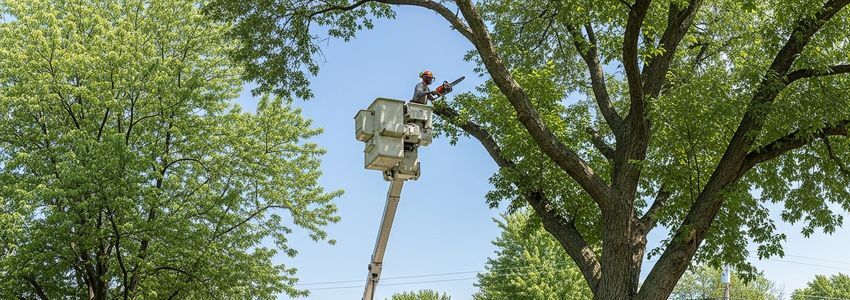
Bucket trucks - also called aerial work platforms or cherry pickers - are vehicles equipped with a hydraulic boom arm and an enclosed platform (bucket) that lifts workers to elevated heights. For tree trimming, a bucket truck provides the safest and most efficient way to access canopies at heights ranging from 30 feet to over 100 feet, far surpassing what climbing or ladders can accomplish in a production environment.
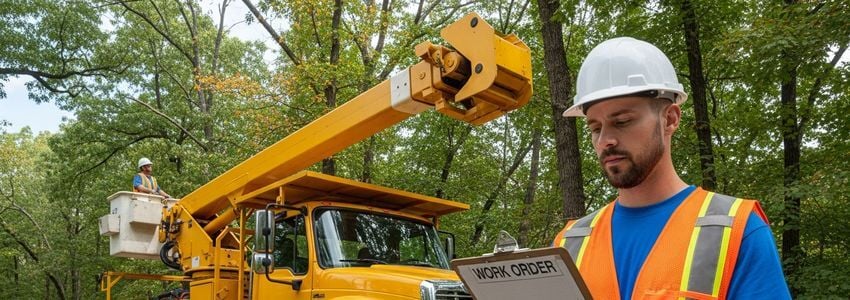
Commercial bucket trucks used in tree care typically feature insulated booms for electrical work proximity, 360-degree rotation capability, outrigger stabilization, and payload capacities of 400 to 1,000 pounds. Popular manufacturers include Altec, Elliott Equipment, Terex, and Hi-Ranger, with units mounted on Ford, International, Kenworth, or Peterbilt chassis.
Leasing provides access to these expensive vehicles without a large upfront capital commitment. Rather than spending $80,000 to $200,000 on a single truck purchase, a business might pay $1,800 to $4,500 per month under a lease arrangement and preserve its working capital for other operational needs. According to the U.S. Small Business Administration, preserving working capital is one of the most important financial practices for small business sustainability and growth.
Two primary lease structures apply to commercial vehicle and equipment financing:
- Operating Lease (True Lease): You use the bucket truck for the lease term and return it at the end. Payments are often treated as a business operating expense. Monthly payments are typically lower because you are not building equity in the asset.
- Capital Lease (Finance Lease / $1 Buyout): You build equity in the truck throughout the lease and purchase it for $1 at the end. Structured more like a loan, with different accounting and depreciation treatment.
Crestmont Capital offers both structures, and its advisors can help you determine which approach fits your business model, cash flow, and tax strategy. Learn more at Crestmont Capital's equipment leasing page.
Ready to Lease a Bucket Truck?
Get flexible equipment financing from the #1 business lender in the U.S. Apply in minutes, no obligation.
Apply Now ->Key Benefits of Leasing a Bucket Truck
For tree service businesses at every stage of growth, leasing a bucket truck delivers meaningful financial and operational advantages compared to purchasing outright. Here are the most compelling reasons why so many contractors choose to lease.
1. Preserve Cash Flow and Working Capital
Buying a bucket truck outright ties up $80,000 to $200,000 in a single depreciating asset. That capital could otherwise fund payroll during slow seasons, cover liability insurance premiums, invest in additional crew equipment, or serve as an operating reserve during the months when work is slower. Leasing converts that large purchase into a predictable monthly operating expense, keeping your available cash where it does the most good.
According to Forbes, equipment financing and leasing are among the most widely used tools small businesses use to preserve working capital while keeping pace with growth demands. For capital-intensive industries like tree service, that principle applies with particular force.
2. Access Better Equipment Than You Could Afford to Buy
Leasing lets you access a higher-specification bucket truck than your cash position would allow for a purchase. Instead of buying a used 40-foot insulated aerial lift for $55,000, you might lease a new 60-foot articulating boom truck with full insulation rating for $2,400 per month. Better equipment means faster job completion, the ability to bid on higher-value municipal and utility contracts, and a stronger safety record for your crew.
3. Fixed, Predictable Monthly Payments
Lease payments are locked for the duration of your agreement. There are no surprise repair bills, no sudden replacement costs, and no fluctuating payments. This makes financial planning straightforward and lets you price jobs accurately knowing exactly what your equipment overhead is each month.
4. Tax Advantages
Under an operating lease, monthly payments are typically fully deductible as a business operating expense. Under Section 179 of the U.S. tax code, qualifying leased equipment may also be eligible for accelerated deductions in the year placed in service. Consult your accountant for guidance specific to your situation, but the tax treatment of leased commercial vehicles is frequently favorable for tree service businesses.
5. Technology and Safety Upgrades
Aerial equipment safety standards evolve, and older trucks may fall out of compliance with OSHA requirements or ANSI standards over time. With a lease, you are not stuck with aging equipment. At the end of your term, you can upgrade to a newer model with current safety ratings, load sensors, and efficiency improvements - without the hassle of selling a used truck.
6. Low or No Down Payment
Most commercial equipment leases can be structured with little or no down payment. For new tree service operations or businesses expanding to a second truck, this is a significant advantage. You can acquire the equipment you need now without depleting startup capital or operational reserves.
Industry Insight
The tree care industry has grown at an average rate of over 5% annually over the past decade, driven by increased demand for urban forestry maintenance, storm damage response, and commercial property management. A well-equipped company with reliable aerial equipment is positioned to capture this growth. Leasing provides the access without the ownership burden.
How Bucket Truck Leasing Works
The process of leasing a bucket truck is more straightforward than many business owners expect. Here is a step-by-step walkthrough of how the process works from initial assessment to equipment delivery.
Step 1: Assess Your Operational Needs
Before approaching a lender, get clear on what you need. How high do your typical jobs require you to work? What types of material will the boom need to clear - branches, power lines, structures? What is your typical job volume and crew size? Do you need an insulated boom for proximity to electrical lines? Answering these questions helps you identify the right truck specification and prevents leasing undersized equipment that limits the jobs you can bid.
Step 2: Identify Equipment and Get a Price Quote
Contact a commercial vehicle dealer or manufacturer representative for Altec, Elliott, Terex, or similar brands. Request a formal quote that includes the truck chassis, aerial unit specifications, and any optional features. Your lender will use this quote to structure the financing.
Step 3: Apply for a Lease
Submit a lease application to a lender like Crestmont Capital. The application is brief and typically requires basic business information, your EIN, time in business, and estimated monthly or annual revenue. You do not need to compile extensive financial documentation for most applications under $250,000. Visit Crestmont Capital's equipment financing page for details. Most decisions come back within 24 hours.
Step 4: Review the Lease Agreement
Your lease agreement will specify the monthly payment amount, lease term length (24 to 60 months), end-of-term options (return, purchase at fair market value, or $1 buyout), any mileage or usage limitations, insurance requirements, and responsibility for maintenance. Read the agreement carefully and ask your advisor to clarify any terms before signing.
Step 5: Equipment Ordered and Delivered
After signing the lease, the lender releases funds to the dealer or seller. Your bucket truck is prepared, delivered to your location or a preferred dealer, and your team completes any required training or certification. Many new truck purchases include operator orientation from the manufacturer.
Step 6: Make Monthly Payments and Operate
Payments begin approximately 30 days after delivery. Your truck is covered by the manufacturer's warranty during the early lease period, and you are responsible for routine maintenance such as oil changes, inspections, and regulatory certifications (annual boom inspections are required by OSHA).
Step 7: End-of-Lease Decision
At lease maturity, you choose your path: upgrade to a newer model and start a new lease, purchase the truck at the agreed residual or fair market value, or return the equipment. This flexibility is one of the most valuable features of leasing for equipment-intensive businesses.
Quick Guide
How to Lease a Bucket Truck - At a Glance
Determine required boom height, insulation rating, chassis type, and payload for your typical jobs.
Select your bucket truck model and decide on lease term length (24-60 months) based on cash flow goals.
Complete a quick application with Crestmont Capital - most decisions returned within 24 hours.
Your bucket truck arrives at your location, inspected and ready to work - often within days of approval.
At lease end, upgrade to newer equipment, purchase your current truck, or return it and move on.
Types of Bucket Trucks Available for Lease
Bucket trucks are not one-size-fits-all equipment. Tree service companies, utility contractors, and landscapers need different configurations depending on their work environment and typical job type. Here is an overview of the main bucket truck categories available for commercial leasing.
Telescopic Boom Trucks
Telescopic boom trucks extend in a straight line from the truck body, offering maximum reach and height. They are well-suited for open environments where the bucket needs to reach directly above or to the side of the truck. Working heights range from 40 feet to 100 feet or more. Telescopic booms are commonly used in line clearance work and tall tree removal in open spaces. New units typically range from $90,000 to $180,000.
Articulating Boom Trucks
Articulating booms (also called knuckle booms) have multiple pivot points that allow the arm to reach around obstacles - ideal for tree work near structures, buildings, and power lines. The ability to articulate up, over, and around objects makes these trucks extremely versatile for residential and commercial arborist work. New articulating bucket trucks run from $80,000 to $200,000 depending on height and payload.
Insulated Aerial Devices
For tree work near electrical distribution or transmission lines, insulated bucket trucks are required. These units are rated by voltage class and tested to ANSI A92.2 and OSHA standards. Municipal utilities, line clearance tree trimmers, and contractors working near electrical infrastructure must have insulated equipment to work safely and legally. Insulated bucket trucks command a premium, typically running $100,000 to $250,000 new.
Combination Chip Body / Bucket Trucks
Many tree service companies specify bucket trucks with an integrated chip body or dump bed on the same chassis. This all-in-one configuration allows one truck to serve as both the aerial work platform and the debris hauler, reducing fleet size and operating costs. These purpose-built forestry trucks are designed specifically for the tree care market and are a popular choice for lease financing.
Mini Aerial Lifts / Small Bucket Trucks
For residential work in tight spaces, gated properties, and urban environments with limited access, smaller bucket trucks on compact chassis or van conversions offer 30 to 45-foot working heights in a nimbler package. These units start around $60,000 new and are accessible for smaller operations just starting to build their aerial work capability.
Used and Certified Pre-Owned Bucket Trucks
Used bucket trucks can also be financed through equipment leasing arrangements. Certified pre-owned units that have passed inspection and recertification offer solid value at lower monthly payments. Lenders typically finance used equipment up to 10 years old depending on condition and remaining useful life.
All of these bucket truck types are eligible for commercial lease financing through Crestmont Capital. Explore all your equipment leasing options to find the right fit for your fleet.
Leasing vs. Buying a Bucket Truck: Full Comparison
Deciding whether to lease or buy a bucket truck depends on your cash position, growth plans, intended use life, and how you manage equipment on your balance sheet. The following comparison breaks down the key dimensions of each approach.
| Feature | Leasing | Buying Outright |
|---|---|---|
| Upfront Cost | Low or none | $60,000 - $250,000+ |
| Monthly Payments | Fixed, predictable | None (after purchase) |
| Equipment Upgrades | Easy at lease end | Must sell and rebuy |
| Cash Flow Impact | Minimal | Significant drain |
| Maintenance | Owner responsible (warranty helps) | Owner responsible |
| Ownership | No (unless buyout) | Yes |
| Approval Speed | 24-72 hours | N/A |
| Best For | Growing businesses, cash flow management | Established businesses with capital surplus |
For most tree service businesses that are actively growing, leasing wins on the cash flow and flexibility dimensions. Buying makes more sense for an established operation with strong reserves that plans to run the same truck for 10 to 15 years without upgrading. For businesses still building their client base, adding crew capacity, or managing seasonal cash flow, leasing is almost always the smarter financial decision.
See How Much Truck You Can Afford to Lease
Crestmont Capital offers commercial vehicle and equipment leasing from $10,000 to $5 million. Fast approvals, competitive rates.
Get a Quote Today ->Who Should Lease a Bucket Truck?
Bucket truck leasing is a practical financing solution across a wide range of businesses and use cases. Here are the business types that benefit most from commercial bucket truck lease financing.
Tree Service and Arborist Companies
Tree service businesses are the most natural fit for bucket truck leasing. Whether you focus on residential trimming, commercial property maintenance, storm damage response, or line clearance contracting, your ability to win premium jobs depends directly on aerial capability. Leasing lets a small operation access the equipment needed to compete for municipal contracts and large commercial accounts without a prohibitive upfront purchase.
Landscaping Companies Expanding into Tree Care
Many landscaping businesses add tree trimming and removal services to their portfolio as they grow. Leasing a bucket truck is a low-risk way to enter the market. If the tree service revenue materializes as expected, the lease pays for itself. If you need to pivot, you are not locked into owning a specialized truck that is difficult to liquidate.
Utility Contractors and Line Clearance Companies
Electric utilities, telecom companies, and their contractors operate extensive fleets of aerial equipment for vegetation management around power lines and infrastructure. Leasing provides fleet flexibility, enables frequent upgrades to maintain ANSI insulation compliance, and spreads capital costs across a large fleet in a predictable way.
Municipal and Government Contractors
Businesses that serve city parks departments, state highway agencies, or county road maintenance operations often need to demonstrate specific equipment capabilities to qualify for public contracts. Leasing the right bucket truck for the contract requirement - rather than the one you could afford to buy - directly expands the contracts you are eligible to bid.
Startups and New Entrants
Starting a tree service company typically requires a significant investment in equipment before any revenue flows. Leasing a bucket truck rather than purchasing outright preserves startup capital and reduces the financial risk of the early months when clients are still being built. Small business financing options from Crestmont Capital are designed to support new and early-stage businesses.
Businesses Replacing Aging Equipment
If your current bucket truck is approaching the end of its safe working life or failing ANSI annual inspection requirements, leasing a replacement avoids a large unplanned capital expenditure. You get a new truck with current safety certifications and a manufacturer's warranty, and you spread the cost over the lease term rather than depleting reserves for an emergency replacement.
Quick Tip
If your business generates at least $8,000 to $10,000 per month in revenue and has been operating for 12 or more months, you have a solid foundation to qualify for bucket truck lease financing. Personal credit scores of 600 or higher are a good starting point, though lenders like Crestmont Capital evaluate the full business profile, not just a number.
How Crestmont Capital Helps Tree Service Businesses
Crestmont Capital is rated the #1 business lender in the U.S., with a proven track record of helping small and growing businesses access the equipment financing they need to compete and grow. For tree service companies and contractors looking to lease bucket trucks, Crestmont Capital offers several key advantages.
Decisions in 24 Hours
Traditional bank loans for commercial vehicles can take weeks or months to process, often requiring extensive financial documentation and multiple review rounds. Crestmont Capital typically returns equipment lease decisions within 24 hours of application submission. When you have a contract lined up or a seasonal window to capitalize on, that speed is critical. See how fast business financing from Crestmont Capital can serve your timeline.
Flexible Terms for All Business Profiles
Whether you are a startup with 12 months of history or an established company with 10 years in business, Crestmont Capital structures lease terms that work for your situation. Lease terms range from 24 to 60 months, and financing is available from $10,000 to $5 million. The team evaluates your complete business profile, not just a credit score, so more businesses qualify.
Full Suite of Financing Options
Beyond equipment leasing, Crestmont Capital offers a complete menu of business financing products. If leasing is not the ideal structure for your situation, explore equipment financing loans that let you build ownership from day one, or a business line of credit to support operating cash flow between jobs.
Industry Experience
Crestmont Capital works with businesses across all industries, including tree service, landscaping, utility contracting, and construction. The team understands the seasonal nature of tree care revenue and structures financing terms accordingly. You are not working with a generalist bank that treats your tree service company like any other small business - you are working with specialists who understand your industry's cash flow patterns.
No Industry Restrictions for Equipment Leasing
As long as the equipment is used to generate business revenue, Crestmont Capital can generally finance it. Bucket trucks, chip trucks, stump grinders, log loaders, skid steers - the full range of tree service equipment is eligible for lease or equipment loan financing.
Real-World Scenarios: Bucket Truck Leasing in Action
Understanding the financial mechanics of bucket truck leasing in real business context helps clarify the decision. Here are three scenarios that illustrate how leasing creates value for tree service operations.
Scenario 1: The Growing Residential Tree Company
A two-year-old tree service company in the Southeast is generating $22,000 per month in revenue from residential trimming and removal work. The owner has been climbing and using a rental bucket truck for large jobs, but rental costs are running $800 to $1,200 per day and limiting how many large jobs can be scheduled in a week.
The owner applies for a lease on a 55-foot articulating bucket truck priced at $115,000. With a 60-month lease through Crestmont Capital, the monthly payment is approximately $2,300. Within 90 days of delivery, the company has added three large tree removal jobs per week that previously required expensive rentals or were passed to competitors. Revenue increases by $9,000 per month. The lease payment represents less than 26% of the incremental revenue it generates.
Scenario 2: The Line Clearance Contractor Winning a Municipal Contract
A utility contractor in the Midwest wins a three-year municipal tree trimming contract requiring a minimum 60-foot insulated aerial device. The contractor's existing bucket truck is a 45-foot non-insulated unit that does not meet the contract specification. Without the right equipment, the contract cannot be executed.
Rather than losing the contract, the owner applies for a lease on a new 65-foot insulated boom truck at $180,000. The 48-month lease results in a payment of approximately $4,100 per month. The municipal contract pays $18,000 per month. The equipment lease is fully covered by less than one-quarter of the contract revenue, and the remaining income funds operations, crew wages, and profit.
Scenario 3: The Landscaping Company Adding Tree Services
An established landscaping firm with $85,000 in monthly revenue decides to add tree trimming and removal to its service menu to serve existing clients who are currently hiring separate tree companies. The owner does not want to commit $120,000 to a truck purchase before the new service line proves itself.
Instead, the owner leases a 50-foot bucket truck on a 36-month term with a monthly payment of approximately $2,800. The new tree service division generates $14,000 in new revenue in its first full month, growing to $24,000 by month four. The lease payment is fully covered from month one, and the company has not had to make a large capital bet on an unproven service line.
How to Qualify and Get Started
Qualifying for a bucket truck lease through Crestmont Capital is simpler than most business owners expect. Here is what you need to know before applying.
Basic Eligibility
- Time in Business: Most lenders look for at least 12 months of operating history. Startups with strong personal credit may qualify with as little as 6 months in some cases.
- Personal Credit Score: A score of 600 or above is generally a workable starting point. Higher scores (650+) typically result in better rates and longer terms. Crestmont Capital evaluates the complete business profile, not just the credit score.
- Revenue: Demonstrated revenue consistency matters more than hitting a specific dollar threshold for most applications. Regular monthly income from tree service contracts, seasonal patterns, and growth trajectory are all considered.
- No Active Bankruptcies: Businesses with active bankruptcy proceedings are generally not eligible. Businesses that have completed and been discharged from bankruptcy may qualify depending on subsequent financial health.
What to Have Ready Before Applying
- Business legal name, address, and structure (LLC, sole proprietor, corporation)
- Federal EIN
- Vendor quote or invoice for the bucket truck you want to lease
- Estimated monthly or annual revenue
- Social Security Number (for personal credit review - standard for business lending)
The Application Process
Crestmont Capital's online application takes approximately 5 to 10 minutes to complete. After submission, an advisor reviews your application and returns a decision within 24 hours in most cases. Upon approval, you receive a lease agreement to review and sign. Funding is released to your vendor, and your truck is ordered and delivered. Total time from application to equipment delivery is commonly 3 to 7 business days.
If you are not ready for a full lease but need immediate operational capital to bridge a cash flow gap or cover crew expenses, Crestmont Capital also offers small business loans and business lines of credit that can help.
Frequently Asked Questions
What is a bucket truck lease for tree trimming?
A bucket truck lease for tree trimming is a commercial financing arrangement where a tree service or contracting business pays a fixed monthly fee to use a bucket truck for a set term, typically 24 to 60 months. The lender retains ownership during the lease period. At the end of the term, the business can purchase the truck, upgrade to a newer model, or return it. This allows businesses to access expensive aerial equipment without a large upfront capital expenditure.
How does the bucket truck leasing process work?
You start by identifying the bucket truck model you need and getting a vendor quote. You then apply for a lease with a lender like Crestmont Capital, which reviews your business profile and returns a decision within 24 hours. After signing the lease agreement, the lender releases funds to the dealer, your truck is delivered, and monthly payments begin approximately 30 days after delivery. At lease maturity, you choose to upgrade, purchase, or return the equipment.
Who qualifies for a bucket truck lease?
Most businesses that have been operating for at least 12 months with consistent revenue can qualify. Lenders look at personal credit score (600+), time in business, and revenue trends. Tree service companies, landscapers, utility contractors, and general contractors all commonly qualify. Startups with strong personal credit may also be eligible. Businesses with no active bankruptcies and a clean financial history have the strongest applications.
How much does it cost to lease a bucket truck per month?
Monthly lease costs depend on the equipment price, lease term, and your credit profile. As a general benchmark: a $90,000 articulating bucket truck on a 48-month lease might result in payments of approximately $2,000 to $2,500 per month. A $160,000 insulated 65-foot boom truck on a 60-month lease might cost $3,200 to $4,200 per month. Factor rates typically range from 1.05 to 1.15 of the equipment cost over the full lease term depending on lender and creditworthiness.
What types of bucket truck leases are available?
The two main lease structures are the operating lease (true lease) and the capital lease (finance lease). Under an operating lease, you use the truck and return it at the end, with payments typically treated as operating expenses. Under a capital lease ($1 buyout), you build equity in the truck and purchase it for $1 at the end of the term, similar to a loan. The right structure depends on your accounting preferences, intended holding period, and tax strategy.
What is typically included in a bucket truck lease?
A standard lease covers financing for the full retail purchase price of the bucket truck. Delivery may or may not be included depending on how the agreement is structured. Manufacturer warranty coverage typically applies during the early lease period. Routine maintenance, annual ANSI boom inspections, insurance, fuel, and licensing costs are the responsibility of the lessee. Some lenders offer optional maintenance packages that can be bundled into the lease payment.
What credit score do I need to lease a bucket truck?
Most commercial equipment lessors look for personal credit scores of at least 600. Scores of 650 to 720+ typically qualify for the most competitive rates and terms. Borrowers with scores below 600 may still qualify with additional documentation, a larger down payment, or a shorter lease term. Lenders like Crestmont Capital evaluate the complete business profile including revenue, time in business, and industry experience - not just the credit score.
How long are bucket truck lease terms?
Bucket truck lease terms typically range from 24 to 60 months. For higher-value equipment like insulated aerial devices over $100,000, 48 and 60-month terms are most common because they keep monthly payments manageable. Shorter terms result in higher monthly payments but lower total financing cost. Longer terms reduce monthly cash outflow but increase total cost over the lease life. The right term depends on your monthly cash flow goals and how long you intend to use the specific equipment.
Can I upgrade my bucket truck during or at the end of a lease?
Yes. At the end of a standard operating lease, you can return your current truck and enter a new lease on an upgraded model. This is one of the most valuable features of leasing for businesses in industries where equipment safety standards and technology evolve. Some lenders also offer mid-term upgrade provisions, though these typically involve a fee or restructuring cost. Discuss upgrade provisions with your lender before signing the original lease agreement.
Who is responsible for maintenance on a leased bucket truck?
The lessee (your business) is responsible for routine maintenance, annual ANSI inspections, and keeping the equipment in safe working condition throughout the lease term. This includes oil changes, hydraulic fluid maintenance, annual boom recertification, and any repairs beyond normal wear. The manufacturer warranty typically covers defects during the early lease period. For high-utilization operations, factoring maintenance costs into your financial plan before signing is strongly recommended.
Can I purchase the bucket truck at the end of the lease?
Yes. Most lease agreements include end-of-term purchase options. Under a capital lease ($1 buyout), you purchase the truck for $1 at the end of the term. Under an operating lease, you may purchase at fair market value or a pre-agreed residual amount. Review your buyout terms carefully before signing so you know exactly what your options will be when the lease matures.
How do I apply for a bucket truck lease with Crestmont Capital?
Visit offers.crestmontcapital.com/apply-now and complete the online application in approximately 5 to 10 minutes. You will need your business name and EIN, a quote or invoice for the bucket truck you want to finance, and basic revenue information. An advisor will review your application and return a decision within 24 hours. Once approved, sign the lease agreement, and your truck can be delivered within days.
What are the main advantages of leasing over buying a bucket truck?
The main advantages of leasing are preserved cash flow (no large upfront cost), predictable fixed monthly payments, easy equipment upgrades at lease end, potential tax deductibility of payments, and faster access to financing compared to traditional bank loans. For tree service businesses, leasing also means you can access a higher-specification truck than you could afford to buy outright, helping you win larger contracts and serve clients better.
How are bucket truck lease payments treated for tax purposes?
Under an operating lease, monthly payments are typically fully deductible as a business operating expense, reducing your taxable income. Under a capital lease, the equipment may qualify for depreciation deductions and interest expense deductions. Section 179 of the U.S. tax code may allow qualifying businesses to deduct the full cost of leased commercial vehicles in the year they are placed in service, up to the annual limit. Consult a tax professional for guidance specific to your business structure and lease type.
How does Crestmont Capital make bucket truck leasing easier?
Crestmont Capital offers 24-hour approval decisions, a streamlined online application, and dedicated advisors who work personally with each client. Unlike traditional banks, Crestmont Capital evaluates the complete business picture - not just a credit score. The team has experience with tree service, landscaping, and contractor businesses, understands seasonal cash flow, and structures lease terms that match your revenue patterns. Financing is available from $10,000 to $5 million.
Conclusion
Leasing a bucket truck for tree trimming is one of the most financially intelligent moves a growing tree service business can make. The combination of preserved cash flow, predictable monthly costs, access to better equipment, and flexibility at lease end makes leasing the preferred financing structure for a large share of the tree care industry.
Whether you are adding your first aerial unit, replacing aging equipment, or expanding to a second or third truck to handle growing contract volume, leasing gives you a path to the equipment you need without the capital shock of an outright purchase. And with a lender like Crestmont Capital, the process is fast, the terms are flexible, and the support is personalized.
The tree service market continues to grow, driven by urban forestry expansion, utility infrastructure maintenance, and storm damage response demand. Businesses that invest in the right equipment at the right time are positioned to capture that growth. Do not let equipment limitations constrain your capacity to win contracts and serve clients. Explore your bucket truck leasing options today.
Get Your Bucket Truck Financed Today
Thousands of U.S. businesses trust Crestmont Capital for fast, flexible equipment financing. Apply online in minutes and get a decision in 24 hours.
Apply for Equipment Leasing ->How to Get Started
Complete our quick application at offers.crestmontcapital.com/apply-now - takes just a few minutes.
A Crestmont Capital advisor will review your needs and match you with the right bucket truck leasing option for your business.
Receive your bucket truck and start taking on more jobs - often within days of approval.
Disclaimer: The information provided in this article is for general educational purposes only and is not financial, legal, or tax advice. Funding terms, qualifications, and product availability may vary and are subject to change without notice. Crestmont Capital does not guarantee approval, rates, or specific outcomes. For personalized information about your business funding options, contact our team directly.