
 (800) 949-0401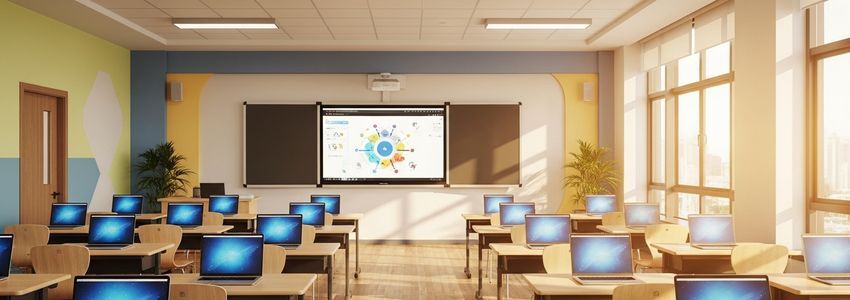
Smartboard and Classroom Technology Financing: The Complete Guide for Schools and Educational Businesses
Modern education depends on technology. From interactive smartboards to student tablets, laptop carts to learning management systems, the tools that power today's classrooms come with a significant price tag. Outfitting a single classroom with quality technology can cost anywhere from $5,000 to $25,000 - and for an entire school or learning center, that investment multiplies fast. Smartboard financing and classroom technology loans give educational institutions a practical path to equip their spaces without depleting cash reserves or waiting years to save up.
Whether you operate a private school, tutoring center, corporate training facility, daycare with educational programming, or any institution that relies on modern classroom tech, this guide covers everything you need to know about financing smartboards and educational technology in 2026.
In This Article
- What Is Smartboard and Classroom Tech Financing?
- Types of Classroom Technology You Can Finance
- Financing Options for Educational Technology
- How Classroom Tech Financing Works
- Who Qualifies for Smartboard Financing?
- Financing vs. Leasing vs. Paying Cash
- How Crestmont Capital Helps
- Real-World Scenarios
- Frequently Asked Questions
- How to Get Started
What Is Smartboard and Classroom Technology Financing?
Smartboard financing is a type of equipment financing or equipment leasing arrangement that allows schools, tutoring centers, corporate training facilities, and other educational businesses to acquire interactive displays, tablets, laptops, projectors, and other classroom technology without paying the full cost upfront.
Instead of depleting your operating budget on a single large technology purchase, financing spreads the cost across monthly payments over a set term - typically 12 to 60 months. This approach preserves cash flow, allows you to acquire the latest technology today, and aligns the cost of the equipment with the value it delivers over its useful life.
Classroom technology financing can cover a wide range of equipment, from a single interactive panel in one room to a comprehensive campus-wide technology deployment. For private schools, tutoring franchises, and educational startups, it's often the most practical path to staying competitive in a technology-driven learning environment.
Did You Know: According to the Education Week Research Center, over 70% of K-12 classrooms in the U.S. now use some form of interactive display technology. The global interactive whiteboard market is projected to surpass $4 billion by 2027, driven by adoption in both traditional schools and private learning centers.
Types of Classroom Technology You Can Finance
Modern educational technology spans a broad spectrum, and most equipment financing programs cover all of it. Here are the primary categories of classroom tech that can be financed or leased:
Interactive Smartboards and Displays
Interactive flat panel displays (IFPDs) have largely replaced traditional whiteboard projector setups. Leading brands like SMART Technologies, Promethean, ViewSonic, and BenQ offer panels ranging from 65 inches to 98 inches. A single high-quality smartboard can cost $2,000 to $8,000 installed. Schools equipping multiple classrooms can quickly reach six-figure technology budgets through smartboard purchases alone.
Student Devices - Tablets, Chromebooks, and Laptops
1:1 device programs - where every student has their own device - have become the standard at competitive private schools and learning centers. Financing a laptop cart or tablet fleet for 30 students typically runs $15,000 to $45,000, depending on the device tier. Chromebook programs are popular for their lower cost and ease of management, while iPad programs are favored in creative and visual arts curricula.
Projectors and Document Cameras
While interactive panels dominate new installations, laser projectors and document cameras remain staple tools in many classrooms. These are typically lower-cost items but are often financed as part of larger technology bundles.
Learning Management System (LMS) and EdTech Software
Beyond hardware, educational software subscriptions and licenses can represent significant costs. Some financing programs allow software costs to be bundled with hardware financing, making it easier to deploy complete technology solutions in a single transaction.
Audio Systems and Classroom Sound Technology
Classroom audio systems - including teacher microphones, amplified speaker systems, and hearing loop technology for students with hearing impairments - are increasingly standard. Sound field systems typically cost $500 to $3,000 per classroom and can be bundled into equipment financing packages.
Video Conferencing and Hybrid Learning Equipment
Post-pandemic, hybrid learning capability has become a baseline expectation. Cameras, microphones, conferencing displays, and related infrastructure allow schools to deliver instruction both in-person and remotely. A complete hybrid classroom setup can run $3,000 to $15,000.
By the Numbers
Classroom Technology Financing - Key Statistics
$4B+
Global smartboard market by 2027
70%
Of U.S. classrooms using interactive displays
$25K
Average cost to fully equip one classroom
24 Hrs
Typical time to get financing approval
Financing Options for Educational Technology
Educational institutions and businesses have several financing pathways available for classroom technology. The right option depends on your organization type, credit profile, ownership preferences, and budget flexibility.
Equipment Financing (Equipment Loan)
With a traditional equipment loan, you borrow the funds to purchase the technology outright, then repay the loan over a fixed term. At the end of the term, you own the equipment free and clear. This is the preferred option when you want to own the technology long-term and plan to use it for its full useful life.
Equipment loans typically feature fixed monthly payments, terms from 24 to 72 months, and competitive interest rates. The equipment itself often serves as collateral, which makes approval more accessible even for organizations with limited credit history.
Equipment Leasing
Leasing is ideal when you want lower monthly payments, the flexibility to upgrade technology as it evolves, and the ability to keep equipment off your balance sheet. With a Fair Market Value (FMV) lease, you make lower payments and have the option to purchase the equipment at market value, return it, or upgrade to newer technology at the end of the lease term.
For educational institutions in rapidly changing tech environments - where today's smartboard may be obsolete in five years - leasing provides a structured upgrade path that keeps classrooms current without accumulating aging equipment.
$1 Buyout Lease (Capital Lease)
A $1 buyout lease functions much like a loan: you make regular payments and at the end of the lease, purchase the equipment for $1. Payments are typically higher than an FMV lease but lower than an outright purchase. This structure suits organizations that want to own the equipment eventually but prefer the accounting treatment of a lease.
Working Capital Loans and Business Lines of Credit
For smaller technology purchases or when you need flexibility in how funds are deployed, a working capital loan or business line of credit provides unrestricted capital. These are unsecured products that don't require equipment as collateral, making them suitable for software purchases, installation costs, teacher training, and other expenses that don't fit neatly into equipment financing.
Ready to Modernize Your Classrooms?
Get flexible classroom technology financing from Crestmont Capital - the #1 business lender in the U.S. Apply in minutes, no obligation.
Apply Now ->How Classroom Technology Financing Works
The process of financing smartboards and classroom tech is straightforward. Here is what to expect from application to funding:
Step 1: Identify your technology needs. Determine exactly what equipment you need, how many classrooms are being outfitted, and your total budget. Getting vendor quotes before applying gives you a clear loan amount to request.
Step 2: Choose your financing structure. Decide whether you want an equipment loan (ownership from day one), an FMV lease (lower payments, upgrade flexibility), or a $1 buyout lease (own at end of term). Your choice affects payment amounts and accounting treatment.
Step 3: Submit your application. A quality lender like Crestmont Capital requires minimal documentation - typically a one-page application, three to six months of bank statements, and basic business information. Most educational businesses can apply in minutes online.
Step 4: Receive approval and review terms. Approval for equipment financing often comes within 24 hours. Review the rate, term, monthly payment, and any fees before signing.
Step 5: Fund and acquire equipment. Once approved and documents are signed, funds are typically disbursed directly to the vendor, or in some cases to you for direct purchase. Equipment arrives and you begin making monthly payments immediately.
Step 6: Deploy technology and start teaching. With your new smartboards, devices, and classroom technology in place, the investment immediately begins delivering value through improved instruction, student engagement, and institutional competitiveness.
Quick Guide
How Classroom Tech Financing Works - At a Glance
Get vendor quotes, determine classroom count, and establish your total budget.
Submit a quick application with basic business information and bank statements.
Most approvals come within 24 hours. Review terms and sign documents online.
Funds go directly to your vendor. Technology is installed and your classrooms are modernized.
Who Qualifies for Smartboard Financing?
Classroom technology financing is available to a wide range of educational businesses and institutions. You do not need to be a public school or large university to qualify. Here are the types of organizations that regularly use equipment financing for educational technology:
- Private K-12 schools - Independent schools, charter schools, and parochial schools
- Tutoring centers and learning labs - Franchise or independent tutoring businesses
- Preschools and early learning centers - Daycare facilities with structured educational programming
- Vocational and trade schools - Training facilities that use technology for simulation and instruction
- Corporate training facilities - Businesses that train employees in classroom or conference settings
- Online learning companies with physical locations - Hybrid education providers
- Colleges and universities (private) - Smaller private institutions supplementing campus tech
- After-school program providers - Enrichment programs that use technology as a core component
- STEM education centers - Robotics labs, coding academies, and science-focused learning centers
General qualification criteria for equipment financing include being in business for at least six months to one year, having consistent revenue, and maintaining a reasonable credit profile. Equipment financing is generally more accessible than conventional business loans because the technology itself serves as collateral, reducing lender risk.
Good to Know: Even newer educational businesses can often qualify for classroom technology financing. Many lenders offer startup-friendly programs that rely more heavily on the strength of the equipment (as collateral) and the business model than on years of operating history. If you have been open at least six months and are generating revenue, it is worth applying.
Financing vs. Leasing vs. Paying Cash
One of the most common questions educational business owners ask is whether to finance, lease, or purchase classroom technology outright. The right answer depends on your financial position, upgrade plans, and long-term goals.
| Factor | Equipment Loan | Operating Lease | Pay Cash |
|---|---|---|---|
| Upfront Cost | Low (down payment only) | Minimal (first payment) | High (full amount) |
| Monthly Payment | Fixed, moderate | Fixed, lower | None |
| Ownership | Yes, at term end | Optional (FMV purchase) | Immediate |
| Tech Upgrade Flexibility | Moderate | High (upgrade at lease end) | Low (own old equipment) |
| Cash Flow Impact | Preserves cash | Best for cash flow | Heavy immediate impact |
| Best For | Long-term tech ownership | Frequent upgrades | Flush with reserves |
For most private schools and educational businesses, equipment financing or leasing outperforms paying cash. Even if you have the funds available, preserving capital for operations, staffing, or future growth is often the wiser financial choice. Monthly payments on financed technology are manageable against tuition revenue, and the equipment begins generating value immediately upon installation.

How Crestmont Capital Helps Educational Businesses
Crestmont Capital is the #1 rated business lender in the U.S., with deep experience financing classroom technology for private schools, tutoring centers, learning facilities, and educational businesses of all sizes. Our equipment financing programs are designed to move fast - because you have a new school year to prepare for, not months to wait on a funding decision.
Here is what sets Crestmont Capital apart for educational technology financing:
- Fast approvals - Most applications receive a decision within 24 hours
- Flexible structures - Equipment loans, FMV leases, and $1 buyout leases all available
- Wide coverage - We finance smartboards, tablets, laptop carts, AV systems, hybrid classroom setups, and more
- Startup-friendly - Educational businesses open as little as six months can qualify
- Bundle financing - Finance hardware, software, and installation in a single transaction
- Dedicated advisors - Work with a specialist who understands the educational sector
Our computer and IT equipment financing programs are particularly popular with tutoring centers and private schools looking to deploy device-per-student programs. We also offer business lines of credit for ongoing technology refreshes and working capital loans for software, installation, and training costs.
Equip Your Classrooms Without Draining Your Budget
Crestmont Capital specializes in educational technology financing. Fast decisions, flexible terms, no surprises.
Get Financing Today ->Real-World Scenarios: Classroom Tech Financing in Action
Abstract concepts become clearer through concrete examples. Here are six realistic scenarios showing how educational businesses use financing to acquire and deploy classroom technology.
Scenario 1: Private Elementary School - Full Classroom Smartboard Rollout
A private elementary school with 15 classrooms decides to replace aging projectors with 75-inch interactive flat panel displays across all rooms. At roughly $4,500 per unit installed, the total project cost is $67,500. The school uses a 36-month equipment loan at a competitive rate, resulting in approximately $2,100 per month - well within the school's technology budget line. By the time the loan is paid off, the panels are still in service and the school owns them outright.
Scenario 2: Growing Tutoring Franchise - Tablet Fleet Expansion
A tutoring center with three locations opens two new sites and needs to equip each with 20 student tablets plus admin devices. The total device cost across both locations is approximately $35,000. The owner uses an equipment lease with an FMV option, keeping monthly payments low and preserving the flexibility to swap to newer devices after three years as the tablet market evolves.
Scenario 3: Corporate Training Center - Hybrid Classroom Build-Out
A mid-size company builds out an internal training facility with two hybrid-capable rooms, each needing professional displays, cameras, microphones, and videoconferencing software. The total build-out cost is $40,000. The company finances the entire project - hardware plus software licenses - through a bundled equipment financing arrangement, spreading costs over 24 months without capital expenditure approval delays.
Scenario 4: STEM Academy - Robotics Lab Equipment
A STEM-focused private school opens a robotics and coding lab. Equipment includes 20 Chromebooks, a 3D printer, robotics kits, a large-format display for instruction, and programming software. Total cost: $28,000. The school uses a $1 buyout lease over 36 months, owning all equipment at the end while benefiting from lower monthly payments than an outright loan.
Scenario 5: After-School Learning Center - Startup Technology Deployment
A newly opened after-school enrichment center (in business 8 months) needs to equip its first location with student tablets, a teaching display, and audio system. Budget: $18,000. Despite being a relatively new business, the owner qualifies for a startup-friendly equipment loan through Crestmont Capital, leveraging strong initial enrollment revenue and the equipment itself as collateral.
Scenario 6: Private High School - Technology Refresh Cycle
A private high school with an existing 1:1 laptop program needs to refresh 200 aging devices. Rather than making a $120,000 capital purchase, the school uses a multi-year operating lease that allows them to cycle out devices every three years and always maintain current-generation student computers. Annual lease payments fit neatly into the school's technology budget, and the upgrade cycle becomes a predictable operational expense rather than a capital shock every few years.
Key Takeaway: Whether you are a brand-new learning center or an established private school, there is a classroom technology financing structure that fits your situation. The key is matching the loan or lease structure to your ownership goals, upgrade timeline, and monthly cash flow capacity.
Frequently Asked Questions
How to Get Started
Contact technology vendors to get specific pricing on the smartboards, devices, and equipment you need. Having concrete numbers makes the financing process faster and more accurate.
Complete our quick application at offers.crestmontcapital.com/apply-now. Have your bank statements and business information ready. Most applications take under 15 minutes.
A Crestmont Capital specialist will review your application and present financing options tailored to your organization. Ask questions, compare structures, and choose the option that fits your budget and goals.
Once funded, your vendor delivers and installs your classroom technology. Students and teachers benefit from modern tools from day one - no waiting, no depleting cash reserves.
Conclusion
Smartboard financing and classroom technology loans have made it possible for private schools, tutoring centers, corporate training facilities, and educational businesses of all sizes to access the tools their students need without the financial strain of large upfront purchases. Whether you choose an equipment loan for outright ownership or a lease for flexibility and lower payments, the right smartboard financing structure puts current-generation technology in your classrooms today while preserving the cash flow your organization needs to operate and grow.
Crestmont Capital has helped hundreds of educational businesses finance technology deployments quickly and affordably. If you are ready to modernize your classrooms, expand your technology program, or simply explore what financing options are available to your organization, our team is ready to help. Apply online today and receive a decision within 24 hours - no commitment required.
Start Your Application Today
Crestmont Capital - the #1 business lender in the U.S. - is ready to help you finance the classroom technology your students deserve.
Apply Now ->Disclaimer: The information provided in this article is for general educational purposes only and is not financial, legal, or tax advice. Funding terms, qualifications, and product availability may vary and are subject to change without notice. Crestmont Capital does not guarantee approval, rates, or specific outcomes. For personalized information about your business funding options, contact our team directly.








