
 (800) 949-0401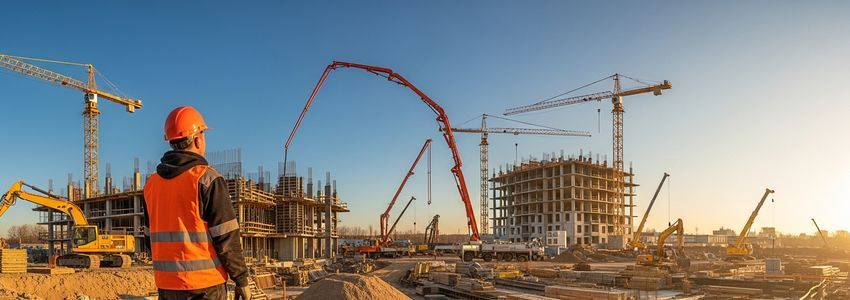
How to Finance or Lease Concrete Pumps and Mixers
Concrete pumps and mixers are among the most capital-intensive pieces of equipment a construction business can acquire. Whether you're bidding on large commercial pours, residential foundation work, or infrastructure projects, having the right concrete equipment on your fleet can be the difference between winning and losing contracts. Yet with new concrete pumps ranging from $80,000 to over $500,000 and commercial mixers costing $15,000 to $150,000 or more, purchasing outright isn't always the smartest use of operating capital.
That's where concrete pump financing and equipment leasing come in. The right financing strategy lets you preserve cash flow, scale your fleet strategically, and stay competitive without shouldering crushing upfront costs. This guide covers every financing and leasing option available to construction businesses, what lenders look for, how to compare offers, and how Crestmont Capital helps contractors across the country get funded.
In This Article
- What Are Concrete Pumps and Mixers?
- Financing Options for Concrete Equipment
- Leasing Options Explained
- How Concrete Equipment Financing Works
- Financing vs. Leasing: Side-by-Side Comparison
- Concrete Equipment Financing by the Numbers
- Who Qualifies
- How Crestmont Capital Helps
- Real-World Scenarios
- How to Get Started
- Frequently Asked Questions
What Are Concrete Pumps and Mixers?
Concrete pumps are hydraulically powered machines that transport liquid concrete through a pipeline to the exact pour location on a job site. They eliminate the need for manual wheelbarrow transport, allowing precise placement in high-rise buildings, bridge decks, tunnels, and large commercial slabs. The two primary types are boom pumps, which use a robotic arm to place concrete over obstacles, and line pumps (also called trailer or static pumps), which pump through hose segments across longer horizontal distances.
Concrete mixers - ranging from portable drum mixers to large transit mixer trucks - blend cement, aggregate, water, and admixtures into workable concrete. Transit mixer trucks are the backbone of ready-mix delivery, maintaining concrete in a rotational state during transport to prevent premature setting. Volumetric mixers combine raw materials on-site, allowing contractors to adjust mix designs in real time and reduce waste.
Together, these machines represent a significant capital investment. A boom pump truck (mounted on a carrier chassis with a 36- to 52-meter reach) typically costs $250,000 to $600,000 new. A standard line pump runs $50,000 to $130,000. Transit mixer trucks generally fall in the $120,000 to $200,000 range. Volumetric mixers start around $80,000 and scale up based on capacity.
Industry Insight: According to the American Concrete Pumping Association, there are over 2,100 concrete pumping contractors in the United States, and the demand for pump services grows each year alongside infrastructure spending and commercial construction activity. Access to financed equipment - rather than purchased outright - allows most of these businesses to remain competitive without depleting working capital.
Financing Options for Concrete Equipment
Construction businesses have several pathways to financing concrete pumps and mixers. Each option carries different terms, ownership implications, and cash flow impacts. Understanding the full spectrum helps you choose the structure that best fits your business model and project pipeline.
Equipment Loans
An equipment loan - sometimes called an equipment finance agreement or EFA - is a traditional installment loan where the lender provides capital to purchase the equipment and you repay the loan in fixed monthly payments over a set term. The equipment itself serves as collateral, which typically means lower interest rates than unsecured business loans. At loan payoff, you own the equipment outright.
Equipment loans for concrete pumps and mixers typically carry terms of 36 to 84 months, with rates starting around 5% to 8% for strong credit profiles. Down payments range from 0% to 20% depending on the lender, the borrower's credit history, and the equipment's age and value. Many lenders offer 100% financing on new equipment from established manufacturers.
SBA Loans for Equipment
The Small Business Administration backs several loan programs that can be used to finance heavy construction equipment. SBA 7(a) loans offer up to $5 million and can be used for equipment, working capital, and real estate. SBA 504 loans specifically target fixed assets including heavy equipment and real property, offering fixed rates and terms up to 20 years. SBA loans carry government-backed guarantees that reduce lender risk, often translating to more favorable terms for borrowers who meet eligibility requirements.
Working Capital Loans
Some construction businesses use working capital loans to bridge cash flow gaps when acquiring equipment. While these typically carry higher rates than equipment-specific loans, they offer flexibility - particularly when a deal requires rapid funding before a formal equipment loan can be processed.
Business Lines of Credit
A business line of credit allows you to draw funds as needed up to a preset limit, repay, and draw again. This revolving structure makes it ideal for covering equipment deposits, insurance costs, or maintenance expenses while your primary equipment loan handles the bulk of the purchase price. Lines of credit are also valuable for bridging the gap between billing cycles on large concrete projects.
Need to Finance Concrete Equipment Fast?
Crestmont Capital specializes in construction equipment financing. Apply in minutes and get a decision fast - no obligation.
Apply Now →Leasing Options Explained
Leasing concrete pumps and mixers is a popular alternative to traditional financing, especially for businesses that prefer predictable monthly costs, need to upgrade equipment frequently, or want to conserve balance sheet capacity. There are two primary lease structures to understand.
Operating Leases (True Leases)
An operating lease functions more like a rental arrangement. The leasing company retains ownership of the equipment throughout the lease term. You make monthly payments for the right to use the equipment, and at the end of the lease you typically have three options: return the equipment, purchase it at fair market value, or renew the lease.
Operating leases tend to have lower monthly payments than capital leases or equipment loans because you're paying for usage, not building equity. This structure works well for businesses that want to regularly upgrade to newer concrete pump models as technology evolves, or for contractors whose workload doesn't justify full ownership of specialized equipment.
Capital Leases (Finance Leases)
A capital lease is structured more like a loan. You make monthly payments, and the lease is designed so that you build equity in the equipment over time. At the end of the term, you typically have a $1 buyout option or a nominal purchase price. Capital leases are reported as assets and liabilities on your balance sheet - similar to a loan - while operating leases traditionally offered off-balance-sheet treatment (though accounting standards have evolved under ASC 842).
Capital leases are preferred when a contractor intends to keep the equipment long-term and wants the eventual ownership benefit, but needs the financing flexibility of a lease structure.
Key Distinction: Operating leases generally preserve more of your balance sheet capacity and offer the most flexibility for equipment upgrades. Capital leases or equipment loans are better when ownership and long-term equity are the goal. Your accountant or financial advisor can help determine which structure optimizes your tax position and financial reporting.
How Concrete Equipment Financing Works
The financing process for concrete pumps and mixers follows a clear sequence. Understanding each step helps you prepare effectively and move from application to funded faster.
Step 1 - Identify the equipment. Before applying, have a clear picture of the specific equipment you're seeking to finance. Know the make, model, year, and purchase price (or estimated value for used equipment). Lenders want to know they're financing equipment with stable residual value.
Step 2 - Assess your qualifications. Lenders review your business credit score, personal credit score, time in business, annual revenue, and existing debt obligations. Most equipment lenders for construction machinery want to see at least 2 years in business and annual revenues of $200,000 or more, though some programs serve newer businesses or those with credit challenges.
Step 3 - Gather documentation. Typical requirements include 3-6 months of business bank statements, 2 years of tax returns, a current profit-and-loss statement, and a balance sheet. Some lenders offer simplified "app-only" approvals for equipment below $150,000 with established businesses.
Step 4 - Submit your application. At Crestmont Capital, the application process is streamlined. You can apply online in minutes and receive a decision quickly, often the same day for straightforward requests.
Step 5 - Review and accept terms. Once approved, you'll receive a term sheet outlining rate, term length, payment amount, and any down payment requirements. Review carefully and compare with any other offers.
Step 6 - Receive funding. Upon execution of documents, funds are disbursed directly to the equipment seller or dealer, often within 1-3 business days.
By the Numbers
Concrete Equipment Financing - Key Statistics
$500K+
New boom pump truck maximum cost
84 Mo.
Maximum typical equipment loan term
1-3 Days
Typical time to funding after approval
2,100+
Concrete pumping contractors in the U.S.

Financing vs. Leasing: Side-by-Side Comparison
Choosing between an equipment loan and a lease depends on your business goals, cash flow needs, and long-term equipment strategy. The table below outlines the key differences to help you decide.
| Feature | Equipment Loan | Operating Lease | Capital Lease |
|---|---|---|---|
| Ownership | You own at payoff | Lessor retains ownership | Option to buy at end |
| Monthly Payments | Moderate | Lowest | Low to moderate |
| Balance Sheet Impact | Asset and liability recorded | Minimal (right-of-use asset) | Asset and liability recorded |
| Equipment Upgrades | Must sell existing unit | Easy - return and upgrade | Purchase option required |
| Best For | Long-term use, building equity | Frequent upgraders, cash flow focus | Ownership goal with lease structure |
| Down Payment | 0-20% typical | Often 1-2 months advance | Low or none |
Who Qualifies for Concrete Pump and Mixer Financing
Financing concrete construction equipment is accessible to a wide range of business profiles. Here's what lenders typically evaluate and where you'll fall on the qualification spectrum.
Established Contractors (2+ Years in Business)
If your construction business has at least two years of operating history and annual revenues of $200,000 or more, you're in a strong position to secure equipment financing with competitive rates. Lenders view established contractors as lower risk, especially when the business has a track record of contract completions and consistent cash flow. Even with moderate personal credit scores (620-680), established businesses often qualify through strong business financials.
Newer Construction Companies
Contractors in their first 1-2 years of operations face a higher bar. Many traditional lenders require 2 years minimum, but specialized equipment lenders and alternative financing companies work with newer businesses. Startup equipment financing programs may require a larger down payment (10-25%) and a strong personal credit score (680+). Providing a detailed business plan, customer contracts, or evidence of project pipeline can significantly strengthen your application.
Contractors with Credit Challenges
Poor business or personal credit doesn't automatically disqualify you. Bad credit equipment financing programs exist specifically for this scenario. Lenders in this space focus more on the equipment's value, your cash flow, and your business's revenue trajectory than on credit scores alone. Expect higher rates and potentially a larger down payment, but funding is achievable.
Large and Mid-Size Concrete Contractors
For established operations generating $1 million or more annually, equipment financing terms are often highly favorable. Multi-unit financing - for businesses looking to add several pumps or a fleet of mixer trucks simultaneously - is also available. Commercial-scale financing through programs at Crestmont Capital can accommodate large transactions with competitive structures.
Check Your Eligibility Today
Whether you're an established contractor or just getting started, Crestmont Capital has a financing solution. No obligation to apply.
Apply Now →How Crestmont Capital Helps Concrete Contractors Get Funded
Crestmont Capital is a U.S.-based business lender rated #1 nationally and focused on providing fast, flexible financing to businesses in construction, manufacturing, and every industry in between. For concrete contractors specifically, Crestmont offers a range of financing structures tailored to the needs of pump and mixer acquisition.
Our equipment financing programs cover new and used concrete pumps, mixer trucks, volumetric mixers, line pumps, and boom pumps. With terms up to 84 months, competitive rates, and a streamlined approval process, we help construction businesses secure the machinery they need without unnecessary delays.
Crestmont also offers construction equipment financing programs specifically designed for heavy machinery. Whether you're financing a single boom pump truck or outfitting an entire concrete division, we have programs that scale with your needs.
Our team understands construction cash flow - project-based revenue, seasonal fluctuations, billing cycle delays. We structure payment schedules with this reality in mind, and our specialists work directly with contractors to match financing terms to contract timelines when possible.
Why Crestmont? We're not a bank. We work with a broad network of lenders and capital sources, which means we can often find financing for construction businesses that traditional banks have declined. Our process is fast, transparent, and built for business owners who need results - not red tape.
Real-World Scenarios: Financing Concrete Equipment in Practice
Understanding how financing works in specific situations helps you plan your own acquisition strategy. Here are six realistic scenarios construction businesses encounter.
Scenario 1: Startup Pump Contractor Financing First Machine. A concrete pumping startup in Texas with 18 months in business and $380,000 in annual revenue applies for financing on a used 36-meter boom pump priced at $145,000. Despite limited credit history, the business provides 6 months of bank statements showing steady job deposits. They secure financing at 8.9% over 60 months with a 10% down payment. Monthly payment: approximately $2,900.
Scenario 2: Established Contractor Adding Mixer Truck to Fleet. A ready-mix operation in Florida with 9 years in business and $2.1 million in revenue finances a new transit mixer truck at $168,000. Strong credit and revenues secure a 6.5% rate over 72 months with zero down. Monthly payment: approximately $2,840.
Scenario 3: Leasing a Volumetric Mixer for Project Flexibility. A mid-size contractor in Colorado takes on a major commercial project requiring a volumetric mixer for on-site batching. Instead of purchasing, they enter a 36-month operating lease on a $95,000 volumetric unit. Monthly payments are $2,100 with an option to purchase at fair market value at lease end. After the project, they return the equipment and avoid the burden of maintaining an underutilized asset.
Scenario 4: SBA 504 for Equipment and Facility Expansion. A concrete contractor in Georgia with 5 years of strong revenue applies for an SBA 504 loan to simultaneously finance a new boom pump ($280,000) and a small equipment yard expansion. The SBA structure provides a 20-year term on the real estate portion and a 10-year term on the equipment, locking in low fixed rates and preserving cash flow for operations.
Scenario 5: Bad Credit Contractor Gets Equipment Through Alternative Lender. A contractor with a 590 personal credit score (the result of a past medical debt) has difficulty with traditional lenders. Working with Crestmont Capital's alternative financing network, they secure a capital lease on a $72,000 line pump with a 15% down payment and a 48-month term. The equipment generates new revenue that strengthens the business's financial profile for future financing at better rates.
Scenario 6: Multi-Unit Financing for Growth Expansion. A concrete business in Ohio is scaling rapidly and needs to add three mixer trucks to support new contracts. Crestmont Capital structures a fleet financing arrangement covering all three units at $480,000 total, with a 60-month term and a blended rate of 7.2%. Single monthly payment simplifies cash flow management and the business can fulfill its contracts without capital constraints.
How to Get Started
Complete our quick application at offers.crestmontcapital.com/apply-now - it takes just a few minutes to submit your information.
A Crestmont Capital construction financing advisor will review your equipment needs, business profile, and match you with the best available program - loan, lease, or SBA.
Once approved and documents are signed, funds are typically disbursed within 1-3 business days - directly to your equipment dealer or seller.
Frequently Asked Questions
Ready to Finance Your Concrete Equipment?
Apply today with Crestmont Capital - the #1 business lender in the U.S. Fast approvals, competitive terms, and financing designed for construction professionals.
Start Your Application →Conclusion
Concrete pump financing and mixer leasing are practical, proven strategies that allow construction businesses of all sizes to access the equipment they need to compete and grow. Whether you're financing your first boom pump, adding a transit mixer fleet, or evaluating an operating lease to preserve balance sheet flexibility, the right approach depends on your business model, cash flow profile, and long-term equipment strategy.
The key is to understand all your options - equipment loans, operating leases, capital leases, SBA programs, and lines of credit - and choose the structure that aligns with both your immediate cash flow and your long-term business goals. Crestmont Capital is here to help you navigate those choices with expert guidance and fast, flexible financing tailored to the construction industry.
Don't let equipment costs hold your business back. With the right financing partner, your next concrete pump or mixer can be on the job site faster than you think.
Disclaimer: The information provided in this article is for general educational purposes only and is not financial, legal, or tax advice. Funding terms, qualifications, and product availability may vary and are subject to change without notice. Crestmont Capital does not guarantee approval, rates, or specific outcomes. For personalized information about your business funding options, contact our team directly.








