
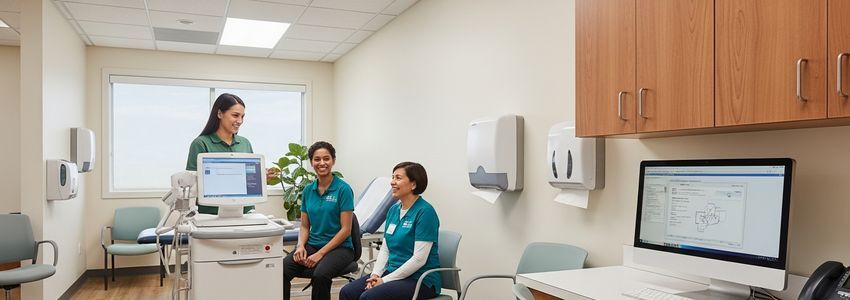
Equipment financing for nonprofits has become one of the most strategic ways mission-driven organizations secure the tools, vehicles, and technology they need without depleting precious operating reserves. Unlike traditional grants or unpredictable donor campaigns, equipment financing gives nonprofits immediate access to essential assets while spreading manageable payments over fixed terms. Whether your organization runs a food bank, operates a community health clinic, provides transitional housing, or delivers youth programs, the right financing structure can dramatically expand your capacity to serve.
In This Article
- What Is Equipment Financing for Nonprofits?
- How Equipment Financing Works
- Types of Equipment Nonprofits Can Finance
- Key Benefits for Nonprofits
- Equipment Financing vs. Equipment Leasing
- How Crestmont Capital Helps Nonprofits
- Who Qualifies for Nonprofit Equipment Financing
- How to Apply
- Real-World Nonprofit Scenarios
- Frequently Asked Questions
- How to Get Started
What Is Equipment Financing for Nonprofits?
Equipment financing for nonprofits is a lending arrangement specifically designed to help tax-exempt organizations acquire the physical assets they need to operate and expand. Under this structure, a lender provides funds to purchase equipment outright, and the nonprofit repays the loan through regular scheduled payments over a set term, typically ranging from 12 to 84 months. In most cases, the equipment itself serves as collateral, which often results in more favorable approval terms than unsecured borrowing.
Nonprofits face a distinct financial challenge that most for-profit businesses do not: their revenue comes from grants, donations, membership fees, and government funding rather than direct commercial sales. This makes it difficult to absorb large upfront capital expenditures without disrupting programming. Equipment financing solves this by transforming a large purchase into a predictable monthly expense that fits within an operating budget.
This form of financing is available for a wide range of equipment types, from commercial kitchen appliances for food banks to medical diagnostic tools for community clinics, vehicles for outreach programs, computers for school programs, and industrial laundry systems for shelters. If the equipment is essential to your mission, it is likely eligible for financing.
Nonprofit Insight: According to the U.S. Small Business Administration, equipment costs are among the top capital expenditures for service organizations. For nonprofits, spreading these costs over time preserves critical reserves for program delivery.
Does Your Nonprofit Need Equipment Financing?
Crestmont Capital works with mission-driven organizations across the U.S. Fast approvals, flexible terms, and a team that understands nonprofit finance.
Apply Now - No ObligationHow Equipment Financing Works for Nonprofits
The process for obtaining equipment financing as a nonprofit is straightforward once you understand the structure. Unlike applying for a grant, which requires detailed programmatic narratives and can take months to receive, equipment financing can often be approved and funded within days or weeks. Here is what the process looks like from start to finish.
First, your organization identifies the equipment it needs and obtains a vendor quote or invoice. This document tells the lender exactly what will be purchased and at what price. Your nonprofit then submits a financing application that includes basic organizational information, financial statements, and documentation of your tax-exempt status, typically your IRS determination letter confirming 501(c)(3) or similar status.
The lender reviews the application, assesses your organization's financial health, and evaluates the equipment as collateral. Once approved, the lender pays the vendor directly and your nonprofit begins making regular monthly payments. At the end of the financing term, ownership of the equipment transfers fully to your organization with no remaining obligations.
Quick Guide
How Nonprofit Equipment Financing Works - At a Glance
Contact vendors, gather pricing, and document exactly what your nonprofit needs.
Provide your IRS determination letter, financial statements, and basic organizational details.
The lender approves your request and funds the purchase directly with the vendor.
Begin using your equipment immediately while making fixed monthly payments that fit your budget.
Types of Equipment Nonprofits Can Finance
One of the most common questions nonprofit leaders ask is whether their specific type of equipment qualifies for financing. The answer is almost always yes. Equipment financing is available for virtually any tangible asset that serves a legitimate organizational purpose. Below are the most common equipment categories nonprofits finance.
Medical and Healthcare Equipment
Community health centers, free clinics, and mobile health programs rely on diagnostic tools, exam tables, imaging equipment, and patient monitoring systems to deliver care. These assets are expensive, but they generate no revenue the way for-profit clinics do. Equipment financing allows these organizations to acquire the tools needed to serve underinsured populations without waiting for grant cycles. Medical equipment financing is available for MRI machines, dental chairs, ultrasound equipment, lab analyzers, and much more.
Commercial Kitchen and Food Service Equipment
Food banks, soup kitchens, and meal delivery programs process thousands of meals each week. Industrial refrigerators, commercial ovens, walk-in coolers, and food prep stations are not optional items. They are mission-critical assets. Financing these purchases spreads the cost over time while ensuring that programming continues uninterrupted. Many organizations also use commercial kitchen equipment financing to upgrade aging appliances without a large upfront payment.
Vehicles and Transportation
Many nonprofits rely on vehicles to deliver services. Food trucks, passenger vans for senior transportation, mobile medical units, and delivery trucks for donated goods are all eligible for financing. Transportation is often the difference between a nonprofit that serves a neighborhood and one that serves an entire region. Vehicle financing with fixed monthly payments makes fleet expansion manageable and budget-friendly.
Office Technology and IT Equipment
Modern nonprofits run on technology. Donor management software, computers, servers, networking equipment, and communications systems are essential for day-to-day operations. Computer and IT equipment financing allows nonprofits to upgrade aging infrastructure without pulling from program funds. Technology investments also improve donor reporting, grant compliance tracking, and volunteer coordination.
Childcare and Educational Equipment
After-school programs, Head Start centers, daycare facilities, and community learning centers need playground equipment, classroom furniture, tablets, smartboards, and sensory learning tools. These organizations face strict safety and regulatory standards that require ongoing equipment investments. Equipment financing makes it possible to meet these standards without compromising program quality.
Industrial and Shelter Equipment
Homeless shelters, transitional housing facilities, and domestic violence programs need commercial laundry systems, HVAC equipment, food service gear, and safety systems. These are high-cost assets with long useful lives, making them ideal candidates for equipment financing. The equipment pays for itself many times over through the services it enables.
Did You Know? The National Council of Nonprofits estimates there are over 1.5 million registered nonprofit organizations in the United States. Many of them lack access to traditional bank credit, making specialized lenders like Crestmont Capital a critical resource for equipment acquisition.
Key Benefits of Equipment Financing for Nonprofits
Understanding why equipment financing makes sense for nonprofits requires looking at the full financial picture. The alternative, paying cash for equipment, ties up money that could otherwise fund programming, staff, and community outreach. Here are the core benefits that make financing the right choice for most mission-driven organizations.
Preserves Operating Reserves: Cash reserves are the lifeblood of a nonprofit. Equipment financing keeps those reserves intact for emergencies, opportunities, and day-to-day operating expenses. Many nonprofit leaders report that the ability to maintain liquidity is the single biggest advantage of financing over outright purchase.
Predictable Monthly Payments: Fixed monthly payments make budgeting simple. Nonprofit boards and finance committees can plan around predictable costs, which is far easier than managing irregular large expenditures. This consistency also helps when reporting to funders and grantmakers about organizational financial health.
Immediate Access to Equipment: Your organization does not have to wait for a grant approval, a capital campaign, or a major donor contribution to acquire equipment. Financing puts the equipment in your hands now, allowing programs to start or expand without delay. This is particularly valuable when community needs are urgent.
No Impact on Grant Funding: Using equipment financing does not affect your eligibility for grants or compromise your donor relationships. In fact, demonstrating responsible financial management, which includes strategic use of credit, can enhance your organization's credibility with institutional funders.
Potential to Build Organizational Credit: Making timely payments on equipment financing helps your nonprofit build a credit history, which can lead to better terms and greater access to capital for future needs. Organizations that start with smaller financing arrangements often qualify for larger ones over time.
Ownership at End of Term: Unlike leasing, equipment financing results in full ownership once the final payment is made. There are no buyout clauses, no residual values to negotiate, and no surprise fees. Your nonprofit retains the asset indefinitely, extracting maximum long-term value from the investment.
By the Numbers
Equipment Financing for Nonprofits - Key Statistics
1.5M+
Registered U.S. nonprofits that rely on equipment to deliver services
80%
Of nonprofits cite equipment and capital costs as a major operational challenge
2-7 Days
Typical time from application to approval with alternative lenders
12-84
Month terms typically available for nonprofit equipment financing
Equipment Financing vs. Equipment Leasing for Nonprofits
When exploring options for acquiring equipment, nonprofit leaders often encounter both financing and leasing. Understanding the difference between these two structures helps you make the right choice for your organization's specific needs and financial position.
With equipment financing, your nonprofit borrows money to purchase the equipment outright. You make regular payments that include principal and interest, and at the end of the term you own the equipment free and clear. This is ideal when the equipment will be used for many years and when long-term ownership matters, such as a commercial refrigeration system or a passenger vehicle that will serve the organization for a decade.
With equipment leasing, your organization rents the equipment for a set period. You make payments during the lease, and at the end of the term you may return the equipment, renew the lease, or purchase it at a predetermined residual value. Leasing is often better for technology equipment that becomes obsolete quickly, since it allows you to upgrade to newer models without selling or disposing of owned assets.
| Feature | Equipment Financing | Equipment Leasing |
|---|---|---|
| Ownership | You own the equipment at end of term | Lender retains ownership (unless you buy out) |
| Monthly Payments | Typically higher (building toward ownership) | Often lower (you pay for use, not ownership) |
| Best For | Long-lived equipment with enduring value | Technology that becomes obsolete quickly |
| Flexibility | Less flexible, structured loan | Can upgrade or return at end of term |
| Balance Sheet Impact | Asset appears on balance sheet | Operating lease may be off-balance-sheet |
For most nonprofits, equipment financing is the preferred structure when acquiring vehicles, kitchen equipment, medical tools, or any asset expected to provide value for five or more years. Leasing makes more sense for computers, copiers, and communications technology that will likely be replaced within three to five years.
How Crestmont Capital Helps Nonprofits Access Equipment Financing
Crestmont Capital is a leading national business lender that works with a diverse range of organizations, including nonprofits, to secure equipment financing with competitive terms and fast approvals. Unlike traditional banks, which often require extensive documentation and impose strict nonprofit credit criteria, Crestmont Capital takes a holistic view of your organization's financial health and mission impact.
When you work with Crestmont Capital, you receive personalized attention from an experienced financing specialist who understands the unique challenges nonprofits face. You do not have to navigate complex bank underwriting processes or wait weeks for a decision. Our streamlined application process is designed to get you the financing you need quickly so that your mission does not stall while waiting for funding.
We offer nonprofit business loans and equipment financing solutions designed to accommodate the specific income structures, reporting requirements, and financial profiles of tax-exempt organizations. From small community centers acquiring their first commercial appliance to established charities upgrading entire fleets, we have helped nonprofits across the country access the capital they need to expand their impact.
Our equipment financing options include flexible repayment terms from 12 to 84 months, competitive interest rates, and the ability to finance both new and used equipment. We work with vendors directly, simplifying the transaction and ensuring that your organization can move forward quickly once approved. You can learn more about our full range of equipment financing options and get started with a no-obligation application today.
Ready to Expand Your Nonprofit's Capacity?
Our nonprofit financing specialists are ready to walk you through your options. No jargon, no runaround - just fast, clear answers and flexible funding.
Apply Now
Who Qualifies for Nonprofit Equipment Financing?
Qualification criteria for nonprofit equipment financing differ from lender to lender, but most share a common set of requirements. Understanding what lenders look for helps you prepare a stronger application and improves your chances of approval.
Tax-Exempt Status: Most equipment financing programs for nonprofits require that your organization hold active 501(c)(3) status, or another recognized tax-exempt classification such as 501(c)(4), 501(c)(6), or 501(c)(19). Your IRS determination letter is the primary document used to establish eligibility.
Organizational History: Lenders generally prefer to work with nonprofits that have been in operation for at least one to two years. Newer organizations may still qualify, but they may face higher interest rates or smaller financing amounts. Established organizations with a strong operating history and documented revenue are typically in the best position to secure favorable terms.
Financial Documentation: Expect to provide two to three years of financial statements, recent bank statements, and your organization's operating budget. Lenders want to see consistent revenue from grants, donations, government contracts, or earned income, as well as a track record of responsible financial management.
Equipment Type and Value: The specific equipment you are financing matters. Lenders evaluate whether the equipment has stable collateral value and whether it is directly related to your organization's mission. Generic or highly specialized equipment may receive different treatment than standard commercial assets.
Credit Profile: While individual credit scores are less critical in nonprofit financing, organizational credit history does matter. If your nonprofit has existing loans or financing arrangements, lenders will review your payment history. Strong payment records improve your chances of approval and favorable terms.
Pro Tip: Before applying for equipment financing, gather your IRS determination letter, two years of financial statements, your most recent operating budget, and three to six months of bank statements. Having these documents ready accelerates the approval process significantly.
How to Apply for Equipment Financing as a Nonprofit
Applying for equipment financing through Crestmont Capital is designed to be straightforward and efficient. Here is a step-by-step overview of what to expect from the application process.
Step 1 - Identify Your Equipment and Get a Quote: Before you apply, gather vendor quotes, product specifications, and pricing for the equipment you want to finance. Having a clear picture of what you need, and what it costs, makes the application process faster and more precise.
Step 2 - Complete the Application: Use our online equipment financing application to submit your organizational information, requested amount, and documentation. The application takes approximately 10 to 15 minutes to complete, and most organizations receive an initial response within 24 hours.
Step 3 - Submit Supporting Documents: A financing specialist will follow up to request supporting documentation, including your IRS determination letter, financial statements, and bank statements. Having these ready in advance significantly reduces turnaround time.
Step 4 - Review Your Offer: Once your application is reviewed and approved, you will receive a financing offer outlining your term length, monthly payment amount, and interest rate. You have the opportunity to review all terms before signing anything.
Step 5 - Fund Your Equipment Purchase: Once you accept the offer and sign the financing agreement, Crestmont Capital coordinates directly with your vendor to fund the purchase. In most cases, equipment is delivered within days of approval.
According to Forbes, nonprofit organizations that maintain clear financial records and operate with transparent governance structures are significantly more likely to receive favorable financing terms. Investing in financial infrastructure before you need funding pays dividends when the time comes to apply.
Real-World Nonprofit Equipment Financing Scenarios
Understanding how equipment financing works in practice helps nonprofit leaders see how it applies to their own organizations. Here are six realistic scenarios that illustrate the range of applications for this type of funding.
Scenario 1: Community Food Bank Upgrades Cold Storage
A regional food bank receives increasing volumes of perishable food donations but cannot keep pace with demand due to inadequate cold storage. The organization needs two commercial walk-in refrigerators and a new industrial freezer at a total cost of $85,000. Rather than waiting for a dedicated capital campaign or depleting an emergency reserve, the food bank applies for equipment financing with a 48-month term. Monthly payments of approximately $2,000 fit within the operating budget, and the upgraded storage capacity allows the organization to serve 40% more families within six months of installation.
Scenario 2: Free Clinic Adds Diagnostic Imaging
A nonprofit community health clinic wants to add a digital X-ray system to reduce patient referrals to expensive imaging centers, saving both time and money for their low-income patient population. The equipment costs $42,000. The clinic secures equipment financing with a 60-month term, reducing the monthly cost to a manageable amount that the board approves in a single meeting. The investment also strengthens the clinic's case for a future capital grant by demonstrating proactive capacity building.
Scenario 3: Youth Services Organization Purchases Transport Van
A nonprofit providing after-school programming needs a 15-passenger van to expand transportation services for youth from underserved neighborhoods. The organization has been relying on rented vehicles, which is both expensive and logistically complicated. A vehicle financing arrangement through Crestmont Capital allows the organization to acquire a new van with predictable monthly payments, and transportation costs actually decrease compared to the prior rental approach. This is an example of the broader principle that well-structured nonprofit loans save money over time while expanding capacity.
Scenario 4: Homeless Shelter Upgrades Laundry Systems
A 200-bed emergency shelter has relied on aging residential washing machines for years, leading to frequent breakdowns, high maintenance costs, and frustrating service gaps. Commercial-grade laundry equipment would cost $28,000 but eliminate these persistent operational problems. Equipment financing makes the purchase affordable, and the monthly payment is substantially less than the organization spent on appliance repairs and laundromat reimbursements in the prior year.
Scenario 5: Environmental Nonprofit Acquires Field Research Equipment
A conservation organization needs specialized field sampling equipment and portable laboratory tools to support a multi-year habitat restoration project. The equipment cost of $55,000 cannot be fully covered by the project's grant funding. Equipment financing bridges the gap, allowing the project to proceed on schedule while the organization pursues additional grant support for other program costs.
Scenario 6: Faith-Based Community Center Expands Technology Lab
A community center operated by a religious organization wants to add a computer lab for workforce development and digital literacy programs. Twenty desktop computers, networking equipment, and peripheral devices total $35,000. The organization uses equipment financing to build out the lab immediately, launching the program in the current fiscal year rather than waiting for a technology grant. The program quickly becomes one of the most popular offerings at the center.
Frequently Asked Questions
Can nonprofits qualify for equipment financing?
Yes. Nonprofits with 501(c)(3) status or other recognized tax-exempt designations can qualify for equipment financing. Lenders evaluate your organization's financial history, revenue, and the type of equipment being financed. Most nonprofits in operation for one year or more can access some form of equipment financing.
What documents does a nonprofit need to apply for equipment financing?
Key documents include your IRS tax-exempt determination letter, two to three years of financial statements or audited reports, recent bank statements (typically three to six months), your current operating budget, and a vendor quote for the equipment you want to finance. Having these ready before applying speeds up the process considerably.
What types of equipment can nonprofits finance?
Nonprofits can finance virtually any tangible equipment used in their operations, including medical and dental equipment, commercial kitchen appliances, vehicles and vans, computers and IT infrastructure, laundry systems, playground equipment, AV systems, office furniture, and specialized program equipment. If the asset is used for mission delivery, it likely qualifies.
How long does it take to get approved for nonprofit equipment financing?
With Crestmont Capital, most nonprofits receive an initial decision within 24 to 48 hours of submitting a complete application. Full funding can occur within two to five business days after approval and document signing. This is significantly faster than traditional bank loans or grant applications, which can take weeks or months.
What interest rates can nonprofits expect for equipment financing?
Interest rates for nonprofit equipment financing vary based on factors including the organization's credit history, years in operation, financial stability, and the type and value of equipment. Rates typically range from 6% to 25% annually. Nonprofits with strong financials and established credit histories tend to qualify for rates on the lower end of this range.
Is equipment financing better than leasing for nonprofits?
It depends on the equipment and your organization's goals. Equipment financing leads to full ownership, which is ideal for long-lived assets like vehicles, kitchen equipment, and medical tools that your organization will use for many years. Leasing tends to be better for technology assets that become obsolete quickly, since it allows you to upgrade without being stuck with outdated equipment.
Can a new nonprofit with less than one year of history get equipment financing?
Some lenders, including alternative lenders like Crestmont Capital, will work with newer nonprofits. Startup or early-stage nonprofits may be required to provide additional documentation, such as a business plan or personal guarantees from executive directors or board members. Terms may not be as favorable as for established organizations, but financing is often attainable.
Does equipment financing affect a nonprofit's grant eligibility?
In most cases, equipment financing does not affect grant eligibility. Many foundations and government funders actually view responsible use of credit favorably, as it demonstrates financial sophistication and the ability to leverage multiple funding sources. Always review the specific terms of individual grants, as some have restrictions on debt financing for grant-funded purchases.
What is the minimum amount nonprofits can borrow for equipment financing?
Most equipment financing programs have minimum loan amounts ranging from $5,000 to $25,000, though this varies by lender. Smaller purchases may be better handled through a business credit line or microloan. For equipment purchases above $10,000, equipment financing typically offers the most competitive terms and structured repayment options.
Can a nonprofit finance used equipment?
Yes. Many lenders, including Crestmont Capital, offer financing for used equipment. The equipment's age, condition, and current market value will affect loan terms. Lenders typically want to ensure that the used equipment has sufficient useful life remaining to serve as adequate collateral for the financing term.
What happens if a nonprofit cannot make its equipment financing payments?
If a nonprofit faces financial difficulty, the first step is to contact the lender immediately. Many lenders offer forbearance options, payment deferrals, or restructuring arrangements for organizations experiencing temporary hardship. Communicating proactively is always better than missing payments without notice. In worst-case scenarios, the lender may repossess the equipment, which is why maintaining adequate financial reserves is important even when financing equipment.
Can a nonprofit combine grants and equipment financing for the same purchase?
Yes, and this is actually a common strategy. A nonprofit might use a grant to cover a portion of an equipment purchase while financing the remainder. For example, if a grant covers $20,000 of a $60,000 medical equipment purchase, the nonprofit could finance the remaining $40,000. This approach maximizes grant dollars while leveraging financing to close the gap.
How does equipment financing compare to SBA loans for nonprofits?
SBA loans, such as the SBA 7(a) and 504 programs, are primarily designed for for-profit businesses and are generally not available to 501(c)(3) nonprofits. However, some SBA loan programs are available to nonprofits that generate earned income or operate in certain sectors. Equipment financing from alternative lenders like Crestmont Capital is more broadly accessible to nonprofits and typically faster to obtain than SBA financing.
Do nonprofit board members need to personally guarantee equipment financing?
Requirements vary by lender and by the financial strength of the nonprofit. Established organizations with strong financials may not need personal guarantees. Newer organizations or those with limited credit history may be asked for a personal guarantee from an executive director or key board member. This is common practice in small business and nonprofit lending alike.
How can a nonprofit improve its chances of approval for equipment financing?
The best ways to improve approval chances include maintaining up-to-date financial records, demonstrating consistent revenue from multiple sources, having clean bank account history, preparing complete documentation before applying, and being clear about how the equipment serves your mission. Organizations that can show the equipment will directly support programmatic goals tend to receive more favorable consideration from lenders.
How to Get Started
Complete our quick application at offers.crestmontcapital.com/apply-now - it takes about 10 minutes and requires no upfront fees.
A Crestmont Capital advisor will review your organization's needs, assess your financing options, and walk you through available programs designed specifically for nonprofits.
Once approved, review your financing offer including term length, payment amount, and rate. Sign digitally and your equipment purchase is set in motion.
Equipment arrives directly from the vendor and your organization gets to work serving more people, more effectively, starting now.
Conclusion
Equipment financing for nonprofits is a powerful, underused tool that allows mission-driven organizations to acquire the physical assets they need without depleting operating reserves or waiting for grants. Whether you run a food bank, a health clinic, a youth center, or an environmental advocacy organization, the right financing structure can accelerate your capacity to serve and strengthen your long-term financial sustainability.
Crestmont Capital offers specialized equipment financing solutions for nonprofits nationwide. Our team understands the unique financial structures and constraints of tax-exempt organizations, and we are committed to helping you access capital quickly, fairly, and transparently. Explore our full range of small business and nonprofit financing options, or contact us today to discuss how equipment financing can support your organization's growth.
According to CNBC Make It, organizations that leverage financing strategically are better positioned to respond to community needs as they arise rather than waiting for funding cycles to align. Equipment financing is one of the most direct ways to translate that principle into action.
Serve More. Do More. Finance Smarter.
Your nonprofit's mission deserves the right tools. Crestmont Capital helps organizations like yours access fast, flexible equipment financing. Start today.
Apply Now - No ObligationDisclaimer: The information provided in this article is for general educational purposes only and is not financial, legal, or tax advice. Funding terms, qualifications, and product availability may vary and are subject to change without notice. Crestmont Capital does not guarantee approval, rates, or specific outcomes. For personalized information about your business funding options, contact our team directly.



