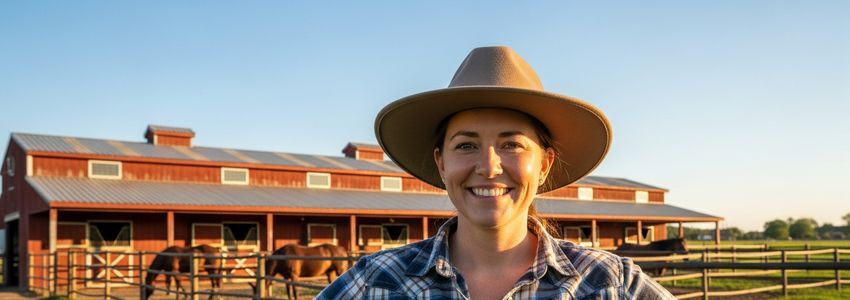
Running a horse farm is as rewarding as it is demanding. Whether you operate a breeding operation, a boarding stable, a training facility, or a riding school, the costs involved in maintaining horses, facilities, and equipment are significant. From hay and feed bills to barn repairs, veterinary care, and pasture maintenance, the financial pressure on horse farm owners never lets up. When growth opportunities arise - or when unexpected costs hit - horse farm business loans can be the difference between thriving and just surviving.
Yet many horse farm owners are unsure where to look for financing, what lenders require, or even which type of loan fits their situation. Traditional banks often view equine businesses as high-risk, making approvals difficult for owners who have limited collateral or shorter operating histories. The good news is that alternative lenders and specialty agricultural financing programs have expanded dramatically, giving horse farm owners more options than ever before in 2026.
This guide covers everything you need to know about horse farm business loans - from the types of financing available and qualification requirements, to how Crestmont Capital can help you secure funding fast. Whether you want to build a new barn, purchase additional acreage, buy horses, or simply cover a cash flow gap, this guide will help you find the right path to funding your equine business.
In This Article
- What Are Horse Farm Business Loans?
- Types of Financing for Horse Farm Owners
- What Can You Finance With a Horse Farm Loan?
- Qualification Requirements for Horse Farm Loans
- Loan Amounts, Rates, and Terms
- Horse Farm Loan Comparison
- How Crestmont Capital Helps Horse Farm Owners
- How to Apply for a Horse Farm Business Loan
- Tips to Improve Loan Approval Chances
- Next Steps
- FAQ
What Are Horse Farm Business Loans?
Horse farm business loans are financing products designed to help equine business owners fund operations, growth, and capital expenses. Unlike personal horse loans (which are typically used to purchase a single animal), horse farm business loans treat your equine operation as a commercial enterprise - providing larger sums, longer terms, and more flexible use of funds.
Horse farm owners can qualify for most standard small business loans as long as they operate as a legitimate business (with an EIN, business bank account, and documented revenue). This includes boarding stables, breeding operations, training facilities, lesson programs, horse show management companies, and equestrian centers.
According to the U.S. Small Business Administration, agricultural and farm businesses represent one of the largest categories of small business loans issued annually. The equine industry contributes over $122 billion to the U.S. economy each year, supporting over 1.7 million jobs, according to the American Horse Council. That scale means horse farms have real financing options - and real lenders willing to work with them.
Key Statistic
The U.S. equine industry generates over $122 billion in economic impact annually and supports 1.7 million jobs, according to the American Horse Council Foundation. That makes horse farm owners a legitimate and significant part of the U.S. small business economy.
Types of Financing for Horse Farm Owners
Horse farm owners have access to a range of financing products, each suited to different needs and situations. Understanding what each loan type does best helps you choose the right tool for your goals.
Term Loans
A term loan provides a lump sum of capital that you repay over a fixed period (typically 1 to 5 years for short- and medium-term, or up to 25 years for SBA-backed loans). Term loans are ideal for larger one-time investments - building a new barn, purchasing property, buying a tractor, or expanding your training facilities. Interest rates for standard business term loans typically range from 7% to 30%, depending on your creditworthiness and the lender.
Business Lines of Credit
A business line of credit works like a revolving credit card - you draw funds when you need them and only pay interest on what you use. This makes it an excellent option for managing seasonal cash flow fluctuations, covering unexpected veterinary bills, buying hay and feed in bulk, or handling payroll during slower months. Lines of credit are highly flexible and can be reused as you pay them down.
SBA Loans
SBA loans are government-backed loans that offer some of the best rates and terms available. The SBA 7(a) loan (up to $5 million) and the SBA 504 loan (for commercial real estate and major equipment) are both available to equine businesses that meet eligibility requirements. The SBA Farm Service Agency also offers specific programs for agricultural operations. SBA loans require strong credit and detailed documentation, but the lower rates make the extra work worthwhile.
Equipment Financing
Equipment financing is specifically designed for purchasing machinery, trailers, tractors, grooming equipment, arena footing equipment, and other hard assets. The equipment itself serves as collateral, which often makes approval easier and interest rates lower compared to unsecured loans. Terms typically range from 3 to 7 years, and you own the equipment outright at the end of the term.
Working Capital Loans
Working capital loans provide short-term funds (3 to 18 months) to cover everyday operating expenses - employee wages, utilities, farrier visits, veterinary costs, and more. These loans are faster to approve than term loans and require less documentation. They are ideal when cash flow dips during seasonal slow periods or when an unexpected expense arises.
Bad Credit Business Loans
If your credit score is below 650, you may still qualify through bad credit business loans. These lenders focus more heavily on your revenue, business cash flow, and time in business rather than credit score alone. Interest rates will be higher, but these loans give horse farm owners with past credit challenges a real path to funding.
Merchant Cash Advances
A merchant cash advance (MCA) provides a lump sum in exchange for a percentage of future daily revenue. While MCAs carry higher costs, they can work for horse farms with consistent card-based revenue (such as boarding fee payments processed by credit card). Approval is fast - often within 24 hours. However, factor in the total cost before committing to an MCA.
Ready to Fund Your Horse Farm?
Get fast, flexible financing from the #1 business lender in the U.S. Apply in minutes.
Apply Now ->What Can You Finance With a Horse Farm Loan?
One of the most common questions from horse farm owners is: what can a business loan actually be used for? The answer is nearly everything that keeps your operation running and growing. Here are the most common uses of horse farm business loans:
Barn and Facility Construction or Renovation
Building a new barn, updating stall systems, installing better ventilation, adding wash racks, or constructing an indoor arena - these are major capital expenses that most horse farm owners cannot fund out of pocket. A term loan or SBA 504 loan can provide the funding needed for construction projects that will increase your farm's value and capacity for years to come.
Land and Property Purchase
Expanding your acreage - whether to add pasture space, build new facilities, or create buffer zones - requires significant capital. SBA loans and commercial real estate loans are well-suited for land acquisition. Owning more land directly increases the revenue-generating capacity of your farm.
Horse Purchases
Whether you run a breeding operation, a training program, or a lesson stable, purchasing quality horses is often your biggest ongoing expense. Business loans can fund horse acquisitions, allowing you to upgrade your stock, add lesson horses, or purchase broodmares. Keep in mind that horses themselves typically cannot serve as loan collateral due to their depreciation and mortality risk.
Hay, Feed, and Supplies in Bulk
Buying hay and grain in bulk at the end of harvest season can produce substantial savings compared to purchasing small lots throughout the year. A working capital loan or line of credit lets you take advantage of seasonal pricing by purchasing large quantities when prices are lowest.
Veterinary and Farrier Equipment
Equipping your farm with quality veterinary tools - from portable ultrasound machines for breeding programs to farrier equipment for in-house hoof care - reduces your outsourced service costs over time. Equipment financing is ideal for these types of purchases.
Trailers and Transportation Vehicles
Horse trailers, dually trucks, and transport equipment are major capital expenditures for any horse operation that competes, shows, or delivers horses. Equipment loans and commercial vehicle financing can fund these purchases with the vehicle or trailer serving as collateral.
Arena and Footing Improvements
High-quality arena footing protects horses from injury and improves the quality of your training program. Footing installations can cost $20,000 to $100,000 or more depending on the surface type and arena size. A business term loan covers this kind of significant facility improvement.
Payroll and Seasonal Cash Flow
If you employ grooms, trainers, barn managers, or riding instructors, payroll is a non-negotiable ongoing expense. During slow boarding months or when competition seasons wind down, a business line of credit can cover payroll gaps and keep your team intact.
Marketing and Business Development
Building a website, running social media ads, attending trade shows, and sponsoring competitions all cost money - but they generate boarders, students, and clients. A short-term working capital loan can fund marketing investments that pay for themselves quickly.
Horse Farm Business Loan: Common Uses and Average Costs
Barn Construction
$50K-$500K
New barns, stalls, arenas, wash racks
Horse Purchases
$5K-$150K+
Broodmares, stallions, lesson horses
Equipment & Trailers
$15K-$120K
Tractors, trailers, veterinary tools
Working Capital
$10K-$250K
Payroll, feed, supplies, cash flow gaps
Arena Improvements
$20K-$100K
Footing, lighting, drainage systems
Land Acquisition
$100K-$2M+
Pasture expansion, new parcels
Qualification Requirements for Horse Farm Loans
Lender requirements vary significantly based on loan type and lender. Here is a general breakdown of what most horse farm owners will encounter when applying for business financing:
Standard Business Loan Requirements
- Time in business: Most lenders require at least 6 months to 2 years of operating history. Alternative lenders often work with businesses as young as 6 months.
- Annual revenue: Most business loan programs require minimum annual revenues of $50,000 to $150,000. Higher loan amounts require higher revenue to qualify.
- Credit score: Prime lenders typically look for personal credit scores of 650 or above. Alternative lenders may approve scores as low as 500-550.
- Business bank account: Lenders will review 3 to 6 months of business bank statements to verify cash flow.
- Business registration: You should operate as a registered business entity (LLC, S-Corp, sole proprietor with EIN).
SBA Loan Requirements
- Personal credit score of 650 or higher (most SBA lenders prefer 680+)
- 2+ years in business
- Strong business financials (profit and loss statements, business tax returns, balance sheets)
- Collateral (real estate, equipment, or other assets)
- Personal guarantee required
Equipment Financing Requirements
- Credit score of 580 or higher
- Equipment quote or invoice from vendor
- 6+ months in business
- Down payment of 0-20% depending on credit strength
For a detailed breakdown of what lenders look at across all loan types, see our guide: Agribusiness Loans: The Complete Guide to Agricultural Business Financing.
Pro Tip
Even if your horse farm operates as a sole proprietorship, you should open a dedicated business checking account and keep personal and farm finances strictly separate. This single step dramatically improves your lendability and speeds up the approval process.
Loan Amounts, Rates, and Terms
The loan amount you qualify for depends on your revenue, creditworthiness, and the type of loan you choose. Below is a general overview of what horse farm owners can typically access:
Working Capital and Short-Term Loans
- Amount: $10,000 to $500,000
- Term: 3 to 18 months
- Factor rates / APR: 15% to 60% APR equivalent
- Funding speed: 24 to 72 hours
Term Loans (Medium-Term)
- Amount: $25,000 to $2,000,000
- Term: 2 to 5 years
- APR: 8% to 35%
- Funding speed: 1 to 7 business days
SBA Loans
- Amount: $50,000 to $5,000,000 (7a) or $5,000,000+ (504)
- Term: 10 to 25 years
- APR: Prime + 2.25% to 4.75% (typically 7-11% in 2026)
- Funding speed: 30 to 90 days
Equipment Financing
- Amount: $5,000 to $5,000,000+
- Term: 2 to 7 years
- APR: 5% to 25%
- Funding speed: 1 to 5 business days
Lines of Credit
- Amount: $5,000 to $500,000
- Term: Revolving (renews annually)
- APR: 10% to 45%
- Funding speed: 1 to 5 business days after approval
Horse Farm Loan Comparison
| Loan Type | Best For | Amounts | Speed | Credit Needed |
|---|---|---|---|---|
| SBA 7(a) | Large purchases, land, expansion | Up to $5M | 30-90 days | 650+ |
| Term Loan | Barn construction, horse purchases | $25K-$2M | 1-7 days | 600+ |
| Equipment Financing | Tractors, trailers, arena equipment | $5K-$5M | 1-5 days | 580+ |
| Line of Credit | Seasonal cash flow, ongoing expenses | $5K-$500K | 1-5 days | 600+ |
| Working Capital | Payroll, feed, immediate expenses | $10K-$500K | 24-72 hrs | 550+ |
| MCA | Urgent needs, lower credit | $5K-$500K | 24-48 hrs | 500+ |
How Crestmont Capital Helps Horse Farm Owners
Crestmont Capital works with horse farm owners and equestrian businesses across the United States to provide fast, flexible business financing tailored to the unique demands of the equine industry. Unlike traditional banks that may view horse farms as risky or unconventional, Crestmont understands the operational realities of running a boarding stable, training operation, breeding farm, or equestrian center.
Here is why horse farm owners choose Crestmont Capital:
Fast Funding
Traditional lenders can take 30 to 90 days to process a business loan application. Crestmont moves faster - many horse farm owners receive approval and funding within 24 to 72 hours for working capital loans and short-term products. Even for larger term loans, funding typically arrives in 1 to 7 business days.
Flexible Requirements
Crestmont works with businesses that have less-than-perfect credit, limited collateral, or shorter operating histories. If you have been in business for at least 6 months and generate consistent revenue, you may qualify for horse farm financing through Crestmont - even if a bank has turned you down.
Multiple Loan Products
Whether you need a fast business loan to cover an emergency vet bill, a line of credit for seasonal cash flow management, or a large term loan for facility expansion, Crestmont has products that fit your situation. The ability to match the right loan type to your specific need is what separates Crestmont from one-size-fits-all lenders.
Dedicated Support
Crestmont's team understands agricultural and specialty business sectors. You will work with a dedicated funding advisor who can explain your options clearly, help you prepare documentation, and guide you through the process from application to funding. This personalized approach is especially valuable for first-time business borrowers.
Transparent Terms
Crestmont believes in straightforward loan terms with no hidden fees or surprise charges. You will know exactly what you owe, when you owe it, and what the total cost of your financing will be before you sign anything. This transparency makes it easier to plan your farm's budget and cash flow.
To learn more about how agricultural operations qualify for business financing, see our guide on Agricultural Equipment Financing.
Get Funded for Your Horse Farm
Crestmont Capital offers fast, flexible funding for equine and agricultural businesses across the U.S.
Apply Now ->How to Apply for a Horse Farm Business Loan
Applying for a horse farm business loan does not have to be overwhelming. Here is a step-by-step overview of what to expect when working with a lender like Crestmont Capital:
Step 1: Define Your Need and Loan Amount
Before applying, know exactly what you need the funds for and how much you need. Vague applications signal uncertainty to lenders. Be specific: "I need $75,000 to fund the construction of two additional stalls and a new wash rack" is far more compelling than "I need money for my barn."
Step 2: Gather Your Documents
Most lenders require the following documentation:
- Business bank statements (last 3 to 6 months)
- Personal and business credit reports
- Business tax returns (last 1 to 2 years for SBA and term loans)
- Profit and loss statement
- Business license or registration documentation
- Equipment quotes or vendor invoices (for equipment financing)
Step 3: Choose the Right Lender
Not all lenders understand the equine industry. Look for lenders experienced with agricultural and specialty businesses. Crestmont Capital specializes in working with farm and agribusiness owners and can quickly assess which loan product best fits your situation.
Step 4: Submit Your Application
With Crestmont, the application process is straightforward. Complete the online application, upload your supporting documents, and a funding advisor will review your file and reach out to discuss your options.
Step 5: Review the Offer and Accept
Once approved, carefully review the loan offer. Pay attention to the APR (not just the interest rate), total repayment amount, payment schedule, and any origination fees. Ask questions if anything is unclear. Accept only when you are fully confident the terms work for your farm.
Step 6: Receive Funding
Upon acceptance, funds are typically deposited directly into your business bank account. For short-term and working capital products, this can happen within 24 to 72 hours of acceptance.
Time-Saving Tip
Prepare all your documents before you apply. Having 6 months of bank statements, your last 2 years of business tax returns, and a current profit and loss statement ready to upload cuts application processing time significantly and signals to lenders that you run a well-organized operation.
Tips to Improve Your Horse Farm Loan Approval Chances
Getting approved for the best possible loan terms requires preparation. Here are the most effective steps horse farm owners can take to strengthen their loan applications:
1. Maintain Separate Business Finances
Keep a dedicated business checking account for all farm income and expenses. Commingling personal and business finances is one of the most common mistakes that slow approvals and reduce loan amounts. According to Forbes, lenders consistently cite financial organization as a top factor in business loan approvals.
2. Build Business Credit
Open a business credit card and use it for farm purchases, paying the balance in full each month. Establish accounts with feed suppliers, tack stores, and veterinary practices that report to business credit bureaus. Over time, this builds a strong business credit profile that qualifies you for larger loans at lower rates.
3. Document All Revenue
Lenders want to see consistent, documented revenue. Deposit all boarding fees, lesson income, competition income, and horse sales proceeds through your business account. Cash transactions that are not deposited are invisible to lenders and can undermine your qualifying revenue significantly.
4. Reduce Existing Debt Where Possible
Your debt service coverage ratio (DSCR) - the relationship between your business income and your existing debt payments - is a key underwriting factor. Paying down existing credit card balances and short-term debt before applying can improve this ratio and increase your loan eligibility.
5. Have a Clear Use of Funds Plan
Lenders are more confident when they understand exactly how loan funds will be used and how that use will generate or protect revenue. A one-page summary explaining your plan - "New 4-stall barn addition will allow us to board 4 additional horses at $800/month each, generating $38,400 in new annual revenue" - dramatically strengthens your application.
6. Consider Collateral Options
If you own real property - your farm, house, or other real estate - offering it as collateral for a secured loan can significantly improve your terms. Secured loans typically carry lower interest rates than unsecured products because the lender's risk is reduced.
7. Work With a Lender Who Knows Ag Businesses
Agricultural businesses like horse farms have unique cash flow patterns and asset profiles that generic lenders may not understand. Working with a lender like Crestmont Capital, who has experience with farm and agribusiness financing, improves both your approval odds and the quality of terms you receive.
For additional tips on qualifying for business financing, see CNBC's guide to getting a small business loan.
Next Steps: How to Move Forward
Identify your exact funding need and amount
Write down what the funds will be used for and how much you need. Be as specific as possible to speed up the process.
Gather your financial documents
Pull together 6 months of bank statements, last 2 years of business tax returns, and a current P&L statement. Having these ready speeds up approval dramatically.
Complete Crestmont Capital's online application
The application takes just minutes to complete. A dedicated funding advisor will review your file and contact you to discuss your options.
Review your offer and ask questions
Carefully review APR, total repayment, payment schedule, and fees before accepting. Your advisor is there to explain everything clearly.
Receive your funds and put them to work
Funds are typically deposited directly to your business account within 24-72 hours of acceptance for most loan types. Start executing your plan immediately.
Ready to Grow Your Horse Farm?
Get fast, flexible financing from the #1 business lender in the U.S. Apply in minutes.
Apply Now ->Frequently Asked Questions
Can I get a business loan for a horse farm?
Yes. Horse farms that operate as legitimate businesses with documented revenue and a business bank account can qualify for most types of small business loans, including term loans, lines of credit, equipment financing, and SBA loans. Alternative lenders like Crestmont Capital often have more flexible requirements than traditional banks.
What credit score do I need for a horse farm business loan?
Requirements vary by lender and loan type. Traditional banks and SBA lenders typically require a personal credit score of 650 or higher. Alternative lenders like Crestmont Capital may work with scores as low as 500-550, placing more weight on your revenue and cash flow than your credit score alone.
How much can I borrow for my horse farm?
Loan amounts depend on your revenue, credit, and loan type. Working capital loans typically range from $10,000 to $500,000. Term loans can reach $2 million or more. SBA loans go up to $5 million (7a) or higher (504). Equipment financing is limited by the value of the equipment being purchased.
Can I use a business loan to buy horses?
Yes. Business loans - particularly working capital loans and term loans - can be used to purchase horses for commercial use, including breeding stock, lesson horses, and horses for resale. However, horses typically cannot serve as loan collateral because they depreciate and carry mortality risk.
What is the best loan for building a new horse barn?
For barn construction projects, a term loan or SBA 504 loan is typically the best fit. Both provide large lump sums with extended repayment periods. SBA 504 loans are specifically designed for real property and permanent structures, making them ideal for barn construction. Term loans from alternative lenders fund faster but may carry higher rates.
How do I qualify for an SBA loan for my horse farm?
To qualify for an SBA loan, you generally need a personal credit score of 650+, at least 2 years in business, strong financial statements, and collateral. You also need to demonstrate that you are unable to obtain financing on reasonable terms from non-government sources. Working with an SBA-preferred lender streamlines the process significantly.
Can a horse boarding business get a line of credit?
Yes. A business line of credit is an excellent tool for horse boarding operations because it provides flexible access to capital for managing seasonal fluctuations in boarding demand, covering unexpected veterinary or repair costs, and funding payroll during slower months. Most lenders require at least 6 months in business and $50,000 or more in annual revenue.
Does my horse farm need to be an LLC to get a business loan?
No. Sole proprietors, partnerships, LLCs, S-Corps, and C-Corps can all qualify for business loans. However, having a formal business structure (especially an LLC) combined with a dedicated business bank account significantly improves your credibility with lenders and may increase the loan amounts and terms available to you.
How fast can I get funding for my horse farm?
With alternative lenders like Crestmont Capital, horse farm owners can receive approval and funding for working capital loans within 24 to 72 hours. Equipment financing typically funds in 1 to 5 business days. SBA loans are slower, requiring 30 to 90 days for full processing and funding.
Can I get a horse farm loan with bad credit?
Yes. Lenders specializing in bad credit business loans evaluate your application based primarily on your business revenue, cash flow, and time in business rather than credit score alone. Horse farm owners with credit scores as low as 500-550 may qualify for working capital loans or merchant cash advances through alternative lenders.
Can I finance a horse trailer with a business loan?
Yes. Horse trailers used for commercial purposes (transporting horses to competitions, delivering horses to clients, hauling for your training program) can be financed through equipment financing or commercial vehicle loans. The trailer typically serves as collateral, which can reduce your interest rate compared to unsecured financing.
What documents do I need to apply for a horse farm loan?
Typical required documents include 3 to 6 months of business bank statements, the last 1 to 2 years of business tax returns (for larger or SBA loans), a current profit and loss statement, business license or registration documents, and an equipment quote or invoice if applying for equipment financing. Having these ready before you apply speeds up the process significantly.
Is horse farming considered agriculture for lending purposes?
Yes. Horse farming - whether for breeding, boarding, training, or riding instruction - is generally classified as an agricultural business by the IRS and most lenders. This classification can open access to specialized agricultural loan programs, USDA financing, and Farm Service Agency products in addition to standard business loans.
What interest rates should I expect for a horse farm business loan?
Interest rates vary widely based on your credit score, loan type, and lender. SBA loans currently range from approximately 7% to 11% APR. Traditional bank term loans typically range from 7% to 20%. Alternative lender products range from 15% to 45% APR or higher for short-term products. Equipment financing rates typically range from 5% to 25% APR.
Can a new horse farm get a business loan?
New horse farms (less than 6 months in business) have limited options for traditional business loans. However, startup business loans, equipment financing for specific assets, USDA beginning farmer programs, and microloans through SBA-affiliated organizations can provide funding for newer operations. Having strong personal credit (670+) and collateral improves your options significantly.
Disclaimer: The information provided in this article is for general educational purposes only and is not financial, legal, or tax advice. Funding terms, qualifications, and product availability may vary and are subject to change without notice. Crestmont Capital does not guarantee approval, rates, or specific outcomes. For personalized information about your business funding options, contact our team directly.

Allan Garfinkle
Allan Garfinkle is the Chief Revenue Officer at Crestmont Capital, where he has spent more than a decade leading revenue strategy, business development, and operational growth. With 28 years of experience building and advising startups and small businesses, Allan has helped more than 10,000 business owners navigate financing decisions, growth opportunities, and changing economic conditions. He earned a Bachelor of Science in Economics and an MBA with a concentration in Finance from Northeastern University, as well as a Juris Doctor from New England Law, where his studies focused on contracts and business law. His writing draws on extensive practical experience in small-business lending, equipment financing, business credit, and commercial finance.