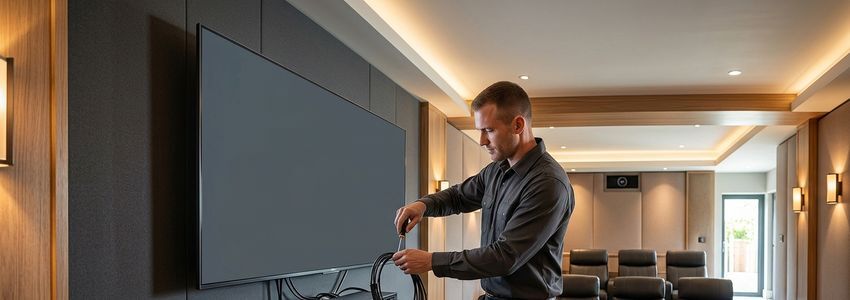
Home theater installation business loans give custom integrators, AV specialists, and home automation companies the capital they need to buy demo equipment, stock inventory, upgrade service vehicles, and take on larger residential and commercial projects without draining cash reserves. As home theater installation demand climbs alongside the broader smart home boom, installers who can move fast on inventory and equipment purchases are winning more bids and closing larger jobs. This guide breaks down exactly how financing works for home theater installation companies, what lenders look for, and how to choose the right funding structure for your business.
In This Article
What Is Home Theater Installation Business Financing?
Home theater installation business financing is capital specifically structured to help AV integration companies purchase the equipment, inventory, and tools required to design, install, and service custom home theater systems. This includes projectors, high-end displays, surround sound processors, speaker arrays, acoustic treatments, automated lighting and shading controls, and the racks, cabling, and mounting hardware that go into every install.
Unlike a general-purpose business loan, financing structured around this industry recognizes that home theater installers often need to buy demo units for showroom displays, pre-order equipment ahead of a scheduled install date, and maintain a rotating inventory of components that vary by brand and project scope. The right financing product lets an integrator say yes to a $40,000 whole-home project without waiting 60 days for a client deposit to clear before ordering hardware.
Home theater installation companies operate in a project-based, cash-intensive business. A single high-end install can require tens of thousands of dollars in equipment purchased weeks before the final invoice is paid. Financing bridges that gap so growth doesn't stall on a cash flow timing problem.
This industry sits at an interesting intersection of construction, retail electronics, and specialized labor. Installers often work alongside general contractors and electricians on new-build projects, which means equipment procurement timelines are frequently dictated by someone else's construction schedule rather than the installer's own cash position. A financing partner who understands that dynamic, rather than treating every application like a generic small business loan, makes a meaningful difference in how quickly a company can say yes to new work.
The category also covers adjacent business models: dedicated home theater retailers with in-house installation teams, smart home integrators who bundle theater rooms into whole-house automation packages, and specialty AV contractors who focus on commercial boardrooms, screening rooms, and media rooms for high-end residential clients. Regardless of the exact business model, the underlying financing need is the same: cover the gap between ordering expensive, specialized hardware and getting paid for the finished installation.
Key Benefits of Financing for Home Theater Installers
Structured financing solves several of the most common growth bottlenecks home theater and AV integration businesses face:
- Preserve working capital - Keep cash on hand for payroll, rent, and marketing instead of tying it all up in equipment purchases.
- Take on bigger projects - Bid on whole-home automation and multi-room theater builds that require large upfront equipment orders.
- Stock showroom inventory - Maintain demo units of current-generation projectors, displays, and speakers so clients can see and hear the technology before they buy.
- Upgrade service vehicles - Finance vans and trucks outfitted for equipment transport and on-site installation work.
- Smooth out seasonal demand - Home theater installs often spike around new construction cycles and holiday seasons; financing helps you staff up and stock up in advance.
- Faster project turnaround - Order equipment the moment a contract is signed instead of waiting on deposit funds to clear.
- Build business credit - Consistent, on-time payments on business financing help establish a credit profile separate from your personal credit.
- Negotiate better vendor pricing - Ordering in larger batches, made possible by financing, often unlocks volume discounts from equipment distributors that a one-off cash purchase would miss.
- Reduce reliance on personal savings or credit cards - Many installers bootstrap early growth on personal credit cards carrying high interest rates. Structured business financing typically offers better terms and keeps personal and business finances cleanly separated.
These benefits compound over time. A company that can consistently say yes to larger projects builds a reputation for capability, which in turn attracts referrals from builders, architects, and interior designers who need a reliable partner for the AV and theater components of their projects. Financing isn't just about covering a single equipment order, it's about building the operational capacity to compete for the projects that actually grow the business.
Ready to Take On Bigger Installation Projects?
Get fast, flexible financing built for AV integrators and home theater installation companies. No obligation - apply in minutes.
Apply Now →How Home Theater Installation Financing Works
The financing process for AV and home theater installation businesses generally follows a straightforward path from application to funded equipment purchase:
- Determine your funding need. Are you financing a specific equipment order for a signed project, building general showroom inventory, or covering a broader working capital gap? This determines which product fits best.
- Gather basic documentation. Most lenders want 3-6 months of business bank statements, a voided check, and basic business information. Equipment financing may also require an invoice or quote from your supplier.
- Submit your application. Online applications for equipment financing and working capital products can often be completed in under 15 minutes.
- Receive an approval decision. Many alternative and specialty lenders return decisions within 24 hours; equipment-secured financing may take slightly longer due to collateral verification.
- Review terms and funding structure. Compare the total repayment amount, term length, and payment frequency before signing.
- Receive funds or equipment purchase approval. Depending on the product, funds are deposited directly into your business account, or the lender pays your equipment vendor directly.
- Begin repayment on schedule. Most products offer daily, weekly, or monthly repayment options structured around your cash flow.
The exact underwriting criteria a lender uses will vary by product type. Equipment-secured financing tends to weigh the value and resale liquidity of the equipment itself alongside business revenue, since the hardware serves as collateral if the loan defaults. Unsecured working capital products lean more heavily on cash flow consistency shown in bank statements, time in business, and personal credit history of the business owner. Knowing which factors matter most for the product you're applying for helps you present the strongest possible application.
It's also worth noting that many installers work with multiple financing products simultaneously rather than a single all-purpose loan. A common structure pairs a standing business line of credit for day-to-day material purchases with occasional equipment financing for large, defined project orders. This layered approach gives flexibility for routine needs while still accessing better rates on large, collateralized purchases.
By the Numbers
Home Theater & Equipment Financing - Key Statistics
$13.7B
Global home theater market size in 2025
8.4%
Projected annual growth rate through 2034
78-84%
Equipment loan approval rate at online/specialty lenders
24-48hrs
Typical funding decision speed for equipment financing
Types of Financing Available for Home Theater Installers
Several financing products work well for home theater and AV integration businesses, each suited to a different need:
- Equipment financing - A term loan secured by the equipment itself (projectors, displays, processors, racks). Ideal for a large, defined equipment purchase tied to a specific project or showroom buildout.
- Equipment leasing - Lease demo units or high-turnover inventory instead of purchasing outright. Useful for showroom displays that get refreshed as new AV technology launches each year.
- Business line of credit - A revolving credit line you draw on as needed for equipment purchases, materials, or short-term cash flow gaps between project deposits and completion payments.
- Working capital loans - Unsecured funding for general operating expenses: payroll, rent, marketing, or bridging the gap on a slow-paying commercial project.
- Commercial vehicle financing - Finance or lease vans and trucks used to transport equipment and installation crews to job sites.
- SBA loans - Government-backed loans with longer terms and competitive rates, well-suited for larger expansion projects like opening a second showroom location.
Each of these products serves a distinct purpose, and most established installation companies end up using more than one over time. A newer company might start with a business line of credit to smooth out early cash flow bumps, then graduate to equipment financing once they're consistently landing larger whole-home automation contracts that justify financing a defined equipment package. A mature company opening a second location or expanding into commercial AV work is more likely to explore SBA financing given the longer runway and larger capital need involved in that kind of expansion.
Choosing the wrong product for the situation is a common and avoidable mistake. Using a short-term working capital loan to finance a long-lived asset like a company van, for example, often means paying it off faster than the vehicle depreciates, which unnecessarily strains monthly cash flow. Matching the repayment term to the useful life of what you're financing keeps monthly obligations proportional to the value you're getting from the purchase.
Key Stat: According to Census.gov data on U.S. small businesses, access to capital remains one of the top-cited growth constraints for service-based businesses, particularly those with high per-project material costs like AV and home theater integration.
Who This Financing Is Best For
Home theater installation financing is a strong fit for:
- Independent AV integrators taking on their first whole-home automation project and needing to front equipment costs before the client's second payment milestone.
- Growing installation companies that want to stock a rotating showroom of current-generation projectors, receivers, and displays to win more consultations.
- Established integrators bidding on new-construction builder contracts that require pre-wiring and equipment installed on a tight schedule tied to the construction timeline.
- Businesses expanding service territory and needing an additional service van or truck to cover a wider install radius.
- Seasonal businesses that see installation spikes around the holidays and new-build completion cycles and need working capital to staff up in advance.
Comparing Financing Options
Choosing between financing products depends on how you plan to use the funds. Here's a side-by-side comparison of the most common options for home theater installation companies:
| Financing Type | Best For | Typical Term | Speed to Fund |
|---|---|---|---|
| Equipment Financing | Large, specific equipment orders tied to a project | 2-7 years | 1-3 days |
| Equipment Leasing | Showroom demo units, rotating inventory | 2-5 years | 1-3 days |
| Business Line of Credit | Flexible, recurring equipment and material purchases | Revolving | 1-2 days |
| Working Capital Loan | Payroll, rent, general operating expenses | 3-18 months | Same day to 2 days |
| SBA Loan | Larger expansion, second showroom location | 5-25 years | 2-8 weeks |
How Crestmont Capital Helps Home Theater Installation Businesses
Crestmont Capital works with AV integrators and home theater installation companies to structure financing around real project timelines, not generic loan templates. Whether you need equipment financing for a large residential build, equipment leasing for showroom demo units, or a business line of credit to smooth out cash flow between project milestones, our team builds financing around how your business actually operates.
Many home theater installation companies also lean on unsecured working capital loans to cover payroll and overhead during a slow month, or commercial van financing to add a second installation crew and vehicle as project volume grows. For integrators considering a larger move, like a second showroom or a shift to commercial AV contracts, our SBA loan programs offer longer terms and lower monthly payments than most conventional options.
If you're comparing this to how nearby industries finance their buildouts, our guide on smart home installation business loans covers the closely related smart home automation space, and our audio visual equipment financing guide dives deeper into financing specific AV hardware categories.
Stock Your Showroom Without Draining Cash Reserves
Whether it's a single equipment order or a full showroom refresh, get financing that matches your project timeline. Apply in minutes.
Apply Now →Pro Tip: If you're bidding on a new-construction builder contract, apply for financing before the bid is awarded. Having pre-approval in hand lets you commit to equipment lead times immediately once the contract is signed, which can be a competitive advantage against installers who wait to secure funding after the fact.
Real-World Scenarios
Scenario 1 - The Whole-Home Build. A three-person AV integration company lands a $65,000 whole-home theater and automation contract for a new-construction property. The client's deposit covers 30% of costs, but equipment needs to be ordered immediately to hit the builder's install window. Equipment financing covers the remaining hardware order, and the loan is repaid as the remaining project milestones are invoiced.
Scenario 2 - The Showroom Refresh. An established integrator wants to update their showroom with the newest generation of projectors and immersive audio processors ahead of the holiday shopping season. Equipment leasing lets them display current technology without a large upfront cash outlay, and they upgrade again in two years when leases roll over.
Scenario 3 - The Second Crew. A growing installer is turning down jobs because their single install crew is booked six weeks out. A working capital loan funds hiring and training a second crew, plus a used van financed separately, doubling their monthly project capacity.
Scenario 4 - The Commercial Pivot. A residential-focused integrator wins their first commercial contract, outfitting a corporate boardroom with video conferencing and presentation AV systems. A business line of credit covers the unfamiliar commercial-grade equipment costs while they learn the new market segment.
Scenario 5 - The Slow Season Bridge. Business slows in late winter between major project cycles. A short-term working capital loan covers payroll and rent for six weeks until spring project bookings pick back up, avoiding layoffs of trained installation technicians.
Scenario 6 - The Builder Partnership. A home theater installer signs an exclusive pre-wire and installation agreement with a regional custom home builder covering eight houses over the next year. SBA financing funds a larger equipment inventory and an additional installation crew to reliably deliver on the builder's construction timeline across all eight properties simultaneously.
Frequently Asked Questions
What is home theater installation business financing?
It's capital structured specifically for AV integrators and home theater installation companies to purchase equipment, inventory, vehicles, and cover working capital needs tied to project-based work.
How fast can I get funded for home theater equipment?
Many equipment financing and working capital products can be approved and funded within 24 to 48 hours, especially with online and specialty lenders that specialize in equipment-secured financing.
What credit score do I need to qualify?
Requirements vary by lender and product. Equipment financing often has more flexible credit requirements than unsecured working capital because the equipment itself serves as collateral, reducing lender risk.
Can I finance showroom demo equipment, not just client project equipment?
Yes. Equipment leasing is commonly used for showroom demo units since it lets you refresh displayed technology every couple of years without large repeated cash outlays.
What's the difference between equipment financing and equipment leasing?
Equipment financing means you're purchasing and eventually owning the equipment outright. Leasing means you're paying to use it for a set term, which works well for equipment that gets replaced frequently, like showroom demo units.
Do I need a down payment for equipment financing?
Some equipment financing programs require a modest down payment, while others finance 100% of the equipment cost depending on your credit profile and the lender's underwriting standards.
Can startups in the home theater installation business qualify?
Newer businesses can qualify for some financing products, though rates and terms are generally more favorable once you have at least one year of business history and consistent revenue.
How much can I borrow for a home theater equipment purchase?
Loan amounts typically scale with the equipment invoice or project scope, ranging from a few thousand dollars for a single-room theater to six figures for whole-home automation and multi-room installations.
Is a business line of credit better than a term loan for my installation business?
A line of credit works best if your equipment and material needs vary project to project. A term loan makes more sense for one large, defined purchase like a full showroom equipment overhaul.
Can I finance a service van along with my equipment?
Yes, commercial vehicle and van financing is typically structured separately from equipment financing but can be arranged at the same time to outfit a new installation crew.
What documents do I need to apply?
Most lenders request 3-6 months of business bank statements, a voided business check, and basic business identification details. Equipment purchases may also require a vendor quote or invoice.
Does financing affect my ability to bid on larger contracts?
Having financing in place, or pre-approval, generally helps because it lets you commit confidently to equipment orders and lead times as soon as a contract is awarded, rather than delaying to secure funding first.
Is an SBA loan a good option for a home theater installation business?
SBA loans work well for larger, longer-term investments like opening a second showroom location, since they offer longer repayment terms and generally lower monthly payments than short-term alternatives.
How do repayment schedules typically work?
Repayment frequency depends on the product. Equipment financing and SBA loans usually run on a monthly schedule, while some working capital products offer daily or weekly repayment structured around cash flow.
What happens if I need financing but my last project ran over budget?
Lenders generally look at overall business revenue and bank statement history rather than a single project's outcome, so one over-budget job typically won't disqualify an otherwise healthy business from qualifying.
Quick Guide
Next Steps for Home Theater Installers
Pin down whether you need equipment financing, leasing, a line of credit, or working capital.
Pull 3-6 months of bank statements and any relevant equipment quotes.
Complete a short application to receive a funding decision, often within 24-48 hours.
Move immediately on your project timeline once approved.
Don't Let Equipment Costs Slow Down Your Next Install
Get the financing you need to buy inventory, upgrade vehicles, and take on bigger home theater installation projects.
Apply Now →Additional Considerations Before You Apply
Before submitting an application, take stock of a few practical details that will streamline the process and improve your odds of a favorable outcome. Lenders generally want to see a clear separation between business and personal finances, so if you've been running equipment purchases through a personal credit card, consider opening a dedicated business account and building at least a few months of clean transaction history before applying for larger financing amounts.
It also helps to have a rough sense of your average project size and typical time-to-payment. If your business regularly waits 30 to 45 days between ordering equipment and receiving final project payment, a financing term that matches or slightly exceeds that window prevents cash flow strain. Conversely, if you're financing a long-lived asset like a service vehicle or permanent showroom fixtures, a longer term keeps monthly payments proportional to the asset's useful life.
It's also worth reviewing your supplier relationships before applying. Some equipment distributors offer their own manufacturer financing programs, which can be useful for smaller purchases but often come with less flexible terms than a dedicated business lender. Comparing a manufacturer's in-house financing offer against a standalone business equipment loan, factoring in both the interest rate and the flexibility to finance multiple brands and vendors under one facility, usually reveals that a standalone lender relationship serves a growing installation business better over the long run.
Finally, don't wait until you're mid-negotiation on a large contract to start the financing conversation. Getting pre-qualified or establishing a standing line of credit before you need it means you can move immediately once a deal closes, rather than losing days or weeks to an application process while equipment lead times tick away.
Conclusion
Home theater installation business loans exist to solve one specific problem: the gap between when equipment needs to be ordered and when project revenue actually arrives. As the home theater and smart home market continues expanding, installers who can move quickly on equipment purchases, keep a stocked showroom, and staff up for busy seasons will consistently out-compete those who let cash flow timing dictate which projects they can accept. Whether the right fit is equipment financing for a single large project, leasing for rotating showroom inventory, or a working capital loan to bridge a slow month, matching the financing structure to how your business actually operates is what makes the difference. Explore your options and apply today to keep your next home theater installation project moving on schedule.
Disclaimer: The information provided in this article is for general educational purposes only and is not financial, legal, or tax advice. Funding terms, qualifications, and product availability may vary and are subject to change without notice. Crestmont Capital does not guarantee approval, rates, or specific outcomes. For personalized information about your business funding options, contact our team directly.