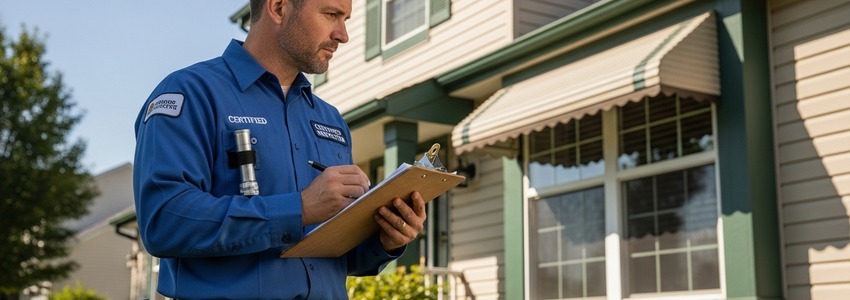
Running a home inspection business can be one of the most rewarding career paths in real estate services, but growth almost always requires capital. Whether you need a new vehicle, updated inspection equipment, software upgrades, or simply more working capital to handle a surge in demand, securing the right home inspection business loans is often the difference between stagnation and expansion. The right financing gives you the funding to invest in your operations, hire additional inspectors, and take on more clients without draining your cash reserves.
This complete guide covers every aspect of financing your home inspection company, from the types of loans available to qualification requirements, real-world scenarios, and smart strategies for using borrowed capital effectively.
What Are Home Inspection Business Loans?
Home inspection business loans are financing products specifically used by home inspection companies to fund operations, equipment, vehicles, staffing, marketing, and expansion. They are not a single specialized product but rather a collection of small business financing options that home inspection businesses can leverage based on their specific needs.
These loans can come from traditional banks, credit unions, the Small Business Administration (SBA), or alternative lenders like Crestmont Capital. Alternative lenders have become the preferred source for many home inspection businesses because they offer faster approvals, more flexible qualification standards, and products designed to accommodate the variable revenue patterns common in real estate-adjacent service businesses.
Home inspection businesses typically use financing for:
- Purchasing or upgrading inspection equipment (thermal cameras, sewer scopes, drones)
- Buying service vehicles for inspectors
- Hiring and training additional inspectors
- Investing in report software and CRM platforms
- Funding marketing campaigns to build referral networks
- Bridging seasonal cash flow gaps during slower real estate markets
Ready to Fund Your Home Inspection Business?
Get fast, flexible financing tailored to service businesses like yours. Apply in minutes.
Apply Now →Benefits of Financing Your Home Inspection Business
Many home inspection business owners hesitate to take on debt, but strategic financing offers significant advantages over waiting to save enough cash for every investment.
Accelerate Growth Without Depleting Cash Reserves
Instead of waiting years to accumulate the cash needed for a second vehicle or a high-end thermal imaging camera, financing lets you acquire those assets immediately and pay for them over time while they generate revenue. The asset works for you from day one rather than sitting in your savings plan.
Capitalize on Market Opportunities
Real estate markets move quickly. A surge in local home sales, an opportunity to partner with a large real estate agency, or a chance to acquire a competitor's client list can all arise without warning. Having access to capital through a business line of credit or fast-approval term loan means you can act when opportunities appear rather than watching them pass.
Maintain Predictable Cash Flow
Spreading large purchases over monthly loan payments preserves your working capital for day-to-day operations like payroll, insurance, licensing fees, and marketing. Rather than one large cash outflow disrupting your operating budget, you have predictable monthly expenses that are easier to plan around.
Build Business Credit
Responsibly repaying business loans builds your business credit profile, which improves your access to larger loan amounts at better rates over time. Early-stage financing that you repay on time lays the foundation for more powerful growth capital down the road.
Tax Advantages
Interest paid on business loans is generally tax-deductible as a business expense, reducing your net borrowing cost. Equipment purchased through financing may also qualify for Section 179 depreciation deductions. Consult your tax advisor for guidance specific to your situation.
Industry Insight
The home inspection industry generates over $5 billion in annual revenue in the United States, with more than 70,000 active inspection businesses operating nationwide. Businesses that invest in advanced tools and multi-inspector teams consistently outperform solo operators in revenue growth.
How Home Inspector Financing Works
The process of securing a small business loan for your home inspection company is straightforward, particularly when working with an alternative lender like Crestmont Capital.
Step 1: Identify Your Funding Need
Start by defining exactly what you need the capital for, how much you need, and what return you expect from the investment. This clarity shapes which loan product is most appropriate and helps you make a compelling case to lenders.
Step 2: Choose the Right Loan Type
Match your need to the appropriate product. Equipment purchases call for equipment financing. Ongoing cash flow management calls for a business line of credit. A major expansion investment might call for a term loan. Selecting the right product matters for both cost and structure.
Step 3: Gather Your Documents
Most alternative lenders require three to six months of business bank statements, a government-issued ID, and your business license. Larger loan amounts may require profit and loss statements or tax returns. The simpler the product, the fewer documents required.
Step 4: Submit Your Application
With an alternative lender, the application is typically completed online in 10 to 15 minutes. Traditional bank applications are more time-consuming and may require in-person meetings.
Step 5: Receive a Decision and Get Funded
Alternative lenders like Crestmont Capital can issue decisions within 24 hours and fund your account as quickly as the same business day for approved applications. Traditional lenders and SBA loans take 30 to 90 days from application to funding.
Types of Loans Available for Home Inspection Businesses
Home inspection businesses can access many of the same financing products available to other small service businesses. The key is understanding which loan type fits your specific need, timeline, and financial profile.
Small Business Term Loans
Term loans provide a lump sum repaid over a fixed period, typically ranging from 12 months to 5 years for alternative lenders or up to 10 years through traditional channels. They work well for larger, one-time investments like buying a new service vehicle, opening a second location, or expanding your team. Small business loans from alternative lenders often have more flexible qualification requirements than banks, with decisions in as little as 24 to 48 hours.
Business Line of Credit
A business line of credit is a revolving credit facility that lets you draw funds as needed and only pay interest on what you use. This is ideal for home inspection businesses dealing with seasonal fluctuations, slow periods between real estate market cycles, or unexpected equipment repairs. Lines of credit provide flexibility that term loans do not, making them one of the most popular financing tools for service businesses.
Equipment Financing
If your primary need is equipment, equipment financing is one of the smartest options. The equipment itself serves as collateral, which reduces the lender's risk and often results in better rates and terms. Thermal cameras, drones, moisture meters, sewer scopes, and company vehicles can all be financed through equipment loans or leases. Approval is often easier than for unsecured loans because the collateral provides security to the lender.
Short-Term Business Loans
Short-term business loans typically range from 3 to 18 months and are designed for immediate needs. They carry higher factor rates than long-term loans but offer fast access to capital, sometimes the same business day. If you need to replace a broken piece of critical inspection equipment immediately or bridge a gap before a large contract payment arrives, a short-term loan delivers speed and simplicity.
Working Capital Loans
A working capital loan covers day-to-day operating expenses when incoming payments are delayed or business is slower than expected. For home inspectors who invoice contractors or real estate companies on net terms, a working capital loan bridges the gap and ensures you can continue paying staff, insurance, and other overhead without interruption.
Revenue-Based Financing
Revenue-based financing provides capital in exchange for a percentage of your future monthly revenue until the advance plus a fee is repaid. It is particularly appealing to home inspection businesses because repayments automatically adjust with your income, meaning slower months result in smaller payments. This flexibility makes it a strong option for businesses with variable revenue tied to real estate market conditions.
Pro Tip: Match the Loan to the Use
One of the most common mistakes business owners make is using short-term, high-cost financing for long-term assets. If you are buying equipment that will last five years, use a term loan or equipment financing with a matching repayment period. Reserve short-term capital for short-term needs.
Who Qualifies for Home Inspector Financing?
Lenders evaluate home inspection businesses using several key criteria. Understanding what they look for helps you prepare a stronger application and increases your chances of approval.
Time in Business
Most traditional lenders require at least two years of operating history. Alternative lenders are more flexible, often approving businesses that have been operating for six months or more. If you are a newer business, your approval options will be narrower but still exist, particularly through revenue-based financing and equipment loans.
Annual Revenue
Lenders want to see that your business generates enough revenue to comfortably make loan payments. Most alternative lenders require a minimum of $10,000 to $15,000 in average monthly revenue. Some smaller short-term loan products are available to businesses with lower monthly revenue.
Credit Score
Your personal credit score plays a role in most business loan decisions, particularly for smaller and newer businesses. Scores above 680 open up the widest range of products. Scores between 580 and 680 may qualify for alternative lending products, though rates will be higher. Scores below 580 will generally require either a secured loan or specialized bad credit products.
Bank Statements and Cash Flow
Most alternative lenders require three to six months of recent business bank statements. They analyze deposit consistency, average daily balances, and evidence of cash flow. Maintaining a clean bank account with predictable deposits and minimal overdrafts significantly strengthens your application.
Industry and Business Type
Home inspection is generally considered a low-risk service industry by lenders. Unlike industries subject to high regulatory scrutiny or market volatility, home inspection businesses benefit from stable demand driven by real estate transactions and a low overhead operating model. This works strongly in your favor when applying.
See If You Qualify Today
Fast approvals, minimal paperwork, and funding as fast as 24 hours. No obligation to check your options.
Apply Now →How Crestmont Capital Helps Home Inspection Businesses
Crestmont Capital is a leading alternative lender specializing in small business financing across every major industry, including home services and inspection companies. We understand that traditional banks often move too slowly and impose qualification requirements that leave many viable small businesses without options. Our approach is different.
We evaluate the health of your overall business, not just your credit score. We look at your revenue history, bank statement trends, and the story behind your business. That means home inspection business owners who have been turned down by banks often find better options working with Crestmont Capital.
Our product lineup covers the full spectrum of home inspection business financing needs:
- Unsecured and secured term loans for growth investments
- Business lines of credit for flexible, ongoing access to capital
- Equipment financing and leasing for inspection tools and vehicles
- Short-term loans for urgent cash flow needs
- Revenue-based financing for businesses with variable income
- Working capital loans to fund daily operations
We offer fast decisions (often within 24 hours), straightforward applications with minimal paperwork, and funding that can hit your bank account in as little as one business day. For home inspection businesses, that speed matters when an opportunity arises or a critical piece of equipment needs immediate replacement.

Real Financing Scenarios for Home Inspection Businesses
Seeing how other home inspection business owners use financing can help you identify the right approach for your own situation. Here are six realistic scenarios that illustrate how loans for home inspectors work in practice.
Scenario 1: Solo Inspector Buying a Thermal Camera
Marcus runs a one-person home inspection business in a mid-sized metro area. He has been offering standard visual inspections for two years but wants to add thermal imaging to command higher fees. A professional-grade thermal imaging camera costs $9,500. Rather than waiting 6 months to save that amount, Marcus applies for equipment financing. With 2 years of business history and $12,000 in average monthly revenue, he is approved for $10,000 at a competitive rate over 36 months. His monthly payment is $310. Within the first month, he books 4 thermal imaging add-ons at $200 each, generating an extra $800 monthly, more than 2.5 times his loan payment. The equipment pays for itself in under 4 months.
Scenario 2: Established Firm Adding a Second Inspector
Priya owns an inspection business that has been operating for 5 years. She is turning away 8 to 10 jobs per month because she cannot keep up with demand. She wants to hire a second licensed inspector but does not have enough cash reserves to cover 3 months of salary while the new hire builds up their client base. She takes a $45,000 working capital loan to cover the hiring costs, training, and salary bridge period. The new inspector hits productivity targets in month 2. By month 4, revenue has increased enough to comfortably cover the loan payments with surplus cash flow.
Scenario 3: Fleet Expansion with a Branded Work Van
Carlos runs a 3-inspector operation and needs to add a fourth vehicle to support a new inspector. A used cargo van with branded graphics costs $38,000. Carlos uses a business term loan through Crestmont Capital, putting $5,000 down and financing the remaining $33,000 over 48 months. The monthly payment fits comfortably within his operating budget, and the branded van generates significant visibility in the neighborhoods where his team works, bringing in 2 to 3 new client referrals per month from homeowners who see the van and save the number.
Scenario 4: Seasonal Cash Flow Bridge with a Line of Credit
Dana operates a home inspection business in a northeastern market where real estate activity slows significantly from November through February. Her revenue drops from $22,000 per month in summer to $8,000 per month in winter. She establishes a $30,000 business line of credit during her peak season. During the winter months, she draws $6,000 to $8,000 per month to cover payroll and overhead. When spring arrives and revenue rebounds, she repays the draws within 90 days. The line of credit costs her only the interest on what she uses, and she avoids having to lay off her part-time admin employee every winter.
Scenario 5: Technology Upgrade for Competitive Differentiation
James has been in the inspection business for 7 years and realizes his competitors are winning clients with better-looking digital reports and online booking systems. He wants to upgrade to a premium report platform, implement a new CRM, and invest in a professional website redesign. The total cost is $18,000. He uses a short-term business loan with a 12-month term. The improved client experience leads to a 28% increase in 5-star online reviews within 6 months and a noticeable uptick in referral conversions. Revenue grows by $3,500 per month, far exceeding the loan payment.
Scenario 6: Expanding into Commercial Inspections
Sandra's residential inspection business is thriving, and she sees an opportunity to expand into commercial property inspections, which command fees of $1,500 to $5,000 per inspection. To make the move, she needs specialized training for herself and one inspector, commercial-grade testing equipment, and updated errors and omissions insurance. She finances $55,000 through a 3-year term loan. Within her first year of offering commercial services, she completes 18 commercial inspections totaling $52,000 in new revenue. The investment more than pays for itself in the first year alone.
Key Takeaway from These Scenarios
In every case, the loan enabled a specific high-return investment. The business owner did not borrow to survive; they borrowed to grow. That distinction is critical. Financing is most powerful when it funds something that generates more revenue than the cost of the capital.
Home Inspection Industry Stats and Trends
Home Inspection Industry at a Glance
$5B+
Annual U.S. Industry Revenue
70,000+
Active Inspection Businesses in the U.S.
88%
Home Buyers Who Request Inspections
$350-$600
Average Inspection Fee Range
The home inspection industry has demonstrated remarkable resilience and consistent growth over the past decade. Service-based firms with low overhead and high demand in their local markets represent some of the strongest loan candidates for alternative lenders. Home inspection fits this profile precisely.
Several macro trends are driving continued growth in the home inspection market. The aging U.S. housing stock means more existing homes changing hands, each requiring inspection before sale. The rise of remote work has spurred residential relocations, increasing transaction volume in suburban and rural markets where many inspection businesses operate.
Additionally, commercial inspections, environmental testing (mold, radon, lead paint), and energy efficiency audits represent growing adjacent markets that allow established home inspection businesses to diversify their revenue streams. Entering these adjacent markets requires investment in specialized equipment and training, which business financing can enable.
Frequently Asked Questions About Home Inspection Business Loans
Can I get a business loan for a new home inspection company? ▼
What credit score do I need for a home inspection business loan? ▼
How fast can I get funded for a home inspection business loan? ▼
Do I need collateral to get a home inspection business loan? ▼
What documents do I need to apply for a home inspection business loan? ▼
Can I use a business loan to buy a vehicle for my inspection business? ▼
What is the best loan for buying thermal imaging equipment? ▼
Can I get a business loan if I have bad personal credit? ▼
Is revenue-based financing a good option for home inspection businesses? ▼
How much revenue do I need to qualify for a home inspection business loan? ▼
Can I get a home inspection business loan if I am a sole proprietor? ▼
What is the difference between a business loan and a business line of credit for home inspectors? ▼
How long does the application process take for a home inspection business loan? ▼
Can I get an SBA loan for my home inspection business? ▼
Does getting a business loan affect my personal credit? ▼
Next Steps: How to Get Funding for Your Home Inspection Business
Your Path to Funding: Step by Step
Define Your Funding Need
Write down exactly what you need the loan for, how much you need, and how it will generate a return. This clarity will guide your product selection and strengthen your application.
Gather Your Documents
Collect three to six months of business bank statements, your business license, and a government ID. For larger loans, also prepare profit and loss statements.
Choose the Right Loan Type
Match your need to the appropriate product: equipment financing for tools and vehicles, a line of credit for cash flow, a term loan for expansion investments, or an SBA loan for major long-term projects.
Apply with Crestmont Capital
Submit your application online in minutes. Our team reviews your profile quickly and can provide a funding decision within 24 hours in most cases.
Use the Capital Strategically
Invest your loan proceeds in the highest-return activities: quality equipment, additional inspectors, marketing that builds referral relationships, or technology that improves efficiency. Track the results so you can optimize future borrowing decisions.
Conclusion
Home inspection business loans are not just a financial product; they are a strategic tool that can transform the trajectory of your company. Whether you are a solo inspector looking to upgrade your thermal camera, a growing firm adding your second inspector, or an established operation ready to expand into commercial inspections, the right financing partner can accelerate your growth in ways that years of slow savings cannot match.
The key is to borrow with purpose. Know what you need, match the loan type to the use, and partner with a lender who understands the home services industry. Crestmont Capital has helped thousands of service business owners across the country access the capital they need to grow, often within 24 hours of applying.
If you are ready to explore your options, start with our small business loans page or dive deeper into specific products like our business line of credit, equipment financing, or short-term business loans. Apply today and see what your home inspection business qualifies for.
Get Funded and Grow Your Inspection Business
From equipment loans to working capital, Crestmont has the right financing for where you are today and where you want to be tomorrow.
Apply Now →Disclaimer: The information provided in this article is for general educational purposes only and is not financial, legal, or tax advice. Funding terms, qualifications, and product availability may vary and are subject to change without notice. Crestmont Capital does not guarantee approval, rates, or specific outcomes. For personalized information about your business funding options, contact our team directly.