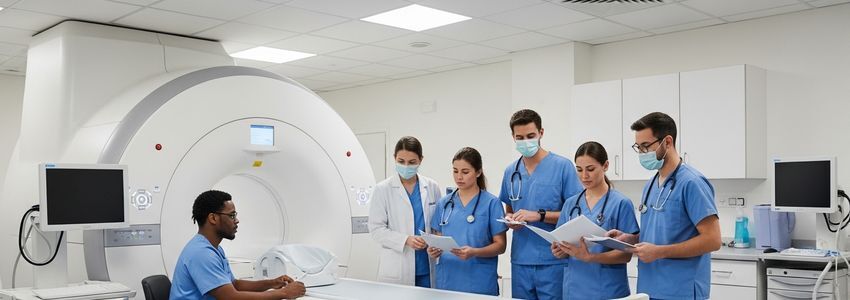
Healthcare equipment is among the most expensive and most critical investments a medical business will ever make - and for most clinics, hospitals, and specialty practices, buying that equipment outright simply is not realistic. Healthcare equipment financing gives healthcare business owners a practical path to acquiring the tools they need now, while preserving cash flow and keeping operations running at full capacity.
Whether you run a dental office, an imaging center, a veterinary clinic, or a multi-specialty outpatient facility, this complete guide will show you exactly how healthcare equipment financing works, what it costs, who qualifies, and how to move fast when you need new equipment today.
In This Article
- What Is Healthcare Equipment Financing?
- Key Benefits for Medical Businesses
- How Healthcare Equipment Financing Works
- Types of Healthcare Equipment You Can Finance
- Healthcare Equipment Financing at a Glance
- Who Healthcare Equipment Financing Is Best For
- Comparing Your Financing Options
- How Crestmont Capital Helps Healthcare Businesses
- Real-World Scenarios
- How to Get Started
- Frequently Asked Questions
- Conclusion
What Is Healthcare Equipment Financing?
Healthcare equipment financing is a type of business funding specifically designed to help medical and healthcare businesses acquire the equipment they need to operate and grow. Instead of paying the full purchase price upfront, a healthcare practice borrows funds - or enters into a lease arrangement - to pay for equipment over time, typically in fixed monthly installments.
The equipment itself typically serves as the collateral for the financing, which is one reason healthcare equipment loans tend to be easier to qualify for than traditional unsecured business loans. The lender holds a security interest in the asset until the loan is fully repaid, which significantly reduces their risk and makes approval more accessible for healthcare businesses at various stages of growth.
Healthcare equipment financing applies to a sweeping range of assets: diagnostic imaging machines, dental chairs and X-ray units, surgical tools, patient monitoring systems, laboratory analyzers, physical therapy equipment, chiropractic tables, ophthalmological devices, and much more. If it is used in the clinical delivery of healthcare services and carries a significant price tag, it likely qualifies for financing.
According to the U.S. Small Business Administration, healthcare is one of the fastest-growing sectors for small business ownership in America. With that growth comes immense pressure to invest in state-of-the-art equipment - equipment that can easily run from tens of thousands to several million dollars per unit. Financing is the mechanism that makes that investment feasible.
It is important to distinguish between two primary structures:
- Equipment loans: The practice borrows a lump sum, purchases the equipment outright, and repays the loan over the term. The business owns the equipment immediately and can depreciate it as an asset.
- Equipment leases: The practice makes monthly payments to use the equipment, with options at the end of the lease to purchase, return, or upgrade. Ownership may or may not transfer.
Both structures are widely used in healthcare, and the right choice depends on the type of equipment, how quickly the technology is expected to evolve, and the financial priorities of the practice.
Key Benefits of Healthcare Equipment Financing
The advantages of financing healthcare equipment rather than purchasing outright extend well beyond simple cash flow management. Here is a detailed look at why so many healthcare business owners choose to finance:
Preserve Working Capital
A single MRI machine can cost between $150,000 and $1.2 million depending on the model and configuration. A fully equipped surgical suite may run several million dollars. Paying for these assets from operating reserves would strip a practice of the liquidity it needs to cover payroll, supplies, rent, and everyday operational expenses. Financing preserves that liquidity so your business remains financially agile.
Access the Latest Technology Faster
Healthcare technology evolves rapidly. Diagnostic imaging machines, lab analyzers, and monitoring systems are frequently updated with new capabilities. Financing - especially leasing - allows practices to stay current with the latest equipment without being locked into aging assets for decades. When a better MRI unit becomes available, a lease end allows you to upgrade cleanly.
Predictable Monthly Payments
Fixed monthly payments make budgeting straightforward. Healthcare practices can project operating costs accurately and plan for growth without the variability that would come from major cash outlays. This predictability supports sound financial planning across multi-year business cycles.
Fast Approval and Funding
Specialized healthcare equipment lenders understand the asset class. Because the equipment serves as collateral and healthcare businesses tend to have stable, recurring revenue, approval decisions can come quickly - sometimes within 24 to 48 hours. That speed matters when a critical piece of equipment fails and needs replacement, or when a new practice location needs to be equipped and operational.
Potential to Finance 100% of Equipment Cost
Many healthcare equipment financing programs cover 100% of the purchase price - including delivery, installation, and software - with zero down payment required. This is a significant advantage over many other types of business financing, which often require 10% to 30% down.
Flexible Structures to Match Your Needs
Healthcare equipment financing comes in a wide range of structures: operating leases, capital leases, $1 buyout leases, fair market value leases, equipment term loans, equipment lines of credit, and more. This flexibility allows each practice to choose the structure that aligns with its financial goals, accounting preferences, and equipment lifecycle expectations.
Ready to Grow Your Business?
Get fast, flexible financing from the #1 business lender in the U.S.
Apply Now ->How Healthcare Equipment Financing Works
Understanding the financing process from start to finish helps healthcare business owners prepare effectively and move quickly when they need equipment. Here is a step-by-step breakdown of how the process typically works:
Step 1: Identify the Equipment You Need
Before approaching any lender, you should have a clear understanding of what equipment you need, what vendors or manufacturers supply it, and what the total cost will be. This includes the purchase price, delivery, installation, training, and any ongoing maintenance contract. Many lenders will ask for a vendor quote or invoice as part of the application.
Step 2: Gather Your Financial Documentation
Healthcare equipment lenders typically require the following documents:
- Business financial statements (profit and loss, balance sheet) for the past 1-3 years
- Business bank statements for the past 3-6 months
- Business and personal tax returns
- Articles of incorporation or business formation documents
- Medical or professional licenses
- Personal financial statement from each owner with 20%+ ownership
For newer practices or practices with limited history, some lenders specialize in startup healthcare equipment financing and may have lighter documentation requirements.
Step 3: Submit Your Application
Applications can often be submitted online in minutes. Modern equipment financing lenders use technology-driven underwriting that can process applications rapidly. For smaller equipment purchases (under $250,000), many lenders use "app-only" underwriting that requires minimal documentation.
Step 4: Receive an Approval and Review Terms
Once approved, the lender will present you with financing terms including the loan or lease amount, interest rate or factor rate, monthly payment, term length, and any fees. It is important to compare these terms carefully, paying particular attention to the total cost of financing over the life of the agreement - not just the monthly payment.
Step 5: Sign Documents and Take Delivery
After accepting the terms and signing the financing agreement, the lender will fund the purchase - either by paying the vendor directly or by disbursing funds to your account for you to pay the vendor. You then take delivery of the equipment and begin making monthly payments according to the agreed schedule.
Interest Rates and Terms
Healthcare equipment financing rates vary based on creditworthiness, practice age, equipment type, and financing structure. Typical ranges:
- Equipment loans: 5% to 25% APR for established practices
- Equipment leases: monthly payment equivalent of 3% to 10% of equipment value per year
- Terms: 24 to 84 months, with 36 to 60 months being most common for major equipment
- Down payment: $0 to 20%, with many programs requiring no down payment
Types of Healthcare Equipment You Can Finance
One of the most important things to understand about healthcare equipment financing is its extraordinary breadth. Virtually any piece of clinical equipment used in the provision of healthcare services can be financed. Here is a breakdown by healthcare sector:
Diagnostic Imaging Equipment
- MRI machines ($150,000 to $3 million+)
- CT scanners ($100,000 to $2.5 million)
- PET scanners ($600,000 to $2.5 million)
- X-ray machines ($30,000 to $200,000)
- Ultrasound machines ($20,000 to $500,000)
- Fluoroscopy units ($100,000 to $500,000)
- Mammography units ($50,000 to $400,000)
Dental Equipment
- Dental chairs and delivery units ($3,000 to $15,000 each)
- Dental X-ray systems ($10,000 to $70,000)
- CBCT cone beam scanners ($30,000 to $120,000)
- CAD/CAM milling systems ($20,000 to $150,000)
- Sterilization and autoclave equipment
- Dental lasers ($10,000 to $50,000)
Surgical and Procedural Equipment
- Surgical tables and lighting ($5,000 to $50,000)
- Laparoscopic and endoscopic systems ($50,000 to $300,000)
- Anesthesia machines ($10,000 to $100,000)
- Electrosurgical units ($5,000 to $50,000)
- Robotic surgical systems ($500,000 to $2 million+)
Laboratory Equipment
- Hematology analyzers ($5,000 to $100,000)
- Chemistry analyzers ($10,000 to $200,000)
- Microbiology and culture systems
- Centrifuges and incubators
- Molecular diagnostic platforms ($50,000 to $500,000)
Therapy and Rehabilitation Equipment
- Physical therapy tables and exercise equipment
- Ultrasound therapy units
- Electrical stimulation and traction equipment
- Hydrotherapy pools
- Chiropractic tables and adjusting instruments
- Laser therapy devices
Ophthalmology and Optometry Equipment
- Slit lamp biomicroscopes
- Optical coherence tomography (OCT) units
- Laser vision correction systems
- Auto refractors and visual field analyzers
Veterinary Equipment
- Digital radiography systems
- Anesthesia machines and monitoring equipment
- Ultrasound machines
- Surgical suites and dental units
- Endoscopy systems
Healthcare Equipment Financing at a Glance
Sources: Equipment Leasing and Finance Association (ELFA), U.S. Census Bureau
Who Healthcare Equipment Financing Is Best For

Healthcare equipment financing is not a one-size-fits-all product, but it serves a remarkably wide range of healthcare businesses effectively. Here is a look at the types of practices and organizations that benefit most:
Private Medical and Dental Practices
Solo practitioners and small group practices typically have limited access to institutional capital and cannot justify the cash outlay for major equipment. Equipment financing gives them the same access to state-of-the-art tools as larger systems, at a payment they can sustain from monthly patient revenue.
Specialty Medical Groups
Orthopedic groups, cardiology practices, gastroenterology practices, and other specialty groups often require expensive specialized equipment. A comprehensive orthopedic imaging suite or a catheterization lab can require millions in equipment. Financing allows the practice to invest in these capabilities and generate the revenue to service the debt from that same revenue stream.
Outpatient Surgery Centers
Ambulatory surgery centers (ASCs) require substantial equipment investment across multiple procedure rooms. Financing allows an ASC to phase equipment acquisitions strategically, matching payments with the case volume and revenue that equipment generates.
Imaging and Radiology Centers
Stand-alone imaging centers and hospital-based radiology departments routinely finance their most expensive assets - MRI units, CT scanners, and PET scanners. The high per-scan revenue these machines generate makes the ROI on equipment financing extremely favorable.
Veterinary Practices
Modern veterinary medicine has adopted many of the same diagnostic tools as human medicine. Digital radiography, ultrasound, CT, and MRI are increasingly standard at advanced veterinary practices. Equipment financing allows veterinary practices to offer these services and build the revenue to justify the investment.
Urgent Care and Telehealth-Integrated Clinics
The rapid growth of urgent care centers and hybrid telehealth/in-person clinics has created enormous demand for point-of-care diagnostic equipment, monitoring tools, and integrated technology platforms. Equipment financing allows new locations to open fully equipped from day one.
New Healthcare Practice Startups
Physicians, dentists, and other healthcare professionals starting their first practice face a particularly challenging financial situation: they need expensive equipment before they have any revenue. Startup equipment financing programs - including some that look primarily at personal credit and professional credentials - address this specific challenge.
Established Practices Upgrading Technology
Even well-established practices with strong revenue benefit from equipment financing when it is time to replace aging equipment or upgrade to newer technology. Rather than depleting reserves, they can finance the upgrade while the new equipment begins generating improved revenue immediately.
Comparing Your Healthcare Financing Options
Healthcare businesses have multiple paths to acquire equipment. Here is how the primary options compare:
Healthcare Equipment Loans vs. Leasing
Equipment loans give you ownership from day one. You build equity in the asset, can depreciate it, and own it free and clear at loan maturity. Leasing is generally more flexible - payments are often lower, upgrades are easier, and you avoid ownership of equipment that may become outdated. Leasing is often preferred for high-tech equipment with rapid technology cycles (like imaging), while loans are preferred for equipment with long useful lives (like dental chairs).
Healthcare Equipment Financing vs. SBA Loans
SBA loans offer competitive interest rates and long repayment terms, but they come with extensive documentation requirements, lengthy approval timelines (often 60 to 90 days), and in some cases, collateral requirements beyond the equipment itself. Equipment financing is typically much faster, less paperwork-intensive, and the equipment is its own collateral. For practices that need equipment quickly, equipment financing almost always wins on speed and simplicity.
Healthcare Equipment Financing vs. Business Lines of Credit
A business line of credit offers revolving access to funds and maximum flexibility, but is typically not ideal for large, one-time equipment purchases. Lines of credit are better for ongoing working capital needs. Equipment financing is purpose-built for asset acquisition and usually offers better terms for that specific use case.
Healthcare Equipment Financing vs. Paying Cash
Even when a practice has the cash available, paying outright for expensive equipment is rarely the optimal financial decision. Capital deployed in equipment cannot be deployed elsewhere. Financing preserves liquidity, maintains a financial cushion for unexpected needs, and - because healthcare equipment financing rates are often modest - the cost of capital may be low relative to the return the equipment generates. CNBC reporting on small business financing consistently shows that many profitable businesses maintain financing even when they could pay cash, precisely because preserved liquidity drives better long-term returns.
Healthcare Equipment Financing vs. Working Capital Loans
While you could technically use a working capital loan to purchase equipment, these loans are typically structured for shorter terms and carry higher costs than purpose-built equipment financing. Using working capital financing for a long-lived asset creates a mismatch between the loan term and the useful life of the asset - a scenario that creates cash flow pressure without strategic benefit.
Ready to Grow Your Business?
Get fast, flexible financing from the #1 business lender in the U.S.
Apply Now ->How Crestmont Capital Helps Healthcare Businesses
Crestmont Capital is a leading business lender with deep expertise in healthcare equipment financing. We understand the financial pressures that medical practices, dental offices, veterinary clinics, imaging centers, and specialty practices face - and we have built our programs to address those pressures directly.
Fast Approvals Designed for Healthcare
We know that a broken autoclave or a failed MRI cannot wait 60 days for SBA approval. Our healthcare equipment financing decisions can come within 24 to 48 hours for qualified applicants, so you can get equipment ordered and operational as quickly as possible.
Flexible Financing Structures
Whether you need a straightforward equipment term loan, a $1 buyout lease, a fair market value lease, or an equipment line of credit to cover multiple acquisitions over time, Crestmont Capital can structure a solution that matches your operational and financial needs. Our team works with each healthcare client to find the right fit - not a one-size-fits-all product.
No-Down-Payment Options
Many of our healthcare equipment financing programs require zero down payment, allowing practices to conserve cash while still acquiring the equipment they need. This is particularly valuable for startups and practices making their first major equipment investment.
Access to Multiple Loan Products
Sometimes equipment financing works best in combination with other funding tools. Crestmont Capital offers a full range of business financing products, including:
- Small business loans for general practice expenses
- Business lines of credit for working capital and ongoing needs
- Long-term business loans for practice expansion and real estate
- Fast business loans when you need funds urgently
- SBA loans for larger investments with favorable long-term rates
Healthcare Industry Expertise
Our underwriters and funding specialists understand the unique financial characteristics of healthcare businesses - including the role of insurance reimbursement cycles, the patient volume model, the regulatory environment, and the rapid pace of technology change. That expertise translates into better approval rates and financing structures that actually work for healthcare practices.
Financing From $5,000 to $10 Million
Whether you are a solo practitioner financing a new dental chair or a multi-site outpatient group financing a comprehensive imaging upgrade, Crestmont Capital can accommodate your needs. Our healthcare equipment financing programs cover amounts from $5,000 for smaller devices up to $10 million or more for major diagnostic systems and surgical facilities.
According to U.S. Census Bureau data, healthcare and social assistance is one of the largest and fastest-growing sectors for small business formation in the United States. As that growth continues, the demand for accessible, fast, and flexible healthcare equipment financing will only increase - and Crestmont Capital is positioned to meet that demand.
Real-World Scenarios: Healthcare Equipment Financing in Action
Seeing how healthcare equipment financing works in real-world situations helps clarify when and how to use it most effectively. Here are detailed scenarios across different healthcare contexts:
Scenario 1: The New Dental Practice Startup
Dr. Amanda Chen is a recently graduated dentist ready to open her first private practice. She has found a 1,800 square foot space in a growing suburb, but needs to outfit it completely. Her equipment list includes four dental chairs with delivery systems ($48,000), digital X-ray systems ($35,000), a dental CBCT scanner ($80,000), sterilization equipment ($15,000), and a reception and office technology package ($22,000). Total equipment need: $200,000.
Rather than depleting her savings - which she needs as a working capital cushion while the practice ramps up - Dr. Chen finances the full $200,000 through a 60-month equipment loan. Her monthly payment is approximately $3,800 at a 7% rate. She opens with all the equipment she needs, starts seeing patients from day one, and uses her cash reserves to cover payroll, supplies, and marketing while the practice builds to profitability.
Scenario 2: The Radiology Center Upgrading Its MRI
Midwest Imaging Associates operates three outpatient imaging centers and has run its primary 1.5T MRI machine for eleven years. The unit is frequently down for maintenance, aging parts are increasingly expensive, and the image quality is falling behind the standard patients expect. A new 3T system will cost $1.8 million - and will dramatically improve diagnostic capability and patient throughput.
The group finances the MRI through a 7-year equipment lease with a fair market value purchase option at end of term. Monthly payments of approximately $27,000 are more than offset by the additional revenue generated from the improved throughput of the new system - which can complete studies 40% faster than the old unit. The practice generates an additional $80,000 to $120,000 per month in MRI revenue after the upgrade.
Scenario 3: The Veterinary Clinic Expanding Services
Mountain View Animal Hospital is a busy small-animal practice that currently refers all diagnostic imaging to an off-site facility. The practice owner, Dr. Marcus Williams, recognizes that bringing imaging in-house would improve patient care, reduce referral revenue losses, and strengthen client retention. He finances a digital radiography system ($45,000) and a portable ultrasound unit ($32,000) through a 48-month equipment loan.
Within 18 months of bringing imaging in-house, Dr. Williams has recouped more than the full cost of financing through captured imaging revenue and reduced referrals. Patient satisfaction scores improve, and the clinic adds a new service line that differentiates it from nearby competitors.
Scenario 4: The Physical Therapy Practice Replacing Aging Equipment
Victory Physical Therapy operates two outpatient PT clinics. After 12 years in operation, the practice's ultrasound therapy units, electrical stimulation devices, and treatment tables are deteriorating. Rather than patching equipment that is past its useful life, the practice owner finances $85,000 in comprehensive equipment replacement through a 36-month equipment loan.
New equipment improves treatment outcomes and therapist efficiency, reduces equipment downtime complaints from the clinical team, and allows the practice to market its updated facilities to new referral sources. The practice sees a measurable uptick in patient volume within six months of the upgrade.
Scenario 5: The Urgent Care Chain Adding a New Location
Urban Urgent Care operates five locations in a major metropolitan area and is expanding to two new sites. Each new location requires approximately $180,000 in equipment: point-of-care diagnostic analyzers, digital X-ray, EKG equipment, autoclave and sterilization, exam tables, and medical technology infrastructure. The company finances the full $360,000 for both new sites through a combined equipment financing package, preserving its revolving line of credit for operational needs during the ramp-up period. Both locations open fully equipped on day one and reach operational break-even within four months.
How to Get Started with Healthcare Equipment Financing
Getting healthcare equipment financing is more straightforward than most practice owners expect. Here is a step-by-step guide to moving from need to funded:
-
1Define your equipment needs in detail Get quotes from vendors, confirm specifications, and establish the total cost including installation, training, and warranties. The more specific your request, the faster a lender can process it.
-
2Review your credit and financial position Pull your personal and business credit reports. Review your last 6 months of bank statements. Understand your practice's revenue and profitability. Identify any issues you may want to address before applying.
-
3Gather your documentation Prepare bank statements, business financial statements or tax returns, and any required professional license documents. The more organized your documentation, the faster approvals will move.
-
4Apply with Crestmont Capital Submit your application online. Our team reviews healthcare equipment financing applications quickly - many decisions are made within 24 to 48 hours. No lengthy waits, no confusing bureaucratic processes.
-
5Review and accept your terms Our team will present financing options tailored to your needs. Review interest rates, monthly payments, term length, and total cost of financing. Ask questions until you are fully confident in your decision.
-
6Sign, fund, and take delivery Once documents are signed, funding is typically disbursed quickly so you can order equipment and begin the installation process. Your practice gets the equipment it needs - and you begin generating the return on that investment immediately.
Qualifying for Healthcare Equipment Financing
Most healthcare practices that apply for equipment financing can qualify if they meet basic criteria. Here are the typical requirements:
- Time in business: Most lenders prefer 1+ years in operation, though startup programs are available for new practices
- Credit score: Personal credit scores of 620 or above are typically sufficient; higher scores unlock better rates
- Annual revenue: Minimum annual revenue thresholds vary, but many programs start at $100,000 to $250,000 per year
- No recent bankruptcies: Most lenders look for no bankruptcy in the past 2 to 5 years
- Valid professional licenses: Medical and healthcare practices must hold current and valid licensure in their state
If you have credit challenges, bad credit business loans and alternative financing structures may still be available. The equipment itself as collateral often compensates for credit limitations - and some healthcare lenders specialize in financing for practices that would not qualify with traditional banks.
According to reporting from Forbes, equipment financing is consistently among the most accessible forms of business financing because the asset itself reduces lender risk - making it a viable path even for businesses with imperfect financial profiles.
Frequently Asked Questions About Healthcare Equipment Financing
What is healthcare equipment financing?
Healthcare equipment financing is a type of business loan or lease specifically used to acquire medical, dental, veterinary, or other healthcare-related equipment. The equipment typically serves as collateral, making it more accessible than many other business loan types. It allows practices to acquire the tools they need now and repay the cost over time from operating revenues.
What types of healthcare equipment can I finance?
Almost any clinical equipment used in the delivery of healthcare services can be financed - from MRI machines and CT scanners to dental chairs, surgical tables, laboratory analyzers, physical therapy equipment, chiropractic tables, and veterinary diagnostic systems. Software, installation, and delivery costs can often be included in the financing as well.
How do healthcare equipment loans differ from leases?
An equipment loan gives you ownership of the equipment immediately; you repay the lender over time and own the asset free and clear at maturity. An equipment lease gives you use of the equipment for a fixed period, with options at the end to purchase, return, or upgrade. Loans are generally better for long-lived assets with stable technology; leases are preferred for equipment with rapid technology cycles where upgrading frequently is important.
How much can I finance for healthcare equipment?
Financing amounts range from a few thousand dollars for smaller devices to $10 million or more for major diagnostic systems and multi-site equipment packages. Lenders like Crestmont Capital work across the full spectrum - from solo practitioners financing a single piece of equipment to large specialty groups upgrading entire facility equipment rosters.
Do I need a down payment for healthcare equipment financing?
Many healthcare equipment financing programs require zero down payment. The equipment itself serves as collateral, which reduces lender risk significantly and often eliminates the need for upfront cash. Some lenders may request a down payment for high-risk situations (such as very new practices or poor credit), but 100% financing is widely available for qualified healthcare borrowers.
How quickly can I get approved for healthcare equipment financing?
Approval timelines vary by lender and complexity of the transaction. Many lenders using modern technology-driven underwriting can deliver decisions within 24 to 48 hours for straightforward applications. Larger or more complex transactions may take 3 to 7 business days. This is dramatically faster than SBA loans, which can take 60 to 90 days to close.
What credit score do I need for healthcare equipment financing?
Most healthcare equipment lenders look for personal credit scores of 620 or above for standard programs. Higher scores (680+) typically unlock better rates and terms. Some specialized lenders focus on healthcare practices with lower credit scores - particularly when the practice has strong revenue, professional credentials, and the equipment itself is strong collateral.
Can a new practice qualify for healthcare equipment financing?
Yes. Many lenders offer startup healthcare equipment financing programs specifically designed for practices in their first year or two of operation. These programs often rely more heavily on personal credit, professional credentials, and the quality of the business plan than on historical revenue. Healthcare professionals (physicians, dentists, veterinarians) are considered lower-risk borrowers because of their earning potential and professional stability.
What is the typical interest rate for healthcare equipment financing?
Interest rates for healthcare equipment financing typically range from 5% to 25% APR depending on creditworthiness, time in business, equipment type, and market conditions. Established practices with strong credit and revenue typically qualify for rates in the 5% to 12% range. Newer practices or those with credit challenges may face rates in the 12% to 25% range. The specific structure (loan vs. lease) also affects how cost is expressed.
How long are typical healthcare equipment financing terms?
Terms typically range from 24 to 84 months. The most common terms are 36, 48, and 60 months. Longer terms lower monthly payments but increase total financing cost. Shorter terms save on total interest but require higher monthly payments. The right term depends on the useful life of the equipment, your monthly cash flow, and your financial priorities.
Can I finance used or refurbished healthcare equipment?
Yes. Many lenders finance used and refurbished healthcare equipment, though the terms may differ slightly from new equipment financing. Lenders typically want to confirm the equipment is in good working condition and has remaining useful life. For major used equipment like refurbished MRI units or CT scanners, a recent service report or condition certification may be required. Crestmont Capital's equipment financing program accommodates both new and used assets.
Is healthcare equipment financing the same as a capital lease?
Not necessarily. Healthcare equipment financing is a broader category that includes both loans (which involve ownership) and leases (which may or may not transfer ownership). A capital lease - also called a finance lease under accounting standards - is a specific type of lease that resembles a purchase and is recorded as an asset and liability on the balance sheet. Healthcare practices should consult with their accountant regarding the accounting treatment of different financing structures.
Can I include software and installation in my equipment financing?
Yes, most healthcare equipment lenders allow "soft costs" such as installation, delivery, training, software, and extended warranties to be bundled into the financing - typically up to 15% to 25% of the total financed amount. This means you can finance a complete, fully operational equipment package rather than just the hardware itself.
What happens if I want to upgrade equipment before my financing term ends?
For equipment loans, you can typically pay off the remaining balance early (check for prepayment penalties in your loan agreement) and refinance for new equipment. For leases, you may be able to execute an early termination - sometimes with a fee - and transition into a new lease on upgraded equipment. Many equipment leases are specifically structured to make technology upgrades easy, which is one reason leasing is popular for rapidly evolving technology like imaging systems.
How does healthcare equipment financing affect my business credit?
Equipment financing, when reported to business credit bureaus, can actually help build and strengthen your business credit profile. Consistent on-time payments demonstrate financial reliability and improve your business credit score over time. This can make future financing - for additional equipment, expansion, or working capital - more accessible and less expensive. If you are working to build business credit, using equipment financing responsibly is one of the most effective strategies available.
Conclusion: Investing in the Right Equipment at the Right Time
Healthcare is built on capability - the ability to diagnose accurately, treat effectively, and care comprehensively for patients. That capability depends fundamentally on having the right equipment. Healthcare equipment financing exists to ensure that financial constraints never become the barrier between your practice and the clinical capabilities it needs to thrive.
Whether you are starting a new practice from the ground up, upgrading aging equipment that is holding your clinical team back, expanding to a new location, or acquiring cutting-edge technology to differentiate your services, healthcare equipment financing gives you a practical, structured path to make that investment without depleting the cash reserves your practice needs to operate effectively day to day.
The decision to finance versus pay cash is rarely purely financial - it is also strategic. Practices that finance equipment intelligently can grow faster, serve patients better, and maintain the financial agility to respond to opportunities and challenges as they arise. Practices that drain cash reserves to pay for equipment often find themselves financially constrained precisely when flexibility matters most.
Crestmont Capital combines speed, expertise, and a genuine commitment to healthcare businesses to deliver financing solutions that work in the real world. Our team understands what healthcare practices need, how quickly they need it, and what financing structures actually make sense for the clinical and financial realities of running a healthcare business.
If you are ready to explore healthcare equipment financing for your practice, the next step is simple - apply with Crestmont Capital and get a decision fast.
Ready to Grow Your Business?
Get fast, flexible financing from the #1 business lender in the U.S.
Apply Now ->Disclaimer: The information provided in this article is for general educational purposes only and is not financial, legal, or tax advice. Funding terms, qualifications, and product availability may vary and are subject to change without notice. Crestmont Capital does not guarantee approval, rates, or specific outcomes. For personalized information about your business funding options, contact our team directly.