
The strategic use of gym and fitness business loans is often the critical factor that separates thriving fitness centers from those that struggle to get off the ground. In an industry defined by high-energy, constant innovation, and a growing consumer demand for health and wellness, having access to adequate capital is non-negotiable. Whether you are launching a brand-new boutique studio, expanding a successful gym to a second location, or upgrading your facility with the latest state-of-the-art equipment, financing provides the fuel needed to power your growth and serve your community effectively.
The U.S. fitness industry is a powerhouse, generating over $33 billion in annual revenue, with more than 39,000 gyms and health clubs serving millions of Americans. This vibrant market presents a significant opportunity for entrepreneurs with a passion for fitness and a solid business plan. However, the initial and ongoing costs can be substantial. From securing a lease and building out the space to purchasing expensive cardio and strength-training machines, the capital required can quickly add up. This is where specialized financing solutions come into play, offering a structured pathway to acquire the necessary funds without depleting personal savings or compromising your operational budget.
This comprehensive guide will walk you through every aspect of gym and fitness business loans. We will explore the various types of financing available, outline the qualification requirements, and provide real-world examples of how these loans are used to build successful fitness enterprises. By understanding your options, you can make an informed decision that aligns with your business goals and sets your gym up for long-term success. At Crestmont Capital, we specialize in helping fitness entrepreneurs like you access the capital needed to turn your vision into a profitable reality.
Ready to Finance Your Gym?
Access up to $5M in as little as 24 hours. Our simple application takes just minutes.
Apply Now - Get Funded FastIn This Article
- What Are Gym and Fitness Business Loans?
- Types of Gym Financing Available
- How Gym Business Financing Works
- Equipment Financing for Gyms
- Qualification Requirements
- Loan Amounts and Terms
- How Crestmont Capital Helps Gym Owners
- Real-World Gym Financing Scenarios
- Comparing Your Financing Options
- Frequently Asked Questions
- Next Steps to Get Funded
- Conclusion
What Are Gym and Fitness Business Loans?
Gym and fitness business loans are specialized financial products designed to meet the unique capital needs of businesses in the health and wellness sector. This includes traditional gyms, 24-hour fitness centers, boutique studios (like yoga, Pilates, or cycling), personal training businesses, CrossFit boxes, and other specialized facilities like those offering kickboxing or boxing training. These loans are not a one-size-fits-all solution; they encompass a range of financing options that can be used for various business purposes, from startup costs and equipment purchases to expansion and working capital.
The fitness industry is more competitive than ever. As reported by Forbes and industry analysts, the market continues to expand, driven by a heightened public awareness of health and preventative care. With over 39,000 gyms operating across the United States, standing out requires a modern facility, top-tier equipment, and a compelling member experience. This is where financing becomes a strategic tool. It allows gym owners to invest in the assets and infrastructure necessary to attract and retain members, rather than being constrained by their current cash flow.
Unlike a generic business loan, financing tailored for the fitness industry takes into account the specific challenges and opportunities gym owners face. Lenders familiar with the industry understand the high upfront cost of equipment, the seasonal fluctuations in membership sales (like the New Year's rush), and the importance of marketing to build a strong brand. These loans can be used for a wide array of expenses, including:
- Purchasing new or used cardio and strength equipment
- Leasing a commercial space and funding leasehold improvements
- Covering initial startup costs, such as business licensing and insurance
- Funding marketing and advertising campaigns to attract new members
- Hiring and training staff, including personal trainers and front-desk personnel
- Managing day-to-day operational expenses and cash flow gaps
- Upgrading locker rooms, showers, and other member amenities
- Investing in management software, POS systems, and security technology
Essentially, a gym business loan is an injection of capital that empowers you to build a competitive, modern, and profitable fitness business. It provides the financial leverage to execute your business plan without compromise.
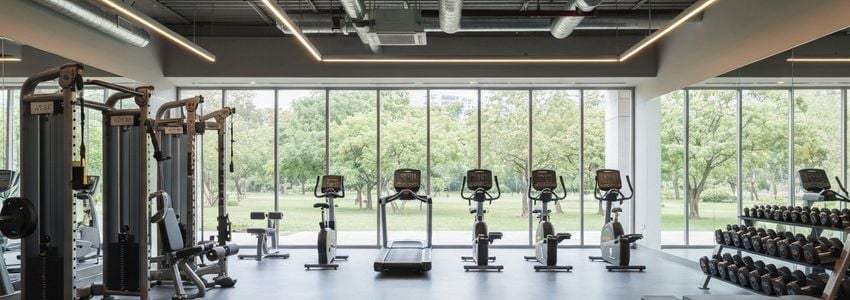
Types of Gym Financing Available
Choosing the right type of financing is crucial for your gym's financial health. Each option comes with its own structure, terms, and ideal use case. Understanding the differences will help you select the product that best aligns with your specific needs, whether you're buying a single treadmill or building a new facility from the ground up.
Term Loans
A term loan is what most people think of as a traditional loan. You borrow a lump sum of capital and repay it over a set period (the "term") with fixed, regular payments that include principal and interest. Term loans are excellent for large, planned investments where you know the exact cost upfront.
- Short-Term Business Loans: These loans typically have repayment terms of 3 to 18 months. They are ideal for addressing immediate needs, such as bridging a seasonal cash flow gap or seizing a time-sensitive opportunity, like purchasing discounted equipment. Crestmont Capital offers short-term business loans with fast funding times.
- Long-Term Business Loans: With terms ranging from 2 to 10 years or more, long-term business loans are suited for significant capital expenditures like a major expansion, facility acquisition, or a complete renovation. They offer lower monthly payments compared to short-term loans, but you'll pay more in total interest over the life of the loan.
SBA Loans
SBA loans are partially guaranteed by the U.S. Small Business Administration, which reduces the risk for lenders. This allows banks and other lending institutions to offer highly favorable terms, including low interest rates and long repayment periods (often 10-25 years). The most common type is the SBA 7(a) loan, which is versatile and can be used for almost any legitimate business purpose, including real estate purchase, construction, equipment, and working capital. While the terms are excellent, the application process for SBA loans is notoriously lengthy and requires strong credit and extensive documentation. For more official information, you can visit the SBA.gov website.
Equipment Financing
Perhaps the most popular option for gym owners, equipment financing is a loan specifically designed for the purchase of machinery and other physical assets. The equipment you are buying serves as the collateral for the loan, which often makes it easier to qualify for than other types of unsecured financing. This is an ideal solution for acquiring treadmills, ellipticals, weight machines, free weights, and even non-fitness items like locker room fixtures or computer systems. The loan terms are typically aligned with the expected lifespan of the equipment.
Business Line of Credit
A business line of credit provides flexible, revolving access to capital up to a certain approved limit. You can draw funds as needed and only pay interest on the amount you've used. Once you repay the drawn amount, your full credit limit becomes available again. This is an excellent tool for managing unpredictable expenses, covering payroll during a slow month, or launching a new marketing campaign. It acts as a financial safety net, giving you peace of mind and the ability to act quickly on opportunities.
Merchant Cash Advance (MCA)
A Merchant Cash Advance is not a loan but rather an advance on your future credit and debit card sales. A lender provides you with a lump sum of cash in exchange for a percentage of your daily card sales until the advance is paid back, plus a fee. MCAs offer extremely fast funding and are accessible to businesses with poor credit or a short operating history. However, they come with a high cost, and the effective APR can be substantial. They are best used for short-term, emergency funding needs when other options are not available.
Revenue-Based Financing
Similar to an MCA, revenue-based financing involves receiving a lump sum in exchange for a percentage of your gym's total future monthly revenue. Repayments are automatically debited from your bank account. The key difference is that payments fluctuate with your revenue-if you have a slow month, your payment is smaller, and if you have a great month, it's larger. This flexibility can be very appealing for gyms with seasonal membership patterns, as it protects cash flow during downturns.
When applying for financing, create a detailed "use of funds" statement. Clearly outlining how you plan to invest every dollar-whether for specific equipment, marketing, or renovations-demonstrates professionalism and a clear vision to lenders, increasing your chances of approval.
How Gym Business Financing Works
Securing financing for your gym may seem like a complex process, but modern lenders like Crestmont Capital have streamlined it to be as fast and efficient as possible. While the specific steps can vary slightly depending on the loan type and lender, the general journey from application to funding follows a clear path. Understanding this process helps you prepare and ensures a smoother experience.
- Assess Your Needs and Choose a Loan Type: The first step is internal. Clearly define why you need the capital and how much you require. Are you buying a $15,000 leg press machine or funding a $150,000 expansion? Your specific goal will guide you toward the most appropriate financing product. A specific equipment purchase points toward equipment financing, while ongoing cash flow management suggests a line of credit.
- Complete the Application: Most modern lenders offer a simple online application that can be completed in minutes. You will provide basic information about your business, including its legal name, address, tax ID number (EIN), time in business, and estimated annual revenue. You will also provide personal information as the business owner.
- Submit Required Documents: After the initial application, a funding advisor will typically request a few key documents to verify your business's financial health. The most common requirements are your last 3-6 months of business bank statements and, for some larger loans, financial statements like a profit and loss statement or balance sheet. Having these documents ready in advance can significantly speed up the process.
- Underwriting and Approval: This is the stage where the lender's underwriting team reviews your application and supporting documents. They analyze your credit history, cash flow, revenue stability, and other factors to assess risk and determine your eligibility. For fast business loans from alternative lenders, this process can be completed in just a few hours.
- Receive and Review Offers: Once approved, you will receive one or more financing offers. Each offer will detail the loan amount, interest rate or factor rate, repayment term, and any associated fees. It is crucial to review these terms carefully. A dedicated funding advisor can walk you through the details and answer any questions to ensure you fully understand the agreement.
- Sign the Agreement and Get Funded: After selecting the best offer for your needs, you will sign the loan agreement electronically. Once the signed contract is received, the lender will initiate the transfer of funds. With lenders like Crestmont Capital, the capital can be deposited directly into your business bank account in as little as 24 hours.
How Gym Financing Works - At a Glance
Apply Online
Fill out a simple, secure online application in minutes with basic business information.
Submit Documents
Provide a few key documents, typically your recent business bank statements, for verification.
Review Your Offer
Receive your approval and review the clear, transparent terms of your loan offer.
Receive Funds
Sign the agreement and get the capital deposited directly into your bank account, often within 24 hours.
Equipment Financing for Gyms
For any gym or fitness center, the quality and variety of its equipment are paramount to its success. Members expect modern, well-maintained machines that help them achieve their fitness goals. This makes gym equipment financing one of the most vital financial tools for facility owners. It provides a direct path to acquiring the necessary assets without the crippling upfront cost of purchasing them outright with cash.
This type of financing is structured as a secured loan where the equipment itself acts as the collateral. This self-collateralizing nature makes it one of the most accessible forms of funding, even for newer businesses or those with less-than-perfect credit. Lenders are often willing to finance 80-100% of the equipment's total cost, which can include not just the purchase price but also taxes, delivery, and installation fees. This preserves your working capital for other critical business needs like marketing, payroll, and facility maintenance.
A wide range of assets crucial to a gym's operation can be acquired through equipment financing, including:
- Cardio Equipment: Treadmills, ellipticals, stationary bikes, rowing machines, and stair climbers.
- Strength Training Equipment: Weight machines, cable crossovers, squat racks, Smith machines, and leg presses.
- Free Weights: Dumbbells, barbells, kettlebells, and weight plates.
- Functional Fitness Gear: Medicine balls, resistance bands, TRX systems, and plyometric boxes.
- Studio-Specific Items: Yoga mats, Pilates reformers, spinning bikes, or heavy bags for a boxing gym business loan.
- Facility Amenities: Lockers, benches, flooring, and front-desk furniture.
- Technology: Point-of-sale (POS) systems, member management software, security cameras, and access control systems.
The repayment terms for equipment financing are typically set to match the useful economic life of the asset, commonly ranging from 2 to 7 years. Once the loan is fully paid off, you own the equipment free and clear. This allows you to build equity in your business's assets over time. Furthermore, there can be significant tax advantages. Under Section 179 of the IRS tax code, businesses may be able to deduct the full purchase price of qualifying equipment in the year it was placed into service, providing a substantial tax benefit.
Consider an Equipment Financing Agreement (EFA) over a traditional lease if you plan to keep the equipment long-term. An EFA is a straightforward financing contract for ownership, whereas leases can have complex end-of-term buyout clauses. Owning the equipment builds equity on your balance sheet.
Upgrade Your Facility Today
Finance 100% of your new equipment cost and attract more members. Get a free quote now.
Apply for Equipment FinancingQualification Requirements
While qualifying for a business loan once required a lengthy, difficult process, modern alternative lenders like Crestmont Capital have made it more accessible. However, lenders still evaluate several key factors to assess risk and determine your eligibility for financing. Understanding these requirements will help you prepare your application for the best chance of success.
Credit Score
Your personal and business credit scores are a primary indicator of your financial responsibility. Traditional banks and SBA lenders typically require a strong personal credit score of 680 or higher. However, alternative lenders offer more flexibility. Many programs are available for business owners with scores in the "fair" range, and it's often possible to secure financing with a minimum credit score of 550-600. For business owners with challenged credit, options like bad credit business loans and merchant cash advances focus more heavily on your business's revenue and cash flow rather than your credit history.
Time in Business
Lenders prefer to work with established businesses that have a proven track record of generating revenue. Most loan products require a minimum of 6 months to 1 year in business. For more favorable products like long-term loans or SBA loans, the requirement is typically at least 2 years of operation. Startups with less than 6 months in business have fewer options, but they may qualify for equipment financing (where the asset provides security) or financing based on the owner's strong personal credit and a solid business plan.
Annual Revenue
Your gym's revenue is a direct measure of its health and ability to repay a loan. Lenders will look at your gross annual revenue to determine how much debt your business can comfortably handle. The minimum requirement varies by loan product, but a common threshold for many alternative loan options is $100,000 to $150,000 in annual revenue. Lenders will verify this by reviewing your recent business bank statements, which show the consistency and volume of your cash flow.
Key Documents
To streamline the application process, it's wise to have your key financial documents organized and ready. While the exact requirements vary, you should be prepared to provide:
- Business Bank Statements: Typically the most recent 3 to 6 months.
- Driver's License: A copy for identity verification.
- Voided Business Check: To set up direct debit for repayments.
- Financial Statements: For larger loan requests ($100,000+), you may need to provide a Profit & Loss Statement and a Balance Sheet.
- Business Plan: Especially important for startups, a detailed business plan can strengthen your application.
Loan Amounts and Terms
The amount of capital you can borrow for your gym and the terms of repayment depend on several factors, including the type of loan, your business's financial profile, and the lender's policies. Financing options are available for a wide spectrum of needs, from small-scale upgrades to major new ventures.
Loan amounts for gym and fitness company business loans can range from as little as $5,000 to over $5,000,000. The amount you qualify for is primarily determined by your annual revenue. A common rule of thumb among alternative lenders is that a business can typically be approved for a loan amount equivalent to 8-15% of its annual gross revenue.
Here’s how loan amounts often align with different business needs and types:
- Small Boutique Studio (e.g., Yoga, Pilates): Startup costs can range from $10,000 to $50,000. A small business loan in this range could cover initial equipment purchases (reformers, mats), marketing to build a client base, and initial working capital.
- Mid-Sized Independent Gym: An established gym looking to upgrade a section, such as its free weight area or cardio machines, might seek equipment financing between $50,000 and $150,000.
- Large Commercial or Franchise Gym: Building out a full-service commercial gym can cost upwards of $300,000 or more. This level of investment would likely require a substantial long-term loan or an SBA loan to cover construction, a full suite of equipment, and significant working capital.
- Expansion to a Second Location: An owner looking to replicate a successful model in a new area might seek a loan of $200,000 or more to cover the lease, build-out, and initial operating costs of the new facility.
Repayment terms vary significantly by loan type:
- Short-Term Loans & MCAs: 3 - 24 months, often with daily or weekly payments.
- Equipment Financing: 2 - 7 years, with monthly payments.
- Term Loans: 2 - 10 years, with monthly payments.
- SBA Loans: 7 - 25 years, with monthly payments.
The key is to match the loan term to the use of the funds. For example, use a short-term loan for a short-term need (like inventory) and a long-term loan for a long-term asset (like a building or major equipment package).
How Crestmont Capital Helps Gym Owners
Navigating the world of business financing can be daunting, but at Crestmont Capital, we simplify the process and focus on providing solutions tailored to the unique needs of gym and fitness entrepreneurs. We understand that in the fast-paced fitness industry, speed, flexibility, and reliable support are critical. Here’s how we stand out as a financing partner for your gym.
Speed and Efficiency
We know that opportunities don't wait. Whether it's a limited-time sale on premium equipment or the chance to secure a prime retail location, you need to act fast. Our application process is designed for speed. You can apply online in minutes, and our streamlined underwriting process often allows for approvals on the same day. Once approved, we can provide same-day business loans with funding in as little as 24 hours. This agility ensures you never miss a chance to grow your business.
Flexible Qualification Requirements
Traditional banks often have rigid requirements that exclude many otherwise healthy businesses. We take a more holistic view of your gym's financial health. While credit score is a factor, we place greater emphasis on your recent revenue and cash flow. This approach allows us to provide funding for a wider range of businesses, including those with less-than-perfect credit, a shorter time in business, or those in specialized niches like kickboxing gyms.
No Prepayment Penalties
We believe in empowering business owners, not penalizing them for success. Many of our financing products come with no prepayment penalties. This means if your gym has a series of highly profitable months and you want to pay off your loan ahead of schedule, you can do so without incurring any extra fees. This flexibility can save you a significant amount in interest and gives you greater control over your business's finances.
Dedicated Funding Advisors
When you partner with Crestmont Capital, you are not just a number in a system. You will be assigned a dedicated funding advisor who will work with you every step of the way. Your advisor will take the time to understand your specific business goals and challenges, help you choose the right financing product, and guide you through the application and funding process. This personalized support ensures you get a solution that truly fits your needs.
A Wide Range of Solutions
We offer a comprehensive suite of small business loans and financing products. From equipment financing and term loans to business lines of credit and SBA loans, our extensive network of lending partners allows us to find the perfect match for your scenario, ensuring competitive rates and favorable terms.
Real-World Gym Financing Scenarios
To better understand how financing works in practice, let's explore three common scenarios faced by gym owners and the solutions that can help them succeed.
Scenario 1: The Startup Boutique Studio
The Challenge: Sarah, a certified yoga and Pilates instructor, wants to open her own boutique studio, "Zenith Body." She has a strong business plan and has found a perfect 1,500-square-foot location. However, she needs $75,000 to cover the initial costs: $40,000 for specialized equipment like Pilates reformers and yoga props, $20,000 for leasehold improvements (mirrors, flooring, paint), and $15,000 for initial marketing and working capital.
The Solution: As a startup, Sarah has difficulty qualifying for a traditional bank loan. Instead, she applies for a combination of financing. She secures a $40,000 equipment financing agreement to purchase all her reformers and props. Because the equipment serves as collateral, the lender is comfortable extending the credit. For the remaining $35,000, she obtains a short-term business loan based on her strong personal credit and detailed business plan. This provides the capital for the build-out and marketing launch.
The Outcome: Sarah successfully launches Zenith Body. The equipment financing allows her to offer top-tier classes from day one, and the working capital from the term loan helps her attract a strong initial membership base. Her monthly payments are manageable, and she's on a clear path to profitability.
Scenario 2: The Expanding Independent Gym
The Challenge: "Iron House Gym," a popular local gym owned by Mark, has reached maximum capacity. Mark wants to capitalize on his brand's success by opening a second, larger location in a neighboring town. He estimates he needs $200,000 to secure the new lease, renovate the space, purchase additional equipment, and cover initial operating expenses for the new facility.
The Solution: With over five years in business and strong, consistent revenue, Iron House Gym is a prime candidate for an SBA 7(a) loan. Mark works with a funding advisor to prepare the extensive application. Though the process takes several weeks, he is approved for a $200,000 loan with a 10-year repayment term and a very low interest rate.
The Outcome: The favorable terms of the SBA loan keep Mark's monthly payments low, preserving his cash flow as the new location ramps up. The long-term funding allows him to build out the second gym exactly to his specifications without cutting corners, ensuring it lives up to the reputation of his original location. The expansion is a success, doubling his overall business revenue within two years.
Scenario 3: The Established Gym Upgrading Equipment
The Challenge: "Velocity Fitness," a 24-hour gym, has been open for a decade. While still profitable, some of its cardio equipment is outdated and frequently needs repairs. The owner, Maria, knows that to stay competitive and retain members, she needs to upgrade her treadmills and ellipticals. The total cost for the new equipment package is $50,000.
The Solution: Maria doesn't want to tie up her cash reserves in the purchase. She applies for equipment financing specifically for the $50,000 package. Because her business has a long history of solid revenue, she is approved within hours. She receives 100% financing for the equipment, including delivery and installation, on a 5-year term. The application process required only her online application and the last three months of her business bank statements.
The Outcome: The new, state-of-the-art equipment arrives and is installed within a week. Member satisfaction soars, and Maria uses the upgrade as a key feature in a new marketing campaign, which attracts a wave of new sign-ups. The monthly payment for the financing is easily covered by her existing revenue, and she has preserved her cash for any unexpected operational needs.
Comparing Your Financing Options
Choosing the right loan involves weighing the pros and cons of each option against your specific business goals. This table provides a quick comparison of the most common types of gym financing.
| Loan Type | Best For | Loan Amount | Repayment Term | Approval Speed |
|---|---|---|---|---|
| Term Loan | Large, one-time investments like renovations or expansions. | $25,000 - $2,000,000+ | 1 - 10 years | 2 - 5 days |
| SBA Loan | Major investments, business acquisition, real estate. | $50,000 - $5,000,000+ | 7 - 25 years | 3 - 8 weeks |
| Equipment Financing | Purchasing new or used gym equipment and technology. | $5,000 - $1,000,000+ | 2 - 7 years | 1 - 2 days |
| Business Line of Credit | Managing cash flow, unexpected expenses, and marketing. | $10,000 - $500,000 | Revolving | 1 - 3 days |
| Merchant Cash Advance | Emergency funding for businesses with high card sales and poor credit. | $5,000 - $500,000 | 3 - 18 months | Under 24 hours |
| Revenue-Based Financing | Businesses with fluctuating revenue needing fast, flexible capital. | $10,000 - $750,000 | 4 - 24 months | Under 24 hours |
Frequently Asked Questions
1. What are gym and fitness business loans?
2. How much can I borrow for my gym?
3. What credit score do I need?
4. Can I get a gym business loan with bad credit?
5. How fast can I get funded?
6. What can I use gym business loan funds for?
7. Do I need collateral?
8. What documents do I need to apply?
9. What is the best loan type for buying gym equipment?
10. Can a new gym get financing?
11. How do SBA loans work for gyms?
12. What is a business line of credit and how does it help gyms?
13. Can I get gym financing with no credit check?
14. How does revenue-based financing work for gyms?
15. Why choose Crestmont Capital for gym financing?
Next Steps to Get Funded
Ready to take your gym to the next level? Securing the financing you need is a straightforward process. Follow these three simple steps to get started on the path to funding.
- Assess Your Needs: Clearly identify the purpose and amount of the loan. Whether it's for new equipment, expansion, or working capital, having a precise plan will help you and your funding advisor select the perfect loan product.
- Gather Your Documents: To ensure the fastest possible approval, have your basic documents ready. This typically includes your last 3-6 months of business bank statements, a photo of your ID, and a voided check from your business account.
- Apply Online: Complete our secure, no-obligation online application in just a few minutes. A dedicated funding advisor will contact you shortly after to discuss your options and guide you through the final steps.
Start Your Application Now
The journey to a better-equipped, more profitable gym starts here. Our fast and simple process can get you funded tomorrow.
Apply in MinutesConclusion
In the dynamic and competitive fitness industry, strategic investment is the key to sustainable growth. Gym and fitness business loans are not just a source of capital; they are a powerful tool that enables you to build the facility your members deserve, stay ahead of the competition, and achieve your long-term business ambitions. From state-of-the-art equipment and inspiring renovations to effective marketing and seamless operations, the right financing empowers every aspect of your gym.
By understanding the different types of loans available and partnering with a lender that values your business's unique potential, you can confidently make the investments needed to thrive. Whether you are launching your first studio or expanding a successful brand, Crestmont Capital is here to provide the fast, flexible, and supportive financing you need to succeed. Don't let a lack of capital hold your vision back-take the next step today and power the future of your fitness business.
Disclaimer: The information provided in this article is for general educational purposes only and does not constitute financial or legal advice. Loan terms, rates, and availability vary by lender and borrower qualifications. Consult a financial advisor for guidance specific to your situation.