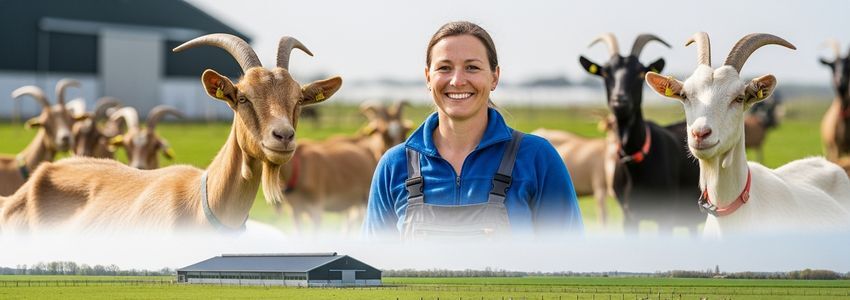
Goat farm business loans give farmers access to the capital they need to purchase animals, buy or upgrade land and equipment, and manage the seasonal cash flow demands of a profitable goat operation. Whether you raise dairy goats, meat goats, fiber goats, or run a diversified small farm, the right financing can fuel growth and long-term stability.
In This Article
- Why Goat Farmers Need Business Financing
- Types of Goat Farm Business Loans
- What You Can Finance on a Goat Farm
- How to Qualify for a Goat Farm Loan
- How to Apply for Goat Farm Financing
- Key Financing Stats for Goat Farmers
- SBA Loans for Goat Farmers
- Equipment Financing for Goat Operations
- Common Financing Challenges for Goat Farmers
- Tips to Improve Your Approval Odds
- Next Steps
- Frequently Asked Questions
Why Goat Farmers Need Business Financing
The U.S. goat industry has grown significantly over the past two decades. According to the U.S. Census Bureau, farm-based livestock businesses represent one of the fastest-growing segments in American agriculture. Goat meat (chevon and cabrito) is the most consumed red meat in the world, and domestic demand for goat milk, cheese, and fiber products like cashmere and mohair continues to climb.
Despite this strong market, goat farmers face real financial hurdles. Feed costs fluctuate with commodity markets. Breeding stock requires significant upfront investment. Building or upgrading pastures, fencing, barns, and milking equipment can run tens of thousands of dollars. And since farm income often comes in seasonal bursts, cash flow gaps between harvest or sale cycles are common.
That is where goat farm business loans come in. A well-structured financing strategy allows farmers to invest strategically, smooth seasonal cash flow, and scale operations without draining personal savings or missing opportunities.
Types of Goat Farm Business Loans
Goat farmers have access to multiple types of business financing, each suited to different needs and timelines.
Term Loans
A term loan provides a lump sum that is repaid with interest over a fixed period - typically 1 to 10 years. Term loans are ideal for large one-time purchases such as land, breeding stock, or barn construction. Rates typically range from 7% to 25% depending on lender type, time in business, and credit profile. Long-term business loans work especially well for capital-intensive goat farm investments.
Business Line of Credit
A business line of credit gives you revolving access to funds up to a set limit. You draw what you need, pay interest only on what you use, and replenish your available balance as you repay. For goat farmers, a line of credit is a flexible tool to cover feed bills, vet expenses, and payroll between sales cycles.
Equipment Financing
Equipment financing is specifically structured for purchasing farm equipment - milking machines, trailers, hay balers, tractors, and more. The equipment itself often serves as collateral, which can make approval more accessible even for farmers with limited credit history. Loan terms typically run 2 to 7 years.
SBA Loans
SBA loans offer the lowest interest rates in small business lending, typically prime plus 2.25% to 4.75%. The SBA 7(a) and Farm Service Agency (FSA) programs both serve agricultural businesses. SBA loans require more documentation and have longer approval timelines, but the low rates make them worth pursuing for stable, established goat operations. Learn more at SBA.gov.
Short-Term Business Loans
Short-term business loans are repaid within 3 to 18 months. They carry higher rates but fund quickly - sometimes in 24 to 48 hours. They are best used for emergency expenses, bridging a gap before a large sale, or seizing a time-sensitive opportunity like purchasing prime breeding stock.
Revenue-Based Financing
Revenue-based financing advances a lump sum in exchange for a percentage of future daily sales until the balance is repaid. It is flexible and does not require traditional collateral, making it useful for goat farms with strong sales but limited business credit history.
Ready to Finance Your Goat Farm?
Crestmont Capital specializes in agricultural and small business financing. Get a decision in hours, not weeks.
Apply for Goat Farm FinancingWhat You Can Finance on a Goat Farm
Business loans for goat farms can be used for almost any legitimate operational or expansion expense. Here are the most common uses:
Purchasing Breeding Stock
Quality breeding stock is the core investment of any profitable goat operation. Registered Boer goats for meat production, Nubian or LaMancha does for dairy, or Angora goats for mohair production can each cost hundreds to thousands of dollars per animal. A term loan or short-term business loan can finance herd expansion without depleting your operating capital.
Feed and Hay Costs
Feed accounts for up to 60% to 70% of ongoing operational costs on most goat farms. A business line of credit can help you purchase hay in bulk during summer when prices are lowest, store it for winter use, and pay for daily feed inputs between revenue cycles.
Fencing and Pasture Improvements
Goats are notorious escape artists. High-tensile fencing, woven wire, and electrified perimeter systems represent major fixed costs. Proper rotational grazing infrastructure can cost $3,000 to $15,000 or more per acre depending on terrain and materials. Business loans allow you to invest in proper containment upfront rather than dealing with constant losses and repairs.
Barn and Shelter Construction or Renovation
A well-designed barn reduces labor, protects animals from the elements, and improves milk quality on dairy operations. Construction costs for a basic goat barn range from $30,000 to over $150,000 depending on size and design. Long-term financing is the most practical approach for these capital expenditures.
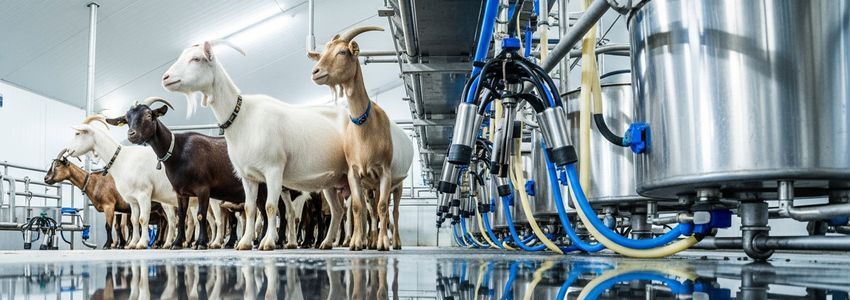
Milking Equipment and Parlor Systems
If you run a dairy goat operation, milking equipment is a major investment. A commercial milking parlor can cost $25,000 to $200,000+. Equipment loans with the machinery as collateral are the standard financing vehicle for these purchases.
Veterinary and Health Management
Herd health is critical. Vaccination programs, deworming, emergency vet visits, and routine care can run thousands of dollars per year. A business line of credit or small working capital loan is ideal for these recurring and unpredictable costs.
Land Purchase or Lease
Growing your goat operation often means acquiring more acreage. Commercial real estate loans, USDA loans, or long-term SBA 504 loans are the most common vehicles for purchasing farmland. Leasehold improvements can also be financed through standard business term loans.
Processing Equipment
If you sell directly to consumers or restaurants - meat, cheese, soap, fiber - processing equipment can improve margins significantly. Commercial cheese-making equipment, meat processing tools, fiber processing machines, and packaging systems can all be financed through equipment loans or business term loans.
Vehicles and Trailers
Livestock trailers, farm trucks, and utility vehicles are expensive but necessary on most goat operations. Commercial vehicle financing and equipment loans provide structured repayment terms for these assets.
Many goat farms stagnate not because of poor management but because of undercapitalization. Delays in purchasing quality breeding stock, deferring infrastructure improvements, and buying feed at retail prices instead of in bulk are all signs of cash constraints - all of which can be addressed through smart business financing.
How to Qualify for a Goat Farm Loan
Lenders evaluate goat farm loan applications using several key criteria. Understanding what they look for helps you prepare a stronger application.
Time in Business
Most alternative lenders require a minimum of 6 months to 1 year in business. SBA and traditional bank lenders typically want to see 2+ years of operating history. If you are a newer operation, starting with equipment financing or a small working capital loan and building your credit history is a smart strategy.
Annual Revenue
Lenders want to see sufficient cash flow to support loan repayments. Many alternative lenders require $120,000 to $150,000 in annual revenue, while banks and SBA lenders may require more. On small goat farms, revenue from multiple income streams - meat, dairy, fiber, breeding stock sales - can be combined to meet thresholds.
Credit Scores
Personal credit scores above 600 are generally needed for alternative lenders, while banks and SBA programs typically want scores of 680 or higher. Business credit is also evaluated if your farm has been incorporated or registered as an LLC. If your credit needs improvement, bad credit business loans are an option, though at higher rates.
Collateral
Farm assets - livestock, equipment, land, and buildings - can all serve as collateral for secured loans. Offering collateral improves your terms and approval odds significantly. Equipment loans use the purchased equipment as collateral by definition.
Business Plan and Financial Statements
A well-prepared business plan demonstrates to lenders that you understand your market, have realistic projections, and have a clear repayment strategy. Financial statements including profit and loss, balance sheet, and cash flow projections are standard requirements for SBA and bank loans.
How to Apply for Goat Farm Financing
The application process varies by lender type, but these steps apply broadly:
- Assess Your Needs - Determine exactly how much you need and why. Be specific: "I need $45,000 to purchase 50 Boer does and related hay to cover the first 90 days."
- Gather Documentation - Collect 3 to 6 months of business bank statements, most recent tax returns, any existing loan documents, and a list of your farm assets.
- Check Your Credit - Review both your personal and business credit before applying. Dispute any errors and pay down high balances if possible.
- Compare Lenders - Evaluate interest rates, term lengths, origination fees, prepayment penalties, and funding speed. Online lenders offer faster approvals; banks and SBA lenders offer lower rates.
- Submit Your Application - Complete the lender's application accurately and completely. Incomplete applications are a leading cause of delays and denials.
- Review the Offer - Carefully review any term sheet before accepting. Understand the total cost of capital, not just the monthly payment.
Get Fast Funding for Your Goat Farm
Crestmont Capital offers same-day decisions on many goat farm business loan applications. No lengthy waiting periods, no hidden fees.
Start Your ApplicationKey Financing Stats for Goat Farmers
Goat Farm Financing at a Glance
SBA Loans for Goat Farmers
The Small Business Administration offers several loan programs that apply directly to goat farming operations. According to SBA.gov, the 7(a) program is the agency's most common, providing loans up to $5 million at competitive interest rates.
SBA 7(a) Loans
The SBA 7(a) program is the broadest and most flexible. Goat farmers can use SBA 7(a) funds for equipment, working capital, livestock, land improvements, and even refinancing existing debt. Rates are tied to the prime rate and are among the lowest available for small businesses. The tradeoff is a longer approval process - typically 60 to 90+ days for traditional lenders. Some SBA Preferred Lenders can process applications in 2 to 3 weeks.
SBA 504 Loans
The SBA 504 program is structured for large capital expenditures - specifically fixed assets like land, buildings, and major equipment. It requires a Certified Development Company (CDC) as a partner lender and is most appropriate for goat farmers making significant infrastructure investments of $250,000 or more.
USDA Farm Service Agency Loans
While separate from SBA, USDA FSA direct and guaranteed loans are purpose-built for agricultural businesses. FSA offers Operating Loans (for feed, seed, fertilizer, and similar operating expenses), Farm Ownership Loans (for land purchase), and Emergency Loans for natural disasters. Goat farmers should explore FSA programs as part of any comprehensive financing strategy. Visit the USDA Farm Service Agency website for details.
For goat farmers who need faster funding than SBA timelines allow, fast business loans through alternative lenders provide a complementary option - fund quickly now, then refinance into SBA terms once the project is established.
Equipment Financing for Goat Operations
Equipment is one of the largest expenses in any goat farming operation. The good news is that dedicated equipment financing makes it possible to acquire the tools you need without a massive upfront cash outlay.
Common Equipment Financed on Goat Farms
- Milking machines and parlor systems for dairy goat operations
- Livestock trailers and farm trucks
- Tractors and skid steers
- Hay balers, mowers, and hay handling equipment
- Feeders, waterers, and automatic systems
- Cheese-making and milk processing equipment
- Fiber processing machinery (for Angora and Cashmere goats)
- Fencing installation equipment and materials
- Cooling tanks and refrigeration for dairy
- Generator backup systems
How Equipment Financing Works
Equipment financing is structured so the equipment itself serves as collateral, which reduces lender risk and often makes approval more accessible. Typical terms run 2 to 7 years with rates starting around 7% to 12% for qualified applicants. Unlike operating leases, equipment financing results in outright ownership at the end of the loan term - a distinct advantage for long-lived farm assets.
Many goat farmers find excellent value in used equipment. Most equipment lenders will finance used machinery as long as it is in good working condition and appraises at or above the loan amount. Request an independent appraisal before financing used equipment to ensure you are not overpaying.
Common Financing Challenges for Goat Farmers
Despite strong market fundamentals for goat products, goat farmers often encounter specific obstacles when seeking financing:
Seasonal and Variable Income
Goat farms often generate income in concentrated windows - kidding season, sale season, or harvest time. Lenders evaluating monthly bank statements may see months with little to no income and misinterpret this as financial weakness. Presenting annualized revenue data and explaining your income cycle in the application narrative helps address this concern.
Limited Business Credit History
Many small goat farms operate as sole proprietorships or informal family operations with little formal business credit. Building a business credit profile through a formal business entity (LLC or corporation), business checking account, and net-30 trade accounts with feed suppliers helps over time. In the short term, business loans with no credit check or asset-based lending using livestock and equipment as collateral can bridge the gap.
Difficulty Valuing Livestock as Collateral
Unlike land or buildings, livestock values fluctuate with market conditions and the health of individual animals. Some lenders discount livestock collateral significantly or refuse it entirely. Focusing loan applications on equipment, land improvements, or other fixed assets tends to produce better results.
Scale Challenges
Many lenders set minimum revenue thresholds that small hobby or part-time goat farms cannot meet. If you are below the threshold for most commercial lenders, USDA FSA microloan programs (up to $50,000) and local agricultural lenders or Farm Credit associations may be more appropriate.
Tips to Improve Your Approval Odds
Regardless of which financing product you pursue, the following practices can significantly improve your chances of approval and help you secure better terms:
Maintain Separate Business Banking
Run all farm income and expenses through a dedicated business checking account. This creates a clean paper trail that lenders can easily verify and demonstrates professional financial management.
Document Everything
Keep meticulous records of herd inventory, sales receipts, vet records, and operational expenses. The more clearly you can demonstrate the profitability and stability of your operation, the more confidence you project to lenders.
Build Business Credit Early
Open a business credit card, establish net-30 accounts with feed and supply vendors, and make all payments on time. Even 12 to 18 months of consistent payment history can meaningfully improve your business credit score.
Reduce Outstanding Debt Before Applying
A lower debt-to-income ratio signals financial health to lenders. If you have high-interest personal debt or existing business debt with room to pay it down, doing so before applying can improve both your approval odds and your interest rate.
Apply with Realistic Amounts
Requesting only what you need - with a clear explanation of how the funds will be deployed and repaid - is more persuasive than requesting the maximum available. Lenders want to see a rational connection between the loan amount, its intended use, and the projected return.
Comparing Goat Farm Lender Types
Not all lenders are created equal for goat farm financing. Here is how the main categories compare:
Traditional Banks and Credit Unions
Banks offer the most competitive rates - often 7% to 12% - but have the highest standards. They typically require 2+ years in business, strong personal credit, and comprehensive financial documentation. Approval timelines of 3 to 8 weeks are common. Best for established, well-documented operations.
SBA-Approved Lenders
SBA lenders offer government-backed loans at excellent rates, but approval can take 30 to 90 days. The SBA guarantee (up to 85% of the loan) enables lenders to extend credit to farms that might not qualify on conventional terms alone. Best for stable operations with documented history and strong long-term capital needs.
Alternative Online Lenders
Alternative lenders like Crestmont Capital provide faster decisions (often same day or next day) and more flexible qualification criteria. Rates are higher - typically 12% to 35% depending on risk factors - but funding can arrive in 24 to 72 hours. Best for time-sensitive needs, seasonal gaps, or farms building credit history. Explore small business loans options that fit your situation.
USDA Farm Service Agency
USDA FSA programs are purpose-built for agricultural businesses and offer highly competitive rates with terms up to 40 years for farm ownership loans. The application process is thorough, and funding timelines vary. Best for large, long-term capital needs on established agricultural operations.
Farm Credit System
The Farm Credit System is a national network of agricultural lenders specifically chartered to serve farmers, ranchers, and agribusinesses. They offer competitive rates and deep agricultural expertise. Best for medium to large goat farming operations with at least 1 to 2 years of documented history. According to Bloomberg, Farm Credit institutions collectively serve over 500,000 borrowers nationwide.
How Multiple Revenue Streams Strengthen Your Application
One of the most compelling things a goat farm can do to improve loan eligibility is to document multiple revenue streams. Lenders see diversified income as risk mitigation. If a single product category (say, meat goat sales) experiences a market downturn, other income sources - dairy, breeding stock sales, fiber, value-added products - continue to support debt service.
Common revenue streams goat farm lenders look favorably on:
- Meat goat sales (chevon, cabrito, whole live animals)
- Breeding stock and registered animal sales
- Raw goat milk and artisan cheese production
- Fiber production (mohair from Angoras, cashmere from Cashmere goats)
- Goat milk soap, lotion, and skincare products
- Agritourism (farm tours, petting zoo, educational workshops)
- Contract grazing and land clearing services
- Online sales and direct-to-consumer channels
If you have not already documented these revenue streams in your business financials, start now. Even informal income sources can be substantiated with bank deposits and sales receipts.
Managing Cash Flow on a Goat Farm
Cash flow management is one of the most important - and most overlooked - aspects of goat farm finance. Most farm financial crises are not caused by unprofitability but by timing mismatches between when expenses are due and when revenue arrives.
A business line of credit is the most effective tool for smoothing these gaps. Rather than taking out a term loan every time a cash flow gap appears, a line of credit allows you to draw funds as needed and repay when sales come in, paying interest only on what you actually use.
According to CNBC, cash flow problems are among the top three reasons small agricultural businesses fail. Proactive access to a line of credit - secured before you urgently need it - is one of the most financially sound strategies a goat farmer can adopt.
For working capital needs specific to goat operations, same-day business loans can provide emergency coverage when an unexpected expense arises - a disease outbreak, equipment failure, or market opportunity requiring immediate action.
Financing Value-Added Goat Products
One of the most powerful growth strategies for a goat farm is vertical integration - processing and selling your own value-added products rather than selling raw commodity animals or milk.
The margins on artisan goat cheese, farmstead soap, cashmere products, and branded meat can be dramatically higher than commodity sales. However, the upfront investment in processing equipment, licensing, and marketing can be substantial.
Business financing plays a key role in making this transition viable:
- Equipment loans fund milking parlors, cheese caves, pasteurizers, and packaging systems
- Working capital loans cover startup inventory, packaging materials, and first-batch production costs
- Business lines of credit provide flexibility as you scale production and marketing
- SBA 7(a) loans can finance the full infrastructure buildout for a commercial value-added operation
Before pursuing value-added financing, ensure you have completed the necessary licensing and regulatory requirements for food production in your state. The SBA's licensing guide is a good starting point.
Next Steps
How to Move Forward with Goat Farm Financing
- Define your financing need - Be specific about the amount, purpose, and timeline. Equipment purchase, herd expansion, or working capital each require different products.
- Gather your documentation - 3-6 months of business bank statements, most recent tax return, basic farm asset list, and income documentation.
- Check your credit - Pull both personal and business credit reports. Dispute errors and address any derogatory marks before applying.
- Research lender options - Compare alternative lenders, SBA programs, USDA FSA, and Farm Credit. Match lender type to your timeline and qualification profile.
- Apply strategically - Start with the lender that best fits your current profile. If declined, ask specifically why and address those factors before reapplying.
- Use funds strategically - Deploy loan funds for their stated purpose and track results so you can demonstrate ROI on future applications.
Frequently Asked Questions
What is a goat farm business loan?
A goat farm business loan is a type of commercial financing designed to help goat farming operations fund herd acquisition, equipment, infrastructure, working capital, and other operational or growth needs. These loans are structured as term loans, lines of credit, equipment financing, or SBA loans depending on the specific use case and the borrower's qualifications.
How much can I borrow for a goat farm?
Loan amounts for goat farming operations typically range from $5,000 to $500,000 or more depending on the lender, the use of funds, and your farm's revenue and creditworthiness. SBA and USDA programs can provide even larger amounts for established operations with significant capital needs.
Can I get a business loan to start a goat farm?
Startup goat farms face the biggest financing hurdles because most lenders require at least 6 to 12 months of operating history and documented revenue. However, USDA FSA beginning farmer loans, microloans, and some alternative lenders specialize in startup agricultural businesses. A strong business plan and demonstrated agricultural experience improve your chances significantly.
What credit score do I need for a goat farm loan?
Most alternative lenders require a minimum personal credit score of 600, while banks and SBA lenders typically want 650 to 700 or higher. USDA FSA loans have more flexible credit standards and may be accessible with lower scores, particularly for beginning farmers. Bad credit does not automatically disqualify you - it affects your options and your rate.
Can I use a business loan to buy goats?
Yes. Business loans can be used to purchase breeding stock, feeder animals, or any other livestock that is part of your farm business model. SBA 7(a) loans, term loans, and agricultural lines of credit all permit livestock purchases. However, some equipment financing products are restricted to non-living assets like machinery and trailers.
What documentation do I need to apply for a goat farm business loan?
Most lenders require 3 to 6 months of business bank statements, the most recent 1 to 2 years of business and personal tax returns, a basic description of your operation and the purpose of the funds, and a list of major farm assets. SBA and bank lenders additionally require full financial statements (profit and loss, balance sheet, cash flow projections) and a formal business plan.
How fast can I get a goat farm business loan?
Alternative lenders can often fund goat farm loans in 24 to 72 hours after approval. SBA loans through traditional banks can take 60 to 90 days. USDA FSA loans vary widely but often take 4 to 8 weeks. If you have an urgent need, an alternative lender or bridge loan is your fastest path to capital.
Are there government loans specifically for goat farmers?
Yes. The USDA Farm Service Agency (FSA) offers Direct Operating Loans, Guaranteed Operating Loans, and Direct Farm Ownership Loans that are specifically designed for agricultural businesses including goat farms. The FSA also has Beginning Farmer Loan programs and Emergency Loan programs for farms affected by natural disasters. Visit fsa.usda.gov for program details and local office contacts.
Can I finance goat milking equipment through a business loan?
Yes. Milking equipment for dairy goat operations is one of the most commonly financed assets on small farms. Equipment loans are ideal because the machinery serves as collateral, making approval more accessible and interest rates competitive. You can typically finance 80% to 100% of the equipment's fair market value with terms of 2 to 7 years.
What interest rates can I expect on a goat farm business loan?
Interest rates vary significantly by lender type and borrower profile. SBA and USDA loans offer the lowest rates, typically prime plus 2.25% to 4.75% (currently around 9% to 11%). Traditional bank loans run 7% to 15%. Alternative online lenders range from 12% to 35%+ depending on risk factors. Equipment loans typically fall in the 7% to 20% range.
Can I use goats as collateral for a business loan?
Some lenders will accept livestock as collateral, but valuing animals is complex, and many lenders assign significant discounts to living collateral due to disease risk, mortality, and market fluctuation. Farm equipment, land, and buildings are more universally accepted as collateral. If livestock is your only significant asset, USDA FSA programs and agricultural lenders with livestock expertise are your best options.
What is the difference between a farm operating loan and a farm ownership loan?
A farm operating loan (like the USDA FSA Operating Loan) covers day-to-day expenses such as feed, seed, supplies, fuel, veterinary costs, and equipment repairs. A farm ownership loan (like the USDA FSA Farm Ownership Loan) is used to purchase or improve land and buildings. Both types are available to goat farmers and can be used in combination.
Does my goat farm need to be an LLC to get a business loan?
No. Sole proprietors, partnerships, LLCs, and corporations can all qualify for business loans. However, operating as an LLC or corporation can improve your application by establishing a formal business entity with its own EIN and business credit history. It also provides liability protection for your personal assets. Many lenders treat sole proprietors the same as other business structures but may require a personal guarantee in all cases.
Can I refinance an existing farm loan?
Yes. Refinancing is a common strategy for goat farmers who took on high-interest short-term debt during a cash flow crisis and now want to lower their cost of capital. SBA 7(a) loans, bank refinancing, and USDA programs all permit refinancing of existing agricultural debt in most circumstances. The best time to refinance is when your farm's revenue, credit, and financial profile have improved since the original loan was taken out.
What happens if I default on a goat farm business loan?
Defaulting on a business loan has serious consequences including damage to your personal and business credit, potential seizure and sale of collateral assets, legal action, and personal liability if you signed a personal guarantee. If you anticipate difficulty making payments, contact your lender immediately - before missing a payment. Many lenders have hardship programs or can work out a restructured repayment schedule.
How do I find the best goat farm business loan for my operation?
Start by defining your exact need (amount, purpose, timeline), then compare lenders across rate, term, speed, and qualification requirements. For urgent short-term needs, alternative lenders provide the fastest path. For long-term investments with the lowest cost of capital, SBA or USDA programs are preferable. Crestmont Capital can help you evaluate your options and match you with financing that fits your specific goat farm situation.
Disclaimer: The information provided in this article is for general educational purposes only and is not financial, legal, or tax advice. Funding terms, qualifications, and product availability may vary and are subject to change without notice. Crestmont Capital does not guarantee approval, rates, or specific outcomes. For personalized information about your business funding options, contact our team directly.