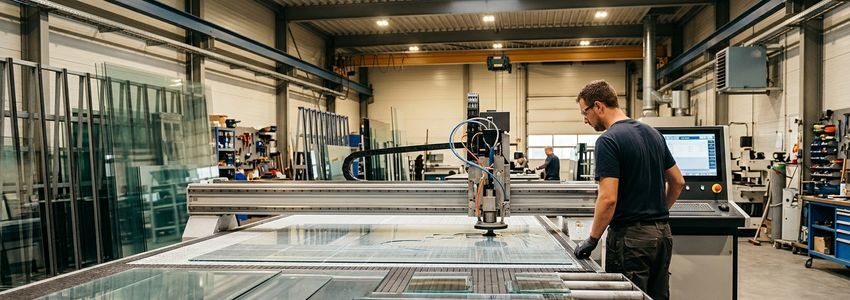
Glass cutting equipment financing gives glass fabricators, glazing contractors, and glass shop owners a way to acquire CNC glass cutting tables, edging machines, tempering ovens, and other specialized production equipment without draining working capital. Whether you are replacing an aging cutting table or scaling up to handle larger commercial glazing contracts, financing spreads the cost of expensive machinery over time while the equipment itself generates revenue.
Glass fabrication is capital-intensive. A single CNC glass cutting system can run from $40,000 to well over $250,000 depending on automation level, and supporting equipment like edgers, washers, and tempering furnaces adds substantially more. Most glass business owners cannot pay cash for a full production line upgrade, which is why glass cutting equipment financing has become the standard path to modernizing a shop.
According to Forbes Advisor, equipment loans commonly cover 80% to 100% of a machine's purchase price, with the equipment itself acting as collateral, which is part of what makes this financing route more accessible than general working capital loans for capital-heavy industries like glass fabrication.
In This Article
What Is Glass Cutting Equipment Financing?
Glass cutting equipment financing is a business loan or lease structured specifically to help glass companies purchase the machinery used to cut, edge, temper, and process flat glass. This includes CNC glass cutting tables, automated glass cutting lines, straight-line edgers, glass washers, tempering furnaces, glass loading and handling systems, and related shop equipment.
Unlike a general working capital loan, equipment financing typically uses the machinery itself as collateral. That structure lowers risk for the lender, which often translates into more competitive rates and faster approvals for glass business owners compared to unsecured financing options.
Financing arrangements can take several forms: a term loan that results in outright ownership, an equipment lease with a purchase option at the end, or a lease that allows the equipment to be upgraded on a regular cycle. The right structure depends on how a glass fabrication or glazing business plans to use the equipment and how quickly the technology in that category tends to change.
Key Benefits of Financing Glass Cutting Equipment
Financing glass cutting and fabrication machinery offers several advantages over paying cash outright or delaying a purchase:
- Preserves working capital. Cash stays available for payroll, glass inventory, and day-to-day operating expenses instead of being tied up in a single large purchase.
- Matches payments to revenue. New or upgraded cutting equipment typically increases throughput and job capacity, so monthly payments can be offset by the additional revenue the equipment generates.
- Predictable budgeting. Fixed monthly payments make it easier to forecast cash flow compared to a large one-time capital outlay.
- Access to newer technology. Financing makes it realistic to adopt automated CNC glass cutting systems that would otherwise be out of reach for many small and mid-size glass shops.
- Potential tax advantages. Depending on how the equipment is financed and used, businesses may be able to deduct interest or lease payments as a standard business operating expense. Always confirm specifics with a qualified accountant.
- Faster approval than many traditional loans. Because the equipment secures the financing, approval timelines are often shorter than unsecured lending products.
Key Stat: The U.S. glass and glazing contractor industry generated an estimated $25.4 billion in revenue in 2026, spread across nearly 27,000 businesses nationwide, according to industry research. The U.S. Census Bureau reported nearly 7,000 employer establishments in this category, and staying competitive in that market increasingly depends on cutting-edge fabrication equipment.
How Glass Cutting Equipment Financing Works
The mechanics of glass cutting equipment financing are straightforward, but understanding each stage helps a business owner move through the process efficiently.
1. Get a vendor quote. Most lenders want a formal quote or invoice from the equipment manufacturer or dealer that specifies the exact machine, model, and total purchase price, including installation and any ancillary tooling.
2. Submit a financing application. Applications typically require basic business information, time in business, and a description of how the equipment will be used. Many lenders also request recent bank statements or financial statements to evaluate cash flow.
3. Underwriting and approval. Because the equipment serves as collateral, underwriting for equipment financing tends to move faster than for unsecured loans. Lenders weigh the equipment's resale value, the applicant's credit profile, and the business's overall financial health. The SBA 504 loan program is one government-backed option many equipment lenders reference, since it is designed specifically for major fixed-asset purchases like manufacturing and fabrication equipment.
4. Funding and equipment delivery. Once approved, funds are typically sent directly to the equipment vendor, or a lease agreement is finalized so the equipment can be delivered and installed.
5. Repayment. The business makes fixed monthly payments over the agreed term, which commonly ranges from 24 to 84 months depending on the equipment type and expected useful life.
Ready to Upgrade Your Glass Shop?
Get fast, flexible financing from the #1 business lender in the U.S. No obligation, apply in minutes.
Apply Now →Types of Glass Cutting and Fabrication Equipment You Can Finance
Glass cutting equipment financing typically covers the full range of machinery used in a modern glass fabrication or glazing operation, including:
- CNC glass cutting tables for high-precision, high-volume cutting of flat glass sheets.
- Automated glass cutting lines that combine loading, cutting, breaking, and sorting into a single production system.
- Straight-line edging machines used to smooth and finish cut glass edges.
- Shape edgers and beveling machines for custom or decorative glass work.
- Glass washing and drying equipment used before tempering or laminating.
- Tempering furnaces and ovens that strengthen glass for safety applications.
- Laminating equipment for impact-resistant and security glass products.
- Glass loading, handling, and lifting systems, including vacuum lifters and A-frame racks.
- Insulated glass unit (IGU) assembly lines for double- and triple-pane window production.
- Waterjet cutting systems used for intricate custom glass shapes and inlays.
Financing generally extends to both new and used equipment, as well as installation costs and, in many cases, ancillary tooling purchased alongside the primary machine.
Who Glass Cutting Equipment Financing Is Best For
Glass cutting equipment financing tends to make the most sense for a specific set of glass industry businesses:
- Glass fabrication shops looking to add automated CNC cutting capacity to reduce labor costs and cutting errors.
- Commercial glazing contractors that need in-house cutting and edging capability instead of outsourcing to a third-party fabricator.
- Auto glass and windshield companies expanding into custom cutting for specialty vehicles or aftermarket applications.
- Architectural glass manufacturers producing insulated glass units, curtain wall panels, or laminated safety glass.
- Mirror and shower door fabricators that need precision edging and shape-cutting equipment.
- Growing shops replacing manual score-and-break stations with automated systems to increase throughput and reduce material waste.
Businesses with seasonal cash flow, such as those tied to construction and renovation cycles, often prefer financing over a cash purchase because it keeps capital available during slower months while still allowing equipment upgrades ahead of busy season.
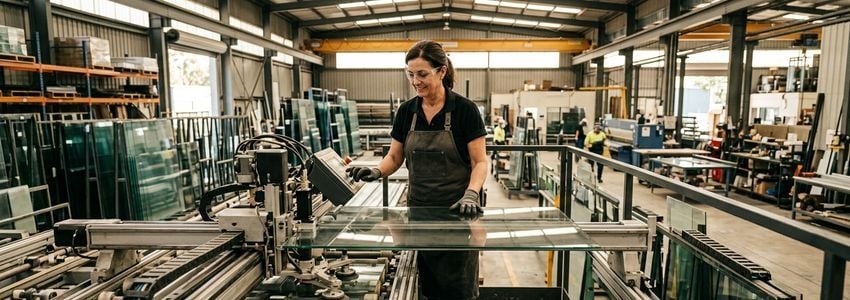
Financing vs. Leasing vs. Paying Cash: A Comparison
Glass business owners generally choose between three approaches when acquiring new cutting equipment. Each has trade-offs worth weighing against the shop's growth plans and cash position.
| Factor | Equipment Loan | Equipment Lease | Cash Purchase |
|---|---|---|---|
| Upfront cost | Low (often 0-20% down) | Very low or none | Full purchase price |
| Ownership | Yes, once paid off | Depends on lease structure | Immediate |
| Working capital impact | Minimal | Minimal | Significant |
| Best for | Long-term core equipment | Equipment that may need upgrading | Businesses with strong cash reserves |
| Total lifetime cost | Moderate (interest applies) | Often higher over time | Lowest |
By the Numbers
Glass Industry and Equipment Financing Statistics
26,773
Glass and glazing contractor businesses in the U.S.
$25.4B
Total U.S. glass and glazing industry market size (2026)
73%
Full approval rate for SBA-backed equipment loans
80-100%
Typical financing coverage of equipment purchase price
How Crestmont Capital Helps Glass Businesses
Crestmont Capital works with glass fabricators, glazing contractors, and window and mirror shops across the country to structure financing around the specific equipment they need. Rather than a one-size-fits-all loan product, Crestmont evaluates the business, the equipment, and the intended use case to recommend the right structure.
Businesses can explore fabrication equipment financing for CNC glass cutting systems and edging machines, or look at broader equipment financing options that cover an entire production line upgrade. For businesses that need computer-controlled cutting systems specifically, Crestmont also offers CNC machine financing tailored to precision manufacturing equipment.
Shops that are not ready to commit to a purchase can consider equipment leasing, which keeps monthly costs lower and provides flexibility to upgrade as technology improves. Glass businesses with credit challenges are not automatically excluded either. Crestmont's bad credit equipment financing options are designed specifically for business owners who may not qualify through a traditional bank.
Shops looking to control costs can also explore used equipment financing, which extends the same financing structure to pre-owned CNC cutting tables and edgers, often at a lower total cost than new machinery. For glass businesses evaluating whether to expand from a single service into a full-scale fabrication operation, our Glass Company Business Loans guide covers the broader financing landscape for glass businesses, and shops already doing glazing installation work may also want to review our Glass Installation Business Loan guide for financing installation-side equipment and vehicles.
Get the Equipment Your Glass Shop Needs
Fast approvals, flexible terms, and financing built around your production goals.
Apply Now →Real-World Scenarios
Scenario 1: Upgrading from manual to automated cutting. A regional glass fabricator running a 15-person shop was still using manual score-and-break stations. After financing a CNC glass cutting table, the shop cut production time per sheet by more than half and reduced material waste from cutting errors, allowing it to take on larger commercial glazing contracts.
Scenario 2: Expanding into insulated glass units. A window and door company wanted to bring IGU assembly in-house instead of outsourcing to a third-party supplier. Financing an IGU assembly line and supporting edger let the company control lead times and margins on every window sold.
Scenario 3: Replacing an aging tempering furnace. A glass shop serving the shower door and mirror market was losing bids because its 20-year-old tempering furnace could not keep pace with demand. Equipment financing covered a modern furnace with faster cycle times, letting the shop bid on larger residential and commercial projects.
Scenario 4: Adding waterjet cutting for custom work. An architectural glass fabricator wanted to expand into decorative and custom-shaped glass panels for high-end residential clients. Financing a waterjet cutting system opened up a new, higher-margin revenue stream without requiring a large cash outlay.
Scenario 5: Seasonal cash flow management. A glazing contractor in a market with a strong summer construction season used equipment financing to add a second edging machine ahead of peak season, spreading payments across the year rather than depleting cash reserves during the slower winter months.
Next Steps to Finance Glass Cutting Equipment
Get a formal quote from your equipment manufacturer or dealer, including installation costs.
Recent bank statements and time-in-business information speed up underwriting.
Apply online in minutes with Crestmont Capital and get a response quickly.
Once approved, funds go to your vendor and your new equipment is scheduled for delivery.
Frequently Asked Questions
What is glass cutting equipment financing?
Glass cutting equipment financing is a loan or lease used specifically to purchase machinery for cutting, edging, and processing glass, such as CNC glass cutting tables, edgers, and tempering furnaces. The equipment typically serves as collateral for the financing.
How much does a CNC glass cutting table cost?
Prices vary widely based on size and automation level, ranging from roughly $40,000 for a smaller entry-level system to well over $250,000 for a large, fully automated production line with integrated loading and sorting.
How much of the equipment cost can I finance?
Many lenders finance between 80% and 100% of the purchase price, including installation costs in some cases. Down payments, when required, often start around 10%.
What credit score do I need to qualify?
Requirements vary by lender, but because the equipment secures the loan, approval standards are often more flexible than unsecured financing. Businesses with less-than-perfect credit may still qualify, particularly through bad credit equipment financing programs.
Can I finance used glass cutting equipment?
Yes. Used equipment financing is available for pre-owned CNC cutting tables, edgers, and furnaces, often at a lower total cost than financing new machinery.
What is the typical repayment term for glass cutting equipment loans?
Repayment terms typically range from 24 to 84 months, depending on the equipment type, its expected useful life, and the total financed amount.
Should I lease or finance my glass cutting equipment?
Financing generally makes more sense for core equipment you plan to use for many years, since you build equity toward ownership. Leasing can be a better fit for equipment categories that change quickly or when you want lower upfront costs and the flexibility to upgrade.
How long does approval take?
Because the equipment secures the financing, approval is often faster than unsecured business loans. Many applications receive a decision within a few business days once documentation is submitted.
What documents do I need to apply?
Typical requirements include a vendor quote for the equipment, recent business bank statements, basic business information, and in some cases financial statements or tax returns depending on the size of the request.
Can startups finance glass cutting equipment?
Established glass businesses with operating history generally have the most financing options. Newer businesses may still qualify but should expect lenders to weigh the owner's personal credit and industry experience more heavily.
Does financing cover installation costs?
In many cases, yes. Installation, delivery, and setup costs can often be rolled into the total financed amount when they are included in the vendor's quote.
What types of glass businesses use this financing most?
Glass fabrication shops, commercial glazing contractors, architectural glass manufacturers, mirror and shower door companies, and auto glass businesses expanding into custom cutting all commonly use this type of financing.
Is a down payment always required?
Not always. Some financing programs offer 100% financing with no down payment, while others may require a down payment, often starting around 10%, depending on the applicant's credit profile and the equipment being financed.
What happens if my glass cutting equipment needs of an upgrade before the loan is paid off?
This is one reason some glass businesses choose leasing over a loan for equipment categories that evolve quickly. A lease can make it easier to transition to newer technology at the end of the term rather than being locked into ownership of aging equipment.
How do I get started with glass cutting equipment financing?
Start by getting a formal quote from your equipment vendor, then submit an application with basic business and financial information. Most lenders can provide a decision within a few business days.
Don't Let Outdated Equipment Slow You Down
Apply today and see what glass cutting equipment financing options you qualify for.
Apply Now →Conclusion
Glass cutting equipment financing gives glass fabricators, glazing contractors, and window and mirror shops a practical way to invest in CNC cutting tables, edgers, tempering furnaces, and other production equipment without straining cash flow. With financing structures that can cover 80% to 100% of the purchase price and repayment terms tailored to the equipment's useful life, businesses can modernize their production capabilities while keeping working capital available for day-to-day operations.
Whether you are automating your first CNC glass cutting line, replacing an aging tempering furnace, or expanding into insulated glass unit assembly, the right financing structure can make the equipment pay for itself through added capacity and reduced material waste. Contact Crestmont Capital to discuss which financing option fits your glass business, or apply directly to get started.
Disclaimer: The information provided in this article is for general educational purposes only and is not financial, legal, or tax advice. Funding terms, qualifications, and product availability may vary and are subject to change without notice. Crestmont Capital does not guarantee approval, rates, or specific outcomes. For personalized information about your business funding options, contact our team directly.