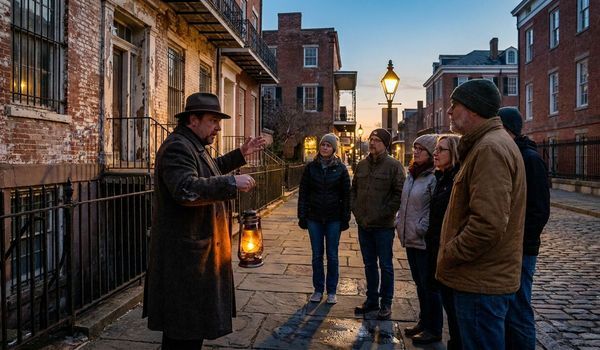
Ghost tours have grown from a quirky Halloween side attraction into a year-round tourism business in cities across America. From the haunted streets of Savannah and New Orleans to historic districts in Salem, St. Augustine, Gettysburg, and dozens of smaller towns, operators are running profitable walking tours, trolley tours, and paranormal investigations twelve months a year. But launching or scaling a ghost tour company takes real capital, and that is where ghost tour business financing comes in. Whether you need funds for tour vehicles, marketing, payroll, insurance, or expansion into new locations, the right financing structure can turn a seasonal side hustle into a serious tourism operation.
This guide covers everything ghost tour operators need to know about business financing: the loan types that fit this industry, what lenders look for, how seasonal revenue affects qualification, realistic costs and terms, and exactly how to apply. If you are ready to fund your ghost tour business, this is your roadmap.
In This Article
- What Is Ghost Tour Business Financing?
- Why Ghost Tour Operators Need Funding
- Types of Ghost Tour Business Financing
- How Ghost Tour Business Financing Works
- Who Qualifies for Ghost Tour Business Loans?
- Costs, Rates, and Terms
- How to Apply for Ghost Tour Business Financing
- Comparing Your Financing Options
- Real-World Scenarios
- How Crestmont Capital Helps Ghost Tour Operators
- Frequently Asked Questions
- Next Steps
What Is Ghost Tour Business Financing?
Ghost tour business financing is any form of business funding used to start, operate, or expand a haunted tour company. It is not a single loan product. It is an umbrella term covering term loans, business lines of credit, equipment financing, working capital loans, and SBA loans that tour operators use to cover the costs of running a tourism and entertainment business.
A ghost tour business typically operates guided walking tours, bus or trolley tours, haunted pub crawls, or paranormal investigation experiences. Revenue comes from ticket sales, private group bookings, merchandise, and add-on experiences like overnight investigations or EMF meter rentals. Because the business model blends tourism, entertainment, and hospitality, the financing needs are equally diverse: vehicles, audio equipment, costumes and props, ticketing software, insurance, licensing, marketing, and payroll for guides.
Most ghost tour operators are small businesses, and many are seasonal or semi-seasonal, earning the bulk of their revenue between September and November. That seasonality shapes which financing products work best. A flexible line of credit handles off-season cash flow gaps better than a rigid term loan, while equipment financing is the natural fit for a tour bus or trolley purchase. Understanding how these pieces fit together is the first step toward funding your operation intelligently.
Why Ghost Tour Operators Need Funding
The haunted tourism niche is lucrative, but it is not cheap to enter or grow. Consumer demand is strong: Americans planned to spend a record $13.5 billion on Halloween in 2026 according to the National Retail Federation, with participation rates near three quarters of the population, and experiential attractions like haunted tours capture a growing slice of that spending, as covered by outlets including CNBC. Capturing that demand requires upfront investment long before ticket revenue arrives.
Here are the most common reasons ghost tour operators seek financing:
- Startup costs: Business formation, permits, insurance, website development, ticketing software, initial marketing, and guide hiring all cost money before the first tour ever runs.
- Vehicles: A used tour trolley, shuttle bus, or passenger van can run $25,000 to $150,000 or more. Few operators can pay cash.
- Seasonal cash flow: Revenue concentrates in the fall, but rent, insurance, and loan payments continue all year. Bridge funding keeps the lights on from January through August.
- Marketing pushes: Ghost tours live and die by visibility. Paid search, social media advertising, billboard placements near tourist districts, and partnerships with hotels all require budget, especially ahead of the peak season.
- Expansion: Adding a second tour route, launching in a new city, or adding a haunted escape room or gift shop multiplies both revenue potential and capital needs.
- Equipment and production value: Audio systems, wireless headsets, lighting, costumes, props, and paranormal investigation gear all differentiate a premium tour from a forgettable one.
Operator Insight
Ghost tours are one of the few tourism businesses where the off-season is predictable and plannable. Lenders who understand tourism will underwrite your business on annual revenue, not just your slowest month. The key is presenting 12 months of bank statements and a clear explanation of your seasonal cycle.
Types of Ghost Tour Business Financing
There is no single "ghost tour loan." Operators typically combine two or three of the following products depending on what they are funding.
Term Loans
A traditional term loan delivers a lump sum that you repay over a fixed period, usually one to ten years, with fixed or variable interest. Term loans work well for defined one-time investments: buying out a competitor, funding a major expansion, or covering a full season of marketing in one push. You get predictability, a set payment schedule, and full use of the funds from day one.
Business Lines of Credit
A business line of credit is the single most popular financing tool for seasonal tourism businesses. You draw only what you need, pay interest only on what you draw, and the credit replenishes as you repay. Ghost tour operators use lines of credit to smooth off-season cash flow, fund pre-season marketing pushes in July and August, and cover payroll during slow months without touching personal savings.
Equipment Financing
Equipment financing covers vehicles, audio systems, and other hard assets, with the equipment itself serving as collateral. For a ghost tour operator, this means tour buses, trolleys, passenger vans, wireless headset systems, and even point-of-sale hardware. Because the asset secures the loan, equipment financing often comes with lower rates and easier approval than unsecured funding, and terms can stretch to match the useful life of the vehicle.
Working Capital Loans
Working capital loans are short-term, fast-funding products designed to cover operating expenses: payroll, rent, insurance premiums, and marketing. They typically fund in days rather than weeks and are repaid over three to eighteen months. For a ghost tour operator facing a slow February or needing to staff up quickly for October, working capital fills the gap.
SBA Loans
Loans backed by the U.S. Small Business Administration offer the lowest rates and longest terms available to small businesses, up to 25 years for some uses. SBA 7(a) loans can fund working capital, equipment, or even the purchase of an existing tour company. The trade-off is speed and paperwork: SBA loans take weeks to months to close and require extensive documentation. Operators planning a major acquisition or a large vehicle fleet purchase should consider them; operators who need money before October should look elsewhere.
Revenue-Based Financing
Revenue-based advances provide upfront capital repaid as a percentage of future sales. Because repayment flexes with your revenue, this structure naturally accommodates seasonality: you repay more in October and less in February. Approval is based primarily on revenue history rather than credit score, making it accessible to newer or credit-challenged operators, though the cost of capital is higher than traditional loans.
Ready to Fund Your Ghost Tour Business?
Get a funding decision in as little as 24 hours. No obligation, no impact on your credit to apply.
Apply NowHow Ghost Tour Business Financing Works
The financing process follows the same basic path regardless of which product you choose, though timelines vary from same-day funding to multi-week underwriting.
Step 1: Define the Purpose and Amount
Lenders will ask what the money is for. "General expenses" is a weak answer; "$48,000 for a used 14-passenger tour bus, $12,000 for a wireless headset system, and $15,000 for a pre-season marketing campaign" is a strong one. A defined purpose also steers you toward the right product: vehicles go to equipment financing, marketing goes to a line of credit or working capital.
Step 2: Gather Your Financials
Most lenders want three to twelve months of business bank statements, basic business information (entity type, EIN, time in business), and a government-issued ID. Larger or SBA loans add tax returns, profit and loss statements, and balance sheets. Ghost tour operators should also prepare a simple seasonality explanation: a one-page summary showing monthly revenue across a full year so the underwriter understands the October spike and the February lull.
Step 3: Apply and Get Matched
Online applications take minutes. With an alternative lender like Crestmont Capital, you submit your statements and application, and an advisor matches your profile to the products you qualify for. You will typically receive options within 24 to 48 hours showing amounts, rates, terms, and payments.
Step 4: Review Offers and Accept
Compare offers on total cost of capital, not just the headline rate. A shorter term raises monthly payments but lowers total interest. A longer term does the opposite. Check for prepayment penalties, origination fees, and whether the payment schedule can be adjusted to your seasonal pattern.
Step 5: Funding and Repayment
Working capital and lines of credit often fund within one to three business days. Equipment financing takes a few days to a couple of weeks depending on the asset. SBA loans take 30 to 90 days. Repayment is usually via automatic daily, weekly, or monthly ACH withdrawals, and some lenders offer seasonal payment structures for tourism businesses.
Who Qualifies for Ghost Tour Business Loans?
Qualification standards vary by product and lender, but ghost tour operators are generally evaluated on the same core factors as any tourism business. The good news: alternative lenders approve far more applicants than traditional banks, and tourism businesses with documented revenue are usually fundable.
Typical Minimum Requirements
- Time in business: Three to six months for working capital and revenue-based products; one to two years for term loans and lines of credit; two or more years for SBA loans.
- Monthly revenue: $10,000 to $15,000 per month minimum for most alternative products, evaluated on a rolling average that accounts for seasonality.
- Credit score: 550 and up for revenue-based and working capital funding; 600 and up for lines of credit; 650 and up for term loans; 680 and up for SBA loans. Higher scores unlock better rates, but a lower score does not automatically disqualify you.
- Business documentation: Active business entity (LLC or corporation preferred), EIN, business bank account, and any required local tour operator permits or licenses.
How Seasonality Affects Qualification
Underwriters who work with tourism businesses look at trailing twelve-month revenue, not just the last three months. A ghost tour operator who earns $400,000 between September and November and $100,000 the rest of the year presents a $500,000 annual revenue picture, and experienced lenders underwrite to that number. Operators who bank with a dedicated business account make this easy to verify; operators who run ticket sales through personal accounts create underwriting friction and should clean that up before applying.
Seasonal Business Tip
Apply for financing in late spring or early summer, before your peak season, not in the middle of it. You will have time to deploy the capital into marketing and staffing, and your prior year's peak revenue will still be fresh in your bank statements. Our guide on seasonal business loans covers this strategy in detail.
What If You Are Just Starting Out?
Brand-new ghost tour businesses face the toughest qualification picture because they lack revenue history. Startup operators typically rely on personal credit, equipment financing (where the vehicle secures the loan), or smaller working capital amounts that grow with the business. Established operators adding a second city or second tour type have a much easier path because their existing operation demonstrates the model works.
Costs, Rates, and Terms: What to Expect
Financing costs depend on the product, your credit profile, time in business, and revenue strength. Here are realistic ranges for ghost tour operators in the current market:
Ghost Tour Business Financing at a Glance
$10K - $500K
Typical funding range for tour operators, from working capital to vehicle fleets
24 - 72 hrs
Funding speed for working capital and lines of credit through alternative lenders
6% - 30%
Approximate annual rate range, from SBA and equipment loans up to revenue-based products
3 mo - 10 yr
Repayment term range depending on product and use of funds
Ranges are illustrative estimates for qualified small tourism businesses; actual offers depend on credit, revenue, and time in business.
As a general hierarchy, SBA loans and equipment financing sit at the low end of the cost range because they are secured or government-backed. Term loans and lines of credit occupy the middle. Working capital and revenue-based advances cost the most but fund the fastest and approve the broadest range of borrowers. Data from the U.S. Census Bureau shows that small employer businesses in arts, entertainment, and recreation are predominantly firms with fewer than 20 employees, which is exactly the profile alternative lenders are built to serve.
Beyond the interest rate, watch for origination fees (typically 1% to 5%), draw fees on lines of credit, and prepayment penalties. Always calculate the total payback amount across the full term before signing. A $100,000 advance at a 1.25 factor rate costs $125,000 regardless of how quickly you repay, while a $100,000 term loan at 12% APR costs less if you pay it off early.
How to Apply for Ghost Tour Business Financing
The application process is straightforward when you prepare in advance. Follow this sequence:
1. Check Your Credit and Clean Up Your Financials
Pull your personal and business credit reports before applying. Dispute errors, pay down maxed-out cards if you can, and make sure your business bank account shows clean, consistent deposits. Route all ticket revenue through the business account for at least three months before applying if you have not already.
2. Prepare Your Documents
Have these ready before you start the application:
- Three to twelve months of business bank statements (PDF format)
- Business license and any tour operator permits required by your city
- EIN confirmation and articles of organization or incorporation
- Driver's license or passport for the primary owner
- For larger loans: two years of business tax returns and a year-to-date profit and loss statement
- For equipment financing: a quote or bill of sale for the vehicle or equipment
3. Write a One-Paragraph Use of Funds Statement
Two or three sentences explaining what the money funds and how it grows the business. Example: "We are financing a 14-passenger electric tour bus and a wireless audio system to launch a second nightly route. The new route adds capacity for 84 additional guests per night at an average ticket price of $35, projecting $260,000 in new annual revenue." That level of specificity separates funded applications from declined ones.
4. Submit and Respond Quickly
Underwriters may ask follow-up questions about large deposits, gaps in revenue, or existing debt. Responding within hours rather than days keeps your file moving. Most alternative lenders deliver decisions in one to two business days.
5. Deploy the Capital Immediately
Financing costs money from day one, so idle funds are wasted funds. Have your vehicle purchase lined up, your marketing plan ready to launch, and your hiring pipeline identified before the money lands. Operators who deploy capital within the first two weeks see the fastest return on their financing.
Get Funded Before Your Peak Season
Apply in minutes. Decisions in as little as 24 hours. Funding as fast as the same week.
Start Your ApplicationComparing Your Financing Options
Each financing product solves a different problem. This comparison shows how the main options stack up for a typical ghost tour operation:
| Product | Best For | Funding Speed | Typical Term | Relative Cost |
|---|---|---|---|---|
| Business Line of Credit | Off-season cash flow, marketing pushes | 1-3 days | Revolving, 6-24 month renewal | Moderate; pay interest only on draws |
| Equipment Financing | Tour buses, trolleys, vans, audio systems | 3-10 days | 3-7 years | Low; asset-secured |
| Working Capital Loan | Payroll, rent, insurance, urgent expenses | 1-2 days | 3-18 months | Higher; speed premium |
| SBA Loan | Acquisitions, major expansion, real estate | 30-90 days | 7-25 years | Lowest available |
| Revenue-Based Financing | Seasonal repayment flexibility, lower credit | 1-3 days | 4-18 months (sales-linked) | Highest; accessibility premium |
Most mature ghost tour operations end up with a stack: a line of credit for ongoing flexibility, equipment financing for vehicles, and occasionally a working capital injection ahead of peak season. Our broader guide to tour company business loans explores how operators across the tour industry combine these tools.
Real-World Scenarios: How Ghost Tour Operators Use Financing
Abstract products only make sense in context. Here are five realistic scenarios showing how different operators put ghost tour business financing to work.
Scenario 1: The New Operator Launching a First Tour
Marcus runs historic pub crawls in a mid-sized Southern city and wants to add a haunted history walking tour. His crawl business generates $18,000 per month, and he needs $35,000 for permits, insurance, a professional website with integrated ticketing, costumes and props, and three months of launch marketing. With 14 months in business and a 640 credit score, he qualifies for a working capital loan that funds in two days. The tour launches in May, builds reviews through summer, and enters October with momentum.
Scenario 2: The Established Operator Buying a Tour Trolley
A Savannah operator running sold-out walking tours wants to add a trolley route covering outlying haunted sites. A used 25-passenger trolley costs $78,000. She uses commercial vehicle financing with a 10% down payment and a five-year term, keeping her cash reserve intact for operations. The trolley seats let her sell 40 more tickets per night at $45 each, adding roughly $500,000 in annual capacity.
Scenario 3: Surviving the Off-Season
A Gettysburg ghost tour company earns 70% of its $600,000 annual revenue between September and November. Every February, cash gets tight: rent, insurance, vehicle payments, and a core staff of three full-time employees add up to $22,000 per month against $15,000 in winter revenue. A $75,000 line of credit bridges the gap each year. The owner draws from January through April, repays from September through November, and pays interest only on drawn balances, roughly $4,000 per year for permanent cash flow stability.
Scenario 4: The Multi-City Expansion
An operator with a profitable New Orleans ghost tour wants to replicate the model in two more cities. The expansion needs $180,000 for licensing, local hiring, vehicles, and launch marketing in both markets. With four years in business, $850,000 in annual revenue, and a 700 credit score, she secures a term loan with a five-year repayment schedule. Year-one projections show the two new cities matching the original city's revenue within 18 months.
Scenario 5: The Pre-Season Marketing Blitz
A Salem operator knows that Halloween-week bookings are largely locked in by early October, which means September visibility determines October revenue. He draws $40,000 from his line of credit in August for paid search, social advertising, hotel concierge partnerships, and a billboard on the main route into town. October revenue jumps 35% year over year, an increase of $95,000 against a financing cost of under $3,000.
How Crestmont Capital Helps Ghost Tour Operators
Crestmont Capital is a U.S. business lender rated #1 in the country, and tourism and entertainment businesses are a core part of our portfolio. We understand the ghost tour business model because we fund businesses like it every week: seasonal revenue patterns, vehicle fleets, ticket-driven cash flow, and growth plans that depend on being fully capitalized before the peak season hits.
Here is what working with Crestmont looks like for a ghost tour operator:
- Fast decisions: Most applicants receive funding options within 24 to 48 hours of submitting bank statements.
- Seasonal-friendly underwriting: We evaluate your trailing twelve-month revenue, so a quiet February does not hurt an operator with a blockbuster October.
- Multiple products under one roof: Lines of credit, working capital, equipment and vehicle financing, and SBA loan guidance, so you can build the right stack instead of forcing one product to do everything.
- Real advisors: You work with a funding advisor who understands tourism businesses and can structure payments around your season.
- Flexible credit requirements: We fund operators across the credit spectrum, and strong revenue can offset a less-than-perfect score.
Operators running adjacent attractions should also read our guide to haunted house business loans, which covers venue-based haunted attractions, and our overview of travel and tourism business loans for the broader industry picture. Additional market context on small business lending trends is regularly covered by Forbes Advisor.
Talk to a Funding Advisor Today
Join the thousands of business owners who trust Crestmont Capital for fast, flexible funding.
Get Started NowFrequently Asked Questions
What is ghost tour business financing? +
Ghost tour business financing is any business funding product used to start, run, or grow a haunted tour company. It includes term loans, business lines of credit, equipment and vehicle financing, working capital loans, SBA loans, and revenue-based financing, applied to costs like vehicles, marketing, payroll, insurance, and expansion.
Can I get a loan to start a ghost tour business? +
Yes, though startup funding is harder to qualify for than funding for an operating business. New operators typically rely on strong personal credit, equipment financing secured by a vehicle, or smaller initial working capital amounts. Operators who already run a related business, like pub crawls or walking tours, qualify more easily because they have documented revenue.
How much does it cost to start a ghost tour business? +
A walking-tour-only operation can launch for $10,000 to $40,000 covering permits, insurance, website and ticketing, marketing, and guide hiring. Adding a used tour van pushes startup costs to $50,000 to $90,000, and a trolley or bus operation can exceed $150,000. Most operators start walking-only and add vehicles as revenue grows.
What credit score do I need for ghost tour business financing? +
Minimums range from about 550 for revenue-based products and some working capital loans, to 600 and up for lines of credit, 650 and up for term loans, and 680 and up for SBA loans. Strong, consistent revenue can offset a lower score with many alternative lenders.
Can a seasonal business like a ghost tour qualify for financing? +
Absolutely. Lenders experienced with tourism businesses underwrite on trailing twelve-month revenue rather than your slowest months. Presenting a full year of bank statements plus a short seasonality summary makes qualification straightforward, and products like lines of credit are specifically designed for seasonal cash flow patterns.
What can ghost tour business loan funds be used for? +
Almost any legitimate business purpose: tour vehicles and trolleys, audio and lighting equipment, costumes and props, marketing and advertising, payroll, rent for office or storage space, insurance premiums, ticketing software, website development, permits and licensing, and expansion into new tour routes or new cities.
How fast can I get funding for my ghost tour business? +
Working capital loans and lines of credit through alternative lenders often fund in one to three business days after approval. Equipment financing typically takes three days to two weeks depending on the vehicle. SBA loans are the slowest at 30 to 90 days but offer the lowest rates.
Do I need collateral for a ghost tour business loan? +
Not always. Working capital loans, lines of credit, and revenue-based financing are typically unsecured. Equipment financing uses the vehicle or equipment itself as collateral, which is why it offers lower rates and easier approval. SBA loans may require collateral for larger amounts but are designed not to decline borrowers solely for insufficient collateral.
Are SBA loans a good option for ghost tour companies? +
SBA loans are excellent for large, planned investments like buying an existing tour company, purchasing multiple vehicles, or acquiring a venue, because rates are the lowest available and terms stretch up to 25 years. They are a poor fit when you need money quickly, since approval and funding take one to three months and require extensive documentation.
What is a business line of credit and how does it help tour operators? +
A business line of credit is a revolving credit limit you draw from as needed, paying interest only on the outstanding balance. For ghost tour operators, it is the ideal off-season tool: draw in the slow months to cover rent, insurance, and payroll, then repay during the fall revenue surge. The credit replenishes and stays available for the next cycle.
Can I finance vehicles or buses for my ghost tour business? +
Yes. Commercial vehicle and equipment financing covers tour buses, trolleys, shuttle vans, and even specialty vehicles like hearses used for haunted tours. Terms typically run three to seven years with the vehicle securing the loan, down payments of 10% to 20% are common, and used vehicles qualify just like new ones.
How do lenders evaluate a ghost tour business with seasonal revenue? +
Experienced lenders look at trailing twelve-month total revenue and deposit consistency rather than any single month. They also consider time in business, average daily bank balances, existing debt obligations, and your stated use of funds. A clear one-page seasonality summary attached to your application speeds up underwriting considerably.
What documents do I need to apply? +
For most alternative financing: three to twelve months of business bank statements, your EIN and entity documents, a government-issued ID, and basic business information. Equipment financing adds a vehicle quote or bill of sale. SBA and larger term loans add two years of tax returns, a profit and loss statement, and a balance sheet.
Can a new ghost tour business with no revenue get financing? +
Options are limited but exist. Equipment financing is the most accessible because the vehicle secures the loan, so a strong personal credit score and a 10% to 20% down payment can carry the deal. Some operators start with a personal loan or business credit card for initial costs, establish three to six months of revenue, then refinance into business financing at better terms.
How is ghost tour business financing different from haunted house financing? +
Ghost tours are mobile, experience-based businesses with relatively low overhead and capital concentrated in vehicles and marketing. Haunted houses are venue-based attractions with heavy build-out, lease, and prop costs, so their financing needs skew toward larger amounts and longer terms, often including commercial real estate or leasehold improvement funding. Both are fundable, but lenders underwrite them differently.
Next Steps: Funding Your Ghost Tour Business
Define your funding need
Write down exactly what you are funding, the amount, and the expected return. Vehicle purchase, marketing campaign, expansion, or cash flow bridge: each maps to a specific product.
Gather your bank statements and documents
Pull three to twelve months of business bank statements, your entity documents, and a photo ID. Add a one-page seasonality summary if your revenue peaks in the fall.
Apply online in minutes
Submit the Crestmont Capital application. There is no obligation and applying does not impact your credit score.
Review your options with an advisor
Compare amounts, rates, terms, and total payback across your offers. Ask about seasonal payment structures that match your revenue cycle.
Deploy the capital and grow
Put the funds to work immediately: buy the vehicle, launch the marketing, hire the guides. Financing earns its keep only when it is actively generating revenue.
Conclusion: Your Ghost Tour Business Deserves Real Capital
The haunted tourism market rewards operators who invest in quality: better routes, better vehicles, better marketing, and better guest experiences. Ghost tour business financing gives you the capital to make those investments on your timeline instead of waiting years to bootstrap from ticket sales alone. Whether you need a line of credit to smooth out the off-season, equipment financing for a tour trolley, working capital to survive until October, or a term loan to fund a multi-city expansion, the right funding structure turns seasonality from a liability into a manageable rhythm.
Ghost tour operators who plan ahead, apply before peak season, and match the financing product to the specific need consistently come out ahead. Crestmont Capital has funded thousands of small businesses across tourism, entertainment, and hospitality, and our advisors understand exactly how businesses like yours earn money. When you are ready to fund your ghost tour business, we are ready to help.
Disclaimer: The information provided in this article is for general educational purposes only and is not financial, legal, or tax advice. Funding terms, qualifications, and product availability may vary and are subject to change without notice. Crestmont Capital does not guarantee approval, rates, or specific outcomes. For personalized information about your business funding options, contact our team directly.

Allan Garfinkle
Allan Garfinkle is the Chief Revenue Officer at Crestmont Capital, where he has spent more than a decade leading revenue strategy, business development, and operational growth. With 28 years of experience building and advising startups and small businesses, Allan has helped more than 10,000 business owners navigate financing decisions, growth opportunities, and changing economic conditions. He earned a Bachelor of Science in Economics and an MBA with a concentration in Finance from Northeastern University, as well as a Juris Doctor from New England Law, where his studies focused on contracts and business law. His writing draws on extensive practical experience in small-business lending, equipment financing, business credit, and commercial finance.