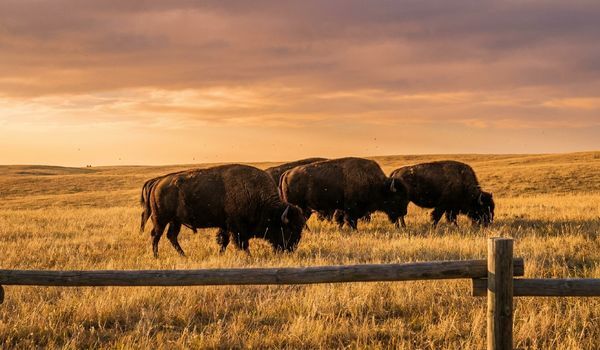
Bison ranch business loans give ranchers the capital they need to buy breeding stock, secure land, build heavy-duty fencing, and purchase the specialized handling equipment that raising American bison demands. Whether you are converting a cattle operation to bison, expanding an established herd, or launching your first ranch, the right financing structure can turn a multi-year capital plan into an immediate growth strategy.
The American bison industry has quietly become one of the most attractive niches in specialty livestock. Consumer demand for lean, sustainably raised protein keeps climbing, bison meat commands premium prices at retail, and the national herd remains small relative to demand. For ranchers, that combination creates real margin potential, but it also creates a financing challenge: bison cost more per head than cattle, require stronger infrastructure, and take longer to reach market weight. This guide covers every major loan option available to bison ranchers, what lenders look for, what financing really costs, and how to apply with confidence.
In This Article
- What Are Bison Ranch Business Loans?
- Why Bison Ranching Is a Growing Business
- Key Benefits of Bison Ranch Financing
- How Bison Ranch Financing Works
- Types of Bison Ranch Business Loans
- Common Uses of Funds
- Who Qualifies for Bison Ranch Financing
- Rates, Terms, and Costs
- Comparing Your Financing Options
- How to Apply
- How Crestmont Capital Helps
- Real-World Scenarios
- Frequently Asked Questions
- Next Steps
What Are Bison Ranch Business Loans?
Bison ranch business loans are commercial financing products designed for ranches that raise American bison, often called buffalo in everyday conversation. They fall under the broader umbrellas of ranch financing and livestock loans, but lenders who understand this niche underwrite them differently than a standard cattle operation because the economics of bison are genuinely different.
A bison operation carries higher per-head costs than most livestock businesses. Quality breeding cows typically run $2,500 to $4,500 per head, proven herd bulls can run $4,000 to $8,000 or more, and the infrastructure has to be built stronger from day one. Bison are powerful, athletic animals that can clear or push through fencing that would hold cattle, so perimeter fence, corrals, and handling systems all need to be heavier and taller. At the same time, bison are remarkably efficient grazers, need far less intervention than cattle, and produce a premium end product that sells at a meaningful markup over conventional beef.
Financing bridges the gap between that upfront investment and the revenue cycle of the herd. Because bison cows are typically bred for a long productive life and calves take 24 to 30 months to finish, a rancher's capital is tied up for years before the full return arrives. Bison ranch business loans smooth that timeline: you acquire the herd and infrastructure now, then repay the financing out of calf crops, meat sales, and breeding stock sales as the operation matures.
These loans can come from several sources, including specialty agricultural lenders, alternative business lenders, banks, and government-backed programs like those offered through the U.S. Small Business Administration. Each source prices risk differently, which is why comparing structures matters as much as comparing rates.
Why Bison Ranching Is a Growing Business
Bison occupies a rare position in American agriculture: a premium protein with demand that consistently outpaces supply. The national bison herd numbers in the hundreds of thousands of head, a fraction of the U.S. cattle herd, and annual processing runs around 60,000 to 70,000 head. That scarcity is structural, and it shows up in pricing. Bison meat routinely sells at two to three times the price of comparable beef cuts at retail, and ground bison has moved from specialty stores into mainstream grocery chains across the country.
Several forces are driving the trend. Health-conscious consumers gravitate toward bison because it is naturally leaner than beef, with fewer calories and more protein per serving. The sustainability story matters too: bison are native grazers that thrive on open rangeland with minimal inputs, no confinement feeding, and a lighter environmental footprint than conventional livestock systems. Restaurants have responded with bison burgers, steaks, and short ribs appearing on menus from fast-casual chains to white-tablecloth steakhouses. Direct-to-consumer sales through farmers markets, ranch stores, and online meat subscriptions have opened high-margin channels that simply did not exist a generation ago.
The American Bison Industry: By the Numbers
|
~385K Head of bison in North American herds |
2-3x Retail price premium of bison over comparable beef cuts |
24-30 Months for a bison calf to reach finishing weight |
|
$2.5K+ Typical cost per quality breeding bison cow |
25+ Productive years a bison cow can remain in the herd |
60K+ Bison processed annually in the United States |
For ranchers, the growth outlook translates into durable pricing power. Established operators report waiting lists for processed animals, and breeding stock sales to new entrants have become a meaningful revenue line of their own. Coverage of the broader small business lending environment, including outlets like CNBC's small business reporting, consistently points to specialty agriculture as a segment where access to capital separates the operations that scale from the ones that stall. Bison ranching rewards ranchers who can invest ahead of the demand curve, and financing is the tool that makes that possible.
Key Benefits of Bison Ranch Financing
Financing a bison operation is not just about affording the herd. Structured correctly, bison ranch business loans create strategic advantages that compound over the life of the ranch:
- Acquire quality genetics now, not eventually. Breeding stock quality determines herd productivity for decades. Financing lets you buy the best cows and bulls available today instead of slowly building genetics through retained heifers.
- Match repayment to your revenue cycle. Livestock loans can be structured around the reality of a 24 to 30 month finishing window and seasonal calf and meat sales, rather than forcing monthly payments that ignore how ranch cash flow actually works.
- Build infrastructure once, correctly. Cutting corners on fencing or handling facilities leads to escaped animals, injuries, and liability. Financing the right infrastructure upfront protects the herd and the balance sheet.
- Preserve working capital. Paying cash for breeding stock can drain the reserves you need for feed, veterinary care, and processing slots. A loan keeps liquidity available for operating expenses and opportunities.
- Scale into premium markets faster. Direct-to-consumer channels, USDA-inspected processing, and branded meat programs all require upfront investment. Financing accelerates entry into the highest-margin segments of the bison business.
- Build business credit. Successfully managing ranch financing strengthens your business credit profile, which lowers the cost of future capital for expansion.
Why lenders like this niche: bison operations tend to have low overhead after establishment, durable asset value in the breeding herd, and a product with structural supply scarcity. A well-documented bison ranch business plan often underwrites more favorably than ranchers expect.
How Bison Ranch Financing Works
The mechanics of bison ranch business loans follow the same general path as other agricultural and small business financing, with a few livestock-specific wrinkles. Here is the typical process from application to funded herd.
Step 1: Define the capital need. Lenders want a number, not a range pulled from thin air. Build a budget that covers breeding stock (with per-head prices from actual auctions or private treaty sellers), land or lease deposits, fencing materials and installation, handling equipment, feed reserves, and at least six to twelve months of operating cushion.
Step 2: Match the need to the loan type. A herd purchase fits a term loan or livestock loan. Fencing and a squeeze chute fit equipment financing. Operating cushion fits a line of credit. Many bison ranches combine two or three structures, and the sections below break down each option.
Step 3: Document the operation. Expect to provide a business plan with herd projections, financial statements or bank statements, experience in livestock or agriculture, and details on the collateral (the animals and equipment themselves often serve). Established ranches add production records and sales history.
Step 4: Underwriting and approval. The lender evaluates credit, cash flow, collateral, and experience. Alternative lenders can return decisions in days; banks and SBA programs take weeks but can offer longer terms.
Step 5: Funding and deployment. Funds are disbursed, the herd or equipment is purchased, and repayment begins on the agreed schedule. Some livestock loans allow interest-only periods or annual payment schedules aligned with calf crop sales.
Types of Bison Ranch Business Loans
No single loan product covers every need in a bison operation. Most successful ranches layer two or three of the following structures, matching each financing tool to a specific asset or expense category.
Term Loans
A term loan delivers a lump sum repaid over a fixed period, typically two to ten years depending on the lender and the use of funds. This is the workhorse for herd acquisition: you borrow the full cost of the breeding herd, purchase the animals, and repay from calf crops, meat sales, and cull cow revenue. Term loans for bison ranches often run $50,000 to $500,000 or more, with the herd itself frequently serving as collateral.
Livestock Loans
Livestock loans are a specialized form of agricultural term financing built around the biology of the animal. Repayment schedules account for breeding cycles, calving seasons, and finishing windows, so payments often land annually or seasonally instead of monthly. For bison, where cows calve once a year and calves take 24 to 30 months to finish, that alignment matters enormously to cash flow. Our guide to livestock loans for farmers and ranchers covers the structure in more depth, and the principles apply directly to bison herds.
Equipment Financing
Bison demand heavy-duty equipment: hydraulic squeeze chutes rated for 2,000-pound animals, tub and alley systems, portable corral panels, water systems, tractors, and feed equipment. Equipment financing spreads those costs over three to seven years, with the equipment as collateral, which keeps approval straightforward and rates competitive. Crestmont Capital's farm equipment financing programs cover exactly this category, and operations with broader needs can also look at agricultural equipment financing for tractors, implements, and irrigation infrastructure.
SBA Loans
Government-backed SBA loans offer some of the longest terms and lowest rates available to small businesses, including ranches structured as for-profit entities. The SBA 7(a) program supports working capital, livestock purchases, and land acquisition up to $5 million, while the SBA 504 program finances major fixed assets like land and facilities. The tradeoff is timeline and paperwork: expect a multi-week process with full documentation. Crestmont Capital helps ranchers navigate SBA loan programs when the longer runway fits the project.
Business Line of Credit
A revolving line of credit covers the uneven rhythm of ranch cash flow: feed purchases before a calf crop sells, veterinary work, processing slot deposits, and the gaps between meat sales. You draw only what you need and pay interest only on the balance. A business line of credit pairs naturally with a term loan for the herd, giving the operation both long-term capital and short-term flexibility.
Working Capital Loans
Short-term working capital loans fund operating expenses over 6 to 24 months. They are faster to obtain than long-term financing and work well for established ranches that need to bridge a seasonal gap, stock up on feed ahead of a drought, or fund a direct-to-consumer marketing push before holiday meat sales.
Ready to Build Your Bison Herd?
Crestmont Capital finances livestock operations nationwide. Fast decisions, flexible structures, and a team that understands ranch economics.
Apply Now - It Takes MinutesCommon Uses of Funds
Bison ranch business loans can fund nearly every legitimate expense of the operation. The most common uses we see:
- Breeding stock acquisition: cows, bulls, and bred heifers from auctions, dispersal sales, or private treaty purchases. This is the single largest use of funds for new and expanding ranches.
- Land purchase or lease deposits: pasture ground suitable for bison, typically 5 to 20 acres per head depending on forage quality and region.
- Fencing: high-tensile or pipe fencing at five to six feet tall, built to contain animals that can weigh a ton and jump or charge through light barrier.
- Handling facilities: squeeze chutes, crowding tubs, alleys, and corrals engineered for bison behavior, plus scales and loading chutes.
- Equipment: tractors, hay equipment, water systems, feed mixers, and livestock trailers.
- Operating capital: feed and mineral programs, veterinary care, herd health testing, breeding soundness exams, and insurance.
- Processing and market development: USDA-inspected processing slots, packaging, cold storage, branding, website and e-commerce buildout, and farmers market presence.
- Refinancing: consolidating higher-cost debt from the startup phase into a single lower-cost structure once the ranch has a track record.
Who Qualifies for Bison Ranch Financing
Qualification standards vary by lender and loan type, but the core factors are consistent across the market.
Credit profile. Most alternative lenders look for personal credit scores of 600 or higher, with better pricing above 680. SBA and bank programs typically want 680 and up. Credit challenges do not automatically disqualify a rancher, especially when collateral and cash flow are strong, but they raise the cost of capital.
Experience. Lenders weight livestock experience heavily in this niche. Ranchers converting from cattle operations, or operators with documented bison handling experience, underwrite more smoothly than first-time livestock owners. New entrants can compensate with a strong business plan, a mentor relationship, or a partnership with an established bison operation.
Revenue and cash flow. Established ranches demonstrate repayment ability through production records and sales history. New operations rely on projections, which lenders stress-test against conservative price and survival assumptions. A realistic plan that acknowledges the 24 to 30 month lag before meat revenue beats an optimistic one every time.
Collateral. The breeding herd, equipment, and sometimes land secure most bison ranch financing. Lenders typically advance a percentage of appraised or purchase value, so expect some equity contribution, commonly 10 to 30 percent depending on the structure.
Good candidates for bison ranch business loans include: cattle ranchers converting to or adding bison, established bison producers expanding herd size or processing capacity, agricultural entrepreneurs with livestock experience entering the niche, and land-rich operators who need capital for animals and infrastructure.
Rates, Terms, and Costs
Pricing on bison ranch business loans depends on the loan type, the lender, your credit, and the collateral. Here is what the market generally looks like in 2026:
| Loan Type | Typical Amounts | Typical Terms | Best For |
|---|---|---|---|
| Term Loan | $50,000 - $500,000+ | 2 - 10 years | Herd acquisition, land improvements |
| Equipment Financing | $10,000 - $250,000 | 3 - 7 years | Chutes, tractors, fencing equipment |
| SBA 7(a) | Up to $5 million | 10 - 25 years | Land, herd, major expansion |
| Line of Credit | $25,000 - $250,000 | Revolving, renewed annually | Seasonal cash flow, feed, vet costs |
| Working Capital | $10,000 - $150,000 | 6 - 24 months | Short-term gaps, marketing pushes |
Interest rates range widely: strong credit and SBA structures can land in the single digits, while faster alternative financing for newer operations runs higher. The honest way to compare offers is total cost of capital over the life of the loan, not the headline rate. A slightly higher rate with annual payments matched to calf sales often costs less in practice than a lower rate with monthly payments that strain cash flow and trigger late fees.
Watch the fine print: ask every lender about prepayment penalties, origination fees, collateral requirements, and payment schedule flexibility. In ranch financing, the payment calendar matters as much as the rate.
Comparing Your Financing Options
Bison ranchers realistically choose among four funding paths. Each has a place, and the right answer depends on your timeline, credit, and how much of the operation you want encumbered.
Specialty and alternative lenders like Crestmont Capital offer the fastest decisions, often within days, with flexible structures built around ranch cash flow. Rates run higher than banks, but speed and schedule flexibility have real economic value when a dispersal sale or a herd bull becomes available and will not wait six weeks for a committee decision.
Banks and agricultural credit institutions offer lower rates for well-qualified borrowers with established operations and strong collateral. Expect a slower process, heavier documentation, and less flexibility on payment schedules.
SBA programs deliver the longest terms and often the lowest total cost for major acquisitions like land, at the price of a multi-week process and detailed paperwork. For a big land-and-herd package, the wait is usually worth it.
Seller and private financing occasionally appears in breeding stock purchases, where an established producer finances part of a herd sale for a new rancher. Terms are negotiated case by case, and the arrangement can double as a mentorship, which has value beyond the capital.
Many mature bison operations use all four over their lifetime: alternative financing for speed early on, SBA or bank debt for the big land move, and a revolving line for the season-to-season rhythm. Our broader guide to ranch business loans compares these structures across ranch types if you are still mapping the landscape.
How to Apply
The application process for bison ranch business loans is straightforward when you prepare the right documents in advance.
Step 1: Assemble your numbers. Gather your herd budget or purchase list, land or lease details, and a twelve-month operating budget. Established ranches add two years of financial statements or tax returns and current production records.
Step 2: Document your experience. A one-page summary of your livestock background, the management team, and any veterinary or mentorship relationships strengthens the file considerably.
Step 3: Submit the application. With Crestmont Capital, the initial application takes minutes online. You will provide basic business information, the funding amount, and the use of funds.
Step 4: Review your options. A funding specialist reviews your file, comes back with structures and terms, and walks you through the total cost of each option so you can compare honestly.
Step 5: Accept and fund. Once you select a structure and sign, funds are disbursed, often within days for alternative structures. Then the real work starts: buying the herd, building the fence, and putting the capital to work.
Get a Financing Decision in Days, Not Months
Tell us about your operation and your herd goals. We will match you with the right structure for your ranch.
Start Your ApplicationHow Crestmont Capital Helps
Crestmont Capital is a top-rated U.S. business lender that has funded thousands of small businesses since 2015, including livestock and agricultural operations across the country. We are not a generalist bank reading about bison for the first time in your application: our team funds ranches, farms, and specialty agricultural businesses every week, and we understand why a bison herd is not a cattle herd with bigger animals.
What that means in practice: we structure repayment around your actual revenue calendar, not a generic monthly template. We finance the full stack of a bison operation, from breeding stock term loans to equipment financing for handling systems to revolving credit for the seasonal gaps. And we move at the speed ranching requires, because a quality bred cow at auction does not wait for a loan committee.
For operations where a government-backed structure fits better, we guide ranchers through SBA loan options with the same hands-on approach. For equipment-heavy phases, our farm equipment financing programs cover everything from squeeze chutes to tractors with the equipment itself as collateral. The goal is a capital structure that grows the herd, not one that starves it.
Real-World Scenarios
These composite scenarios reflect the financing patterns we see most often in the bison niche.
Scenario 1: The cattle-to-bison conversion. A third-generation cattle rancher in South Dakota decides to convert 800 acres to bison after watching bison prices hold while beef margins compressed. A $220,000 term loan funds 45 bred cows and two herd bulls from a reputable dispersal sale, equipment financing covers a bison-rated hydraulic chute and alley system, and a $50,000 line of credit carries operating costs until the first calf crop sells at 30 months. The herd genetics position the ranch to sell breeding stock to other new entrants within four years, adding a revenue line the cattle operation never had.
Scenario 2: The direct-to-consumer scale-up. An established bison ranch in Colorado has a waiting list for its processed animals and sells out at every farmers market within hours. A $130,000 working capital package funds USDA-inspected processing slots, vacuum-seal packaging, cold storage, and an e-commerce buildout with nationwide shipping. Online sales reach customers in 30 states within the first year, and the price per pound captured rises meaningfully over wholesale live-animal sales.
Scenario 3: The new entrant with a mentor. A former agricultural lender in Nebraska partners with an established bison producer who agrees to mentor the startup and sell 25 bred heifers with partial seller financing. An SBA 7(a) loan arranged through Crestmont Capital covers the balance of the herd, a land lease deposit, and perimeter fencing. The mentorship de-risks the file for underwriting, and the seller financing reduces the equity required at closing.
Scenario 4: The established herd expansion. A Montana bison operation running 200 cows has the land and demand to double but not the liquid capital. A livestock term loan funds 100 additional bred cows over two purchasing seasons, with annual payments aligned to calf crop sales each fall. The expansion pushes the ranch past the volume threshold that regional distributors require, unlocking wholesale accounts that were previously out of reach.
Your Bison Operation Deserves a Lender That Understands Ranching
Join the ranchers nationwide who fund their herds with Crestmont Capital. Fast, flexible, and built around your revenue calendar.
Apply for Bison Ranch FinancingFrequently Asked Questions
What is a bison ranch business loan? +
A bison ranch business loan is commercial financing designed for operations that raise American bison. It can fund breeding stock, land, fencing, handling equipment, and operating costs. Structures include term loans, livestock loans, equipment financing, SBA loans, lines of credit, and working capital loans, and most ranches combine two or more.
How much can I borrow for a bison ranch? +
Amounts range from around $10,000 for equipment or working capital up to $5 million through SBA programs for land and herd packages. Most herd-acquisition term loans fall between $50,000 and $500,000, sized against the value of the animals, your equity contribution, and the operation's projected cash flow.
What credit score do I need to qualify? +
Most alternative lenders look for scores of 600 or higher, with the best pricing above 680. Bank and SBA programs generally expect 680 or more. Strong collateral and documented livestock experience can offset a weaker score with many lenders.
Can I use a loan to buy breeding bison? +
Yes. Breeding stock acquisition is the most common use of bison ranch financing. Term loans and livestock loans are structured specifically for herd purchases, and the animals themselves typically serve as collateral for the loan.
Are bison ranch loans available for new ranchers? +
Yes, though new entrants face closer scrutiny. A detailed business plan, documented livestock or agricultural experience, a mentor relationship with an established producer, or seller financing on the herd all strengthen a first-time rancher's application considerably.
How long does approval take? +
Alternative lenders like Crestmont Capital often return decisions within one to three business days and fund within days of acceptance. Banks typically take two to six weeks, and SBA programs can run four to eight weeks depending on complexity.
What documents do I need to apply? +
Expect to provide a business plan or herd budget, recent bank statements, financial statements or tax returns for established operations, identification and business entity documents, and details on the livestock or equipment being purchased. SBA applications require more extensive documentation.
Can I finance bison handling equipment and fencing? +
Yes. Equipment financing covers squeeze chutes, tubs, alleys, corral systems, tractors, and trailers, with the equipment as collateral. Fencing materials and installation are commonly financed as part of a term loan or land-improvement package.
Do I need collateral for a bison ranch loan? +
Most bison ranch financing is secured by the assets being funded: the herd, equipment, or land. Lenders typically advance a percentage of value, so plan on an equity contribution of roughly 10 to 30 percent depending on the structure and your credit profile.
What are typical interest rates and terms? +
Rates range from single digits for strong credit and SBA structures to higher pricing for fast alternative financing. Terms run 6 to 24 months for working capital, 3 to 7 years for equipment, 2 to 10 years for term loans, and up to 25 years for SBA real estate financing.
Can I use an SBA loan for a bison ranch? +
Yes. Ranches operating as for-profit businesses can qualify for SBA 7(a) loans up to $5 million for livestock, land, and working capital, and SBA 504 loans for major fixed assets. The process takes longer but offers some of the longest terms and lowest rates available.
Is bison ranching profitable? +
It can be, and the economics are driven by premium meat pricing, low input costs after establishment, and long productive cow lives. Bison meat retails at two to three times comparable beef cuts. Profitability depends on herd management, market access, and a capital structure that survives the 24 to 30 month lag before meat revenue.
Can I refinance existing ranch debt? +
Yes. Established ranches frequently refinance higher-cost startup debt into a single lower-cost structure once they have production records and sales history. Refinancing can lower monthly obligations, extend terms, or free collateral for expansion.
What is the difference between a livestock loan and an equipment loan? +
A livestock loan finances the animals and is structured around breeding and finishing cycles, often with seasonal or annual payments. An equipment loan finances machinery and handling systems with fixed monthly payments over three to seven years, secured by the equipment itself.
How do I get started with Crestmont Capital? +
Start with the online application, which takes minutes. A funding specialist reviews your operation, presents structures matched to your herd and cash flow, and walks you through total costs. Funding can follow within days of acceptance for most alternative structures.
Next Steps
If bison ranching is your next move, or your next expansion, here is how to put this guide to work this week:
Price your actual herd. Pull real numbers from upcoming bison auctions, dispersal sales, and private treaty listings so your capital request reflects the market, not a guess.
Map the full budget. Add land or lease costs, fencing, handling equipment, and a six to twelve month operating cushion to the herd number.
Match each need to a structure. Herd to a term or livestock loan, equipment to equipment financing, seasonal gaps to a line of credit.
Apply with Crestmont Capital. Our team will review your operation and come back with structures built for the way a bison ranch actually earns.
Conclusion
The American bison industry rewards ranchers who move decisively. Demand for premium, lean, sustainably raised protein keeps growing, the national herd remains small, and pricing reflects that scarcity year after year. The barrier has never been demand; it is the capital intensity of getting a herd established and the patience required while it matures.
Bison ranch business loans remove that barrier. The right structure puts quality genetics on your ground now, builds infrastructure once and correctly, and aligns repayment with the real revenue calendar of a bison operation. Whether you are converting from cattle, scaling a proven herd into direct-to-consumer channels, or entering ranching for the first time with a mentor at your side, financing is the lever that compresses a decade of slow growth into a single well-planned season.
Crestmont Capital has funded thousands of small businesses since 2015, and our team understands the economics of livestock operations. If you are ready to talk through bison ranch business loans for your operation, apply online in minutes and a funding specialist will walk you through your options with straight answers on cost, structure, and timing.
Disclaimer: The information provided in this article is for general educational purposes only and is not financial, legal, or tax advice. Funding terms, qualifications, and product availability may vary and are subject to change without notice. Crestmont Capital does not guarantee approval, rates, or specific outcomes. For personalized information about your business funding options, contact our team directly.

Allan Garfinkle
Allan Garfinkle is the Chief Revenue Officer at Crestmont Capital, where he has spent more than a decade leading revenue strategy, business development, and operational growth. With 28 years of experience building and advising startups and small businesses, Allan has helped more than 10,000 business owners navigate financing decisions, growth opportunities, and changing economic conditions. He earned a Bachelor of Science in Economics and an MBA with a concentration in Finance from Northeastern University, as well as a Juris Doctor from New England Law, where his studies focused on contracts and business law. His writing draws on extensive practical experience in small-business lending, equipment financing, business credit, and commercial finance.