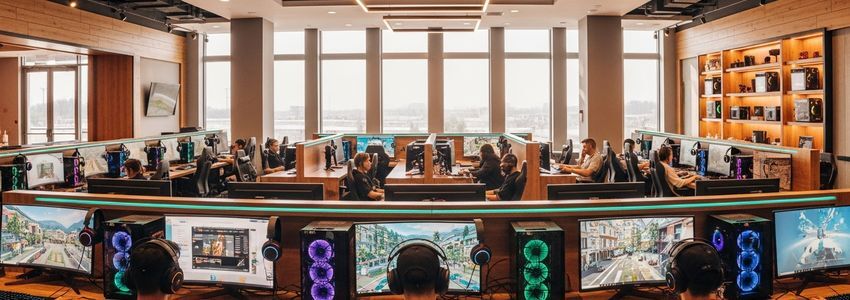
The esports and competitive gaming industry is experiencing explosive growth, transforming from a niche hobby into a mainstream entertainment powerhouse. This surge has created a massive opportunity for entrepreneurs to launch gaming lounges and esports cafes. However, these ventures are capital-intensive, requiring significant investment in high-end technology, premium real estate, and immersive experiences. Securing the right gaming lounge business loans is often the critical step that separates a winning concept from a game over. This comprehensive guide explores the financing landscape, providing owners with the essential information needed to fund their startup, upgrade their equipment, or expand their operations.
In This Article
- What Is a Gaming Lounge Business Loan?
- Why Gaming Lounges Need Business Financing
- Types of Gaming Lounge Business Loans
- How Gaming Lounge Financing Works
- How Much Funding Does a Gaming Lounge Need?
- How to Qualify for Gaming Lounge Business Loans
- How Crestmont Capital Helps Gaming Lounge Owners
- Real-World Gaming Lounge Financing Scenarios
- Gaming Lounge Business Loans vs. Alternative Options
- Frequently Asked Questions
- How to Get Started
- Conclusion
What Is a Gaming Lounge Business Loan?
A gaming lounge business loan is not a single, specific financial product. Instead, it is a broad term that encompasses a variety of financing solutions designed to meet the unique capital needs of gaming lounges, esports arenas, LAN centers, and virtual reality (VR) arcades. These specialized funding options provide the necessary capital to cover the substantial costs associated with starting, operating, and growing a modern gaming venue.
Unlike generic business loans, financing tailored for the gaming industry acknowledges the specific assets and operational models of these businesses. Lenders familiar with the sector understand that the primary assets are often high-value, rapidly depreciating electronics. Therefore, the financing structures are often adapted to accommodate these unique circumstances. Whether it's for a startup or an established venue, these loans are the financial backbone that enables owners to create competitive and profitable entertainment destinations.
The funds from gaming cafe loans or esports cafe financing can be used for a wide range of business purposes, including:
- Equipment Purchase: Acquiring high-performance gaming PCs, consoles (PlayStation, Xbox, Nintendo), monitors, peripherals (keyboards, mice, headsets), and VR systems.
- Venue Build-Out: Covering costs for construction, renovations, custom furniture (gaming chairs, desks), specialized lighting, sound systems, and interior design to create an immersive atmosphere.
- Real Estate Costs: Funding for a down payment on a commercial property purchase, or covering the security deposit and first few months of rent for a leased space.
- Working Capital: Managing day-to-day operational expenses such as payroll, utilities (especially electricity), high-speed internet service, software licenses, and inventory for concessions.
- Marketing and Launch: Financing a grand opening event, digital marketing campaigns, social media promotion, and local advertising to attract the initial customer base.
- Expansion and Upgrades: Adding more gaming stations, building a dedicated streaming studio, creating a tournament area, or refreshing technology to stay ahead of the competition.
Essentially, a loan for a gaming lounge is a strategic tool that injects capital precisely where it's needed, allowing owners to build a high-quality venue that attracts and retains customers in the highly competitive entertainment market.
Why Gaming Lounges Need Business Financing
The allure of opening a gaming lounge is strong, but the financial barrier to entry can be formidable. Both startup and established venues face significant and recurring costs that make business financing not just a helpful option, but often a necessity for survival and growth. The capital-intensive nature of this business model means that relying solely on personal savings is often impractical and risky. Here are the primary reasons why gaming lounge financing is so crucial.
High Upfront Equipment Costs
The core of any gaming lounge is its technology. To attract serious gamers and casual players alike, a venue must offer a top-tier experience. This requires a substantial initial investment in a fleet of high-performance equipment.
- Gaming PCs and Consoles: A single high-end gaming PC can cost between $2,000 and $4,000. For a modest 20-station lounge, this translates to an immediate equipment cost of $40,000 to $80,000, just for the computers. Add in the latest consoles, and the cost climbs even higher.
- Monitors and Peripherals: High-refresh-rate monitors, mechanical keyboards, precision mice, and quality headsets are not luxuries-they are expected. These can add another $500 to $1,000 per station.
- VR and Specialty Equipment: Offering a dedicated VR area requires expensive headsets, sensors, and powerful dedicated computers, adding tens of thousands to the startup budget.
Equipment financing for gaming lounges is specifically designed to address this challenge, allowing owners to acquire necessary hardware without depleting all their liquid cash upfront.
Expensive Venue Build-Out and Infrastructure
Creating the right atmosphere is key to a gaming lounge's success. This involves more than just setting up desks and chairs. A significant portion of the budget is allocated to transforming a commercial space into a professional gaming environment.
- Lease and Renovations: Securing a lease in a high-traffic area requires a substantial security deposit and several months of rent paid in advance. Renovations can include new flooring, paint, soundproofing, and custom construction, which can easily run into tens of thousands of dollars.
- Custom Furniture and Fixtures: Ergonomic gaming chairs and custom-built desks that accommodate cable management are essential for player comfort and venue aesthetics.
- Network and Electrical: A gaming lounge requires a robust, commercial-grade network infrastructure with high-speed fiber internet. Furthermore, the electrical system must be upgraded to handle the massive power draw from dozens of high-performance PCs running simultaneously.
Ongoing Operational and Working Capital Needs
Once the doors open, the expenses continue. A business needs a cash reserve, known as working capital, to manage day-to-day operations until it generates consistent, positive cash flow.
- Payroll: Staffing for front desk, tech support, and management is a major recurring expense.
- Utilities: Electricity bills for a gaming lounge can be exceptionally high due to the constant operation of powerful computers and air conditioning.
- Software and Licensing: Commercial licenses for games and operating systems are required and can be costly, sometimes involving per-station fees.
- Marketing: Continuous marketing efforts are needed to attract new customers, promote events, and build a community around the brand.
The Need for Constant Upgrades and Expansion
The technology landscape changes at lightning speed. What is top-of-the-line today may be standard or even outdated in two to three years. To remain competitive, gaming lounges must have a plan and the capital for regular tech refreshes. Financing provides the means to upgrade equipment in cycles, ensuring the venue never falls behind. Similarly, as the business grows, financing is essential for expansion projects like adding more stations, opening a new location, or building out a dedicated space for esports tournaments.
Ready to Fund Your Gaming Lounge?
Get fast, flexible financing from the #1 business lender in the U.S. No obligation - apply in minutes.
Apply Now ->Types of Gaming Lounge Business Loans
Navigating the world of business financing can be complex, as there are many different products available. The best choice for your gaming lounge depends on your specific needs, financial situation, and business goals. Below is a breakdown of the most common and effective types of gaming center business loans and financing options.
Equipment Financing
This is one of the most popular options for gaming lounges. Equipment financing is a loan used specifically to purchase business equipment. The equipment being purchased-in this case, gaming PCs, consoles, VR systems, and servers-serves as the collateral for the loan. This reduces the risk for the lender, often making these loans easier to qualify for than other types of financing, even for startups. It's an ideal way to acquire expensive hardware without a massive upfront cash outlay, preserving your working capital for other expenses.
SBA Loans
Backed by the U.S. Small Business Administration, SBA loans are highly sought after for their long repayment terms and low interest rates. The two most common types for a gaming lounge are:
- SBA 7(a) Loan: This is the most flexible SBA loan. It can be used for a wide range of purposes, including working capital, equipment purchases, real estate acquisition, and business construction. It's an excellent all-in-one funding solution for a new gaming lounge startup.
- SBA 504 Loan: This loan is specifically for purchasing major fixed assets, such as commercial real estate or long-term equipment. It's a great option if you plan to buy the building for your lounge.
While SBA loans offer excellent terms, the application process is typically longer and more document-intensive than other loan types.
Business Line of Credit
A business line of credit functions like a business credit card. You are approved for a certain credit limit and can draw funds as needed, up to that limit. You only pay interest on the amount you use. Once you repay the borrowed funds, your credit limit is restored. This provides incredible flexibility for managing fluctuating expenses, such as marketing for a new tournament, covering an unexpected repair, or purchasing concession inventory. It's an ideal tool for ongoing cash flow management.
Working Capital Loans
These are short-term loans designed to provide a quick infusion of cash to cover immediate operational needs. Working capital loans are perfect for bridging a seasonal cash flow gap, covering payroll before a busy weekend, or seizing a time-sensitive opportunity. The application and funding processes are typically very fast, often providing access to funds within 24-48 hours. They are meant to be repaid quickly, usually over a period of 3 to 18 months.
Term Loans
A traditional term loan provides a lump sum of capital that you repay with interest over a predetermined period (the "term"). Payments are typically fixed, making it easy to budget for. Term loans are well-suited for large, one-time investments where the cost is known upfront, such as a major venue renovation, a significant expansion project, or the initial purchase of all startup assets.
| Loan Type | Best For | Typical Amount | Repayment Term |
|---|---|---|---|
| Equipment Financing | Purchasing PCs, consoles, VR, servers, and furniture. | $10,000 - $500,000+ | 2 - 7 years |
| SBA Loans | Startups, real estate purchase, large-scale projects. | Up to $5 Million | 7 - 25 years |
| Business Line of Credit | Managing cash flow, unexpected costs, marketing campaigns. | $10,000 - $250,000 | Revolving |
| Working Capital Loan | Short-term needs like payroll, inventory, or bridging revenue gaps. | $5,000 - $500,000 | 3 - 18 months |
| Term Loan | Major one-time investments like renovations or expansion. | $25,000 - $2 Million | 1 - 10 years |
How Gaming Lounge Financing Works
Securing a business loan for your gaming lounge might seem daunting, but modern lenders have streamlined the process to make it as efficient as possible. While the specifics can vary slightly depending on the lender and the type of loan, the general workflow follows a clear, logical progression. Understanding these steps can help you prepare effectively and increase your chances of a successful application.
Initial Application
The process begins with a simple online application. You will provide basic information about your business, such as its legal name, time in business, monthly revenue, and the amount of funding you are requesting. This initial step is designed to be quick and usually takes only a few minutes to complete.
Document Submission
After the initial review, a funding specialist will contact you to discuss your needs and request necessary documentation. This typically includes recent bank statements, financial statements (profit and loss, balance sheet), and for startups, a comprehensive business plan with financial projections.
Underwriting & Review
The lender's underwriting team will analyze your application and submitted documents. They assess your business's financial health, credit history, cash flow, and overall risk profile to determine your eligibility for financing and the terms they can offer.
Approval & Offer
If your application is approved, you will receive a formal offer (or multiple offers) outlining the loan amount, interest rate, repayment term, and any associated fees. You will have the opportunity to review the terms with your funding specialist and ask any questions before making a decision.
Funding
Once you accept the offer and sign the final loan documents, the funds are transferred directly to your business bank account. For fast financing options like working capital loans, this can happen in as little as 24 hours. For SBA loans, the process can take several weeks.
How Much Funding Does a Gaming Lounge Need?
Determining the precise amount of funding your gaming lounge needs is one of the most critical steps in the financing process. Asking for too little can leave you short on capital before you can become profitable, while asking for too much can lead to unnecessary debt. The total cost can vary dramatically based on location, size, and the quality of equipment you choose. A small, 15-station LAN center in a suburban area will have a vastly different budget than a 50-station esports arena in a major city center.
Startup costs for a new gaming lounge can range from as low as $50,000 for a lean operation to over $500,000 for a large, premium venue. Here is a sample breakdown of potential expenses for a mid-sized, 25-station gaming lounge:
- Real Estate (Lease): $10,000 - $25,000 (Security deposit + first 2-3 months' rent)
- Venue Build-Out & Renovation: $20,000 - $75,000 (Includes construction, electrical upgrades, lighting, sound, and paint)
- Gaming Stations (25 units): $75,000 - $125,000 (PCs, consoles, monitors, peripherals at $3k-$5k per station)
- Furniture & Fixtures: $15,000 - $30,000 (Gaming chairs, custom desks, reception counter, lounge seating)
- Network Infrastructure: $5,000 - $15,000 (Commercial-grade routers, switches, servers, cabling)
- Software & Game Licenses: $5,000 - $20,000 (Operating systems, POS software, commercial game licenses)
- Initial Marketing & Grand Opening: $5,000 - $15,000
- Working Capital Reserve (3-6 months): $30,000 - $100,000 (To cover payroll, rent, utilities, and other operating expenses)
Estimated Total Startup Cost: $165,000 - $405,000
Key Insight: According to a Forbes analysis, a high-end pre-built gaming PC for 2024 can easily cost over $3,500. For a venue with 30 stations, this single line item can exceed $100,000, highlighting the critical need for effective equipment financing.
For existing businesses, funding needs are typically more targeted. You might need $50,000 for a complete tech refresh, $25,000 to build a streaming booth, or $100,000 to open a second location. The key is to create a detailed budget, get quotes from vendors, and add a contingency fund (usually 10-15%) to cover unexpected costs. This detailed financial plan will be essential when you apply for gaming room business loans.
How to Qualify for Gaming Lounge Business Loans
Lenders evaluate several key factors to determine your eligibility for a business loan and the terms they can offer. Preparing in these areas will significantly improve your chances of securing the funding you need for your gaming lounge. While requirements vary, most lenders focus on the following criteria.
1. Credit Score
Your personal and business credit scores are a primary indicator of your financial responsibility. Lenders use this score to predict the likelihood that you will repay your loan on time. For most traditional and SBA loans, a personal credit score of 650 or higher is preferred. Alternative lenders may be more flexible, but a stronger credit score will almost always result in better interest rates and more favorable terms. If you have an established business, building a positive business credit history is also important.
2. Time in Business
The length of time your business has been operational is a measure of its stability. Most lenders prefer to work with businesses that have been operating for at least one to two years. However, this doesn't mean startups are out of luck. Startups can and do get funding, but they will need to compensate with a very strong business plan, excellent personal credit, and often a personal guarantee or collateral. Specific startup loan programs, like some SBA loans, are designed for new ventures.
3. Annual and Monthly Revenue
For an existing gaming lounge, your revenue is one of the most important metrics. Lenders will analyze your bank statements to verify your cash flow and ensure you generate enough income to comfortably cover your existing expenses plus the new loan payment. Many lenders have minimum annual revenue requirements, which might range from $100,000 to $250,000 or more, depending on the loan product.
4. A Comprehensive Business Plan
For startups, a detailed and professional business plan is non-negotiable. This document is your opportunity to sell your vision to the lender and prove that you have a viable path to profitability. A strong business plan for a gaming lounge should include:
- Executive Summary: A concise overview of your business concept and funding request.
- Market Analysis: Research on the local gaming community, target demographics, and analysis of competitors.
- Marketing & Sales Strategy: How you will attract and retain customers, including pricing, promotions, and event plans.
- Management Team: Bios of the owners and key personnel, highlighting relevant experience.
- Financial Projections: Detailed 3-5 year forecasts for revenue, expenses, and profitability. This is the most scrutinized section.
5. Financial Documents
Be prepared to provide a clear picture of your financial health. This includes:
- Business Bank Statements (3-6 months)
- Profit & Loss Statements and Balance Sheets
- Business and Personal Tax Returns
- A detailed list of assets and liabilities
Having these documents organized and ready will expedite the underwriting process and demonstrate your professionalism.
How Crestmont Capital Helps Gaming Lounge Owners
In the competitive world of entertainment and esports, having the right financial partner can make all the difference. Crestmont Capital, rated the #1 small business lender in the U.S., understands the unique challenges and opportunities within the gaming industry. We provide more than just capital; we provide strategic small business financing solutions tailored to help your gaming lounge succeed.
Expertise in Specialized Industries
We have extensive experience funding businesses in the entertainment and recreation sectors. Much like the venues we discuss in our guides to recreation center business loans and indoor playground business loans, gaming lounges have unique equipment needs and operational models. Our team understands the value of your assets and the importance of cash flow in a high-tech, customer-facing environment. This expertise allows us to structure financing that makes sense for your specific business.
A Full Suite of Funding Products
We recognize that one size does not fit all. That's why we offer a comprehensive range of financing options to cover every need. Whether you require fast commercial equipment financing to build out your gaming stations, a flexible business line of credit for ongoing expenses, or a working capital loan to seize a growth opportunity, we have a solution. We work with you to identify the right mix of products to achieve your goals.
Speed and Efficiency
Traditional banks can take weeks or even months to approve a loan, a delay that can be fatal in the fast-moving tech industry. At Crestmont Capital, we've streamlined our application and underwriting process. Our goal is to get you a decision quickly and provide funding in as little as 24 hours for certain loan types. This speed allows you to act on opportunities, purchase equipment before prices rise, and get your doors open faster.
Dedicated Support
When you partner with Crestmont Capital, you are assigned a dedicated funding specialist who will guide you through the entire process. They will take the time to understand your vision for your gaming lounge, answer your questions, and help you prepare a strong application. We are committed to building long-term relationships and supporting your business as it grows.
Level Up Your Business with Crestmont Capital
Partner with the experts in entertainment business financing. See your funding options today.
Get Pre-Qualified ->Real-World Gaming Lounge Financing Scenarios
To better understand how different financing tools apply to gaming lounges, let's explore some detailed, real-world scenarios. These examples illustrate how strategic use of capital can address specific challenges and opportunities at various stages of a business's life cycle.
Scenario 1: The Startup Esports Cafe
- The Business: "Pixel Arena," a startup concept by two entrepreneurs with strong personal credit and a detailed business plan. They have secured a 2,500 sq. ft. location in a busy shopping center.
- The Need: They require $200,000 in total startup capital. The budget allocates $90,000 for 20 high-end PC stations, $60,000 for the venue build-out (electrical, networking, furniture), and $50,000 for working capital (rent, marketing, initial payroll).
- The Solution: A combination financing strategy is ideal.
- They apply for a $90,000 equipment financing agreement. Since the PCs themselves serve as collateral, this portion is relatively straightforward to secure. The terms are for 5 years, keeping monthly payments manageable.
- For the remaining $110,000, they secure an SBA 7(a) loan. Their strong business plan and good credit make them excellent candidates. The SBA loan covers the build-out and provides the necessary working capital with a favorable 10-year repayment term.
- The Outcome: Pixel Arena is fully funded. They preserve their personal cash for contingencies and launch with top-of-the-line equipment and a healthy cash reserve.
Scenario 2: The Critical Tech Refresh
- The Business: "Game On," an established and profitable gaming lounge that has been open for three years. Their 30 PC stations are starting to show their age and can no longer run the latest games at maximum settings.
- The Need: The owner needs to upgrade all 30 PCs, focusing on new GPUs, processors, and RAM. The total cost for the components and labor is estimated at $75,000.
- The Solution: A straightforward equipment financing loan is the perfect fit. The owner submits an application along with quotes from their hardware vendor. Because "Game On" has a proven track record of strong revenue, they are approved within 24 hours for the full $75,000 on a 3-year term.
- The Outcome: The lounge completes the upgrade over a single weekend with minimal downtime. They market their "All-New RTX 40-Series Rigs" and see an immediate increase in traffic from competitive gamers, boosting their revenue and maintaining their reputation as the premier gaming spot in town.
Scenario 3: The VR Expansion Project
- The Business: "Virtual Realms," a successful 5-year-old gaming cafe that wants to capitalize on the growing popularity of virtual reality. They have an underutilized 400 sq. ft. area they want to convert into two dedicated VR bays.
- The Need: The project requires $40,000. This covers two high-end VR systems, powerful dedicated PCs, soundproofing, and safety padding for the space.
- The Solution: The owner has a good relationship with their lender and opts for a business line of credit with a $50,000 limit. This provides flexibility. They draw $30,000 immediately to purchase the primary equipment. As the project progresses, they draw another $8,000 to cover unexpected construction costs.
- The Outcome: The VR expansion is a huge hit, attracting a new customer segment and allowing them to charge a premium price for the experience. The revenue from the VR bays quickly covers the interest payments, and they pay down the balance on the line of credit, leaving the remaining credit available for future needs.
Scenario 4: Bridging a Seasonal Cash Flow Gap
- The Business: "Console Corner," a gaming lounge that heavily relies on student traffic. They are profitable during the school year but experience a significant revenue dip during the summer months.
- The Need: The owner needs $20,000 to ensure they can cover rent and payroll for July and August without having to lay off their skilled staff. They anticipate a huge surge in business in September when students return.
- The Solution: A short-term working capital loan is the ideal instrument. The application is simple, requiring only a few months of bank statements. They are approved for a $20,000 loan with a 6-month repayment term. The funds are in their account within 48 hours.
- The Outcome: "Console Corner" navigates the slow season without financial stress. When revenue skyrockets in September, the small daily or weekly payments are easily manageable. They fully repay the loan by December, ready for the next cycle.
Gaming Lounge Business Loans vs. Alternative Options
While formal business loans are a primary source of funding, entrepreneurs often consider other avenues to raise capital. It's important to understand the pros and cons of each alternative compared to traditional and alternative lending. Choosing the right path depends on your risk tolerance, need for control, and the stage of your business.
Key Insight: The fundamental difference is debt vs. equity. Business loans are debt-you borrow money and pay it back with interest, but you retain 100% ownership of your company. Investors provide capital in exchange for equity, meaning you give up a percentage of ownership and future profits.
| Funding Option | Pros | Cons | Best For |
|---|---|---|---|
| Business Loans | Retain full ownership; predictable payments; interest is tax-deductible. | Requires repayment regardless of profit; may require collateral or personal guarantee. | Clear funding needs with a solid plan for repayment (e.g., startups, equipment purchase, expansion). |
| Personal Savings | No debt, no interest, full control; fastest access to cash. | High personal financial risk; blurs line between personal and business finances; may not be enough capital. | Covering very small initial costs or as a down payment for a larger loan. |
| Friends & Family | Potentially flexible or lower-interest terms; based on trust. | Can strain personal relationships if the business struggles; agreements can be informal and lead to disputes. | Seed money for very early-stage concepts, but should always be formalized with a legal agreement. |
| Angel Investors / VCs | Access to large amounts of capital; gain valuable mentorship and industry connections. | Must give up a significant portion of ownership (equity); loss of some decision-making control. | Highly scalable business models, such as a plan to open a large national chain of esports arenas. |
| Crowdfunding | Validates market demand before launch; builds an early community of supporters. | No guarantee of success; requires significant marketing effort; must deliver on promised rewards. | Unique concepts with a strong story that can capture public interest and generate pre-launch hype. |
The Gaming Industry: By the Numbers
$486 Billion
Projected global video game market revenue by 2027, demonstrating massive and sustained industry growth. (Source: Reuters)
995 Million
The estimated global esports audience by 2025, a huge potential customer base for gaming lounges and venues. (Source: CNBC)
$1.87 Billion
Projected global esports market revenue in 2025, highlighting the commercial viability of competitive gaming events. (Source: AP News)
Frequently Asked Questions
Can I get a gaming lounge business loan as a startup?
Yes, it is possible for startups to get financing. While some lenders prefer to work with established businesses, options like SBA loans are specifically designed to help new ventures. To qualify as a startup, you will need a very strong and detailed business plan, excellent personal credit, and potentially some personal investment or collateral to secure the loan.
What is the minimum credit score required for esports cafe financing?
The minimum credit score varies by lender and loan type. For traditional bank loans and SBA loans, a score of 650-680 or higher is often required. Alternative lenders can be more flexible, sometimes accepting scores as low as 550-600, but this will likely result in higher interest rates. A higher credit score will always improve your chances of approval and lead to better terms.
How much money can I borrow for my gaming lounge?
The amount you can borrow depends on the lender, your business's financial health, your credit history, and the loan product. Funding can range from as little as $5,000 for a small working capital loan to over $5 million for a large SBA loan used for real estate and a full build-out. Most established small gaming lounges seek funding in the $50,000 to $250,000 range for upgrades or expansion.
What can I use the funds from a gaming center business loan for?
You can use the funds for nearly any legitimate business purpose. Common uses include purchasing gaming PCs and consoles, renovating your venue, covering rent and payroll, launching marketing campaigns, buying software licenses, expanding your location, or refinancing existing debt. The only exception is equipment financing, where funds must be used to purchase the specified equipment.
How fast can I get funded?
Funding speed varies significantly. Alternative lenders offering working capital loans or equipment financing can often provide funds in as little as 24-48 hours after approval. Traditional term loans might take one to two weeks. SBA loans have the longest timeline, typically taking anywhere from 30 to 90 days from application to funding.
Is collateral required for a gaming lounge loan?
It depends on the loan. For equipment financing, the equipment itself serves as collateral. For large SBA or term loans, lenders may require other business assets or even a lien on personal real estate as collateral. However, many working capital loans and business lines of credit are unsecured, meaning they do not require specific collateral, though a personal guarantee is common.
What's the difference between equipment financing and leasing?
With equipment financing, you are taking a loan to purchase the equipment. You own the equipment at the end of the loan term. With a lease, you are essentially renting the equipment for a set period. At the end of the lease, you may have the option to buy it, return it, or renew the lease. Financing is better for long-term assets, while leasing can be good for technology that needs to be upgraded very frequently.
Can I get a loan if my gaming lounge has been losing money?
It can be more challenging, but not impossible. Lenders will want to see a clear plan for how the new capital will turn the business around and lead to profitability. If the losses are due to a specific, solvable problem (like outdated equipment that the loan will replace), you may still qualify. Lenders will look closely at your recent bank statements to assess current cash flow, even if you have a net loss on paper.
What documents do I need to apply?
At a minimum, you will likely need 3-6 months of business bank statements, your driver's license, and a voided business check. For larger loans or more traditional products, you may also need profit and loss statements, balance sheets, business and personal tax returns, and a full business plan if you are a startup.
Will applying for a loan affect my credit score?
Most reputable online lenders, including Crestmont Capital, use a "soft credit pull" for the initial application and pre-qualification process. A soft pull does not affect your credit score. A "hard credit pull," which can have a small, temporary impact on your score, is only performed later in the process, typically after you have reviewed and decided to proceed with a specific loan offer.
What are typical interest rates for gaming cafe loans?
Interest rates vary widely based on your creditworthiness, the loan type, and the lender. SBA loans typically offer the lowest rates, often tied to the prime rate. Term loans and equipment financing might have annual interest rates ranging from 7% to 30%. Short-term working capital loans use a factor rate instead of an APR, which can be higher but provides fast access to cash.
Can I use a loan to buy an existing gaming lounge?
Yes. A business acquisition loan, often structured as an SBA 7(a) loan or a traditional term loan, can be used to purchase an existing business. This is often seen as less risky by lenders than a pure startup, as the business has a proven track record of revenue and a built-in customer base.
What is a personal guarantee?
A personal guarantee is a legal promise from an entrepreneur to be personally responsible for a business loan if the business defaults on its payments. This means if the business fails, the lender can go after the owner's personal assets (like their home or savings) to recoup the debt. It is a common requirement for small business loans, especially for new businesses or those without significant collateral.
Can I refinance existing gaming lounge debt?
Yes. If you have existing high-interest debt, you can apply for a new loan with better terms to pay it off. This is called refinancing. It can help you lower your monthly payments, reduce your overall interest cost, or consolidate multiple payments into a single, more manageable one. This is a common strategy for businesses looking to improve their cash flow.
What makes a gaming lounge a good investment for a lender?
Lenders are attracted to the high-growth potential of the esports and gaming industry. A strong application will demonstrate multiple revenue streams (hourly play, memberships, concessions, event hosting, merchandise), a clear understanding of the target market, a solid marketing plan, and realistic financial projections. A passionate and experienced management team also adds significant value.
How to Get Started
Ready to take the next step and secure funding for your gaming lounge? Follow this simple, three-step process to begin your journey with Crestmont Capital.
Assess Your Financial Needs
Before applying, create a detailed breakdown of your funding requirements. Calculate exactly how much capital you need and create a budget outlining how every dollar will be spent. Whether it's for new equipment, a venue build-out, or working capital, having a clear plan is the foundation of a successful application.
Gather Your Documentation
Prepare the necessary financial documents to expedite the process. For most applications, you will need your three most recent months of business bank statements. For startups or larger loan requests, have your business plan, financial projections, and personal financial statements ready for review.
Apply Online in Minutes
Complete our secure and straightforward online application. It takes just a few minutes and requires only basic information about you and your business. Once submitted, a dedicated funding specialist will contact you to discuss your options with no obligation. Click here to apply now.
Don't Let a Lack of Capital Hold You Back
The gaming industry is booming. Get the funding you need to build your empire today.
Apply Now ->Conclusion
Launching and growing a successful gaming lounge in today's burgeoning esports market is an exciting venture filled with immense potential. However, the high costs of cutting-edge technology and premium facilities make strategic financing an indispensable component of any solid business plan. From securing the initial capital for a grand opening to funding the constant cycle of tech upgrades, the right financial tools are essential for staying competitive and profitable. By understanding the different types of gaming lounge business loans available, the qualification requirements, and the application process, you can confidently seek the capital needed to turn your vision into a thriving reality. Partnering with an experienced lender like Crestmont Capital can streamline this process, providing you with the tailored funding solutions and expert guidance necessary to level up your business and capture your share of this dynamic industry.
Disclaimer: The information provided in this article is for general educational purposes only and is not financial, legal, or tax advice. Funding terms, qualifications, and product availability may vary and are subject to change without notice. Crestmont Capital does not guarantee approval, rates, or specific outcomes. For personalized information about your business funding options, contact our team directly.