
 (800) 949-0401
Funding Guide for Specialty Food and Beverage Startups
The specialty food and beverage industry is one of the most dynamic growth sectors in the U.S. economy, generating over $205 billion in annual retail sales according to the Specialty Food Association. Whether you are launching an artisan hot sauce line, a plant-based snack brand, a craft kombucha company, or a premium spice blend business, securing the right food and beverage startup loans is the single most critical step between a great idea and a scalable business. This guide breaks down every funding option available to specialty food founders, what lenders actually look for, and how to position your business for approval.
In This Article
- What Is Specialty Food and Beverage Startup Funding?
- Top Funding Options for Specialty Food Startups
- How Food and Beverage Startup Loans Work
- Key Funding Statistics
- Equipment Financing for Food Producers
- Who Qualifies for Food Business Financing?
- How Crestmont Capital Helps Specialty Food Businesses
- Real-World Funding Scenarios
- Frequently Asked Questions
- How to Get Started
What Is Specialty Food and Beverage Startup Funding?
Specialty food and beverage startup funding refers to any capital financing specifically used to launch, operate, or scale a food or beverage brand outside the mass-market mainstream. This includes businesses selling products through direct-to-consumer channels, farmers markets, specialty grocery retailers, food service distributors, or e-commerce platforms.
The funding needs of a specialty food startup differ significantly from a traditional restaurant or food truck. Founders typically need capital for product development and recipe testing, commercial kitchen rental or co-packer fees, FDA compliance and labeling requirements, ingredient sourcing and inventory buildup, trade show participation, and retail placement fees. These are capital-intensive activities that happen long before the first check arrives from a retailer.
Unlike tech startups, specialty food companies often struggle to attract venture capital because margins are thinner and growth is more capital-intensive. This makes understanding food and beverage startup loans and alternative financing options critically important for founders who want to maintain ownership while scaling.
Industry Insight: The specialty food market has grown for 17 consecutive years, with over 85,000 products introduced annually. According to the Specialty Food Association, 74% of specialty food buyers say they actively seek out new products, creating a window of opportunity for well-funded startups.
Top Funding Options for Specialty Food Startups
Specialty food and beverage founders have more financing choices than many realize. Understanding each option helps you match the right capital to the right stage of your business.
Small Business Term Loans
Traditional term loans from direct lenders provide a lump sum you repay over a fixed period with predictable monthly payments. For specialty food companies, term loans work best for larger one-time expenses like purchasing production equipment, building out a commercial kitchen, or acquiring a co-packing contract that requires upfront payment. Terms typically range from 12 months to 7 years with fixed or variable rates depending on your credit profile and revenue history.
Most direct lenders require at least 6 months in business and monthly revenue above $10,000 to consider a term loan application. Established specialty food brands with 2-plus years of sales history and solid cash flow can often access loans of $50,000 to $500,000 or more.
SBA Loans for Food Businesses
SBA 7(a) loans are among the most favorable financing options available to specialty food startups because they offer longer repayment terms (up to 10 years for working capital), lower interest rates than conventional small business loans, and can accommodate newer businesses that lack extensive revenue history. The SBA does not lend money directly; it guarantees a portion of the loan through approved lenders, reducing the lender's risk and opening the door for businesses that might not otherwise qualify.
For specialty food companies, SBA loans can finance working capital, inventory purchases, equipment acquisition, leasehold improvements to a commercial kitchen, and even the launch of a new product line. The application process takes longer than alternative lenders - typically 30 to 90 days - but the lower cost of capital makes it worth the wait for businesses that qualify.
Business Line of Credit
A revolving business line of credit is particularly valuable for specialty food companies navigating seasonal demand spikes or managing the cash flow gap between production runs and retailer payment cycles. With a line of credit, you draw only what you need and pay interest only on the outstanding balance. This makes it ideal for purchasing ingredients before a large production run or bridging the 45 to 60 day gap between when you ship product and when you receive payment from distributors.
Equipment Financing
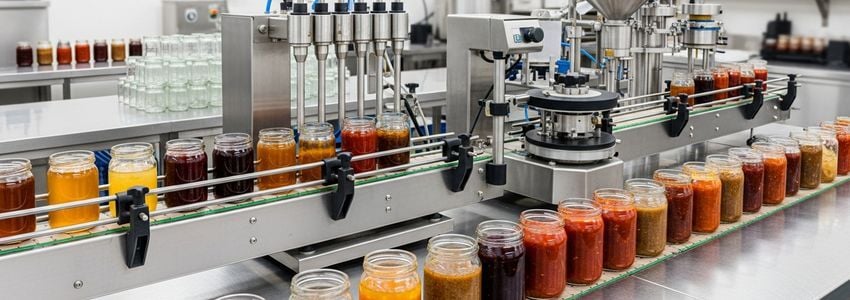
For food producers who need commercial mixers, filling machines, bottling lines, refrigeration units, or packaging equipment, equipment financing is often the most cost-effective path. The equipment itself serves as collateral, which means qualification requirements are often more flexible than for unsecured loans. Equipment loans preserve working capital while allowing you to deploy production capacity immediately.
Working Capital Loans
Specialty food companies often experience significant gaps between when they pay for ingredients and production and when they collect from retailers or distributors. Unsecured working capital loans provide fast access to cash for covering these gaps, paying suppliers, managing payroll during slow periods, and funding seasonal inventory builds. Approval is typically based on business revenue and cash flow rather than collateral, making these loans accessible to asset-light specialty food brands.
Invoice Financing
If your specialty food company sells to retailers, distributors, or food service operators with net-30 or net-60 payment terms, invoice financing lets you access up to 80-90% of your outstanding receivables immediately. This solves one of the most common cash flow problems in the food industry: producing and delivering product weeks before you get paid. Invoice financing turns your receivables into immediate working capital without taking on traditional debt.
Ready to Fund Your Food Business?
Crestmont Capital offers flexible financing for specialty food and beverage startups. Apply in minutes - no obligation required.
Apply Now ->How Food and Beverage Startup Loans Work
Understanding the mechanics of food and beverage startup financing helps you choose the right product and prepare a stronger application. Here is how the process typically works from application to funding.
Step 1: Assess Your Capital Needs
Before approaching any lender, map out exactly what you need the capital for and how it will generate a return. Lenders want to see that you have thought through your use of funds. A specialty food founder asking for $75,000 to purchase a commercial filling machine that will allow you to fulfill a new 10,000-unit retail order is a far more compelling borrower than one seeking capital for vague "business growth."
Step 2: Gather Your Financial Documentation
Most lenders will require at least the last 3 to 6 months of business bank statements, recent profit and loss statements, a business tax return if you have filed one, and basic information about your business structure and ownership. If you are a very early-stage startup with less than 6 months in operation, you may need to rely on a business plan with financial projections and any co-packer or retailer contracts you have secured.
Step 3: Choose the Right Lending Product
Match the financing product to the specific need. Short-term working capital for a seasonal inventory build is different from a 5-year equipment loan for a filling line. Using the wrong product - for example, a short-term loan to purchase long-lived equipment - creates unnecessary repayment pressure. A good advisor will help you match the financing term to the economic life of what you are buying.
Step 4: Submit Your Application
With an established direct lender like Crestmont Capital, the application takes minutes. You submit basic business information, link your bank account for statement review, and describe your funding needs. Many direct lenders provide same-day or next-day decisions on working capital products, with funding in as little as 24 to 48 hours for approved applications.
Step 5: Review and Accept Your Offer
Once approved, review all terms carefully - interest rate or factor rate, repayment schedule, prepayment penalties, and any covenants. Compare offers if you receive multiple term sheets. The goal is not always the lowest rate but the best overall package given your cash flow situation and growth plans.
By the Numbers
Specialty Food and Beverage Industry - Key Statistics
$205B
Annual U.S. specialty food retail sales
17
Consecutive years of industry growth
85K+
New specialty products introduced each year
74%
Shoppers actively seeking new specialty brands
Equipment Financing for Food Producers
Equipment is often the largest single capital need for specialty food and beverage startups moving from cottage production to commercial scale. Whether you need a commercial blast freezer, an automated bottling system, a large-format commercial mixer, or a precision filling line, the right equipment can transform a founder-dependent operation into a scalable business.
Commercial food equipment financing structures the purchase so you spread the cost over the usable life of the asset, typically 3 to 7 years. The equipment secures the loan, which often results in more favorable qualification requirements than unsecured working capital products. This means a startup with a short revenue history but strong purchase orders or letters of intent from retailers may still qualify for equipment financing based on the collateral value of the machinery.
Key equipment commonly financed by specialty food companies includes:
- Commercial mixers, blenders, and food processors
- Filling, capping, and labeling machines
- Walk-in coolers and freezers
- Pasteurization and thermal processing equipment
- Packaging and sealing equipment
- Commercial ovens, proofers, and fermentation tanks
- Bottling lines for beverages
- Quality testing and laboratory equipment for food safety
Pro Tip: When financing equipment, consider whether to structure the transaction as a loan (you own the equipment and build equity) or a lease (lower monthly payments but no ownership at end of term). For specialty food equipment that holds its value well - like commercial refrigeration or mixing equipment - an equipment loan often delivers better long-term economics than leasing.
Founders who have reviewed the bakery business loans guide frequently cite equipment financing as the most important capital decision in their first 18 months. The ability to bring production in-house - rather than paying a co-packer's premium - often transforms the unit economics of a specialty food brand.
Who Qualifies for Food Business Financing?
Qualification criteria vary by lender and product, but here is a realistic overview of what most lenders look for when evaluating a specialty food or beverage startup's financing application.
For Working Capital Loans and Lines of Credit
Most direct lenders look for a minimum of 6 months in business and at least $8,000 to $15,000 in monthly revenue. A credit score above 600 is typical for conventional working capital products, though some lenders work with scores in the 550-599 range if cash flow is strong. You should expect to provide 3-6 months of business bank statements.
For SBA 7(a) Loans
SBA loans require the business to be U.S.-based, for-profit, and meet the SBA's size standards (which most specialty food companies easily satisfy). You will need at least 2 years in business for most SBA programs, strong personal credit (typically 680+), and a demonstrated ability to repay from business cash flow. The SBA also requires that you have exhausted other financing options first, which the lender will verify during underwriting.
For Equipment Financing
Equipment loans are often the most accessible for early-stage food businesses. Since the equipment serves as collateral, lenders typically require only 6 months in business and monthly revenue as low as $5,000. The loan-to-value ratio depends on the equipment's marketability - newer, branded commercial food equipment typically qualifies for 80-100% financing.
For Invoice Financing
Invoice financing approval is based primarily on the creditworthiness of your customers (the retailers or distributors who owe you money), not just your own credit. This makes it an excellent option for specialty food brands that are landing big retail accounts but need cash faster than the retailer's payment terms allow. Typical requirements include at least $10,000 in monthly accounts receivable and 3 months in business.
Not Sure Which Option Fits Your Stage?
Our advisors specialize in food and beverage business funding. Get a custom recommendation with no obligation in minutes.
Get Your Options ->How Crestmont Capital Helps Specialty Food Businesses
Crestmont Capital is a direct lender and the #1 rated business lender in the U.S., providing flexible financing solutions to specialty food and beverage companies at every stage of growth. Unlike traditional banks, Crestmont does not require years of profitability or extensive collateral to consider your application. The focus is on your business's actual performance and growth trajectory.
For food and beverage founders who have explored restaurant-specific financing, Crestmont's platform covers the full range of capital products including working capital loans, SBA loan programs, equipment financing, invoice financing, and business lines of credit. All under one roof, with specialists who understand the unique cash flow dynamics of food production and distribution.
Founders who have also read the food truck financing complete guide will recognize a similar approach: fast decisions, transparent terms, and funding designed to fit your business model rather than forcing your business to fit a rigid banking product.
The Crestmont Capital small business financing hub includes multiple pathways for specialty food operators:
- Same-day working capital decisions for businesses with 6+ months of revenue history
- SBA loan pre-qualification to check eligibility before a full application
- Equipment financing with flexible terms matched to the asset's useful life
- Invoice financing programs for food companies with established retail or food service accounts
- Line of credit programs for managing seasonal inventory and cash flow fluctuations
| Financing Type | Best For | Typical Funding Time | Min. Revenue |
|---|---|---|---|
| Working Capital Loan | Inventory, payroll, operational gaps | 1-3 days | $10K/mo |
| Business Line of Credit | Seasonal cash flow, ingredient purchases | 2-5 days | $8K/mo |
| Equipment Financing | Commercial kitchen, production equipment | 3-7 days | $5K/mo |
| SBA 7(a) Loan | Long-term expansion, major projects | 30-90 days | Varies |
| Invoice Financing | Outstanding receivables from retailers | 24-48 hours | $10K AR |
Real-World Funding Scenarios for Specialty Food Startups
Understanding how other specialty food founders have used business financing helps you think through the right approach for your situation.
Scenario 1: The Co-Packer to Own-Production Transition
A woman-owned hot sauce company had been using a co-packer for two years and was paying $0.82 per unit in production costs. After securing a $120,000 equipment loan to purchase a commercial bottling and labeling line, her per-unit production cost dropped to $0.31. The equipment loan paid for itself in under 18 months through cost savings alone - before factoring in increased margins from higher production volume. The key: she financed the right asset with the right product, matching the 5-year loan term to the 10-plus year useful life of the equipment.
Scenario 2: Retail Placement Requires Inventory Capital
A plant-based snack brand received its first regional grocery chain placement covering 140 stores. The retailer required 10 cases per store at placement, totaling 1,400 cases or roughly $28,000 in production cost. The brand secured a $35,000 working capital loan to cover production and the first 60-day inventory float. The retail launch generated $85,000 in revenue over the next quarter, more than enough to repay the loan and fund the next production run from operating cash flow.
Scenario 3: Managing a 45-Day Retailer Payment Gap
A specialty beverage company sold to a natural foods distributor under net-45 payment terms. With $75,000 in outstanding invoices and $12,000 in operating cash, the founder used invoice financing to access $62,500 immediately (83% of receivables). This bridged the cash gap during peak production season without taking on new debt or diluting ownership. When the distributor paid 45 days later, the invoice financing was cleared automatically.
Scenario 4: Seasonal Inventory Build for Holiday Demand
A specialty confectionery brand did 60% of its annual revenue in the October-December holiday quarter. Each July, the owner used a $50,000 business line of credit to fund ingredient purchases and production for holiday inventory. The line was fully drawn by September and fully repaid by February. This pattern repeated annually with a higher credit line as revenues grew, allowing the business to scale holiday sales without ongoing debt pressure outside the holiday season.
Scenario 5: SBA Loan for Brick-and-Mortar Retail Launch
An artisan jam company with 3 years of farmers market and e-commerce history secured a $175,000 SBA 7(a) loan to open a flagship retail store and production facility. The SBA loan's 10-year term kept monthly payments manageable while the business established consistent retail foot traffic. The lower SBA interest rate saved approximately $28,000 in total interest compared to a conventional small business loan of the same amount.
Scenario 6: Franchise Co-Packer Expansion
A regional salsa brand was approached by a national retailer for a 500-store rollout. The production volume exceeded the brand's co-packer's capacity. A $200,000 term loan funded a 6-month dedicated production run, securing the national account. The national placement tripled annual revenue and generated the cash flow needed to pursue an SBA loan for a permanent owned production facility the following year.
External Resource: The SBA's Small Business Development Center (SBDC) network offers free consulting and loan application assistance for food businesses. According to the SBA website, SBDC advisors help thousands of food entrepreneurs each year prepare loan-ready business plans and financial projections.
Comparing Funding Sources: Pros and Cons
Every financing option involves trade-offs. Here is a practical comparison to help you evaluate which path makes most sense for your specialty food business at its current stage.
Traditional bank loans offer the lowest interest rates but require strong credit, extensive documentation, 2-plus years in business, and often take 60-90 days to fund. For most early-stage food startups, they are not a realistic primary option.
SBA loans offer nearly bank-level rates with more flexible qualification thanks to the government guarantee. They are slower (30-90 days) but excellent for larger capital needs where time allows the process.
Direct lender working capital loans offer the fastest access (24-72 hours) with the most flexible qualification requirements, but rates are higher than bank or SBA products. Best for short-term operational needs, not long-term asset purchases.
Equipment financing is highly specialized and often the best structure for funding production machinery. The collateral-based structure makes it accessible to younger businesses, and terms can match the asset's useful life.
Invoice financing turns existing receivables into immediate cash without adding traditional debt. It is the most expensive on a per-dollar basis but solves a specific problem - payment timing - that no other product addresses.
According to Forbes, specialty food companies that strategically combine multiple financing products - using a line of credit for ongoing operations, equipment loans for capital expenditures, and invoice financing for receivables gaps - grow significantly faster than those that rely on a single funding source.
The CNBC Small Business coverage of the food startup sector consistently highlights capital access as the #1 determinant of whether a promising food brand can scale from regional to national distribution. According to SBA.gov, access to capital remains the most significant growth barrier reported by small business owners across all industries.
Get Funded and Scale Your Food Brand
From working capital to equipment financing, Crestmont Capital has the right product for your stage. Apply in minutes with no commitment required.
Apply Now ->Frequently Asked Questions
How to Get Started
Complete our quick application at offers.crestmontcapital.com/apply-now - takes just a few minutes and requires no commitment.
A Crestmont Capital advisor familiar with food and beverage industry cash flow will review your needs and match you with the right financing option for your stage and goals.
Receive your funds and put them to work - for equipment, inventory, retail placements, or any other capital need. Most working capital loans fund within 1 to 3 business days of approval.
Start Funding Your Specialty Food Brand
The specialty food and beverage industry rewards bold, differentiated brands with the operational capacity to meet demand at scale. The gap between a great product and a scalable business is almost always a capital gap - the inability to fund the equipment, inventory, and receivables timing that growth requires. Understanding your food and beverage startup loans options is the first step toward closing that gap.
Whether you are a first-time founder seeking working capital for your initial retail placement, or an established brand looking to bring production in-house with equipment financing, or a high-growth company managing complex cash flow across multiple retail channels, the right financing structure can make the difference between building a lasting brand and running out of runway at the worst possible moment.
Crestmont Capital works with specialty food and beverage companies across the country, providing tailored financing with fast decisions and transparent terms. The application takes minutes. The impact on your business can last years. Start your application today and find out what you qualify for.
Disclaimer: The information provided in this article is for general educational purposes only and is not financial, legal, or tax advice. Funding terms, qualifications, and product availability may vary and are subject to change without notice. Crestmont Capital does not guarantee approval, rates, or specific outcomes. For personalized information about your business funding options, contact our team directly.
"""







