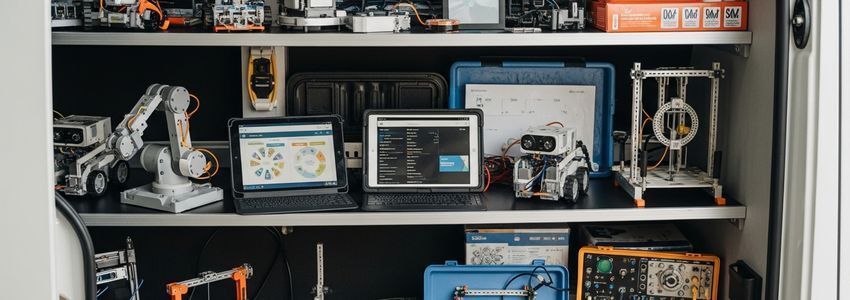
Running a mobile STEM education business puts you at the intersection of two powerful forces: the surging demand for science, technology, engineering, and math learning experiences, and the logistical challenge of delivering those experiences on wheels. Whether you operate a rolling robotics lab, a mobile coding classroom, or a science demonstration van, your business requires capital that traditional lenders don't always know how to evaluate. This guide walks through every financing option available to mobile STEM education entrepreneurs - from equipment loans to working capital lines of credit - so you can fund your mission and your growth.
In This Article
- What Is a Mobile STEM Education Business?
- Why Financing Is Critical for Mobile STEM Operators
- Types of Loans for Mobile STEM Businesses
- Equipment Financing for STEM Vehicles and Technology
- How the Financing Process Works
- What Lenders Look For
- Comparing Financing Options
- Real-World Scenarios
- How Crestmont Capital Helps
- How to Get Started
- Frequently Asked Questions
What Is a Mobile STEM Education Business?
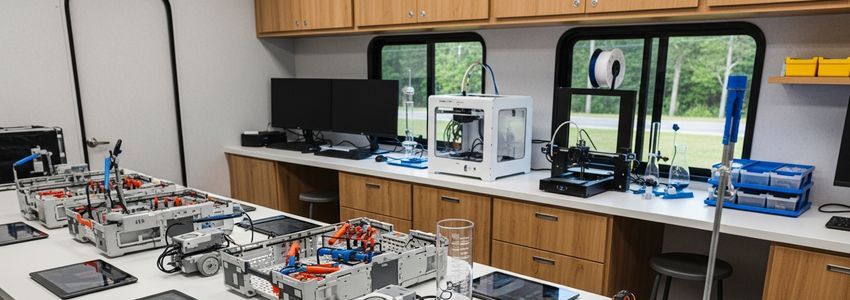
A mobile STEM education business delivers science, technology, engineering, and math programming directly to schools, community centers, libraries, corporate campuses, birthday parties, and events - eliminating the need for a permanent facility. The business model typically involves one or more converted vehicles (vans, buses, trailers) outfitted with age-appropriate STEM equipment and curriculum materials.
The programming can range from basic coding workshops for elementary students to advanced robotics competitions for high schoolers. Some operators focus on a single niche like 3D printing or drone piloting, while others offer a rotating menu of STEM experiences. Revenue typically comes from per-visit school contracts, event bookings, corporate team-building programs, after-school enrichment partnerships, and summer camp fees.
The market for mobile STEM education has expanded significantly over the past decade. According to the U.S. Bureau of Labor Statistics, STEM occupations are projected to grow 10.5 percent through 2030, far outpacing the average for all occupations. Schools, parents, and communities are investing heavily in STEM exposure at younger ages, and mobile operators fill a critical gap for schools that lack dedicated STEM lab spaces or budget for facility upgrades.
Market Insight: The global STEM education market was valued at over $35 billion in 2023 and is projected to exceed $75 billion by 2030, according to industry research. Mobile delivery models are among the fastest-growing segments as schools prioritize experiential learning without facility costs.
Why Financing Is Critical for Mobile STEM Operators
Unlike a traditional classroom business that can start with a laptop and a rented space, mobile STEM education demands significant upfront investment. A single well-equipped STEM van can cost between $80,000 and $200,000 after vehicle purchase, conversion, equipment installation, and branding. Adding a second unit to expand into new territories or cover more school districts can double or triple that initial capital requirement.
Beyond the vehicle, operators need ongoing capital to cover curriculum licensing, equipment maintenance and replacement, instructor payroll, insurance, fuel and maintenance costs, and marketing to build a school district pipeline. Many mobile STEM businesses also experience seasonal cash flow cycles - peaking during the school year and slowing in summer - which creates a need for flexible working capital access.
Most mobile STEM entrepreneurs don't have $150,000 sitting in a bank account. That's not a sign of an unviable business - it's the reality for virtually every small business owner in America. According to the Federal Reserve's Small Business Credit Survey, 43 percent of small businesses applied for financing in the past 12 months, and access to capital remains the number-one operational challenge cited by growing businesses.
Ready to Fund Your Mobile STEM Business?
Get fast, flexible financing from the #1 business lender in the U.S. Equipment loans, working capital, and more - apply in minutes.
Apply Now →Types of Loans for Mobile STEM Businesses
Mobile STEM education businesses have access to several financing structures, each suited to different needs and growth stages. Understanding which product fits your situation is the first step toward getting funded efficiently.
Equipment Financing Loans
Equipment financing is purpose-built for purchasing physical assets. The equipment itself serves as collateral, which means lenders can approve borrowers with shorter credit histories or lower credit scores than they would for an unsecured loan. For mobile STEM operators, equipment loans can cover the STEM van or bus, robotics kits, 3D printers, VR headsets, computer banks, laser cutters, and any other specialized technology that makes up your mobile lab. Terms typically range from 24 to 84 months, with monthly payments that preserve your operating cash flow.
SBA 7(a) Loans
Small Business Administration 7(a) loans are the gold standard for small business financing. With loan amounts up to $5 million, terms of up to 10 years for working capital and 25 years for real estate, and interest rates that are capped below conventional commercial loan rates, SBA loans offer the most favorable terms available. The trade-off is a longer application process and more documentation requirements. For a mobile STEM business with established revenue and a solid business plan, an SBA loan can fund a full fleet expansion or provide the working capital to hire additional instructors and territory managers.
Working Capital Loans
Working capital loans provide unrestricted cash you can deploy wherever your business needs it most - whether that's covering payroll between school contracts, bridging the summer revenue gap, investing in marketing to land a new school district contract, or handling an unexpected equipment repair. These are typically unsecured, meaning no collateral is required, and can be approved in as little as 24 to 48 hours for qualified borrowers. Amounts range from $10,000 to $500,000 depending on your business revenue and creditworthiness.
Business Line of Credit
A business line of credit is the most flexible financing tool available. Rather than receiving a lump sum, you access funds as needed up to your approved credit limit. You only pay interest on what you draw, and as you repay, your available credit replenishes. For mobile STEM operators dealing with variable cash flow from seasonal bookings, this revolving structure is ideal - you can draw funds during slow months and pay them back when school-year revenue picks up.
Revenue-Based Financing
Revenue-based financing is an alternative to traditional loans that works particularly well for businesses with consistent monthly revenue. Instead of fixed monthly payments, you repay a percentage of your monthly revenue until the financed amount plus a factor fee is repaid. This structure naturally flexes with your business cycle - payments shrink during slow periods and accelerate when revenue is strong, protecting your cash flow throughout the year.
By the Numbers
Mobile STEM Education - Key Market Statistics
$75B+
Projected global STEM education market by 2030
10.5%
Projected STEM job growth through 2030 (BLS)
$200K
Average cost to launch a fully equipped STEM mobile unit
48 hrs
Typical approval time for equipment financing
Equipment Financing for STEM Vehicles and Technology
Equipment financing deserves a closer look because it's typically the primary financing tool for mobile STEM businesses, especially at the startup or early growth stage. The core advantage is that your STEM vehicle and technology assets serve as their own collateral, reducing the lender's risk and making approval more accessible even if you don't have years of business history.
Through Crestmont Capital's equipment financing program, mobile STEM operators can finance a wide range of assets:
- Converted cargo vans, buses, and trailers outfitted as mobile labs
- Robotics systems and components (LEGO Education, VEX Robotics, Arduino, Raspberry Pi kits)
- 3D printers and filament storage systems
- Laptop and tablet banks with protective cases and charging stations
- VR and AR headsets and related computing hardware
- Laser cutters, CNC routers, and digital fabrication tools
- Science lab equipment (microscopes, measurement tools, chemistry kits)
- Drone fleets with ground control stations
- Coding and electronics teaching kits
- Display screens, projectors, and AV systems installed in the vehicle
- Generator systems for off-grid power in the field
Equipment loan terms typically range from two to seven years, with fixed monthly payments that make budgeting straightforward. Many lenders also offer deferred payment options for the first one to three months, giving you time to start generating revenue from your new unit before the payments begin.
Equipment Leasing as an Alternative
For technology-heavy assets that depreciate quickly - like robotics kits, tablets, and VR headsets - equipment leasing can be more cost-effective than financing to own. With a lease, you use the equipment for a defined term (typically 24 to 48 months), make lower monthly payments than a loan would require, and then have the option to return the equipment, upgrade to newer technology, or purchase it at fair market value. For STEM businesses where technology evolves rapidly, leasing keeps you current without the burden of owning obsolete hardware.
How the Financing Process Works
Understanding what to expect when you apply for mobile STEM business financing removes much of the uncertainty and helps you prepare effectively. Here's the typical journey from application to funding.
Quick Guide
How Mobile STEM Business Financing Works - At a Glance
Complete the online application with basic business and financial information. Takes about 5-10 minutes.
Your advisor reviews your business profile and matches you with the right financing product and terms.
Provide bank statements, tax returns, and business documentation as requested by the lender.
Receive your approval decision - often within 24-48 hours - and get funded, sometimes same day.
What Lenders Look For When Evaluating Mobile STEM Businesses
Lenders evaluate mobile STEM education businesses using many of the same criteria they apply to any small business loan - but there are some nuances specific to education sector businesses that you should understand before applying.
Time in Business
Most conventional lenders prefer at least two years of business history. Equipment financing lenders may work with businesses that have been operating for as little as six to twelve months, especially when the loan is collateralized by the equipment being purchased. Startups launching their first STEM mobile unit may need to rely on startup business loan programs, SBA microloans, or equipment leasing with personal guarantees.
Annual Revenue and Cash Flow
Lenders want to see that your business generates enough revenue to comfortably cover loan payments. A common benchmark is a Debt Service Coverage Ratio (DSCR) of at least 1.25, meaning your net operating income is 1.25 times your annual debt obligations. For a working capital loan of $50,000 with monthly payments of approximately $1,200, a lender would expect your business to generate monthly net income well above that threshold.
Credit Score
Your personal credit score matters significantly, especially in the early stages of your business before you've built a strong business credit profile. Conventional lenders typically require a score of 680 or above. Alternative lenders and equipment financing companies may approve borrowers with scores as low as 580 to 620, though at higher rates. If your credit score is below the ideal range, working on credit improvement for three to six months before applying can meaningfully improve your rate and terms.
Business Plan and Revenue Pipeline
For newer businesses, a well-documented business plan that demonstrates your customer pipeline - signed contracts with school districts, MOUs with community organizations, letters of intent from corporate clients - significantly strengthens your application. Lenders for education sector businesses appreciate seeing recurring revenue commitments rather than one-off event bookings.
Collateral
For equipment loans and SBA loans, the equipment itself provides collateral. For unsecured working capital loans, lenders rely more heavily on creditworthiness and cash flow. Some lenders may also accept a personal guarantee, where you personally guarantee repayment if the business defaults - a common requirement for small businesses seeking larger loan amounts.
Pro Tip: Build relationships with local school districts and get letters of intent or signed contracts before applying for financing. Documented revenue commitments can be the difference between approval and denial for newer mobile STEM businesses, and may help you qualify for larger loan amounts or better terms.
Comparing Financing Options for Mobile STEM Businesses
Choosing the right financing product requires understanding the trade-offs between cost, speed, flexibility, and qualification requirements. The following table provides a direct comparison of the most relevant options for mobile STEM operators.
| Loan Type | Best For | Typical Amount | Term | Speed |
|---|---|---|---|---|
| Equipment Financing | Buying STEM vans, tech equipment | $10K - $5M+ | 2-7 years | 24-72 hours |
| SBA 7(a) Loan | Large capital needs, best rates | Up to $5M | Up to 10 years | 30-90 days |
| Working Capital Loan | Payroll, marketing, operating costs | $10K - $500K | 6-36 months | 24-48 hours |
| Business Line of Credit | Seasonal cash flow gaps | $10K - $250K | Revolving | 24-72 hours |
| Equipment Leasing | Tech that depreciates quickly | $5K - $500K | 24-60 months | 24-72 hours |
Real-World Scenarios: How Mobile STEM Businesses Use Financing
Abstract descriptions of financing products become much more useful when grounded in real business situations. Here are several scenarios that reflect how mobile STEM education entrepreneurs actually use business financing.
Scenario 1: The First Vehicle Purchase
Maria runs STEM Adventures LLC from her home office. She's spent six months building a curriculum, signing a memorandum of understanding with two school districts, and booking a dozen birthday party events. She needs a $95,000 equipment loan to purchase and convert a cargo van into a fully equipped mobile coding and robotics lab. With a 720 credit score, two years of teaching experience, and signed district contracts in hand, she qualifies for equipment financing at a competitive rate with a 60-month term. Her monthly payment of approximately $1,800 is easily covered by her booking revenue.
Scenario 2: Expanding to a Second Market
James operates one successful STEM mobile unit in a suburban market and has been approached by a regional after-school enrichment company to service their 15 locations across three counties. He needs a second vehicle - cost approximately $130,000 - plus $25,000 in additional equipment to fulfill the contract. He applies for a combined equipment loan through Crestmont Capital and is approved within 48 hours. The new revenue from the contract more than covers his combined loan payments from both units.
Scenario 3: The Summer Cash Flow Gap
Chen's mobile STEM business generates $280,000 per year, but 80 percent of that revenue comes September through May. Summer bookings barely cover fixed costs, and she needs to keep two instructors employed year-round to maintain her team. She establishes a $60,000 working capital line of credit that she draws from each June and August, then repays from school-year revenue starting in September. The interest cost over summer months is a fraction of what it would cost her to rehire and retrain instructors every fall.
Scenario 4: Equipment Technology Upgrade
A three-year-old mobile STEM company needs to replace aging iPad banks and robotics kits across two vehicles. Rather than tying up $40,000 in capital to purchase new equipment, the owner opts for an equipment lease. The 36-month lease covers the latest tablets and updated robotics systems with a monthly payment well below what a loan would require. At lease end, she can upgrade to whatever technology has become the industry standard.
Scenario 5: Landing a Corporate Client
A mobile STEM operator is approached by a Fortune 500 company that wants monthly STEM workshops for employee families as part of its community engagement program. The annual contract value is $180,000, but the operator needs to purchase $50,000 in custom-branded equipment and hire an additional part-time instructor before the contract starts. A short-term working capital loan bridges the gap, with the corporate contract revenue paying it off within the first four months.
Scenario 6: SBA Loan for Multi-Unit Expansion
An established mobile STEM operator with five years of history and $500,000 in annual revenue wants to add three new vehicles to cover an entire metropolitan area. She applies for an SBA 7(a) loan to cover the $400,000 in vehicles and equipment. With her strong track record, documented cash flow, and a business plan projecting revenues from existing school district relationships, she qualifies for a 10-year SBA loan at a rate significantly below what conventional lenders would offer. The long term keeps monthly payments low while she builds revenue from the new units.
See Your Options Without Impacting Your Credit
Crestmont Capital works with mobile STEM businesses at every stage - startups to established operators. Get a fast quote today.
Get Your Quote →How Crestmont Capital Helps Mobile STEM Businesses
Crestmont Capital has been funding small businesses across the United States for years, earning recognition as the #1 business lender in the country. Our approach is built around matching each business with the right financing product for their specific situation - not forcing every application into a one-size-fits-all product.
For mobile STEM education operators, we offer access to equipment financing for vehicles and technology, working capital loans for operational expenses and expansion, business lines of credit for seasonal cash flow management, and SBA loan programs for established operators seeking the most favorable long-term rates. We work with businesses at all stages, from startups launching their first mobile unit to established multi-unit operators expanding into new markets.
Our application process is designed to be as simple as possible. Most applications can be completed online in under 10 minutes, and decisions are often delivered within 24 to 48 hours. For equipment loans, we can sometimes fund within the same business day as approval. You'll work with a dedicated advisor who understands the education sector and can help you structure the right financing package for your business model.
Beyond the initial loan, Crestmont Capital supports your long-term growth. As your business builds a track record and your credit profile strengthens, we can help you access larger credit facilities, refinance existing obligations at better rates, and structure multi-unit financing that scales with your expansion plans.
If you've been told "no" by your bank or struggled to find a lender who understands mobile STEM as a business model, Crestmont Capital can help. Our lender network includes specialists in education sector businesses, and our team knows how to present your revenue pipeline and contract portfolio in the way that gets deals approved. Learn more about our small business financing options and see how we can help your STEM mission grow.
How to Get Started
Complete our quick application at offers.crestmontcapital.com/apply-now - takes just a few minutes. No impact on your credit score to get started.
A Crestmont Capital advisor will review your mobile STEM business profile and match you with the right financing structure for your needs.
Receive your funds and put them to work - equipment loans often fund within 24-48 hours of approval, sometimes same day.
Frequently Asked Questions
Ready to Fund Your Mobile STEM Mission?
From your first STEM van to a fleet serving entire school districts - Crestmont Capital has the financing to make it happen. Apply in minutes.
Apply Now →Conclusion
Mobile STEM education is one of the most impactful and rapidly growing business models in the education sector. The demand for hands-on STEM learning experiences continues to outpace what traditional school facilities can provide, creating sustained market opportunity for entrepreneurs willing to bring the lab to the learner. But realizing that opportunity requires capital - for vehicles, equipment, staffing, and the operational staying power to build the school district relationships that produce recurring revenue.
Mobile STEM education business loans provide the financial foundation to launch, grow, and scale. Whether you need equipment financing for your first STEM van, a working capital line of credit to bridge summer cash flow, or SBA financing to expand into multiple territories, the right financing partner makes the difference between a good idea that stays small and a thriving business that serves thousands of students each year.
Crestmont Capital is committed to helping mobile STEM operators access the capital they need to fulfill their educational mission and build sustainable, profitable businesses. Our team understands the unique financial profile of education sector businesses, and our lender network has the range to match every business situation with the right product and terms. Take the first step and apply today - your STEM students are counting on you to bring the lab to their school.
Disclaimer: The information provided in this article is for general educational purposes only and is not financial, legal, or tax advice. Funding terms, qualifications, and product availability may vary and are subject to change without notice. Crestmont Capital does not guarantee approval, rates, or specific outcomes. For personalized information about your business funding options, contact our team directly.