
 (800) 949-0401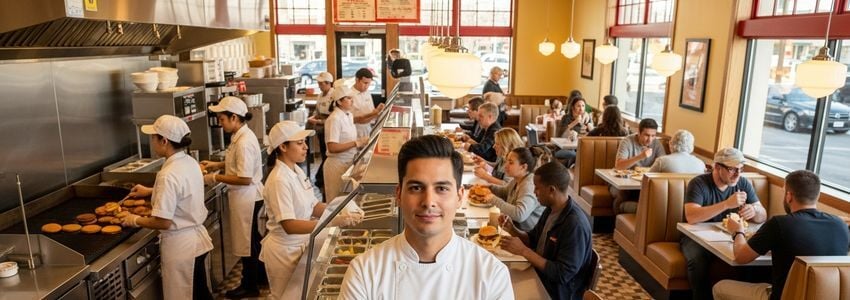
Freddy's Frozen Custard Franchise Loan: The Complete Financing Guide for Freddy's Franchise Owners
Investing in a Freddy's Frozen Custard franchise is a proven path to business ownership in the booming fast-casual restaurant sector, but understanding the Freddy's Frozen Custard franchise cost and securing the right financing are critical first steps. This comprehensive guide walks you through everything you need to know about Freddy's franchise investment requirements, financing options, and how Crestmont Capital helps aspiring franchisees get funded quickly and confidently.
In This Article
What Is Freddy's Frozen Custard Franchise?
Freddy's Frozen Custard and Steakburgers is an American fast-casual restaurant chain founded in 2002 in Wichita, Kansas by Scott Redler and brothers Bill and Randy Simon. Named after Bill and Randy's father, Freddy Simon, the brand draws inspiration from the classic post-World War II steakburger and frozen custard stands of the era - offering a nostalgic experience backed by modern operational excellence.
The concept centers on three signature offerings: hand-smashed steakburgers made with thin, crispy-edged patties; all-beef hot dogs; and ultra-premium frozen custard served in sundaes, concretes (blended custard treats), and cones. What sets Freddy's apart from competitors is its commitment to freshness - steakburgers are cooked to order, and frozen custard is churned in small batches throughout the day for maximum creaminess and quality.
Since its founding, Freddy's has grown to more than 400 locations across the United States, making it one of the fastest-growing chains in the fast-casual segment. The brand has attracted praise from industry publications and Forbes for its differentiated menu, strong unit economics, and loyal customer base. The chain has ranked consistently among the top emerging franchise brands and continues to expand aggressively, with franchise opportunities available in dozens of states.
From a business perspective, Freddy's is attractive for several reasons. According to the brand's franchise disclosure document (FDD), the average unit volume (AUV) for open and operating Freddy's restaurants has been strong relative to the fast-casual segment average. The chain appeals to a broad demographic - families, millennials, and value-conscious consumers alike - which helps insulate franchisees from economic cycles that more narrowly targeted concepts face.
Freddy's operates under a traditional franchise model. Franchisees receive rights to operate within a protected territory, access to the brand's recipes, supplier relationships, marketing support, and ongoing operational training. The franchisor provides a comprehensive opening support program, and franchisees benefit from national marketing campaigns that drive brand awareness. The brand has received high marks in franchise satisfaction surveys, and its multi-unit development deals are common, suggesting franchisees tend to reinvest and grow their portfolios.
The company is headquartered in Wichita, Kansas, and is privately held - giving it the ability to reinvest in the brand and make strategic decisions without public market pressures. As CNBC has reported, fast-casual restaurant franchises have been among the most resilient business models through economic uncertainty, and Freddy's consistent growth trajectory supports that narrative.
Ready to Finance Your Freddy's Frozen Custard Franchise?
Get fast, flexible financing from the #1 business lender in the U.S. No obligation - apply in minutes.
Apply Now ->Freddy's Franchise Cost Breakdown
Understanding the Freddy's Frozen Custard franchise cost is essential before you pursue financing. The total investment required to open a Freddy's restaurant varies based on location, real estate costs, build-out complexity, and other site-specific factors. Here is a detailed breakdown of what prospective franchisees can expect:
Initial Investment Range
The total estimated initial investment to open a Freddy's Frozen Custard and Steakburgers restaurant typically ranges from $650,000 to $2,000,000 or more. This wide range reflects the significant variation in construction costs, real estate markets, and whether you are building from the ground up, converting an existing space, or opening in an end-cap or inline shopping center location.
| Cost Category | Estimated Range |
|---|---|
| Initial Franchise Fee | $35,000 |
| Real Estate / Lease Deposits | $10,000 - $150,000+ |
| Building Construction / Leasehold Improvements | $350,000 - $1,200,000 |
| Equipment (Kitchen, Custard Machines, POS) | $150,000 - $350,000 |
| Signage | $15,000 - $50,000 |
| Opening Inventory | $10,000 - $25,000 |
| Training Costs / Travel | $5,000 - $20,000 |
| Grand Opening Marketing | $10,000 - $30,000 |
| Working Capital (3-6 months) | $50,000 - $150,000 |
| Miscellaneous / Professional Fees | $15,000 - $40,000 |
| Total Estimated Investment | $650,000 - $2,000,000+ |
Ongoing Fee Structure
In addition to the upfront investment, Freddy's franchisees pay ongoing fees that are critical to account for in your financial projections:
- Royalty Fee: Approximately 6% of gross sales
- Brand Fund (Marketing) Fee: Approximately 2-3% of gross sales
- Local Marketing: Additional spending requirements may apply in your territory
Net Worth and Liquidity Requirements
Freddy's requires prospective franchisees to demonstrate strong financial health. Typical requirements include:
- Minimum Net Worth: $1,500,000 or more
- Liquid Assets: $500,000 or more
These thresholds are higher than many fast-casual concepts, reflecting the premium quality positioning and significant construction investment involved in opening a Freddy's. If you meet these requirements, you are well-positioned to secure third-party financing to cover a substantial portion of your startup costs.
How Freddy's Franchise Financing Works
Financing a Freddy's Frozen Custard franchise works much like financing any major business venture, but with some unique considerations specific to the franchise model. Here is how the process typically unfolds:
1. Determine Your Equity Contribution. Most lenders require that the franchisee inject a meaningful equity stake - typically 20-30% of the total project cost - from personal funds or other liquid sources. For a $1,000,000 Freddy's build-out, that means contributing $200,000 to $300,000 of your own capital. This equity injection demonstrates commitment and reduces lender risk.
2. Identify the Right Loan Products. Freddy's investments are large enough to qualify for SBA 7(a) loans, SBA 504 loans, conventional business term loans, and equipment-specific financing. Each product has different terms, rates, collateral requirements, and approval timelines. Understanding which product fits your situation is key to a successful financing strategy.
3. Prepare Your Documentation. Lenders will review your personal financial statements, tax returns (typically 3 years), business plan, Freddy's FDD (Franchise Disclosure Document), signed franchise agreement, construction bids, and projected profit and loss statements. Having these documents organized and ready accelerates the approval process significantly.
4. Apply and Await Approval. SBA loans typically take 60-90 days from application to funding, while alternative lenders like Crestmont Capital can move significantly faster - sometimes funding within days of approval. Many franchisees use a combination of SBA financing for the long-term capital structure and alternative lending for working capital and equipment.
5. Close and Build. Once financing is secured, you close on your loan, receive your funds, and proceed with site construction and buildout. Your lender will typically release funds in draws aligned with construction milestones, ensuring accountability throughout the process.
According to the U.S. Small Business Administration, franchise businesses have historically had lower default rates than independent startups, making them attractive candidates for SBA-backed loans. Freddy's brand recognition and proven business model further strengthen your financing application.
Freddy's Franchise Financing at a Glance
$650K+
Min. Total Investment
$35K
Franchise Fee
6%
Royalty Rate
400+
U.S. Locations
$1.5M
Min. Net Worth
Types of Financing for Freddy's Frozen Custard Franchise
There is no one-size-fits-all answer when it comes to financing a Freddy's location. Most successful franchisees use a combination of financing products tailored to their specific financial situation, credit profile, and growth goals. Here are the primary options available:
1. SBA 7(a) Loans
The SBA 7(a) loan program is one of the most popular choices for franchise financing. These government-backed loans offer competitive interest rates (typically prime plus 2.25-2.75%), long repayment terms (up to 25 years for real estate, 10 years for other purposes), and lower down payment requirements than conventional loans. Loan amounts can reach up to $5 million, making them well-suited to the Freddy's investment range.
Crestmont Capital works with SBA-approved lenders and can help you navigate the SBA process. Learn more about our SBA loan programs to see if this is the right fit for your Freddy's investment.
2. SBA 504 Loans
For franchisees purchasing real estate or heavy equipment, the SBA 504 loan provides long-term fixed-rate financing. This program is structured as two loans: a conventional bank loan covering approximately 50% of the project, an SBA debenture covering 40%, and the borrower contributing 10%. The fixed-rate, long-term structure of the 504 program makes it ideal for real estate-heavy Freddy's builds.
3. Conventional Business Term Loans
Conventional term loans from banks or alternative lenders offer flexibility that government programs may lack. Small business loans from Crestmont Capital can be structured with competitive rates and terms, and approval timelines are typically shorter than SBA programs. For franchisees who need capital fast or who have unique financing structures, conventional term loans can be a strong option.
4. Equipment Financing
A significant portion of the Freddy's startup cost involves specialized equipment - frozen custard machines, commercial grills, refrigeration units, fryers, and POS systems. Rather than financing equipment through your primary loan, equipment financing allows you to borrow specifically against the equipment being purchased. This preserves working capital and often comes with more flexible terms than general business loans. Equipment financing is available even for franchisees with imperfect credit histories.
5. Business Line of Credit
A business line of credit is a revolving credit facility that gives you flexible access to funds as needed. This is particularly valuable during the early months of operation, when cash flow may be uneven while your Freddy's location builds its customer base. Lines of credit are typically used for payroll, inventory, marketing expenses, and unexpected costs - not for the primary buildout investment.
6. Fast Business Loans
For franchisees who need capital quickly - whether to bridge a financing gap, fund working capital, or cover grand opening costs - fast business loans from Crestmont Capital can provide funding in as little as 24-48 hours. These short-term products are best suited for specific, time-sensitive needs rather than the primary investment structure.
7. Bad Credit Business Loans
A less-than-perfect credit history does not automatically disqualify you from franchise financing. Bad credit business loans through Crestmont Capital are evaluated based on the strength of the franchise brand, your business plan, revenue projections, and overall financial picture - not just your credit score. Many franchisees who were turned down by traditional banks have secured funding through alternative lending channels.
8. Rollover for Business Startups (ROBS)
ROBS allows entrepreneurs to use retirement funds (401k or IRA) to finance a new business without incurring early withdrawal penalties or tax consequences. This strategy is complex and requires careful legal structuring, but it can be an effective way to self-fund a portion of your Freddy's investment while preserving borrowing capacity for other loan products.
How to Qualify for a Freddy's Franchise Loan
Qualifying for franchise financing involves demonstrating to lenders that you are a creditworthy borrower with a viable business plan and the financial resources to succeed. Here are the key qualification criteria for most Freddy's franchise loan applications:
Credit Score Requirements
For SBA loans, most lenders look for a personal credit score of 680 or higher, though some programs are available to borrowers in the 620-680 range with compensating factors. Conventional bank loans typically require 700+. Alternative lenders like Crestmont Capital may work with scores as low as 580-620 depending on other financial factors. Regardless of your score, reviewing your credit report and resolving any errors before applying is always worthwhile.
Time in Business
Since Freddy's is a new location startup, lenders evaluate your relevant business experience rather than years in operation. Having a background in restaurant management, multi-unit operations, or franchising significantly strengthens your application. Many successful Freddy's franchisees come from corporate management backgrounds or have experience with other franchise concepts.
Equity Injection
Lenders typically require you to contribute 20-30% of the total project cost from your own funds. For a $1,200,000 project, that means injecting $240,000 to $360,000 personally. This demonstrates commitment and reduces the lender's risk. Some programs allow gifts from family members or seller financing to count toward the equity injection, but verification of the source of funds is required.
Business Plan and Financial Projections
A comprehensive business plan is not just a formality - it is a critical document that lenders use to assess the viability of your franchise investment. Your plan should include detailed market analysis, competitive landscape review, site selection rationale, revenue and expense projections for 3-5 years, and a clear explanation of how you will service the debt. Freddy's corporate support teams can help with many of these elements.
Collateral
Most franchise loans are collateralized by business assets - equipment, fixtures, leasehold improvements - and sometimes personal assets including home equity. The SBA requires borrowers to pledge all available business assets as collateral, and may require personal real estate collateral if business assets are insufficient to fully secure the loan.
Franchise Agreement
Lenders will want to review your signed franchise agreement (or at minimum, a letter of intent from Freddy's) before approving financing. The franchise agreement establishes the term, territory, and rights that serve as the foundation for the business's value and the lender's security interest.
See What Financing You Qualify For
Get fast, flexible financing from the #1 business lender in the U.S. No obligation - apply in minutes.
Check My Options ->
How Crestmont Capital Helps Freddy's Franchisees
Crestmont Capital has helped hundreds of franchise owners across the United States secure the financing they need to open, grow, and succeed. Here is what sets Crestmont Capital apart when it comes to Freddy's franchise financing:
Access to Multiple Lending Products
Unlike a traditional bank that offers a single product, Crestmont Capital connects franchisees with a broad range of financing options - from SBA-backed programs to equipment financing, lines of credit, and alternative term loans. This marketplace approach means you get the right product for your situation, not the only product your bank happens to offer. Explore our full range of small business financing options to see the breadth of what is available.
Speed and Efficiency
Franchise timelines can be tight - Freddy's may require you to secure financing and commence construction within defined windows per your development agreement. Crestmont Capital's streamlined application process and experienced team can get deals done faster than traditional bank channels. Our fast business loan options can provide bridge capital in as little as 24-48 hours when needed.
Specialized Franchise Expertise
Our advisors understand the franchise model - how FDDs work, what lenders look for in franchise deals, and how to structure financing across multiple products for maximum benefit. We have worked with franchisees from leading brands including Anytime Fitness, Dunkin', Subway, and many more. That experience translates directly into faster approvals and better terms for Freddy's applicants.
Equipment Financing Solutions
The custard machines, commercial kitchen equipment, and POS systems required for a Freddy's buildout represent a significant investment. Our equipment financing programs allow you to finance these assets separately, often with more favorable terms than including equipment in your primary loan. This strategy can reduce your overall interest cost and preserve working capital for operations.
Working Capital Solutions
The first six to twelve months after opening are often the most financially challenging for new franchisees. Crestmont Capital's business lines of credit and working capital loans give you the financial cushion to navigate the ramp-up period confidently, covering payroll, inventory, and marketing without draining your personal reserves.
Support for All Credit Profiles
We understand that life happens - and that a challenging credit history should not permanently bar talented entrepreneurs from franchise ownership. Our bad credit business loan options evaluate your overall financial picture, not just a three-digit number. If you have the drive and the plan, we work to find a financing path forward.
According to Bloomberg, franchise businesses have consistently outperformed independent startups in both survival rates and revenue growth. Crestmont Capital's advisors are experts at structuring financing that positions franchise owners for long-term success from day one.
Real-World Financing Scenarios for Freddy's Franchisees
To illustrate how Freddy's franchise financing works in practice, here are four real-world scenarios representing different types of prospective franchisees:
Scenario 1: First-Time Franchisee with Strong Credit
Profile: Maria is a former regional manager for a national restaurant chain. She has a personal credit score of 720, $350,000 in liquid assets, a net worth of $1.8 million (primarily home equity and retirement accounts), and has been approved by Freddy's to open her first location in a growing suburb of Charlotte, North Carolina. Her total project cost is estimated at $1,100,000.
Financing Strategy: Maria works with Crestmont Capital to structure an SBA 7(a) loan for $770,000, covering 70% of the project cost. She injects $330,000 of her own capital as the equity contribution. Her SBA loan carries a 10-year term with a variable rate tied to prime plus 2.5%. Separately, she secures a $75,000 business line of credit for working capital. Her monthly debt service is manageable relative to projected revenues, and her lender is comfortable with the brand's strong unit economics.
Outcome: Maria opens on time and is cash-flow positive within 14 months. Within three years, she signs a development agreement to open two additional locations.
Scenario 2: Experienced Multi-Unit Operator Expanding Portfolio
Profile: James already operates three Freddy's locations in Texas and wants to add a fourth in a new market. His existing locations generate $3.2 million in combined annual revenue, and he has demonstrated strong operational performance. His personal credit score is 695, and he has significant equity in his existing franchise businesses.
Financing Strategy: Because James has operating businesses generating revenue, Crestmont Capital structures a conventional business term loan at a competitive rate, using the equity in his existing Freddy's locations as additional collateral. The loan is closed in 35 days - significantly faster than the SBA timeline - allowing James to hit his construction start window. He also uses equipment financing to separately fund approximately $220,000 of kitchen and custard equipment.
Outcome: James' fourth location opens with the fastest ramp-up in his portfolio, benefiting from the lessons learned across his previous three units.
Scenario 3: Franchisee with Below-Average Credit
Profile: Derek has always wanted to own a Freddy's but had a medical emergency five years ago that resulted in some late payments and a lowered credit score - now at 615. His personal finances have recovered, and he has $275,000 in liquid capital, but traditional banks have declined his loan applications.
Financing Strategy: Crestmont Capital reviews Derek's full financial picture and identifies that his current cash flow, the strength of the Freddy's brand, and his solid equity injection make him a viable candidate for alternative financing. We structure a combination of a business term loan and equipment financing, with slightly higher rates to reflect the elevated credit risk. Additionally, Derek uses a ROBS strategy to access $80,000 from his 401k tax-free to boost his equity contribution and reduce the loan amount.
Outcome: Derek opens his Freddy's location successfully. By year two, his improved business credit profile and track record of consistent loan payments allow him to refinance into more favorable terms.
Scenario 4: Military Veteran Opening via SBA Veterans Advantage
Profile: Lisa is a Navy veteran with 12 years of logistics management experience. She wants to open a Freddy's franchise near a military installation in Virginia. Her credit score is 710, and she has $200,000 in liquid assets. She qualifies for the SBA Veterans Advantage program, which provides fee reductions on SBA 7(a) loans.
Financing Strategy: Lisa works with Crestmont Capital to apply for an SBA 7(a) loan under the Veterans Advantage program, saving thousands in upfront guarantee fees. Her strong management background and the favorable market demographics near the military base help her secure favorable terms. She combines the SBA loan with a $50,000 business line of credit for operational flexibility.
Outcome: Lisa's location becomes one of the top performers in the region, benefiting from consistent foot traffic from the adjacent military community and her exceptional operational discipline.
Start Your Freddy's Franchise Financing Today
Get fast, flexible financing from the #1 business lender in the U.S. No obligation - apply in minutes.
Apply Now ->Frequently Asked Questions
How to Get Started
Complete our quick application at offers.crestmontcapital.com/apply-now - takes just a few minutes.
A Crestmont Capital advisor will review your needs and match you with the right financing option.
Receive your funds and put them to work - often within days of approval.
Conclusion
Opening a Freddy's Frozen Custard and Steakburgers franchise is an exciting opportunity to build a thriving business backed by one of the most distinctive and beloved fast-casual brands in America. But with a Freddy's Frozen Custard franchise cost ranging from $650,000 to $2,000,000 or more, securing the right financing is just as important as finding the right location. Whether you pursue an SBA 7(a) loan, equipment financing, a business line of credit, or a combination of products, having an experienced lending partner on your side makes all the difference.
Crestmont Capital has helped hundreds of franchise owners across the country navigate the complex landscape of business financing and turn their ownership dreams into reality. Our advisors understand the Freddy's franchise model, the SBA loan process, and the full spectrum of alternative lending options - giving you access to the best possible capital structure for your specific situation. As research from the U.S. Census Bureau confirms, franchise businesses generate billions in economic output annually, and the brands with strong unit economics like Freddy's are among the most fundable concepts in the market.
Do not let financing uncertainty hold you back from pursuing your Freddy's franchise opportunity. Apply today at Crestmont Capital and take the first step toward owning your own Freddy's Frozen Custard franchise. If you are exploring other franchise concepts, check out our guide to Anytime Fitness franchise financing for more insights on how we structure franchise loans across different investment levels.
Disclaimer: The information provided in this article is for general educational purposes only and is not financial, legal, or tax advice. Funding terms, qualifications, and product availability may vary and are subject to change without notice. Crestmont Capital does not guarantee approval, rates, or specific outcomes. For personalized information about your business funding options, contact our team directly.








