Buying a franchise is one of the most reliable paths to business ownership in America. You get a proven brand, established systems, training, and ongoing support — but you still need significant capital to get started. Franchise financing is the term for the broad category of loan products and funding strategies that help aspiring and existing franchisees afford the franchise fee, buildout costs, equipment, inventory, and working capital required to open and grow a franchise business.
According to the International Franchise Association, the U.S. franchise industry comprises more than 790,000 franchise establishments, contributing over $850 billion to the economy annually. Yet the #1 barrier to franchise ownership isn't lack of opportunity — it's access to capital. Whether you're buying your first franchise location or expanding to your fifth, the right financing strategy can mean the difference between a profitable grand opening and a stressful scramble for cash.
This guide covers everything you need to know about franchise financing: the types of loans available, how to qualify, what lenders look for, real-world franchise funding scenarios, and how Crestmont Capital can help you secure the capital you need — fast.
Quick Facts: Franchise Financing in 2026
- Average initial franchise investment: $250,000 – $500,000 (varies widely by brand)
- Franchise fee range: $20,000 – $100,000+ (paid to franchisor)
- SBA 7(a) loans are the most popular financing tool for franchise purchases
- SBA franchisor registry lists 3,000+ pre-approved brands for streamlined SBA loans
- Equipment financing covers 100% of equipment costs for many franchise categories
- Funding timelines range from 24 hours (MCA) to 60–90 days (SBA)
Understanding the True Cost of Franchise Ownership
Before selecting a financing strategy, you need a precise picture of what you're actually funding. Franchise costs fall into several distinct categories, and most buyers underestimate total capital requirements because they focus only on the franchise fee while overlooking the full buildout and ramp-up costs.
Franchise Fee
The franchise fee is the upfront payment to the franchisor for the right to operate under their brand. It typically ranges from $20,000 to $100,000 and is usually not refundable. Franchise fees are generally not financeable through SBA loans on their own — they must be part of a larger financing package.
Real Estate and Buildout
Most retail and food service franchises require a physical location. Leasehold improvements (buildout costs) can range from $50,000 for a small service franchise to $500,000+ for a full-service restaurant or fitness concept. This is typically the largest single cost in franchise development.
Equipment and Fixtures
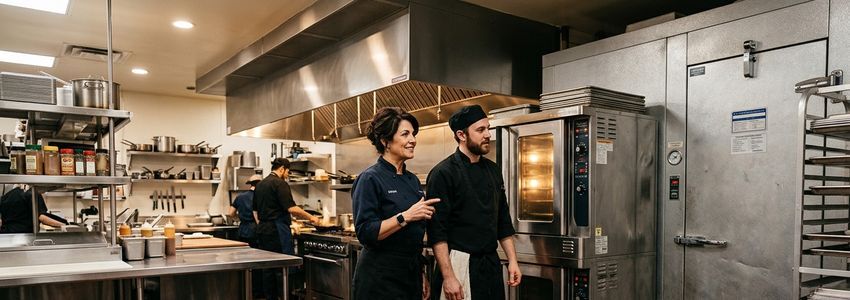
Equipment costs vary dramatically by franchise category. A fast-food franchise might require $150,000–$300,000 in commercial kitchen equipment, while a service franchise (cleaning, staffing, consulting) may need only office equipment and vehicles. Equipment financing can cover these costs separately and often at better rates than general business loans.
Working Capital
Most franchisors require franchisees to demonstrate 3–6 months of working capital reserves before opening. Even after launch, new franchises often operate at a loss for 6–18 months while building their customer base. Working capital financing ensures you can meet payroll, pay suppliers, and cover overhead during the ramp-up period.
Inventory
Retail, food, and product-based franchises require initial inventory purchases. Depending on the concept, this can range from $5,000 to $150,000 for the opening inventory load.
Training and Travel
Many franchisors require franchisees to attend corporate training programs (often 2–6 weeks), covering travel, accommodation, and lost income during the training period. While typically modest ($3,000–$15,000), this is a real cost to budget for.
Types of Franchise Financing
There is no single "best" franchise financing product — the right solution depends on your franchise type, investment amount, credit profile, timeline, and personal financial situation. Here are the primary financing options available to franchisees.
1. SBA 7(a) Loans for Franchise Financing
The SBA 7(a) loan is the gold standard for franchise financing. Backed by the U.S. Small Business Administration, these loans offer some of the best terms in the market: amounts up to $5 million, repayment terms up to 10 years (25 years for real estate), and interest rates tied to the prime rate (typically prime + 2.25%–4.75%). The SBA maintains a "Franchise Registry" of pre-approved franchise brands, which dramatically streamlines the underwriting process for qualifying concepts.
Best for: Established franchises on the SBA Franchise Registry, buyers with 680+ credit scores, investments of $150,000–$5 million
Timeline: 30–90 days (faster for pre-approved brands)
Down payment: Typically 10–20% of total project cost
2. SBA 504 Loans for Real Estate and Equipment
The SBA 504 program is specifically designed for major fixed asset purchases — commercial real estate and long-lived equipment. For franchisees who are purchasing the building where they'll operate (rather than leasing), a 504 loan can finance up to 40% of the project cost at below-market fixed rates, with the franchisee providing 10% down and a conventional lender funding the remaining 50%.
Best for: Franchisees purchasing commercial real estate, investments over $1 million
Maximum loan: $5.5 million (up to $5.5M for certain energy-efficient projects)
3. Conventional Business Term Loans
Traditional term loans from banks or alternative lenders provide a lump sum repaid over a fixed period. While conventional bank loans for franchises often have stricter requirements than SBA products, they can fund faster and may work well for franchisees with strong credit and collateral. Crestmont Capital's business loans offer terms from 1–10 years with amounts from $25,000 to $2 million.
4. Equipment Financing for Franchises
For equipment-heavy franchises (restaurants, fitness studios, auto service, healthcare), equipment financing is often the most cost-effective way to fund the physical assets of the business. The equipment itself serves as collateral, enabling approvals with lower credit scores and without additional collateral. Equipment loans typically offer competitive rates (6–25% APR) and terms matching the useful life of the equipment.
5. Franchise-Specific Lending Programs
Many major franchise brands have established preferred lending relationships with specific banks or alternative lenders who understand the brand's business model, unit economics, and typical capital requirements. These franchisor-preferred lenders can often offer streamlined underwriting and faster decisions for franchisees of their partner brands. Ask your franchisor's development team which lending partners they recommend.
6. ROBS (Rollover for Business Startups)
A Rollover for Business Startups (ROBS) allows you to use funds from your 401(k) or IRA to capitalize a franchise without paying the 10% early withdrawal penalty or income taxes. The process involves creating a C-corporation, establishing a new retirement plan, and rolling existing retirement funds into it — then using those funds to purchase stock in the new corporation that will operate the franchise. ROBS arrangements must be properly structured by qualified ERISA attorneys and plan administrators. While complex, ROBS can be a powerful equity injection tool for franchisees with substantial retirement savings.
7. Merchant Cash Advances for Existing Franchises
For franchisees who already have an operating location and need additional capital quickly — for a second location deposit, unexpected renovation, or working capital — a Merchant Cash Advance (MCA) provides fast funding (often 24–48 hours) based on your daily card volume. MCAs are not appropriate for initial franchise purchases but excel as operational capital tools for established franchisees with strong card sales.
8. Business Line of Credit
A business line of credit is a revolving credit facility that franchisees use for working capital, inventory, seasonal fluctuations, and unexpected expenses. Unlike a term loan, you only pay interest on what you draw. Lines of credit are particularly valuable for franchisees in their first 2–3 years, when cash flow can be unpredictable.
Franchise Financing Qualification Requirements
| Loan Type | Min. Credit Score | Down Payment | Net Worth Required | Speed |
|---|---|---|---|---|
| SBA 7(a) | 650+ | 10–20% | Varies by loan size | 30–90 days |
| SBA 504 | 650+ | 10% | Positive net worth | 45–90 days |
| Conventional Term Loan | 620+ | 15–25% | Flexible | 5–21 days |
| Equipment Financing | 580+ | None (equipment is collateral) | None specified | 2–5 days |
| MCA (existing franchise) | 500+ | None | None | 24–48 hours |
| Business Line of Credit | 600+ | None | None specified | 2–5 days |
The Franchise Financing Process: Step by Step
Understanding the financing process before you begin will help you avoid the common mistakes that delay or derail franchise purchases. Here's a realistic step-by-step overview.
Step 1: Get Your Financial House in Order
Before approaching any lender, review your personal credit report (from all three bureaus), calculate your net worth (assets minus liabilities), and compile your liquid assets. Lenders will want to know your total investment capital available and your credit profile. If your score is below 650, spend 60–90 days improving it before applying for SBA financing.
Step 2: Understand the Franchise Disclosure Document (FDD)
The FDD is the legal document the franchisor must provide to prospective franchisees. Item 5 shows the initial franchise fee, Item 7 shows estimated initial investment ranges, and Item 19 (when provided) shows financial performance representations. Lenders will use the FDD to understand unit economics and assess the viability of your specific franchise concept.
Step 3: Prepare Your Loan Package
For SBA and conventional loans, you'll need: personal financial statement, personal tax returns (2–3 years), business plan, FDD, signed franchise agreement (or letter of intent), construction/renovation cost estimates, equipment quotes, and real estate information (lease or purchase agreement). The more complete your package, the faster the process.
Step 4: Work with a Franchise-Experienced Lender
Not all lenders understand franchise businesses. Working with a lender like Crestmont Capital that has experience in franchise financing — and understands the difference between a pre-approved SBA franchise and a new concept — can save weeks of time and significantly improve your approval odds.
Step 5: Negotiate Your Loan Terms
Don't accept the first offer. Interest rates, repayment terms, prepayment penalties, and personal guarantee requirements are all negotiable, particularly for borrowers with strong credit and established franchise brands. Get offers from multiple lenders when possible.
Step 6: Close and Fund
Once approved, you'll receive a commitment letter outlining final loan terms. SBA loans require additional closing steps including SBA authorization. Upon closing, funds are disbursed to your business account or directly to vendors, contractors, and the franchisor.
Ready to Finance Your Franchise?
Get pre-qualified in minutes. Crestmont Capital has helped hundreds of franchise owners secure the capital they need since 2015.
Apply for Franchise FinancingFranchise Financing by Industry Type
| Franchise Type | Typical Investment Range | Best Financing Products |
|---|---|---|
| Fast Food / QSR | $200K–$2M+ | SBA 7(a), SBA 504, Equipment Financing |
| Fast Casual / Sit-Down Restaurant | $350K–$750K | SBA 7(a), Equipment Financing, Term Loan |
| Fitness / Gym | $100K–$500K | SBA 7(a), Equipment Financing |
| Service (Cleaning, Staffing, Coaching) | $50K–$200K | SBA Microloan, Term Loan, LOC |
| Auto Service / Repair | $200K–$400K | SBA 7(a), Equipment Financing |
| Healthcare / Senior Care | $100K–$500K | SBA 7(a), Term Loan |
| Retail / Specialty | $100K–$350K | SBA 7(a), Equipment Financing, LOC |
| Education / Tutoring | $75K–$250K | SBA 7(a), Term Loan |
Real-World Franchise Financing Scenarios
Scenario 1: First-Time Franchisee — Sandwich Concept — $380,000
The Situation: A first-time franchisee in Denver signed a franchise agreement for a popular sandwich franchise. Total estimated investment: $380,000, including a $45,000 franchise fee, $180,000 leasehold improvements, $95,000 equipment, $35,000 initial inventory, and $25,000 working capital reserve.
The Solution: Crestmont Capital structured an SBA 7(a) loan for $304,000 (80% of total investment), with the franchisee providing $76,000 (20%) from personal savings and a ROBS partial rollover. The SBA loan covered the buildout, equipment, and working capital. Interest rate: prime + 2.75%. Term: 10 years. Monthly payment: approximately $3,100.
Outcome: The franchise opened on schedule and reached break-even within 14 months.
Scenario 2: Multi-Unit Expansion — Fitness Franchise — $1.2M
The Situation: An existing franchisee who owned two successful fitness franchise locations wanted to fund a third location requiring $400,000 in construction and $350,000 in specialized gym equipment, plus working capital for the first year ($450,000 total project).
The Solution: A combination approach: SBA 7(a) for $350,000 (covering construction and working capital) plus a separate $350,000 equipment financing package. The equipment loan was approved quickly (5 days) based on the fitness equipment value. The SBA loan took 45 days but delivered the lowest rate component. Total blended financing: $700,000.
Outcome: Location opened under budget. The equipment loan's self-collateralizing nature reduced the personal guarantee exposure significantly.
Scenario 3: Franchise Acquisition — Buying an Existing Unit — $650,000
The Situation: An investor wanted to purchase an existing, profitable franchise location from a retiring franchisee. The purchase price included goodwill and existing equipment — making it an acquisition rather than a new buildout.
The Solution: SBA 7(a) loan for $520,000 with a $130,000 seller note (the selling franchisee agreed to carry 20% of the purchase price). The SBA loan covered the business acquisition, with the existing profitable cash flow supporting the debt service. Approval was faster than a startup because of the existing revenue history.
Outcome: Deal closed in 52 days. The franchisee assumed operations of a business already generating $85,000/month in revenue.
Common Franchise Financing Mistakes to Avoid
- Underestimating total capital needs: Always budget 15–20% more than the FDD Item 7 estimates. Construction always runs over; opening is always slower than projected.
- Not checking the SBA Franchise Registry first: If your franchise brand is on the SBA Franchise Registry, the underwriting is dramatically streamlined. Always verify registration status before choosing a loan product.
- Applying with too much personal debt: Lenders calculate your personal debt-to-income ratio. Pay down high-interest personal debt before applying for franchise financing.
- Choosing the wrong loan product for your timeline: If you need to fund quickly because the franchise location is at risk, an SBA loan won't work — you'll need alternative financing while an SBA loan processes.
- Not negotiating the franchise agreement first: Lenders want to see a signed or nearly-signed franchise agreement. But have an attorney review the FDD and franchise agreement before signing — it's much harder to renegotiate after you've signed.
- Ignoring working capital: The #1 reason new franchise locations fail is running out of working capital before the business reaches profitability. Always include 6 months of operating expenses in your financing request.
Why Franchise Owners Choose Crestmont Capital
Since 2015, Crestmont Capital has financed franchise owners across hundreds of brands and dozens of franchise categories. Here's what sets our franchise financing apart:
🏪 Franchise Industry Expertise
We understand franchise economics — royalty structures, ramp-up timelines, franchise registry requirements. We speak the language.
⚡ Fast Pre-Qualification
Apply in 5 minutes. No impact to credit score for pre-qualification. Know your options before you sign the franchise agreement.
🔄 Multiple Products
SBA loans, equipment financing, working capital, lines of credit — we can structure a blended solution to fit your specific franchise needs.
📋 Transparent Process
We walk you through every step. No hidden fees. No surprises. Clear communication from application to funding.
Get Your Franchise Financing Quote
Pre-qualify today with no impact to your credit score. Our franchise financing specialists are ready to help.
Apply Now — Takes 5 MinutesFrequently Asked Questions: Franchise Financing
Can I get franchise financing with no money down?
What credit score do I need for franchise financing?
How long does franchise financing take?
Can I use a 401(k) or IRA to fund a franchise?
Does the franchisor help with financing?
What happens to my financing if the franchise fails?
Can I finance a franchise if I'm buying an existing location?
Start Your Franchise Journey Today
Whether you're opening your first location or expanding to multiple units, Crestmont Capital has the franchise financing expertise to get you funded. Apply in 5 minutes — no impact to your credit score.
Apply for Franchise Financing →Disclaimer: The information provided in this article is for general informational purposes only and does not constitute financial, legal, or investment advice. Loan products, rates, and eligibility requirements are subject to change and vary based on individual business and personal financial qualifications. All financing is subject to credit approval. Crestmont Capital is not affiliated with the U.S. Small Business Administration (SBA); SBA loan references describe products offered in partnership with SBA-approved lenders. ROBS arrangements involve complex legal and tax considerations — consult qualified ERISA and tax professionals before proceeding. Franchise investment ranges cited are estimates from publicly available sources and will vary by brand, market, and specific circumstances. © 2026 Crestmont Capital. All rights reserved.

Allan Garfinkle
Allan Garfinkle is the Chief Revenue Officer at Crestmont Capital, where he has spent more than a decade leading revenue strategy, business development, and operational growth. With 28 years of experience building and advising startups and small businesses, Allan has helped more than 10,000 business owners navigate financing decisions, growth opportunities, and changing economic conditions. He earned a Bachelor of Science in Economics and an MBA with a concentration in Finance from Northeastern University, as well as a Juris Doctor from New England Law, where his studies focused on contracts and business law. His writing draws on extensive practical experience in small-business lending, equipment financing, business credit, and commercial finance.