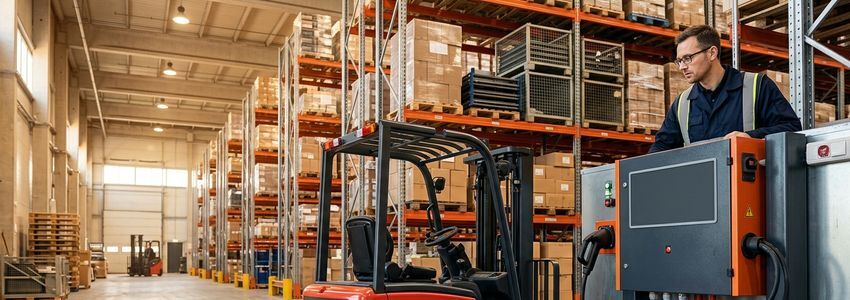
Forklift battery financing gives warehouse, distribution, and manufacturing businesses a way to upgrade aging lead-acid battery fleets or install modern lithium-ion charging infrastructure without draining working capital. For operations running multiple shifts, a failing battery bank is not a minor inconvenience. It is a direct threat to throughput, labor efficiency, and customer commitments. This guide walks through how forklift battery and charging station financing works, who qualifies, and how to structure the right funding solution for your facility.
In This Article
What Is Forklift Battery and Charging Station Financing?
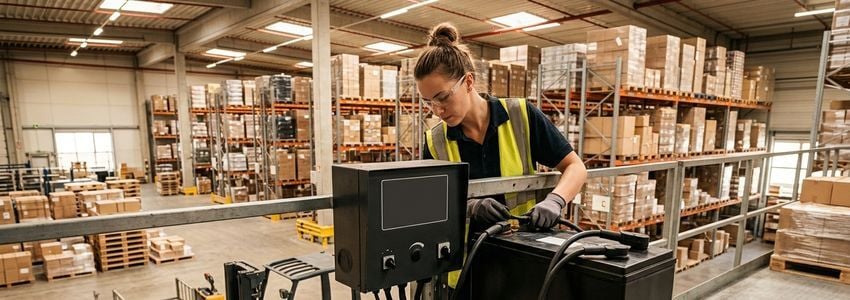
Forklift battery and charging station financing is a business funding solution that covers the purchase or lease of replacement batteries, new lithium-ion power packs, and the charging infrastructure needed to run them. This includes the batteries themselves, industrial chargers, charging bay wiring and electrical upgrades, ventilation modifications for lead-acid rooms, and battery management systems for lithium-ion fleets.
Unlike financing a whole forklift, battery and charging financing is narrower in scope but often just as urgent. A single lead-acid battery bank for a 5,000 lb capacity lift truck can run from a few thousand dollars up to $10,000 or more, and a facility running two or three shifts frequently needs two to three batteries per truck just to keep operations moving. Multiply that across a fleet of ten or twenty forklifts and the capital requirement becomes substantial very quickly.
Financing options range from equipment loans that treat the battery and charger as collateral, to equipment leases that preserve cash flow with predictable monthly payments, to working capital loans and business lines of credit that give you flexibility to fund the upgrade on your own timeline.
The decision between lead-acid and lithium-ion is not just a technology preference, it is a financing decision. Lead-acid batteries require a larger charging room, ventilation for hydrogen gas released during charging, and typically a battery-handling cart or hoist for swapping. Lithium-ion systems eliminate most of that infrastructure but cost more per unit upfront. Lenders who understand material handling equipment can help you weigh the total project cost, including facility changes, not just the battery price tag itself.
Many businesses underestimate how much of the total project cost sits outside the battery itself. Electrical panel upgrades, new conduit runs, dedicated charging bay flooring, and safety signage can all factor into a full charging station buildout. A well-structured financing package accounts for these ancillary costs up front, rather than forcing a business to scramble for additional capital mid-project once the vendor uncovers unexpected electrical work.
Key Insight: Industry cost analyses show a fleet of 20 forklifts converting from lead-acid to lithium-ion battery systems can save more than $100,000 per year in combined energy, labor, and maintenance costs, even though the upfront lithium-ion investment is higher.
Key Benefits of Financing Your Battery and Charging Upgrade
Financing a forklift battery and charging station upgrade rather than paying cash up front offers several advantages for growing operations:
- Preserve working capital. Keep cash on hand for payroll, inventory, and other operating needs instead of tying it up in batteries and chargers.
- Match payments to usage. Spread the cost of the upgrade over the useful life of the equipment, often 3 to 7 years, instead of a single large outlay.
- Avoid downtime-driven losses. A dead or degraded battery bank can shut down a shift. Financing lets you move fast when a battery starts failing rather than waiting to save up the cash.
- Access newer, more efficient technology. Lithium-ion batteries and fast-charging stations cost more upfront but reduce long-term operating expenses. Financing bridges that upfront cost gap.
- Potential tax and accounting advantages. Equipment loans and leases can offer favorable treatment depending on your business structure and accountant's guidance.
- Predictable budgeting. Fixed monthly payments make it easier to forecast facility operating costs across the year.
How Forklift Battery and Charging Financing Works
The process for financing a forklift battery or charging station upgrade is similar to other equipment financing but tends to move faster because the dollar amounts are typically smaller than financing an entire forklift fleet.
- Assess your current fleet and charging needs. Determine how many batteries need replacement, whether you are staying with lead-acid or converting to lithium-ion, and what electrical or facility changes a new charging station requires.
- Get quotes from battery and charging equipment vendors. Most lenders will finance against a vendor invoice or purchase order, so having a firm quote in hand speeds up approval.
- Submit a financing application. This typically includes basic business information, time in business, and recent bank statements. Many lenders can review straightforward equipment requests with minimal paperwork.
- Receive approval and terms. Approval timelines for equipment financing can be as fast as 24 to 48 hours for straightforward applications, though complex multi-site upgrades may take longer.
- Equipment is purchased and installed. Funds are typically disbursed directly to the vendor or reimbursed to your business once installation is confirmed.
- Begin making scheduled payments. Payments are structured monthly, aligned with the expected useful life of the batteries and charging equipment.
Ready to Upgrade Your Forklift Fleet?
Get fast, flexible financing from the #1 business lender in the U.S. No obligation, apply in minutes.
Apply Now →Types of Forklift Battery and Charging Financing
Several financing structures can be used to fund a battery and charging station upgrade, depending on your business's cash flow needs, credit profile, and how the equipment will be used.
Equipment Loans
An equipment loan finances the batteries, chargers, and related infrastructure as collateral. You own the equipment once the loan is paid off. This structure works well for businesses that plan to keep the equipment for its full useful life and want to build equity in owned assets.
Equipment Leasing
Leasing spreads out payments and can include end-of-term options to purchase, renew, or upgrade to newer battery technology. This is a popular choice for businesses anticipating rapid change in battery technology, since lithium-ion systems and charging standards continue to evolve.
Working Capital Loans
A working capital loan provides a lump sum that is not tied specifically to the battery purchase, giving you flexibility to cover the upgrade alongside other operational needs, such as facility electrical work or staff training on new charging protocols.
Business Lines of Credit
A line of credit lets you draw funds as needed, which is useful if you are staging a battery and charging upgrade across multiple shifts or locations over time rather than all at once.
Each of these structures can also be combined. Some businesses use a working capital loan to cover the immediate facility electrical work, then finance the batteries themselves separately through an equipment loan tied specifically to that hard asset. Discussing your full project scope with a lender before applying helps determine which combination of structures minimizes your total cost of capital.
By the Numbers
Forklift Battery and Charging Upgrades - Key Statistics
20-40%
Five-year total cost of ownership savings switching lead-acid to lithium-ion
$100K+
Annual savings potential for a 20-forklift fleet converting to lithium-ion
16 Hrs
Typical lead-acid charge plus cool-down downtime vs 1-2 hrs for lithium-ion
$9.1B
Estimated size of the U.S. forklift market, driving fleet upgrade demand
Common Mistakes to Avoid When Financing a Battery Upgrade
Businesses that rush into a battery or charging station upgrade without proper planning often run into avoidable problems. Being aware of these pitfalls in advance can save time, money, and frustration.
- Underestimating electrical capacity needs. Adding fast-charge lithium-ion stations often requires more electrical capacity than an existing lead-acid charging room. Confirm your facility's panel capacity before finalizing a charger order.
- Financing only the battery, not the full project. If your upgrade also requires electrical work, ventilation changes, or new charging bay construction, make sure your financing covers the complete scope, not just the equipment itself.
- Waiting until a battery fails to start the process. Reactive financing under time pressure limits your options. Planning a battery or charging upgrade proactively, ideally 60 to 90 days before an anticipated failure, gives you more room to compare terms.
- Ignoring shift patterns when choosing battery technology. A single-shift operation may not see enough value from lithium-ion's faster charging to justify the higher upfront cost, while a multi-shift operation almost always benefits.
- Not accounting for battery handling equipment. If you are staying with lead-acid and running multiple shifts, you likely need a battery extraction cart, hoist, or dedicated handling system. This equipment can often be included in the same financing package.
Who This Financing Is Best For
Forklift battery and charging station financing is particularly valuable for:
- Multi-shift warehouse and distribution operations where battery downtime directly cuts into productive labor hours.
- Manufacturers and 3PL providers managing fleets of 5 or more forklifts where staggered battery failures are common.
- Businesses converting from lead-acid to lithium-ion who need to cover the higher upfront cost of the newer technology to capture long-term savings.
- Facilities expanding capacity that need additional charging bays and electrical infrastructure to support a growing fleet.
- Companies facing a sudden battery failure who need fast funding to avoid extended downtime on a critical piece of material handling equipment.
Comparing Your Financing Options
Choosing between an equipment loan, a lease, a working capital loan, or a line of credit depends on how you plan to use and eventually replace the battery and charging equipment.
Consider how quickly battery technology in your industry segment is likely to change. Cold storage, food distribution, and high-throughput e-commerce fulfillment centers tend to adopt lithium-ion faster because the operational savings are larger given their multi-shift schedules. A single-shift light manufacturing operation may see a longer payback period and could reasonably stick with lead-acid a while longer, financed through a simpler loan structure rather than a lease built around future upgrades.
Also factor in how the financing interacts with your existing equipment debt. If you already have a loan or lease on your forklift fleet itself, adding a separate battery and charging financing arrangement should not create conflicting liens or covenant issues. A knowledgeable lender will structure the new financing to sit cleanly alongside your existing obligations rather than complicate your balance sheet.
| Financing Type | Best For | Ownership | Typical Term |
|---|---|---|---|
| Equipment Loan | Businesses keeping equipment long-term | You own at payoff | 2-7 years |
| Equipment Lease | Businesses anticipating tech changes | Lessor owns, purchase option at end | 2-5 years |
| Working Capital Loan | Flexible use alongside facility upgrades | You own equipment purchased | Varies |
| Business Line of Credit | Staged, multi-location upgrades | You own equipment purchased | Revolving |
Pro Tip: If you are still deciding between lead-acid and lithium-ion, ask your lender whether the financing structure allows for an early payoff or upgrade clause. This gives you flexibility if battery technology or your shift schedule changes before the term ends.
How Crestmont Capital Helps
Crestmont Capital works with warehouse, distribution, manufacturing, and logistics businesses across the country to fund forklift battery replacements, lithium-ion conversions, and charging station buildouts. Our forklift financing programs are structured specifically around material handling equipment, so your application is reviewed by people who understand the difference between a lead-acid battery room and a fast-charge lithium-ion bay.
If your facility is also considering a broader fleet upgrade, our general equipment financing and equipment leasing programs can be structured together with your battery and charging financing to simplify payments into a single, predictable monthly obligation. For businesses looking at previously-owned trucks alongside new battery systems, our used equipment financing program can help extend the life of an existing fleet at lower upfront cost.
Many of our warehouse clients also explore related equipment upgrades. Our post on warehouse business loans covers broader facility financing options, and our guide to reach truck financing is a useful companion resource if you are upgrading both your forklift fleet and its power systems at the same time.
Keep Your Fleet Running Without the Downtime
Crestmont Capital funds battery replacements and charging station upgrades fast, so a dead battery never stalls your shift.
Apply Now →Real-World Scenarios
Scenario 1: The Multi-Shift Distribution Center
A regional distribution center running three shifts was cycling through three lead-acid batteries per forklift just to keep 12 trucks moving around the clock. Battery swap labor alone consumed nearly an hour of staff time per shift change. By financing a conversion to lithium-ion batteries and installing four fast-charge stations, the facility eliminated battery swaps entirely and freed up warehouse floor space previously used for battery storage racks.
Scenario 2: The Growing 3PL Provider
A third-party logistics provider added a new client contract that required expanding its forklift fleet from six to ten trucks within 60 days. Rather than delay onboarding the new client, the company used an equipment lease to finance both the additional forklifts and the batteries and chargers needed to support them, spreading the cost over 48 months.
Scenario 3: The Manufacturer With an Aging Battery Room
A mid-size manufacturer had a lead-acid battery charging room that no longer met updated ventilation code requirements after a facility inspection. Rather than spending cash reserves on both the electrical retrofit and replacement batteries, the company used a working capital loan to cover both the facility upgrade and a partial conversion to lithium-ion, which also eliminated the ventilation issue since sealed lithium-ion batteries do not emit the same gases during charging.
Scenario 4: The Seasonal Cold Storage Facility
A cold storage operator noticed lead-acid battery performance dropped sharply in low-temperature environments, shortening runtime mid-shift during the peak holiday season. Financing a switch to cold-rated lithium-ion batteries ahead of the seasonal rush avoided a repeat of the previous year's mid-shift charging emergencies.
Scenario 5: The Family-Owned Warehouse Business
A family-owned warehouse operation with five forklifts had strong revenue but limited cash reserves after a slow season. A business line of credit let ownership replace two failing batteries immediately while spreading the remaining fleet upgrade across the following two quarters as cash flow allowed.
Scenario 6: The Food Distribution Company Under Cold Storage Compliance Pressure
A food distribution company operating a refrigerated warehouse faced a compliance deadline requiring updated ventilation in its lead-acid battery charging room. Instead of absorbing the electrical retrofit cost out of pocket while also replacing three aging batteries, the company financed the entire project as a single equipment loan, bundling the ventilation upgrade, new batteries, and a replacement charger into one monthly payment that matched its seasonal cash flow cycle.
Frequently Asked Questions
What is forklift battery and charging station financing?
It is a business funding solution that covers the cost of replacement forklift batteries, new lithium-ion battery systems, industrial chargers, and any electrical or facility upgrades needed to support them, structured as a loan, lease, or line of credit.
How much does a forklift battery replacement cost?
Lead-acid battery costs typically range from $2,000 to $6,000 per unit depending on voltage and capacity, while lithium-ion batteries generally run higher, often $17,000 to $20,000 for standard industrial models, though prices vary by manufacturer and specifications.
Is it better to lease or take out a loan for forklift batteries?
A loan makes sense if you plan to keep the equipment for its full useful life and want to own it outright. Leasing may suit businesses that expect battery technology to keep evolving and want the flexibility to upgrade at the end of the term.
Can I finance just a charging station without new batteries?
Yes. Many businesses finance charging infrastructure separately from battery purchases, especially when upgrading charging bays, adding fast-charge stations, or expanding electrical capacity to support a growing fleet.
How long does approval take for battery and charging financing?
Straightforward equipment financing requests can often be reviewed within 24 to 48 hours. Larger or multi-location upgrades that involve facility electrical work may take longer depending on the complexity of the project.
Why are lithium-ion forklift batteries more expensive upfront?
Lithium-ion batteries use more advanced cell chemistry and integrated battery management systems, which raises manufacturing costs. However, they typically last two to three times longer than lead-acid batteries and require far less maintenance, which can offset the higher upfront cost over the equipment's lifespan.
Do I need to replace all batteries in my fleet at once?
No. Many businesses stage upgrades over time, replacing the oldest or most heavily used batteries first. A business line of credit is often used specifically to support this kind of phased approach.
What credit score is needed to qualify for equipment financing?
Requirements vary by lender and financing structure. Equipment-backed financing is often more accessible than unsecured funding because the batteries and chargers themselves serve as collateral, which can help businesses with less-than-perfect credit still qualify.
What documents do I need to apply?
Typically a completed application, basic business information, recent bank statements, and a vendor quote for the batteries and charging equipment being financed. Additional documentation may be requested for larger facility upgrades.
Can startups or newer businesses qualify for this type of financing?
Qualification depends on the lender's specific criteria, including time in business, revenue, and the strength of the overall application. Speak with a financing specialist to understand what options may be available for your situation.
How does opportunity charging affect financing decisions?
Opportunity charging, or topping off a battery during short breaks, works well with lithium-ion batteries but can shorten the life of lead-acid batteries. Businesses planning to use opportunity charging often finance a lithium-ion conversion specifically to support this charging pattern.
Will financing cover the electrical work needed for new chargers?
In many cases, yes. Financing can often be structured to include the electrical upgrades, wiring, and installation costs needed to support new charging stations, not just the equipment itself. Discuss the full project scope with your lender when applying.
What happens if my battery fails before financing is approved?
Because equipment financing decisions can move quickly, many businesses are able to secure funding within a day or two of applying. If you are facing an urgent battery failure, communicate the timeline clearly with your lender so they can prioritize your application.
Are there ongoing costs I should budget for after financing a lithium-ion conversion?
Lithium-ion batteries require far less ongoing maintenance than lead-acid, but you should still budget for periodic battery management system checks and eventual charger maintenance. These costs are typically much lower than the watering, cleaning, and equalization charges associated with lead-acid batteries.
How do I get started with forklift battery and charging station financing?
Start by getting a quote from your battery or charging equipment vendor, then apply with a lender that understands material handling equipment. Crestmont Capital's application process is designed to move quickly so a battery issue does not become a prolonged shutdown.
Don't Let a Dead Battery Stop Your Fleet
Apply today and get a fast decision on financing for your forklift battery and charging station upgrade.
Apply Now →Next Steps
Identify which batteries need replacement and whether a lithium-ion conversion makes sense for your shift pattern.
Collect firm quotes for batteries, chargers, and any needed electrical work.
Submit your application with Crestmont Capital and get a fast decision on terms.
Once funded, your vendor installs the new batteries and charging stations so your fleet runs at full strength.
Conclusion
Forklift battery and charging station financing gives warehouse, distribution, and manufacturing businesses a practical way to keep material handling operations running without depleting cash reserves. Whether you are replacing an aging lead-acid fleet, converting to lithium-ion, or building out new charging infrastructure to support growth, the right financing structure can turn a costly capital expense into a manageable monthly payment. The businesses that handle this decision well tend to plan ahead rather than react to a battery failure in the middle of a shift, and they choose a lender who understands the difference between financing a simple replacement battery and financing a full charging station buildout with electrical and facility considerations attached.
According to the U.S. Small Business Administration, access to the right type of capital at the right time is one of the most consistent factors separating businesses that scale successfully from those that stall out. If your forklift fleet is facing battery or charging challenges, exploring financing now can prevent a small problem from becoming a major operational disruption.
Disclaimer: The information provided in this article is for general educational purposes only and is not financial, legal, or tax advice. Funding terms, qualifications, and product availability may vary and are subject to change without notice. Crestmont Capital does not guarantee approval, rates, or specific outcomes. For personalized information about your business funding options, contact our team directly.