The forestry industry is one of the most capital-intensive sectors in the U.S. economy. From purchasing specialized harvesting equipment to managing payroll through slow seasons, forestry companies face financial demands that most traditional lenders simply don't understand. If you own or operate a logging company, tree farm, wood processing facility, or any other forestry business, access to the right financing can determine whether your operation thrives or stalls.
This guide covers every major loan option available to forestry companies, how to qualify, how much you can borrow, and how Crestmont Capital helps timber and logging businesses secure the funding they need - fast.
In This Article
- Why Forestry Companies Need Business Loans
- Types of Business Loans for Forestry Companies
- Forestry Financing: By the Numbers
- Loan Options Compared
- How to Qualify for a Forestry Business Loan
- How Crestmont Capital Helps Forestry Businesses
- Real-World Financing Scenarios
- How to Get Started
- Frequently Asked Questions
Why Forestry Companies Need Business Loans
Running a forestry business requires capital at almost every stage of operations. Unlike many industries where startup costs are modest, forestry companies typically need significant upfront investment just to get into the field - and the costs don't stop there. Equipment depreciates, regulations change, and seasonal revenue cycles mean cash flow is rarely steady throughout the year.
Here are the primary reasons forestry businesses seek financing:
Equipment Purchase and Maintenance
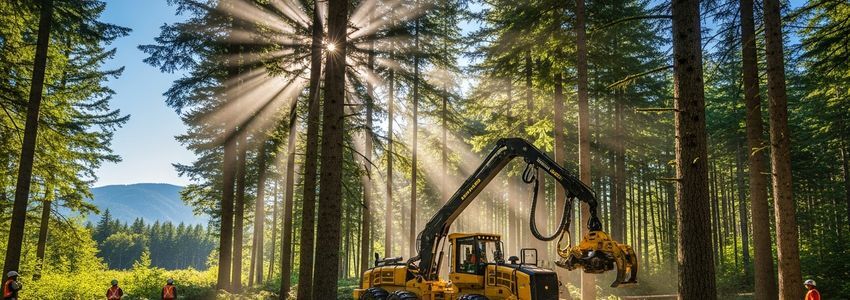
Forestry operations rely on some of the most expensive equipment in any industry. A single harvester can cost $250,000 to $600,000. Skidders, feller bunchers, delimbers, log loaders, and chippers all add up quickly. Many companies also need a fleet of heavy-duty trucks for transport. Equipment financing allows forestry businesses to acquire this machinery without draining cash reserves, while keeping monthly payments predictable.
Maintenance is an equally significant expense. Equipment operating in harsh outdoor environments breaks down regularly. Having access to a line of credit or working capital loan means you can address repairs quickly without interrupting operations.
Seasonal Cash Flow Gaps
The forestry industry is highly seasonal. Logging activity typically peaks in late fall and winter when the ground freezes and is easier to traverse with heavy equipment - but revenue from timber sales may come in months later. Tree farming has similar cycles tied to planting and harvest seasons. Working capital loans and lines of credit help companies bridge the gap between operating expenses and incoming revenue during off-peak periods.
Land Acquisition and Timber Rights
Expanding a forestry operation often requires acquiring additional acreage for tree farming or timber extraction. Timber rights on established stands can also represent major purchases. Commercial real estate loans and SBA loans are commonly used to finance land purchases and long-term leases.
Environmental Compliance and Certifications
Regulatory compliance in the forestry sector is increasingly rigorous. Companies pursuing Forest Stewardship Council (FSC) certification, sustainable forestry certifications, or compliance with state environmental requirements often face significant upfront costs. Financing can cover environmental impact assessments, third-party audits, and process upgrades.
Workforce Expansion
Skilled labor is in short supply in the logging and timber industry. Hiring and training additional crew members - especially during peak season - requires capital for payroll, benefits, training, and safety equipment. Working capital loans and payroll financing help companies scale their workforce without cash flow pressure.
Ready to Finance Your Forestry Business?
Crestmont Capital offers fast, flexible financing for logging, timber, and forestry companies. No obligation - apply in minutes.
Apply Now →Types of Business Loans for Forestry Companies
Forestry businesses have access to a wide range of financing options. The best choice depends on what you need the funds for, your time in business, your revenue, and your credit profile. Here is a detailed breakdown of every major loan type available to forestry companies.
Equipment Financing
Equipment financing is one of the most common and practical funding solutions for forestry companies. The equipment itself - harvesters, skidders, log loaders, sawmill machinery, chippers, delimbers, or transport trucks - serves as collateral for the loan. This significantly reduces the lender's risk and often makes approval easier, even for businesses with less-than-perfect credit.
Loan terms typically range from 24 to 84 months, with fixed monthly payments. Down payments are usually low (10% to 20%), and rates are competitive because the collateral reduces risk. Equipment financing through Crestmont Capital can fund new or used forestry machinery, often with same-week approval and funding.
One important consideration: if you default on an equipment loan, the lender can seize the equipment. This is a standard condition with all secured equipment financing, so it's essential that monthly payments fit comfortably within your cash flow projections.
Working Capital Loans
Working capital loans provide a lump sum of cash to cover day-to-day operating expenses - payroll, fuel, supplies, insurance, maintenance, and other overhead costs. These are short-term to medium-term loans (6 to 36 months) that are repaid in fixed daily, weekly, or monthly installments.
For forestry companies that experience seasonal revenue swings, a working capital loan can be a lifeline during the slow months. Unlike equipment financing, working capital loans are typically unsecured - meaning no specific collateral is required - which makes them faster to obtain but sometimes at slightly higher interest rates.
Business Line of Credit
A business line of credit is one of the most flexible financing tools available. Instead of receiving a lump sum, you're approved for a maximum credit limit and can draw from it as needed. You only pay interest on what you actually use, and as you repay, the funds become available again.
For forestry operations, a line of credit is ideal for managing unpredictable expenses - like an unexpected equipment repair, a sudden opportunity to purchase timber rights, or bridging payroll during a gap between invoice and payment. Credit limits range from $10,000 to $500,000 depending on your business financials.
SBA Loans
Small Business Administration (SBA) loans are government-backed loans offered through approved lenders. Because the SBA guarantees a portion of the loan, lenders are willing to offer lower interest rates and longer repayment terms than conventional financing. The two most common programs for forestry businesses are:
- SBA 7(a) Loans: Up to $5 million, used for working capital, equipment, land, or debt refinancing. Terms up to 25 years for real estate, 10 years for equipment and working capital.
- SBA 504 Loans: Specifically for major fixed assets like real estate and heavy equipment. Up to $5.5 million, with long repayment terms and below-market interest rates.
The tradeoff is that SBA loans require a more extensive application process, including a detailed business plan, financial projections, and strong personal credit. Approval timelines can range from 30 to 90 days. If you qualify, the long-term savings on interest are substantial.
Commercial Real Estate and Land Loans
If your forestry expansion involves purchasing timberland, a sawmill facility, or additional processing infrastructure, you'll likely need a commercial real estate loan. These loans are secured by the property itself and typically offer lower interest rates and longer terms (10 to 25 years) compared to other business loan types.
Timber and agricultural land can also serve as collateral for broader business financing needs, depending on the lender's policies.
Invoice Financing and Factoring
Many forestry companies work on long payment cycles - selling timber to mills or wood products manufacturers who may take 30, 60, or even 90 days to pay. Invoice financing allows you to borrow against outstanding invoices, receiving 70% to 90% of the invoice value upfront. Once the client pays, you receive the remainder minus fees.
This approach keeps cash flowing without taking on traditional debt. It's particularly useful for logging contractors who work on project-by-project billing cycles.
Merchant Cash Advances
A merchant cash advance (MCA) provides a lump sum in exchange for a percentage of future sales (often credit card or ACH transactions). MCAs offer extremely fast funding - sometimes within 24 to 48 hours - with minimal documentation requirements. They are best used for short-term needs when traditional financing isn't fast enough.
The cost of an MCA is higher than most other options, making them appropriate for urgent situations rather than long-term capital needs.
By the Numbers
Forestry Industry Financing - Key Statistics
$300K+
Average cost of a commercial harvester or feller buncher
$900B
U.S. forest products industry annual economic contribution
24 hrs
Typical funding time for working capital loans through alternative lenders
$5M
Maximum loan amount available through SBA 7(a) program
Loan Options Compared: Finding the Right Fit
Not every forestry business has the same needs. A logging contractor who needs a new skidder has different financing requirements than a tree farm looking to purchase 200 acres of timberland. The table below compares the most common loan types side by side to help you identify the best match for your situation.
| Loan Type | Best For | Typical Amount | Speed | Credit Required |
|---|---|---|---|---|
| Equipment Financing | Harvesters, trucks, sawmill equipment | $10K - $2M+ | 2-5 days | 550+ |
| Working Capital | Payroll, fuel, seasonal gaps | $10K - $500K | 1-3 days | 550+ |
| Line of Credit | Ongoing expenses, cash flow management | $10K - $500K | 2-5 days | 600+ |
| SBA 7(a) Loan | Large projects, land, long-term growth | Up to $5M | 30-90 days | 680+ |
| Commercial Real Estate | Land, facilities, timber rights | $100K - $10M+ | 30-60 days | 650+ |
| Invoice Financing | Waiting on B2B payment cycles | 70-90% of invoices | 1-3 days | 500+ |
| Merchant Cash Advance | Emergency capital, fast funding | $5K - $250K | 24-48 hours | 500+ |
Industry Insight: According to the U.S. Forest Service, the timber industry employs over 900,000 workers and contributes nearly $900 billion to the U.S. economy annually. Yet many forestry businesses struggle to access traditional bank financing due to the seasonal nature of cash flow and high equipment costs - making alternative lenders like Crestmont Capital a critical resource for the industry.
How to Qualify for a Forestry Business Loan
Qualification requirements vary depending on the type of loan and the lender. However, most lenders - including alternative lenders like Crestmont Capital - look at the following key factors when evaluating a forestry business loan application.
Time in Business
Most traditional lenders require at least 2 years in business. Alternative lenders are often more flexible, with some programs available to businesses operating for as little as 6 months. If your forestry operation is newer, equipment financing (where the equipment itself serves as collateral) or invoice financing may be easier to access.
Monthly or Annual Revenue
Lenders want to see consistent revenue sufficient to cover loan repayments. For working capital loans, many lenders look for a minimum of $10,000 to $15,000 per month in gross revenue. Larger loans require higher revenue thresholds. Providing 3 to 6 months of bank statements is typically part of the application process.
Credit Score
Both personal and business credit scores matter. For equipment financing and working capital loans, scores in the 550+ range are often acceptable. For SBA loans and commercial real estate loans, lenders typically want to see scores of 650 to 680 or higher. Even if your credit isn't perfect, strong revenue and cash flow can sometimes offset a lower score with the right lender.
Financial Documentation
Be prepared to provide bank statements (3 to 6 months), business tax returns (1 to 2 years), profit and loss statements, a business plan (especially for SBA loans), and details on existing debts or liens. Having organized financial records speeds up the approval process significantly.
Collateral
For equipment loans, the equipment itself is the collateral. For working capital loans, many are unsecured. For larger loans, lenders may require additional collateral such as real estate, existing equipment, or a personal guarantee.
Pro Tip: If your forestry business has seasonal revenue, provide 12 months of bank statements (not just 3 months) when applying. This gives lenders the full picture of your annual cash flow cycle and can significantly improve your approval odds and loan terms.
How Crestmont Capital Helps Forestry Businesses
At Crestmont Capital, we specialize in providing fast, flexible financing to businesses across capital-intensive industries - including forestry, logging, timber, and wood processing operations. Unlike traditional banks that may view forestry companies as high-risk or require months-long approval processes, we work efficiently to match you with the right financing product for your specific situation.
Here is what you can expect when you work with Crestmont Capital:
A Broad Range of Loan Products
We offer equipment financing, working capital loans, business lines of credit, SBA loans, commercial real estate financing, invoice financing, and merchant cash advances. Rather than fitting your business into a one-size-fits-all product, we assess your needs and identify the financing structure that makes the most sense for your operation's size, cash flow, and growth goals.
Fast Approvals and Funding
Many forestry businesses can't wait 60 to 90 days for a bank to process a loan. We offer streamlined applications with approvals in as little as 24 to 48 hours and funding within days for most loan products. For equipment purchases, we can often provide term sheets the same day you apply.
Flexible Credit Requirements
We work with forestry businesses across a wide range of credit profiles. If your business has strong revenue and consistent operations, we have options even if your credit score is below what traditional banks require. We look at the full picture of your business - not just a number.
Industry Knowledge
Our lending team understands the unique financial profile of forestry operations, including seasonal revenue patterns, equipment lifecycle considerations, and the capital requirements for land acquisition and environmental compliance. You won't have to explain your business model from scratch - we already understand it.
Financing for Every Stage of Your Forestry Operation
From a single piece of equipment to a full operation expansion, Crestmont Capital has the funding solutions your forestry business needs to grow.
Get Your Quote →Real-World Forestry Financing Scenarios
Understanding how other forestry businesses use financing can help you identify which approach is right for your situation. Here are six real-world scenarios representing common financing needs in the industry.
Scenario 1: Purchasing a New Harvester
A logging contractor in the Pacific Northwest has been operating with a 15-year-old harvester that's become unreliable and expensive to maintain. A new mid-size harvester costs $385,000. The contractor applies for equipment financing through Crestmont Capital, using the harvester as collateral. With a credit score of 620 and $80,000 per month in revenue, he qualifies for 84-month equipment financing at a competitive rate, with a 10% down payment of $38,500. Monthly payments fit comfortably within his cash flow, and the new equipment significantly reduces maintenance costs and downtime.
Scenario 2: Bridging a Seasonal Cash Flow Gap
A tree farm in the Southeast generates most of its revenue in the fall during harvest season. By March, the business is covering payroll and overhead from reserves, which are nearly depleted. The owner applies for a $75,000 working capital loan to cover 4 months of payroll and operating expenses. Approved within 48 hours through Crestmont Capital, the loan carries a 12-month repayment term with manageable daily payments. When the fall harvest revenue arrives, she pays off the loan balance early with no prepayment penalty.
Scenario 3: Buying Timberland
A mid-size timber company in Appalachia identifies 400 acres of mature hardwood timberland for sale at $1.2 million. The owner secures a commercial real estate loan with a 25-year term and a fixed rate, using the timberland itself as collateral. The loan is structured with an interest-only period for the first 2 years while the company harvests the most mature stands and reinvests proceeds into replanting and operational growth.
Scenario 4: Upgrading a Sawmill Operation
A family-owned sawmill needs to replace aging band saws, debarking equipment, and a log deck conveyor system. Total equipment cost: $620,000. The company qualifies for an SBA 504 loan, which provides favorable long-term financing with a below-market fixed rate. The application process takes 6 weeks, but the lower interest rate saves the business over $150,000 in interest over the life of the 20-year loan.
Scenario 5: Managing Client Payment Delays
A contract logging company regularly invoices paper mills on 60-day payment terms. With two active contracts totaling $180,000 in outstanding invoices, the company needs cash to pay its crew and fuel costs while waiting for payment. Through invoice financing, the company receives 85% of the invoice value - $153,000 - within 3 days. When the mills pay in 60 days, the company receives the remaining 15% minus the financing fee, maintaining strong cash flow throughout.
Scenario 6: Opening a Second Location
A successful logging operation in the Midwest is ready to expand into a neighboring state. The expansion requires $200,000 for new equipment, leasehold improvements to a storage facility, and initial operating capital. The owner uses a combination of a $120,000 equipment loan for specific machinery and an $80,000 working capital loan for startup costs and operating reserves. Both loans close within a week through Crestmont Capital, enabling the expansion to proceed on schedule.
How to Get Started
Complete our quick application at offers.crestmontcapital.com/apply-now - takes just a few minutes. No lengthy paperwork upfront.
A Crestmont Capital advisor will review your forestry business's financials and match you with the right financing option for your specific needs.
We'll present you with clear financing options, including rates, terms, and monthly payments, with no pressure and no hidden fees.
Once approved, receive your funds and put them to work - often within days of application. Equipment can be ordered, crew hired, and operations expanded immediately.
Frequently Asked Questions
Secure the Capital Your Forestry Business Needs Today
Don't let cash flow or equipment limitations hold your operation back. Apply now and get a decision in as little as 24 hours.
Apply Now →Disclaimer: The information provided in this article is for general educational purposes only and is not financial, legal, or tax advice. Funding terms, qualifications, and product availability may vary and are subject to change without notice. Crestmont Capital does not guarantee approval, rates, or specific outcomes. For personalized information about your business funding options, contact our team directly.