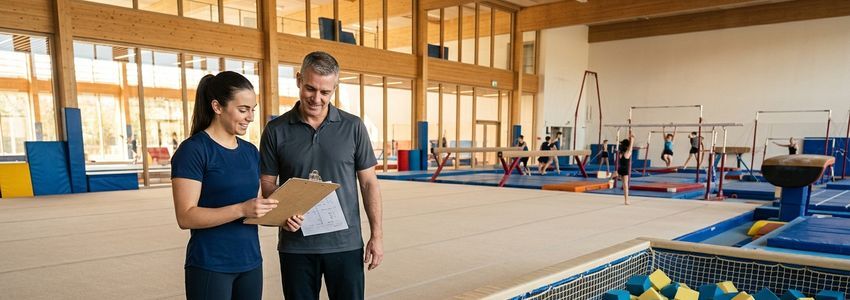
Foam pit gymnastics equipment financing has become one of the most common funding searches among gym owners, cheer coaches, and tumbling facility operators who want to add or replace a foam pit without draining their cash reserves. A well-built foam pit is one of the biggest draws for gymnastics, cheerleading, and trampoline park programs, but it is also one of the more expensive single investments a facility makes outside of the building itself.
This guide walks through what foam pit equipment typically costs, the financing and leasing options available to gym owners, how approval works, and the steps to get funded quickly so you are not stuck delaying a pit installation while you save up cash.
In This Article
What Is Foam Pit Gymnastics Equipment Financing?
Foam pit gymnastics equipment financing refers to the business loans, equipment leases, and working capital products gym owners use to cover the cost of a foam pit system. This includes the foam blocks themselves, the steel or wood frame, the in-ground excavation or above-ground enclosure, safety netting or padded covers, and surrounding spring floor panels that tie the pit into the rest of the training floor.
Rather than paying tens of thousands of dollars out of pocket, owners use financing to spread the cost over a set repayment term, usually 12 to 60 months, while the pit is already generating revenue through enrollment, team training fees, and open gym sessions.
A foam pit is not a single product you can buy off a shelf. It is a built system that typically includes a steel sub-frame rated for repeated high-impact loading, a excavated or framed cavity sized to the gym's ceiling height and skill level needs, loose foam blocks or cubes replaced on a rotating schedule, a protective netting or lid system to keep the pit safe when not in use, and often a connecting spring floor transition so athletes can tumble directly into the pit without a visible seam. Each of these components carries its own cost, and vendors typically quote the full system as one project rather than itemizing every part separately.
Because a foam pit touches structural, safety, and athletic performance considerations all at once, most gym owners work with a specialized gymnastics equipment installer rather than a general contractor. That specialization also means the equipment itself holds recognizable resale and collateral value, which is exactly what makes it a strong candidate for equipment-specific financing. Lenders can underwrite against the value of a known, well-documented asset instead of treating it as a generic business expense.
Key Stat: According to the U.S. Small Business Administration, access to capital remains one of the top barriers cited by small business owners when it comes to expanding or upgrading their facilities, which is why equipment-specific financing has become such a common tool for gym and recreation businesses.
Key Benefits of Financing a Foam Pit
- Preserve working capital. Keep cash available for payroll, insurance, marketing, and day-to-day gym operations instead of locking it into one piece of equipment.
- Install the pit now, not later. Capture enrollment and competitive team demand immediately rather than waiting months to save the full purchase price.
- Predictable monthly payments. Budget around a fixed payment instead of a large unplanned cash outlay.
- Potential tax advantages. Equipment financing may allow you to claim depreciation on the equipment, though you should confirm specifics with your accountant.
- Flexible structures. Choose between owning the equipment outright through a loan or keeping payments lower through a lease with upgrade flexibility.
- Bundle related equipment. Combine the foam pit with spring floors, bars, beams, vault runways, or trampolines in a single financing agreement.
Ready to Build Out Your Gym?
Get fast, flexible financing from the #1 business lender in the U.S. No obligation, apply in minutes.
Apply Now →How Foam Pit Equipment Financing Works
The process is more straightforward than many gym owners expect, especially compared to a traditional bank loan. Here is the typical path from quote to installed pit.
Quick Guide
How Foam Pit Financing Works, At a Glance
Obtain an itemized quote from your foam pit builder or equipment supplier covering blocks, framing, netting, and installation.
Provide basic business details, recent bank statements, and the vendor quote to the lender.
Compare term length, monthly payment, and total cost across loan versus lease options.
Once documents are signed, funds are released to pay your vendor and schedule installation.
Most lenders approve equipment financing based primarily on the value of the equipment and the borrower's cash flow and credit profile rather than requiring years of detailed collateral documentation like a commercial mortgage would. This is part of why equipment financing turns around so much faster than traditional bank loans.
Types of Financing Available for Gymnastics Equipment
Gym owners have a few structures to choose from depending on their goals, cash flow, and plans for the facility.
Equipment Financing (Term Loan)
A traditional equipment loan is secured by the foam pit system itself. You make fixed monthly payments over a set term, typically 24 to 60 months, and own the equipment outright once the loan is paid off. This is a strong fit for owners who plan to keep the pit for many years and want to build equity in the equipment.
Equipment Leasing
Leasing often comes with a lower monthly payment than a loan because you are not necessarily paying toward full ownership from day one. At the end of the lease term, you typically have the option to buy out the equipment for a predetermined amount, return it, or upgrade to a newer configuration. This can make sense for growing facilities that expect to expand or reconfigure their training floor within a few years.
Business Line of Credit
A revolving line of credit gives you access to funds you can draw on as needed, which is useful if you expect ongoing equipment needs beyond just the initial pit installation, such as periodic foam replacement or adding mats and safety padding.
Unsecured Working Capital Loans
If you need flexibility to cover the pit installation alongside other business expenses like staffing or marketing for a grand reopening, a working capital loan can provide a lump sum without requiring the funds to be tied strictly to the equipment purchase.
Some owners also use a combination approach: an equipment loan or lease covers the foam pit itself, while a separate working capital loan or line of credit handles ancillary costs like repainting the training floor, updating signage, or running a marketing campaign to promote the new pit to prospective members. Splitting funding this way can sometimes result in better overall terms, since the equipment-secured portion often carries a lower rate than a general-purpose loan.
It is also worth asking any lender you work with whether they offer seasonal payment structures. Many gymnastics and cheer programs see enrollment spikes around the start of the school year and again in January, with slower stretches during summer break. A lender familiar with the recreation and fitness industry may be able to structure smaller payments during slow months and larger payments during peak enrollment, which can ease cash flow pressure in the first year after a major equipment purchase.
Who This Financing Is Best For
Foam pit financing is commonly used by a range of facility types, including:
- Competitive gymnastics gyms upgrading from a basic landing pit to a full in-ground foam pit with a drop zone for high-level skill training.
- Cheerleading and tumbling gyms adding a foam pit to support stunting and tumbling progressions safely.
- Trampoline parks integrating a foam pit zone alongside jump courts as a signature attraction.
- New facility owners building out a training floor from scratch and needing to finance multiple major equipment pieces at once.
- Established gyms replacing aging foam or upgrading an outdated pit frame and netting system to meet current safety standards.
Comparing Your Financing Options
There is no single right answer for every gym. A facility planning to operate out of the same building for the next decade generally benefits most from ownership-based financing, since the pit becomes a long-term asset on the business's books. A facility that expects to relocate, expand into a larger space, or frequently reconfigure its training floor to follow competitive trends may prefer the flexibility of a lease, even if the total cost over time runs slightly higher than an outright purchase.
Cash flow timing matters just as much as the financing structure itself. A gym with strong, consistent monthly tuition revenue from a large existing student base can often comfortably handle a shorter-term loan with higher monthly payments, paying off the equipment faster and reducing total interest paid. A newer or smaller facility may be better served by a longer term that keeps monthly payments low while enrollment continues to grow toward capacity.
| Option | Best For | Ownership | Typical Term |
|---|---|---|---|
| Equipment Financing | Long-term ownership plans | You own at payoff | 24 to 60 months |
| Equipment Leasing | Lower payments, future upgrades | Buyout, return, or upgrade at term end | 12 to 60 months |
| Business Line of Credit | Ongoing or recurring equipment needs | N/A, revolving credit | Revolving, draw as needed |
| Working Capital Loan | Combining equipment with other expenses | N/A, general purpose funds | Varies by lender |
How Crestmont Capital Helps Gym Owners Finance Equipment
Crestmont Capital works with gymnastics, cheer, and recreation facility owners across the country to structure financing around the specific equipment they need, including foam pits, spring floors, and other training equipment. Rather than a one-size-fits-all product, Crestmont reviews your vendor quote and business profile to recommend whether gym equipment financing or equipment leasing fits your situation best.
If you are also updating other parts of your facility alongside the foam pit, Crestmont's used equipment financing programs can help if you are purchasing a pre-owned pit frame or foam system from another facility, while new equipment purchases are covered under standard equipment financing terms. Many gym owners researching this topic have also found it useful to review how gymnastics gym business loans work more broadly, or how a cheerleading gym business loan is structured if the facility also runs a competitive cheer program.
Applications are reviewed quickly, often within 24 to 48 hours, so you are not left waiting weeks to move forward with your pit builder or installer.
Don't Let Your Training Floor Fall Behind
See what financing options you qualify for in minutes, with no obligation to proceed.
Check Your Options →Real-World Scenarios
Scenario 1: Competitive Gym Upgrading From a Landing Pit to a Full Foam Pit
A Level 7-10 competitive gymnastics gym has been using a shallow landing mat system but needs a full in-ground foam pit to safely train harder vault and tumbling skills ahead of the upcoming season. The owner gets a $42,000 quote from a pit installer and uses a 48-month equipment loan to spread the cost, keeping cash on hand for coach salaries during the transition.
Scenario 2: New Cheer Gym Opening With a Full Equipment Package
A first-time gym owner is opening a new cheerleading and tumbling facility and needs to finance a foam pit, spring floor, and tumble track together as part of a $95,000 total equipment package. By bundling the equipment into a single financing agreement, the owner secures one predictable monthly payment instead of juggling multiple vendor terms.
Scenario 3: Established Gym Replacing Aging Foam and Netting
A 15-year-old gymnastics academy's foam pit frame and safety netting no longer meet current insurance requirements. The owner uses a shorter-term equipment lease to replace the frame, netting, and foam blocks for $28,000, keeping payments low since the facility plans to expand into a larger building within three years.
Scenario 4: Trampoline Park Adding a Foam Pit Zone
An indoor trampoline park wants to add a dedicated foam pit zone to differentiate itself from a competing park that recently opened nearby. The owner finances $55,000 in foam pit construction, including excavation and netting, using a working capital loan that also covers a marketing push for the grand reopening.
Scenario 5: Gym Owner Purchasing Used Equipment From a Closing Facility
When a nearby gym closes, an owner has the opportunity to purchase a barely used foam pit frame and foam blocks at a discount. Using used equipment financing, the owner secures the $18,000 purchase and installation cost without disrupting cash flow needed for the move and reinstallation.
Common Mistakes Gym Owners Make When Financing Equipment
Even with financing readily available, a few avoidable mistakes can slow down approval or lead to a worse deal than necessary.
- Getting a vague quote. A quote that simply says "foam pit package" without breaking out materials, labor, and installation can slow underwriting. Ask your vendor for an itemized quote up front.
- Waiting until the last minute. Gyms often wait until just before a new season to start the financing process, which can compress timelines and limit the ability to compare multiple offers. Starting the conversation 60 to 90 days ahead of a planned installation gives more room to shop terms.
- Only requesting the exact pit cost. Pit installations sometimes uncover unexpected costs, such as needing to reinforce a subfloor or adjust HVAC near an in-ground pit. Building in a small buffer when requesting financing can prevent a mid-project funding gap.
- Ignoring the total cost of a lease. A lower monthly payment can look attractive, but it is worth calculating the full cost over the lease term, including any buyout amount, before assuming it is cheaper than a loan.
- Not asking about prepayment. If there is a chance you will want to pay off the equipment early using future revenue, confirm whether the financing agreement allows prepayment without a penalty.
Frequently Asked Questions
Get Your Foam Pit Funded Fast
Apply in minutes and get a financing decision from the #1 business lender in the U.S.
Apply Now →Next Steps
Request an itemized quote from your foam pit builder covering materials, framing, and installation.
Have your last three to four months of business bank statements ready to speed up review.
Submit your application and review loan versus lease structures side by side.
Conclusion
Foam pit gymnastics equipment financing gives gym owners a practical way to install, replace, or upgrade one of the most important and expensive pieces of equipment in their facility without draining cash reserves. Whether you are a competitive gymnastics program building out a new drop zone, a cheer gym adding tumbling safety equipment, or a trampoline park expanding your attractions, financing lets you move forward on your timeline instead of your savings timeline. Comparing loan and lease structures, getting a clear vendor quote, and working with a lender that understands gym equipment can get a new foam pit installed in weeks rather than months.
Disclaimer: The information provided in this article is for general educational purposes only and is not financial, legal, or tax advice. Funding terms, qualifications, and product availability may vary and are subject to change without notice. Crestmont Capital does not guarantee approval, rates, or specific outcomes. For personalized information about your business funding options, contact our team directly.