Food cart equipment financing gives mobile food entrepreneurs a way to acquire a cart, griddles, warmers, refrigeration, and point-of-sale systems without draining savings on day one. For a business model built on low overhead and fast turnaround, tying up $10,000 to $20,000 in cash before opening day can be the difference between a strong launch and a stalled one. This guide breaks down exactly how food cart equipment financing works, what it costs, who qualifies, and how to choose the right structure for your concept.
In This Article
What Is Food Cart Equipment Financing?
Food cart equipment financing is a type of business loan or lease specifically structured to help vendors purchase or lease the physical cart, cooking equipment, refrigeration units, and point-of-sale hardware needed to operate a mobile food business. Instead of paying the full purchase price upfront, the business owner spreads the cost over a set repayment term, often 12 to 60 months, while using the equipment to generate revenue immediately.
Unlike a general working capital loan, equipment financing is typically secured by the equipment itself. That collateral arrangement tends to make approval faster and terms more favorable than unsecured credit, especially for newer operators who have not yet built years of business credit history. Lenders look at the value and useful life of the cart and equipment as part of the underwriting decision, not just the owner's personal credit profile.
Food cart equipment financing can cover a brand-new custom-built cart, a used cart in good condition, or simply the equipment that goes inside a cart you already own, such as a propane griddle, deep fryer, warming drawers, a commercial cooler, a generator, and a card reader or POS tablet.
Key Benefits of Food Cart Equipment Financing
- Preserve working capital. Keep cash on hand for permits, commissary rent, inventory, and marketing instead of spending it all on equipment.
- Faster approval than traditional bank loans. Because the equipment secures the financing, underwriting can move in days rather than weeks.
- Predictable monthly payments. Fixed terms make it easier to budget cash flow during slower seasons.
- Access to better equipment. Financing often makes it possible to buy a higher-quality, more reliable cart and cooking setup than a cash-only budget would allow.
- Build business credit. On-time payments on an equipment financing account can help establish a credit history separate from the owner's personal credit.
- Potential tax advantages. Many equipment financing structures allow the business to treat payments as a deductible business expense (consult a tax professional for specifics to your situation).
Ready to Launch or Upgrade Your Food Cart?
Get fast, flexible financing from the #1 business lender in the U.S. No obligation, apply in minutes.
Apply Now →Key Stat: According to U.S. Census Bureau County Business Patterns data, there were 12,487 employer establishments classified under Mobile Food Services (NAICS 722330) as of the most recent reporting year, employing nearly 38,500 workers nationwide. That figure does not even count the thousands of solo-operator carts run without employees, meaning the true size of the mobile food vending market is substantially larger.
How Food Cart Equipment Financing Works
The process is more straightforward than many first-time applicants expect. Most lenders follow a similar sequence from application to funding.
- Choose your equipment or get a quote. Identify the cart manufacturer, used equipment seller, or full build-out vendor and get a written quote or invoice.
- Submit a financing application. Provide basic business information, the equipment quote, and recent bank statements. Many lenders can review an application same-day.
- Underwriting review. The lender evaluates the equipment value, the business's cash flow, and the owner's credit profile to determine approval and terms.
- Review and sign your agreement. Once approved, you will review the payment schedule, term length, and any down payment requirement before signing.
- Equipment is purchased and delivered. Funds are typically sent directly to the equipment vendor, or disbursed to you to complete the purchase.
- Begin making payments while operating. You start using the cart and equipment to generate revenue immediately, with fixed monthly payments over the agreed term.
Quick Guide
How Food Cart Equipment Financing Works, At a Glance
Price out the cart, cooking equipment, and refrigeration from your chosen vendor.
Submit basic business details and bank statements for review.
Underwriting reviews equipment value and cash flow, often within 24 to 48 hours.
Funds are disbursed, equipment is delivered, and you begin generating revenue.
Types of Food Cart Equipment You Can Finance
Food cart equipment financing is not limited to the cart itself. Most lenders, including Crestmont Capital, will finance any combination of the following:
- The cart or trailer — new or used, custom-built or stock models
- Cooking equipment — griddles, flat-tops, deep fryers, charbroilers, and steam tables
- Refrigeration — commercial coolers, freezers, and ice bins to keep inventory food-safe
- Power systems — generators, battery systems, or propane tanks to run equipment on location
- Point-of-sale hardware — card readers, tablets, and receipt printers
- Ventilation and exhaust systems — required by many local health departments for grill and fryer setups
- Signage and branding elements — menu boards, wraps, and awnings that are part of the overall build-out
Some lenders bundle all of these into a single financing agreement when they are purchased together as part of a complete build-out, which simplifies both the application process and the monthly payment structure.
Equipment selection matters as much as financing structure. A cart that is slightly undersized for your menu, or refrigeration that cannot keep pace with your volume on a busy weekend, can quietly cap your revenue no matter how good your food is. Many experienced vendors recommend buying one size up on refrigeration and ice storage capacity specifically because running out of cold storage mid-shift is one of the most common reasons carts have to close early on their best sales days. Financing the right-sized equipment from day one, rather than the cheapest available option, often pays for itself within the first season.
It also helps to think about equipment durability in terms of total cost of ownership rather than sticker price alone. A commercial-grade griddle built for daily outdoor use will typically outlast a residential or light-duty unit by years, even though the upfront cost is higher. Financing makes it possible to buy the commercial-grade version without the full price hitting your bank account at once, which is often the difference between equipment that lasts five seasons and equipment that needs replacing after one.
Who Food Cart Equipment Financing Is Best For
Food cart equipment financing tends to make the most sense for a specific set of business owners:
- First-time vendors who want to preserve cash for permits, commissary fees, and initial inventory rather than spending it all on the cart up front
- Established vendors upgrading equipment who need a reliable new griddle, fryer, or refrigeration unit after years of wear on existing gear
- Operators expanding to a second or third cart who want to replicate a proven concept without waiting to save enough cash for each new unit
- Seasonal or event-based vendors who need equipment ready well ahead of fair season, festival circuits, or farmers market schedules
- Vendors with limited time in business who may not yet qualify for a large unsecured loan but can qualify for equipment-secured financing based on the collateral value
Comparing Food Cart Financing to Other Options
Food cart equipment financing is one of several paths to funding a mobile food business. Here is how it generally compares:
| Option | Best For | Speed | Collateral |
|---|---|---|---|
| Equipment Financing | Buying a cart or cooking equipment | Often 1-3 days | The equipment itself |
| SBA Microloan | Startups needing up to $50,000 | Several weeks | Varies by intermediary lender |
| Business Line of Credit | Ongoing working capital needs | Typically 1-2 days once approved | Usually unsecured or blanket lien |
| Personal Savings | Very small, used-equipment builds | Immediate | None, but ties up personal cash |
For most new vendors, equipment financing strikes the best balance of speed, approval likelihood, and cash preservation. An SBA loan can offer a lower rate for those who qualify and can wait out a longer approval timeline, while a business line of credit is a better fit for ongoing supply and inventory costs rather than a one-time equipment purchase.
Credit cards are sometimes used by new vendors in a pinch, but they tend to be the most expensive option over time due to higher interest rates and lower credit limits relative to the cost of a full cart build-out. Personal loans are another alternative, though they place the full weight of repayment on personal credit and typically do not offer the same collateral-based flexibility that equipment financing provides. For a cart and equipment purchase specifically, where the asset itself has resale value and a defined useful life, equipment financing generally remains the most purpose-built option on the market.
How Crestmont Capital Helps Food Cart Owners
Crestmont Capital works with mobile food vendors at every stage, from a first cart purchase to a full fleet expansion. Our equipment financing programs are built to accommodate newer businesses, seasonal revenue patterns, and the specific equipment categories used in mobile food service, including cooking equipment typically covered under our restaurant equipment financing and commercial kitchen equipment financing programs.
If your cart or equipment is used rather than brand new, our used equipment financing option can still provide competitive terms. And for entrepreneurs who are brand new to business ownership, our startup equipment financing program is specifically designed to help first-time owners get approved without years of established business history. Many food cart owners eventually expand into full food trucks as well, and our dedicated food truck financing page walks through that path in more detail, along with our related post on food truck business loans for owners planning that next step.
If your working capital needs extend beyond the equipment itself, such as covering commissary rent, initial inventory, or marketing before your first event, our unsecured working capital loans can complement an equipment financing agreement without requiring additional collateral.
Turn Your Food Cart Concept Into Reality
Crestmont Capital has helped thousands of small business owners get the equipment they need, fast. See what you qualify for with no obligation.
Apply Now →The Mobile Food Industry Today
Mobile and street food vending has grown from a niche side hustle into a recognized path to small business ownership. According to U.S. Census Bureau County Business Patterns data, the Mobile Food Services category includes over 12,000 employer establishments nationwide, and that figure only counts businesses with paid staff, leaving out the much larger population of solo-operator carts and seasonal vendors.
Several factors are driving continued interest in cart-based food businesses specifically, as opposed to full-size food trucks. Lower upfront costs are the biggest draw. A complete food cart build-out typically costs a fraction of what a food truck requires, since there is no vehicle purchase, no commercial driver's license consideration, and often lower insurance premiums. For entrepreneurs testing a concept before committing to a larger investment, a cart can serve as a lower-risk proving ground.
Local farmers markets, festivals, office parks, and downtown lunch corridors continue to provide steady demand for mobile food options, particularly as more cities streamline vendor permitting to encourage small business activity. That steady demand, combined with the relatively low barrier to entry, is part of why equipment financing has become such a common tool among first-time food entrepreneurs specifically in this segment.
Common Mistakes to Avoid When Financing Food Cart Equipment
Even with financing in place, a few avoidable mistakes can slow down a food cart launch or strain cash flow once operating. Reviewing these before you apply can save real time and money.
- Underestimating total equipment needs. It is common to budget for the cart and the obvious cooking equipment, then discover mid-build-out that ventilation, a generator, or a larger cooler is also required by the local health department. Get a complete equipment list reviewed by your local permitting office before finalizing your financing amount.
- Choosing the longest available term without comparing total cost. A longer term lowers the monthly payment but increases total interest paid. Run the numbers on a 24-month versus 48-month term before deciding, rather than defaulting to whichever has the lowest monthly figure.
- Skipping a review of the equipment warranty. Financing payments continue whether or not the equipment is working. Understanding what is and is not covered under warranty protects you from double expenses if something breaks early in the term.
- Not accounting for seasonal revenue patterns in the payment schedule. A flat monthly payment can be harder to manage for vendors whose revenue is concentrated in a few months per year. Ask whether a seasonal or graduated payment structure is available if your business has a defined peak season.
- Financing equipment separately from the build-out instead of as one package. Splitting a cart purchase and an equipment purchase into two separate financing agreements can mean two sets of fees and two approval processes. Bundling the full build-out into one agreement is usually simpler and often more cost-effective.
Real-World Scenarios
Scenario 1: The First-Time Vendor
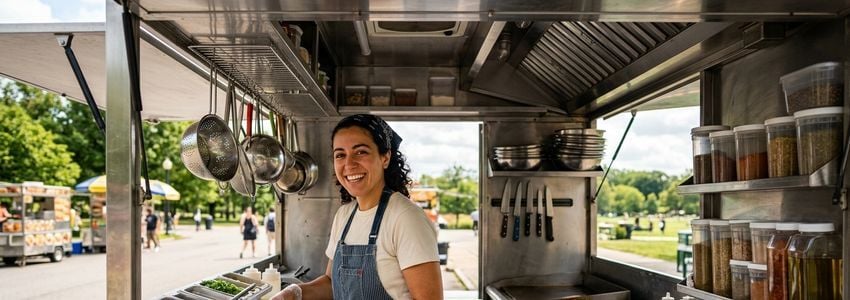
Maria has spent two years perfecting a birria taco recipe at family gatherings and wants to launch her own cart at a local farmers market. She has $6,000 in savings but a full build-out, including cart, griddle, fryer, cooler, and POS system, runs closer to $16,000. By financing the equipment over 36 months, she keeps her $6,000 available for permits, her first round of inventory, and a cash reserve for slow weeks while her customer base grows.
Scenario 2: The Upgrade
Dante has operated a hot dog cart near a downtown office district for four years. His original griddle and warming equipment are showing their age, and a breakdown during lunch rush means lost sales. Rather than pay $4,500 cash for new equipment, he finances it over 24 months, keeping his monthly payment low enough to absorb easily against his established daily revenue.
Scenario 3: The Expansion
After two successful seasons with one cart at weekend festivals, Priya wants to add a second cart to cover two events simultaneously during peak season. Equipment financing lets her replicate her proven setup without liquidating the profits she has been saving toward a future brick-and-mortar location.
Scenario 4: The Seasonal Operator
Tom runs a kettle corn and lemonade cart that operates primarily at county fairs between May and September. Ahead of fair season, he needs a new popping kettle and a larger ice chest. Financing lets him get equipment in place in March, well before his first booked event, without depleting his off-season savings.
Scenario 5: The Pivot From Employee to Owner
Janelle worked as a line cook for eight years before deciding to start her own mobile breakfast burrito cart. With limited personal credit history under her own name and no prior business ownership, she qualifies for equipment financing based primarily on the value of the cart and equipment as collateral, something a larger unsecured loan would have been far harder to approve without a lending history.
Frequently Asked Questions
Pro Tip: Get a detailed, itemized quote from your equipment vendor before applying. Lenders move faster and can often provide more accurate terms when they can see exactly what is being purchased, including the cart, cooking equipment, and any installation or delivery fees.
Your Food Cart Business Starts With the Right Equipment
Don't let equipment costs delay your launch. Get pre-qualified in minutes with no impact to your credit score.
See What You Qualify For →Next Steps
Collect pricing for your cart and all equipment you plan to purchase.
Most lenders request 3 to 6 months of recent business or personal bank statements.
Submit a no-obligation application and get a decision fast.
Take delivery of your equipment and start serving customers.
Conclusion
Food cart equipment financing gives mobile food entrepreneurs, from first-time vendors to seasoned operators expanding their footprint, a practical way to acquire the cart and equipment they need without tying up all available cash. By spreading the cost of a cart, cooking equipment, refrigeration, and point-of-sale hardware over a manageable monthly payment, vendors can preserve the working capital that keeps a mobile food business running through slow weeks, permit renewals, and unexpected repairs. Whether you are launching your very first cart or replacing equipment after years of daily use, understanding how food cart equipment financing works puts you in a stronger position to make a confident, informed decision for your business.
Disclaimer: The information provided in this article is for general educational purposes only and is not financial, legal, or tax advice. Funding terms, qualifications, and product availability may vary and are subject to change without notice. Crestmont Capital does not guarantee approval, rates, or specific outcomes. For personalized information about your business funding options, contact our team directly.