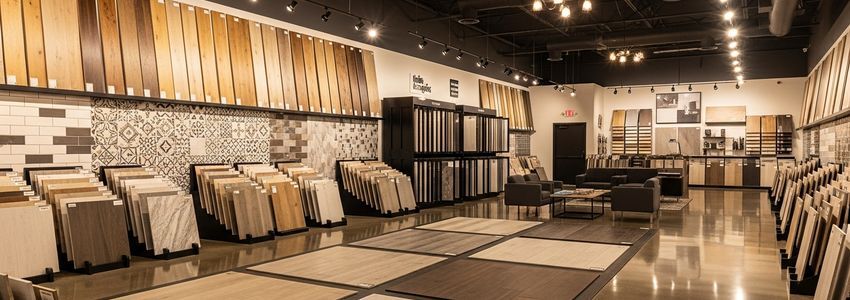
Running a flooring store means juggling large inventory purchases, seasonal demand swings, showroom upkeep, and the constant pressure to stay ahead of design trends - all while keeping cash flow healthy. Flooring store business loans give retailers the capital they need to stock premium materials, upgrade their showroom, hire skilled installers, and grow into new markets. This guide breaks down every financing option available, how to qualify, and how Crestmont Capital helps flooring store owners get funded fast.
In This Article
- What Are Flooring Store Business Loans?
- Why Flooring Retailers Need Financing
- Types of Loans for Flooring Stores
- How Flooring Store Financing Works
- Flooring Industry Financing Snapshot
- Who Qualifies for a Flooring Store Loan?
- How Crestmont Capital Helps Flooring Retailers
- Real-World Flooring Store Financing Scenarios
- Next Steps to Get Funded
- Frequently Asked Questions
What Are Flooring Store Business Loans?
Flooring store business loans are financing products specifically suited to the capital needs of retail flooring operations. These range from small business loans used to purchase tile, hardwood, carpet, and luxury vinyl plank inventory, to equipment financing for cutting machines, floor sanders, and installation tools. A flooring retailer might also tap a business line of credit to manage cash flow between large commercial projects and everyday retail sales.
Unlike generic small business loans, the best flooring store financing accounts for the industry's unique dynamics: high cost-of-goods, cyclical residential demand, the growing commercial flooring market, and the capital-intensive nature of showroom maintenance. Whether you operate a single-location flooring boutique or manage multiple showrooms across a metro region, purpose-fit financing can give you the edge to grow profitably.
According to the U.S. Small Business Administration, access to working capital is one of the top factors separating growing small businesses from stagnant ones. Flooring retailers that leverage financing strategically can expand inventory, hire experienced staff, and win larger commercial contracts that would otherwise be out of reach.
Why Flooring Retailers Need Financing
The flooring industry is capital-intensive in ways that many other retail sectors are not. Consider that a single order of premium hardwood, large-format tile, or custom carpet can run tens of thousands of dollars - and that inventory often must be purchased weeks before installation and payment arrive. Here are the most common reasons flooring store owners seek business financing:
- Bulk inventory purchases: Locking in competitive pricing from suppliers often requires buying in large quantities upfront.
- Showroom renovations: An outdated showroom loses customers to competitors. Redesigning display areas, lighting, and sample walls requires meaningful capital investment.
- Equipment acquisition: Tile saws, floor grinders, carpet stretchers, and moisture meters represent significant upfront costs for stores that also offer installation services.
- Seasonal cash flow gaps: Residential flooring demand peaks in spring and fall. Financing helps bridge slower winter and summer periods without cutting staff or inventory.
- Commercial project financing: Landing a hotel, office building, or apartment complex contract is lucrative but requires substantial material deposits and labor costs well before final payment.
- Geographic expansion: Opening a second or third showroom location requires leasehold improvements, inventory, and marketing spend that can strain existing cash reserves.
- Marketing and digital advertising: Competing with national chains and big-box stores requires investment in local SEO, paid ads, and showroom events.
According to data from the U.S. Census Bureau, floor covering store retail sales in the U.S. generate billions annually, with independent retailers and regional chains capturing a significant share. Yet independent flooring stores often struggle with access to capital compared to national chains that have corporate credit lines. Business loans level that playing field.
Types of Loans for Flooring Stores
Flooring retailers have more financing options than most business owners realize. Understanding the right tool for each need is critical to avoiding over-borrowing or choosing a product that doesn't fit your cash flow structure.
1. Working Capital Loans
Working capital loans provide cash for day-to-day operations including payroll, utilities, marketing, and supplier payments. These are ideal for bridging the gap between when you pay for materials and when your customer pays you. Short-term business loans are commonly used for this purpose.
2. Equipment Financing
Floor cutting machines, moisture meters, belt sanders, carpet installers, and delivery vehicles can all be financed through equipment financing. The equipment itself often serves as collateral, making approval more accessible even for businesses with limited credit history. Terms typically run 24-72 months.
3. Business Line of Credit
A business line of credit functions like a revolving credit facility - you draw what you need, repay it, and draw again. This is ideal for flooring retailers managing unpredictable project timelines or seasonal inventory purchases. Lines of credit are particularly useful for commercial project deposits where you won't get paid for 60-90 days.
4. SBA Loans
SBA loans offer some of the lowest interest rates and longest terms available to small businesses. The SBA 7(a) program is well-suited for flooring retailers looking to buy a building, acquire another store, or fund long-term expansion. The application process is more detailed, but the savings in interest can be substantial over a 10-year term.
5. Merchant Cash Advance (MCA)
For flooring stores that process significant credit card volume, a merchant cash advance provides fast capital in exchange for a percentage of future card sales. While MCAs carry higher factor rates than traditional loans, they offer same-day or next-day funding with minimal paperwork - useful for emergency situations.
6. Invoice Financing
Flooring retailers serving commercial clients with net-30 or net-60 payment terms can use invoice financing to unlock the value of unpaid invoices immediately. Instead of waiting two months for a commercial client to pay, you receive 80-90% of the invoice value upfront, with the remainder (minus fees) paid when your client settles.
7. Long-Term Business Loans
Long-term business loans are ideal for major investments such as opening a new showroom location, purchasing commercial real estate, or investing in a large-scale digital marketing program. Terms can extend 3-10 years with fixed or variable interest rates.
Ready to Fund Your Flooring Store?
Crestmont Capital offers flooring store business loans from $10,000 to $5 million. Get pre-approved in minutes with no impact to your credit score.
Apply Now - Free & FastHow Flooring Store Financing Works
Understanding how the financing process works helps you prepare a stronger application and move quickly when capital needs arise.
Step 1 - Define Your Need: Calculate exactly how much capital you need and what you'll use it for. Lenders want to see a clear purpose - whether that's a $75,000 inventory purchase, a $200,000 showroom renovation, or a $40,000 equipment acquisition.
Step 2 - Assess Your Financials: Gather your last 2-3 years of tax returns, recent bank statements (typically 3-6 months), and a current profit and loss statement. Lenders will evaluate your annual revenue, net income, and cash flow consistency.
Step 3 - Check Your Credit Profile: Most lenders look at both personal and business credit scores. A personal FICO score of 650+ opens most alternative lending products. Scores above 720 unlock the best rates from traditional lenders and SBA programs.
Step 4 - Apply and Get Approved: Online lenders like Crestmont Capital can approve flooring store loans in as little as 24-48 hours. SBA loans take 30-90 days but offer the most favorable terms. Your lender will review your application, request any missing documents, and issue a term sheet with your approved amount, rate, and repayment schedule.
Step 5 - Receive Funds and Deploy: Once approved and agreements are signed, funds are typically deposited directly into your business bank account within 1-3 business days for alternative lenders. Use the capital as specified and keep detailed records.
Flooring Industry Financing Snapshot
U.S. Flooring Store Industry - Key Financing Data
Sources: U.S. Census Bureau, SBA, industry estimates
Who Qualifies for a Flooring Store Loan?
Lender qualification criteria vary based on the type of loan you're pursuing. Here's a general breakdown by loan type:
Alternative Lenders (Fastest Approval)
- Time in business: Minimum 6 months (12+ months preferred)
- Annual revenue: $100,000+ per year
- Credit score: 550+ personal FICO (some lenders accept lower)
- Monthly deposits: Consistent bank deposits showing business activity
Traditional Banks and Credit Unions
- Time in business: 2+ years
- Annual revenue: $250,000+
- Credit score: 680+ personal FICO
- Collateral: Often required (inventory, equipment, or personal assets)
SBA Loans
- Time in business: 2+ years
- For-profit status: Required
- Net worth and liquidity: Must meet SBA size standards for the floor covering retail industry
- Personal guarantee: Required from all 20%+ owners
- Credit score: 650+ personal FICO
How Crestmont Capital Helps Flooring Retailers
Crestmont Capital has helped thousands of retail business owners across the U.S. access the capital they need to grow. For flooring store owners, we offer a streamlined application process, access to a wide network of lenders, and personalized guidance on choosing the right product for your situation.
Here's what sets Crestmont apart for flooring store financing:
- Fast funding: Many clients receive fast business loan approvals within 24 hours and funding within 1-3 business days.
- Wide loan range: We work with flooring retailers seeking anywhere from $10,000 for a small equipment purchase to $5 million for a major expansion project.
- Multiple product options: Rather than forcing you into one loan type, we match you with the financing structure that best fits your revenue model and repayment capacity.
- No hard credit pull to check rates: You can see your options without impacting your credit score.
- Industry expertise: Our team understands the flooring retail business model, including seasonal patterns, commercial project cycles, and supplier relationships.
- Transparent terms: We clearly disclose all fees, factor rates, and repayment schedules before you sign anything.
Flooring store owners across the country trust Crestmont Capital because we move fast, communicate clearly, and deliver results. Whether you're a startup showroom or an established multi-location retailer, we have financing options designed for your stage of growth.
Get Your Flooring Store Loan Quote Today
No impact to your credit score. Approvals in 24 hours. Funding as fast as same business day.
Check Your Options NowReal-World Flooring Store Financing Scenarios
Sometimes the best way to understand how flooring store loans work is to see how other retailers have used them. Here are five realistic scenarios representing common situations flooring business owners face:
Scenario 1: Pre-Season Inventory Purchase
A family-owned flooring retailer in suburban Ohio knows that spring is their busiest season. In February, they take out a $60,000 short-term business loan to stock up on hardwood, waterproof LVP, and tile before supplier prices rise. By May, the loan is nearly paid off from spring sales revenue, and the retailer captured an additional $12,000 in gross profit by buying early.
Scenario 2: Showroom Renovation to Win Commercial Clients
A mid-size flooring company in Dallas wants to attract more commercial clients - hotels, office buildings, and restaurants. They use a $175,000 long-term business loan to completely renovate their showroom with dedicated commercial display sections, premium sample walls, and a dedicated contractor consultation area. Within 12 months of reopening, commercial sales double from 20% to 40% of total revenue.
Scenario 3: Equipment Financing for an Expanded Installation Team
A growing flooring retailer in Georgia decides to bring installation in-house rather than subcontracting. They finance $45,000 in floor cutting equipment, installation vans, and tools through equipment financing over 36 months. The monthly payment is offset by the margin improvement from doing their own installations, turning a cost center into a profit driver.
Scenario 4: Bridging a Commercial Project Gap
A flooring store in Phoenix wins a contract to supply and install LVP throughout a 150-unit apartment complex. The job requires $90,000 in materials upfront, but the property developer won't pay until project completion 90 days later. The owner uses a business line of credit to fund the materials, completes the job, receives payment, and pays back the line - netting a $45,000 profit on a single project.
Scenario 5: Opening a Second Location
After five successful years, a flooring retailer in Tennessee is ready to open a second showroom in a neighboring city. They secure a $250,000 SBA 7(a) loan to fund leasehold improvements, initial inventory, signage, and three months of operating reserves. The low SBA interest rate keeps monthly payments manageable while the new location builds its customer base.
Scenario 6: Bad Credit Recovery with Alternative Financing
A flooring store owner had a rough year during a slow economic period and their credit score dropped to 580. Traditional banks turn them away. Crestmont Capital matches them with a revenue-based financing product that funds $35,000 based on their consistent monthly bank deposits. The owner uses the capital to restock inventory, revenues rebound, and they rebuild their credit profile over the next 18 months.
Next Steps to Get Your Flooring Store Funded
Start Your Flooring Store Loan Application
Join thousands of retail business owners who trust Crestmont Capital for fast, transparent, and flexible business financing.
Apply in Minutes - No ObligationFrequently Asked Questions About Flooring Store Business Loans
What types of flooring store expenses can a business loan cover?
Flooring store business loans can cover virtually any legitimate business expense including inventory purchases (tile, hardwood, carpet, LVP, laminate), showroom renovations, equipment acquisition, delivery vehicle purchases, marketing campaigns, payroll, technology systems, and working capital for commercial projects. Lenders generally want to see that funds are being invested in business growth or operations, not personal expenses.
How much can a flooring retailer borrow?
Flooring retailers can typically borrow anywhere from $10,000 to $5 million depending on the lender, loan type, and the business's financial profile. Most alternative lenders offer up to 1-1.5x your monthly gross revenue as a maximum loan amount. SBA loans can go up to $5 million for the 7(a) program and $5.5 million for the 504 program. Equipment financing is typically limited to the purchase price of the equipment being financed.
Can a flooring store get a business loan with bad credit?
Yes. While traditional banks typically require personal credit scores of 680+, many alternative lenders and online financing platforms work with flooring retailers with personal credit scores as low as 550. Revenue-based financing, merchant cash advances, and invoice financing place more weight on monthly revenue and bank deposit consistency than on credit scores. A history of strong, consistent monthly deposits can compensate for lower credit scores with many alternative lenders.
How fast can a flooring store get approved for a business loan?
Alternative lenders and online platforms like those in Crestmont Capital's network can approve flooring store loans in as little as 4-24 hours and fund within 1-3 business days. Traditional bank loans typically take 2-4 weeks, while SBA loans can take 30-90 days due to the more thorough underwriting process. If you need capital quickly for a time-sensitive inventory purchase or commercial project deposit, alternative lenders are typically the fastest route.
What documents do I need to apply for a flooring store loan?
For most alternative lenders, you'll need the last 3-6 months of business bank statements, a government-issued ID, basic business information (EIN, legal entity name, years in business), and an approximate annual revenue figure. For traditional bank loans and SBA programs, you'll typically also need the last 2 years of business and personal tax returns, a current profit and loss statement, a balance sheet, and sometimes a business plan or use-of-funds statement.
Do I need collateral to get a flooring store business loan?
Many flooring store loans - particularly from alternative lenders - are unsecured, meaning they don't require specific collateral. However, lenders may still require a personal guarantee from business owners with 20%+ ownership. Equipment financing uses the purchased equipment as collateral. SBA loans and traditional bank term loans often require collateral such as business assets, inventory, or real estate. If you'd prefer to avoid putting up collateral, small business loans from alternative lenders are typically your best option.
What interest rates should flooring stores expect on business loans?
Interest rates vary significantly by loan type and lender. SBA loans typically carry rates in the range of 6-12% APR. Traditional bank term loans range from 7-15% APR. Alternative lenders typically charge higher rates ranging from 15-40% APR for working capital loans or factor rates of 1.15-1.50 on merchant cash advances. Equipment financing often falls in the 6-20% APR range. Your specific rate will depend on your credit profile, time in business, annual revenue, and the loan amount requested.
How does a business line of credit benefit flooring stores specifically?
A business line of credit is particularly valuable for flooring retailers because it provides on-demand access to working capital for unpredictable expenses. Rather than applying for a new loan each time you need funds, you draw from your credit line, repay it as cash flow allows, and draw again. This is ideal for purchasing inventory when supplier deals arise, covering commercial project upfront costs, managing payroll during slow seasons, or handling unexpected showroom repairs. A credit line also helps you build business credit history over time.
Can a new flooring store get a business loan?
Startup flooring stores face more challenges in qualifying for traditional loans, but options exist. Lenders that work with startups typically require at least 6 months in business and consistent revenue. Alternatives include SBA microloans (up to $50,000), equipment financing secured by the purchased equipment, business credit cards for smaller purchases, or personal loans used for business purposes. Bringing on a co-signer with strong credit can also improve approval odds for newer businesses.
What is invoice financing and how does it work for flooring retailers?
Invoice financing (also called accounts receivable financing) allows flooring retailers serving commercial clients to receive an advance on unpaid invoices. If you complete a $50,000 commercial flooring installation but the client has net-60 payment terms, invoice financing lets you receive approximately $40,000-$45,000 immediately. When the client pays the invoice, you receive the remaining balance minus the financing fee. This eliminates long payment gaps that can strain a flooring business's cash flow on commercial projects.
Can I use a business loan to purchase another flooring store?
Yes. Business acquisition loans are specifically designed for purchasing an existing business, including another flooring store. SBA 7(a) loans are a popular choice for acquisitions because they offer favorable rates and longer repayment terms. The acquired business's existing revenue and cash flow history are often key factors in approval. Traditional term loans and business acquisition financing from alternative lenders are also options. An acquisition loan can be an efficient way to rapidly expand your flooring business's footprint without starting a new location from scratch.
What is the minimum time in business required for most flooring store loans?
Most alternative lenders require a minimum of 6 months in business. Traditional banks and SBA programs typically require 2+ years in operation. Some revenue-based financing products have minimal time-in-business requirements and focus primarily on recent monthly revenue. If your flooring store is less than 6 months old, startup-specific financing options, personal loans, SBA microloans, or equipment financing (which uses the equipment as collateral) may be your best routes to capital.
How do seasonal fluctuations in flooring retail affect loan repayment?
Flooring retail is seasonal, with peak demand in spring and fall and slower periods in winter and summer. Some lenders offer seasonal repayment structures where payments are higher during strong revenue months and lower during slow periods. Revenue-based financing automatically adjusts to your cash flow because repayments are calculated as a percentage of monthly revenue. When considering loan terms, discuss seasonal payment flexibility with your lender upfront to ensure the repayment schedule aligns with your business's natural cash flow rhythm.
Can I finance flooring installation equipment separately from a general business loan?
Yes. Equipment financing is a distinct loan type specifically for purchasing business equipment. If you want to keep your working capital loan separate from your equipment purchases, equipment financing lets you finance each piece of equipment independently with the equipment itself serving as collateral. This approach keeps your general line of credit available for inventory and operations while financing equipment over a separate term - typically 24-60 months - that aligns with the equipment's useful life.
How do I compare flooring store business loan offers effectively?
When comparing loan offers, focus on the total cost of capital rather than just the interest rate or factor rate. Calculate the total dollar amount you'll repay over the full term of each loan offer. Also compare the APR (annual percentage rate), repayment term length, payment frequency, prepayment penalties, origination fees, and any other associated fees. A loan with a higher interest rate but shorter term might cost less total than a lower-rate loan stretched over a longer period. Ask every lender to provide a full amortization schedule or repayment summary before signing.
Disclaimer: The information provided in this article is for general educational purposes only and is not financial, legal, or tax advice. Funding terms, qualifications, and product availability may vary and are subject to change without notice. Crestmont Capital does not guarantee approval, rates, or specific outcomes. For personalized information about your business funding options, contact our team directly.

Allan Garfinkle
Allan Garfinkle is the Chief Revenue Officer at Crestmont Capital, where he has spent more than a decade leading revenue strategy, business development, and operational growth. With 28 years of experience building and advising startups and small businesses, Allan has helped more than 10,000 business owners navigate financing decisions, growth opportunities, and changing economic conditions. He earned a Bachelor of Science in Economics and an MBA with a concentration in Finance from Northeastern University, as well as a Juris Doctor from New England Law, where his studies focused on contracts and business law. His writing draws on extensive practical experience in small-business lending, equipment financing, business credit, and commercial finance.