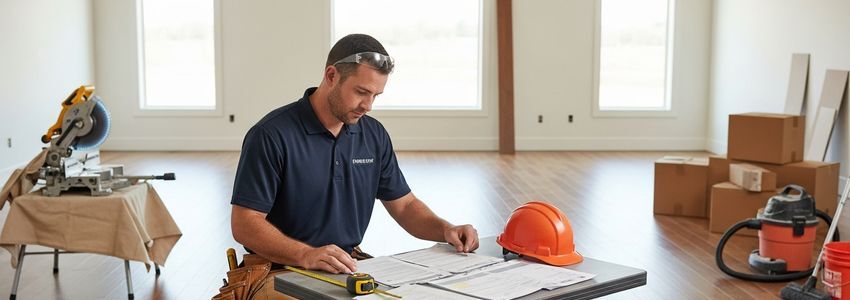
Flooring installation is one of the most consistently in-demand trades in both residential and commercial construction. Whether driven by new construction, renovation activity, or commercial tenant improvement projects, skilled flooring contractors rarely lack work — but they frequently face capital challenges that limit how much work they can take on at once. Materials must be purchased before installation begins. Crews must be paid weekly even when project invoices are paid net-30 or net-60. Tools and installation equipment require ongoing investment as technology improves and contract scale increases. This guide covers every financing option available to flooring installation business owners, what lenders look for, and how to get the right capital to grow your flooring contracting business.
In This Article
- Why Flooring Businesses Need Financing
- Types of Flooring Business Loans
- Equipment Financing for Flooring Contractors
- SBA Loans for Flooring Installation Companies
- How to Qualify for a Flooring Business Loan
- Flooring Loan Rates, Terms, and Amounts
- Best Uses for Flooring Contractor Financing
- Flooring Industry Statistics
- How to Apply and What to Prepare
- Why Flooring Contractors Choose Crestmont Capital
- Frequently Asked Questions
Why Flooring Businesses Need Financing
Flooring installation businesses face a structural cash flow challenge: they are materials-intensive contractors who get paid after the work is done. A typical commercial flooring project requires purchasing $20,000 to $80,000+ in materials before the first tile is laid or the first plank is installed. The general contractor or commercial client who hired you pays net-30 to net-60 after project completion. Meanwhile, your crew's weekly payroll continues, your truck payment is due, and your next job's materials need to be purchased.
This project-to-project cash flow gap is the most common reason flooring contractors seek financing — and the right financing structure eliminates it permanently, allowing flooring businesses to grow their backlog without being constrained by current cash position.
Common financing needs for flooring installation businesses include:
- Working capital — bridging the gap between material purchases and project payment receipt
- Equipment and tools — floor sanders, tile saws, carpet stretchers, nail guns, moisture meters, commercial floor scrubbers, and specialty installation tools
- Vehicles — cargo vans and trucks for crew transportation and material delivery
- Material purchasing — buying flooring, adhesives, underlayment, and installation supplies before project start
- Scaling crews — hiring, training, and equipping additional installation teams to take on more projects simultaneously
- Showroom development — some flooring contractors invest in client-facing showrooms with material samples and design consultation space
- Business acquisition — purchasing an established flooring company with existing client relationships and contract pipeline
Contractor Financing Advantage: Flooring businesses with documented commercial contracts — tenant improvement agreements with general contractors, multi-project master service agreements with property managers — are viewed favorably by lenders because contract revenue is more predictable than residential project-by-project work. For a broader view of construction contractor financing, see our Construction Business Loans: The Complete Financing Guide for Contractors and Builders.
Types of Flooring Business Loans
Small Business Term Loans
Term loans provide a lump sum repaid over a fixed period with scheduled payments. For flooring businesses, term loans work best for significant investments — purchasing an equipment package, scaling to commercial contracting, or acquiring a competitor. Terms range from 12 to 84 months with rates from 6% to 45%+ depending on lender and borrower profile. Online alternative lenders approve in 1 to 5 days; banks take 2 to 8 weeks at lower rates.
Business Lines of Credit
A revolving line of credit is the most useful ongoing financing tool for flooring contractors because it addresses the recurring material-purchase-to-payment gap. Draw to purchase materials at project start, repay when the project invoice clears, draw again for the next job. A $50,000 to $150,000 line of credit functions as a permanent working capital buffer that eliminates project financing constraints.
Equipment Financing
Equipment financing covers installation tools, floor equipment, and service vehicles using those assets as collateral. For flooring companies, this includes sanders, tile saws, carpet tools, commercial vehicles, and specialty equipment. Equipment-secured financing offers lower rates and easier approval than unsecured financing. See our Construction Equipment Financing: The Complete Guide for Contractors and Construction Companies for detailed structures.
Invoice Financing
Invoice financing advances 80% to 90% of outstanding commercial invoices immediately rather than waiting 30 to 60 days. For flooring contractors with significant commercial client receivables, invoice financing directly eliminates the payment gap that constrains growth. Costs are 1% to 5% per month on the invoice value — often the most cost-effective solution for contractors with strong commercial billing.
SBA 7(a) Loans
SBA loans offer the lowest rates for qualified small businesses. Flooring installation companies qualify as contractors under SBA guidelines. SBA loans are most appropriate for $100,000+ investments in fleet expansion, showroom development, or business acquisitions. Approval takes 60 to 90 days with thorough documentation requirements.
Material Financing / Purchase Order Financing
For flooring contractors with confirmed commercial contracts, purchase order (PO) financing advances funds to pay suppliers directly against confirmed orders. The financing is repaid when the project client pays. PO financing works particularly well for large-scale commercial flooring projects where material costs represent a significant portion of the contract value.
Ready to Grow Your Flooring Business?
Get fast, flexible financing from the #1 business lender in the U.S. No obligation — apply in minutes.
Apply Now →Equipment Financing for Flooring Contractors
Professional flooring installation requires specialized tools and equipment that represent significant capital investment. Key equipment categories and cost ranges:
- Floor sanders (drum and orbital): $1,500–$5,000 per unit for professional hardwood refinishing equipment
- Tile saws (wet saws): $500–$3,000 for commercial-grade tile cutting equipment
- Carpet stretchers and power stretchers: $300–$1,500 per tool
- Flooring nailers and staplers: $200–$800 per tool; pneumatic systems require compressors ($500–$2,000)
- Commercial floor scrapers: $3,000–$8,000 for ride-on or walk-behind scrapers for large commercial jobs
- Moisture meters and testing equipment: $200–$1,500 for professional concrete and subfloor moisture testing
- Commercial floor grinders: $2,000–$15,000 for concrete prep and surface grinding equipment
- Cargo vans and trucks: $35,000–$55,000 new; $15,000–$30,000 used, for crew transport and material delivery
- Trailers for material transport: $5,000–$15,000 for enclosed or flatbed trailers
For a multi-crew flooring operation, equipment investment per crew (excluding vehicles) typically ranges from $15,000 to $40,000. Equipment financing uses these assets as collateral, spreading the cost over 2 to 5 years while the new crew capacity generates revenue.
Equipment lenders for flooring businesses typically require:
- Equipment or vehicle invoice or quote
- 6+ months in business
- Credit score 580+
- Basic revenue documentation (bank statements)
SBA Loans for Flooring Installation Companies
Flooring installation companies qualify for SBA 7(a) and SBA Express loans as specialty trade contractors under SBA size standards (generally under $16.5 million in average annual revenue for specialty contractors). Available programs and parameters:
| SBA Program | Max Amount | Best Use | Min. Credit | Time to Fund |
|---|---|---|---|---|
| SBA 7(a) | $5 million | Equipment, working capital, fleet, acquisition | 650+ | 60–90 days |
| SBA Express | $500,000 | Working capital, equipment, LOC | 650+ | 30–45 days |
| SBA Microloan | $50,000 | Startup equipment, initial working capital | 560+ | 30–60 days |
How to Qualify for a Flooring Business Loan
Credit Score Requirements
- Bank term loans: 700+
- SBA 7(a) loans: 650–680+
- Online alternative term loans: 600–650+
- Equipment and vehicle financing: 580–620+
- Business lines of credit: 600–650+
- Invoice financing: Based primarily on commercial client creditworthiness
- MCAs: 500+
Time in Business
- Banks and SBA: 2 years preferred
- Online alternative lenders: 6 months to 1 year
- Equipment financing: 6 months (some startups considered)
- Invoice financing: 3+ months with verifiable commercial invoices
Annual Revenue
- SBA and bank loans: $150,000+ annually
- Online term loans: $100,000+ annually
- Equipment financing: Varies by equipment value
- Invoice financing: $50,000+ in annual commercial invoices
Contractor-Specific Considerations
- Contractor licensing: Most states require flooring contractor or specialty trade licenses. Verify all licenses are current — license lapses can delay or prevent approval.
- Insurance: Commercial general liability and workers' compensation insurance are typically required. Have current certificates of insurance ready before applying.
- Commercial vs. residential mix: Lenders view commercial flooring contracts more favorably because commercial clients are more stable and contracts tend to be recurring. Document your commercial contract pipeline.
- Project-based revenue: Revenue from flooring projects can be lumpy. Provide 12 months of bank statements to show lenders the full annual cycle rather than a single month's activity.
Flooring Business Loan Rates, Terms, and Amounts
| Loan Type | Typical Rate | Term | Amount Range | Speed |
|---|---|---|---|---|
| SBA 7(a) Loan | 10%–13% | Up to 10 years | $50K–$5M | 60–90 days |
| Bank Term Loan | 8%–15% | 1–7 years | $25K–$500K | 2–8 weeks |
| Online Term Loan | 15%–45% | 3 months–5 years | $5K–$500K | 1–5 days |
| Equipment / Vehicle Financing | 5%–22% | 2–6 years | $5K–$500K | 1–7 days |
| Business Line of Credit | 8%–45% | Revolving (1–3 yr facility) | $10K–$250K | 1–7 days |
| Invoice Financing | 1%–5% per month | Per invoice (net-30/60) | 80–90% of invoice value | 1–3 days |
| Merchant Cash Advance | Factor 1.15–1.45 (60–150%+ eff. APR) | 3–18 months | $5K–$500K | 24–48 hours |
Best Uses for Flooring Contractor Financing
Bridging Project Material Costs
The most common and highest-impact use of financing for flooring contractors is covering material costs at project start before client payment arrives. A business line of credit drawn at project kickoff — covering hardwood, tile, carpet, adhesive, and underlayment — eliminates the cash flow constraint that prevents contractors from starting new jobs while waiting for prior project payments. This single financing tool can double or triple a flooring company's active project capacity.
Adding Installation Crews
Each additional flooring crew requires equipment, a vehicle, and working capital to fund their first few projects while building payment history. A term loan covering one crew's full equipment package ($25,000–$50,000) and initial working capital buffer ($20,000–$40,000) enables hiring without depleting cash reserves. The additional crew's revenue typically services the loan within 6 to 12 months.
Scaling from Residential to Commercial
Commercial flooring projects — tenant improvement work for office buildings, hotel renovations, retail builds — offer significantly higher revenue per project than residential. But commercial work requires commercial-grade equipment (floor scrapers, grinders, specialized installation tools), higher insurance limits, and the working capital to fund larger material purchases. A $75,000 to $150,000 financing package covering equipment upgrades and working capital can enable a residential flooring contractor to compete for commercial contracts that are 3 to 5 times the revenue of comparable residential work.
Purchasing a Flooring Business
Acquiring an established flooring company with existing commercial contracts, a trained crew, and supplier relationships is often more efficient than organic growth. SBA 7(a) acquisition loans can cover the purchase price plus working capital. Lenders evaluate the target business's contract backlog, client retention, and financial history as primary underwriting criteria.
Opening a Flooring Showroom
Some flooring contractors invest in client-facing showrooms with material samples, design consultation space, and brand presence. A showroom investment ($30,000–$100,000) in leasehold improvements, sample displays, and technology can increase average project value by enabling design-led selling and reducing the time between lead and close. Term loans or SBA 7(a) financing are appropriate for showroom buildout.
Flooring Industry Statistics
- The U.S. flooring installation industry generates approximately $28 billion in annual revenue across an estimated 63,000 businesses (IBISWorld)
- Residential flooring accounts for approximately 60% of industry revenue; commercial flooring (office, hospitality, healthcare, retail) accounts for the remaining 40% and tends to produce larger per-project revenue
- The flooring industry grew at approximately 4% annually from 2018 to 2023, driven by renovation activity, new construction, and increasing preference for premium flooring materials
- Hardwood, luxury vinyl plank (LVP), and tile installation are the fastest-growing segments, with LVP adoption growing at approximately 15% annually as a cost-effective hardwood alternative
- Average revenue per flooring installation business employee is approximately $80,000–$100,000 annually, with commercial-focused contractors exceeding $120,000 per employee
- Flooring contractors report that working capital constraints are the primary barrier to taking on additional projects — a finding consistent with the industry's materials-intensive, project-based cash flow structure

How to Apply and What to Prepare
For Online Alternative Lenders
- 3 to 6 months of business bank statements (12 months preferred)
- Most recent business tax return
- Government-issued ID
- Basic business information (EIN, entity type, address)
For Equipment and Vehicle Financing
- Equipment or vehicle invoice or quote
- 3 to 6 months of bank statements
- Contractor license and business license
- Insurance certificates
For SBA and Bank Loans
- 2 to 3 years of business and personal tax returns
- Year-to-date profit and loss statement
- Current balance sheet
- 12 months of business bank statements
- Current contractor licenses
- Commercial contracts or signed project agreements (if available)
- Insurance certificates (GL, workers' comp, commercial auto)
- Personal financial statement
Application Tips for Flooring Contractors
- Provide 12 months of statements: Project-based revenue is uneven. Twelve months of bank statements gives lenders the full picture of your annual capacity rather than a single month's variability.
- Document commercial relationships: If you have master service agreements or repeat commercial clients, include those contracts. They signal recurring revenue and lower default risk.
- Know your project metrics: Average project value, average project duration, revenue per crew, and backlog depth are metrics lenders find informative and credible.
- Maintain licensing currency: A lapsed contractor license is a common approval obstacle. Verify all licenses are current before applying.
Why Flooring Contractors Choose Crestmont Capital
Crestmont Capital is the #1 rated business lender in the United States. We work with specialty trade contractors — including flooring installation businesses — at every stage of growth. We understand the project-based cash flow cycle, materials-first payment structure, and equipment capital needs specific to flooring contractors. We offer:
- Fast approvals: Decisions in as little as 24 hours for qualified applicants
- Working capital expertise: We structure lines of credit and term loans around contractor cash flow cycles
- Multiple financing products: Equipment loans, vehicle financing, term loans, lines of credit, invoice financing, and SBA programs
- Competitive rates: From 6% for qualified borrowers
- Transparent terms: No hidden fees, complete cost disclosure before you sign
Get Your Flooring Business Loan Today
Apply in minutes. No obligation. Funding as fast as 24 hours.
Apply Now →Frequently Asked Questions
Frequently Asked Questions: Flooring Installation Business Loans
Disclaimer: This article is provided for general educational purposes only and does not constitute financial, legal, or tax advice. Loan rates, terms, and requirements vary by lender and are subject to change. Statistics cited reflect publicly available industry data as of the publication date and may not reflect current conditions. Consult a qualified financial advisor before making business financing decisions.