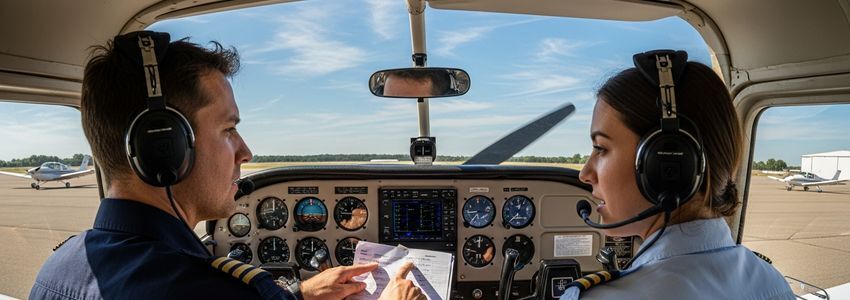
Flight school business loans give aviation entrepreneurs the capital they need to purchase aircraft, upgrade training simulators, hire certified instructors, and scale operations to meet growing demand for pilots. Whether you operate a Part 61 flight school or a Part 141 approved program, finding the right financing can mean the difference between stagnation and taking your business to new heights.
In This Article
What Are Flight School Business Loans?
Flight school business loans are specialized financing products designed to help aviation training businesses cover their unique and substantial capital requirements. Unlike most service businesses, flight schools face equipment costs that can run into the hundreds of thousands of dollars per aircraft, plus the ongoing expenses of maintenance, fuel, insurance, hangar fees, and staff training.
These loans can be structured as term loans, equipment financing arrangements, business lines of credit, SBA loans, or working capital facilities. The right product depends on what you are buying, how quickly you need funds, and what your school's financial profile looks like.
Flight school financing covers a broad range of needs: buying or leasing training aircraft, purchasing flight simulators, funding facility expansions, hiring and paying instructors, and managing the seasonal cash flow swings that are common in the aviation training industry.
Industry Insight: The Bureau of Labor Statistics projects 6% employment growth for commercial pilots through 2032 - well above the average for all occupations. This growing demand for trained pilots directly fuels the need for more flight school capacity and investment.
Key Benefits of Flight School Business Loans
For aviation school owners, access to financing offers significant strategic advantages that cash-only operations simply cannot match. The capital-intensive nature of flight training makes financing not just helpful but often essential for growth.
- Preserve working capital - Keep cash on hand for day-to-day operations like fuel, maintenance, and payroll rather than tying it up in aircraft purchases
- Expand your fleet faster - Add training aircraft sooner than a pure savings approach would allow, letting you enroll more students and generate more revenue
- Acquire modern simulators - Flight simulators dramatically increase training throughput and can be financed independently of aircraft purchases
- Manage seasonal cash flow - Aviation training is often seasonal, and a line of credit helps bridge slow-enrollment months
- Hire and retain talent - Certified flight instructors are in high demand; having capital allows competitive compensation packages
- Stay competitive - Modern avionics, glass cockpit trainers, and updated curriculum materials keep your school competitive with larger programs
Ready to Expand Your Flight School?
Get fast, flexible financing tailored for aviation businesses. No obligation - apply in minutes.
Apply Now →How Flight School Financing Works
The mechanics of flight school business loans follow the same general framework as other business lending, with some aviation-specific nuances. Lenders evaluate your school's revenue history, credit profile, years in operation, and the nature of your collateral when determining your eligibility and terms.
Step 1 - Define Your Need
Start by clearly identifying what you need the capital for. Aircraft purchases are typically financed through equipment loans or aircraft-specific financing, while operational needs like payroll or marketing are better suited to a line of credit or working capital loan.
Step 2 - Gather Documentation
Most business lenders will request 3-6 months of bank statements, 2 years of tax returns, a profit and loss statement, and basic business information. FAA certifications and your operating certificate may also be relevant context, though not typically required for standard business loans.
Step 3 - Apply and Receive Offers
With a strong lender like Crestmont Capital, you can receive a decision in as little as 24 hours. Terms will vary based on loan type, amount, and your business profile.
Step 4 - Fund and Deploy Capital
Once approved, funds are typically deposited directly into your business account within days. For equipment financing on specific aircraft, the lender may pay the seller directly.
By the Numbers
Flight Training Industry - Key Statistics
$9.6B
Global flight training market value
68K+
Active certified flight instructors in the US
6%
Projected pilot job growth through 2032 (BLS)
$350K+
Average cost of a new Cessna training aircraft
Types of Financing Available for Flight Schools
Flight school owners have access to several distinct financing structures, each suited to different needs. Understanding the differences helps you select the right product and avoid over-paying in interest or fees.
Equipment Financing and Aircraft Loans
Equipment financing is purpose-built for purchasing tangible assets - in the aviation context, this means training aircraft, flight simulators, avionics upgrades, and ground school equipment. The equipment itself typically serves as collateral, which means you may qualify for lower interest rates than unsecured loans. Terms generally run 2-7 years depending on the asset value and useful life.
SBA Loans
The Small Business Administration's 7(a) and 504 programs can be excellent fits for established flight schools. SBA 7(a) loans go up to $5 million and can fund equipment, real estate, and working capital. SBA 504 loans are specifically structured for major fixed assets like real estate or equipment above $150,000. The downside is longer approval timelines - often 30-90 days - making them less suitable for urgent needs.
Business Lines of Credit
A revolving business line of credit is ideal for managing cash flow fluctuations, covering fuel costs and instructor pay during slow enrollment periods, and funding unexpected maintenance expenses. You draw only what you need and pay interest only on what you use.
Working Capital Loans
Working capital loans provide lump-sum cash for operational expenses without requiring collateral. They are typically shorter-term (3-18 months) and can be funded in 1-3 business days, making them well-suited for seasonal gaps or unexpected large expenses.
Term Loans
Traditional term loans deliver a fixed amount at a fixed or variable interest rate, repaid over a set schedule. For flight schools looking to fund hangar construction, major renovations, or multiple aircraft purchases simultaneously, a term loan with a 3-10 year repayment provides predictable monthly costs.
| Loan Type | Best For | Typical Terms | Speed |
|---|---|---|---|
| Equipment Financing | Aircraft, simulators | 2-7 years | 2-5 days |
| SBA 7(a) | Large purchases, real estate | Up to 25 years | 30-90 days |
| Line of Credit | Cash flow, fuel, payroll | Revolving, 1-2 years | 1-3 days |
| Working Capital Loan | Operations, marketing, staff | 3-18 months | 1-3 days |
| Term Loan | Hangar, major expansion | 3-10 years | 3-7 days |
What You Can Fund with Flight School Business Loans
The right flight school business loan can finance virtually any legitimate business expense. Here is a closer look at what aviation school owners most commonly use financing for:
Aircraft Purchases and Fleet Expansion
Training aircraft represent the single largest capital expenditure for most flight schools. A new Cessna 172 Skyhawk - the most common primary trainer - costs between $320,000 and $450,000 new, though used models can be found for $60,000 to $180,000. Multi-engine trainers like the Piper Seminole run $350,000 to $600,000. Equipment financing allows you to spread these costs over years rather than depleting cash reserves.
Flight Simulators and Training Devices
FAA-approved aviation training devices (ATDs) and flight training devices (FTDs) can dramatically increase your school's training capacity without burning flight hours on actual aircraft. Entry-level desktop simulators start around $50,000, while full-motion Level D simulators used by Part 141 schools can exceed $1 million. Equipment financing is ideal for these high-value training assets.
Hangar and Facility Improvements
Flight schools need adequate hangar space for aircraft storage, maintenance, ground instruction classrooms, briefing rooms, and administrative offices. Leasehold improvements, hangar construction, and facility upgrades can be financed through term loans or SBA programs depending on the project scope.
Avionics and Aircraft Upgrades
The shift to glass cockpit avionics (Garmin G1000, G3X) is nearly universal in new training aircraft and increasingly expected by students. Retrofitting analog panel aircraft with modern avionics can cost $30,000 to $100,000 per aircraft - expenses that can be financed rather than paid upfront.
Operational Working Capital
Fuel is the lifeblood of a flight school, and fuel costs can swing dramatically with market conditions. A school with 10 aircraft burning 8 gallons per flight hour at current jet-A prices can spend $20,000 to $40,000 per month on fuel alone. Working capital financing helps bridge cash flow timing gaps, especially when student payments lag behind operational costs.
Marketing and Student Acquisition
The aviation training market is competitive. Digital advertising, career fairs, military pipeline partnerships, and community outreach programs all require upfront investment. A business loan can fund marketing campaigns designed to grow enrollment before those students generate revenue.
Staff and Instructor Pay
Certified flight instructors (CFIs) are in high demand, particularly as commercial airlines have hired aggressively in recent years. Competitive compensation packages and signing bonuses funded through a working capital loan or line of credit help retain your best instructors during peak hiring periods.
Fund Your Aviation Training Business
From aircraft purchases to simulator upgrades - Crestmont Capital has the financing solutions your flight school needs to grow.
Get Your Quote →Who Qualifies for Flight School Business Loans?
Lender requirements vary by product type and loan amount, but most flight school operators can qualify for some form of financing. Here are the general eligibility benchmarks to keep in mind:
Time in Business
Most traditional lenders prefer at least 2 years of operating history, though some alternative lenders will work with schools as young as 6 months. Startups may face more limited options and higher rates, but SBA microloans and equipment financing are still accessible.
Annual Revenue
Lenders typically want to see sufficient revenue to comfortably service the new debt. A general rule of thumb is that annual revenue should be at least 1.25 times the projected annual loan payments. Flight schools with $300,000 or more in annual revenue will have access to the broadest range of products.
Credit Scores
Business credit scores and personal credit scores both matter. For SBA loans, lenders typically look for a personal credit score of 680 or higher. Alternative lenders may approve borrowers with scores as low as 550, particularly when strong revenue and cash flow offset the credit risk. If your credit needs work, explore bad credit business loan options.
Cash Flow
Lenders review bank statements to verify positive cash flow and the ability to support new debt payments. Most want to see at least 3 months of bank statements, with consistent deposits and manageable existing obligations.
Collateral
For equipment loans, the aircraft or simulator itself serves as collateral. For unsecured working capital loans or lines of credit, no collateral is required, but interest rates may be higher to offset the lender's risk.

Comparing Financing Options for Flight Schools
Choosing between financing options requires matching the product to the purpose. Equipment financing is almost always the best choice for aircraft and simulators - the asset serves as its own collateral, enabling lower rates and longer terms. SBA loans work well for major capital projects with longer timelines. Lines of credit and working capital loans serve operational and short-term needs most efficiently.
Many mature flight schools maintain multiple financing products simultaneously: an equipment loan on each aircraft, a revolving line of credit for operational expenses, and a term loan for facility improvements. This layered approach, sometimes called a blended financing strategy, optimizes cost of capital across different use cases.
One important consideration is the difference between leasing and purchasing training aircraft. Leasing requires less upfront capital and keeps aircraft off your balance sheet, but you build no equity and have less flexibility. Purchasing with equipment financing builds equity over time, and the aircraft can later be sold or used as collateral for additional financing.
How Crestmont Capital Helps Flight Schools
Crestmont Capital is the #1 rated U.S. business lender, with deep experience in equipment-intensive industries like aviation training. We offer a complete suite of financing products designed to meet the unique needs of flight school operators at every stage of growth.
Our equipment financing programs can fund aircraft purchases up to $5 million or more, with competitive rates and terms from 24 to 84 months. We also offer working capital loans, business lines of credit, and SBA loan programs for schools looking for longer repayment periods or lower rate structures.
What sets Crestmont Capital apart is our speed and simplicity. Most flight school owners receive a financing decision within 24 hours of submitting their application. Funding typically arrives within 2-5 business days, letting you move fast when the right aircraft becomes available or when an unexpected maintenance bill arrives.
Our team understands aviation businesses and does not treat flight schools as unusual or high-risk. We look at your actual business performance - revenue, cash flow, and trajectory - not just rigid credit score cutoffs. Explore our small business loan options or reach out directly to discuss your specific needs.
For flight schools interested in equipment financing specifically, Crestmont offers up to 100% financing on aircraft and simulator purchases, with no down payment required on qualified transactions. Our equipment financing programs are designed to be as streamlined as possible for asset-backed transactions.
If you have had credit challenges in the past, do not assume financing is out of reach. Our bad credit equipment financing options are built for exactly these situations, evaluating the strength of your business and collateral alongside your credit history.
Real-World Scenarios: Flight Schools Using Business Loans
Seeing how other flight schools have used financing can help clarify how these products might work for your situation.
Scenario 1 - Growing a Part 141 School with New Aircraft
A Part 141 flight school in the southeast was approved as a collegiate training partner, creating sudden demand for 4 additional Cessna 172 trainers to accommodate the new contract. With aircraft prices at $380,000 each, purchasing all four outright was not feasible. The school secured equipment financing for $1.5 million over 60 months, adding the aircraft immediately and structuring payments that were comfortably covered by the new contract revenue.
Scenario 2 - Funding a Simulator to Reduce Flight Hours
A single-location flight school in the midwest recognized that investing in an FAA-approved advanced aviation training device (AATD) would let students complete up to 20 hours of instrument training in the simulator rather than actual aircraft. The $180,000 simulator was financed over 48 months. Within 18 months, the reduced aircraft wear, fuel savings, and increased throughput generated enough additional margin to cover the payments with room to spare.
Scenario 3 - Managing Seasonal Cash Flow with a Line of Credit
A VFR-only flight school in the Pacific Northwest saw enrollment drop significantly every winter due to weather constraints. Rather than laying off instructors and rebuilding from scratch each spring, the owner established a $250,000 business line of credit. Each October through February, the school drew on the line to cover payroll, insurance, and fixed costs, then repaid the balance using spring enrollment surges. Instructor retention improved dramatically, reducing the annual cost of hiring and training new staff.
Scenario 4 - Launching a New Multi-Engine Training Program
A school with an established private and instrument pilot curriculum wanted to add a commercial pilot track requiring multi-engine training. Adding a Piper Seminole trainer at $520,000 was too large for the owner's existing cash reserves. A term loan funded the purchase, and the new multi-engine program was positioned at a premium price point. The additional revenue from commercial pilot candidates covered the loan payments and became a significant profit center within the first year of operation.
Scenario 5 - Hangar and Facility Expansion
A growing charter and flight training operation needed expanded hangar space to accommodate additional aircraft and a proper ground school classroom. The facility project required $850,000 in leasehold improvements and construction. An SBA 504 loan, which required only 10% down and offered a 20-year repayment, was the right tool for this longer-duration, real estate-adjacent investment.
Scenario 6 - Avionics Modernization Fleet-Wide
An established flight school with 8 older Cessna 172s in its fleet was losing students to a competitor with glass cockpit trainers. Upgrading all 8 aircraft to Garmin G3X avionics at approximately $45,000 per aircraft totaled $360,000. The school financed the upgrades through a combination of equipment financing on the avionics and a working capital loan to cover installation costs and downtime during the upgrades. Student enrollment increased 22% in the following enrollment cycle, validating the investment.
Frequently Asked Questions
What is the minimum credit score needed for flight school business loans?
Most traditional lenders look for a personal credit score of 650-680 or higher. Alternative lenders like Crestmont Capital may work with scores as low as 550, particularly when your school has strong revenue and positive cash flow. Equipment financing for aircraft may have slightly lower credit requirements because the aircraft itself serves as collateral.
Can a new flight school qualify for financing?
Yes, though options may be more limited. Startup flight schools often have access to equipment financing (using aircraft as collateral), SBA microloans, and some alternative working capital products. Having a strong personal credit history, industry experience, and a solid business plan improves your chances significantly.
How much can I borrow for a flight school?
Loan amounts range widely from $25,000 for small working capital needs to $5 million or more for large aircraft fleet purchases or SBA-backed real estate projects. The key drivers of loan amount are your annual revenue, debt service coverage ratio, and the value of any collateral. Most flight schools qualify for $100,000 to $2 million depending on their size and financial profile.
Is aviation training considered a high-risk industry for lenders?
Some traditional banks view aviation businesses with caution due to the capital intensity and perceived liability. However, alternative lenders and specialized business finance companies like Crestmont Capital evaluate aviation schools based on actual financial performance rather than industry stereotypes. A profitable, well-managed flight school with documented revenue can access financing on competitive terms.
How long does the application process take?
With Crestmont Capital, most flight school owners receive a decision within 24 hours of submitting a complete application. Funding typically arrives in 2-5 business days for equipment financing and working capital loans. SBA loans take longer - generally 30-90 days from application to funding due to the SBA's review process.
Can I finance a used training aircraft?
Yes, used aircraft can be financed through equipment loans. Lenders will typically require an aircraft appraisal and review the maintenance history and airworthiness records. The loan-to-value ratio on used aircraft may be slightly lower than new aircraft, meaning you might need a small down payment. Well-maintained aircraft with current avionics and logbooks in order receive the most favorable financing terms.
What documents do I need to apply?
For most business loans, you will need 3-6 months of business bank statements, 2 years of business and personal tax returns, a current profit and loss statement, a voided business check, and basic business information (EIN, articles of incorporation). For equipment financing on specific aircraft, you may also need a purchase agreement or quote from the seller. SBA loans require a more comprehensive documentation package including a business plan and personal financial statement.
Are flight simulators eligible for equipment financing?
Yes, FAA-approved flight training devices and advanced aviation training devices are eligible for equipment financing. Like aircraft, they serve as collateral for the loan. Terms typically run 36-60 months depending on the device value, with longer terms available for higher-value full-motion simulators. Both new and used simulators can be financed.
Can I get a loan for flight school without a personal guarantee?
For most small business loans, a personal guarantee from owners with 20% or more ownership stake is standard. However, some equipment financing arrangements with strong collateral may allow reduced or limited personal guarantee requirements, particularly for well-established schools with multiple years of profitable operations. No-personal-guarantee options exist but typically require very strong business credit profiles.
How does a business line of credit help a flight school manage fuel costs?
Fuel is one of the largest variable costs for flight schools, and prices fluctuate with energy markets. A business line of credit allows you to purchase fuel in larger quantities when prices dip, reducing per-gallon costs, or to cover fuel expenses during months when student payments are slow. You draw on the line as needed and repay it as revenue comes in, paying interest only on what you have borrowed.
Can I refinance existing aviation debt for better terms?
Yes, refinancing existing aircraft loans or business debt is possible and often beneficial when interest rates have declined or your credit profile has improved since the original financing. Refinancing can lower monthly payments, extend terms, or pull equity out of appreciated assets. Crestmont Capital can evaluate your current debt structure and identify refinancing opportunities that reduce your overall cost of capital.
What interest rates can I expect on flight school equipment financing?
Equipment financing rates for aircraft and simulators typically range from 6% to 18% annually, depending on your credit profile, loan amount, term length, and the nature of the collateral. Schools with strong credit (700+), 2+ years in business, and solid revenue will qualify for rates at the lower end of this range. SBA-backed equipment loans may offer rates as low as prime plus 2.75% for qualified borrowers.
Do I need an FAA operating certificate to qualify for a business loan?
An FAA certificate (Part 141 or Part 61) is not typically required by lenders as a condition of financing, but having proper regulatory status demonstrates legitimacy and may improve lender confidence. What matters most to lenders is your business's financial performance - revenue, cash flow, and credit history. Both Part 61 and Part 141 schools can access business financing on comparable terms.
Is aviation business insurance required to get a flight school loan?
For equipment financing on aircraft, lenders will require proof of hull insurance and liability coverage naming the lender as lienholder. This is standard practice for any asset-backed loan. You should already carry comprehensive aviation insurance as a business requirement regardless of financing, so this is typically not an additional burden. For working capital or unsecured loans, insurance requirements are generally less stringent.
How can I strengthen my flight school loan application?
The most impactful steps are: maintaining a business credit score above 650 by paying obligations on time, keeping personal debt low, having at least 6 months of operating reserves, and documenting revenue growth over multiple years. If you are purchasing specific equipment, a firm purchase agreement and seller invoice strengthen the application. For larger loans, having a clear written plan for how the capital will generate returns demonstrates financial maturity to lenders.
How to Get Started
Complete our quick application at offers.crestmontcapital.com/apply-now - takes just a few minutes. Tell us your loan purpose, desired amount, and basic business information.
A Crestmont Capital advisor familiar with aviation and equipment-intensive businesses will review your application and match you with the right financing structure for your flight school's needs.
Receive your funds within 2-5 business days for most loan types and put them to work - whether that means adding an aircraft to your fleet, upgrading your simulators, or covering operational costs during a seasonal dip.
Conclusion
Flight school business loans are a powerful tool for aviation entrepreneurs who need capital to compete, grow, and serve the growing pipeline of aspiring pilots. From equipment financing on training aircraft and simulators to flexible lines of credit for operational cash flow, the right financing product can accelerate your school's growth in ways that cash-only approaches simply cannot match.
The demand for qualified pilots and flight instruction is growing, driven by commercial airline hiring, military training programs, and the general aviation renaissance. Flight schools that invest now in expanded fleets, modern avionics, and top-tier simulators will be positioned to capture this demand and build lasting, profitable businesses.
Whether you are launching a new aviation training program or scaling an established school, Crestmont Capital has the flight school business loans and financing solutions you need. Apply today and take the next step toward expanding your aviation training operation.
Disclaimer: The information provided in this article is for general educational purposes only and is not financial, legal, or tax advice. Funding terms, qualifications, and product availability may vary and are subject to change without notice. Crestmont Capital does not guarantee approval, rates, or specific outcomes. For personalized information about your business funding options, contact our team directly.