
 (800) 949-0401
Business Loan to Fund a Fleet Replacement Cycle: Commercial Vehicle Refresh Financing
Fleet replacement cycle financing gives business owners a way to get ahead of rising repair bills by replacing aging trucks and vans on a planned schedule instead of waiting for a breakdown to force the decision.
Every commercial fleet reaches a point where the cost of keeping a vehicle on the road starts to outweigh the cost of replacing it. For many small and mid-size businesses, that tipping point sneaks up gradually, one expensive repair at a time, until the fleet's total maintenance spending is quietly eating into profit margins. Fleet replacement cycle financing solves that problem by giving you the capital to refresh vehicles proactively, on your own timeline, rather than reactively after a costly failure sidelines a truck or van.
In This Article
What Is Fleet Replacement Cycle Financing?
Fleet replacement cycle financing is a category of business funding used to systematically retire aging commercial vehicles and bring newer, more reliable units online in their place. Rather than a single named loan product, it typically draws on tools like equipment financing, business lines of credit, or SBA loans, structured around a repeating cycle instead of a one-time purchase.
The core idea is planning. Instead of scrambling for cash when a 9-year-old delivery van finally breaks down for good, a business with a replacement cycle financing plan already knows which vehicles are due, has funding lined up, and can execute the swap with minimal disruption to routes, schedules, and customer commitments.
This kind of planning matters more than ever given current market conditions. Commercial vehicle registrations and fleet values have shifted significantly in recent years, and Reuters transportation coverage has tracked how rising input costs and tighter freight capacity are reshaping fleet economics for small carriers nationwide.
This approach matters because vehicle costs do not rise evenly over a vehicle's life. They tend to hold relatively flat for the first several years and then climb sharply as parts wear out, technology becomes outdated, and unplanned repairs become more frequent. Financing the replacement cycle rather than the individual emergency lets a business smooth out that cost curve.
Key Benefits of Fleet Replacement Cycle Financing
- Predictable, budgetable payments instead of unpredictable emergency repair bills that hit at the worst possible time.
- Reduced downtime since newer vehicles break down less often and can be scheduled for replacement before they fail on the job.
- Preserved working capital because financing spreads the cost of new vehicles over time rather than draining cash reserves needed for payroll, inventory, or growth.
- Improved fuel efficiency and lower insurance costs that come with newer vehicle technology and safety features.
- Stronger customer service and reliability, since a dependable fleet means fewer missed deliveries, late service calls, or canceled routes.
- Better resale value capture by trading in vehicles before they depreciate too far past their useful life.
Key Stat: Fleet vehicles over 10 years old make up only about 12 percent of total miles driven but account for roughly 34 percent of total service and repair spending, according to fleet maintenance benchmarking data.
How Fleet Replacement Financing Works
The process generally starts with an honest audit of your current fleet. For every vehicle, you want to know its age, current mileage, year-to-date repair costs, and current market value. This data tells you which vehicles are approaching or past the point where replacement becomes more cost-effective than continued repair.
From there, a lender evaluates your business financials, time in business, and the vehicles being replaced, since the vehicles themselves usually serve as collateral. This collateral position is a major reason fleet replacement financing tends to be more accessible than unsecured business loans, even for companies without a long credit history.
According to data from the U.S. Small Business Administration, fixed asset financing such as vehicle and equipment loans remains one of the most common uses of SBA-backed capital, reflecting how central reliable transportation equipment is to day-to-day small business operations.
Once approved, funds are used to purchase the replacement vehicles, and the older units are typically sold or traded in, with proceeds applied toward the down payment or to reduce the total amount financed. Many businesses set up either a lump-sum loan for a batch of replacements or a revolving line of credit that lets them draw funds as each vehicle reaches its replacement point throughout the year.
Pull mileage, age, and maintenance cost data for every vehicle to identify which units are due for replacement first.
Decide between equipment financing per vehicle, a revolving line of credit, or a larger SBA-backed loan based on fleet size and pace.
Submit bank statements, vehicle quotes, and basic business documentation. Vehicle collateral often speeds up approval.
Sell or trade older units, apply proceeds toward the new vehicle, and repeat the cycle on a set schedule going forward.
Ready to Refresh Your Fleet?
Get fast, flexible commercial vehicle financing from the #1 business lender in the U.S. No obligation, apply in minutes.
Apply Now →Types of Fleet Replacement Financing
Equipment Financing or Leasing
Equipment financing structures a loan around each vehicle purchase, using the vehicle as collateral. This is often the fastest and most straightforward option when replacing a handful of vehicles at a time, and terms typically run two to seven years depending on the vehicle type and expected useful life.
Business Line of Credit
A revolving line of credit is well suited to businesses replacing vehicles on a staggered schedule throughout the year. You draw funds as each replacement comes due, pay it down, and the credit becomes available again, which avoids taking on a large lump-sum loan for vehicles you are not replacing yet.
SBA 7(a) or 504 Loans
For larger fleet overhauls, SBA-backed financing can provide favorable long-term rates and terms up to 10 years, with loan amounts scaling up to 5 million dollars for 7(a) loans. These loans typically take longer to close, so they work best when planned well in advance of the replacement cycle rather than as an emergency solution.
U.S. Census Bureau data shows that small operations with limited fleet sizes account for a disproportionate share of the commercial vehicles on the road today, underscoring why accessible financing structures matter to the broader small business economy.
Working Capital Loans
Working capital financing can bridge the gap between selling or trading in older vehicles and receiving new units, especially when timing does not line up perfectly or when a business wants to preserve cash reserves during the transition period.
Who Fleet Replacement Financing Is Best For
Fleet replacement cycle financing tends to make the most sense for delivery companies, service contractors, courier operations, trucking companies, and any business running five or more commercial vehicles where maintenance costs have started climbing noticeably year over year. It also fits businesses that have grown into their fleet over several years without a formal replacement plan and are now seeing the effects of an aging vehicle mix on both cost and reliability.
Businesses with a single vehicle or very light usage may not see the same return on a formal replacement cycle strategy, since the cost curve of a lightly used vehicle stretches out much further. The businesses that benefit most are those putting real mileage on their vehicles day after day.
Pro Tip: Track cost-per-mile by vehicle, not just by fleet average. A single high-mileage unit can quietly drag down your entire fleet's profitability while newer vehicles in the same fleet perform well.
Comparing Your Financing Options
Choosing the right structure depends on how many vehicles you are replacing, how quickly you need funding, and how your cash flow is positioned throughout the year. The table below compares the most common paths.
| Financing Option | Best For | Typical Terms | Speed to Fund |
|---|---|---|---|
| Equipment Financing | Replacing specific vehicles one at a time or in small batches | 2 to 7 years, vehicle as collateral | 24 to 72 hours |
| Business Line of Credit | Phased replacement cycles over time | Revolving, draw as needed | 1 to 3 days |
| SBA 7(a) Loan | Large-scale fleet overhauls | Up to 10 years, up to $5 million | 2 to 8 weeks |
| Working Capital Loan | Bridging cash flow during transition | 3 months to 3 years | 1 to 3 days |
How Crestmont Capital Helps
Crestmont Capital works with business owners to structure commercial fleet financing around the way your fleet actually ages, not a generic loan template. Whether you need to replace two aging delivery vans this quarter or plan a phased overhaul of a 20-vehicle fleet over the next two years, our team can match you with the right structure, whether that is equipment financing, a business line of credit, or broader equipment financing solutions.
For businesses specifically replacing trucks or specialized commercial vehicles, our truck fleet financing programs are built to move quickly, since vehicle collateral simplifies underwriting compared to unsecured lending. If you have already gone through the process of financing your first fleet purchase, our guide on how to structure a business loan for fleet purchase is a useful companion resource as you move into your first full replacement cycle.
We also help businesses evaluate whether a single large loan or a revolving structure makes more sense given how spread out your replacement schedule is, so you are not paying interest on capital you have not deployed yet.
Stop Paying for Breakdowns
Crestmont Capital structures fleet replacement financing around your actual replacement schedule, not a one-size-fits-all loan.
See Your Options →Real-World Scenarios
Scenario 1: The Regional Delivery Company
A regional last-mile delivery company running 12 cargo vans noticed repair costs on its oldest 5 vans had nearly tripled over 18 months. Using a business line of credit, the company replaced those 5 vans over a 4-month window, applying trade-in proceeds toward each new purchase and avoiding a large upfront cash outlay.
Scenario 2: The HVAC Service Contractor
An HVAC contractor with 8 service trucks was losing an estimated $1,200 per day in missed appointments whenever a truck broke down during peak summer season. Equipment financing let the company replace its 3 oldest trucks ahead of the next summer season, cutting unplanned downtime significantly.
Scenario 3: The Regional Trucking Fleet
A trucking company operating 22 tractors used an SBA 7(a) loan to fund a two-year phased replacement of its oldest 10 tractors, locking in a fixed long-term rate rather than financing each truck separately at potentially higher short-term rates. Rising operating costs reported by outlets like Forbes Advisor have made fleet operators increasingly proactive about locking in predictable financing terms before repair and insurance costs climb further.
Scenario 4: The Courier Startup Scaling Up
A growing courier business that had accumulated a mismatched fleet of used vans over several years of rapid growth used working capital financing to bridge the transition period while selling off older vans and standardizing on a newer, more fuel-efficient model across the fleet.
By the Numbers
Fleet Replacement Cycle Financing: Key Statistics
34%
Of service spending comes from vehicles over 10 years old, despite driving only 12% of miles
$0.20 to $1.00+
Per-mile cost range from newer to aging fleet vehicles
75-80K Miles
Common target replacement window for commercial trucks and vans
$400 to $800+/day
Lost revenue from unplanned fleet downtime on a typical small fleet
Frequently Asked Questions
Next Steps
Identify which vehicles are approaching or past their optimal replacement point.
Discuss fleet size, replacement pace, and cash flow to determine the right financing structure.
Get approved and begin replacing your highest-cost vehicles first.
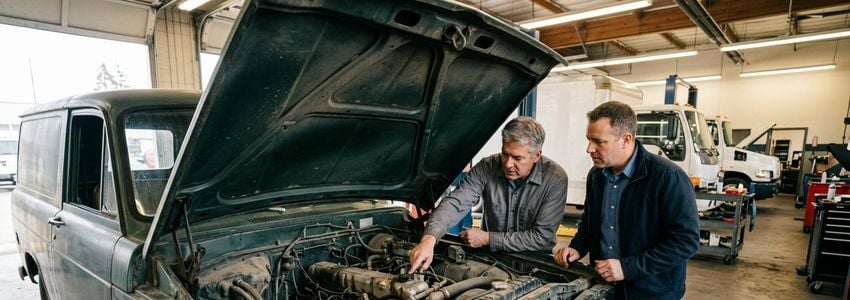
Plan Your Fleet Replacement Cycle Today
Talk to Crestmont Capital about a financing structure built around your fleet's real mileage, age, and maintenance history.
Apply Now →Conclusion
Waiting for a breakdown is the most expensive way to manage a commercial fleet. A well-structured fleet replacement cycle financing plan lets you replace aging vehicles on your own schedule, control repair and downtime costs, and keep your business running reliably. Whether you need to replace two vans or overhaul an entire fleet, matching the right financing tool to your replacement pace makes the difference between a costly scramble and a smooth, budgeted transition.
Disclaimer: The information provided in this article is for general educational purposes only and is not financial, legal, or tax advice. Funding terms, qualifications, and product availability may vary and are subject to change without notice. Crestmont Capital does not guarantee approval, rates, or specific outcomes. For personalized information about your business funding options, contact our team directly.








