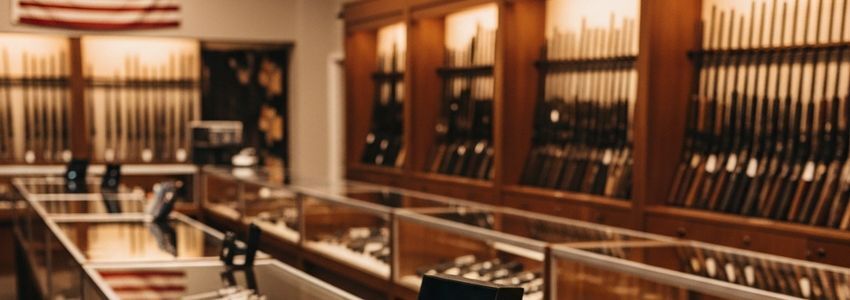
Running a firearms business requires significant capital - from FFL licensing fees and compliance systems to high-cost inventory and secure storage requirements. Whether you own a gun shop, shooting range, firearms training facility, or ammunition retailer, gun shop business loans can give you the financial edge to grow, stock up, and stay competitive in a highly regulated industry.
What Are Firearms Business Loans?
Firearms business loans are commercial financing products designed to help gun shop owners, shooting range operators, FFL dealers, and firearms manufacturers fund day-to-day operations, inventory purchases, equipment upgrades, and business expansion. Because the firearms industry operates under strict federal and state regulations, many traditional lenders are cautious about extending credit to these businesses - even when they are fully licensed and profitable.
That's where alternative and specialty lenders come in. Gun shop business loans are available through a range of lending channels, from business lines of credit and equipment financing to working capital loans and revenue-based financing. The key is knowing where to look, what to expect, and how to present your business in the best possible light to a lender.
Firearms retailers and related businesses generated over $28 billion in revenue in the United States in recent years, according to industry data from the National Shooting Sports Foundation. This is a robust, growing sector - and one where access to capital can mean the difference between stocking a hot-selling product or losing sales to a competitor.
Ready to Fund Your Firearms Business?
Crestmont Capital works with licensed gun shop owners, shooting ranges, and FFL dealers to provide fast, flexible business financing.
Apply Now - Get Funded in 24-48 HoursTypes of Financing for Gun Shop Owners
Firearms businesses have access to several types of commercial financing, each suited to different needs and financial situations. Understanding your options is the first step to making the right funding decision.
1. Working Capital Loans
Working capital loans provide cash for everyday business expenses - restocking inventory, covering payroll during slow seasons, or handling unexpected costs. These are short-to-medium term loans, typically repaid over 6-24 months. For gun shops, working capital loans are ideal for purchasing new firearm inventory before peak buying seasons or during promotional events.
2. Business Lines of Credit
A business line of credit gives you a revolving credit facility you can draw from as needed and repay over time. This flexibility is especially valuable for firearms dealers who need to respond quickly to market demands, purchase time-sensitive inventory lots, or manage seasonal cash flow fluctuations. You only pay interest on the funds you actually use.
3. Equipment Financing
Equipment financing allows you to purchase or lease business equipment with the equipment itself serving as collateral. For firearms businesses, this could include:
- Gun safes and commercial vault systems
- Security cameras and alarm systems
- POS systems and firearms tracking software
- Gunsmithing tools and repair equipment
- Shooting range infrastructure (target systems, ventilation)
- Ammunition manufacturing or reloading equipment
Equipment financing typically offers competitive rates because the collateral lowers the lender's risk.
4. Inventory Financing
Inventory financing lets you use your existing or incoming inventory as collateral to secure a loan. For gun shops, this is a natural fit - firearms are high-value, traceable assets that lenders can use as security. Inventory financing is particularly useful when you have the opportunity to purchase a large lot of firearms at a favorable price but lack the liquid capital to do so immediately.
5. SBA Loans
SBA loans are government-backed loans with favorable rates and longer repayment terms. While the SBA does work with firearms businesses that hold valid FFL licenses, the application process is lengthy. For businesses that qualify and can wait 2-4 months for funding, SBA 7(a) loans can provide up to $5 million at competitive rates. However, many gun shop owners prefer the speed and flexibility of alternative lending.
6. Merchant Cash Advances (MCAs)
A merchant cash advance provides a lump sum of capital in exchange for a percentage of your daily card sales until the advance is repaid. While MCAs come with higher costs than traditional loans, they can be secured quickly (often within 24-48 hours) and have lenient credit requirements. They work best for short-term needs when traditional lending isn't an option.
7. Revenue-Based Financing
Revenue-based financing is similar to an MCA but structured differently - repayments are based on a fixed percentage of monthly revenue rather than daily card swipes. This makes it a more predictable option for businesses with stable but variable monthly revenue.
How Much Can You Borrow?
The amount you can borrow for a firearms business loan depends heavily on your revenue, time in business, credit profile, and the type of loan you're seeking. Here's a general breakdown:
Typical Loan Amounts by Product Type
| Loan Type | Typical Range | Term | Speed |
|---|---|---|---|
| Working Capital Loan | $10,000 - $500,000 | 6 - 24 months | 1-3 days |
| Business Line of Credit | $5,000 - $250,000 | Revolving | 1-5 days |
| Equipment Financing | $5,000 - $1,000,000+ | 2 - 7 years | 1-3 days |
| SBA 7(a) Loan | $25,000 - $5,000,000 | 5 - 25 years | 60-90 days |
| Merchant Cash Advance | $5,000 - $500,000 | 3 - 18 months | 24-48 hours |
Most gun shop owners qualify for between $25,000 and $250,000 in working capital or short-term financing, depending on their monthly revenue. Established businesses with strong revenue can often access $500,000 or more through multi-product financing strategies.
Qualification Requirements
Lenders evaluate firearms businesses using the same general criteria as other small businesses, but they also pay close attention to certain industry-specific factors. Here's what most lenders look for:
Standard Business Requirements
- Time in Business: Most lenders require at least 6-12 months of operating history. Some require 2+ years for traditional bank loans.
- Revenue: Minimum monthly revenue of $10,000-$15,000 is typical for alternative lenders. Banks may require higher thresholds.
- Credit Score: A personal credit score of 550+ is generally sufficient for alternative lenders; 680+ for SBA and bank loans.
- Profitability: While you don't need to be highly profitable, you should be able to demonstrate positive cash flow.
- Banking History: At least 3-6 months of business bank statements showing regular deposits and manageable spending patterns.
Firearms-Specific Requirements
- Valid FFL License: You must hold a current Federal Firearms License (FFL) from the ATF. Some lenders also verify state-level firearms dealer licenses.
- Compliance Record: A clean or near-clean ATF compliance inspection record strengthens your application. Lenders may ask whether you have had any ATF violations or license revocations.
- Business Entity: Lenders prefer LLCs or corporations over sole proprietors for firearms businesses due to liability considerations.
- Insurance: Current general liability and firearms-specific business insurance is typically required.
Pro Tip: Prepare These Documents
- 6-12 months of business bank statements
- Copy of current FFL license
- Business and personal tax returns (2 years)
- Proof of business liability insurance
- Government-issued ID
- Business license and entity documents
Best Uses for Firearms Business Financing
Here are the most common and effective ways gun shop owners use business loans and financing:
Inventory Purchases
Inventory is the lifeblood of any firearms retail operation. New handguns, rifles, shotguns, and accessories need to be purchased ahead of peak demand periods - hunting season, the holiday shopping season, or following media cycles that drive consumer interest. A working capital loan or inventory financing line allows you to buy in volume at better wholesale prices, increasing your margin while meeting customer demand.
FFL-Compliant Security Upgrades
ATF regulations require gun dealers to maintain secure storage for firearms. Many dealers need to upgrade their vault systems, add reinforced display cases, install high-resolution security cameras, or replace aging alarm systems. Equipment financing is perfectly suited for these capital improvements, spreading the cost over 2-5 years at manageable monthly payments.
Shooting Range Buildout or Expansion
Shooting ranges generate consistent recurring revenue from lane rentals, memberships, lessons, and events. Adding lanes, upgrading ventilation and HEPA filtration systems, installing new target technology, or adding a pro shop can dramatically increase revenue. These projects often cost $100,000-$500,000+, making a term loan or SBA 7(a) the appropriate funding vehicle.
Gunsmithing Equipment
Gunsmiths and repair shops require specialized tools - from lathes and mills to laser engravers, checkering tools, and diagnostic equipment. Equipment financing allows you to acquire these assets without depleting working capital, and the equipment itself serves as collateral.
Hiring and Payroll
Scaling your team to handle increased store traffic, manage online sales, or staff a growing shooting range requires capital. A working capital loan or business line of credit can cover payroll during growth phases until the new revenue generation catches up.
Marketing and Customer Acquisition
Digital marketing, trade show participation, sponsored events, and loyalty programs all require upfront investment. A short-term business loan or draw from a credit line can fund marketing campaigns that deliver long-term customer value.
Real Estate and Lease Improvements
Securing a favorable commercial lease or funding tenant improvements to a new location requires capital. Commercial real estate loans or SBA 504 loans are designed for these larger capital expenditures.
Fund Your Firearms Business Today
From inventory financing to equipment loans, Crestmont Capital provides fast, flexible funding for licensed gun shop owners and shooting ranges nationwide.
Get My Free QuoteChallenges Unique to Firearms Businesses
The firearms industry faces a set of financing obstacles not encountered by other small businesses. Understanding these challenges helps you navigate the lending landscape more effectively.
Industry Classification as "High-Risk"
Many traditional banks and payment processors classify firearms businesses as "high-risk" industries. This doesn't reflect the profitability or creditworthiness of individual businesses - it reflects institutional risk policies driven by regulatory scrutiny and reputational concerns. As a result, some large banks, payment processors like PayPal, and online lending platforms restrict or refuse service to gun dealers.
The solution is to work with lenders who specifically understand and serve regulated industries. Alternative lenders, community banks, credit unions, and specialty lenders are far more likely to approve firearms business loan applications.
Higher Compliance Costs
FFL dealers must comply with ATF regulations including background check (NICS) systems, bound book record-keeping, and compliance inspections. These operational requirements add costs that non-firearms businesses don't face, which can affect cash flow calculations. Make sure your loan application shows how compliance costs are factored into your operating budget.
Inventory Valuation Challenges
Some lenders struggle to accurately value firearms inventory because they're not familiar with the market. Working with a lender experienced in the firearms industry - or one that specializes in retail - helps ensure your inventory is given appropriate credit as collateral.
Political and Regulatory Risk Perception
Firearms businesses operate under ongoing regulatory scrutiny at both federal and state levels. Lenders may perceive this as creating future business risk. The best way to counter this perception is to demonstrate stable revenue, consistent compliance, and a strong customer base.
According to the SBA, legal firearms dealers are explicitly permitted to apply for SBA loan programs, including the 7(a) and 504 programs, as long as they hold the appropriate federal and state licenses. This provides a regulatory backstop that many applicants don't fully leverage.
How to Apply for a Gun Shop Business Loan
Applying for a firearms business loan follows a fairly standard process, but there are industry-specific nuances to keep in mind.
Step 1: Assess Your Financing Needs
Before approaching any lender, get clear on exactly how much you need and why. Calculate the specific cost of inventory, equipment, or operational expenses you want to fund. Lenders respond well to borrowers who have a precise, documented plan for the capital.
Step 2: Gather Your Documents
Prepare your business financial documents: 6-12 months of bank statements, business tax returns, profit and loss statements, and your current FFL license. Having these ready upfront speeds the approval process significantly.
Step 3: Review Your Credit
Check both your personal and business credit scores. If your personal score is below 550, focus on improving it before applying - even a small improvement can unlock better rates and terms. Pay down existing balances and dispute any errors on your credit reports.
Step 4: Compare Lenders
Don't apply to the first lender you find. Compare options across several categories: interest rates (or factor rates for MCAs), repayment terms, funding speed, and lender reputation with firearms businesses specifically. See our guide on how to compare business loan offers for a detailed framework.
Step 5: Submit Your Application
With Crestmont Capital, the application process is straightforward. Complete a simple online application, upload your bank statements and FFL documentation, and our team will review your file and present options - typically within 4-24 hours.
Step 6: Review and Accept Terms
Review the offer carefully. Understand the total repayment amount, not just the monthly payment. Ask about prepayment penalties, origination fees, and what happens if you need to adjust your payment schedule. Once you're satisfied with the terms, sign and receive funding.
Real-World Financing Scenarios
Scenario 1: Peak Season Inventory Stocking
A mid-sized gun shop in Texas does 60% of its annual revenue in October through December. In September, the owner applies for a $75,000 working capital loan to pre-stock handguns, hunting rifles, and holiday gift items. With the inventory in place, November and December sales are $185,000 - a 40% increase over the prior year. The loan repays itself in 9 months from the increased cash flow.
Scenario 2: Security System Upgrade for ATF Compliance
A gun dealer in Ohio receives an ATF compliance inspection noting deficiencies in their vault security. The owner needs to install a new commercial vault, upgrade camera systems, and add motion sensors - a total cost of $42,000. Equipment financing at a 7% annual rate over 48 months results in monthly payments of $1,006. The upgrade passes the follow-up inspection, protecting the FFL license.
Scenario 3: Shooting Range Expansion
A gun shop in Georgia operates a 5-lane indoor shooting range that routinely has wait times of 30+ minutes on weekends. The owner wants to add 4 more lanes and upgrade ventilation - estimated cost of $220,000. An SBA 7(a) loan covers $180,000 at a competitive rate, with the owner investing $40,000 in equity. The expanded range generates an additional $8,500/month in lane revenue within 6 months of opening.
Scenario 4: Gunsmith Equipment Purchase
A firearms dealer in Virginia wants to add an in-house gunsmith to offer repair and customization services. The investment: a precision milling machine ($18,000), trigger job tooling ($4,500), and a modern lathe ($12,000) - total $34,500. Equipment financing at 8% over 36 months results in monthly payments of $1,081. Within 18 months, the gunsmith department generates $4,200/month in revenue - paying off the loan in under a year.
Scenario 5: New Location Opening
An established firearms dealer in Florida wants to open a second location in a growing suburb. Tenant improvements, initial inventory, and setup costs are projected at $180,000. Using a combination of an SBA 7(a) loan ($120,000) and a working capital loan ($60,000), the owner opens the second location, which reaches profitability in month 7.
Scenario 6: Online Sales Expansion
A gun shop in Colorado wants to build an e-commerce presence to sell ammunition, accessories, and non-NFA items online. The project requires $25,000 for website development, inventory systems, and compliance software. A short-term business loan covers the costs, and online sales add $12,000/month within 90 days of launch.
Firearms Business Financing: Key Stats

How Crestmont Capital Helps Firearms Businesses
Crestmont Capital is a nationwide business lender that works with regulated industries including licensed firearms dealers, shooting ranges, and firearms training facilities. We understand the unique compliance requirements, seasonal patterns, and inventory dynamics of the gun industry - and we structure our financing accordingly.
Here's why firearms business owners choose Crestmont Capital:
- Industry Knowledge: We understand FFL licensing, ATF compliance, and the specific capital needs of firearms retailers and ranges.
- Fast Approvals: Most applications receive a decision within 4-24 hours. Funding typically arrives within 1-3 business days.
- Flexible Products: From working capital loans and lines of credit to equipment financing and revenue-based funding, we offer the right product for your specific situation.
- No-Discrimination Policy: We evaluate firearms businesses on their financial merits - revenue, cash flow, and creditworthiness - not on industry stereotypes.
- Competitive Terms: Our network of lenders competes for your business, giving you access to competitive rates and terms you might not find on your own.
- Experienced Team: Our business financing specialists have helped hundreds of retailers and specialty businesses access capital to grow.
Learn more about small business financing options on our website, or explore our complete guide to business loan requirements to understand exactly what lenders evaluate.
Get Started Today
Apply in minutes. Our team will review your file and present financing options tailored to your firearms business. No obligation to accept.
Apply for Firearms Business FinancingFrequently Asked Questions
Can a gun shop get a business loan?
Yes. Licensed firearms dealers (FFL holders) can access a wide range of business financing products including working capital loans, equipment financing, lines of credit, and SBA loans. The key is finding lenders who understand and serve the firearms industry, as some traditional banks restrict services to gun dealers.
Does the SBA loan to firearms businesses?
Yes. The SBA explicitly permits licensed firearms dealers to apply for SBA 7(a) and SBA 504 loans. Applicants must hold valid federal and state licenses and must operate in compliance with all applicable firearms laws. SBA loans offer competitive interest rates and long repayment terms - up to 10 years for working capital and 25 years for real estate.
What credit score do I need for a gun shop business loan?
Most alternative lenders require a minimum personal credit score of 550. For SBA loans and traditional bank financing, a score of 680 or higher is typically required. The higher your credit score, the better the rates and terms you'll receive. Other factors like revenue and time in business also play important roles.
How fast can I get funding for my firearms business?
With alternative lenders like Crestmont Capital, most applicants receive a decision within 4-24 hours and funding within 1-3 business days. SBA loans take significantly longer - typically 60-90 days from application to funding. For urgent needs, a working capital loan or merchant cash advance is the fastest option.
Do I need an FFL to get a firearms business loan?
If you are applying as a firearms dealer, you will need to provide your current FFL license as part of the application. However, businesses that sell firearms accessories, shooting supplies, or safety equipment without conducting transfers may not require an FFL for financing purposes. Consult with your lender about your specific business model.
Can I use a business loan to purchase firearms inventory?
Yes. Purchasing inventory - including firearms, ammunition, and accessories - is one of the most common uses for gun shop business loans. Working capital loans and inventory financing products are specifically designed to fund inventory purchases. Some lenders may require that inventory be tracked through standard bound book records consistent with ATF requirements.
Are there special loans for shooting ranges?
While there are no loan products exclusively for shooting ranges, standard business financing products are well-suited to range needs. Equipment financing covers target systems and ventilation upgrades. Term loans or SBA financing can fund major construction or expansion projects. Working capital loans handle operational costs and seasonal fluctuations.
What documentation do I need to apply?
Typical documentation required includes: 6-12 months of business bank statements, a copy of your current FFL license, business and personal tax returns (2 years), a government-issued ID, proof of business insurance, and your business formation documents (LLC or corporation articles). Some lenders also request a profit and loss statement or financial projections.
Can I get a business loan for a new gun shop?
Yes, but it's more challenging for new businesses. Startup firearms businesses can explore SBA microloans (up to $50,000), equipment financing for initial buildout, and certain specialty lenders who work with startups. Having strong personal credit, a detailed business plan, and collateral significantly improves your chances. Most lenders prefer at least 6 months of operating history.
What interest rates can I expect for a firearms business loan?
Interest rates vary based on loan type, lender, and your credit profile. SBA loans typically range from 7%-12% annual interest. Equipment financing often runs 6%-15%. Working capital loans from alternative lenders may range from 15%-45% APR depending on term length and risk. Merchant cash advances are the most expensive option, often equivalent to 40%-150%+ APR when calculated.
What if I have bad credit - can I still get a gun shop loan?
Yes. Lenders exist who serve borrowers with credit scores as low as 500, particularly for short-term working capital loans and MCAs. Revenue-based financing options focus on your monthly cash flow rather than your credit score. If your business is generating consistent revenue, you may qualify even with imperfect credit - though the rates will be higher.
Can I finance gunsmithing equipment?
Yes. Gunsmithing equipment qualifies for standard equipment financing. Items like lathes, milling machines, trigger work tools, laser engravers, and checkering fixtures can all be financed with the equipment itself serving as collateral. Terms typically range from 24-60 months, and many lenders offer 100% financing with no down payment required.
Is it harder to get a business loan for a gun shop than other retailers?
In some ways, yes. The firearms industry is classified as "high risk" by many large banks and payment processors due to regulatory scrutiny, which means some lenders decline applications without evaluating the business's financial health. However, alternative lenders, community banks, and specialty lenders evaluate firearms businesses on the same financial metrics as any other industry. Working with the right lender eliminates most of this friction.
Are there restrictions on how I can use a firearms business loan?
Most business loans can be used for any legitimate business purpose - inventory, equipment, payroll, marketing, expansion, and more. There are no restrictions specific to firearms businesses beyond normal legal requirements. You cannot, of course, use business loan proceeds for any illegal activities. For SBA loans, the funds must be used for business purposes and you must provide documentation of how the funds will be spent.
How does seasonal demand affect firearms business financing?
The firearms industry has strong seasonal patterns - hunting season, holiday shopping, and periods of high consumer interest driven by news cycles or political events. Lenders familiar with the industry understand these patterns. A business line of credit is particularly well-suited to seasonal businesses because you can draw funds before peak seasons and repay as revenue comes in. See our guide to seasonal business financing for more strategies.
Next Steps
Ready to Secure Financing for Your Firearms Business?
- Assess your capital needs - determine exactly how much you need and what you'll use it for
- Gather your documents - bank statements, FFL license, tax returns, business formation documents
- Check your credit - pull your personal and business credit reports and address any issues
- Compare lenders - don't stop at the first offer; get multiple quotes to find the best terms
- Apply with Crestmont Capital - complete our simple online application in minutes and get a decision fast
- Review your offer carefully - understand total repayment cost, fees, and payment schedule before signing
- Use funds strategically - track ROI on your loan investment to ensure it generates value for your business
Conclusion
Financing a firearms business presents unique challenges, but the opportunities are real. With over 55,000 licensed dealers across the country and a $28 billion industry generating consistent demand, gun shop owners who can access capital at the right time have a significant competitive advantage.
Whether you need working capital to stock up before hunting season, equipment financing for a gunsmithing buildout, or a business line of credit to handle day-to-day cash flow, the right lending partner makes all the difference. Crestmont Capital works with licensed firearms dealers to provide fast, flexible financing without the barriers that frustrate applicants at traditional banks.
Ready to take the next step? Apply now and our team will review your application and present your options - typically within 24 hours. There's no obligation, and the application takes just a few minutes to complete.
Disclaimer: The information provided in this article is for general educational purposes only and is not financial, legal, or tax advice. Funding terms, qualifications, and product availability may vary and are subject to change without notice. Crestmont Capital does not guarantee approval, rates, or specific outcomes. For personalized information about your business funding options, contact our team directly.