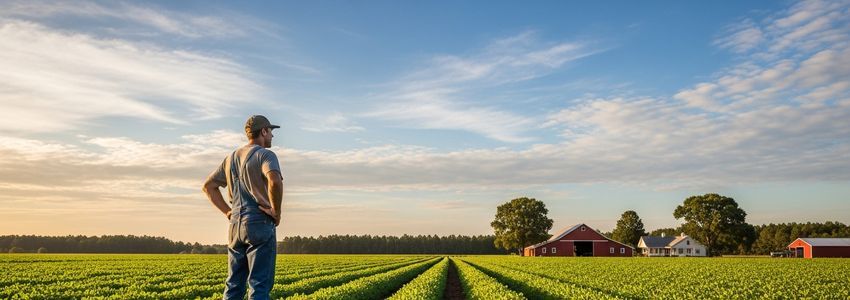
Georgia ranks among the top agricultural states in the nation, generating billions in farm revenue each year from crops like peanuts, pecans, blueberries, peaches, and broiler chickens. Yet even the most productive farms and agribusinesses face a persistent challenge: access to reliable, affordable capital. Whether you need to purchase new equipment, expand your acreage, manage operating costs during slow seasons, or modernize your facilities, Georgia agricultural business financing is the engine that keeps your operation moving forward.
This guide covers every major financing option available to Georgia farmers and agribusinesses - from USDA farm loans and SBA programs to equipment financing and working capital solutions through private lenders like Crestmont Capital. If you are ready to grow, upgrade, or simply stabilize your agricultural operation, understanding your financing options is the first step.
In This Article
- What Is Georgia Agricultural Business Financing?
- The State of Georgia Agriculture: Key Statistics
- Types of Agricultural Financing Available in Georgia
- How Georgia Agricultural Loans Work
- SBA Loan Options for Georgia Farmers
- USDA Farm Loans and Federal Programs
- How Crestmont Capital Helps Georgia Agricultural Businesses
- Types of Equipment Georgia Farmers Finance
- Comparison: Financing Options for Georgia Agribusinesses
- Who Qualifies for Agricultural Financing in Georgia?
- Real-World Scenarios: Georgia Farmers Who Used Financing
- How to Get Started
- Frequently Asked Questions
- Conclusion
What Is Georgia Agricultural Business Financing?
Georgia agricultural business financing refers to the range of loans, credit lines, equipment financing, and other funding tools specifically designed to support farms, ranches, orchards, processing facilities, agritourism operations, and related agricultural businesses in Georgia. This type of financing can be used for virtually any legitimate business purpose: purchasing land, buying or leasing farm equipment, covering payroll during slow seasons, expanding into new product lines, or investing in technology like precision agriculture systems.
Unlike traditional consumer loans, agricultural financing is structured to account for the unique cash flow patterns of farming - including seasonal revenue cycles, crop failures, commodity price volatility, and the capital-intensive nature of agricultural equipment. Lenders who specialize in agricultural financing understand that a peach farmer's cash flow looks very different in July than in February, and they structure repayment schedules accordingly.
Georgia's agricultural sector spans poultry and egg production, row crops, fruits, vegetables, timber, aquaculture, and a growing agritourism segment. Each of these subsectors has distinct financing needs, and the right lender will have products tailored to each.
Key Fact: Georgia is consistently ranked among the top five agricultural states in the Southeast, generating over $74 billion in total economic impact from agriculture and related industries each year, according to the University of Georgia College of Agricultural and Environmental Sciences.
The State of Georgia Agriculture: Key Statistics
Before exploring financing options, it helps to understand the scope and scale of Georgia's agricultural economy. The state is home to more than 40,000 farms covering over 9 million acres. Georgia leads the nation in peanut production, producing roughly 40% of all peanuts grown in the United States. The state also ranks first nationally in broiler chicken production and is a top producer of pecans and blueberries.
The average Georgia farm has approximately 225 acres, and the average market value of agricultural products sold per farm exceeds $200,000. The poultry industry alone generates more than $18 billion in economic output annually. These numbers underscore both the enormous opportunity and the significant capital requirements of Georgia agricultural businesses.
Despite these impressive figures, access to capital remains a major challenge. The USDA Economic Research Service reports that beginning farmers - those in operation for 10 years or fewer - face particularly high barriers to financing. Even established farms often struggle to qualify for traditional bank loans due to land value fluctuations, commodity price risk, and variable annual revenues. This is precisely why specialized agricultural financing programs and alternative lenders play such a critical role.
By the Numbers
Georgia Agriculture - Key Statistics
40K+
Farms operating in Georgia
$74B
Total agricultural economic impact
40%
Of all U.S. peanuts grown in Georgia
9M+
Acres of farmland across the state
Types of Agricultural Financing Available in Georgia
Georgia farmers and agribusinesses have access to a wide variety of financing products. The right option depends on your specific needs, the size of your operation, your credit profile, and how quickly you need capital. Below is an overview of the primary financing types available.
Farm Operating Loans
Operating loans are short-term credit facilities used to cover the everyday costs of running a farm - seed, fertilizer, fuel, pesticides, labor, and other inputs. These loans are typically repaid at or after harvest when revenue comes in. Operating loans are often structured as revolving credit lines, allowing farmers to draw funds when needed and repay as cash becomes available. They are essential for managing the gap between planting season expenses and harvest revenue.
Farm Ownership Loans
Farm ownership loans are long-term financing instruments used to purchase farmland, construct buildings, or make major improvements to existing facilities. These loans can span 20 to 40 years, with fixed or variable interest rates. The USDA's Farm Service Agency (FSA) offers direct farm ownership loans, while private lenders and commercial banks also provide this type of financing to qualified borrowers.
Equipment Financing and Leasing
Equipment financing allows Georgia farmers to acquire tractors, harvesters, irrigation systems, processing equipment, and other machinery without paying the full purchase price upfront. Instead, the farmer makes fixed monthly payments over a set term, typically two to seven years. At the end of the term, the farmer may own the equipment outright or have the option to purchase it at a predetermined price. Equipment leasing is similar but offers more flexibility, including easier upgrades to newer equipment when the lease ends.
Working Capital Loans
Working capital loans provide lump-sum financing that businesses can use for operational expenses, payroll, marketing, or any short-term need. Unlike operating lines of credit, working capital loans disburse the full amount upfront and are repaid in fixed installments. They are ideal for agribusinesses that need predictable cash flow management rather than revolving access to credit.
Commercial Real Estate Loans
For agricultural businesses looking to purchase processing plants, cold storage facilities, distribution centers, or other commercial real estate, commercial real estate loans provide long-term financing secured by the property itself. These loans differ from farm ownership loans in that they are typically used for non-residential agricultural infrastructure rather than farmland itself.
SBA Loans
The U.S. Small Business Administration offers several loan programs that are available to agricultural businesses, provided the farm operation qualifies as a small business under SBA guidelines. SBA 7(a) loans and SBA 504 loans are the most commonly used by agricultural businesses for equipment purchases, facility expansions, and working capital needs.
Need Financing for Your Georgia Farm or Agribusiness?
Crestmont Capital offers fast, flexible financing options for Georgia agricultural businesses. No obligation - apply in minutes.
Apply Now →How Georgia Agricultural Loans Work
Understanding how agricultural loans work in practice helps you prepare a stronger application and set realistic expectations for the process. Here is a step-by-step overview of what to expect when applying for Georgia agricultural business financing.
Step 1: Assess Your Financing Needs
Before approaching any lender, clearly define what you need the money for, how much you need, and when you need it. Are you buying a new combine harvester that will cost $350,000? Are you bridging a $75,000 cash flow gap before your peanut harvest? Are you expanding your poultry operation with a new broiler house that will cost $1.2 million? The answers to these questions will determine which financing product is most appropriate and which lenders are most likely to approve your application.
Step 2: Gather Your Financial Documents
Most agricultural lenders will want to review your last two to three years of federal tax returns, recent bank statements, a current balance sheet, a profit and loss statement, and documentation of any existing debt obligations. If you are applying for a large loan, you may also need to provide a business plan, cash flow projections, and a schedule of your farm assets. Having these documents organized before you apply will significantly speed up the approval process.
Step 3: Choose the Right Lender
Not all lenders are equally equipped to handle agricultural financing. Banks and credit unions that serve rural communities often have more experience with farm loans than large urban banks. The USDA's Farm Service Agency is a government option for farmers who cannot qualify through conventional channels. Private lenders like Crestmont Capital offer speed and flexibility that government programs cannot match, making them ideal for time-sensitive purchases or businesses that do not meet traditional bank criteria.
Step 4: Submit Your Application
Once you have selected a lender and gathered your documents, submit your application. Be thorough, honest, and specific about how you plan to use the funds. Lenders appreciate applicants who demonstrate a clear understanding of their business and a realistic repayment plan. Incomplete applications are a leading cause of delays and denials.
Step 5: Receive and Review Your Offer
If approved, your lender will provide a loan offer detailing the amount, interest rate, repayment term, and any fees or conditions. Review this offer carefully. Compare the annual percentage rate (APR), not just the interest rate. Ask about prepayment penalties, origination fees, and any covenants that could restrict your business operations. Negotiate if possible - many lenders have some flexibility on terms, particularly for well-qualified borrowers.
Quick Guide
How Georgia Agricultural Financing Works - At a Glance
Determine the amount, purpose, and urgency of the financing you need.
Tax returns, bank statements, balance sheet, P&L, and asset schedule.
Match your needs to the right financing source - USDA, SBA, or private lenders.
Submit your application, review the offer, and receive your funds.
SBA Loan Options for Georgia Farmers
The SBA does not directly lend money to agricultural businesses, but it guarantees loans made by approved lenders, which reduces the lender's risk and enables them to offer more favorable terms to borrowers. The two most relevant SBA programs for Georgia agricultural businesses are the SBA 7(a) loan and the SBA 504 loan.
SBA 7(a) Loans
The SBA 7(a) loan is the most flexible and widely used SBA program. Loan amounts can reach up to $5 million, and the funds can be used for working capital, equipment purchases, real estate, business acquisitions, and debt refinancing. Repayment terms range from 5 to 25 years depending on the purpose. Interest rates are variable, tied to the prime rate plus a lender spread. For agricultural businesses, SBA 7(a) loans work particularly well for equipment purchases, facility expansions, and working capital needs. However, note that the SBA explicitly excludes certain agricultural operations that are primarily engaged in farming from its standard programs - farms must typically have significant non-farming business activity to qualify, or use other USDA programs instead.
SBA 504 Loans
The SBA 504 loan program is specifically designed for fixed asset purchases - primarily real estate and long-lived equipment. A 504 loan typically involves a Certified Development Company (CDC) providing 40% of the financing, the borrower contributing 10% as a down payment, and the participating lender covering the remaining 50%. Loan amounts can reach $5.5 million for standard projects and up to $5.5 million for projects that meet certain public policy goals. For Georgia agribusinesses that need to acquire processing facilities, cold storage buildings, or other long-term assets, the SBA 504 program offers competitive fixed interest rates.
You can learn more about SBA loan options through Crestmont Capital's SBA Loans page.
USDA Farm Loans and Federal Programs
The USDA's Farm Service Agency (FSA) administers several loan programs specifically designed for agricultural producers who cannot obtain financing through conventional commercial credit. These programs are especially valuable for beginning farmers, socially disadvantaged farmers, and those who have experienced financial setbacks.
FSA Direct Farm Ownership Loans
The FSA Direct Farm Ownership Loan provides up to $600,000 to help farmers and ranchers purchase farmland, construct or repair buildings, and make improvements to farms. The interest rates are set by the FSA and are typically well below market rates. Repayment terms extend up to 40 years. To qualify, borrowers must be unable to obtain credit elsewhere at reasonable terms, must have adequate farm experience or training, and must intend to operate the farm as their primary occupation.
FSA Direct Operating Loans
FSA Direct Operating Loans provide up to $400,000 for annual operating expenses such as seed, feed, fertilizer, fuel, farm chemicals, and minor equipment purchases. These loans are short-term, typically with terms of one to seven years. They are designed to be repaid as crops are harvested and sold. Like farm ownership loans, direct operating loans are available to borrowers who cannot obtain credit elsewhere.
FSA Guaranteed Loans
When a farmer can qualify for commercial credit but needs a guarantee to secure better terms, the FSA Guaranteed Loan program provides that backing. The FSA guarantees up to 95% of the loan amount, enabling commercial lenders to offer lower rates and longer terms than they otherwise would. Guaranteed farm ownership loans can reach up to $1.776 million, while guaranteed operating loans can reach up to $1.776 million as well.
USDA Value-Added Producer Grants
Beyond loans, Georgia farmers can also apply for USDA Value-Added Producer Grants (VAPG), which provide up to $250,000 in working capital or planning funds for agricultural producers who want to expand their market opportunities by adding value to their products. For example, a Georgia pecan farmer who wants to invest in a shelling and packaging facility to sell retail pecan products could use a VAPG grant to fund that expansion. Grants do not have to be repaid, making them an attractive complement to loan financing.
Pro Tip: USDA programs often have application windows and funding caps, so apply early in the fiscal year for the best chance of approval. Working with an experienced agricultural lender like Crestmont Capital can help you navigate both federal programs and private financing options simultaneously.
How Crestmont Capital Helps Georgia Agricultural Businesses
While USDA and SBA programs offer valuable financing, they are not always the fastest or most flexible solution. Government loans often involve lengthy application processes, extensive documentation requirements, and waiting periods that can stretch from several weeks to several months. When a Georgia farmer needs to act quickly on a land purchase opportunity, replace a failed piece of critical equipment before harvest, or cover an unexpected cash flow gap, that timeline simply does not work.
Crestmont Capital fills that gap by providing fast, flexible financing solutions tailored to the needs of agricultural businesses. As the #1 business lender in the United States, Crestmont Capital offers equipment financing, working capital loans, lines of credit, and other funding products with streamlined applications, faster approvals, and funding often within days rather than months.
Equipment Financing for Georgia Farmers
Georgia agricultural businesses can finance virtually any type of farm equipment through Crestmont Capital, from tractors and harvesters to irrigation systems and processing machinery. Our agricultural equipment financing programs offer competitive rates, flexible terms, and the ability to finance both new and used equipment. We work with all major equipment manufacturers and can often approve applications for equipment financing within 24 to 48 hours of receiving a complete application.
Working Capital Solutions
Seasonal cash flow challenges are an inherent part of farming. Crestmont Capital's unsecured working capital loans provide Georgia farmers with the cash they need to bridge seasonal gaps, cover operating expenses, or seize growth opportunities without requiring collateral. These loans are available in amounts from $10,000 to $5 million, with repayment terms tailored to your cash flow patterns.
Business Lines of Credit
A business line of credit is one of the most powerful tools for managing the unpredictable cash flow demands of agricultural operations. Unlike a term loan, a line of credit lets you draw funds as needed and only pay interest on the amount you actually use. This makes it ideal for purchasing inputs at the beginning of a growing season, handling equipment repairs, or managing payroll during slow periods.
Commercial Financing for Larger Operations
For larger agribusinesses that need financing for commercial real estate, processing facilities, cold storage infrastructure, or major expansion projects, Crestmont Capital's commercial financing options provide the scale and flexibility these operations require. Our team of experienced financing specialists understands the unique dynamics of agricultural businesses and works to structure deals that align with your operation's revenue cycles.
Ready to Fund Your Georgia Agricultural Operation?
Apply in minutes and get a decision fast. Crestmont Capital specializes in agricultural business financing for Georgia farms and agribusinesses of all sizes.
Get Funded Today →Types of Equipment Georgia Farmers Finance
Equipment represents one of the largest capital investments for most Georgia agricultural businesses. The right equipment can dramatically improve productivity, reduce labor costs, and expand the scale of your operation. Here are the most common types of equipment that Georgia farmers finance.
Tractors and Tillage Equipment
Tractors are the backbone of nearly every farming operation. A modern row-crop tractor capable of handling large-scale peanut or cotton farming in South Georgia can cost anywhere from $150,000 to over $400,000. Financing spreads this cost over a manageable term while preserving cash for other operating expenses. Tillage equipment - plows, discs, cultivators, and planters - is often financed alongside tractors to keep total equipment costs under a single financing arrangement.
Harvesting Equipment
Combine harvesters, peanut diggers, pecan harvesters, and other specialized harvesting machines are critical for capturing maximum yield in a narrow harvest window. A commercial peanut harvesting system can cost $200,000 or more. Equipment financing allows Georgia farmers to acquire this equipment while preserving liquidity for other farm needs.
Irrigation Systems
Water management is particularly critical in Georgia's diverse agricultural regions. Drip irrigation systems for vegetable operations, center pivot irrigators for row crops, and micro-irrigation systems for orchards and vineyards all represent significant investments. A single center pivot irrigation system can cost $50,000 to $150,000 depending on the acreage it covers. Our irrigation equipment financing options make these systems accessible to farms of all sizes.
Poultry and Livestock Facilities
Georgia's broiler chicken industry relies on state-of-the-art broiler house facilities equipped with climate control, automated feeding systems, and waste management infrastructure. Building or upgrading a broiler house can cost $300,000 to $600,000 or more. Equipment financing can cover these systems individually, while commercial real estate loans handle the facility structure itself.
Processing and Value-Added Equipment
Many Georgia farmers are moving up the value chain by processing their products on-farm - shelling pecans, pressing peanut butter, packaging fresh produce, or producing artisan food products. Processing equipment ranges from small-scale commercial food processors to large industrial grading and packaging lines. Financing this equipment allows farmers to capture significantly more revenue per pound of product without a prohibitive upfront investment.
Comparison: Financing Options for Georgia Agribusinesses
| Financing Type | Best For | Typical Amount | Speed | Collateral Required |
|---|---|---|---|---|
| USDA FSA Direct Loan | Beginning farmers, land purchase | Up to $600K | Slow (months) | Yes |
| SBA 7(a) Loan | Working capital, equipment, real estate | Up to $5M | Moderate (weeks) | Usually |
| Equipment Financing | Tractors, harvesters, irrigation systems | $10K - $5M+ | Fast (days) | Equipment serves as collateral |
| Working Capital Loan | Seasonal gaps, operating expenses | $10K - $5M | Very fast (1-3 days) | Often not required |
| Business Line of Credit | Ongoing, flexible funding needs | $10K - $2M | Fast (days) | Varies by lender |
| USDA VAPG Grant | Value-added product development | Up to $250K | Slow (competitive) | None (grant) |
Who Qualifies for Agricultural Financing in Georgia?
Qualifying for Georgia agricultural business financing depends on the specific program and lender you choose. Here is a general overview of the qualification criteria for the most common types of agricultural financing.
For USDA FSA Loans
To qualify for USDA FSA direct loans, applicants must be U.S. citizens or legal residents, have adequate farming experience or training, be able to demonstrate an ability to repay the loan, and be unable to obtain credit elsewhere at reasonable terms. Credit score requirements are more flexible than conventional loans, but the FSA still requires a satisfactory credit history. Farmers who have experienced prior FSA loan defaults may face additional restrictions.
For SBA Loans
SBA loan eligibility requirements include being a for-profit business operating in the United States, meeting the SBA's size standards for small businesses, demonstrating a need for the loan, showing an ability to repay from business cash flow, and having a reasonable personal credit history. SBA loans generally require a personal credit score of at least 650, though some lenders set higher minimums. Collateral is typically required for larger loan amounts.
For Equipment Financing Through Private Lenders
Equipment financing through Crestmont Capital and similar private lenders is generally more accessible than government programs. Minimum requirements typically include a business that has been operating for at least one year, monthly revenues of at least $10,000, a personal credit score of at least 550 (though higher scores qualify for better terms), and the equipment itself serving as collateral for the loan. Many equipment financing applications can be decided within 24 to 48 hours with minimal documentation.
For Working Capital Loans
Working capital loan eligibility focuses primarily on your business revenue and cash flow rather than collateral or credit score alone. Lenders typically want to see consistent monthly deposits in your business bank account, a track record of at least six months to one year of operation, and adequate revenue to support the proposed loan payments. Businesses with seasonal revenue patterns may need to demonstrate that their off-season cash flow is sufficient to cover loan payments during slow periods.
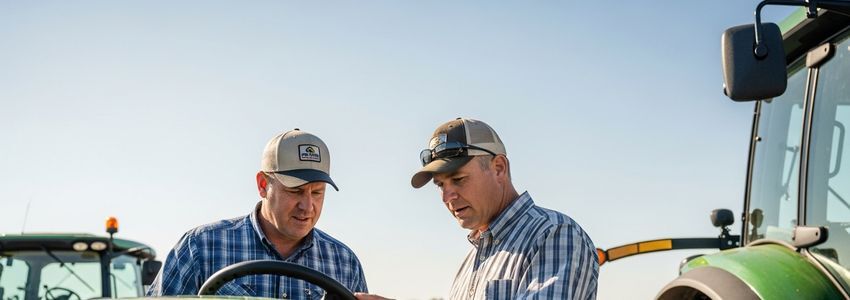
Important: Many Georgia farmers and agribusinesses do not realize they qualify for multiple financing products simultaneously. A peach farm, for example, might use USDA operating loans for seasonal inputs, equipment financing for a new harvester, and a working capital loan from Crestmont Capital to bridge the gap between seasons. Diversifying your financing sources gives you more flexibility and reduces dependence on any single lender.
Real-World Scenarios: Georgia Farmers Who Used Financing
Understanding how financing works in practice is often more instructive than reading about loan terms in the abstract. Here are several real-world scenarios that illustrate how Georgia agricultural businesses use financing to grow and stabilize their operations.
Scenario 1: A Tifton Peanut Farmer Upgrades His Harvesting Equipment
A second-generation peanut farmer near Tifton, Georgia operates 1,200 acres and has been farming for 18 years. His aging peanut digger and picker needed replacement, with repair costs becoming unpredictable and threatening to delay or compromise his harvest. After evaluating his options, he applied for equipment financing through Crestmont Capital and was approved within 48 hours for a $285,000 loan to purchase a new peanut digger. Monthly payments were structured to align with his cash flow patterns, with lower payments during the winter months and higher payments following his fall harvest. The new equipment increased his harvest efficiency by approximately 20%, reducing labor costs and minimizing losses from weather-related delays.
Scenario 2: A Blueberry Grower in Alma Installs Drip Irrigation
A blueberry farm in Bacon County was expanding from 80 acres to 150 acres and needed to install a drip irrigation system for the new plantings. The irrigation system was projected to cost $90,000, a significant investment for a farm that would not see revenue from the new plantings for two to three growing seasons. The farmer applied for an agricultural equipment loan through a USDA Guaranteed Loan program backed by a local FSA-approved lender. The loan was approved at a competitive rate with a seven-year term, and the new irrigation system was installed in time for the first growing season. The improved water management is expected to reduce drought-related yield losses and ultimately pay for the system within four to five years.
Scenario 3: A Poultry Integrator Builds a New Broiler House
A poultry farmer under contract with a major integrator near Gainesville, Georgia was offered the opportunity to add a fourth broiler house to his operation, which would increase his annual revenue by approximately $200,000. The new house would cost approximately $450,000 to build and equip. He combined financing from three sources: an FSA Guaranteed Loan for the real estate and construction, an equipment financing loan from Crestmont Capital for the automated feeding and ventilation systems, and a working capital line of credit to cover operating costs during the construction period. The layered financing approach allowed him to manage cash flow throughout the construction period while minimizing the total cost of capital.
Scenario 4: A Savannah Agritourism Operation Expands Its Facilities
An agritourism operation near Savannah, Georgia that offers u-pick strawberries, farm tours, and a farm stand decided to expand by adding a barn event venue and a commercial kitchen for on-site food preparation. The project was estimated to cost $350,000. Traditional bank financing was difficult to obtain because the business combined farming with event hosting - an unusual combination that many bank underwriters were not equipped to evaluate. Working with Crestmont Capital, the owner secured a combination of a commercial real estate loan for the barn construction and a working capital loan for initial marketing, staffing, and kitchen equipment. The venue is now fully booked most weekends from April through October.
How to Get Started
Complete our quick application at offers.crestmontcapital.com/apply-now - takes just a few minutes and requires minimal documentation to get started.
A Crestmont Capital agricultural financing specialist will review your needs and match you with the right financing product for your Georgia farm or agribusiness.
Receive your funds and put them to work - often within days of approval. Equipment financing, working capital loans, and lines of credit are all available.
Frequently Asked Questions
What types of financing are available for Georgia agricultural businesses?
Georgia agricultural businesses can access USDA FSA direct and guaranteed loans, SBA 7(a) and 504 loans, equipment financing, working capital loans, business lines of credit, commercial real estate loans, and USDA Value-Added Producer Grants. The best option depends on your specific needs, the size of your operation, and your financial profile.
How do I qualify for a USDA FSA loan in Georgia?
To qualify for a USDA FSA loan, you must be a U.S. citizen or legal resident, have adequate farming experience or training, demonstrate an ability to repay the loan, and be unable to obtain credit at reasonable terms from commercial sources. Credit score requirements are flexible, but a satisfactory credit history is required. Contact your local USDA Service Center in Georgia to learn about specific requirements and available programs.
Can beginning farmers in Georgia get agricultural financing?
Yes. USDA FSA programs specifically target beginning farmers - those who have been farming for 10 years or fewer. Beginning farmers may be eligible for lower down payment requirements, higher loan-to-value ratios, and access to programs that would otherwise require a longer track record. Private lenders like Crestmont Capital also work with beginning agricultural businesses, focusing on revenue trends and business fundamentals rather than years in operation.
How fast can I get equipment financing for my Georgia farm?
With private lenders like Crestmont Capital, equipment financing can often be approved and funded within 24 to 72 hours of receiving a complete application. This is significantly faster than USDA or SBA programs, which can take several weeks to several months. If you need to act quickly on an equipment purchase - especially during planting or harvest season - private equipment financing is often the fastest option.
What is the difference between an operating loan and a working capital loan?
An operating loan, specifically from the USDA FSA, is a short-term agricultural credit product designed to cover annual farm operating expenses and is typically repaid at harvest. A working capital loan from a private lender is a broader business financing product that provides a lump sum for any operational purpose, repaid in fixed installments. Working capital loans from private lenders are faster to obtain and can be used for a wider variety of purposes than USDA operating loans.
What credit score do I need to qualify for agricultural financing?
Credit score requirements vary by lender and loan type. USDA FSA programs are the most flexible and do not publish a minimum credit score requirement, focusing instead on credit history and ability to repay. SBA loans generally require a minimum personal credit score of 650, though many lenders set higher minimums. Private lenders like Crestmont Capital can often work with credit scores as low as 550 for equipment financing, though higher scores qualify for better rates and terms.
Can I use a business line of credit for seasonal farming expenses?
Absolutely. A business line of credit is one of the most effective tools for managing seasonal cash flow in agricultural operations. You can draw funds during planting or preparation season when expenses are high, then repay the balance as revenue comes in at harvest. You only pay interest on the amount you actually use, making it more cost-effective than a term loan for cyclical expenses. Crestmont Capital's business lines of credit are specifically designed to accommodate the irregular cash flow patterns of seasonal businesses.
Are there grants available specifically for Georgia farmers?
Yes. The USDA Value-Added Producer Grant (VAPG) program is one of the most relevant federal grant programs for Georgia farmers who want to develop value-added products or market opportunities. The Georgia Department of Agriculture also administers various state-level programs and incentives. Additionally, USDA SARE (Sustainable Agriculture Research and Education) grants support farming innovation. Grants are competitive and not guaranteed, so they should be pursued alongside loan financing rather than as a primary funding strategy.
What documents do I need to apply for agricultural financing?
Most agricultural lenders require the past two to three years of federal tax returns, recent bank statements (typically three to six months), a current balance sheet and profit and loss statement, and a schedule of farm assets. Larger loans or government programs may also require a business plan, cash flow projections, a schedule of debts, and documentation of collateral. Crestmont Capital's streamlined application for equipment financing and working capital loans requires significantly fewer documents than government programs.
Can I finance used farm equipment in Georgia?
Yes. Crestmont Capital and many other private lenders can finance both new and used farm equipment. Used equipment financing allows farmers to acquire reliable machinery at a lower total cost, which can be particularly beneficial for beginning farmers or operations looking to preserve capital. The approval process and terms may differ slightly from new equipment financing, and the lender will evaluate the age and condition of the equipment as part of the underwriting process.
How does equipment financing affect my farm's balance sheet?
When you finance equipment, the equipment is recorded as an asset on your balance sheet, and the corresponding loan appears as a liability. As you make payments, the liability decreases and the equipment depreciates over its useful life. This treatment differs from leasing, where the impact on the balance sheet depends on whether the lease is classified as an operating lease or a finance lease under accounting standards. Your CPA can advise on the optimal financing structure for your operation's balance sheet and tax situation.
What is the maximum amount I can borrow for agricultural financing in Georgia?
Maximum loan amounts vary widely by program and lender. USDA FSA direct farm ownership loans cap at $600,000. USDA FSA guaranteed loans can reach up to $1.776 million. SBA 7(a) loans cap at $5 million. Private lenders like Crestmont Capital can finance equipment purchases and working capital needs up to $5 million or more for well-qualified borrowers. Very large agricultural operations may need to combine multiple financing sources to meet their total capital requirements.
Can a Georgia agritourism business qualify for agricultural financing?
Yes, though eligibility depends on the specific lender and program. USDA programs generally support farm-based enterprises that have a clear agricultural component. Private lenders like Crestmont Capital evaluate agritourism operations as businesses and can provide working capital loans, equipment financing, and commercial real estate loans to fund u-pick operations, farm stays, event venues, farm stands, and similar enterprises. The key is demonstrating adequate revenue and a clear plan for how the financing will support business growth.
How do I choose between USDA financing and private lender financing?
USDA financing typically offers lower interest rates and is the best choice for farmers who cannot qualify for commercial credit or who need very large, long-term loans for land purchases. However, the application process is slow, documentation-intensive, and subject to funding availability. Private lenders like Crestmont Capital offer faster approvals, more flexible qualification criteria, and broader eligible uses, making them the better choice when speed and flexibility matter. Many Georgia agricultural businesses use both simultaneously, combining USDA programs for long-term assets with private financing for equipment and operating needs.
How does Crestmont Capital differ from a traditional agricultural bank?
Crestmont Capital is a specialized business lender focused on providing fast, flexible financing to businesses that may not fit the strict criteria of traditional agricultural banks. Traditional banks often require extensive collateral, multiple years of tax returns, strong credit scores, and can take weeks or months to make a lending decision. Crestmont Capital uses streamlined underwriting, can work with a wider range of credit profiles, and can often fund loans within 24 to 72 hours. This makes Crestmont Capital an excellent complement to - or alternative to - traditional agricultural banking for Georgia farms and agribusinesses.
Conclusion
Georgia agricultural business financing encompasses a wide range of programs, products, and lenders - from USDA FSA loans designed for beginning farmers to fast equipment financing from private lenders like Crestmont Capital. The common thread is that access to capital is essential for every farm and agribusiness that wants to grow, modernize, and compete in an increasingly demanding marketplace.
Whether you operate a family peanut farm in the Coastal Plain, a poultry operation in the Piedmont, a blueberry orchard in the Vidalia region, or an agritourism business in the North Georgia mountains, there is a financing solution designed for your needs. The key is understanding your options, preparing a complete and accurate loan application, and choosing the right lender for your specific situation.
Crestmont Capital is proud to serve Georgia's agricultural community with financing solutions that are fast, flexible, and built around the realities of farming. If you are ready to take the next step in growing your agricultural business, apply online today and let our team of specialists find the right Georgia agricultural business financing solution for your operation.
Start Your Agricultural Financing Application Today
Join thousands of agricultural businesses that trust Crestmont Capital for fast, reliable business financing. Apply in minutes - no obligation.
Apply Now →Disclaimer: The information provided in this article is for general educational purposes only and is not financial, legal, or tax advice. Funding terms, qualifications, and product availability may vary and are subject to change without notice. Crestmont Capital does not guarantee approval, rates, or specific outcomes. For personalized information about your business funding options, contact our team directly.