
 (800) 949-0401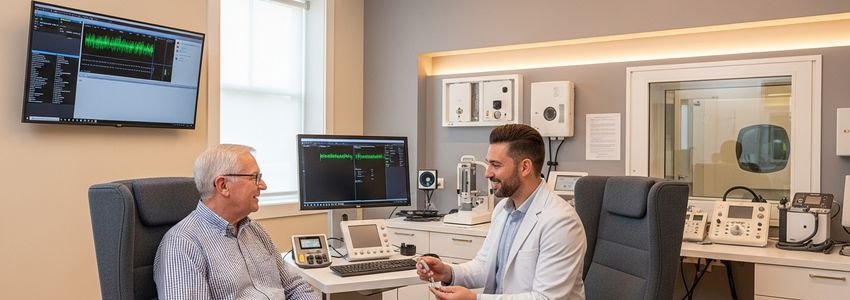
Hearing Aid Dealer Business Loans: The Complete Financing Guide for 2026
```htmlHearing Aid Dealer Business Loans: The Complete Financing Guide for 2026
The hearing healthcare industry is experiencing unprecedented growth, driven by an aging population, technological advancements, and increasing awareness of hearing loss. For entrepreneurs and established practice owners in this sector, securing the right capital is essential for success. This guide provides a comprehensive overview of hearing aid dealer business loans, exploring the specific financial needs of your practice and the funding solutions available to meet them in 2026 and beyond. Whether you are looking to start a new clinic, purchase state-of-the-art audiological equipment, expand your inventory, or launch a new marketing campaign, understanding your financing options is the first step toward sustainable growth and profitability.
Navigating the world of business financing can be complex. Lenders have different requirements, loan products have unique structures, and the best choice for one practice may not be suitable for another. This guide will demystify the process, detailing everything from common uses for capital and the types of loans available to qualification criteria and a step-by-step application plan. With this knowledge, you can confidently partner with a financial institution like Crestmont Capital to acquire the funding necessary to provide exceptional care to your community and build a thriving business.
In This Article
Why Financing Matters for Hearing Aid Dealers
A hearing aid dealership is a unique blend of a retail business and a healthcare practice. This model presents a distinct set of financial challenges and opportunities. Unlike a typical retail store, a hearing clinic requires significant investment in specialized medical equipment, highly trained personnel, and a professional, accessible environment. Capital is not just a tool for growth- it is the lifeblood that sustains daily operations and ensures a high standard of patient care. Understanding the key areas where financing is critical can help you plan strategically for your business's future.
Covering High Inventory Costs
Modern hearing aids are sophisticated electronic devices, often featuring Bluetooth connectivity, rechargeable batteries, and artificial intelligence for sound processing. This technology comes at a high cost. A single pair of premium hearing aids can have a wholesale cost of several thousand dollars. To serve a diverse patient base, a dealer must stock a wide range of models, styles, and technology levels from multiple manufacturers like Phonak, Oticon, Starkey, and Widex. This inventory represents a substantial capital investment. Business financing allows you to:
- Maintain a Diverse Stock: Offer patients a variety of choices to meet their specific hearing needs, lifestyle, and budget without being limited by cash on hand.
- Take Advantage of Bulk Discounts: Manufacturers often provide discounts for larger orders. A loan or line of credit can provide the upfront cash to make a bulk purchase, improving your profit margins on each unit sold.
- Bridge Seasonal Gaps: Sales can fluctuate throughout the year. Financing helps ensure you have adequate inventory during peak seasons, such as before the holidays or at the end of the year when patients use flexible spending account funds.
Investing in Advanced Audiological Equipment
Accurate diagnosis and effective treatment of hearing loss depend on specialized equipment. Patients expect a modern, well-equipped clinic, and maintaining this standard requires ongoing investment. The initial cost to equip a single testing room can easily exceed $50,000 to $100,000. Key equipment includes:
- Soundproof Booths: Essential for conducting accurate audiometric tests, these structures are a major construction and installation expense.
- Audiometers: The core diagnostic tool used to measure hearing sensitivity. Advanced clinical audiometers are a significant investment.
- Real-Ear Measurement (REM) Systems: Considered the gold standard for verifying hearing aid fittings, these systems are crucial for providing evidence-based care and achieving optimal patient outcomes.
- Otoscopes and Immittance Systems: Used to examine the physical condition of the ear canal and middle ear function.
- Hearing Aid Programming and Servicing Tools: Computers, programming interfaces (like HI-PRO), and tools for cleaning and minor repairs.
As technology evolves, this equipment needs to be upgraded or replaced. Equipment financing is a popular solution that allows dealers to acquire these necessary assets without depleting their working capital, often with the equipment itself serving as collateral.
Managing Operational Expenses and Cash Flow
Day-to-day operations require consistent cash flow. For a hearing aid dealer, revenue can be inconsistent due to long sales cycles and delays in insurance reimbursements. A patient may take weeks or even months from their initial consultation to the final purchase. Meanwhile, fixed expenses must be paid on time.
Common operational costs include:
- Payroll: Salaries for licensed audiologists, hearing instrument specialists, and administrative staff are a primary expense.
- Rent and Utilities: The cost of maintaining a professional, accessible office space in a desirable location.
- Marketing and Advertising: Attracting new patients requires a consistent marketing budget for digital ads, direct mail, community outreach, and physician referrals.
- Insurance: Professional liability (malpractice) insurance, as well as general business insurance, is a necessity.
- Continuing Education and Licensing: Staff must stay current with state licensing requirements and technological advancements.
Financing options like a business line of credit provide a flexible safety net to manage these expenses and navigate the gaps between revenue collection and payment obligations.
Funding Growth and Expansion
For ambitious practice owners, strategic growth is always on the horizon. Financing is the engine that powers these initiatives, transforming vision into reality. Growth opportunities in the hearing healthcare space include:
- Opening a New Location: Expanding into a new neighborhood or city to capture a larger market share. This requires capital for a new lease, office build-out, equipment, inventory, and marketing.
- Acquiring a Competitor: Purchasing an existing practice from a retiring owner can be an effective way to grow your patient base and revenue instantly.
- Renovating an Existing Clinic: Modernizing your office can improve patient experience, enhance your brand image, and increase efficiency.
- Hiring Additional Staff: Adding another audiologist or support staff member can increase your capacity to see more patients and reduce wait times.
Larger-scale funding, such as an SBA loan, is often ideal for these major, long-term investments.
Key Stat: According to data from the U.S. Census Bureau, the number of Americans aged 65 and older is projected to reach 83.7 million by 2050, nearly doubling the number from 2012. This demographic shift is a primary driver of sustained demand for hearing healthcare services.
Loan Options for Hearing Aid Dealer Companies
There is no one-size-fits-all financing solution. The best option for your hearing aid dealership depends on your specific needs, financial situation, and business goals. Lenders like Crestmont Capital offer a diverse portfolio of products designed to address various scenarios, from purchasing a single piece of equipment to funding a complete practice acquisition. Here is a detailed look at the most common types of hearing aid dealer business loans.
SBA Loans
SBA loans are partially guaranteed by the U.S. Small Business Administration, which reduces the risk for lenders and often results in more favorable terms for borrowers. These loans are highly sought after for their long repayment periods, competitive interest rates, and large funding amounts. They are an excellent choice for significant, long-term investments.
- SBA 7(a) Loan: This is the most popular and flexible SBA loan program. Funds can be used for a wide range of purposes, including working capital, equipment purchases, debt refinancing, and even business acquisition. Loan amounts can go up to $5 million with terms up to 10 years for working capital and equipment, and up to 25 years for real estate.
- SBA 504 Loan: This program is specifically designed for financing major fixed assets, such as purchasing commercial real estate (your clinic's building) or long-term, heavy equipment. It involves two lenders- a bank or credit union for 50% of the cost and a Certified Development Company (CDC) for 40%- with the borrower contributing a 10% down payment.
While the terms are excellent, the application process for SBA loans can be lengthy and requires extensive documentation. It is best suited for well-established businesses with strong financials who are planning a major capital project. For more information, you can visit the official SBA.gov website.
Equipment Financing
This is one of the most direct and accessible forms of financing for hearing aid dealers. An equipment financing agreement is essentially a loan used to purchase specific business equipment, such as an audiometer, a REM system, or a soundproof booth. The equipment itself serves as collateral for the loan.
Key benefits include:
- Fast Approval: The process is much quicker than a traditional bank loan, with funding often available in a few days.
- 100% Financing: Many lenders will finance the full cost of the equipment, including soft costs like taxes, shipping, and installation, requiring little to no down payment.
- Preserves Capital: It allows you to acquire necessary technology without tying up cash that could be used for inventory, marketing, or payroll.
- Potential Tax Advantages: Under Section 179 of the IRS tax code, you may be able to deduct the full purchase price of qualifying equipment in the year it is placed into service. Consult a tax professional for details.
Business Line of Credit
A business line of credit provides flexible, revolving access to capital. Instead of receiving a lump sum of cash, you are approved for a specific credit limit (e.g., $100,000). You can draw funds as needed up to that limit and you only pay interest on the amount you use. As you repay the principal, your available credit is replenished.
This is an ideal tool for:
- Managing Cash Flow: Cover expenses during slow periods or while waiting for insurance payments to come in.
- Inventory Purchases: Quickly access funds to buy a new product line or take advantage of a manufacturer's special offer.
- Unexpected Expenses: Handle emergency repairs, such as a malfunctioning HVAC system or a critical piece of equipment breaking down.
- Marketing Opportunities: Fund a time-sensitive advertising campaign to drive new patient appointments.
A business line of credit acts as a financial safety net, providing peace of mind and operational flexibility.
Unsecured Working Capital Loans
Sometimes a business needs a straightforward injection of cash for general operational purposes. An unsecured working capital loan provides a lump sum of money that can be used for nearly any business expense without requiring you to pledge specific collateral like real estate or equipment.
Common uses include:
- Hiring and training new staff.
- Launching a large-scale digital marketing campaign.
- Bridging a significant revenue gap.
- Paying for professional services like accounting or legal counsel.
Because these loans are unsecured, lenders place a heavy emphasis on the business's revenue and cash flow history. They typically have shorter repayment terms (6-24 months) and higher interest rates than secured loans but offer very fast funding, often within 24-48 hours.
Merchant Cash Advance (MCA)
A Merchant Cash Advance is not a traditional loan. Instead, it is the purchase of a portion of your future credit and debit card sales at a discount. A provider gives you an upfront sum of cash in exchange for a percentage of your daily card sales until the advance is paid back, plus a fee. The repayment amount flexes with your sales volume- you pay back more on busy days and less on slow days.
MCAs are best for:
- Businesses with high credit card sales volume.
- Owners with less-than-perfect credit who may not qualify for other loans.
- Situations requiring extremely fast, emergency funding.
While accessible, MCAs typically have a very high cost of capital compared to other financing options and should be considered carefully.
Upgrade Your Audiology Equipment Today
Get the latest diagnostic and fitting technology with flexible equipment financing. Fast approvals and 100% financing available.
Apply Now →How Hearing Aid Dealer Financing Works
The process of securing a business loan has become significantly more streamlined with the rise of modern lenders like Crestmont Capital. While the specifics can vary by loan type and lender, the general journey from application to funding follows a clear path. Understanding these steps can help you prepare effectively and increase your chances of a successful outcome.
Step 1: Assess Your Financial Needs
Before approaching any lender, conduct a thorough internal assessment. Clearly define why you need the capital and exactly how much is required. Are you purchasing a $40,000 REM system? Do you need $25,000 to cover inventory for the next quarter? Or are you planning a $200,000 expansion? Having a precise number and a detailed plan for the funds is crucial. This demonstrates to lenders that you are a responsible, forward-thinking business owner. Over-borrowing can lead to unnecessary debt, while under-borrowing can leave your project unfinished.
Step 2: Gather Necessary Documentation
Preparation is key to a smooth application process. While a streamlined lender like Crestmont Capital requires less paperwork than a traditional bank, you should have key documents ready. The exact requirements will vary, but it is wise to have the following on hand:
- Business Bank Statements: Typically the most recent 3-6 months. Lenders use these to verify revenue and assess your daily cash flow.
- Financial Statements: Profit & Loss (P&L) statements and balance sheets, especially for larger loan requests.
- Business and Personal Tax Returns: Usually the last 1-2 years.
- Business Plan: Essential for startups or major expansion projects. It should outline your market analysis, growth strategy, and financial projections.
- Equipment Quote: If applying for equipment financing, provide the official quote from the vendor.
- Basic Business Information: Your business name, address, Tax ID (EIN), and ownership structure.
Step 3: Complete the Application
Most modern lenders offer a simple online application that can be completed in minutes. This initial step typically asks for basic information about you and your business, including time in business, monthly revenue, and the desired funding amount. It is designed to be a quick pre-qualification step. Be prepared to provide accurate information, as this will form the basis of the lender's initial review.
Step 4: Underwriting and Review
Once your application is submitted, it moves to the underwriting department. An underwriter will perform a detailed review of your business's financial health to assess the risk of the loan. They will analyze your bank statements to confirm revenue, look for consistent positive cash flow, and check your business and personal credit history. For some loan types, they may request additional documentation during this stage. A dedicated funding advisor will often work with you to ensure the underwriter has everything they need for a swift decision.
Step 5: Receive and Accept Your Offer
If your application is approved, you will receive a formal loan offer (or multiple offers for different products). This document will outline all the key terms: the loan amount, interest rate or factor rate, repayment term, and any associated fees. It is critical to review this offer carefully and ensure you understand all aspects of the agreement. Do not hesitate to ask your funding advisor to clarify any points. Once you are comfortable with the terms, you will sign the loan agreement electronically, and the funding process will be initiated. For products like working capital loans and equipment financing, funds can often be disbursed to your bank account or paid directly to your equipment vendor within 24 hours of signing.
What Lenders Look For: Key Qualification Criteria
Lenders evaluate several key factors to determine a business's creditworthiness and its ability to repay a loan. While each lender has its own proprietary underwriting model, they all focus on a core set of metrics. Understanding these criteria will help you position your hearing aid dealership for approval and secure the most favorable terms possible.
Time in Business
Lenders prefer to work with established businesses that have a proven track record of success. Most alternative lenders require a minimum of 6-12 months in business. For more traditional financing like SBA loans, the requirement is typically at least two years. A longer history demonstrates stability and reduces the perceived risk for the lender. Startups are considered higher risk, but financing options are still available, often requiring a strong business plan, good personal credit, and some form of owner equity or collateral.
Annual and Monthly Revenue
Consistent revenue is one of the most important qualification factors. Lenders need to see that your practice generates enough income to support its current operations and the new loan payments. They will analyze your bank statements to verify your monthly deposits and look for a stable or growing revenue trend. Most lenders have a minimum annual revenue threshold, often starting around $100,000 to $250,000, depending on the loan product.
Credit Score
Both your personal and business credit scores will be reviewed.
- Personal Credit (FICO): As the business owner, your personal credit history is seen as an indicator of your financial responsibility. For most small business financing, a personal FICO score of 600 or higher is required, with scores above 680-700 unlocking the best rates and terms.
- Business Credit: Your business credit score (from agencies like Dun & Bradstreet or Experian Business) reflects your company's history of paying its bills and other creditors. A strong business credit profile can significantly improve your chances of approval.
Cash Flow and Profitability
Beyond top-line revenue, lenders are deeply interested in your cash flow. They will examine your bank statements to see the average daily balance and look for patterns of non-sufficient funds (NSF) or overdrafts, which can be red flags. A healthy, positive cash flow shows that you manage your finances well and will have the liquidity to make regular loan payments. Profit and Loss statements will be used to confirm that the business is profitable, or at least has a clear path to profitability.

By the Numbers
Hearing Aid Industry - Key Statistics
$2.5B+
U.S. hearing aid market annual revenue
48M
Americans with hearing loss
28%
Industry growth over the past decade
$5K-$7K
Average cost per hearing aid pair
Comparing Financing Options: A Side-by-Side Look
Choosing the right financing product requires a clear understanding of the trade-offs between speed, cost, and flexibility. This table provides a quick comparison of the most common loan types for hearing aid dealers to help you identify which solution best aligns with your business's immediate and long-term needs.
| Loan Type | Best For | Typical Amount | Speed |
|---|---|---|---|
| SBA Loans | Business acquisition, real estate, major expansion | $50,000 - $5,000,000 | Slow (30-90 days) |
| Equipment Financing | Purchasing diagnostic and fitting technology | $10,000 - $500,000+ | Fast (2-5 days) |
| Business Line of Credit | Ongoing cash flow management and inventory | $10,000 - $250,000 | Fast (1-3 days) |
| Working Capital Loan | General operations, marketing, hiring staff | $5,000 - $500,000 | Very Fast (24-48 hours) |
| Merchant Cash Advance | Urgent cash needs with high card sales | Varies based on sales | Fastest (under 24 hours) |
Ready to Fund Your Hearing Aid Business?
Get fast, flexible financing from the #1 business lender in the U.S. Apply in minutes - no obligation.
Apply Now →Real-World Scenarios: How Financing Solves Problems
Theoretical discussions of loan products are helpful, but seeing them in action provides a clearer picture. Here are three common scenarios faced by hearing aid dealers and how the right financing solution can provide the perfect resolution.
Scenario 1: The Startup Audiology Practice
The Challenge: Dr. Chen, an experienced audiologist, decides to open her own private practice. She has a solid business plan, excellent clinical skills, and some personal savings, but she needs significant capital to get started. Her estimated startup costs include $30,000 for a commercial lease deposit and initial build-out, $75,000 for a sound booth and essential diagnostic equipment, $20,000 for initial hearing aid inventory, and $15,000 for marketing to attract her first patients. Her total funding need is $140,000.
The Solution: An SBA 7(a) loan is the ideal choice. While the application process is rigorous, her strong business plan, good personal credit, and clinical experience make her a strong candidate. The SBA guarantee makes a lender more willing to fund a new venture. The loan provides the full $140,000 she needs with a 10-year repayment term, which keeps her monthly payments manageable as she builds her patient base. This long-term, affordable financing allows her to launch her practice on a solid financial foundation.
Scenario 2: The Established Dealer Needing a Tech Upgrade
The Challenge: "HearWell Center" has been in business for 15 years. Their diagnostic equipment is functional but outdated. Competing clinics are advertising the latest technology, and HearWell's lead audiologist knows that a new Real-Ear Measurement (REM) system would improve fitting accuracy and patient satisfaction. The new system costs $35,000. The owner doesn't want to use his cash reserves, which are earmarked for payroll and inventory.
The Solution: Equipment financing is a perfect fit. The owner contacts Crestmont Capital, submits a simple online application along with the vendor's quote for the REM system. Because the equipment itself secures the loan and HearWell has a long, profitable business history, the application is approved within hours. The lender pays the vendor directly, and the new equipment is shipped. HearWell gets the technology it needs with a predictable monthly payment over a five-year term, preserving its cash flow for other operational needs.
Scenario 3: The Multi-Location Practice with Fluctuating Cash Flow
The Challenge: A regional hearing aid business with three locations faces inconsistent cash flow. They often need to make large inventory purchases to get volume discounts, but this can strain their cash reserves, especially when waiting on large insurance reimbursements that can take 60-90 days. They also want to be able to quickly fund a marketing opportunity if one arises.
The Solution: A business line of credit provides the necessary flexibility. The practice is approved for a $150,000 line of credit. In March, they use $50,000 to place a large inventory order and secure a 10% discount. They make interest-only payments on the $50,000 balance. In May, a large insurance payment arrives, and they pay back the full $50,000, restoring their credit line to the full $150,000. The following month, they draw $10,000 to run a local radio ad campaign. The line of credit acts as a revolving financial tool they can tap into whenever needed, allowing them to operate smoothly and seize opportunities without worry.
Market Insight: A Forbes Health/OnePoll survey found that 65% of hearing aid users reported an improved quality of life, highlighting the powerful impact of the services provided by hearing aid dealers.
How Crestmont Capital Empowers Hearing Aid Dealers
Choosing a financial partner is as important as choosing the right loan product. Crestmont Capital is not just a lender; we are a dedicated partner invested in the success of your hearing aid practice. We understand the unique financial landscape of the healthcare and medical device industries and have tailored our services to meet your specific needs.
Industry Expertise: Our funding advisors have extensive experience working with healthcare professionals, including audiologists and hearing instrument specialists. We understand the value of audiological equipment, the challenges of insurance billing cycles, and the importance of maintaining a healthy inventory. This expertise allows us to structure financing that makes sense for your business model.
A Broad Spectrum of Solutions: Unlike a traditional bank that may only offer one or two types of loans, Crestmont Capital provides a full suite of financing options. From fast equipment financing and flexible lines of credit to long-term SBA loans and unsecured working capital, we have a solution for every need. This allows us to find the right fit for your situation, rather than trying to force you into a one-size-fits-all product.
Speed and Efficiency: We know that in business, opportunities are time-sensitive. Our technology-driven platform and streamlined processes eliminate the bureaucracy and long waits associated with traditional lending. With a simple online application and minimal paperwork, you can get a decision in hours and funding in as little as one day. This allows you to acquire equipment, purchase inventory, and act on growth opportunities without delay.
Dedicated Support: When you work with Crestmont Capital, you are assigned a dedicated funding advisor who will be your single point of contact throughout the entire process. They will take the time to understand your goals, answer your questions, and guide you toward the best possible financing solution. We believe in building long-term relationships, serving as your trusted financial resource as your practice grows and evolves.
Find Your Perfect Financing Solution
Our experts will help you navigate your options and secure the best terms for your hearing aid business. Get a free, no-obligation quote today.
Get Started →Frequently Asked Questions
How to Get Started
Securing the capital your hearing aid dealership needs to thrive is a straightforward process with Crestmont Capital. Our goal is to make financing simple, fast, and transparent. Follow these three steps to begin.
Apply Online in Minutes
Fill out our secure, one-page online application. It takes less than five minutes and requires only basic information about your business. This initial step is a soft credit pull and will not affect your credit score.
Review Your Options
A dedicated funding advisor will contact you to discuss your application, understand your specific needs, and present you with the best financing options available. They will walk you through the rates and terms of each offer, ensuring complete transparency.
Receive Your Funds
Once you select your preferred option and sign the agreement, the funding process is finalized. Depending on the loan product, capital can be deposited into your account in as little as 24 hours, ready to be put to work for your business.
The hearing healthcare industry is poised for continued expansion, and your practice should be ready to grow with it. Strategic financing is the key to unlocking your business's full potential, enabling you to invest in the technology, inventory, and talent needed to provide superior patient care and achieve your financial goals. By understanding the diverse range of hearing aid dealer business loans and partnering with an experienced lender, you can confidently navigate the path to success in 2026 and for years to come.
Disclaimer: The information provided in this article is for general educational purposes only and is not financial, legal, or tax advice. Funding terms, qualifications, and product availability may vary and are subject to change without notice. Crestmont Capital does not guarantee approval, rates, or specific outcomes. For personalized information about your business funding options, contact our team directly.
```







