Running a service business means your tools are your livelihood. Whether you operate a plumbing company, landscaping firm, home cleaning service, HVAC operation, or any other service-oriented business, the equipment and tools you use directly determine how much work you can take on, how efficiently you deliver results, and how quickly you can grow. Equipment financing for service businesses provides a structured way to acquire those essential tools without draining your working capital or waiting years to save up for a major purchase.
In This Article
- What Is Equipment Financing for Service Businesses?
- What Tools and Equipment Can Be Financed?
- Key Benefits of Financing Your Service Business Tools
- How Equipment Financing Works Step-by-Step
- Types of Financing Options Available
- Financing vs. Paying Cash: A Comparison
- Who Qualifies for Service Business Equipment Financing?
- How Crestmont Capital Helps Service Businesses
- Real-World Scenarios
- How to Get Started
- Frequently Asked Questions
What Is Equipment Financing for Service Businesses?
Equipment financing for service businesses is a type of business loan or lease specifically designed to help companies acquire the tools, machinery, vehicles, and technology they need to operate and grow. Unlike general-purpose business loans, equipment financing uses the purchased asset itself as collateral, which typically makes it easier to qualify for and often results in more favorable terms.
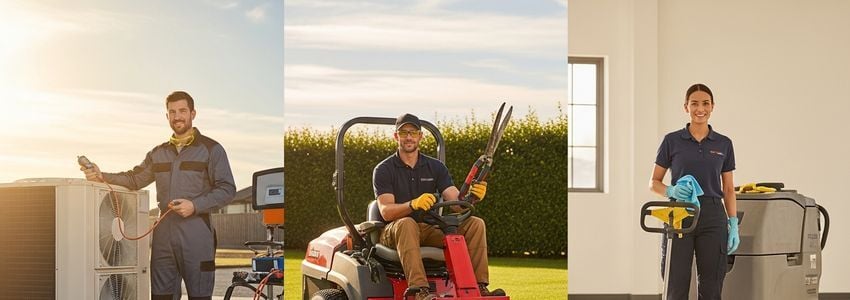
For service businesses - which rely heavily on specialized tools and equipment to deliver their core service - this type of financing can be transformative. A landscaping company can acquire commercial-grade mowers and excavating equipment. An HVAC contractor can outfit a new service van with diagnostic tools. A cleaning company can scale from residential to commercial contracts by financing industrial-grade equipment.
The core premise is simple: rather than paying the full cost of expensive equipment upfront, you spread the cost over monthly payments while immediately putting the equipment to work generating revenue. The equipment pays for itself through the jobs it enables you to complete.
Key Fact: According to the Equipment Leasing and Finance Association (ELFA), approximately 79% of U.S. businesses use some form of financing to acquire equipment. Service businesses that finance equipment grow revenue 2-3x faster than those that rely solely on cash purchases.
What Tools and Equipment Can Be Financed?
One of the most attractive aspects of equipment financing for service businesses is its broad applicability. Nearly any tangible business tool or piece of equipment qualifies, provided it has a useful life of at least one year and serves a legitimate business purpose.
Field Service and Trade Equipment
Plumbers can finance pipe cameras, hydro-jetting systems, and drain snaking machines. Electricians can finance wire pullers, conduit benders, and panel installation tools. HVAC technicians can finance manifold gauges, refrigerant recovery systems, leak detection equipment, and service vans equipped with their entire tool inventory.
Landscaping and Outdoor Service Equipment
Commercial zero-turn mowers, skid steer loaders, trenchers, stump grinders, and entire trailer setups can all be financed. Even snow removal equipment like plows and salt spreaders qualify, letting landscaping companies operate year-round.
Cleaning and Janitorial Equipment
Industrial floor buffers, carpet extraction machines, commercial pressure washers, and vehicle-mounted steam cleaning systems are all eligible. For companies targeting commercial cleaning contracts, financing allows them to acquire equipment that meets the specific demands of office buildings, hospitals, and retail centers.
IT and Technology Tools
Field management software, tablets, laptops, GPS fleet tracking systems, customer management platforms, and diagnostic tools can often be financed as part of an equipment package or standalone technology loan.
Vehicles and Fleet Assets
Work vans, pickup trucks, flatbed trailers, and specialized service vehicles are among the most commonly financed assets for service businesses. Many lenders offer dedicated fleet financing programs with competitive rates for businesses acquiring multiple vehicles.
By the Numbers
Service Business Equipment Financing - Key Statistics
79%
of U.S. businesses use financing to acquire equipment
$1.1T
in equipment financed annually in the U.S.
2-5 Days
typical funding timeline with modern lenders
33M+
small businesses operating in the U.S.
Key Benefits of Financing Your Service Business Tools
Service business owners often ask whether it makes more sense to save up and pay cash for equipment or to finance it. In most cases, financing delivers a measurable business advantage, particularly for growth-oriented companies. Here are the most significant benefits:
Preserve Working Capital
Cash is the lifeblood of a service business. Payroll, insurance, fuel, materials, and marketing all require ready access to cash. When you pay $40,000 out of pocket for a new piece of equipment, you deplete the reserve that keeps your business running smoothly during slow seasons or unexpected downturns. Equipment financing lets you preserve that cash while still acquiring the tools you need.
Generate Revenue Immediately
The most compelling argument for equipment financing is simple math: the equipment generates revenue the day it arrives. If a new commercial pressure washer allows you to take on three additional cleaning contracts worth $3,000 per month, and your monthly loan payment is $800, you are net positive from day one. Waiting to save up means months of missed revenue.
Flexible Repayment Structures
Modern lenders offer a wide range of repayment structures tailored to the cash flow patterns of service businesses. Seasonal businesses can often negotiate step-up or seasonal payment plans. Companies with strong cash flow can accelerate repayment. Terms typically range from 12 to 84 months depending on the equipment type and loan amount.
Potential Improvements to Business Credit
Consistently making on-time payments on a business loan builds your company's credit profile, which improves your ability to secure larger financing in the future at better rates. Many service business owners who start with smaller equipment loans eventually access six-figure credit lines as their creditworthiness improves.
Stay Current with Technology
Equipment evolves quickly, and service businesses that use outdated tools lose competitive ground. Equipment financing - particularly leasing structures - allows you to upgrade at the end of each term, ensuring you always have access to current technology without carrying the full burden of depreciation.
Ready to Equip Your Service Business for Growth?
Crestmont Capital provides fast, flexible equipment financing for service businesses nationwide. Apply in minutes - no obligation.
Apply Now →How Equipment Financing Works Step-by-Step
Understanding the mechanics of equipment financing helps you make informed decisions and approach the process with confidence. Here is what typically happens from application to funding:
Quick Guide
How Equipment Financing Works - At a Glance
Determine exactly what tools or equipment you need, get vendor quotes, and confirm the total acquisition cost.
Apply with a lender like Crestmont Capital. The application typically takes minutes and requires basic business and financial information.
The lender reviews your application and provides a decision, often within 24-48 hours. You receive a term sheet outlining loan amount, rate, and repayment schedule.
Once you accept the terms, the lender funds the purchase directly to the vendor. Your equipment is delivered and you begin making monthly payments.
Put the equipment to work immediately. Monthly payments are typically offset by the additional revenue the equipment enables.
Types of Financing Options Available for Service Businesses
Not all equipment financing is structured the same way. Understanding the options helps you select the approach best suited to your business needs, equipment type, and financial situation.
Equipment Loans
An equipment loan functions similarly to a car loan. The lender provides funds to purchase the equipment, and you own the asset while repaying the loan with interest over a fixed term. At the end of the term, you own the equipment outright. Equipment loans are ideal for tools and machinery you plan to keep and use long-term. Interest rates typically range from 6% to 24% depending on credit profile, loan term, and equipment type.
Equipment Leasing
With an equipment lease, you make monthly payments to use the equipment for a fixed period - typically 24 to 60 months - without owning it. At the end of the lease, you can purchase the equipment at fair market value, renew the lease, or return the equipment and upgrade to newer models. Leasing works well for technology and equipment that becomes obsolete quickly. Monthly payments are often lower than loan payments because you are not building equity in the asset.
Business Line of Credit
A business line of credit provides revolving access to funds you can draw against as needed. For service businesses acquiring tools incrementally or managing ongoing equipment expenses, a line of credit offers flexibility that term loans do not. You only pay interest on what you draw, making it a cost-effective solution for businesses with variable equipment needs.
SBA Equipment Loans
SBA loans, particularly the SBA 7(a) and SBA 504 programs, can be used to finance equipment for service businesses. SBA loans typically offer the most competitive interest rates and longest repayment terms, but the application process is more rigorous and approval timelines are longer. They work best for businesses with strong credit profiles seeking larger amounts.
Working Capital Loans for Equipment
Working capital loans can also be used to fund smaller equipment purchases. While not secured by the equipment itself, these loans provide a fast funding path for service businesses that need tools quickly or for amounts too small to justify a formal equipment loan.
Financing vs. Paying Cash: A Service Business Comparison
| Factor | Equipment Financing | Paying Cash |
|---|---|---|
| Impact on Working Capital | Capital preserved for operations | Significant capital depleted upfront |
| Speed to Equipment | Days to weeks | Immediate (if funds available) |
| Total Cost | Higher due to interest | Lower (no interest) |
| Flexibility for Multiple Purchases | High - spread across multiple assets | Limited by available cash |
| Credit Building | Builds business credit profile | No credit impact |
| Business Risk | Monthly obligation; cash cushion maintained | No debt; but cash reserve depleted |
| Ability to Scale | Can finance multiple tools simultaneously | Limited by savings rate |
For most growing service businesses, financing delivers a better strategic outcome even if the total cost is slightly higher due to interest. The ability to acquire revenue-generating equipment now - rather than waiting - almost always outweighs the cost of financing when the equipment is put to productive use immediately.
Pro Tip: When evaluating whether to finance equipment, calculate your expected monthly revenue increase from the new equipment and compare it to the monthly loan payment. If the revenue increase exceeds the payment, financing almost certainly makes financial sense for your business.
Who Qualifies for Service Business Equipment Financing?
Lenders evaluate several factors when reviewing equipment financing applications from service businesses. Understanding these criteria helps you prepare a stronger application and set realistic expectations.
Time in Business
Most traditional lenders prefer businesses that have been operating for at least two years, as this demonstrates stability and reduces risk. However, many alternative lenders - including Crestmont Capital - work with businesses that have been operating for as few as six months to one year, provided they show adequate revenue.
Annual Revenue
Lenders want to see that your business generates sufficient revenue to support monthly loan payments. A general guideline is that your annual revenue should be at least three to five times the annual loan payment. For example, if your monthly payment is $1,000, you would ideally show at least $36,000 to $60,000 in annual revenue. Many lenders have minimum revenue thresholds starting at $100,000 per year.
Credit Score
Both your personal credit score and your business credit profile are considered. A personal score above 650 is generally the threshold for most equipment financing programs, though some lenders offer programs for borrowers with scores as low as 580. Bad credit equipment financing programs exist specifically for business owners who are still building their credit profile.
Equipment Type and Condition
New equipment is generally easier to finance than used equipment, though many lenders offer used equipment financing programs. Lenders may require an appraisal for older equipment and may cap the loan-to-value ratio based on the asset's condition and remaining useful life.
Industry and Business Type
Service businesses across virtually every sector qualify for equipment financing. Contractors, tradespeople, cleaning companies, landscapers, pest control operators, property maintenance firms, IT service providers, and hundreds of other service business types regularly use equipment financing. Some specialized industries have dedicated financing programs with terms tailored to their specific needs.
Not Sure If You Qualify?
Apply in minutes and get a decision fast. Crestmont Capital works with service businesses at all stages - even newer companies and those with less-than-perfect credit.
Check Your Options →How Crestmont Capital Helps Service Businesses
Crestmont Capital is a leading business lender serving service businesses across the United States. Rated #1 in the country, Crestmont offers a comprehensive suite of financing solutions designed specifically for the unique challenges and opportunities service businesses face.
When you work with Crestmont Capital, you get access to fast approvals, flexible terms, and a team of specialists who understand service industry cash flows, seasonal revenue patterns, and the equipment demands of companies like yours. Our equipment financing programs cover everything from individual tools and machines to entire fleet packages.
Crestmont's Equipment Financing Advantages
- Fast Decisions: Approvals often within 24-48 hours, with funding in as little as 2-5 business days.
- Flexible Terms: Loan terms from 12 to 84 months, structured around your cash flow.
- Broad Eligibility: We work with businesses with as little as 6-12 months of operating history.
- High Approval Rates: Our underwriting team considers the full picture of your business - not just your credit score.
- No Collateral Beyond Equipment: In most cases, the equipment itself serves as the only collateral required.
- Dedicated Advisors: Our specialists understand the service industry and provide guidance tailored to your specific situation.
Crestmont also offers commercial equipment financing for larger acquisitions, as well as small business financing programs for newer companies that may not yet qualify for traditional bank loans. Whether you need $10,000 for a single tool or $500,000 for an entire service fleet, Crestmont has programs designed to help you succeed.
Our team has helped thousands of service businesses - from solo operators to regional companies with dozens of employees - acquire the equipment they need to grow. We understand that every dollar matters when you are running a service business, and we structure our programs to maximize your financial leverage while minimizing risk.
Why Crestmont? According to Bloomberg and CNBC reporting on small business lending trends, businesses that work with experienced specialty lenders - rather than large banks - report higher approval rates and faster funding timelines. Crestmont Capital focuses exclusively on business lending, meaning your application receives specialized attention and underwriting expertise.
Real-World Scenarios: How Service Businesses Use Equipment Financing
Understanding how other service businesses have used equipment financing successfully can help you envision how it might work for your own operation.
Scenario 1: The Growing Landscaping Company
A landscaping company in the Southeast had built a solid residential client base but was turning away commercial bids because they lacked the equipment to handle large properties. The owner identified a commercial zero-turn mower, a skid steer loader, and a dump trailer as the assets that would unlock the commercial market. Total cost: $85,000.
Rather than depleting working capital or waiting two years to save up, the owner applied for equipment financing and secured a 60-month term at a competitive rate. The monthly payment was approximately $1,700. Within the first three months of having the equipment, the company landed two commercial contracts worth $4,500 per month combined. The equipment paid for itself many times over within the first year.
Scenario 2: The HVAC Contractor Scaling the Fleet
An HVAC contractor with five years in business had consistently strong seasonal revenue but struggled to expand beyond three service trucks during peak season. The owner wanted to add two fully outfitted service vans to handle demand. Each van, fully equipped with tools, diagnostic equipment, and inventory, would cost approximately $55,000.
Using a combination of a commercial truck financing program and a separate equipment loan for tools, the contractor was able to finance both vans simultaneously. The additional capacity allowed the business to service 30 more customers per week during peak season, generating enough additional revenue to pay down both loans ahead of schedule.
Scenario 3: The Commercial Cleaning Startup
A solo cleaning operator who had been serving residential clients for 18 months decided to pursue commercial contracts. Commercial cleaning requires industrial-grade equipment - floor buffers, commercial extractors, and pressure washers - that can cost $15,000 to $30,000 for a starter package.
The operator used a startup equipment financing program to acquire the necessary equipment. While the interest rate was slightly higher than a traditional loan due to limited business history, the monthly payment of $650 was easily offset by a single new commercial client worth $1,800 per month. Within four months, the operator had secured three commercial clients and was generating more revenue than ever from the residential side.
Scenario 4: The IT Service Provider Upgrading Technology
A managed IT services company needed to upgrade its technician workstations, diagnostic tools, and remote monitoring software to maintain its competitive edge. Total technology investment: $42,000. Rather than purchasing outright, the company used a technology equipment lease with a 36-month term, allowing them to upgrade to newer hardware at the end of the term without being locked into aging technology.
Scenario 5: The Plumbing Company Winning Bigger Contracts
A plumbing company that had been focused on residential service calls wanted to pursue commercial and municipal projects. Those projects required video inspection cameras, hydro-jetting systems, and a dedicated service van - approximately $60,000 in equipment. Equipment financing allowed them to acquire everything at once. Their first municipal contract alone covered four months of loan payments.
Scenario 6: The Property Maintenance Firm Building Scale
A property maintenance company managing 40 residential properties decided to pursue commercial property management contracts. This required commercial-grade power tools, pressure washing rigs, and additional service vehicles. Equipment financing allowed them to acquire $95,000 in equipment across multiple vendors using a single loan application, streamlining the process significantly.
How to Get Started
Your Path to Equipment Financing
Make a list of the specific tools, machines, or vehicles you need. Get vendor quotes so you have exact costs before applying.
Complete our quick application at offers.crestmontcapital.com/apply-now. The form takes just a few minutes and requires basic business information.
A Crestmont Capital advisor will review your application, discuss your options, and help you select the financing structure that best fits your needs and cash flow.
Once approved, funds are disbursed quickly - often within 2-5 business days. Your equipment is ordered and delivered so you can get to work immediately.
Start Growing Your Service Business Today
Join thousands of service businesses that have used Crestmont Capital to acquire the tools they need to grow. No obligation - get your options in minutes.
Apply Now →Frequently Asked Questions
What is equipment financing for service businesses?
Equipment financing for service businesses is a lending product that allows companies to acquire the tools, machinery, vehicles, and technology they need by spreading the cost over monthly payments. The equipment typically serves as collateral, making it easier to qualify than unsecured loans. Service businesses use equipment financing to preserve working capital while still accessing the assets they need to deliver services and generate revenue.
What types of equipment can service businesses finance?
Nearly any business equipment qualifies, including power tools, commercial vehicles, landscaping machinery, HVAC equipment, cleaning systems, IT hardware, diagnostic tools, pressure washers, floor care machines, and much more. Both new and used equipment can typically be financed, though terms may vary. The equipment must have a useful business life of at least one year and serve a legitimate business purpose.
How long does the equipment financing approval process take?
With modern lenders like Crestmont Capital, equipment financing approvals often happen within 24-48 hours of submitting a complete application. Funding typically follows within 2-5 business days after approval and signing of documents. Traditional bank loans may take 2-4 weeks or longer. The speed of the process depends on the complexity of the request and how quickly the applicant provides required documentation.
What credit score do I need to qualify for equipment financing?
Most equipment financing programs require a personal credit score of at least 600-650, though some lenders offer programs for borrowers with scores as low as 580. At Crestmont Capital, we evaluate the full picture of your business - including revenue, time in business, and industry - rather than focusing solely on credit score. Businesses with lower credit scores may qualify for specialized programs at slightly higher rates, which can still make excellent financial sense depending on the equipment's revenue-generating potential.
What is the difference between equipment financing and equipment leasing?
With equipment financing (a loan), you own the equipment at the end of the repayment term. With a lease, you pay to use the equipment for a set period and then have the option to purchase it at fair market value, renew the lease, or return it. Financing is better for equipment you plan to keep long-term. Leasing works well for technology that becomes outdated quickly, as it allows you to upgrade to newer models at the end of each term. Monthly lease payments are often lower than loan payments since you are not building equity.
Can a startup or new service business get equipment financing?
Yes, though options are more limited for newer businesses. Most traditional lenders prefer businesses with at least two years of operating history, but many alternative lenders work with businesses as young as six to twelve months. Startup equipment financing programs typically require stronger personal credit, may ask for a larger down payment, and often carry higher interest rates to compensate for the additional risk. As your business history grows, your financing options and terms improve significantly.
How much can I borrow for equipment financing?
Equipment financing amounts vary widely based on the lender, your business profile, and the equipment being financed. Crestmont Capital offers programs ranging from $10,000 for individual tools and smaller equipment up to several million dollars for large fleet or major equipment acquisitions. The amount you qualify for depends on your annual revenue, credit profile, time in business, and the value of the equipment being purchased.
What documents do I need to apply for equipment financing?
Typical documentation requirements include a completed application, government-issued ID, business bank statements from the past 3-6 months, basic business information (EIN, business address, time in business), and a vendor quote or invoice for the equipment. For larger loans, lenders may also request business tax returns, financial statements, and a business plan. Crestmont Capital's streamlined process minimizes paperwork to help you get funded faster.
Are there down payment requirements for equipment financing?
Many equipment financing programs offer 100% financing with no down payment required, which is one of the most attractive features of this lending category. Some lenders may require a down payment of 10-20% for newer businesses, lower credit scores, or higher-risk equipment categories. In many cases, the first month's payment functions as a soft down payment. Always ask your lender about the specific requirements of the program you are applying for.
Can I finance used equipment for my service business?
Yes. Many lenders, including Crestmont Capital, offer financing for used equipment. Terms for used equipment may be slightly shorter and rates slightly higher than new equipment loans, as the lender's collateral position is affected by the depreciated value of older assets. Used equipment financing is an excellent option for service businesses seeking to minimize costs while still acquiring the tools they need. Lenders typically require the equipment to be in good working condition and may cap the loan based on appraised value.
What interest rates should I expect on equipment financing?
Equipment financing interest rates typically range from 6% to 30% depending on several factors including the borrower's credit score, time in business, annual revenue, equipment type, and loan term. Businesses with strong credit and established revenue history qualify for rates at the lower end of that range. Newer businesses or those with credit challenges typically pay more. It is always worth getting multiple quotes to compare terms before committing to a specific lender or program.
Can equipment financing help my business build credit?
Yes. Repaying an equipment loan consistently and on time builds your business credit profile, which improves your ability to access larger financing amounts at better rates in the future. Many service business owners deliberately use equipment financing as a credit-building tool, starting with smaller loans and systematically working toward larger credit facilities as their profile strengthens. This is an important long-term financial strategy for any service business owner planning to grow.
How does equipment financing differ from a general business loan?
The primary distinction is collateral. Equipment financing is secured by the specific equipment being purchased, which reduces risk for the lender and often results in better rates and easier qualification compared to unsecured business loans. General business loans can be used for any business purpose but typically require stronger credit or additional collateral. Equipment financing also typically offers longer repayment terms matched to the useful life of the asset, which can result in lower monthly payments.
Can I finance multiple pieces of equipment at the same time?
Yes. Many lenders, including Crestmont Capital, allow you to bundle multiple equipment items into a single financing package. This is particularly common when service businesses are outfitting a new service van, launching a new crew, or opening an additional location. Bundled financing simplifies the administrative process and often results in more favorable terms than applying separately for each item. Discuss your full equipment list with your lender during the application process.
What happens if my business cannot make a payment on the equipment loan?
If you anticipate difficulty making a payment, the most important thing you can do is contact your lender immediately. Most reputable lenders, including Crestmont Capital, are willing to work with borrowers facing temporary hardship. Options may include payment deferral, loan modification, or restructuring. If a loan goes into default, the lender has the right to repossess the equipment used as collateral. Communicating proactively is always the best approach when facing financial challenges.
Conclusion: Equipment Financing Is a Growth Strategy, Not Just a Loan
Equipment financing for service businesses is more than a way to acquire tools - it is a strategic growth lever. When deployed thoughtfully, it allows you to expand your capacity, take on more clients, and generate more revenue today, rather than waiting years to save up for the equipment that would make those outcomes possible.
The most successful service businesses treat equipment financing as a core part of their growth strategy. They regularly assess their capacity constraints, identify the tools and equipment that would remove those constraints, and use financing to acquire those assets while maintaining the working capital flexibility to weather unexpected challenges and seize new opportunities.
Crestmont Capital has helped thousands of service businesses across the country do exactly that. Whether you are a solo operator looking to acquire your first major piece of equipment or an established company building out a fleet, our team is ready to help you find the financing structure that fits your business and your goals.
Apply today at offers.crestmontcapital.com/apply-now and take the next step in equipping your service business for the growth you have worked hard to achieve.
Disclaimer: The information provided in this article is for general educational purposes only and is not financial, legal, or tax advice. Funding terms, qualifications, and product availability may vary and are subject to change without notice. Crestmont Capital does not guarantee approval, rates, or specific outcomes. For personalized information about your business funding options, contact our team directly.