
 (800) 949-0401
Financing Backup Equipment for Critical Operations
Backup equipment financing gives businesses a cost-effective path to protecting mission-critical operations without depleting working capital. Whether you run a hospital, a manufacturing plant, a data center, or a logistics company, unexpected equipment failure can mean thousands of dollars in lost revenue per hour. Smart financing lets you maintain operational continuity, protect your customers, and comply with regulatory requirements, all while preserving the cash flow your business depends on.
In This Article
- What Is Backup Equipment Financing?
- Why Backup Equipment Matters for Critical Operations
- Key Benefits of Financing Backup Equipment
- How Backup Equipment Financing Works
- Types of Backup Equipment Businesses Finance
- Financing Options Available
- Who Qualifies for Backup Equipment Financing?
- How Crestmont Capital Helps
- Real-World Scenarios
- Backup Equipment Financing by the Numbers
- Frequently Asked Questions
- Next Steps
- Conclusion
What Is Backup Equipment Financing?
Backup equipment financing refers to any funding arrangement that enables a business to purchase, lease, or otherwise acquire redundant machinery, technology, or infrastructure designed to take over when primary equipment fails. Rather than paying the full cost upfront, businesses spread the expense across monthly installment payments, freeing working capital for payroll, inventory, and growth.
The concept is rooted in risk management. When a single piece of equipment represents a critical link in your operations, having a funded backup is not optional, it is prudent business planning. According to research compiled by the U.S. Small Business Administration, equipment failure is among the top causes of unplanned operational downtime, and most small-to-midsize businesses underestimate both the frequency and cost of failure events.
Backup equipment financing can be structured as a traditional equipment loan, a business line of credit drawn as needed, or an equipment lease with an option to purchase. Each structure offers different tax, cash flow, and balance sheet implications, which we will explore in detail.
The businesses that benefit most are those in industries where downtime carries severe consequences: healthcare providers relying on diagnostic imaging equipment, cold-chain logistics companies dependent on refrigeration systems, manufacturers whose entire production lines hinge on a single CNC machine, and financial services firms requiring constant network uptime to serve clients.
Why Backup Equipment Matters for Critical Operations
Equipment failure does not discriminate by business size or industry. According to data from the Federal Reserve and industry insurance reports, unplanned downtime costs U.S. businesses an estimated $50 billion annually. For small and mid-sized businesses, a single day of downtime can mean $10,000 to $250,000 in lost revenue, depending on your sector.
Beyond direct revenue loss, equipment failure creates cascading problems:
- Customer churn: Clients who experience service interruptions often seek alternatives and may not return.
- Regulatory penalties: Healthcare, food processing, and financial services companies face compliance fines for operational failures.
- Reputational damage: Even a single major outage can erode years of brand trust, as documented by studies from Reuters Business.
- Employee productivity loss: Workers sitting idle during a failure still draw wages, adding fixed cost without output.
- Supply chain disruptions: Upstream and downstream partners are affected when your operations stall.
Having financed backup equipment on standby eliminates most of these risks. The cost of financing a redundant generator, server cluster, or processing unit is typically far less than the cost of a single major failure event. This is not a luxury investment, it is a measurable return on capital.
The 2024 Allianz Risk Barometer report, frequently cited by CNBC Small Business, identified business interruption as the single greatest risk concern among executives globally, ahead of cybercrime and natural catastrophe. Backup equipment directly addresses this risk category.
Ready to Grow Your Business?
Get fast, flexible financing from the #1 business lender in the U.S. No obligation - apply in minutes.
Apply Now ->Key Benefits of Financing Backup Equipment
Financing backup equipment delivers a combination of financial and operational advantages that outright purchase cannot match:
- Capital preservation: Instead of committing $50,000 to $500,000 from reserves, you pay fixed monthly installments that are predictable and budget-friendly.
- Tax efficiency: Equipment loan interest and depreciation are generally tax-deductible. Section 179 of the IRS code also allows businesses to deduct the full purchase price of financed equipment in the year it is placed in service, up to a $1.16 million limit for 2024.
- Scalability: Financing structures can be designed to match your operational growth, with step-up payment options as revenue increases.
- Technology refresh cycles: Leasing arrangements ensure you always have access to current-generation equipment without the burden of disposal.
- Improved credit profile: Responsibly serviced equipment loans strengthen your business credit file with Dun and Bradstreet, Experian Business, and Equifax Business, improving your future financing terms.
- Collateral advantage: Equipment serves as its own collateral, making approval more accessible for businesses that lack other pledgeable assets.
- Operational resilience: Documented backup equipment investments can reduce business insurance premiums and satisfy the business continuity planning requirements of enterprise clients.
- Vendor relationships: Financing through a specialized lender like Crestmont Capital often unlocks volume purchasing agreements with equipment vendors that yield 5-15% discounts.
How Backup Equipment Financing Works
The mechanics of equipment financing for backup systems follow a straightforward process:
Step 1: Identify Your Critical Equipment Gaps
Begin with a risk assessment of every piece of equipment your operations depend on. Categorize each asset by failure frequency, replacement lead time, and revenue impact per hour of downtime. This "criticality matrix" becomes the foundation of your financing request.
Step 2: Determine the Appropriate Financing Structure
Depending on whether you want ownership, a rental arrangement, or maximum flexibility, you will choose between an equipment loan, a lease, or a business line of credit. Each structure has distinct accounting treatment. Loans and capital leases appear as assets on your balance sheet, while operating leases may qualify as off-balance-sheet treatment under certain accounting standards.
Step 3: Apply and Document
Lenders typically require the last two to three years of business tax returns, recent bank statements showing cash flow, a description of the equipment being financed, and occasionally a vendor quote. Specialized lenders may have expedited programs that approve within 24 to 48 hours.
Step 4: Equipment Delivery and Activation
Once approved, funds are disbursed directly to the equipment vendor. Your backup system is delivered, installed, and tested, typically within days. You begin making scheduled payments according to your loan or lease terms.
Step 5: Ongoing Management
Unlike a capital expenditure that is often forgotten in the budget, a financed backup asset has a known monthly cost that feeds directly into your operating expense planning. Many lenders also offer mid-term modifications, allowing you to upgrade or expand your backup assets as your business scales.
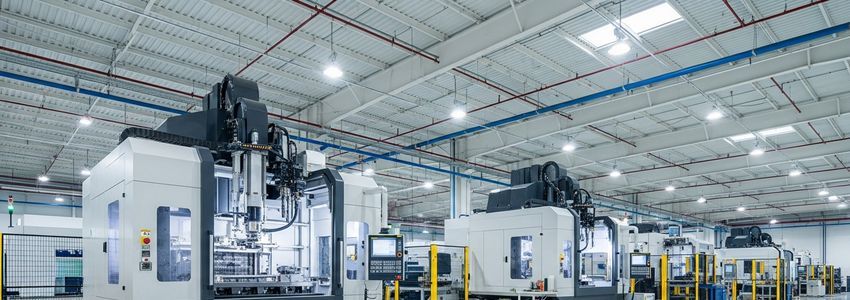
Inline image for context:
Types of Backup Equipment Businesses Finance
The range of assets financed as "backup equipment" is broad, spanning nearly every sector of the economy:
Power and Energy Systems
- Diesel and natural gas generators for hospitals, data centers, and manufacturing facilities
- Uninterruptible power supply (UPS) arrays
- Battery storage systems for renewable energy-dependent operations
- Automatic transfer switches and power conditioning equipment
Information Technology and Communications
- Redundant server clusters and failover systems
- Network switches, routers, and firewall appliances
- Backup storage arrays and NAS devices
- Satellite communications terminals for remote operations
Manufacturing and Production
- CNC machines, lathes, and milling centers kept as standby capacity
- Industrial compressors, pumps, and conveyor systems
- Injection molding or casting equipment for high-volume producers
- Quality control and inspection equipment
Healthcare and Life Sciences
- Ventilators, infusion pumps, and patient monitoring systems
- Diagnostic imaging equipment including portable ultrasound and X-ray units
- Sterilization and autoclave equipment
- Laboratory analyzers and centrifuges
Cold Chain and Food Service
- Refrigeration compressors and condensing units
- Walk-in cooler and freezer backup systems
- Commercial kitchen equipment including ranges, ovens, and dishwashers
- Temperature monitoring and alarm systems
Logistics and Transportation
- Spare tractors, trailers, and lift gate trucks
- Forklifts and material handling equipment
- Warehouse management system hardware
- Fuel dispensing equipment for private fleets
Financing Options Available
Businesses have multiple paths to finance backup equipment, and the right choice depends on your financial profile, tax situation, and operational requirements:
Equipment Loans
Equipment financing through a direct loan is the most straightforward approach. You borrow the purchase price, take ownership immediately, and repay over a fixed term of 24 to 84 months. The equipment serves as collateral, often reducing or eliminating the need for additional security. Interest rates range from 5% to 18% depending on your credit profile, time in business, and lender type.
Equipment Leasing
For businesses that prefer off-balance-sheet treatment or that need to refresh equipment on a regular cycle, leasing offers a monthly payment without ownership transfer. At lease end, you typically have the option to return the equipment, renew the lease, or purchase at fair market value. Operating leases preserve lines of credit for other business needs.
Business Line of Credit
A revolving business line of credit is ideal for businesses that need to purchase backup components on an ad-hoc basis as equipment ages out or fails. You draw funds as needed and repay, with the available credit replenishing. This structure is particularly effective for IT departments managing rolling hardware refresh programs.
Small Business Loans
General-purpose small business loans can be used to purchase backup equipment alongside other operational needs. These term loans typically offer 12 to 60-month repayment terms and can cover both the equipment cost and associated installation, training, and integration expenses.
SBA Loans
SBA loans, particularly the 7(a) program, are well-suited for larger backup equipment purchases because they offer the lowest interest rates available, extended repayment terms, and higher loan amounts. The tradeoff is a longer approval process, typically 30 to 90 days, making them less appropriate for urgent backup needs.
Fast Business Loans
When a critical piece of primary equipment has already failed and you need a backup immediately, fast business loans from alternative lenders can deliver funding in 24 to 72 hours. These programs trade speed for slightly higher rates, but the cost is almost always lower than continued downtime losses.
Ready to Grow Your Business?
Get fast, flexible financing from the #1 business lender in the U.S. No obligation - apply in minutes.
Apply Now ->Who Qualifies for Backup Equipment Financing?
Backup equipment financing is broadly accessible, but lenders evaluate several key factors when underwriting these requests:
Time in Business
Most conventional equipment lenders require a minimum of two years in business. Some alternative lenders will approve businesses as young as six months old if revenue and bank statement history are strong. Startups with less than six months of history typically need SBA Microloan programs or specialized startup financing.
Credit Score
Owner credit scores of 600 or above typically qualify for equipment financing, though the best rates are reserved for scores above 680. Businesses with bad credit can still access equipment financing through subprime lenders or by providing larger down payments, typically 20% or more of the equipment value.
Revenue
Most equipment lenders look for monthly revenue of at least $10,000 to $15,000, though startups or seasonal businesses may qualify with strong projections and asset-based underwriting. Generally, your debt service (loan payments) should represent no more than 30% to 40% of monthly gross revenue.
Equipment Type and Age
Lenders prefer new or lightly used equipment because it retains collateral value. Financing used backup equipment that is more than five years old may require a higher down payment or shorter loan term to compensate for depreciation risk. Specialized or highly customized equipment may receive lower financing amounts relative to cost.
Business Structure
All entity types are eligible, including sole proprietors, LLCs, S-corps, C-corps, and partnerships. Sole proprietors may face additional documentation requirements since their personal and business finances are more intertwined.
How Crestmont Capital Helps
Crestmont Capital is a leading provider of equipment financing and small business loans built specifically for the operational needs of American businesses. Unlike traditional banks that evaluate equipment financing through a one-size-fits-all underwriting lens, Crestmont Capital understands that backup equipment is a strategic investment, not a luxury.
Here is how Crestmont Capital makes backup equipment financing easier:
- Fast approvals: Applications are reviewed within hours, with decisions typically rendered within 24 to 48 business hours. For urgent situations, same-day pre-approvals are available.
- Flexible structures: We offer term loans, leases, lines of credit, and SBA programs under one roof, so you get the structure that best fits your financial situation.
- High approval rates: Our underwriting team evaluates the full picture of your business, not just your credit score, making approval accessible even for businesses that have been turned down by traditional banks.
- No pre-payment penalties: If your business cash flow improves and you want to pay off the loan early, Crestmont Capital does not charge pre-payment penalties.
- Dedicated support: A dedicated loan advisor guides you from application through funding and beyond, with ongoing support as your financing needs evolve.
- Competitive rates: Because Crestmont Capital specializes in business lending, we deliver rates that are competitive with banks while offering far more flexibility and faster processing.
Businesses across manufacturing, healthcare, food service, technology, and logistics trust Crestmont Capital to deliver the working capital and equipment financing they need to stay competitive and resilient.
Real-World Scenarios
Scenario 1: The Regional Hospital
A 200-bed regional hospital in Ohio relies on a single MRI machine generating $2,500 per scan, with average daily volume of eight scans. When the primary MRI unit required unexpected service taking three weeks, the hospital faced $420,000 in lost imaging revenue. After financing a portable backup MRI unit for $185,000 over 60 months at $3,800 per month, the hospital maintained imaging continuity during the next maintenance cycle and generated ROI within the first year.
Scenario 2: The Cold Storage Distributor
A regional food distributor in Texas operating a 40,000 square foot cold storage facility lost $380,000 in inventory when a primary refrigeration compressor failed during a summer heat wave. After financing two backup condensing units for $95,000 total, the company added just $2,100 per month to its operational costs while eliminating a failure risk that had nearly bankrupted it. Per reporting by Forbes Business Council, cold storage failures rank among the costliest equipment events for food businesses.
Scenario 3: The Manufacturing Plant
A precision parts manufacturer in Michigan operates three CNC machining centers, two of which run on the same model. When one machine failed, the remaining two units absorbed production, but delivery commitments slipped by 11 days, triggering $78,000 in penalty clauses. By financing a fourth CNC center as dedicated backup capacity for $145,000 over 48 months, the company eliminated contract penalty exposure entirely, and the backup machine was producing revenue within 60 days of installation.
Scenario 4: The Data Center Services Company
A managed IT services firm in California with 240 business clients experienced a primary storage array failure that caused six hours of total service outage. The reputational fallout cost the company three major contracts worth $340,000 in annual recurring revenue. After financing redundant storage infrastructure and dual-path networking for $210,000, the company marketed its "guaranteed uptime" SLA to new enterprise prospects and recovered lost revenue within 18 months.
Scenario 5: The Hotel and Convention Center
A 350-room convention hotel in Las Vegas financed a backup commercial HVAC system after its primary chiller failed during a peak convention weekend, resulting in $290,000 in rebooking costs and lost food and beverage revenue. The financed backup system cost $118,000 over 60 months, and the hotel added climate reliability as a competitive differentiator in sales materials, attracting three long-term convention contracts valued at $2.1 million combined.
Scenario 6: The Commercial Bakery
A 65-employee commercial bakery supplying 40 regional grocery chains financed a backup deck oven and proofing system after learning that its primary oven required three-week lead time for major repairs. The $62,000 financing arrangement spread costs over 36 months at $1,850 per month. During a subsequent primary oven failure, the backup kept production at 80% capacity, honoring all retail supply agreements and preserving $180,000 in monthly revenue.
Backup Equipment Financing by the Numbers
Key Statistics: Why Backup Equipment Financing Matters
$50B
Annual cost of unplanned downtime for U.S. businesses
82%
of businesses experience at least one significant equipment failure per year
$10K-$250K
Average daily revenue loss during equipment downtime by sector
78%
of businesses with backup systems report faster post-failure recovery
$1.16M
Section 179 deduction limit for financed equipment in 2024
24-48 hrs
Typical approval time for equipment financing from specialty lenders
Sources: Gartner Research, SBA.gov, Equipment Leasing and Finance Association, IRS.gov
Frequently Asked Questions
What is backup equipment financing?
Backup equipment financing is any loan, lease, or line of credit used to fund the purchase or leasing of redundant machinery, technology, or infrastructure that activates when primary equipment fails. It is a proactive business continuity investment that protects revenue, customer relationships, and regulatory compliance.
How much can I borrow to finance backup equipment?
Loan amounts vary by lender and your business profile, but equipment financing typically ranges from $5,000 to $5 million or more. Specialized lenders like Crestmont Capital can finance backup equipment at any scale, from a single backup server costing $8,000 to a complete industrial generator system valued at $2 million.
What credit score do I need to qualify?
Most equipment lenders look for a minimum owner credit score of 600, though conventional bank lenders often require 680 or higher. Specialty lenders and alternative financing programs are available for businesses with scores below 600, typically requiring larger down payments or additional collateral.
Can I finance used backup equipment?
Yes, most equipment lenders will finance used equipment, though loan terms may be shorter and interest rates slightly higher than for new equipment. The age, condition, and remaining useful life of the equipment affect the financing terms. Equipment more than 10 years old may face financing restrictions depending on the lender.
Is backup equipment financing tax-deductible?
Generally, yes. Interest paid on equipment loans is tax-deductible as a business expense. Under Section 179 of the IRS tax code, businesses can also deduct the full purchase price of financed equipment in the year it is placed in service, up to $1.16 million for 2024. Always consult a qualified tax advisor regarding your specific situation.
How quickly can I get funded?
Specialty equipment lenders like Crestmont Capital typically provide approvals within 24 to 48 hours and fund within two to five business days for standard applications. Emergency situations involving active equipment failure may qualify for expedited same-day pre-approval. SBA programs take 30 to 90 days and are better suited for planned purchases.
Does financing backup equipment affect my business credit?
Yes, in a positive way if managed well. Equipment loans reported to business credit bureaus such as Dun and Bradstreet, Experian Business, and Equifax Business contribute to your business credit profile. Consistent, on-time payments build your PAYDEX and Intelliscore ratings, improving your access to better rates on future financing.
What documents do I need to apply?
Typical documentation includes the last two years of business tax returns, three to six months of business bank statements, a completed loan application, and a vendor quote or invoice for the equipment. Some lenders also request accounts receivable aging, a balance sheet, and a brief description of how the equipment will be used.
Can a startup finance backup equipment?
Startups can access equipment financing, though it is more challenging. Options include lenders specializing in startup equipment loans, SBA Microloan programs, equipment leases with personal guarantees, and fintech lenders using alternative underwriting criteria. Startups with strong credit profiles and significant industry experience have the best approval odds.
Is a down payment required?
Many equipment lenders offer 100% financing with no down payment for qualified borrowers. Higher-risk applications may require a down payment of 10% to 25%. Providing a down payment of 20% or more often results in lower interest rates and faster approval for businesses with borderline credit profiles.
What is the difference between equipment leasing and an equipment loan?
An equipment loan results in ownership of the equipment once the loan is repaid. The equipment appears as an asset on your balance sheet and can be depreciated. A lease is a rental agreement, often with an option to purchase at lease end. Operating leases may qualify for off-balance-sheet treatment and are preferred by businesses that want to regularly refresh equipment without disposal hassles.
Can I finance backup equipment alongside other business needs?
Yes. A general small business loan or a business line of credit can cover backup equipment costs alongside installation, training, maintenance contracts, and other operational expenses. For larger dedicated equipment purchases, a standalone equipment loan or lease may offer better terms.
What happens if I default on an equipment loan?
If a borrower defaults on an equipment loan, the lender has the right to repossess the equipment, which serves as collateral. Depending on the loan terms, additional personal assets may also be at risk if the borrower signed a personal guarantee. Before defaulting, it is always advisable to contact your lender proactively to discuss payment modifications, deferments, or restructuring options.
Are there industry-specific backup equipment financing programs?
Yes. Healthcare-specific lenders offer programs designed for medical equipment including extended repayment terms up to 84 months. Agricultural equipment programs through the USDA and FSA offer lower rates for farm-critical equipment. The SBA 7(a) and 504 programs also have industry-specific guidelines for healthcare, food service, and manufacturing sectors.
How do I calculate the ROI of financing backup equipment?
Start by estimating your revenue per hour of operation, then multiply by the average duration of equipment failures you have experienced or that are typical in your industry. Compare that cost against the monthly financing payment for backup equipment. If a single failure event would cost more than six months of loan payments, the ROI case is typically compelling.
Next Steps
How to Get Started with Backup Equipment Financing
- Conduct a risk assessment - Identify every critical piece of equipment, its failure history, replacement lead time, and revenue impact per hour of downtime.
- Determine your financing need - Get vendor quotes for backup equipment and determine the total investment required, including installation, maintenance contracts, and integration costs.
- Review your financial profile - Pull your business credit reports from Dun and Bradstreet, Experian Business, and Equifax Business and review your last two years of tax returns and bank statements.
- Choose the right financing structure - Decide between a loan, lease, or line of credit based on your accounting, tax, and cash flow needs.
- Apply with Crestmont Capital - Submit your application online or speak with a dedicated loan advisor who will guide you through the process and match you with the best program for your situation.
- Receive funding and take delivery - Once approved, funds are disbursed directly to your equipment vendor, and you receive your backup systems within days.
- Document and insure - Update your business continuity plan to include the new backup asset, notify your insurer, and schedule regular testing to confirm the backup system is ready to activate when needed.
Ready to Grow Your Business?
Get fast, flexible financing from the #1 business lender in the U.S. No obligation - apply in minutes.
Apply Now ->Conclusion
For businesses that depend on continuous operations, backup equipment financing is one of the highest-ROI investments available. The math is straightforward: a financed backup system costs a fraction of a single major failure event, and that failure may never come, but if it does, your business is protected.
The flexibility of modern equipment financing means that businesses of all sizes, from a six-employee bakery to a 500-person manufacturing plant, can structure a backup equipment solution that fits their budget and operational requirements. Whether you choose an equipment loan, a lease, or a business line of credit, the key is acting before your next failure event rather than after it.
Crestmont Capital has helped thousands of American businesses build operational resilience through smart financing. Our equipment financing programs are designed for speed, flexibility, and transparency, with decisions in as little as 24 hours and no hidden fees. Reach out today to speak with a loan advisor about what backup equipment financing can do for your business.
Additional resources on equipment financing and business continuity planning are available from the U.S. Small Business Administration, and the Equipment Leasing and Finance Association publishes industry data on financing trends that can help you benchmark your backup equipment investment strategy. The AP News Business section regularly covers developments in business continuity and risk management relevant to equipment-dependent operations.
Disclaimer: The information provided in this article is for general educational purposes only and is not financial, legal, or tax advice. Funding terms, qualifications, and product availability may vary and are subject to change without notice. Crestmont Capital does not guarantee approval, rates, or specific outcomes. For personalized information about your business funding options, contact our team directly.








