Opening a franchise is a monumental step toward entrepreneurship, offering the allure of a proven business model combined with the autonomy of being your own boss. Among the myriad of franchise opportunities available, FASTSIGNS stands out as a leader in the visual communications and signage industry. With over 35 years of experience and more than 700 locations worldwide, FASTSIGNS presents a compelling B2B opportunity for aspiring business owners. Its model is built on providing essential services to other businesses, creating a stable and recurring customer base that is less susceptible to the whims of consumer trends.
However, turning the dream of owning a FASTSIGNS franchise into a reality requires significant capital. The total fastsigns franchise investment cost can range from approximately $230,000 to over $320,000, a sum that few individuals have readily available in liquid cash. This is where strategic financing comes into play. Securing the right fastsigns franchise loan is not just a necessary step; it is the foundational pillar upon which your business's future success is built. The right financing package can provide the necessary funds for the initial investment and ensure you have adequate working capital to navigate the crucial first few months of operation.
Understanding how to finance a fastsigns franchise can feel overwhelming. The landscape of commercial lending is complex, with options ranging from government-backed SBA loans to specialized equipment financing and flexible lines of credit. This comprehensive guide is designed to demystify the process. We will break down every aspect of fastsigns franchise financing, from understanding the initial costs and exploring different loan types to detailing the qualification requirements. Our goal is to equip you with the knowledge and confidence to secure the capital you need to launch and grow your successful FASTSIGNS center.
Get pre-qualified in minutes with Crestmont Capital. Loans from $50K to $5M with competitive rates.
Apply Now - Free Consultation- What Is FASTSIGNS and Why It's a Top Franchise Opportunity
- How Much Does a FASTSIGNS Franchise Cost?
- What Is a FASTSIGNS Franchise Loan?
- Types of Financing Available for FASTSIGNS Franchisees
- FASTSIGNS SBA Loan Options
- Equipment Financing for Your FASTSIGNS Location
- Working Capital and Business Lines of Credit for FASTSIGNS
- How to Qualify for a FASTSIGNS Franchise Loan
- How Crestmont Capital Helps FASTSIGNS Franchise Owners
- Real-World Financing Scenarios for FASTSIGNS Owners
- FASTSIGNS Franchise Loan FAQ
- Next Steps to Finance Your FASTSIGNS Franchise
- Conclusion
What Is FASTSIGNS and Why It's a Top Franchise Opportunity
Founded in 1985 in Dallas, Texas, FASTSIGNS International, Inc. has grown from a single location into a global powerhouse in the sign and visual graphics industry. With a network of over 700 independently owned and operated centers in more than nine countries, FASTSIGNS has established itself as a premier B2B (business-to-business) franchise. The company's mission is to help businesses of all sizes and across all industries manage their visual communications, making it more than just a sign shop. FASTSIGNS centers provide comprehensive solutions that include signs, graphics, point of purchase displays, trade show exhibits, digital signage, interior decor, and much more.
The strength of the FASTSIGNS model lies in its diverse service offering and its essential role in the business ecosystem. Every business, from a local coffee shop to a multi-national corporation, needs signage and visual branding to attract customers, inform visitors, and build brand identity. This creates a vast and perpetually renewing market. According to U.S. Census Bureau data, there are over 33 million small businesses in the United States, each a potential client for a FASTSIGNS center. This built-in demand provides a level of stability and resilience that is highly attractive to prospective franchisees.
Several key factors contribute to FASTSIGNS' reputation as a top-tier franchise opportunity:
- Strong Brand Recognition: With decades of operation and a massive footprint, the FASTSIGNS name is synonymous with quality and reliability in the industry. This brand equity provides new franchisees with immediate credibility in their local markets.
- Proven Business Model: The FASTSIGNS system has been refined over 35+ years. Franchisees benefit from established operating procedures, proprietary technology, and a clear roadmap for success, which significantly reduces the learning curve associated with starting a new business from scratch.
- Comprehensive Training and Support: FASTSIGNS is renowned for its franchisee support system. This begins with a multi-week initial training program covering everything from production and sales to financial management. The support continues long after opening day with ongoing training, marketing assistance, conventions, and a dedicated business consultant.
- High Franchisee Satisfaction: The brand consistently receives high marks for franchisee satisfaction. This is a critical indicator of a healthy and supportive franchise system, suggesting that owners feel valued and are equipped with the tools they need to succeed.
- B2B Operating Hours: Unlike many retail or food service franchises, FASTSIGNS operates primarily during standard business hours (Monday through Friday, 9-to-5). This provides franchisees with a better work-life balance, a significant advantage for many entrepreneurs.
- Multiple Revenue Streams: A FASTSIGNS center is not limited to one product. Franchisees can offer a wide array of products and services, including digital signs, vehicle graphics, architectural signs, and promotional products. This diversification creates multiple income streams and allows owners to adapt to the specific needs of their local market.
The franchise industry as a whole is a powerful economic driver. A report highlighted by Forbes notes the resilience and enduring power of the franchise model, which often outperforms independent small businesses due to its established systems and brand support. FASTSIGNS exemplifies this power, offering a robust framework for entrepreneurs to build a valuable asset and achieve their financial goals within a supportive and proven system.
How Much Does a FASTSIGNS Franchise Cost?
Understanding the full financial scope of opening a new location is the first critical step in planning your fastsigns franchise financing. The fastsigns franchise cost is not a single number but a range of expenses outlined in detail in the company's Franchise Disclosure Document (FDD). This legal document provides prospective franchisees with all the essential information about the investment. While the exact figures can vary based on location, market conditions, and individual choices, the FDD provides a reliable estimate of the total initial investment.
The total estimated initial investment to open a new FASTSIGNS center typically ranges from $233,555 to $323,529. This figure includes everything from the franchise fee to the funds needed to cover operating expenses for the first few months. A significant portion of this investment is for tangible assets like printing and cutting equipment, which makes the business a strong candidate for specific types of financing.
Let's break down the estimated costs as you would find them in the FDD. This detailed analysis is crucial for creating a comprehensive business plan and for discussions with potential lenders.
| Expense Category | Estimated Cost Range | Notes |
|---|---|---|
| Initial Franchise Fee | $49,750 | Paid directly to the franchisor. Covers brand license, training, and initial support. |
| Equipment Package | $90,000 - $110,000 | Includes printers, laminators, cutters, software, and computers. A major asset. |
| Leasehold Improvements | $30,000 - $65,000 | Cost to build out the retail space to FASTSIGNS specifications. Highly variable. |
| Furniture, Fixtures & Decor | $10,000 - $15,000 | Desks, chairs, showroom displays, and other interior elements. |
| Exterior Signage | $8,000 - $15,000 | Critical for visibility and branding of your physical location. |
| Initial Inventory & Supplies | $8,000 - $10,000 | Vinyl, substrates, inks, and other materials needed to start production. |
| Grand Opening Marketing | $15,000 - $20,000 | Funds to promote your new center's opening and build initial momentum. |
| Insurance, Licenses, Professional Fees | $2,805 - $8,779 | Includes business insurance, permits, and fees for legal/accounting advice. |
| Additional Funds (3 Months) | $20,000 - $30,000 | Working capital for rent, utilities, salaries, and other initial operating costs. |
| Total Estimated Investment | $233,555 - $323,529 |
Understanding the Key Investment Components
- Initial Franchise Fee ($49,750): This is your entry fee into the FASTSIGNS system. It grants you the license to use the FASTSIGNS name, trademarks, and operating system. More importantly, it covers the cost of their extensive initial training program for you and your key staff, access to their proprietary business management software, and crucial pre-opening support, including site selection assistance and lease negotiation guidance.
- Equipment Package ($90,000 - $110,000): This is one of the largest components of the fastsigns franchise investment cost. It covers the state-of-the-art technology that is the heart of your production capabilities. This includes large-format digital printers, vinyl plotters/cutters, laminators, design workstations, and specialized software. Because this is a hard asset, it's an ideal candidate for equipment financing, which can preserve your cash for other needs.
- Leasehold Improvements ($30,000 - $65,000): This cost is highly dependent on the condition of the retail space you choose. It covers construction costs like interior walls, flooring, electrical work, plumbing, and painting required to transform a generic space into a professional FASTSIGNS center with a showroom, office area, and production space.
- Additional Funds / Working Capital ($20,000 - $30,000): This is your business's financial safety net. Lenders pay close attention to this figure. It represents the liquid cash you'll need to cover day-to-day operating expenses during the initial ramp-up period (typically the first 3-6 months) before your business generates consistent positive cash flow. This includes employee salaries, rent, utilities, insurance, ongoing royalty payments (6%), and national advertising fund contributions (2%). A robust working capital fund is essential for survival and growth.
It's also important to note FASTSIGNS' financial requirements for candidates. They typically look for a minimum net worth of $300,000 and at least $80,000 in liquid capital (cash, stocks, etc.) to ensure you have the financial stability to secure a loan and successfully launch the business.
What Is a FASTSIGNS Franchise Loan?
A FASTSIGNS franchise loan isn't a single, specific product offered by one bank. Instead, it's a broad term for any type of commercial financing used to cover the costs associated with opening and operating a FASTSIGNS franchise. Because the fastsigns franchise cost is multifaceted, the financing solution is often a carefully structured package that combines different types of funding to meet specific needs. The goal is to create a capital structure that is both affordable and flexible, allowing you to launch your business on solid financial footing.
Unlike a generic small business loan for an independent startup, a franchise loan comes with a significant advantage: the lender is financing a proven concept. Lenders view franchises, especially well-established ones like FASTSIGNS, as lower-risk investments compared to new, unproven business ideas. The franchisor has already done the heavy lifting of developing a successful business model, creating brand recognition, and establishing a track record of success across hundreds of locations. This pre-existing success story makes lenders more comfortable and often leads to more favorable loan terms, higher approval rates, and a more streamlined application process.
A well-structured fastsigns franchise financing package will typically address the following core needs:
- Covering the Initial Investment: This is the primary purpose of the loan. It provides the bulk of the capital needed to pay for the franchise fee, equipment, leasehold improvements, signage, and initial inventory.
- Financing Specific Assets: Certain parts of the investment, like the expensive printing equipment, can be financed separately through equipment loans or leases. This can offer tax advantages and preserve the main loan's funds for other purposes.
- Providing Working Capital: The loan must also include sufficient funds for working capital. This ensures you can cover payroll, rent, marketing, and royalty fees for the first several months of operation without draining your personal savings.
- Building a Long-Term Financial Foundation: The right loan sets the stage for future growth. It should have manageable monthly payments that don't strangle your cash flow, allowing you to reinvest profits back into the business for expansion, new equipment, or increased marketing efforts.
Financial partners like Crestmont Capital specialize in understanding the unique financial DNA of franchises like FASTSIGNS. We know what lenders are looking for in an application and can help you navigate the process to secure a loan package that is tailored to the specific cost structure of a FASTSIGNS center. We help you move beyond simply asking for money to strategically deploying capital where it will be most effective.
Types of Financing Available for FASTSIGNS Franchisees
Once you understand the costs involved, the next step in how to finance a fastsigns franchise is to explore the various funding options available. There is no one-size-fits-all solution; the best approach often involves a combination of different financing vehicles tailored to your financial situation and the specific needs of the business. An experienced lending partner can help you assemble the optimal mix of funding.
Here are the most common and effective types of fastsigns franchise financing:
1. SBA Loans
Loans guaranteed by the U.S. Small Business Administration (SBA) are often considered the gold standard for franchise financing. The SBA doesn't lend money directly but provides a guarantee to participating lenders (like banks and credit unions), reducing their risk. This encourages them to lend to small businesses that might not otherwise qualify for a conventional loan. For franchisees, this often translates to lower down payments, longer repayment terms (up to 10 years for working capital and equipment, 25 years for real estate), and competitive interest rates. The most popular SBA loan programs for franchises are the 7(a) and 504 loans, which we will cover in more detail in the next section.
2. Conventional Bank Loans
A conventional term loan is a lump-sum loan from a traditional bank or credit union that you repay over a set period with fixed monthly payments. These loans typically have some of the most competitive interest rates available. However, they also come with the strictest qualification requirements. Lenders will look for excellent personal and business credit, a substantial down payment (often 20-30%), significant collateral, and a strong financial history. While harder to obtain, a conventional loan is an excellent option for well-qualified borrowers with a high net worth and strong credit profile.
3. Equipment Financing and Leasing
Given that the equipment package is a massive part of the fastsigns franchise investment cost, dedicated equipment financing is an extremely popular and logical choice. With this type of loan, the equipment itself serves as the collateral. This simplifies the approval process and often doesn't require additional collateral.
- Equipment Loans: You borrow money to purchase the equipment and own it outright once the loan is paid off. This allows you to build equity in the assets.
- Equipment Leases: You pay a monthly fee to use the equipment for a set term. At the end of the lease, you may have the option to buy it, renew the lease, or return it. Leasing can offer lower monthly payments and makes it easier to upgrade to newer technology down the line.
This option is also attractive due to potential tax benefits, such as the Section 179 deduction, which allows businesses to deduct the full purchase price of qualifying equipment in the year it's placed into service.
4. Business Lines of Credit
A business line of credit functions like a credit card for your business. You are approved for a specific credit limit and can draw funds as needed, paying interest only on the amount you use. This is not typically used for the initial large investment but is an invaluable tool for managing day-to-day cash flow and covering unexpected expenses once your FASTSIGNS center is open. It's perfect for bridging gaps between invoicing clients and receiving payments, purchasing small batches of inventory, or funding a small-scale marketing campaign.
5. Rollover for Business Startups (ROBS)
The ROBS arrangement allows you to use funds from your eligible retirement account (like a 401(k) or traditional IRA) to fund your business without incurring early withdrawal penalties or taxes. The process involves creating a C Corporation for your new business and a new 401(k) plan for that corporation. You then roll your existing retirement funds into the new plan and use those funds to purchase stock in your own company. The cash from the stock purchase is then used to fund the business. While a powerful tool, this is a complex process that requires the guidance of a professional ROBS provider to ensure compliance with IRS and Department of Labor regulations.
6. Franchisor-Assisted Financing
Some franchisors offer direct financing or have special relationships with third-party lenders. FASTSIGNS, for example, is listed on the SBA Franchise Directory, which streamlines the SBA loan application process. They also have relationships with preferred lenders who are familiar with their business model and the financial needs of their franchisees. While FASTSIGNS doesn't typically offer direct financing, their guidance and lender relationships can be an invaluable resource, simplifying your search for capital.
Crestmont Capital specializes in creating custom financing packages for franchisees. Let us help you combine SBA loans, equipment financing, and working capital to fund your dream.
Explore Your Options TodayFASTSIGNS SBA Loan Options
For many aspiring FASTSIGNS owners, the path to securing a franchise loan leads directly to the U.S. Small Business Administration (SBA). SBA loans are a cornerstone of small business financing in the United States, and they are particularly well-suited for franchise startups. The SBA's guarantee makes lenders more willing to provide capital on favorable terms, which can be the deciding factor in getting a new franchise off the ground.
The key benefit of an SBA loan is the terms. Lenders are able to offer longer repayment periods, which results in lower monthly payments. This is critically important for a new business, as it preserves cash flow that can be used for growth, marketing, and navigating the initial ramp-up phase. FASTSIGNS is an SBA-approved franchise, which means it is listed in the SBA Franchise Directory. This is a significant advantage, as it simplifies and expedites the loan application process because the lender doesn't have to vet the entire franchise concept from scratch.
Two main SBA loan programs are relevant for financing a FASTSIGNS franchise:
SBA 7(a) Loan Program
The SBA 7(a) is the most common and flexible SBA loan program. It can be used for a wide variety of business purposes, making it a perfect all-in-one solution for a FASTSIGNS franchisee.
- Use of Funds: A single SBA 7(a) loan can cover nearly every component of the fastsigns franchise cost. This includes the initial franchise fee, equipment purchases, leasehold improvements, signage, inventory, and, crucially, working capital.
- Loan Amounts: 7(a) loans can go up to $5 million, which is more than enough to cover the total investment for a new FASTSIGNS center.
- Repayment Terms: Terms are a major advantage. You can get up to 10 years for equipment and working capital, and up to 25 years if the loan includes the purchase of real estate. These extended terms result in lower, more manageable monthly payments.
- Down Payment: The SBA requires a borrower injection (down payment) of at least 10%. However, lenders may require more, typically in the 15-20% range for a startup business. This is still significantly lower than the 25-30% often required for a conventional loan.
- Interest Rates: Rates are variable and are tied to the Prime Rate, plus a margin set by the lender. The SBA sets maximums for this margin, ensuring the rates remain competitive.
For a prospective FASTSIGNS owner, an SBA 7(a) loan can bundle the entire startup cost into a single loan with one monthly payment, simplifying financial management from day one.
SBA 504 Loan Program
The SBA 504 loan program is more specialized. It is designed to provide long-term, fixed-rate financing for major fixed assets, such as real estate or large equipment. While less common for a startup leasing a retail space, it becomes a powerful tool if you plan to purchase the building for your FASTSIGNS center.
The 504 loan structure is a partnership:
- 50% of the project cost is provided by a conventional lender (a bank or credit union).
- 40% is provided by a Certified Development Company (CDC), which is a nonprofit entity licensed by the SBA. This portion is backed by a 100% SBA-guaranteed debenture.
- 10% is the required down payment from the borrower.
The key advantage of a 504 loan is the long-term, fixed interest rate on the CDC/SBA portion of the loan. This provides stability and predictability in your largest occupancy expense. If your long-term plan includes owning your commercial property, the 504 program is an unbeatable option. It could also be used to finance the substantial equipment package, though a dedicated equipment loan is often a more direct route for that specific need.
For more information directly from the source, you can visit the official SBA website to explore the details of their loan programs.
Equipment Financing for Your FASTSIGNS Location
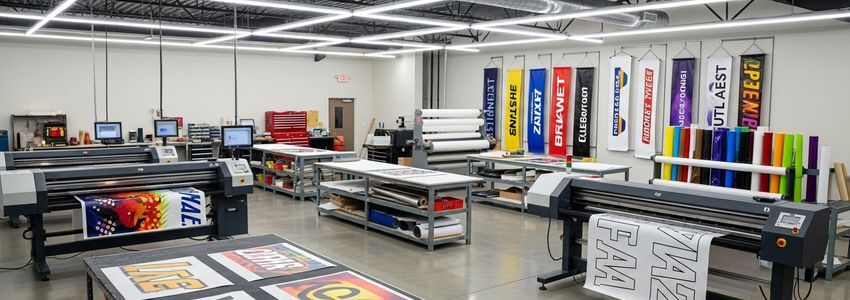
The heart of any FASTSIGNS center is its production room, filled with sophisticated and expensive technology. The equipment package, which can cost upwards of $100,000, includes large-format printers, vinyl cutters, laminators, high-powered computers, and specialized design software. This machinery is what allows you to produce high-quality signs, banners, and graphics for your clients. Given the significant cost, using dedicated equipment financing is one of the smartest strategies when planning your fastsigns franchise loan package.
Equipment financing is a type of asset-based lending where the loan is specifically for the purchase of machinery or equipment, and the equipment itself serves as the collateral for the loan. This has several major advantages for a new franchisee:
- Preserves Working Capital: By financing the equipment separately, you don't have to use the funds from your primary SBA or conventional loan to cover this cost. This frees up a significant amount of cash that can be used for working capital, marketing, or unexpected expenses during your first year of operation.
- Easier Qualification: Because the equipment acts as collateral, these loans are often easier to qualify for than unsecured loans. The lender's risk is lower, which can lead to faster approvals and less stringent credit requirements.
- 100% Financing Possible: Many equipment lenders will finance up to 100% of the cost of the equipment, sometimes including "soft costs" like taxes, shipping, and installation. This means you may not need any down payment for this portion of your investment.
- Builds Business Credit: Making timely payments on an equipment loan helps to build a strong credit history for your new business, which will make it easier to secure other types of financing in the future.
Equipment Loans vs. Equipment Leases
Within equipment financing, you have two primary options:
-
Equipment Loan: This is a straightforward loan where you borrow the money to purchase the equipment. You make regular payments over a set term (typically 3-7 years), and at the end of the term, you own the equipment free and clear. This is a great option if you plan to use the equipment for its entire useful life. Owning the asset also means you can take advantage of depreciation for tax purposes.
-
Equipment Lease: A lease is essentially a long-term rental agreement. You make monthly payments to use the equipment for a specified period. At the end of the lease term, you usually have a few options:
- Fair Market Value (FMV) Lease: You can purchase the equipment for its current market value, return it, or renew the lease. This often results in the lowest monthly payments.
- $1 Buyout Lease: This is a capital lease, structured more like a loan. You make slightly higher monthly payments, but at the end of the term, you can purchase the equipment for just $1.
Leasing is an attractive option if you want to keep your technology current. In an industry where printing technology evolves, leasing can make it easier to upgrade to the latest and greatest equipment every few years.
Tax Advantages: Section 179
A significant benefit of purchasing and financing equipment is the IRS Section 179 tax deduction. This allows businesses to deduct the full purchase price of qualifying new or used equipment from their gross income in the year it is put into service. For 2023, the deduction limit was over $1 million. This can provide a substantial tax savings in your first year of business, effectively reducing the net cost of your equipment. It's a powerful incentive to invest in the tools you need to succeed. Always consult with a tax professional to understand how Section 179 can benefit your specific situation.
Working Capital and Business Lines of Credit for FASTSIGNS
While the initial franchise fee and equipment package represent the most significant upfront costs, having sufficient working capital is arguably the most critical factor for the long-term survival and success of your new FASTSIGNS center. Working capital is the lifeblood of your business; it's the cash available to cover short-term operating expenses. Even the most successful business concepts take time to build a customer base and generate consistent positive cash flow. During this initial period, you need a financial cushion to keep the lights on.
The "Additional Funds" line item in the FASTSIGNS FDD, estimated between $20,000 and $30,000, is the franchisor's estimate of the working capital you'll need for the first three months. This capital is used for:
- Payroll: Paying your employees, including a graphic designer, a production specialist, and yourself.
- Rent and Utilities: Covering your monthly lease payment, electricity, internet, and phone bills.
- Inventory & Supplies: Purchasing the vinyl, ink, and substrates needed for your first jobs.
- Marketing & Advertising: Funding your local marketing efforts beyond the grand opening to build brand awareness and attract clients.
- Royalty and Marketing Fees: Paying the required 6% royalty and 2% marketing fees to the franchisor on your gross sales.
- Insurance and Professional Fees: Paying for business insurance, accounting services, and other professional overhead.
- Unexpected Expenses: Having a buffer for unforeseen costs, such as minor equipment repairs or a marketing opportunity that is too good to pass up.
Lenders understand the importance of working capital and will want to see that your loan request includes adequate funds for this purpose. An SBA 7(a) loan is an excellent tool for this, as working capital is an explicitly approved use of funds.
The Role of a Business Line of Credit
While your initial loan should include a healthy amount of startup working capital, a business line of credit is the ideal tool for managing ongoing cash flow needs once you're operational. Unlike a term loan, which gives you a lump sum of cash upfront, a line of credit is a revolving source of funds you can access as needed.
Here’s how a business line of credit can be a game-changer for a FASTSIGNS owner:
- Managing Cash Flow Gaps: In a B2B environment, you often complete work and invoice clients on Net 30 or Net 60 payment terms. This means you may have to wait one or two months to get paid, even though you have to pay your suppliers and employees now. A line of credit allows you to bridge these gaps seamlessly.
- Seizing Opportunities: What if a large client needs a rush job that requires you to buy a significant amount of special materials upfront? A line of credit gives you the immediate purchasing power to say "yes" to that opportunity without disrupting your budget.
- Covering Unexpected Costs: If a key piece of equipment needs an emergency repair, you can draw from your line of credit to cover the cost immediately and minimize downtime.
- Flexible and Cost-Effective: You only pay interest on the funds you actually use. When you're not using it, it costs you nothing, but it's always there as a financial safety net.
Securing a business line of credit early on, even if you don't need it immediately, is a proactive strategy that provides immense financial flexibility and peace of mind as you grow your business. Many entrepreneurs establish one at the same time they secure their primary startup loan. For short-term needs, some business owners also consider working capital loans, which provide a quick infusion of cash to be paid back over a shorter term.
FASTSIGNS Franchise Financing: Key Stats
|
$233k - $323k Total Initial Investment |
$49,750 Initial Franchise Fee |
$80,000+ Required Liquid Capital |
|
10-20% Typical SBA Loan Down Payment |
680+ Typical Minimum Credit Score |
#1 Ranked in Category by Entrepreneur Magazine |
How to Qualify for a FASTSIGNS Franchise Loan
Securing financing for your FASTSIGNS franchise is a process of demonstrating to lenders that you are a responsible borrower with a high probability of success. Lenders evaluate what they call the "Five C's of Credit": Character, Capacity, Capital, Collateral, and Conditions. For a franchise loan, this translates into a few key areas they will scrutinize. Preparing these elements in advance will dramatically increase your chances of approval.
1. Strong Personal Credit Score
Your personal credit history is one of the most important factors, especially for a new business without its own credit history. Lenders see your personal credit score as an indicator of your financial responsibility.
- Excellent Credit (720+): A score in this range will open up the most options, including the best rates on conventional loans and SBA loans. You will be seen as a low-risk borrower.
- Good Credit (680-719): This is generally the minimum threshold for most SBA lenders. You are still a strong candidate for an SBA 7(a) loan and other financing options.
- Fair Credit (Below 680): Qualifying for a traditional or SBA loan will be challenging. You may need to work on improving your credit score or explore alternative financing options, which often come with higher interest rates.
Before applying, obtain copies of your credit reports from all three major bureaus (Equifax, Experian, and TransUnion) to check for errors and address any negative items.
2. Sufficient Down Payment (Capital)
Lenders want to see that you have some of your own skin in the game. A personal investment, or down payment, demonstrates your commitment to the business and shares the financial risk.
- SBA Loans: Typically require a 10-20% down payment on the total project cost. For a $300,000 total investment, this would be $30,000 to $60,000.
- Conventional Loans: Often require a larger down payment, in the range of 20-30% or more.
This capital injection can come from various sources, including personal savings, non-retirement investments, a home equity line of credit (HELOC), or even a gift from family (though this may require a formal gift letter stating the funds do not need to be repaid).
3. A Comprehensive Business Plan
Your business plan is your roadmap to success and a critical tool for convincing lenders to invest in your vision. While FASTSIGNS provides the proven model, you need to customize the plan for your specific location. It should include:
- Executive Summary: A concise overview of your business and your loan request.
- Company Description: Details about the FASTSIGNS franchise model and why you chose it.
- Market Analysis: In-depth research on your specific territory. Who are your target customers (local businesses, schools, hospitals)? Who are your direct competitors? What is your unique selling proposition?
- Management Team: Your resume and the resumes of any key partners or managers. Highlight relevant experience in sales, marketing, management, or the B2B sector.
- Financial Projections: This is the most scrutinized section. Include a 12-month cash flow projection and 3-5 year pro forma statements (income statement, balance sheet). FASTSIGNS can provide you with financial performance representations (Item 19 in the FDD) from existing franchisees, which you can use as a baseline for your own projections. Be prepared to justify your assumptions.
- Funding Request: A detailed breakdown of the total project cost and how you will use the loan funds, referencing the FDD cost table.
4. Collateral
Collateral is an asset that you pledge to the lender to secure the loan. If you default on the loan, the lender can seize the collateral to recoup their losses. For a FASTSIGNS franchise loan, collateral can include:
- Business Assets: The equipment, inventory, and accounts receivable of the business will almost always be required as collateral.
- Personal Assets: For SBA loans, lenders will often require personal guarantees from all owners with 20% or more equity. They may also place a lien on your personal residence or other real estate if the business assets are not sufficient to cover the loan amount.
Having available collateral can strengthen your application, but a lack of significant personal collateral shouldn't deter you from applying for an SBA loan, as they are designed to help business owners who may not have substantial assets.
5. Relevant Experience and Character
Lenders are not just investing in a business model; they are investing in you. They want to see that you have the skills, experience, and character to run a business successfully. While direct experience in the sign industry is a plus, it's not a requirement. More important are transferable skills in:
- Sales and marketing
- Business management or operations
- Financial management
- Customer service and networking
Highlight these skills in your resume and business plan. Your character is assessed through your credit history, your professionalism during the application process, and your passion for the business. Be prepared, be organized, and be confident.
How Crestmont Capital Helps FASTSIGNS Franchise Owners
Navigating the world of commercial lending can be a complex and time-consuming process, especially when you're also trying to manage the logistics of starting a new franchise. This is where a dedicated financing partner like Crestmont Capital becomes an invaluable asset. We act as your advocate and guide, leveraging our expertise in franchise financing to connect you with the right funding solutions for your specific needs.
Here’s how Crestmont Capital provides a distinct advantage over approaching a traditional bank on your own:
- Franchise Financing Expertise: We live and breathe franchise financing. We understand the FASTSIGNS business model, its cost structure, and its financial performance. This specialized knowledge allows us to present your loan application to lenders in the most favorable light, highlighting the strengths of the franchise system and your potential as an owner. We know what lenders want to see, and we help you prepare a package that checks all the right boxes.
- Extensive Lender Network: Crestmont Capital has cultivated relationships with a wide network of lenders, including national banks, community banks, and SBA-preferred lenders. We know which lenders have an appetite for franchise loans and are actively funding deals in your industry. Instead of you applying to one bank at a time, we can discreetly shop your loan request to multiple lenders simultaneously to create a competitive environment and secure the best possible terms, rates, and conditions.
- Streamlined Process: Our process is designed for efficiency. We start with a single, simple application. From there, our team handles the heavy lifting of preparing the loan package, communicating with lenders, and managing the paperwork. This saves you dozens of hours of administrative work, allowing you to focus on your pre-opening training and other critical startup tasks. We act as your single point of contact throughout the entire process.
- Customized Financing Solutions: We recognize that every franchisee's financial situation is unique. We don't believe in one-size-fits-all solutions. We take the time to understand your financial profile, your goals, and your priorities. Then, we help you structure a financing package that might include a combination of an SBA 7(a) loan for the bulk of the investment, separate equipment financing to preserve cash, and a business line of credit for future flexibility. Our goal is to build a capital structure that supports your long-term success.
- Advocacy and Support: We are more than just a broker; we are your partner. We advocate on your behalf, negotiating with lenders to secure favorable terms and helping you overcome any potential hurdles in the underwriting process. We provide guidance and support from the initial consultation all the way through to closing and funding. Our success is tied to your success.
By partnering with Crestmont Capital, you gain access to the expertise, resources, and relationships needed to navigate the financing process with confidence and efficiency. We help you secure the optimal fastsigns franchise loan so you can turn your entrepreneurial dream into a thriving reality.
Focus on launching your FASTSIGNS center while we secure the capital. Crestmont Capital offers a streamlined process and access to a vast network of franchise-friendly lenders.
Get a Free ConsultationReal-World Financing Scenarios for FASTSIGNS Owners
To better understand how different financing strategies can be applied, let's look at a few hypothetical scenarios for prospective FASTSIGNS owners. These examples illustrate how a financing package can be tailored to an individual's unique financial situation and goals.
Scenario 1: The Corporate Professional (First-Time Business Owner)
- Profile: Sarah has spent 15 years in a corporate marketing role. She has a strong 401(k), excellent credit (780), and about $50,000 in personal savings. The total project cost for her FASTSIGNS center is estimated at $300,000.
- Challenge: Sarah doesn't have the full $80,000+ in liquid capital that FASTSIGNS and many lenders prefer for a down payment.
- Financing Strategy:
- ROBS (Rollover for Business Startups): Sarah works with a ROBS provider to roll over $100,000 from her 401(k) into her new business, tax and penalty-free. This money becomes the cash injection (down payment) for her business loan.
- SBA 7(a) Loan: With a strong $100,000 (33%) down payment from the ROBS, Sarah easily qualifies for a $200,000 SBA 7(a) loan to cover the remaining project costs. Her excellent credit score helps her secure a very competitive interest rate.
- Outcome: Sarah is able to fund her entire business without depleting her personal savings or taking on high-interest debt. The SBA loan's 10-year term provides a manageable monthly payment, and she is fully capitalized from day one.
Scenario 2: The Veteran Entrepreneur
- Profile: Mark is a U.S. military veteran with experience running a small landscaping business. He has good credit (710) and has saved $100,000 in cash. He wants to take advantage of programs available to veterans. The total project cost is $280,000.
- Challenge: Mark wants to preserve as much of his cash as possible for working capital and a personal safety net.
- Financing Strategy:
- SBA Express Loan for Veterans: Mark applies for an SBA Express loan. Through the SBA Veterans Advantage program, the upfront guarantee fees are often waived for veterans. He uses $40,000 of his savings for the down payment.
- Equipment Financing: For the $100,000 equipment package, Mark secures a separate equipment loan. Because the equipment is the collateral, this is approved quickly and doesn't require any additional down payment.
- Combined Loan: He secures a primary SBA loan for the remaining $140,000 ($280k total - $100k equipment - $40k down payment).
- Outcome: By splitting the financing, Mark is able to preserve $60,000 of his personal savings for a robust working capital fund. The waived SBA fees save him several thousand dollars, and the equipment loan helps build his business's credit profile from the start. FASTSIGNS also offers a 50% discount on the franchise fee for veterans through their participation in the VetFran program, further reducing his startup costs.
Scenario 3: The Multi-Unit Operator
- Profile: David and Lisa already own a successful franchise in a different industry (like the 9Round franchise we've previously covered). They have a strong business balance sheet, excellent cash flow from their existing business, and a net worth over $1 million. They want to diversify by opening a FASTSIGNS. Total project cost is $320,000.
- Challenge: They want the fastest possible financing with the least amount of personal guarantees and paperwork.
- Financing Strategy:
- Conventional Bank Loan: Due to their strong financial history, proven business success, and high net worth, David and Lisa bypass the SBA process and qualify for a conventional loan directly from a commercial bank.
- Large Down Payment: They put down 30% ($96,000) from their business savings.
- Business Line of Credit: At the same time, they secure a $100,000 business line of credit tied to their new FASTSIGNS location to manage cash flow.
- Outcome: The conventional loan offers them a very competitive fixed interest rate. The process is faster than an SBA loan because there is no government agency involvement. Their strong financial position allows them to secure excellent terms, and the line of credit gives them maximum operational flexibility.
FASTSIGNS Franchise Loan FAQ
1. How much cash do I really need to get a FASTSIGNS franchise loan?
While the total fastsigns franchise investment cost is over $230,000, you don't need all of that in cash. Lenders typically require a down payment, or "capital injection," of 10% to 20% of the total project cost. Therefore, you should plan to have at least $30,000 to $60,000 in liquid capital. FASTSIGNS itself recommends having a minimum of $80,000 in liquid assets to ensure you have both the down payment and a post-closing cash reserve.
2. What is the minimum credit score for a FASTSIGNS franchise loan?
Most lenders, especially for SBA-backed loans, will look for a minimum personal credit score of 680. A score above 720 will significantly improve your chances of approval and help you secure more favorable interest rates and terms. If your score is below 680, it's advisable to work on improving it before applying for a major loan.
3. Can I finance 100% of the FASTSIGNS franchise cost?
No, it is nearly impossible to finance 100% of a business startup. All lenders, and especially the SBA, require the borrower to have a personal financial stake in the business. This down payment demonstrates your commitment and shares the risk. Expect to contribute at least 10% of the total project cost from your own funds.
4. How long does it take to get a FASTSIGNS franchise loan approved?
The timeline can vary significantly depending on the type of loan and the lender. An SBA 7(a) loan process typically takes 60 to 90 days from application to funding. Conventional bank loans can sometimes be faster for highly qualified borrowers. Working with a financing partner like Crestmont Capital can help streamline the process by ensuring your application package is complete and accurate from the start.
5. Does FASTSIGNS offer financing directly?
FASTSIGNS does not offer direct financing to its franchisees. However, they provide significant financing assistance by maintaining relationships with a network of third-party lenders who are familiar with their business model. Their status as an SBA-approved franchise also simplifies the SBA loan application process.
6. What is the SBA Franchise Directory and why is it important?
The SBA Franchise Directory is a list of franchise brands whose franchise agreements have been pre-vetted and approved by the SBA. Because FASTSIGNS is on this list, it signals to lenders that the franchise system is credible and meets SBA requirements. This can speed up the underwriting process for your SBA loan because the lender doesn't have to conduct a full review of the franchisor.
7. Can I use my 401(k) to finance my FASTSIGNS franchise?
Yes, you can use funds from an eligible retirement account (like a 401(k) or traditional IRA) through a process called Rollover for Business Startups (ROBS). This allows you to invest in your business without incurring taxes or early withdrawal penalties. It's a complex process that should be managed by a reputable ROBS provider to ensure full compliance with regulations.
8. What kind of collateral do I need for a FASTSIGNS franchise loan?
For a fastsigns franchise loan, the business assets you are purchasing - such as the expensive printing equipment, inventory, and accounts receivable - will serve as the primary collateral. Additionally, lenders will require a personal guarantee from all owners with 20% or more equity. If the business assets are not sufficient to cover the loan amount, they may also require a lien on personal assets, such as your home.
9. Should I get one big loan or multiple smaller loans?
This depends on your situation. An SBA 7(a) loan is a great all-in-one option that bundles everything into a single loan. However, a strategic approach often involves combining loan types. For example, using a primary SBA loan for the franchise fee and build-out, while using a separate equipment loan or lease for the technology package. This can help preserve your main loan's capital for working funds and may offer better terms for the equipment itself.
10. How important is my business plan if I'm buying a franchise?
It is critically important. While the FASTSIGNS FDD provides the business model, your business plan must demonstrate to lenders that you understand how to execute that model in your specific local market. It should include detailed local market research, a competitive analysis, specific marketing plans for your territory, and realistic financial projections based on your area's demographics and business landscape.
11. What are the ongoing fees I need to budget for?
Beyond the initial fastsigns franchise cost, you need to account for ongoing fees in your financial projections. FASTSIGNS charges a royalty fee of 6% of your gross sales and a national advertising fund fee of 2% of your gross sales. These are standard in the franchise industry and must be factored into your cash flow analysis.
12. Are there any special financing programs for veterans?
Yes. FASTSIGNS is a member of the VetFran program and offers a 50% discount on the initial franchise fee to qualified military veterans. Additionally, the SBA offers the Veterans Advantage program, which can reduce or eliminate the upfront guarantee fee on SBA loans, saving you thousands of dollars.
13. What's the difference between working capital in my loan and a line of credit?
Working capital included in your initial loan is a lump sum of cash designed to cover your operating expenses for the first few months. A business line of credit is a revolving credit facility you can draw from and repay as needed on an ongoing basis. The loan's working capital gets you started; the line of credit helps you manage cash flow long-term.
14. Can I get a loan to buy an existing FASTSIGNS franchise?
Yes. Financing is readily available for purchasing an existing, operational FASTSIGNS center. In some ways, it can be easier to get a loan for a resale because the business has a proven track record of financial performance (P&L statements, tax returns). Lenders can analyze historical data, which reduces their perceived risk compared to a brand-new location.
15. How can Crestmont Capital help me if I'm just starting to look?
Even if you are in the early stages, Crestmont Capital can provide a free pre-qualification analysis. We can review your financial profile (credit, cash on hand) and give you a realistic assessment of your financing potential. This helps you understand your budget and borrowing power before you get too deep into the franchise discovery process, saving you time and setting clear expectations.
Your Next Steps to Finance Your FASTSIGNS Franchise
Feeling informed and ready to move forward? Here is a clear, step-by-step action plan to guide you through the financing process:
- Review Your Personal Finances: Before anything else, get a clear picture of your financial standing. Pull your credit reports, calculate your net worth, and determine exactly how much liquid capital you can comfortably invest.
- Request and Study the FASTSIGNS FDD: Contact FASTSIGNS corporate to formally request their Franchise Disclosure Document. Pay close attention to Item 7 (Estimated Initial Investment) and Item 19 (Financial Performance Representations).
- Develop Your Business Plan: Start drafting your business plan. Focus on your local market analysis, your personal qualifications, and create detailed financial projections. This document will be the cornerstone of your loan application.
- Get Pre-Qualified for a Loan: Contact a financing specialist like Crestmont Capital for a no-obligation pre-qualification. This will give you a strong understanding of what you can afford and strengthen your position when speaking with the franchisor.
- Gather Your Loan Application Documents: Start assembling the necessary paperwork. This will typically include personal and business tax returns (if applicable) for the last 3 years, personal financial statements, bank statements, your business plan, and a resume.
- Submit Your Application: Work with your financing partner to submit a complete and compelling loan application package to the most suitable lenders for your profile.
Conclusion
Embarking on the journey to open a FASTSIGNS franchise is an exciting venture filled with incredible potential. As a leader in the visual communications industry with a robust B2B model, FASTSIGNS offers a pathway to entrepreneurship backed by a world-class brand and a proven system. However, the key that unlocks this opportunity is a solid financial foundation. The initial fastsigns franchise cost is significant, and securing the right fastsigns franchise loan is not just a preliminary step - it is the most critical decision you will make in the early stages of your business.
Throughout this guide, we have demystified the process of fastsigns franchise financing. We've broken down the investment costs, explored the powerful and flexible options of SBA loans, highlighted the strategic use of equipment financing, and underscored the vital importance of working capital. Understanding these components and preparing the key qualification elements - strong credit, a sufficient down payment, and a comprehensive business plan - will position you for success with lenders.
The path to financing can seem daunting, but you do not have to walk it alone. Partnering with a franchise financing expert like Crestmont Capital can transform a complex process into a streamlined and efficient experience. By leveraging our expertise, lender network, and dedication to your success, you can focus on what truly matters: preparing to become a successful FASTSIGNS center owner. With the right preparation and the right partners, you can confidently secure the capital needed to build your business, serve your community, and achieve your entrepreneurial dreams.
Disclaimer: The information provided in this article is for general educational purposes only and does not constitute financial, legal, or investment advice. Franchise costs and loan terms vary and are subject to change. Consult with a qualified financial advisor before making any financing decisions.