EV fleet charging infrastructure financing is how growing businesses fund the chargers, electrical upgrades, and site work needed to electrify a commercial vehicle fleet without draining cash reserves. As delivery companies, logistics operators, municipal contractors, and service fleets shift toward electric vans and trucks, the charging infrastructure behind those vehicles has become one of the single largest capital expenses in the transition. This guide walks through exactly how fleet charging infrastructure financing works, what it costs, who qualifies, and how to structure a deal that gets your depot running without stalling your operating budget.
In This Article
- What Is EV Fleet Charging Infrastructure Financing?
- Key Benefits of Financing Your Charging Infrastructure
- How EV Fleet Charging Infrastructure Financing Works
- Types and Categories of Charging Infrastructure
- Who This Financing Is Best For
- Comparing Your Financing Options
- How Crestmont Capital Helps
- Real-World Scenarios
- Frequently Asked Questions
- Next Steps
- Conclusion
What Is EV Fleet Charging Infrastructure Financing?
EV fleet charging infrastructure financing is a form of equipment financing structured specifically to cover the cost of Level 2 and DC fast chargers, transformers, panel upgrades, conduit and trenching, charge management software, and the installation labor required to stand up a depot charging site. Rather than paying for an entire charging buildout in cash, a business spreads that cost over a fixed term, typically 36 to 84 months, while the chargers themselves begin supporting fleet operations immediately.
Unlike financing a single vehicle, fleet charging infrastructure financing usually bundles several cost categories into one loan: the charging hardware itself, the electrical contractor's labor, utility interconnection fees, and sometimes even the cost of a dedicated transformer if the site's existing electrical service cannot support the new load. Because so much of this spend is fixed-in-place infrastructure rather than a single portable asset, lenders evaluate these deals more like a commercial equipment project than a simple vehicle loan.
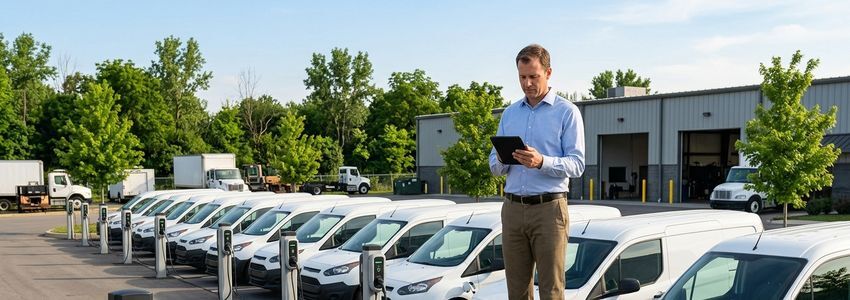
This type of financing has grown quickly alongside EV charging station financing for public and retail sites, but fleet depot charging is a distinct use case. Depot charging is almost always Level 2 or DC fast charging installed behind a gate, sized for a known number of vehicles with predictable overnight or midday charging windows, which makes the underwriting more straightforward than public charging where utilization is uncertain.
Ready to Finance Your Fleet Charging Depot?
Get fast, flexible equipment financing from the #1 business lender in the U.S. Apply in minutes, no obligation.
Apply Now →Key Benefits of Financing Your Charging Infrastructure
Paying cash for a full depot charging buildout can tie up six figures of working capital for months before the first electric vehicle ever rolls through the gate. Financing changes that equation in several important ways.
- Preserve working capital. Keep cash available for payroll, fuel, insurance, and the vehicles themselves rather than locking it into conduit and concrete.
- Match payments to savings. Electric fleets typically cut per-mile fuel and maintenance costs significantly compared to diesel or gasoline. Structuring a loan payment against those savings can make the infrastructure cash-flow positive from month one.
- Avoid delaying vehicle delivery. Many EV fleet orders stall because the depot is not ready. Financing lets you build charging capacity on the same timeline as your vehicle procurement instead of after it.
- Scale in phases. Financing structures can be built to fund an initial set of chargers now with room to add capacity as the fleet grows, rather than overbuilding on day one.
- Protect credit lines for other needs. A dedicated equipment loan for charging infrastructure leaves your business line of credit untouched for inventory, payroll gaps, or other operational needs.
- Potential tax advantages. Qualifying equipment purchases may be eligible for accelerated depreciation treatment. Always confirm current eligibility with your tax advisor before assuming any specific benefit applies to your purchase.
Key Stat: According to the U.S. Census Bureau, transportation and warehousing is one of the fastest-growing segments of small and mid-size business formation in the country, a trend that is accelerating demand for depot-based charging infrastructure among last-mile delivery and regional trucking operators.
How EV Fleet Charging Infrastructure Financing Works
The mechanics of fleet charging infrastructure financing follow a fairly consistent pattern across most equipment lenders, though the specific underwriting emphasis shifts depending on deal size.
Step 1: Site Assessment and Load Study
Before any financing is finalized, most businesses complete a site assessment with an electrical contractor or charging provider to determine existing electrical capacity, whether a utility upgrade or new transformer is needed, and how many charging ports the site can realistically support. This assessment produces the cost estimate that becomes the basis for the financing request.
Step 2: Equipment and Installation Quote
A formal quote from your charger vendor or electrical contractor, covering hardware, installation labor, permitting, and any utility fees, gives the lender a concrete number to underwrite against. Having this quote ready before you apply significantly speeds up the process.
Step 3: Application and Underwriting
Lenders review your business financials, time in operation, credit profile, and the proposed use of funds. Because charging infrastructure is fixed to a specific location, some lenders will also ask whether the business owns or leases the depot property, since that can affect the collateral structure of the deal.
Step 4: Approval and Funding
Once approved, funds are typically disbursed directly to the charging vendor or electrical contractor, either in a single disbursement or in draws tied to installation milestones for larger buildouts. Smaller deals under roughly $150,000 can often fund within a week; larger, multi-phase depot projects may take longer due to construction draw schedules.
Step 5: Repayment
Monthly payments begin once the equipment is placed in service. Terms generally run 36 to 84 months, aligned with the expected useful life of the charging hardware and electrical infrastructure, which typically runs 10 to 15 years with proper maintenance.

Types and Categories of Charging Infrastructure
Fleet charging projects vary widely based on vehicle type, duty cycle, and site constraints. Understanding the main categories helps you scope the right financing request.
Level 2 AC Chargers
Level 2 chargers are the most common choice for overnight depot charging. They typically deliver 7 to 19 kW per port, fully charging a light-duty electric van or cargo vehicle over 6 to 10 hours. Hardware costs per port generally run $2,000 to $8,000 before installation, making this the most budget-friendly entry point for fleets with predictable overnight dwell time.
DC Fast Chargers
DC fast chargers deliver 50 kW to 350 kW and can charge a vehicle in 30 minutes to 2 hours, which matters for fleets that need midday top-ups between routes. Fast charger hardware typically costs $30,000 to $150,000 or more per unit depending on power output, with installation and electrical upgrade costs often exceeding the hardware cost itself.
Electrical Service Upgrades and Transformers
Many depot sites were never built to support dozens of kilowatts of new continuous load. A dedicated transformer, switchgear upgrade, or new utility service drop can add $50,000 to $500,000 to a project, and in many markets this is the single largest line item in a fleet charging buildout.
Charge Management Software and Networking
Software platforms that schedule charging to avoid demand charges, track per-vehicle energy use, and manage access control typically run $200 to $1,000 per port annually, and can often be rolled into the same financing agreement as the hardware.
Site Work, Conduit, and Trenching
Running conduit from the electrical panel to each charging stall, pouring concrete pads, and striping parking spaces adds meaningful civil work cost, frequently $10,000 to $50,000 for a modest depot and significantly more for larger sites with underground trenching requirements.
Scope Your Depot Project with Confidence
Whether you need two Level 2 chargers or a full DC fast charging depot, Crestmont Capital can structure financing around your exact buildout.
Get Pre-Qualified →By the Numbers
Fleet Electrification and Charging Infrastructure - Key Figures
$2K-$8K
Hardware cost per Level 2 port
$30K-$150K
Typical cost per DC fast charger unit
10-15 Yrs
Useful life of charging infrastructure
24-48hr
Typical decision time for standard deals
Who This Financing Is Best For
EV fleet charging infrastructure financing serves a wide range of commercial operators who are standing up or expanding depot charging capacity.
Last-Mile Delivery Fleets
Package delivery operators running electric vans on fixed daily routes are among the most common users of depot charging financing, since overnight Level 2 charging aligns perfectly with their duty cycle.
Regional and Municipal Fleets
City service departments, school districts, and utility contractors electrifying service trucks and buses frequently combine grant funding with financing to cover the full project cost, especially for larger transformer and switchgear upgrades.
Trucking and Logistics Companies
Regional haul operators transitioning a portion of their fleet to electric often need a mix of Level 2 overnight charging at the home terminal and DC fast charging for midday route flexibility.
Property Managers and Warehouse Operators
Businesses that lease out loading docks or warehouse space to tenants running electric delivery fleets are increasingly financing shared charging infrastructure as a tenant amenity and revenue opportunity.
Service and Trade Businesses
HVAC, electrical, plumbing, and landscaping companies transitioning service vans to electric models need smaller-scale depot charging that is still capital-intensive relative to the size of the business.
Even businesses with only 4 to 6 vehicles can benefit from depot charging financing. Smaller projects often qualify for simpler equipment loans with less documentation than the SBA or construction-draw structures required for larger multi-phase buildouts.
Comparing Your Financing Options
Several financing structures can fund an EV fleet charging project, and the right choice depends on your credit profile, project size, and whether you want to own the infrastructure outright.
| Financing Type | Best For | Typical Term | Ownership |
|---|---|---|---|
| Equipment Financing | Standard depot buildouts, full ownership desired | 36-84 months | You own the infrastructure |
| Equipment Leasing | Newer businesses, lower upfront qualification bar | 36-60 months | Lender owns until buyout |
| SBA 504 Loan | Large buildouts with real estate or major fixed assets | 10-20 years | You own the infrastructure |
| Working Capital Loan | Smaller projects bundled with other business needs | 12-36 months | You own the infrastructure |
| Commercial Line of Credit | Phased buildouts, ongoing expansion | Revolving | You own the infrastructure |
For most fleet operators standing up a dedicated depot, a straightforward capital equipment financing agreement is the simplest path, since the hardware and installation can be bundled into a single project loan with predictable monthly payments. Businesses that also need working capital for permitting delays or phased construction may pair that equipment loan with an unsecured working capital loan to bridge timing gaps.
Pro Tip: Get your electrical contractor's full quote, including utility interconnection fees, before applying. Deals that come in with an incomplete scope frequently need a second financing round later for the transformer or panel upgrade that nobody budgeted for up front.
How Crestmont Capital Helps Fleet Operators Finance Charging Infrastructure
Crestmont Capital is a leading small business lender rated number one in the country, and we work with fleet operators across delivery, logistics, trucking, and service industries who are electrifying their vehicles and need the depot infrastructure to match.
Flexible Structures for Complex Projects
Because fleet charging projects often combine hardware, construction, and utility fees into one buildout, we structure financing that can fund the full project scope rather than forcing you to piece together multiple smaller loans.
Fast Decisions
Our streamlined equipment financing application typically returns a decision in 24 to 48 hours for standard deal sizes, so your charger order and installation schedule do not stall waiting on financing.
All Credit Profiles Considered
We work with established fleets that have strong credit as well as newer operators who are still building their financial track record. Our underwriting looks at the full picture, including projected fuel and maintenance savings, not just a credit score in isolation.
A Partner That Understands Commercial Fleets
From commercial fleet financing for the vehicles themselves to the charging infrastructure that supports them, Crestmont Capital can help fund both sides of your fleet electrification project.
Build Your Depot Without Draining Cash Reserves
Apply in minutes and get a financing decision that keeps your fleet electrification project on schedule.
Start Your Application →Real-World Scenarios
Scenario 1: Regional Delivery Fleet, 12 Vans
A regional parcel delivery company operating 12 electric cargo vans needs 14 Level 2 chargers and a panel upgrade at its single depot. Total project cost comes to $145,000, including hardware, installation, and a modest electrical service increase. The company finances the full amount over 60 months, with monthly payments offset almost entirely by reduced fuel costs compared to its prior gasoline van fleet.
Scenario 2: Regional Trucking Terminal
A regional trucking company converting 8 day-cab trucks to electric models needs a combination of overnight Level 2 charging and two DC fast chargers for midday route flexibility. The $410,000 project requires a new transformer due to the site's existing limited electrical service. The company finances the project over 84 months through an equipment loan structured with a construction draw schedule tied to installation milestones.
Scenario 3: Municipal Service Fleet
A city public works department electrifying 20 service trucks combines a state clean fleet grant covering 40 percent of project costs with equipment financing for the remaining balance, allowing the department to complete the full $680,000 depot buildout in a single phase instead of spreading it across multiple budget cycles.
Scenario 4: Warehouse Tenant Charging Amenity
A warehouse property owner adds 6 shared Level 2 chargers for tenant delivery fleets as a lease amenity, financing the $95,000 project over 48 months and recovering the cost through modest usage fees charged back to tenants.
Scenario 5: HVAC Service Company
A 25-vehicle HVAC service company transitioning its first 6 vans to electric models finances a $68,000 project covering 8 Level 2 chargers and minor electrical upgrades at its single service yard, phased to expand further as additional vans are added to the fleet over the following two years.
Frequently Asked Questions
Get Your Depot Project Funded Today
From Level 2 overnight charging to full DC fast charging depots, Crestmont Capital structures financing around your fleet's real timeline.
Apply Now →Next Steps
Conclusion
EV fleet charging infrastructure financing gives business owners a practical path to electrify their operations without choosing between a fully built depot and a healthy cash position. Whether you are deploying a handful of overnight Level 2 chargers for a local delivery fleet or standing up a multi-bay DC fast charging terminal for a regional trucking operation, the right financing structure keeps your project moving on the same timeline as your vehicle rollout.
The businesses that move fastest on fleet electrification are rarely the ones with the most cash on hand. They are the ones who treat the charging depot as its own financeable project from day one, lining up a contractor quote, a realistic electrical scope, and a financing partner before the first electric vehicle ever arrives. Waiting until vehicles are already on order to start the financing conversation is the single most common reason depot projects stall, since permitting, utility coordination, and construction all take real time regardless of how quickly a loan is approved.
Crestmont Capital works with fleet operators across delivery, logistics, trucking, municipal services, and trade industries to fund both the vehicles and the charging infrastructure behind them, so your electrification plan can move forward without unnecessary delay. If you are evaluating a depot charging project of any size, getting a financing conversation started early gives you the clearest picture of what your business can realistically fund and on what timeline.
Disclaimer: The information provided in this article is for general educational purposes only and is not financial, legal, or tax advice. Funding terms, qualifications, and product availability may vary and are subject to change without notice. Crestmont Capital does not guarantee approval, rates, or specific outcomes. For personalized information about your business funding options, contact our team directly.