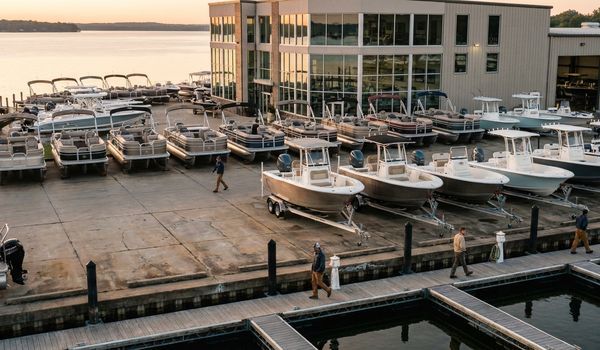
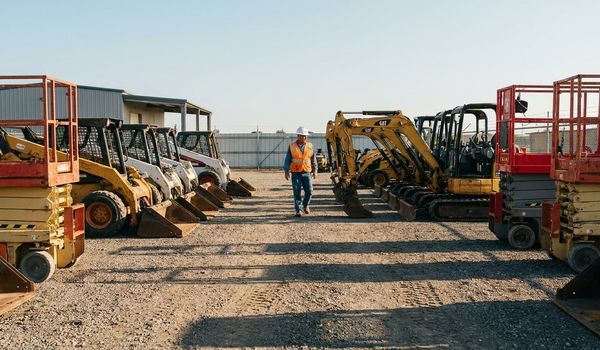
The equipment rental industry has become one of the most important segments of the American economy, and the equipment rental industry statistics heading into 2026 tell a story of sustained growth, rising demand, and expanding opportunity for independent rental business owners. Whether you operate a general tool rental store, a party and event rental company, or a heavy equipment rental yard, understanding the latest data helps you make smarter decisions about fleet investment, pricing, and financing.
This report brings together the most important equipment rental industry statistics for 2026, including market size, growth projections, rental penetration rates, segment breakdowns, and financing data. Every figure is drawn from credible public sources such as the American Rental Association (ARA), the Equipment Leasing and Finance Association (ELFA), the U.S. Census Bureau, and the Small Business Administration, so you can cite the numbers with confidence and use them to plan your next move.
In This Article
- What Are Equipment Rental Industry Statistics?
- Equipment Rental Market Size and Growth
- Key Equipment Rental Statistics for 2026
- Equipment Rental Financing Statistics
- Statistics by Rental Segment
- Industry Trends Shaping 2026
- Why These Statistics Matter
- How Equipment Rental Business Financing Works
- Types of Financing for Rental Businesses
- How Crestmont Capital Helps
- Real-World Scenarios
- Frequently Asked Questions
- How to Get Started
What Are Equipment Rental Industry Statistics?
Equipment rental industry statistics are the measurable data points that describe the size, health, and direction of the rental market. They include total industry revenue, growth rates, rental penetration (the share of equipment in use that is rented rather than owned), utilization rates, segment-level breakdowns, employment figures, and financing data that shows how rental companies fund their fleets.
These numbers come from a small set of authoritative sources. The American Rental Association publishes rental revenue forecasts and penetration studies. The Equipment Leasing and Finance Association tracks how businesses finance equipment acquisitions through its monthly index and annual surveys. The U.S. Census Bureau's County Business Patterns program counts rental establishments and employees by NAICS code, and the Census Bureau's construction spending report tracks the activity that drives rental demand. Together, these sources give owners, lenders, and researchers a reliable picture of where the industry stands.
For rental business owners, statistics are not just trivia. Market size data tells you how much room there is to grow. Penetration data tells you whether customers are shifting from ownership to rental. Financing data tells you how your competitors are funding fleet expansion. The sections below break down each category in detail.
Equipment Rental Market Size and Growth
The headline statistic for 2026 is the sheer scale of the industry. According to the American Rental Association's most recent forecasts, U.S. equipment rental revenue surpassed $71 billion in 2024 and is projected to keep climbing through the second half of the decade, with total rental revenue expected to approach $80 billion by 2027. That figure includes construction and industrial equipment, general tool rental, and party and event rental.
Growth has been remarkably consistent. The industry has expanded in nearly every year since the post-2008 recovery, and ARA's five-year outlooks have repeatedly called for annual growth in the mid-single digits. Even when construction activity moderates, rental demand tends to hold up because contractors shift from buying equipment to renting it, which actually increases rental penetration during uncertain periods.
Globally, the equipment rental market is estimated at $120 billion to $145 billion depending on the research firm, with North America representing the largest regional market. The United States accounts for the bulk of North American rental revenue, which makes the U.S. data especially meaningful for domestic operators.
Several structural forces support continued growth. Construction spending in the United States has run above a $2 trillion annualized rate in recent Census Bureau reports, and infrastructure investment continues to feed demand for earthmoving and compaction equipment. At the same time, the total cost of owning new equipment has risen sharply, pushing more contractors toward rental as a capital-light alternative.
Key Equipment Rental Statistics for 2026
The following statistics represent the most important data points for understanding the equipment rental industry in 2026. Each one is sourced from a recognized industry authority or government agency.
Market Size and Revenue
- U.S. equipment rental revenue surpassed $71 billion in 2024, according to the American Rental Association, and is projected to approach $80 billion by 2027 as fleet investment and rental rates continue to climb.
- The global equipment rental market is valued between $120 billion and $145 billion, with North America representing the largest regional market by revenue.
- Construction and industrial equipment accounts for the largest share of rental revenue, followed by general tool rental and party and event rental.
- Annual industry growth has averaged in the mid-single digits across ARA's recent five-year forecasts, a pace that outstrips broader GDP growth.
Rental Penetration and Demand
- Roughly 56 to 57 percent of construction equipment in use in North America is now rented rather than owned, up from approximately 40 percent two decades ago. This metric, known as rental penetration, is the single best indicator of long-term industry health.
- U.S. construction spending has exceeded a $2 trillion annualized rate in recent Census Bureau construction spending reports, providing a massive demand base for rental equipment.
- The United States is home to more than 33 million small businesses, according to the Small Business Administration, and small businesses make up 99.9 percent of all U.S. firms. Contractors, landscapers, event companies, and trades businesses form the core rental customer base.
- Compact equipment leads rental volume. Skid steers, mini excavators, compact track loaders, and aerial work platforms consistently rank among the most rented categories in North America.
Industry Structure
- The top three rental companies (United Rentals, Sunbelt Rentals, and Herc Rentals) hold roughly one-third of the North American market, leaving the majority of the market in the hands of thousands of independent and regional operators.
- The American Rental Association represents more than 10,000 rental locations across North America, and Census Bureau County Business Patterns data shows thousands of establishments operating under equipment rental NAICS codes.
- The largest public rental company generates more than $15 billion in annual revenue and invests billions per year in fleet capital expenditures, a figure widely covered by financial press including Forbes and Bloomberg.
- Industry consolidation continues, but independent rental companies still serve the majority of local and specialty markets where relationships and niche inventory matter more than scale.
Utilization and Operations
- Healthy rental fleets target time utilization between 65 and 70 percent, meaning a machine generates revenue roughly two-thirds of the days it is available.
- Average rental fleet age runs between three and four years, requiring constant reinvestment as machines accumulate hours and maintenance costs rise.
- The party and event rental segment generates an estimated $5 billion to $6 billion annually, serving weddings, corporate events, festivals, and private functions.
- Digital booking has become standard. A majority of rental customers now research and reserve equipment online before ever calling a branch.
Ready to Expand Your Rental Fleet?
Get fast, flexible equipment financing from the #1 business lender in the U.S. No obligation - apply in minutes.
Apply Now →Equipment Rental Financing Statistics
Rental businesses live and die by their fleets, and fleets require capital. The financing statistics below show how the industry funds its growth and where independent operators fit in.
How America Finances Equipment
- Nearly 8 in 10 U.S. businesses (approximately 79 percent) use at least one form of financing when acquiring equipment, according to the Equipment Leasing and Finance Association. Cash purchases are the exception, not the rule.
- The U.S. equipment finance industry funds roughly $1.3 trillion in equipment acquisitions annually, making it one of the largest segments of commercial credit.
- ELFA's Monthly Leasing and Finance Index regularly reports $9 billion to $11 billion in new equipment finance volume per month, a real-time pulse on how actively businesses are financing equipment.
- Equipment loans and leases typically run 24 to 72 months, with rates commonly falling between 6 and 15 percent depending on credit profile, time in business, and equipment type.
- Down payments of 10 to 20 percent are typical for conventional equipment loans, though strong-credit borrowers can often finance 100 percent of the purchase price.
Key Stat: According to ELFA, nearly 80 percent of American businesses finance their equipment acquisitions. If your competitors are expanding their fleets, they are almost certainly using financing to do it.
What the Financing Data Means for Rental Companies
Rental companies are among the most capital-intensive small businesses in the country. A single new mini excavator can cost $60,000 or more, a boom lift can exceed $100,000, and a modest fleet refresh can easily run into seven figures. Because rental revenue accrues over the life of each machine, matching the financing term to the revenue life of the asset is fundamental to healthy cash flow.
The data also shows why access to fast, flexible financing is a competitive advantage. When a local contractor calls needing a specific machine next week, the rental company that can fund that purchase quickly wins the revenue. Operators who rely solely on retained earnings grow more slowly than operators who leverage equipment financing, equipment leasing, and equipment lines of credit to expand ahead of demand.
Equipment Rental Statistics by Segment
The equipment rental industry is not one market but several distinct segments, each with its own growth drivers and financing needs. Here is how the major segments compare heading into 2026.
Construction and Industrial Equipment Rental
Construction and industrial equipment is the dominant segment, representing the majority of U.S. rental revenue. Earthmoving equipment, aerial work platforms, forklifts, generators, and compaction equipment make up the core of most fleets. Demand tracks construction spending, which the Census Bureau pegs at more than $2 trillion on an annualized basis, plus industrial maintenance and energy sector activity.
General Tool Rental
General tool rental serves homeowners, small contractors, and do-it-yourself customers with items like power tools, pressure washers, lawn equipment, and small machinery. This segment benefits from the home improvement market and from tradespeople who prefer renting specialty tools to owning them. Margins tend to be strong because tools carry lower unit costs and turn frequently.
Party and Event Rental
Party and event rental generates an estimated $5 billion to $6 billion annually in the United States. Tents, tables, chairs, linens, staging, and catering equipment serve weddings, corporate events, festivals, and private parties. This segment is highly seasonal, which makes flexible financing and working capital especially important for managing off-peak cash flow.
Heavy Equipment and Specialty Rental
Heavy equipment rental covers large earthmoving machines, cranes, and specialty equipment for infrastructure and energy projects. Ticket sizes are larger, terms are longer, and relationships with financing partners matter more. Specialty niches like trench safety equipment, traffic control, and climate control rentals have grown steadily as contractors outsource non-core fleet needs.
By the Numbers
Equipment Rental Industry - Key Statistics for 2026
$71B+
U.S. equipment rental revenue in 2024, with growth projected through 2027 (ARA)
~57%
Share of construction equipment in use that is rented, not owned (rental penetration)
79%
U.S. businesses that use financing to acquire equipment (ELFA)
$2T+
Annualized U.S. construction spending driving rental demand (Census Bureau)
Equipment Rental Industry Trends Shaping 2026
Beyond the headline numbers, several trends are reshaping how rental businesses operate and compete in 2026.
Rising Equipment Costs Push Customers Toward Rental
New equipment prices have climbed sharply since 2020, with many categories up 20 percent or more. Higher purchase prices, combined with elevated interest rates, make ownership math harder for contractors. Every increase in ownership cost pushes rental penetration higher, which directly benefits rental businesses.
Telematics and Fleet Technology
Modern rental fleets run on data. Telematics units track machine location, hours, fuel burn, and maintenance needs in real time, letting rental companies price accurately, bill for overuse, and schedule service before breakdowns. Rental companies that invest in fleet technology consistently report better utilization than those that manage by spreadsheet.
Electric and Low-Emission Equipment
Demand for electric and low-emission rental equipment is growing, driven by indoor work requirements, municipal emissions rules, and customer sustainability goals. Battery-powered scissor lifts, compact excavators, and light towers are appearing in more fleets. Early movers can charge premium rates while differentiating from competitors.
Online Booking and Digital Customer Experience
A majority of rental customers now research and reserve online. Rental companies with real-time inventory, transparent pricing, and digital contracts win business from competitors who still require a phone call for every quote. The bar for digital experience rises every year.
Consolidation Alongside Independent Growth
National players continue acquiring regional rental companies, yet independent operators keep thriving in local markets where service speed, niche inventory, and relationships win. The data shows room for both models, but independents must invest in fleet and technology to defend their position.
Pro Tip: Rental penetration rises when ownership gets expensive. Every uptick in new equipment prices and interest rates is effectively free marketing for your rental business. Track your local market's ownership costs and adjust your rates accordingly.
Why These Statistics Matter for Rental Business Owners
Statistics only matter if they change decisions. Here is how to apply the 2026 data to your own rental business.
Market size tells you the ceiling. A $71 billion industry growing in the mid-single digits means demand is expanding faster than the broader economy. If your revenue is flat while the market grows, the problem is local: pricing, fleet mix, or marketing, not demand.
Penetration data tells you the direction. With roughly 57 percent of construction equipment already rented and the trend still climbing, the long-term shift from ownership to rental continues. That structural tailwind rewards operators who expand fleet ahead of demand rather than waiting for the phone to ring.
Utilization benchmarks tell you how you compare. If your time utilization runs below 60 percent while healthy fleets target 65 to 70 percent, you have an inventory or marketing problem. If you run above 75 percent, you are likely turning away business and should consider adding units.
Financing data tells you how competitors grow. With nearly 80 percent of businesses financing equipment, the operators expanding fastest are using other people's money strategically. Matching loan terms to asset revenue life keeps cash flow positive while the fleet grows.
How Equipment Rental Business Financing Works
Financing for a rental business follows the same mechanics as any equipment-intensive company, with a few industry-specific wrinkles. Here is the typical process.
Step 1: Identify the need. Define what you are buying (a single excavator, a fleet of lifts, event inventory) and how it maps to booked or projected rental demand. Lenders want to see that the asset generates revenue.
Step 2: Choose the financing structure. Equipment loans give you ownership at the end of the term. Equipment leases offer lower payments and flexibility to return or upgrade. Lines of credit cover ongoing inventory purchases and working capital. The next section compares these in detail.
Step 3: Apply with documentation. Most lenders ask for basic business information, bank statements, and an equipment quote or invoice. Approvals for established businesses with decent credit often come back within one to three business days.
Step 4: Funding and purchase. The lender pays the vendor directly or funds your account. You take delivery and start renting the equipment immediately, so the asset begins covering its own payment from day one.
Step 5: Repayment from rental revenue. Monthly payments come out of rental income. A well-utilized machine typically generates several times its monthly payment in revenue, which is why rental economics support leverage so well.
Types of Financing for Equipment Rental Businesses
Rental businesses use four main financing structures. The right choice depends on what you are buying, how long you plan to keep it, and how your cash flow moves through the year.
| Feature | Equipment Loan | Equipment Lease | Line of Credit |
|---|---|---|---|
| Best for | Long-life fleet assets | Fast-upgrading inventory | Ongoing purchases, cash flow |
| Ownership | You own at payoff | Return, renew, or buy out | You own purchases |
| Typical term | 36 to 72 months | 24 to 60 months | Revolving |
| Down payment | 10 to 20 percent | Low or none | None |
| Cash flow fit | Fixed monthly payment | Lower fixed payment | Pay interest only on draws |
Equipment loans suit core fleet assets you will run for five years or more. You build equity with every payment, and the machine typically outlasts the loan, giving you years of payment-free rental revenue afterward.
Equipment leases suit inventory that ages quickly or categories where you want the option to upgrade. Party rental inventory, technology-heavy equipment, and seasonal items often fit leasing better than ownership. Learn more about how equipment leasing structures compare.
Equipment lines of credit work like a revolving funding pool for fleet purchases. Draw what you need when a deal appears, repay as rentals generate revenue, and draw again for the next purchase. Active rental companies often pair a line of credit with term loans for larger machines. See how an equipment line of credit supports ongoing fleet investment.
Working capital financing covers the non-equipment side of the business: payroll between seasonal peaks, insurance premiums, transport costs, and marketing. Many rental companies keep a working capital facility alongside their equipment financing so growth never stalls waiting for cash.
How Crestmont Capital Helps Equipment Rental Businesses
Crestmont Capital has funded equipment-intensive businesses since 2015, and rental companies are among the businesses we know best. As the #1 rated business lender in the United States, we structure financing around how rental revenue actually works: seasonal, utilization-driven, and asset-backed.
Our equipment financing programs cover everything from compact machines to heavy earthmoving fleets, with terms matched to the revenue life of each asset. For rental companies focused on construction inventory, our dedicated construction equipment financing team understands utilization metrics and fleet cycles.
Speed matters in rental. When a customer needs a machine next week, waiting six weeks for a bank decision means losing the revenue. Crestmont Capital approves qualified applicants in as little as 24 to 48 hours, and our advisors help you structure the financing so monthly payments stay comfortable even in the off-season.
If you are comparing options, our guide to equipment rental business loans walks through the full application process, and our heavy equipment rental financing guide covers larger fleet acquisitions in detail.
Get Fleet Financing That Moves at Rental Speed
Approvals in as little as 24 hours for qualified rental businesses. Talk to a financing specialist today.
Apply Now →Real-World Scenarios: How Rental Businesses Use Financing
Statistics come alive in practice. These five scenarios show how rental operators apply the industry's growth trends using financing.
Scenario 1: The Construction Yard Expanding Its Compact Fleet
A regional rental yard in Texas tracks its mini excavator utilization at 82 percent, well above the 65 to 70 percent healthy range, and turns away renters weekly. The owner finances three additional compact machines through an equipment loan with a 60-month term. Within a quarter, the new units hit 70 percent utilization, and the added rental revenue covers the loan payments with margin to spare.
Scenario 2: The Party Rental Company Preparing for Peak Season
An event rental company in the Southeast books 70 percent of its annual revenue between April and October. In February, the owner uses a working capital facility to add a 40-foot frame tent, 400 chairs, and a climate control unit before wedding season. The inventory pays for itself by midsummer, and the company rents the same assets for years afterward.
Scenario 3: The Tool Rental Store Opening a Second Location
A general tool rental store with a strong local reputation wants a second location across town. Rather than draining cash reserves, the owners finance the new location's opening inventory through a combination of an equipment line of credit for tools and a term loan for the larger machinery. The second store reaches break-even within its first year because the fleet started generating revenue immediately.
Scenario 4: The Heavy Equipment Rental Company Refreshing an Aging Fleet
A heavy equipment rental company notices repair costs climbing as its fleet average age passes four years. The owner replaces six aging machines with new units financed through equipment loans, then sells the older machines at auction. Rental rates hold steady, but downtime drops sharply, and customer satisfaction scores improve enough to win two new contractor accounts.
Scenario 5: The Event Rental Business Bridging the Off-Season
A Midwest event rental company generates most revenue in summer but owes insurance, storage, and payroll year-round. A business line of credit covers fixed costs from November through March, and the owner repays the balance each season. The business stays stable without turning away growth opportunities when a corporate client asks for a large winter event setup.
Pro Tip: The strongest financing applications show the revenue the asset will produce. Bring your utilization data, your booking calendar, or a signed customer commitment, and approval gets faster and terms get better.
Frequently Asked Questions
How big is the equipment rental industry in 2026?+
U.S. equipment rental revenue surpassed $71 billion in 2024, according to the American Rental Association, and is projected to approach $80 billion by 2027. The global market is estimated between $120 billion and $145 billion, with North America as the largest regional market.
What is the equipment rental industry growth rate?+
Recent ARA five-year forecasts have called for annual growth in the mid-single digits, roughly 4 to 6 percent per year. That pace has held through most of the past decade and exceeds broader GDP growth, making equipment rental one of the more resilient segments of the economy.
What percentage of construction equipment is rented?+
Approximately 56 to 57 percent of construction equipment in use in North America is rented rather than owned. This rental penetration rate has climbed steadily from around 40 percent two decades ago, and most analysts expect it to keep rising as ownership costs increase.
How many equipment rental businesses operate in the United States?+
The American Rental Association represents more than 10,000 rental locations across North America, and U.S. Census Bureau County Business Patterns data counts thousands of establishments under equipment rental industry codes. The top three national companies hold roughly one-third of the market, leaving the majority to independent operators.
What types of equipment are rented most often?+
Compact equipment leads rental volume: skid steers, mini excavators, compact track loaders, and aerial work platforms consistently rank at the top. Generators, forklifts, and compaction equipment follow closely. In the general tool segment, power tools, pressure washers, and lawn equipment turn most frequently.
How much does it cost to finance equipment for a rental business?+
Equipment loans and leases typically run 24 to 72 months with rates commonly between 6 and 15 percent, depending on your credit profile, time in business, and equipment type. Down payments of 10 to 20 percent are typical for loans, though strong-credit borrowers can often finance the full purchase price.
What credit score does a rental business need for equipment financing?+
Most lenders look for business and personal credit scores of 600 or higher for standard equipment financing, with the best rates reserved for scores above 680. Because the equipment itself secures the loan, lenders are often more flexible than with unsecured financing, and options exist for borrowers with challenged credit.
How do equipment rental companies typically finance their fleets?+
Most rental companies combine several structures: equipment loans for long-life core machines, leases for inventory that turns over quickly, and equipment lines of credit for ongoing purchases. According to ELFA, nearly 80 percent of U.S. businesses use financing when acquiring equipment, and rental companies are among the heaviest users.
What is rental penetration and why does it matter?+
Rental penetration measures the share of equipment in use that is rented rather than owned. It matters because it captures the long-term shift from ownership to rental. As penetration rises, the addressable market for every rental company expands, regardless of how construction spending moves in a given year.
Is the equipment rental industry growing or shrinking?+
Growing. The industry has expanded in nearly every year since the post-2008 recovery, and ARA forecasts continued mid-single-digit growth through the decade. Even during periods of softer construction activity, rental demand tends to hold up because contractors rent instead of buying when uncertainty rises.
What is a good utilization rate for rental equipment?+
Healthy rental fleets target time utilization between 65 and 70 percent, meaning each machine generates revenue roughly two-thirds of the days it is available. Sustained utilization above 75 percent usually signals you are turning away business and should add units, while utilization below 60 percent points to an inventory or marketing problem.
How much revenue can an equipment rental business generate?+
Revenue varies widely by segment and market. A single-location general tool rental store might generate $500,000 to $2 million annually, while multi-location construction equipment rental operations run into the tens of millions. The largest public rental company generates more than $15 billion per year across more than a thousand locations.
Can a newer rental business qualify for equipment financing?+
Yes. Because equipment serves as its own collateral, lenders can work with businesses that have limited operating history, especially when the owner has industry experience and a signed customer base. Expect closer review of your business plan, fleet mix, and projected utilization, and be prepared for a larger down payment than an established operator would pay.
How does a business line of credit help an equipment rental company?+
A line of credit gives rental companies revolving access to capital for inventory purchases, off-season expenses, and opportunistic fleet deals. You draw only what you need, pay interest only on the drawn balance, and replenish the line as rental revenue comes in. It pairs naturally with term loans that cover larger machines.
Where can I find official equipment rental industry data?+
Start with the American Rental Association for revenue forecasts and penetration studies, the Equipment Leasing and Finance Association for financing data, and the U.S. Census Bureau's County Business Patterns and construction spending reports for establishment counts and demand indicators. The SBA offers market research guidance for putting the data to work.
Put the 2026 Growth Data to Work
Join the rental businesses expanding their fleets with fast, flexible financing from Crestmont Capital.
Apply Now →How to Get Started
Complete our quick application at offers.crestmontcapital.com/apply-now - takes just a few minutes.
A Crestmont Capital advisor will review your fleet plans and match you with the right financing structure.
Receive your funds and put new equipment to work generating rental revenue, often within days of approval.
Conclusion
The equipment rental industry statistics for 2026 describe an industry in durable growth: more than $71 billion in U.S. revenue, rental penetration near 57 percent and climbing, and a financing ecosystem that funds nearly 80 percent of equipment acquisitions. For independent rental business owners, the opportunity is clear. Demand keeps expanding, customers keep shifting away from ownership, and the capital to grow is available for operators who plan ahead.
The businesses that win in this environment are the ones that use the data. Track your utilization against the 65 to 70 percent benchmark, invest ahead of booked demand, and match your financing structure to the revenue life of each asset. When you are ready to expand your fleet, Crestmont Capital can move at the speed your customers expect. Apply today and put the 2026 growth numbers to work for your rental business.
Disclaimer: The information provided in this article is for general educational purposes only and is not financial, legal, or tax advice. Funding terms, qualifications, and product availability may vary and are subject to change without notice. Crestmont Capital does not guarantee approval, rates, or specific outcomes. For personalized information about your business funding options, contact our team directly.

Allan Garfinkle
Allan Garfinkle is the Chief Revenue Officer at Crestmont Capital, where he has spent more than a decade leading revenue strategy, business development, and operational growth. With 28 years of experience building and advising startups and small businesses, Allan has helped more than 10,000 business owners navigate financing decisions, growth opportunities, and changing economic conditions. He earned a Bachelor of Science in Economics and an MBA with a concentration in Finance from Northeastern University, as well as a Juris Doctor from New England Law, where his studies focused on contracts and business law. His writing draws on extensive practical experience in small-business lending, equipment financing, business credit, and commercial finance.