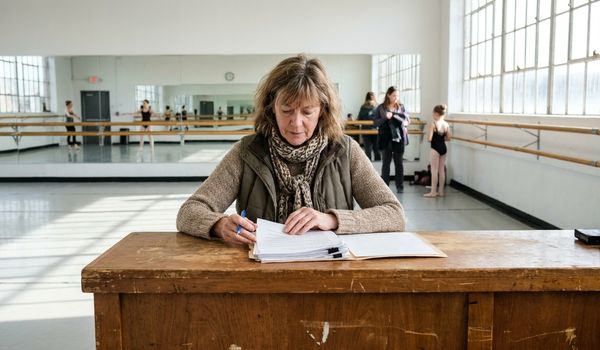
Dance studio financing statistics reveal an industry that is growing, capital-hungry, and increasingly served by flexible lenders. Whether you run a single-room ballet academy or a multi-discipline performing arts center, the numbers behind small business lending in 2026 directly shape what you can build, buy, and expand this year. This report gathers the most important dance studio financing statistics for 2026, from loan approval rates and startup costs to revenue benchmarks and funding trends, so studio owners can plan with real data instead of guesswork.
The dance education industry sits at the intersection of small business, commercial real estate, and specialty equipment, which means studio owners face financing questions that generic advice rarely answers. How much does it really cost to open or expand a studio? What share of applicants actually get approved? Which financing products do studio owners use most, and what do they cost? The sections below break down each of these questions with verified figures from government sources and lending industry data.
In This Article
- The State of Dance Studio Financing in 2026
- Dance Studio Industry Overview and Market Size
- Startup and Operating Cost Statistics
- Loan Approval and Funding Statistics
- The Most Common Financing Types for Dance Studios
- Revenue and Profitability Benchmarks
- Trends Shaping Dance Studio Financing in 2026
- How Crestmont Capital Helps Dance Studio Owners
- Real-World Financing Scenarios
- How to Improve Your Financing Approval Odds
- Frequently Asked Questions
- How to Get Started
The State of Dance Studio Financing in 2026
Small business lending conditions in 2026 continue to reward prepared borrowers. According to the U.S. Small Business Administration, there are more than 33 million small businesses operating in the United States, and access to capital remains one of the top factors separating the studios that expand from the ones that stall. Dance studios are no exception. Enrollment-driven businesses depend on physical space, specialized flooring, mirrors, sound systems, and seasonal marketing pushes, and nearly all of those needs require outside capital at some point.
Several statistics define the current lending environment for studio owners. The Federal Reserve's Small Business Credit Survey has consistently found that roughly half of small business loan applicants receive the full amount of funding they seek, while the rest receive partial funding or are declined. Approval outcomes vary sharply by lender type: nonbank and online lenders approve a meaningfully higher share of applicants than large national banks, particularly for borrowers with less than perfect credit or shorter operating histories.
At the same time, the SBA backed approximately $27.5 billion in 7(a) loans in its most recent full fiscal year, much of it flowing to service businesses in the same size class as the typical dance studio. The practical takeaway is that capital is available in 2026, but the source you approach matters as much as the strength of your application. Studio owners who match the right financing product to the right business need, and who apply with organized financials, consistently report faster approvals and better terms than those who apply blindly to a single bank.
For dance studios specifically, financing demand clusters around five needs: lease deposits and buildouts, sprung flooring and mirrors, sound and lighting equipment, working capital to bridge the summer enrollment dip, and expansion capital for second locations. Each of these needs maps to a different financing product, which is why the statistics in this report are organized by use case rather than by loan type alone.
Dance Studio Industry Overview and Market Size
Before diving into lending data, it helps to understand the size and shape of the industry being financed. Industry estimates suggest that more than 50,000 dance studios and dance schools operate across the United States, ranging from solo-instructor neighborhood studios to regional performing arts academies with hundreds of enrolled students. The U.S. Census Bureau tracks related activity under categories such as fine arts schools and dance companies in its Statistics of U.S. Businesses program, which documents tens of thousands of establishments in the broader arts education and recreation space.
Industry revenue estimates place the U.S. dance studio market at roughly $4 billion to $5 billion per year, with steady growth driven by rising participation in dance fitness, competitive youth dance, and adult recreational classes. The typical studio earns the majority of its revenue from monthly tuition, supplemented by recital fees, costume sales, competition team fees, summer intensives, and private lessons. This diversified revenue mix is one reason lenders increasingly view established studios as stable borrowers: a studio with 150 enrolled students on recurring monthly tuition has predictable cash flow that underwriters can model.
Key Stat: The SBA reports that small businesses make up 99.9 percent of all U.S. businesses and employ nearly half of the private workforce. Dance studios are part of that engine: most are independently owned, locally rooted, and financed through the same small business lending channels covered in this report.
Demographic trends also support the industry. Youth dance participation remains strong in suburban markets, and adult classes in ballet, hip hop, ballroom, and dance fitness have expanded the customer base well beyond the traditional children-only model. Studios that added adult programming and fitness-adjacent classes over the past several years report some of the strongest enrollment gains, which in turn supports stronger loan applications: lenders look favorably on revenue growth, and diversified programming is one of the clearest growth levers a studio has.
The flip side is that the industry remains fragmented and relationship-driven. Most studios have one or two locations, lean administrative staff, and owners who teach classes themselves. That operational profile makes fast, low-friction financing especially valuable, because few studio owners have the time to assemble a 90-day bank application package while running a full class schedule.
Startup and Operating Cost Statistics
One of the most-searched questions in this niche is cost: what does it actually take to open or upgrade a dance studio? While every market differs, the following ranges reflect commonly reported figures from studio owners, franchise disclosures, and industry cost guides.
Typical startup cost categories for a new dance studio:
- Lease deposit and initial rent: $6,000 to $30,000 depending on market, square footage, and buildout condition of the space
- Sprung or marley flooring: $6 to $15 per square foot installed, or roughly $9,000 to $22,500 for a 1,500 square foot studio room
- Wall mirrors: $1,000 to $5,000 per studio room depending on wall length and glass quality
- Ballet barres and portable equipment: $100 to $500 per barre, with most studios needing six to twelve
- Sound and lighting systems: $1,000 to $5,000 for a quality commercial setup
- Lobby, office, and retail fixtures: $2,000 to $8,000
- Studio management software: $50 to $200 per month
- Initial marketing and grand opening: $2,000 to $10,000
- Licensing, insurance, and legal setup: $1,500 to $5,000
Add these together and a modest single-room studio in a leased space typically requires $30,000 to $75,000 to open, while larger multi-room buildouts in competitive markets regularly exceed $100,000. That capital requirement is exactly why dance studio financing statistics matter: the gap between personal savings and total startup cost is the financing gap a lender needs to fill.
Operating costs are equally important for loan sizing. Rent, instructor payroll, insurance, utilities, software, and marketing for a mid-size studio commonly total $8,000 to $25,000 per month. Because enrollment revenue concentrates in September through January and dips sharply in summer, most studios need a working capital buffer of two to four months of operating expenses to smooth the cycle. Lenders that understand the dance business model will ask about this seasonality directly, and applicants who present it proactively with a financing plan tend to receive better outcomes.
Ready to Fund Your Studio's Next Step?
From sprung floors to second locations, get fast, flexible financing from the #1 business lender in the U.S. No obligation - apply in minutes.
Apply Now →Loan Approval and Funding Statistics
Approval data is where dance studio financing statistics get practical. The headline finding across recent Federal Reserve Small Business Credit Survey data is that about half of small business applicants receive the full funding they request. Outcomes improve considerably for applicants with two or more years of operating history, consistent monthly deposits, and credit scores above 650. They deteriorate for applicants with recent delinquencies, heavy existing debt, or incomplete documentation.
Lender type is the single biggest variable. Large national banks approve the smallest share of small business applicants, while community banks, online lenders, and specialty finance companies approve progressively larger shares. For a dance studio owner who needs $40,000 of flooring and mirrors before the fall season, the difference between a bank timeline of four to eight weeks and an alternative lender timeline of two to five business days can determine whether the new room is ready when enrollment peaks.
Key Stat: Federal Reserve survey data shows roughly 51 percent of small business loan applicants receive the full amount they seek. Applicants who apply to lenders matched to their credit profile and use case report meaningfully higher full-approval rates than those who apply to a single big bank.
SBA-guaranteed loans remain a major funding channel. The SBA's 7(a) program backed approximately $27.5 billion in loans in its most recent full fiscal year, with average loan sizes in the mid-six figures but a long tail of smaller loans well suited to studio buildouts. SBA loans offer attractive rates and long terms, but they trade speed for price: approval timelines of 30 to 90 days are common. Studio owners with an urgent equipment deadline typically pair faster financing for the immediate need with longer-term SBA or term financing for planned expansion. The SBA's loan programs page outlines the current guarantee programs and eligibility rules.
One more statistic worth noting: lenders consistently report that incomplete applications are among the top reasons for delay or decline. Studios that arrive with three to six months of business bank statements, a basic profit and loss statement, and a clear statement of use for the funds move through underwriting dramatically faster than those that do not.
By the Numbers
Dance Studio Financing - Key Statistics for 2026
33M+
Small businesses operating in the U.S. (SBA, 2024)
$27.5B
SBA 7(a) loans backed in the most recent full fiscal year
51%
Of small business loan applicants receive full funding sought (Fed SBCS)
$4B+
Estimated annual U.S. dance studio industry revenue
The Most Common Financing Types for Dance Studios
Different statistics apply to different products, so it helps to see the main financing categories studio owners actually use, side by side. Each product below solves a different problem, and the strongest financing plans usually combine two of them.
| Financing Type | Best For | Typical Amounts | Funding Speed |
|---|---|---|---|
| Equipment financing | Flooring, mirrors, sound systems, barres | $10,000 to $250,000 | 2 to 5 business days |
| Working capital loans | Summer cash-flow gaps, payroll, marketing | $10,000 to $500,000 | 1 to 3 business days |
| Business line of credit | Ongoing flexibility, seasonal draws | $10,000 to $250,000 | 1 to 5 business days |
| SBA 7(a) loans | Buildouts, acquisitions, large expansions | $50,000 to $5,000,000 | 30 to 90 days |
Equipment financing is the workhorse for studios because the equipment itself secures the loan, which keeps rates moderate and approvals fast. Flooring, mirrors, barres, and sound systems all qualify. Working capital loans solve the seasonal problem: a studio that is cash-rich in October and cash-tight in July uses a short-term working capital injection to keep payroll and marketing running through the dip. A business line of credit provides the same flexibility on a revolving basis, letting owners draw only what they need and pay interest only on the outstanding balance.
SBA loans sit at the top of the size and complexity range. They are the right tool for buying a building, acquiring a second studio, or funding a full buildout, and their long repayment terms keep monthly payments low. The tradeoff is documentation and time, which is why many owners use fast financing for immediate needs while an SBA application processes in parallel.
For a deeper look at product-level qualification requirements, our complete guide to dance studio business loans walks through each option in detail, and our overview of dance school business loans covers the education-focused side of the industry.
Revenue and Profitability Benchmarks
Lenders underwrite studios against revenue benchmarks, so owners should know the numbers underwriters have in mind. Industry estimates place average single-location dance studio revenue between $100,000 and $300,000 per year, with established multi-room studios in affluent suburban markets frequently exceeding $500,000. The drivers are enrollment count and average monthly tuition: a studio with 150 students paying $85 per month generates about $153,000 in annual tuition before recitals, costumes, and private lessons are added.
Ancillary revenue matters more than most owners realize. Recital fees, costume markups, competition team fees, birthday parties, and summer camps commonly add 15 to 30 percent on top of tuition revenue. Studios that report this ancillary income clearly on their financial statements present materially stronger revenue figures to underwriters than studios that track only tuition.
On the profitability side, well-run studios typically operate at net margins of 10 to 20 percent after owner compensation. Rent is usually the largest fixed cost at 15 to 25 percent of revenue, followed by instructor payroll at 25 to 40 percent. Lenders reviewing a studio loan application generally want to see total debt payments, including the proposed new payment, staying below roughly 30 percent of monthly gross revenue. Keeping that ratio in view when sizing a loan request is one of the simplest ways to improve approval odds.
Pro Tip: Structure repayment around your enrollment cycle. Studios earn the most from September through January, so financing with payments that fit your peak-season cash flow, or a line of credit you draw down only in summer, keeps debt service comfortable year-round.
Growth-stage studios should also track revenue per square foot. A studio generating $150,000 in a 2,000 square foot space produces $75 per square foot annually. When a second room or second location can hold that ratio, expansion financing becomes a straightforward math problem for both the owner and the underwriter: the new space pays for itself if enrollment per square foot holds.
Trends Shaping Dance Studio Financing in 2026
Several trends stand out in this year's data. First, speed has become the deciding factor in lender selection. Coverage of small business lending on outlets like CNBC's small business section reflects the same shift the application data shows: owners increasingly choose lenders on approval speed and simplicity rather than rate alone, because a delayed equipment purchase or missed lease window costs more than a modestly higher rate.
Second, equipment financing demand is being driven by studio upgrades rather than new openings. Existing owners are reinvesting in professional flooring, updated lobbies, and better sound systems to compete for students who have more activity choices than ever. Financing these upgrades preserves cash for marketing and payroll, which is why equipment financing remains the most-used product in this niche.
Third, hybrid programming is changing revenue models and, with them, underwriting. Studios that added on-demand video classes, adult fitness programming, and daytime rentals to homeschool groups report smoother monthly revenue, and smoother revenue is exactly what lenders reward. Owners planning a 2026 expansion should document these diversified streams explicitly in their application package.
Finally, second-location expansion is back on the agenda. After several cautious years, established studios with waitlists are opening satellite rooms in adjacent suburbs, typically financed with a mix of equipment financing for the buildout and a line of credit for the first-year operating ramp. The studios succeeding with this model are the ones that documented waitlist demand before applying, giving underwriters concrete evidence the new location will fill.
How Crestmont Capital Helps Dance Studio Owners
Statistics only matter if they lead to action, and this is where Crestmont Capital comes in. As the #1 rated business lender in the U.S., Crestmont Capital finances the exact needs this report covers: studio buildouts, sprung flooring and mirror packages, sound and lighting systems, working capital for seasonal gaps, and expansion capital for new locations.
Through our equipment financing programs, studio owners can fund flooring, mirrors, barres, and AV systems with the equipment itself securing the loan, which keeps approvals fast and documentation light. For seasonal cash-flow management, our business line of credit lets owners draw only what they need during the summer dip and repay as fall enrollment arrives. Studios that prefer a lump sum for a defined project can use unsecured working capital loans with fixed terms and no collateral requirement.
What sets Crestmont Capital apart for dance studio owners is speed plus understanding. Applications take minutes, decisions often come back the same day, and funding can land in as little as 24 hours. Just as important, our funding specialists work with enrollment-driven businesses every day, so a studio owner never has to explain why August looks different from October on a bank statement. Owners ready to explore the full range of options can start at our small business financing hub or go straight to the application.
Get Studio Financing Built Around Your Enrollment Cycle
Fast approvals, flexible terms, and funding specialists who understand seasonal businesses. Apply in minutes with no obligation.
Apply Now →Real-World Financing Scenarios
The statistics above come to life in real situations. These scenarios reflect the most common ways studio owners put financing to work.
Scenario 1: The Pre-Season Flooring Replacement
An established ballet academy in suburban Ohio needed to replace 2,400 square feet of worn marley flooring before September registration. The $26,000 project was quoted in June, and the owner used equipment financing to fund it in four business days. Because the equipment secured the loan, approval required only bank statements and the vendor invoice. The new floor was installed in August, and the studio's fall enrollment campaign launched on schedule with the upgraded room featured in every photo.
Scenario 2: Bridging the Summer Dip
A hip hop and contemporary studio in Texas generates 70 percent of tuition revenue between September and May. Every July, cash flow tightened as rent and instructor payroll continued while tuition paused. The owner secured a $40,000 business line of credit, drawing $15,000 in July and $12,000 in August, then repaying the balance in October when enrollment payments arrived. Total interest cost stayed low because only drawn funds accrued interest, and the studio kept its marketing running through the critical back-to-school window.
Scenario 3: The Second Location Expansion
A competitive dance studio in Florida with a 90-family waitlist decided to open a second room eight miles away. The buildout required $85,000 for flooring, mirrors, barres, and lobby fixtures, plus $20,000 of working capital for the first-year ramp. The owners combined equipment financing for the buildout with a working capital loan, documenting the waitlist as evidence of demand. The new room reached 60 percent enrollment capacity within five months, and debt payments stayed under 20 percent of combined revenue.
Scenario 4: The New Studio Launch
A first-time owner with eight years of teaching experience leased a 1,800 square foot space to open a children's dance academy. Personal savings covered the lease deposit and initial marketing, leaving a $35,000 gap for flooring, mirrors, sound equipment, and three months of operating cushion. A combination of startup-friendly equipment financing and a small working capital facility closed the gap. The studio opened with 85 enrolled students and reached break-even in month seven.
How to Improve Your Financing Approval Odds
The approval statistics in this report are averages, and individual outcomes depend on preparation. Studio owners can move themselves into the approved half of the data with a few concrete steps.
First, organize your financials before you apply. Three to six months of business bank statements, a current profit and loss statement, and a one-paragraph statement of how the funds will be used answer the questions underwriters ask most. Second, match the product to the need. Equipment purchases belong in equipment financing, seasonal gaps belong in lines of credit or working capital, and large expansions belong in term or SBA structures. Mismatched requests raise flags; matched requests sail through.
Third, size the request against your revenue. Keeping total monthly debt payments below roughly 30 percent of monthly gross revenue keeps your file inside standard underwriting guidelines. Fourth, disclose seasonality proactively. An underwriter who sees August deposits drop with no explanation assumes trouble; the same underwriter, told upfront that tuition pauses in summer and resumes in September, sees a normal enrollment business. Finally, check your credit before applying and address any errors on the report, because even a small score improvement can move you into a better pricing tier.
Turn These Numbers Into Your Growth Plan
Join the thousands of business owners who fund growth with the #1 rated lender in the U.S. Apply in minutes.
Apply Now →Frequently Asked Questions
How much does it cost to open a dance studio in 2026? +
A modest single-room studio in a leased space typically costs $30,000 to $75,000 to open, including the lease deposit, flooring, mirrors, barres, sound equipment, and initial marketing. Larger multi-room buildouts in competitive markets regularly exceed $100,000. Flooring is usually the single largest line item at $6 to $15 per square foot installed.
What percentage of dance studio loan applications get approved? +
Federal Reserve survey data shows roughly half of small business applicants receive the full funding they request. Approval rates are higher at nonbank and specialty lenders than at large national banks, and they improve significantly for applicants with two or more years in business, consistent monthly deposits, and credit scores above 650.
What credit score do I need to finance dance studio equipment? +
Most equipment financing programs look for scores of 600 or higher, with the best rates reserved for scores above 680. Because the equipment secures the loan, equipment financing is often accessible to owners with fair credit who would struggle to qualify for unsecured bank financing. Strong revenue can offset a weaker score with many lenders.
Can I get dance studio financing with bad credit? +
Yes, options exist for owners with challenged credit, particularly revenue-based products and equipment financing where the collateral reduces lender risk. Expect higher rates and smaller approval amounts than prime borrowers receive. Demonstrating strong, consistent monthly deposits is the most effective way to offset a low credit score in underwriting.
How much revenue does the average dance studio generate? +
Industry estimates place average single-location studio revenue between $100,000 and $300,000 per year, with established multi-room studios in strong suburban markets exceeding $500,000. Tuition is the core driver, while recitals, costumes, competition teams, and summer programs commonly add 15 to 30 percent on top of tuition revenue.
What is the average profit margin for a dance studio? +
Well-run studios typically operate at net margins of 10 to 20 percent after owner compensation. Rent usually consumes 15 to 25 percent of revenue and instructor payroll 25 to 40 percent, so the remaining margin depends heavily on enrollment density per square foot and how effectively the studio monetizes recitals, camps, and private lessons.
How long does it take to get funded for dance studio equipment? +
Alternative lenders typically fund equipment financing in two to five business days once the application and vendor invoice are submitted. Traditional banks often take four to eight weeks, and SBA loans run 30 to 90 days. If you have a seasonal deadline like fall registration, build the lender timeline into your project schedule.
Are SBA loans a good option for dance studios? +
SBA 7(a) loans work well for large, planned projects such as buying a building, acquiring another studio, or funding a full buildout, because rates and terms are the most favorable in the market. The tradeoff is a 30 to 90 day timeline and heavy documentation. Many owners pair fast financing for urgent needs with an SBA loan for the bigger picture.
What equipment can I finance for a dance studio? +
Sprung and marley flooring, wall mirrors, ballet barres, sound and lighting systems, lobby furniture, front-desk technology, and even security systems all qualify as financeable equipment. As a rule, if the item is a tangible business asset with a useful life of several years, an equipment financing program can fund it.
Do I need a down payment for dance studio equipment financing? +
Many equipment financing programs offer 100 percent financing for qualified borrowers, meaning no down payment is required. Borrowers with thinner credit files or newer businesses may be asked for 10 to 20 percent down or the first and last payment upfront. A down payment typically reduces both the rate and the monthly payment.
How much working capital does a dance studio need? +
A common benchmark is two to four months of operating expenses held in reserve. For a studio spending $12,000 per month on rent, payroll, and overhead, that means $24,000 to $48,000 of accessible capital. A business line of credit sized to that range covers the summer enrollment dip without forcing owners to hold idle cash year-round.
Can a new dance studio get financing without business history? +
Yes, though options narrow. Startup-friendly equipment financing, equipment leasing, and smaller working capital facilities are the most accessible products for pre-revenue or early-stage studios. Strong personal credit, industry experience, a signed lease, and a documented enrollment pipeline or pre-registration list all strengthen a new studio's application.
What are typical interest rates for dance studio loans in 2026? +
Rates vary widely by product and borrower strength. SBA loans price lowest, typically in the low double digits or better for strong files. Equipment financing for qualified borrowers often lands in the mid single digits to mid teens. Short-term working capital products price highest because of their speed and flexibility. The strongest lever on your rate is your combined credit and revenue profile.
Is leasing or buying better for dance studio flooring and mirrors? +
Financing to own usually wins for long-lived assets like sprung floors and mirrors, because the equipment outlasts the financing term by years and you build equity with each payment. Leasing can make sense for technology that becomes obsolete or for owners who want the lowest possible upfront cost. Run the total cost of both structures before deciding.
How do I apply for dance studio financing with Crestmont Capital? +
Start with the online application at offers.crestmontcapital.com/apply-now, which takes just a few minutes. A funding specialist reviews your information, discusses your project and timeline, and matches you with the right product. Many applicants receive a decision the same day, and funded deals can close in as little as 24 hours.
How to Get Started
Complete our quick application at offers.crestmontcapital.com/apply-now - takes just a few minutes.
A Crestmont Capital advisor will review your studio's needs and match you with the right financing option.
Receive your funds and put them to work on your studio - often within days of approval.
Conclusion
The dance studio financing statistics for 2026 point to a straightforward conclusion: capital is available, approval outcomes reward preparation, and the studios growing fastest are the ones matching the right financing product to each business need. Equipment financing handles the floors, mirrors, and sound systems that define a professional studio. Lines of credit and working capital smooth the enrollment cycle. SBA and term structures fund the big moves like second locations and acquisitions.
Use the benchmarks in this report as your planning baseline: startup costs of $30,000 to $75,000 for a modest studio, revenue potential of $100,000 to $300,000 and up for an established location, margins of 10 to 20 percent, and a working capital buffer of two to four months of expenses. When you are ready to put the numbers to work, Crestmont Capital's team is ready to help you build a financing plan around your enrollment cycle, your growth timeline, and your goals. Apply in minutes and find out what your studio qualifies for today.
Disclaimer: The information provided in this article is for general educational purposes only and is not financial, legal, or tax advice. Funding terms, qualifications, and product availability may vary and are subject to change without notice. Crestmont Capital does not guarantee approval, rates, or specific outcomes. For personalized information about your business funding options, contact our team directly.

Allan Garfinkle
Allan Garfinkle is the Chief Revenue Officer at Crestmont Capital, where he has spent more than a decade leading revenue strategy, business development, and operational growth. With 28 years of experience building and advising startups and small businesses, Allan has helped more than 10,000 business owners navigate financing decisions, growth opportunities, and changing economic conditions. He earned a Bachelor of Science in Economics and an MBA with a concentration in Finance from Northeastern University, as well as a Juris Doctor from New England Law, where his studies focused on contracts and business law. His writing draws on extensive practical experience in small-business lending, equipment financing, business credit, and commercial finance.