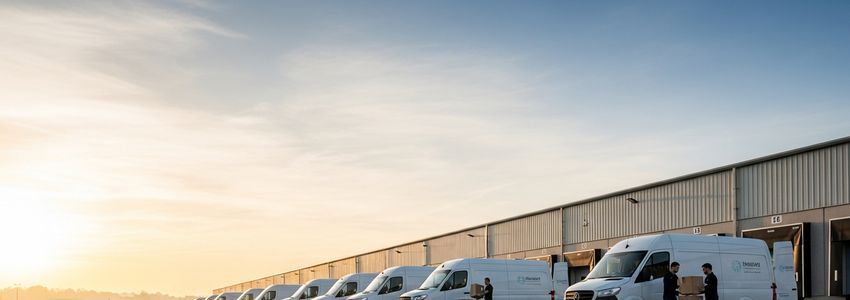
Keeping your delivery vehicles modern, reliable, and efficient is one of the most impactful investments you can make as a business owner. Whether you run a regional courier operation, a food distribution company, or a local service business with a small fleet, the condition of your delivery vehicles directly shapes your customer experience, fuel costs, driver safety, and operating margins. Yet replacing or upgrading those vehicles can require tens of thousands of dollars — money most businesses simply don't have sitting in a bank account.
That's exactly why equipment loans for delivery vehicles have become one of the most widely used financing tools among growing businesses. These loans allow you to acquire newer, more capable vehicles without draining your working capital, and they often come with structured repayment terms that make monthly budgeting straightforward. In this guide, you'll find everything you need to understand how delivery vehicle financing works, what it costs, who qualifies, and how to get started.
In This Article
- What Are Equipment Loans for Delivery Vehicles?
- Key Benefits of Financing Your Fleet Upgrade
- How Delivery Vehicle Equipment Loans Work
- Types of Vehicles and Equipment You Can Finance
- Fleet Financing: By the Numbers
- Who Qualifies for Delivery Vehicle Loans?
- Loan vs. Lease vs. Working Capital
- How Crestmont Capital Helps
- Real-World Business Scenarios
- Frequently Asked Questions
- How to Get Started
What Are Equipment Loans for Delivery Vehicles?
An equipment loan for a delivery vehicle is a business financing product specifically used to purchase, upgrade, or replace commercial vehicles used in business operations. Unlike a general-purpose term loan, equipment loans are typically secured by the vehicle itself — meaning the vehicle serves as collateral for the financing. This structure generally makes approval easier and rates more favorable compared to unsecured business loans.
These loans are structured like traditional installment financing: you borrow a set amount, repay it over a fixed term (typically 24 to 84 months), and own the vehicle outright at the end of the loan. Interest rates, down payment requirements, and approval criteria vary by lender, but the core mechanic is the same across most programs — your business acquires the vehicle, puts it to work, and repays the lender from the revenue it helps generate.
Delivery vehicle equipment loans differ from commercial vehicle leasing, which we'll compare later in this guide. With a loan, you build equity in the vehicle with every payment. With a lease, you have lower monthly costs but no ownership at the end of the term unless you pay a buyout price. For businesses that put high mileage on their vehicles or want to build a depreciating asset on the balance sheet, loans are often the better long-term move.
Industry Insight: According to the Equipment Leasing and Finance Association (ELFA), commercial vehicle financing is one of the fastest-growing segments of the equipment finance market, with businesses borrowing over $70 billion annually to fund vehicle and fleet acquisitions.
Key Benefits of Financing Your Fleet Upgrade
There are several compelling reasons businesses choose to finance their delivery vehicle upgrades rather than buying outright or delaying the purchase altogether. Here are the most important:
- Preserve cash flow: Rather than spending $40,000 to $150,000 in one lump sum, you spread payments over months or years while the vehicle immediately starts generating revenue.
- Maintain working capital: Your cash reserves stay available for payroll, inventory, marketing, and unexpected expenses rather than being tied up in depreciating equipment.
- Improve operations immediately: You don't have to wait until you've saved enough to buy outright. Upgraded vehicles can reduce fuel costs, repair bills, and delivery times starting on day one.
- Fixed monthly payments: Equipment loans typically carry fixed interest rates, making budgeting predictable throughout the repayment period.
- Potential for fast approval: Many lenders can approve and fund delivery vehicle loans within 24 to 72 hours, particularly for established businesses with strong cash flow.
- Build business credit: Responsible repayment of equipment loans strengthens your business credit profile, opening the door to better financing options in the future.
Ready to Upgrade Your Delivery Fleet?
Get fast, flexible financing from Crestmont Capital - the #1 business lender in the U.S. No obligation - apply in minutes.
Apply Now →How Delivery Vehicle Equipment Loans Work
Understanding the mechanics of equipment loans helps you evaluate offers and negotiate better terms. Here's what happens from application to funding:
Step 1: Application and Documentation
You submit a loan application to your lender of choice, along with supporting documentation. Most lenders require 3 to 6 months of bank statements, basic business financials, information about the vehicle(s) you intend to purchase, and proof of business ownership. Some online lenders have streamlined this process significantly — applications can take as little as 10 minutes to complete.
Step 2: Underwriting and Credit Review
The lender evaluates your application by examining your personal and business credit scores, your business's revenue and cash flow, the loan-to-value ratio of the vehicle, and your time in business. Because the vehicle secures the loan, even businesses with moderate credit scores can often qualify for reasonable terms.
Step 3: Approval and Offer
If approved, the lender presents a formal offer that includes the loan amount, interest rate (APR), term length, monthly payment, and any fees (origination, documentation, or early prepayment). Review this carefully and compare multiple offers before accepting.
Step 4: Closing and Funding
Once you accept the offer, the lender funds the loan — often directly to the vehicle dealer or seller. In some cases, funds are deposited in your business bank account and you pay the seller directly. The vehicle title is typically held by the lender until the loan is repaid in full.
Step 5: Repayment
You make fixed monthly payments over the agreed term. At the end of the term, you own the vehicle free and clear. Some lenders allow early repayment without penalty, while others charge a prepayment fee — always confirm this before signing.
Rate Ranges to Know: Interest rates on delivery vehicle equipment loans typically range from 5% to 30% APR depending on your credit profile, time in business, and lender type. SBA vehicle financing programs can offer rates as low as prime + 2.75%. Alternative lenders may charge higher rates but offer faster approvals and more flexible requirements.
Types of Vehicles and Equipment You Can Finance
Equipment loans cover a wide range of commercial vehicles and related delivery equipment. If it's used primarily for business operations, there's a good chance it qualifies for financing. Common examples include:
- Cargo vans and sprinter vans - for last-mile delivery businesses, florists, caterers, and service companies
- Box trucks and refrigerated trucks - for food distributors, grocery delivery, medical supply companies
- Pickup trucks - for contractors, landscaping companies, and home service businesses
- Flatbed trucks - for construction supply, lumber, and heavy materials delivery
- Straight trucks and medium-duty vehicles - for furniture, appliance, and retail delivery operations
- Electric delivery vehicles - increasingly popular for urban delivery businesses looking to reduce fuel costs and environmental impact
- Tow trucks - for auto recovery and roadside assistance businesses
- Step vans (bread trucks) - for route delivery businesses including food and beverage distributors
Beyond the vehicles themselves, some equipment loan programs also cover delivery-related accessories and technology: GPS fleet management systems, refrigeration units, lift gates, cargo security systems, and custom shelving or racking. Ask your lender whether add-on equipment costs can be rolled into the primary vehicle loan.
Fleet Financing: By the Numbers
By the Numbers
Delivery Fleet Financing - Key Statistics
$70B+
Commercial vehicle financing originated annually in the U.S.
24-72h
Typical funding time with alternative lenders for qualified applicants
5-30%
Typical APR range for commercial delivery vehicle loans
84 Mo.
Maximum repayment term available from many commercial vehicle lenders
Who Qualifies for Delivery Vehicle Equipment Loans?
Qualification requirements vary by lender type, but most programs look at similar factors. Here's what lenders typically evaluate when reviewing your application for delivery vehicle financing:
Credit Score Requirements
Many equipment lenders have more flexible credit requirements than traditional term loan programs because the vehicle itself secures the loan. General benchmarks:
- 700+: Excellent rates and terms from most lenders, including SBA programs and traditional banks
- 650-699: Good options available from online lenders and alternative financing companies
- 600-649: Possible approval with higher interest rates; larger down payment may be required
- Below 600: More challenging, but specialized bad credit equipment lenders exist; expect higher rates
Time in Business
Most mainstream lenders prefer businesses with at least 12-24 months of operating history. Startups and newer businesses may need to work with specialized lenders or provide a larger down payment. Some programs from equipment financing providers cater specifically to newer businesses.
Annual Revenue and Cash Flow
Lenders want to see that your business generates enough revenue to comfortably cover loan payments. A common benchmark is that your monthly payment should not exceed 10-15% of your average monthly revenue. Strong, consistent cash flow is often more important than a high credit score in commercial vehicle lending.
Down Payment
Some programs offer 100% financing with no money down, while others require 10-20% down. A larger down payment typically results in a lower interest rate, lower monthly payments, and easier approval — particularly if your credit profile has some challenges.
Vehicle Age and Condition
Most lenders have restrictions on the age and mileage of used vehicles they'll finance. Newer vehicles are easier to finance at better rates. Older or high-mileage vehicles may require a specialized lender or a larger down payment.
Not Sure If You Qualify? Let Us Check.
Crestmont Capital works with businesses across all credit profiles to find the right delivery vehicle financing solution. Get a no-obligation quote in minutes.
Check My Eligibility →Loan vs. Lease vs. Working Capital: Which Option Is Right for You?
Equipment loans aren't the only way to upgrade your delivery fleet. It helps to understand how your options compare:
| Factor | Equipment Loan | Vehicle Lease | Working Capital Loan |
|---|---|---|---|
| Ownership | You own at end of term | Lender owns; buyout option | You own (no collateral) |
| Monthly Cost | Moderate | Lower (typically) | Higher (unsecured) |
| Down Payment | 0-20% | First/last month payment | None |
| Credit Requirements | Moderate (vehicle secures) | Moderate | Higher (unsecured) |
| Mileage Limits | None | Often applies | None |
| Best For | High-mileage, long-term use | Low mileage, frequent upgrades | Fast cash, flexible use |
For most delivery-heavy businesses — where vehicles accumulate mileage quickly and are expected to last many years — an equipment loan tends to offer the best long-term value. A lease may make sense if you prefer to upgrade your fleet every 2-3 years and stay within mileage caps. A working capital loan could work for smaller purchases or supplemental funding if your primary vehicle financing is already in place.

How Crestmont Capital Helps Growing Businesses Finance Their Fleets
Crestmont Capital is a leading business lender with programs specifically designed for companies looking to upgrade or expand their commercial vehicle fleets. Whether you're replacing a single aging delivery van or financing a multi-vehicle fleet expansion, our team works to match your business with the right program at competitive terms.
Here's what sets our approach apart:
- Flexible programs: We work with businesses across a wide range of credit profiles — from strong to challenged. Our bad credit business loan options extend to equipment and vehicle financing.
- Fast approvals: Many clients receive decisions within hours and can be funded in as little as one business day. We understand delivery businesses can't afford extended downtime.
- Competitive rates: Our network of lenders allows us to source competitive rates tailored to your financial profile — not a one-size-fits-all rate sheet.
- Dedicated advisors: Our financing specialists take the time to understand your business, your fleet needs, and your growth plans before recommending a financing structure.
- Multiple financing types: Beyond equipment loans, we offer small business loans, business lines of credit, and other products that may complement your vehicle financing strategy.
We've helped businesses in transportation, food distribution, home services, retail delivery, and dozens of other industries upgrade their fleets and scale their operations. If your delivery vehicles are holding your business back, Crestmont Capital is ready to help you move forward.
Pro Tip: When applying for delivery vehicle financing, have these documents ready: 3-6 months of business bank statements, your most recent business tax return, vehicle purchase quote or invoice, and your business license or registration. Having these ready can cut approval time in half.
Real-World Business Scenarios: Equipment Loans in Action
Understanding how other businesses have used equipment loans for their delivery fleets can help you visualize how this financing could work for your own situation.
Scenario 1: Regional Food Distributor Upgrades Refrigerated Trucks
A food distribution company operating in the southeast had a fleet of four refrigerated box trucks — all over eight years old and increasingly prone to breakdowns. After two costly breakdowns in a single quarter, the owner decided to replace three vehicles with newer refrigerated trucks. The purchase price totaled $285,000. Using equipment financing, the owner secured a 60-month loan at a competitive rate, keeping monthly payments manageable while the newer vehicles virtually eliminated breakdown-related delays and reduced maintenance costs by over 40% in the first year.
Scenario 2: Landscaping Company Expands Delivery Capacity
A landscaping business was turning away new commercial contracts because their single delivery truck couldn't handle the increased volume during peak season. They used a delivery vehicle equipment loan to purchase two additional pickup trucks and an enclosed trailer, totaling $78,000. The new vehicles were in service within a week of applying. The company was able to accept three new commercial accounts that collectively generated more revenue in a year than the total cost of the vehicles.
Scenario 3: E-Commerce Business Builds In-House Delivery
An e-commerce retailer was paying a third-party courier service $18,000 per month for last-mile deliveries in their metro area. By financing two Sprinter vans through an equipment loan program — total cost $94,000 — they brought delivery in-house. Their monthly payment on the vans was significantly lower than their previous courier bill, and they gained control over delivery timing, customer experience, and branding.
Scenario 4: Plumbing Company Replaces Aging Service Vans
A plumbing company with six service vans had three that were consistently failing inspections and requiring expensive repairs. Using a fleet financing program, they financed three new fully-equipped service vans. The newer vehicles came with manufacturer warranties, reducing repair costs. The owner structured the loan to align payments with the company's strong seasonal cash flow, keeping stress on the budget minimal during slower months.
Scenario 5: Startup Delivery Business Acquires Its First Fleet
A newer last-mile delivery startup launched with two personal vehicles but quickly outgrew them. With 18 months in business and solid revenue growth, they qualified for a startup-friendly equipment loan to purchase four cargo vans. The financing allowed them to professionalize operations, take on contracts with larger retailers, and scale toward profitability — all without raising outside capital.
Scenario 6: Bakery Chain Standardizes Fleet Across Locations
A regional bakery chain with five locations needed to standardize their delivery vehicles for branding consistency and maintenance efficiency. They financed eight new branded delivery vans through a single equipment financing package, giving their fleet a unified look while simplifying maintenance with vehicles of the same make and model.
Frequently Asked Questions
How to Get Started with Delivery Vehicle Financing
Before applying, know what type of vehicle(s) you need, whether you're buying new or used, and your approximate budget. Get a purchase quote from a dealer if possible - lenders will want to see this.
Collect 3-6 months of business bank statements, your most recent business tax return, a copy of your business license, and a photo ID. Having these ready speeds up the approval process significantly.
Complete our quick application at offers.crestmontcapital.com/apply-now - takes just a few minutes. A specialist will review your needs and match you with the right financing option.
Compare your loan offer carefully - review the rate, term, total cost, and any fees. Don't hesitate to ask your advisor to clarify any terms or explore alternative structures.
After signing, funding typically arrives within 1-3 business days. Put your new vehicles to work and start generating the ROI that makes your investment worthwhile.
Conclusion: Upgrade Your Delivery Fleet and Keep Your Business Moving
Outdated, unreliable delivery vehicles are more than a maintenance headache — they're a drag on your business growth and customer satisfaction. Equipment loans for delivery vehicles offer a practical, accessible path to upgrading your fleet without disrupting your cash flow or depleting your working capital reserves.
Whether you need one new cargo van, a fleet of refrigerated box trucks, or a complete overhaul of your delivery operation, there's a financing structure that fits. With fast approvals, flexible terms, and programs that accommodate a wide range of credit profiles, delivery vehicle financing has never been more accessible to small and mid-size businesses.
Crestmont Capital has helped thousands of business owners secure the financing they need to grow — and we're ready to do the same for you. Take the first step today by applying online or speaking with one of our financing specialists. Your next delivery vehicle upgrade is closer than you think.
Start Your Delivery Fleet Upgrade Today
Apply in minutes and get a decision fast. Crestmont Capital - the #1 business lender in the U.S. - is standing by to help.
Apply Now →Disclaimer: The information provided in this article is for general educational purposes only and is not financial, legal, or tax advice. Funding terms, qualifications, and product availability may vary and are subject to change without notice. Crestmont Capital does not guarantee approval, rates, or specific outcomes. For personalized information about your business funding options, contact our team directly.