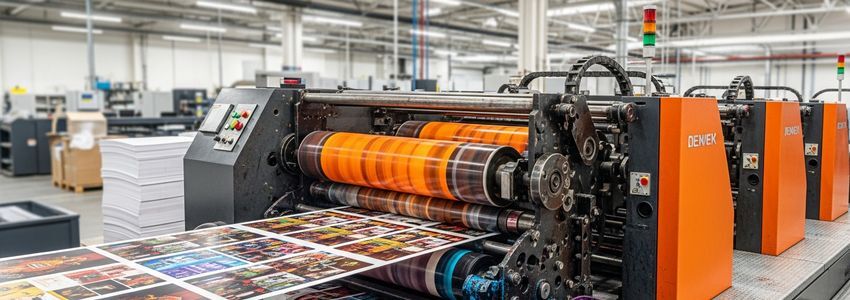
Running a print shop means staying competitive in a fast-moving industry where technology evolves quickly and client expectations are always rising. Whether you operate an offset printing facility, a digital print-on-demand service, or a full-service commercial print shop with finishing capabilities, your equipment is the backbone of your business. Printing presses, bindery machines, cutting systems, folding equipment, and finishing tools represent significant capital investments - often tens or even hundreds of thousands of dollars. That's where printing press equipment financing comes in.
Equipment financing allows print shop owners to acquire the machinery they need now, spread the cost over time, and preserve cash flow for day-to-day operations, staffing, and materials. Rather than depleting your working capital on a single large purchase, you can make structured monthly payments that align with the revenue your new equipment helps generate. This guide covers everything print shop owners need to know about financing and leasing printing presses, bindery machines, and related production equipment.
In This Article
- What Is Printing Press Equipment Financing?
- Types of Equipment You Can Finance
- Financing Options for Print Shops
- How the Financing Process Works
- Printing Industry: By the Numbers
- Who Qualifies for Print Equipment Financing?
- Financing vs. Leasing vs. Buying Outright
- How Crestmont Capital Helps Print Shops
- Real-World Scenarios
- How to Get Started
- Frequently Asked Questions
What Is Printing Press Equipment Financing?
Printing press equipment financing is a funding structure that allows print shop owners to acquire new or used printing and bindery machinery by borrowing against the value of the equipment itself. Instead of paying the full purchase price upfront, you make fixed monthly payments over an agreed term - typically 24 to 84 months - while using the equipment to generate revenue from day one.
The equipment serves as collateral in most financing arrangements, which means lenders can often approve print shop owners even when other business credit factors are less than perfect. This structure is distinct from general working capital loans and is specifically designed for capital equipment purchases. For print shops, it's one of the most practical and widely used financing tools available.
Printing equipment financing covers a wide range of machinery across the commercial printing industry: offset lithography presses, digital printing systems, wide-format printers, letterpress machines, UV flatbed printers, paper cutters, folder-gluers, perfect binders, saddle stitchers, and more. If it's production equipment used in a print or bindery operation, it can likely be financed.
Industry Insight: According to the Printing Industries of America, the U.S. commercial printing industry generates over $80 billion in annual revenue, with more than 30,000 establishments employing nearly 400,000 workers. Equipment investment is central to maintaining competitiveness in this sector.
Types of Equipment You Can Finance
One of the advantages of printing press equipment financing is its broad scope. Whether you're upgrading a single machine or outfitting an entirely new facility, lenders working in this space understand the full range of printing production equipment. Here's a breakdown of what print shop owners commonly finance:
Printing Presses
Commercial offset presses are among the most significant equipment investments in any print operation. Sheetfed offset presses from manufacturers like Heidelberg, Komori, manroland, and RYOBI can range from $200,000 to over $1 million depending on configuration. Web presses used for high-volume publications, catalogs, and newspapers represent even larger investments. Digital printing systems from manufacturers like Xerox, Canon, Konica Minolta, and HP Indigo are also commonly financed, with costs ranging from $50,000 to $500,000 or more for production-grade models.
Bindery and Finishing Equipment
Bindery machines complete the production cycle by turning printed sheets into finished products. Equipment in this category includes perfect binders, saddle stitchers, spiral and wire-o binding machines, case-making systems, and foil stamping machines. High-capacity paper cutters and guillotines, folding machines, and collators round out most finishing departments. These machines often range from $20,000 to $300,000+ and are frequently financed alongside press equipment.
Wide-Format and Specialty Equipment
Wide-format printers used for signage, banners, vehicle wraps, and display graphics are a growing segment of the commercial print market. UV flatbed printers, latex printers, dye-sublimation systems, and plotters all qualify for equipment financing. Specialty equipment like letterpress machines, engravers, and laser cutting systems used by custom print shops are also eligible.
Pre-Press and Support Equipment
Computer-to-plate (CTP) systems, plate processors, spectrophotometers, densitometers, and color management systems represent significant investments in pre-press workflow. Laminating machines, UV coating systems, die-cutting equipment, and scoring machines that support the finishing process can all be included in an equipment financing package.
Ready to Upgrade Your Print Shop?
Crestmont Capital helps print shop owners get fast, flexible financing for printing presses, bindery machines, and finishing equipment. No obligation - apply in minutes.
Apply Now →Financing Options for Print Shops
Print shop owners have several distinct financing structures available to them. Understanding the differences helps you choose the arrangement that best matches your cash flow, growth plans, and long-term ownership goals.
Equipment Loans
With an equipment loan, you borrow a fixed amount to purchase the printing or bindery equipment outright. The lender typically finances 80 to 100 percent of the equipment cost, and you repay the principal plus interest over a set term. At the end of the loan term, you own the equipment free and clear. This option makes sense when you plan to use the equipment for many years, want to build equity in your assets, and prefer a clear path to ownership.
Equipment Leasing
Equipment leasing works differently from a loan. Instead of purchasing the equipment, you pay to use it for a defined term - usually 24 to 60 months. At the end of the lease, you typically have options to purchase the equipment at fair market value or a predetermined buyout price, renew the lease, or return the equipment. Leasing can be attractive for rapidly evolving digital printing technology where you may want to upgrade to newer systems every few years without taking a depreciation hit on owned equipment.
Operating vs. Capital Leases
Operating leases are structured so the lessee never assumes ownership - ideal for equipment that becomes obsolete quickly. Capital leases (sometimes called finance leases) are structured more like loans and eventually transfer ownership to the lessee. The accounting treatment differs between the two, and your CPA can advise which structure makes more sense for your financial reporting.
Sale-Leaseback
If you already own printing equipment outright, a sale-leaseback arrangement allows you to sell the equipment to a financing company and immediately lease it back from them. This converts an illiquid asset into working capital while allowing you to continue operating the equipment. It can be particularly useful for print shops that need a cash infusion for expansion, new technology investment, or managing seasonal cash flow pressure.
Lines of Credit for Equipment
An equipment line of credit functions like a revolving credit facility specifically designated for equipment purchases. Once approved, you can draw on the line as needed to purchase equipment up to your credit limit. This is useful for print shops that anticipate purchasing multiple pieces of equipment over time rather than in a single transaction. You only pay interest on what you draw, and as you repay, the available credit replenishes.
By the Numbers
Printing Press Equipment Financing - Key Statistics
$80B+
U.S. commercial printing industry annual revenue
30K+
Commercial printing establishments in the U.S.
2-5 Days
Typical funding timeline with equipment financing
$1M+
Maximum financing available for large press purchases
How the Financing Process Works
The equipment financing process for print shops is generally straightforward, especially when working with a lender that specializes in commercial equipment. Here's a step-by-step overview of what to expect:
Step 1: Identify Your Equipment Needs
Before applying, have a clear picture of what equipment you need, whether new or used, and an estimated cost. Get quotes from vendors and dealers. Knowing the equipment make, model, and purchase price helps lenders process your application faster and can result in more favorable terms.
Step 2: Gather Your Documentation
Most lenders will request basic business documentation including recent bank statements (typically 3-6 months), a completed application, and sometimes business and personal tax returns for larger financing amounts. For equipment financing specifically, the lender will also want details about the equipment being purchased, including a quote or invoice from the seller.
Step 3: Submit Your Application
Applications can typically be submitted online in minutes. Many equipment financing lenders can provide same-day or next-day decisions, particularly for amounts under $150,000. Larger transactions involving million-dollar presses or complete shop buildouts may require more underwriting time.
Step 4: Review Your Terms and Accept
Once approved, you'll receive a term sheet or financing agreement outlining the loan amount, interest rate, monthly payment, term length, and any fees. Review these carefully and compare offers if you've applied with multiple lenders. Ask about prepayment penalties, end-of-term options if leasing, and any additional fees.
Step 5: Equipment Purchase and Funding
After signing your financing agreement, the lender typically pays the equipment vendor directly on your behalf. In some cases, funds are disbursed directly to you so you can complete the purchase. Once the equipment is delivered and installed, your payment schedule begins.
Pro Tip: Many equipment financing lenders can approve transactions under $150,000 with minimal documentation - sometimes just a one-page application and recent bank statements. For larger presses, expect a more thorough review of your business financials.
Who Qualifies for Print Equipment Financing?
Qualification requirements vary by lender, but most equipment financing programs look at a combination of factors rather than a single credit score. This makes equipment financing more accessible than traditional bank loans for many print shop owners.
Business and Personal Credit
While excellent credit is always helpful, equipment financing is available to businesses across a wide credit spectrum. Many lenders focus more on the value of the equipment being financed than on your credit score alone, since the equipment itself serves as collateral. Businesses with credit scores in the 600-640+ range can typically qualify for financing through alternative lenders, while those with 680+ often qualify for more favorable rates.
Time in Business
Lenders generally prefer businesses with at least 1-2 years of operating history, as established revenue patterns are easier to evaluate. That said, startup print shops and newer businesses can still access financing - often through programs specifically designed for startups that use the equipment value as the primary underwriting factor.
Revenue and Cash Flow
Lenders want to see that your business generates enough revenue to service the new debt. For most equipment financing, they're looking at whether your monthly payment represents a manageable percentage of your average monthly revenue. A general rule of thumb is that your total debt payments should not exceed 15-20% of monthly gross revenue, though this varies by lender.
Equipment Type and Age
New equipment is the easiest to finance since its value is clear and depreciation is predictable. Used equipment can also be financed, though lenders may apply tighter restrictions on age (typically no more than 10-15 years old) and may require an appraisal for higher-value transactions.
Finance Your Printing Equipment Today
From digital presses to industrial bindery lines - Crestmont Capital has flexible programs to fit your print shop's needs. Terms from 24 to 84 months. Fast approvals.
Get Your Quote →Financing vs. Leasing vs. Buying Outright
Choosing the right acquisition strategy for your printing equipment depends on your cash position, tax situation, growth plans, and how long you plan to use the equipment. Here's a comparison of the three primary options:
| Feature | Equipment Loan | Equipment Lease | Cash Purchase |
|---|---|---|---|
| Upfront Cost | Low (down payment or none) | Very low (first/last payment) | Full purchase price |
| Ownership | You own at end of term | Option to buy or return | Immediate ownership |
| Cash Flow Impact | Predictable monthly payments | Lower monthly payments | Large immediate outflow |
| Upgrade Flexibility | Low (you own the asset) | High (can upgrade at lease end) | Low (must sell/trade) |
| Balance Sheet | Asset and liability recorded | Varies by lease type | Asset recorded, no liability |
| Best For | Long-term use, building equity | Frequent upgrades, cash conservation | Strong cash position, no debt preferred |
How Crestmont Capital Helps Print Shop Owners
Crestmont Capital is a leading U.S. business lender with deep experience in equipment financing for commercial businesses across all industries, including commercial printing and bindery operations. Whether you need to finance a single digital press or an entire production floor upgrade, Crestmont can structure a solution that fits your operation.
Our team understands the printing industry - the equipment lifecycle, the seasonal nature of many print contracts, and the capital intensity of maintaining competitive production capabilities. We work with print shops of all sizes, from small quick-print operations to large commercial printing facilities, and we can often get decisions quickly, sometimes in as little as 24-48 hours.
Beyond equipment financing, Crestmont offers a full suite of business funding solutions that print shop owners may find valuable. Business lines of credit can provide flexible access to capital for materials, staffing, and operational expenses. Working capital loans can bridge cash flow gaps between large print jobs or during seasonal slowdowns.
For print shops considering expansion into new equipment categories - such as adding wide-format capabilities, investing in a UV coating system, or upgrading from analog to digital workflows - Crestmont can help structure financing that spreads the investment over time and maintains healthy cash reserves. Learn more about our commercial equipment financing options or explore our packaging equipment financing for print shops with bindery and packaging lines.
Why Crestmont? As the #1 rated business lender in the U.S., Crestmont Capital offers flexible terms, fast decisions, and financing programs tailored to the specific needs of commercial print businesses. Our specialists understand the printing industry and can help you find the right structure for your equipment investment.
Real-World Scenarios: Print Shops Using Equipment Financing
To illustrate how printing press equipment financing works in practice, here are several scenarios that reflect common situations print shop owners face.
Scenario 1: The Digital Press Upgrade
A commercial print shop in a mid-sized city has been operating offset presses for 15 years. Their primary clients - local businesses, marketing agencies, and nonprofits - are increasingly requesting shorter runs, faster turnaround, and variable data printing capabilities that offset can't efficiently deliver. The owner identifies a production-class digital color press at $180,000 that would allow the shop to handle these jobs profitably.
Rather than depleting the shop's cash reserves (which are needed for paper inventory, ink, and payroll), the owner secures equipment financing at a 60-month term. The monthly payment is approximately $3,400, while the new press generates an additional $8,000-12,000 per month in new revenue from short-run digital jobs the shop couldn't previously accept. The press pays for itself within its first year of operation.
Scenario 2: The Bindery Buildout
A book printer specializing in short-run publishing has solid press capacity but sends all bindery work to outside vendors - incurring significant outsourcing costs and losing control of turnaround times. The owner wants to bring finishing in-house with a perfect binder, a folding machine, and a high-capacity cutter. Total equipment cost: $95,000.
Using equipment financing with a 48-month term, the print shop owner brings these three pieces of equipment in-house. The outsourcing costs that used to run $4,000-6,000 per month are eliminated, and the shop now generates additional revenue by offering binding services to other small printers in the area. The equipment financing payment of approximately $2,100 per month is far outweighed by the savings and new revenue streams.
Scenario 3: The Wide-Format Expansion
A commercial print shop wants to break into the lucrative wide-format signage and display market. Their current equipment is limited to standard sheet sizes. A quality wide-format UV flatbed printer capable of printing on rigid substrates would open up new client categories including retail stores, trade show exhibitors, and event companies. The equipment costs $65,000.
Financing the wide-format printer over 36 months keeps monthly payments manageable while the shop builds its wide-format client base. Within six months, wide-format jobs account for 25% of shop revenue, and the monthly equipment payment is covered by a single large order from a local retail chain needing seasonal window displays.
Scenario 4: The Startup Print Shop
An entrepreneur with 12 years of experience in the printing industry wants to open her own commercial print shop. She has strong industry relationships and pre-negotiated contracts with two anchor clients, but her personal capital is limited. She needs a digital press and basic finishing equipment totaling $140,000.
Through a startup equipment financing program that evaluates the equipment value and the owner's industry experience alongside business projections, she secures financing with a manageable down payment. With her anchor clients generating immediate revenue, the shop is operational and profitable from month one, and she owns her equipment outright by the end of the financing term.
Scenario 5: The Fleet Replacement
A large commercial printing facility has five offset presses, the oldest of which is 18 years old and increasingly prone to downtime. Maintenance costs are escalating, and the aging press is limiting throughput on rush jobs. Replacing two of the oldest presses with modern sheetfed offset equipment would reduce maintenance costs and increase productivity, but each press costs $400,000-600,000.
The print facility works with a commercial equipment financing company to structure a transaction that finances both new presses over a 72-month term. The predictable monthly payments are incorporated into the facility's operating budget, while the reduced maintenance costs and increased production capacity improve the facility's bottom line substantially.
Scenario 6: The Sale-Leaseback Scenario
A print shop owner purchased a premium offset press outright two years ago at a cost of $350,000. The press is now valued at approximately $280,000 and is fully paid for - but the business is going through a growth phase and needs working capital for a major facility expansion. Rather than taking out an unrelated business loan, the owner structures a sale-leaseback with a financing company, receiving $250,000 in cash while continuing to use the press under a lease arrangement. The working capital funds the expansion, and the lease payments are incorporated into operational costs.
How to Get Started
Complete our quick application at offers.crestmontcapital.com/apply-now - it takes just a few minutes and requires minimal documentation to get started.
A Crestmont Capital equipment financing advisor will review your needs, evaluate your situation, and match you with the right financing structure for your print shop.
Receive your financing, complete your equipment purchase, and put your new printing or bindery equipment to work - often within days of approval.
Start Your Equipment Financing Application
Join thousands of U.S. business owners who have used Crestmont Capital to fund their equipment investments. Fast, flexible, and built for businesses like yours.
Apply Now →Frequently Asked Questions
What types of printing equipment can be financed?
Virtually any commercial printing or bindery equipment can be financed, including offset printing presses (sheetfed and web), digital printing systems, wide-format printers, UV flatbed printers, letterpress equipment, perfect binders, saddle stitchers, paper cutters, folding machines, laminating machines, die cutters, UV coating systems, computer-to-plate (CTP) systems, and large-format plotters. Both new and used equipment typically qualify.
How much can I finance for printing equipment?
Financing amounts vary widely depending on your lender and the equipment you're purchasing. For small digital printers or individual bindery machines, you might finance $20,000-$50,000. For production-class digital presses or offset printing systems, financing can range from $100,000 to $500,000 or more. For large commercial printing facilities investing in multiple pieces of equipment or industrial offset press lines, financing of $1 million or more is available from specialized lenders.
What credit score do I need to finance printing equipment?
Credit score requirements vary by lender and financing amount. Traditional banks typically require 700+ personal credit scores. Alternative equipment financing lenders may work with scores as low as 600-620, especially since the equipment itself serves as collateral. Having a higher score will generally result in more favorable interest rates and terms, but many print shop owners with imperfect credit histories can still qualify for equipment financing through the right lender.
What's the difference between equipment financing and equipment leasing for print shops?
Equipment financing (a loan) allows you to own the equipment at the end of the term. You borrow money to purchase the press or bindery machine, make payments over time, and own the asset outright when the loan is paid off. Equipment leasing is more like renting - you pay for the use of the equipment over a defined period and at the end have options to buy it at fair market value, extend the lease, or return it. Leasing typically has lower monthly payments but doesn't build equity. For digital printing equipment that becomes obsolete quickly, leasing may be preferable; for long-lasting offset presses, financing toward ownership often makes more sense.
Can I finance used printing presses and bindery equipment?
Yes, used printing equipment can be financed, though lenders typically apply some restrictions. Most lenders will finance used equipment that is no more than 10-15 years old and in good working condition. For high-value used press transactions, an equipment appraisal may be required. Used equipment financing rates are sometimes slightly higher than for new equipment, but financing used presses can still be significantly more cost-effective than purchasing outright, and it opens up access to quality pre-owned machines at a fraction of the new price.
How long does equipment financing approval take for print shops?
Approval timelines vary by lender and transaction size. For smaller equipment purchases (under $150,000), alternative lenders like Crestmont Capital can often provide decisions within 24-48 hours with minimal documentation. Larger transactions involving industrial press equipment over $500,000 typically require more thorough underwriting and may take 5-10 business days. Once approved, funding and equipment purchase can often be completed within 2-5 business days.
What documentation is typically required to finance printing equipment?
Documentation requirements depend on the lender and transaction size. For smaller financing amounts (under $100,000), many lenders require just a completed application, 3-6 months of business bank statements, and a vendor quote for the equipment. For larger transactions, you may also need to provide business and personal tax returns (2 years), a profit and loss statement, a balance sheet, and business licenses or organizational documents. Having your documentation organized in advance speeds up the process significantly.
What interest rates can I expect for printing press financing?
Equipment financing rates vary based on your credit profile, business financials, term length, and the specific lender. Print shop owners with strong credit and established businesses can expect rates in the range of 6-12% APR for equipment financing. Businesses with newer operations or lower credit scores may see rates from 12-25%. The best way to understand your rate is to apply and receive an actual offer, which costs nothing and doesn't obligate you to accept. Comparing multiple offers can help you find the most competitive rate for your situation.
Can a startup print shop get equipment financing?
Yes, startup print shops can access equipment financing, though options may be more limited than for established businesses. Lenders that specialize in startup equipment financing typically focus heavily on the borrower's personal credit, industry experience, and the value of the equipment being financed. Some programs require a larger down payment for startups. Having pre-signed client contracts or letters of intent can also strengthen a startup's financing application by demonstrating projected revenue.
What happens if I want to pay off my equipment loan early?
Early payoff policies vary by lender. Some equipment financing agreements allow you to pay off the loan early with no penalty, while others charge a prepayment fee - typically a percentage of the remaining balance. Before signing any financing agreement, ask specifically about the prepayment terms. If early payoff flexibility is important to you, prioritize lenders that don't charge prepayment penalties, or negotiate this term before signing.
Can I finance bindery equipment separately from printing presses?
Absolutely. You can finance individual pieces of bindery or finishing equipment as standalone transactions. Perfect binders, saddle stitchers, paper cutters, folding machines, laminating systems, and similar bindery equipment all qualify for equipment financing on their own. You can also finance multiple pieces of bindery equipment together in a single financing package, which can sometimes simplify the process and result in more favorable overall terms.
How does a sale-leaseback work for print shop equipment?
A sale-leaseback allows you to unlock the equity in printing equipment you already own. You sell the equipment to a financing company at an agreed value and immediately enter into a lease agreement to continue using the equipment. The financing company pays you the purchase price, providing cash for your business, while you make lease payments over the agreed term. At the end of the lease, you typically have the option to repurchase the equipment. This is useful when you need capital for expansion or operations without taking on a separate loan.
What's the typical term length for printing equipment loans?
Equipment loan terms for printing and bindery equipment typically range from 24 to 84 months (2 to 7 years). Shorter terms result in higher monthly payments but less total interest paid. Longer terms lower the monthly payment burden but increase total interest cost over the life of the loan. For large capital investments like offset press lines, longer terms of 60-84 months are common because they keep monthly payments manageable while the equipment is put to productive use. For smaller equipment purchases, 24-48 month terms are more typical.
Is a down payment required for printing press financing?
Down payment requirements vary by lender and your financial profile. Many equipment financing programs offer 100% financing with no down payment for qualified borrowers, meaning you finance the full purchase price of the equipment. Some lenders may require a 10-20% down payment, particularly for higher-risk applications or very large transactions. Providing a down payment voluntarily can improve your interest rate and reduce your monthly payment, even when it's not required.
How does equipment financing for printing presses affect my cash flow?
Equipment financing is specifically designed to improve cash flow management by spreading a large capital expenditure over time. Instead of depleting your working capital with a single large purchase, you pay a predictable fixed amount each month while the equipment generates revenue from day one. For most print shops, the revenue generated by new printing or bindery equipment significantly exceeds the monthly financing payment, making cash flow positive from the outset. It also preserves your capital reserves for materials, staffing, and other operational needs.
Conclusion: Making the Right Equipment Financing Decision
Printing press equipment financing gives print shop owners a practical, sustainable path to acquiring the production equipment they need to compete and grow. Whether you're a startup building your first shop, an established operation upgrading to digital production, or a large commercial facility investing in new offset capacity, equipment financing allows you to acquire the right tools without compromising your working capital.
The key is choosing the right financing structure - loan vs. lease, short term vs. long term - for your specific situation. Consider how long you plan to use the equipment, whether you want to own it at the end of the term, and how the monthly payment fits within your cash flow. Consult with a lender who understands the printing industry and can help you structure a transaction that makes sense for your business.
With the right printing press equipment financing partner, you can focus on what you do best - producing high-quality print products for your clients - while leaving the capital structure to professionals who specialize in helping businesses like yours grow.
Disclaimer: The information provided in this article is for general educational purposes only and is not financial, legal, or tax advice. Funding terms, qualifications, and product availability may vary and are subject to change without notice. Crestmont Capital does not guarantee approval, rates, or specific outcomes. For personalized information about your business funding options, contact our team directly.