
 (800) 949-0401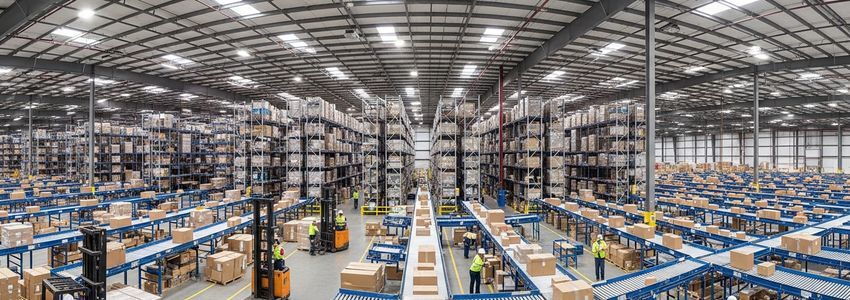
Equipment Loans for High-Output Distribution: The Complete Guide to Scaling Your Distribution Business
Distribution businesses live and die by their equipment. A conveyor system that breaks down during peak season, an aging forklift fleet that slows warehouse throughput, or insufficient dock equipment that creates bottlenecks - any of these can cost tens of thousands of dollars in lost productivity and missed orders. Equipment loans for distribution give business owners the capital to modernize, expand, and compete without draining working capital. This guide covers everything you need to know about financing distribution equipment, from how it works to what you qualify for.
In This Article
- What Are Equipment Loans for Distribution?
- Types of Distribution Equipment You Can Finance
- How Equipment Financing Works
- Key Benefits for Distribution Businesses
- Who Qualifies for Distribution Equipment Loans
- Equipment Financing vs. Leasing for Distribution
- How Crestmont Capital Helps Distribution Companies
- Real-World Scenarios
- Frequently Asked Questions
- How to Get Started
What Are Equipment Loans for Distribution?
An equipment loan for distribution is a form of secured financing specifically designed to help distribution businesses acquire the machinery, vehicles, and systems they need to operate at scale. Unlike general business loans, equipment financing uses the purchased asset itself as collateral - which means lenders are often willing to offer better rates and higher approval rates than they would for unsecured borrowing.
Distribution businesses span a wide range: wholesale distributors, third-party logistics providers (3PLs), e-commerce fulfillment centers, food and beverage distributors, pharmaceutical distributors, and more. All of them share a common challenge - high-output operations require significant equipment investment to function efficiently. Equipment loans solve this problem by spreading the cost of large purchases over time, allowing businesses to maintain cash flow while acquiring the assets they need.
Most equipment loans for distribution cover 80-100% of the equipment purchase price and are structured as term loans with fixed monthly payments. Terms typically range from 24 to 84 months, depending on the type of equipment and the financial profile of the borrower. The equipment is owned by the business from day one, which means you build equity and can claim depreciation benefits.
Industry Fact: According to the Equipment Leasing and Finance Association (ELFA), over 80% of U.S. businesses use some form of equipment financing. Among logistics and distribution companies, equipment is consistently ranked among the top three investment priorities.
Types of Distribution Equipment You Can Finance
Distribution operations rely on dozens of different equipment categories, and nearly all of them can be financed through equipment loans. Whether you are outfitting a new distribution center or upgrading aging assets in an established facility, lenders can typically cover the following:
Material Handling Equipment
This includes forklifts, pallet jacks, reach trucks, order pickers, and turret trucks. These are the workhorses of any distribution facility - equipment that moves product from receiving docks to storage locations to outbound shipping. Forklift financing is one of the most common equipment loan categories in the distribution space. Electric forklift fleets in particular have seen surging demand as companies look to reduce emissions and operating costs.
Conveyor and Sortation Systems
Automated conveyor systems, belt conveyors, roller conveyors, and sortation systems are high-ticket items that dramatically improve throughput. A mid-sized fulfillment center may invest $500,000 to $5 million in conveyor infrastructure. These systems have long useful lives and strong residual value, making them excellent candidates for equipment financing.
Warehouse Management and Automation Technology
Warehouse robotics, automated storage and retrieval systems (AS/RS), voice-directed picking systems, and warehouse management software (WMS) with hardware components all qualify for equipment loans. As distribution becomes increasingly automated, technology-related equipment financing has grown substantially.
Dock Equipment
Loading dock levelers, dock seals, dock shelters, dock plates, and trailer restraint systems are essential for efficient inbound and outbound operations. These items are often overlooked but directly impact throughput. Equipment financing covers individual dock components or full dock system upgrades.
Racking and Storage Systems
Selective rack, drive-in rack, push-back rack, pallet flow rack, and vertical lift modules can all be financed. Racking is one of the largest upfront costs in a new distribution center buildout. Financing these systems allows businesses to maximize their storage capacity without tying up all available capital.
Fleet and Transportation Equipment
Distribution fleets - including delivery trucks, refrigerated vehicles, yard trucks, and trailers - are a natural fit for equipment financing. Many distribution businesses finance their entire fleet through dedicated equipment loans or commercial vehicle financing programs. For more on fleet financing, see our guide to equipment financing for fulfillment operations.
Refrigeration and Cold Chain Equipment
For food, pharmaceutical, and specialty chemical distributors, refrigeration infrastructure is mission-critical. Walk-in coolers, blast freezers, refrigerated conveyor systems, and temperature monitoring equipment all qualify for equipment loans.
Packaging Equipment
Automated packaging lines, case erectors, palletizers, stretch wrappers, and void fill systems are common in high-volume distribution. These machines improve throughput and reduce labor costs, making them strong candidates for equipment financing with fast ROI.
By the Numbers
Distribution Equipment Financing - Key Statistics
80%+
U.S. businesses that use equipment financing
$1.2T
Equipment and software financed annually in the U.S.
24-84
Typical loan term range in months
100%
Financing available - no down payment required in many cases
How Equipment Financing Works for Distribution Businesses
The equipment financing process is straightforward, but knowing each step helps you move quickly when the opportunity arises. Here is how a typical distribution equipment loan works from start to finish.
Step 1: Identify the Equipment
The first step is identifying the specific equipment you need to purchase. For equipment loans, lenders will require a vendor quote or purchase agreement. Having a specific quote from a vendor or manufacturer accelerates the approval process significantly. If you are acquiring used equipment, a current market valuation or appraisal may be required for higher-dollar transactions.
Step 2: Apply for Financing
Most equipment lenders have streamlined applications that can be completed in minutes. For loans under $250,000, many lenders use a simplified one-page application. For larger equipment purchases, you will typically need to provide business tax returns, bank statements, and sometimes a business financial statement. Crestmont Capital works with distribution companies of all sizes and can handle everything from small forklift purchases to multi-million-dollar warehouse system buildouts.
Step 3: Underwriting and Approval
Lenders evaluate the creditworthiness of the borrower, the value of the equipment as collateral, and the overall health of the business. Because the equipment itself secures the loan, approval rates for equipment financing are generally higher than for unsecured business loans. Many distributors who have been turned down by banks can qualify through alternative equipment lenders.
Step 4: Loan Closing and Funding
Once approved, the lender funds the equipment purchase directly to the vendor. In many cases, equipment loans can close in 24-72 hours for standard transactions. Complex multi-system installations may take slightly longer but can often still be funded within a week. The equipment is delivered to your facility, and your loan payments begin the following month.
Step 5: Equipment Ownership and Loan Repayment
You own the equipment from day one. Monthly payments are fixed, making budgeting straightforward. At the end of the loan term, you own the equipment outright with no additional payment required. Many distribution companies find that equipment loans align naturally with the revenue improvement generated by the new equipment - your throughput gains often offset your loan payments.
Ready to Upgrade Your Distribution Equipment?
Get fast, flexible equipment financing from the #1 business lender in the U.S. Approvals in as little as 24 hours.
Apply Now →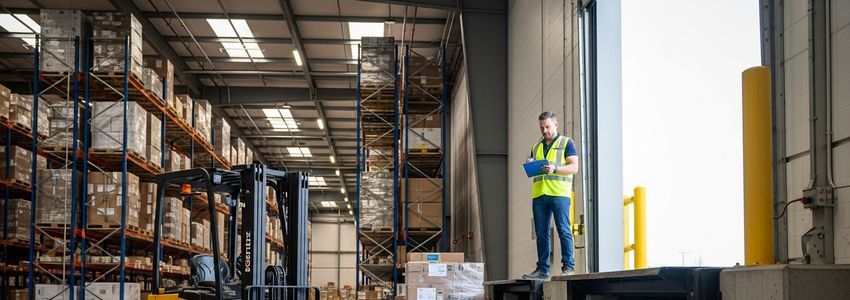
Key Benefits of Equipment Loans for High-Output Distribution
Distribution businesses that use equipment financing consistently cite several advantages over outright cash purchases or alternative financing methods.
Preserves Working Capital
Distribution operations require substantial working capital to fund inventory, payroll, and seasonal demand spikes. Paying cash for a $500,000 conveyor system would deplete reserves needed to keep operations running smoothly. Equipment financing lets you acquire critical assets while maintaining the liquidity needed to seize opportunities and weather disruptions. Many distributors coordinate equipment financing alongside a business line of credit for maximum operational flexibility.
Fixed, Predictable Payments
Unlike variable-rate financing or equity-based capital, equipment loans typically carry fixed interest rates and fixed monthly payments. This predictability is invaluable for distribution companies that operate on tight margins and need precise cash flow forecasting.
Immediate Equipment Ownership
With an equipment loan, you own the asset from day one. This is different from leasing, where the lessor retains ownership. Ownership means you can customize the equipment, depreciate it on your tax return, and sell it or use it as collateral for future financing if needed.
Tax Advantages
Equipment loan payments - specifically the interest portion - are generally tax-deductible as a business expense. Additionally, equipment purchases may qualify for accelerated depreciation under Section 179 of the IRS code, allowing businesses to deduct the full purchase price in the year of acquisition rather than spreading it over the asset's useful life. Consult a tax professional to understand how these benefits apply to your situation.
Faster Scaling
In distribution, the ability to scale quickly is a competitive advantage. When a major retail customer awards you a new contract, when e-commerce volumes spike, or when you acquire a competitor's operation, having access to equipment financing means you can move quickly without waiting to accumulate capital. Speed is money in distribution.
Improved Equipment Quality
Cash-constrained businesses often compromise on equipment quality, buying older or lower-spec machinery to stay within budget. Equipment financing lets you acquire the best equipment for the job - newer technology that performs better, breaks down less often, and supports your operational goals more effectively.
Throughput Insight: Distribution companies that upgrade to modern automated sorting and conveyor systems report throughput improvements of 40-60% on average, according to industry data from the Warehousing Education and Research Council (WERC). The ROI on well-financed equipment investments often pays back within 18-36 months.
Who Qualifies for Distribution Equipment Loans
Qualification requirements for equipment loans vary by lender, but here is what most lenders look for when evaluating a distribution company's application.
Credit Score
Most traditional equipment lenders prefer a business owner credit score of 680 or higher. However, because the equipment secures the loan, many lenders will work with scores as low as 580-620 for well-established businesses with strong revenue. Crestmont Capital works with a network of lenders who specialize in businesses across the credit spectrum, including those recovering from past credit challenges. Learn more in our guide to equipment financing for automation.
Time in Business
Most lenders require at least 1-2 years of operating history for standard equipment loans. Startups and newer businesses can qualify for equipment financing through specialized startup equipment programs, though the rates may be slightly higher to offset the additional risk. For newer distribution operations, a strong business plan and existing customer contracts can strengthen your application significantly.
Annual Revenue
Lenders want to see that your business generates enough revenue to service the loan. While there is no universal minimum, most lenders want to see monthly revenue of at least 3-4 times the proposed loan payment. For a $50,000 loan with $1,200 monthly payments, a business generating $5,000-$10,000 in monthly revenue would typically qualify.
Equipment Type and Age
New equipment is easiest to finance, as it has well-defined value and zero wear. Used equipment can also be financed, but lenders typically require the equipment to be less than 10-12 years old and may cap financing at 80% of appraised value. High-quality brands with strong resale markets - such as Toyota forklifts, Hytrol conveyors, or Dematic automation systems - are generally easier to finance than off-brand alternatives.
Down Payment
Many equipment loans for distribution require no down payment, particularly for newer businesses with strong credit profiles. Some lenders may request 10-20% down for higher-risk profiles. A down payment reduces the lender's exposure and can help secure better interest rates for borderline applications.
Equipment Financing vs. Equipment Leasing for Distribution
Distribution companies often face the choice between equipment financing (loans) and equipment leasing. Both have their merits depending on your situation, so understanding the key differences is important.
| Factor | Equipment Loan | Equipment Lease |
|---|---|---|
| Ownership | You own from day one | Lessor owns until end of term |
| Monthly Payments | Higher (building equity) | Lower (no equity building) |
| End of Term | Equipment fully owned, no payment | Buy out, return, or upgrade |
| Depreciation | Full depreciation available | Lease payments deductible |
| Technology Obsolescence | Risk on owner | Easier to upgrade at end of term |
| Customization | Full customization allowed | May be restricted by lease terms |
| Best For | Long-term use equipment, high-value systems | Rapidly evolving tech, fleet vehicles |
For most high-output distribution businesses, equipment loans make more sense for core infrastructure - conveyor systems, racking, dock equipment - that will be in service for a decade or more. Leasing may make more sense for technology-heavy equipment like warehouse robotics or WMS hardware that evolves rapidly. Many distributors use a combination of both strategies. For a deeper dive, see our warehouse expansion financing guide.
How Crestmont Capital Helps Distribution Companies
Crestmont Capital is the #1 rated business lender in the United States, and we have extensive experience serving distribution businesses of all sizes - from regional wholesale distributors to multi-location 3PL operations. We understand that distribution is a capital-intensive business where timing matters enormously, and we structure our financing solutions to match that reality.
Our equipment financing programs for distribution businesses include:
- Loans from $25,000 to $10 million - covering everything from a single forklift to a full warehouse automation buildout
- Terms from 24 to 84 months - structured to match the useful life of your equipment
- Same-day or next-day approvals for loans under $250,000 with a simplified application
- No down payment required for qualified borrowers
- Financing for new and used equipment up to 10 years old
- Competitive rates from our network of 75+ equipment lending partners
We also offer working capital loans that complement equipment financing when you need to fund installation costs, staff training, or operational ramp-up expenses alongside an equipment purchase. For businesses with large receivables, our accounts receivable financing programs can provide additional liquidity without taking on additional debt.
Scale Your Distribution Operation Today
Don't let equipment constraints hold you back. Crestmont Capital funds distribution equipment fast so you can grow.
Get a Quote →Real-World Scenarios: Equipment Loans in Action
Understanding how distribution companies actually use equipment financing helps illustrate the practical impact. Here are six representative examples:
Scenario 1: Regional Food Distributor - Forklift Fleet Replacement
A regional food and beverage distributor in the Southeast was operating a fleet of aging propane forklifts that were consuming $80,000 annually in maintenance costs and causing increasing downtime. They financed a fleet of 12 new electric forklifts through a 60-month equipment loan at $18,500 per month. The reduced maintenance costs and charging savings cut their total operating expense by $45,000 annually, creating a net positive ROI in under 24 months while preserving $222,000 in working capital they would have spent on a cash purchase.
Scenario 2: E-Commerce 3PL - Conveyor System Installation
A third-party logistics provider serving e-commerce clients needed to install a conveyor and sortation system to handle a new volume contract. The system cost $1.2 million. They financed 100% through a 72-month equipment loan, with monthly payments of approximately $21,000. The new contract generated $45,000 in monthly gross margin - more than doubling their debt service coverage and allowing the facility to remain profitable from day one without depleting reserves.
Scenario 3: Industrial Distributor - Racking and Storage Expansion
A wholesale industrial supplies distributor was running out of storage capacity and turning away new inventory due to space constraints. They financed a selective pallet racking expansion that added 8,000 pallet positions to their facility. The $180,000 racking system was financed over 48 months at $4,800 per month. The expanded capacity allowed them to add three new supplier lines, increasing gross revenue by $1.1 million in the first year.
Scenario 4: Pharmaceutical Distributor - Cold Chain Equipment
A pharmaceutical distributor needed to expand its cold storage capacity to take on a hospital supply contract. They financed two new pharmaceutical-grade refrigeration units and a temperature monitoring system for $320,000 through a 60-month equipment loan. The hospital contract was worth $2.8 million annually, making the $6,500 monthly loan payment inconsequential relative to the revenue it enabled.
Scenario 5: Automotive Parts Distributor - Delivery Fleet Expansion
An automotive parts distributor was losing same-day delivery business to a competitor with a larger fleet. They financed four additional delivery vehicles through a commercial fleet equipment loan over 48 months. The expanded delivery capacity allowed them to offer guaranteed same-day service to dealers within a 150-mile radius, increasing their customer count by 22% within six months.
Scenario 6: Building Materials Distributor - Dock Modernization
A building materials distributor was experiencing significant bottlenecks at their loading docks, limiting the number of trucks they could process per day. They financed a dock modernization project - including new dock levelers, seal systems, and vehicle restraints across 20 dock positions - for $280,000 over 60 months. The upgraded docks increased their daily truck processing capacity by 35%, eliminating the delivery delays that had been affecting customer satisfaction.
Growth Fact: The U.S. distribution and logistics sector has grown at 6-8% annually over the past decade, driven by e-commerce expansion and supply chain modernization. Distribution companies that invest in modern equipment consistently outperform competitors still operating legacy infrastructure, according to data from the Council of Supply Chain Management Professionals (CSCMP).
Frequently Asked Questions
How to Get Started with Distribution Equipment Financing
Make a list of the specific equipment you need, including vendor quotes or purchase prices. This accelerates the application and approval process significantly.
Complete our quick application at offers.crestmontcapital.com/apply-now - it takes just a few minutes and requires no obligation.
A Crestmont Capital equipment financing specialist will review your application and present the best available options from our network of 75+ lending partners.
Accept your offer, finalize paperwork, and receive funding - often within 24-72 hours. Your equipment is delivered and your operation starts scaling immediately.
Conclusion
For high-output distribution businesses, equipment is the backbone of every operation. Forklifts, conveyor systems, racking, dock equipment, fleet vehicles, and automation technology all require significant capital investment - and that investment needs to grow alongside your business. Equipment loans for distribution provide the most efficient path to acquiring the machinery and systems you need without sacrificing the working capital that keeps your day-to-day operations running smoothly.
Whether you need $50,000 for a replacement forklift or $5 million for a complete distribution center modernization, Crestmont Capital has the experience, lender relationships, and commitment to help you close the right deal quickly. As the #1 rated business lender in the U.S., we take pride in helping distribution companies grow, compete, and succeed with the right financing behind them.
Ready to take the next step? Apply now and get a decision in as little as 24 hours.
Get Your Distribution Equipment Financed Today
Fast approvals, competitive rates, no obligation. The #1 business lender in the U.S. is ready to help your distribution business grow.
Apply Now - No Obligation →Disclaimer: The information provided in this article is for general educational purposes only and is not financial, legal, or tax advice. Funding terms, qualifications, and product availability may vary and are subject to change without notice. Crestmont Capital does not guarantee approval, rates, or specific outcomes. For personalized information about your business funding options, contact our team directly.








