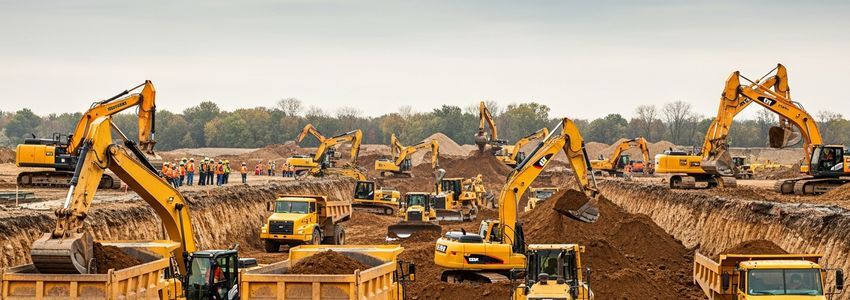
Running a construction company in New Jersey means managing some of the most demanding job sites on the East Coast. From highway infrastructure projects to luxury residential builds in Bergen County, New Jersey contractors face one constant challenge: keeping equipment in the field without draining cash reserves. Equipment loans for construction firms in New Jersey give business owners a smarter path to acquiring the machinery they need - without sacrificing working capital or operational flexibility.
Whether you need to finance an excavator for a commercial site in Newark, lease a fleet of dump trucks for a road project in Trenton, or upgrade your crane capabilities for a high-rise development in Jersey City, the right equipment financing strategy can mean the difference between winning contracts and watching competitors walk away with them.
This guide covers everything New Jersey construction companies need to know about equipment loans - from how they work and who qualifies, to real-world scenarios, comparison tables, and a step-by-step path to getting funded.
In This Article
- What Is Equipment Financing for Construction?
- Why New Jersey Construction Firms Need Equipment Financing
- Types of Equipment Loans Available
- How Equipment Financing Works Step by Step
- What Construction Equipment Qualifies?
- Loan vs. Lease: Comparing Your Options
- Who Qualifies for Construction Equipment Loans?
- How Crestmont Capital Helps NJ Contractors
- Real-World Scenarios for NJ Construction Firms
- How to Get Started
- Frequently Asked Questions
What Is Equipment Financing for Construction?
Equipment financing is a type of business lending that allows construction companies to acquire machinery, vehicles, and tools without paying the full purchase price upfront. The equipment itself typically serves as collateral for the loan, which means lenders can offer competitive rates even for companies that don't have extensive credit histories or substantial real estate assets.
For New Jersey construction firms, equipment financing can cover a wide range of assets - from backhoes and bulldozers to concrete pumps, cranes, trailers, and GPS fleet management systems. The loan amount is typically tied to the value of the equipment, and repayment terms generally align with the useful life of the asset.
Unlike a general-purpose business loan, equipment financing is purpose-specific. The funds are used to acquire a defined asset, which provides the lender with security and allows for more favorable terms than unsecured financing. This makes equipment loans one of the most accessible forms of business credit available to construction companies at virtually every stage of growth.
Industry Fact: The U.S. construction industry generates over $1.8 trillion in annual output, according to the U.S. Census Bureau. New Jersey's construction sector alone accounts for billions in annual GDP, with thousands of active contractors competing for commercial, residential, and infrastructure contracts every year.
Why New Jersey Construction Firms Need Equipment Financing
New Jersey presents a unique operating environment for construction businesses. The state's dense urban centers, aging infrastructure, and high-volume residential development market create sustained demand for construction services. At the same time, the cost of doing business in New Jersey - including labor, permits, insurance, and equipment - ranks among the highest in the nation.
For most construction firms, equipment represents the largest single capital expense. A single excavator can cost $100,000 to $500,000 new. A full equipment fleet for a mid-size general contractor might be worth $2 million or more. Purchasing this equipment outright would consume virtually all available capital, leaving the business unable to take on new projects, cover payroll, or weather slow periods.
Equipment financing solves this problem by spreading large capital expenditures over predictable monthly payments. Rather than depleting cash reserves, New Jersey contractors can preserve working capital for the expenses that require it most - materials, labor, bonding, and insurance.
New Jersey-specific factors that make equipment financing particularly valuable include:
- High equipment costs: Urban environments and specialized job sites often require more expensive, specialized equipment
- Competitive bidding: Winning contracts requires having the right equipment on demand - not waiting weeks for procurement
- Seasonal cash flow: Construction in New Jersey experiences seasonal fluctuations, making monthly payment structures easier to manage than lump-sum purchases
- Regulatory requirements: New Jersey environmental and safety regulations often mandate specific equipment specifications, requiring regular upgrades
- Growth opportunities: Access to financing allows firms to scale up for larger contracts without turning down profitable work
Need Equipment for Your Next NJ Construction Project?
Crestmont Capital specializes in fast, flexible equipment financing for construction firms. Get a decision in hours, not weeks.
Apply Now →Types of Equipment Loans Available to NJ Construction Companies
Construction firms in New Jersey have access to several distinct types of equipment financing, each with different structures, benefits, and ideal use cases. Understanding the differences allows you to select the option that best fits your company's financial position and operational goals.
Traditional Equipment Loans
A traditional equipment loan provides a lump sum to purchase a specific piece of equipment. You take ownership of the equipment immediately and repay the loan over a fixed term, typically two to seven years. Interest rates vary based on creditworthiness, equipment type, and term length, but equipment loans generally offer lower rates than unsecured business loans because the collateral reduces lender risk.
This structure works well for equipment you intend to own long-term - machinery that has a 10 to 20-year useful life and that you'll use extensively across many projects.
Equipment Leasing
Equipment leasing allows construction companies to use machinery for a fixed term without taking ownership. Monthly lease payments are typically lower than loan payments for the same equipment, and at the end of the lease term, you can return the equipment, renew the lease, or purchase the equipment at fair market value or a predetermined price.
Leasing is particularly valuable for technology-heavy equipment (such as GPS systems, surveying tools, or advanced diagnostics) that becomes obsolete quickly, and for machinery that you need temporarily for specific projects.
Equipment Lines of Credit
An equipment line of credit gives you pre-approved access to financing up to a maximum limit. You can draw from the line as needed to purchase equipment and only pay interest on the amount you actually use. This structure offers flexibility that single-equipment loans cannot - ideal for construction companies that frequently acquire smaller pieces of equipment or tools throughout the year.
SBA Equipment Loans
The Small Business Administration (SBA) offers loan programs that can be used for equipment purchases. SBA 7(a) loans and SBA 504 loans both support equipment acquisition, with competitive rates and longer terms than most conventional loans. SBA loans typically require more documentation and have longer approval timelines, but they often offer the most favorable terms available for qualifying businesses.
Sale-Leaseback Financing
If you already own equipment outright, a sale-leaseback arrangement allows you to sell the equipment to a financing company and lease it back immediately. This unlocks equity in your existing equipment without losing access to it - providing a lump sum of working capital while preserving operational continuity.
By the Numbers
NJ Construction Equipment Financing - Key Statistics
$500K
Average heavy equipment cost in construction
72%
Of construction firms use financing for major equipment
2-7 Yrs
Typical equipment loan repayment terms
24 Hrs
Typical approval time with alternative lenders
How Equipment Financing Works - Step by Step
The equipment financing process is more straightforward than many business owners expect, especially when working with experienced lenders who specialize in construction industry needs. Here is how the process typically unfolds from application to funding.
Step 1 - Identify the equipment: Before applying, you'll need to identify the specific equipment you want to finance. This includes the make, model, age, and purchase price or estimated value. Having a vendor quote or invoice ready speeds up the process significantly.
Step 2 - Submit your application: Most equipment financing applications require basic business information, financial statements, and details about the equipment being financed. Online lenders can often process applications in hours.
Step 3 - Lender review and underwriting: The lender evaluates your creditworthiness, business financials, time in business, and the value of the equipment. Since the equipment itself serves as collateral, requirements are generally less strict than for unsecured loans.
Step 4 - Approval and terms: You receive a financing offer outlining the loan amount, interest rate, repayment term, and monthly payment. Review these carefully and ask your lender about any fees, prepayment penalties, or end-of-lease terms.
Step 5 - Funding and equipment acquisition: Once approved, funds are typically disbursed directly to the equipment vendor. For lease arrangements, the financing company purchases the equipment and leases it to you. You take possession of the equipment and begin operations immediately.
Step 6 - Repayment: Monthly payments begin according to your agreed schedule. Most lenders offer flexible payment timing to align with construction billing cycles - an important feature for firms that operate on progress billing or net-30/net-60 payment terms.
What Construction Equipment Qualifies for Financing?
One of the advantages of equipment financing is how broadly the eligible equipment category is defined. For New Jersey construction companies, virtually any major piece of machinery used in the course of business operations qualifies. Common examples include:
Heavy Machinery and Earthmoving Equipment
- Excavators and mini-excavators
- Bulldozers and dozers
- Backhoes and backhoe loaders
- Skid steers and compact track loaders
- Graders and scrapers
- Compactors and rollers
Lifting and Material Handling
- Cranes (tower, mobile, crawler)
- Boom lifts and scissor lifts
- Forklifts and telehandlers
- Material hoists and personnel lifts
Vehicles and Fleet Equipment
- Dump trucks and semi-trucks
- Flatbed trailers and lowboys
- Concrete mixer trucks and pump trucks
- Service vans and work trucks
- Water trucks and fuel tankers
Specialty Construction Equipment
- Concrete pumps and batch plants
- Pile drivers and drilling rigs
- Paving equipment and asphalt pavers
- Trenchers and horizontal directional drills
- Generators and compressors
Technology and Survey Equipment
- GPS machine control systems
- Surveying and layout equipment
- Drone fleet and inspection systems
- Construction management software platforms
Pro Tip: Used equipment can often be financed just as easily as new equipment, provided it has documented value and is in working condition. This gives NJ construction firms more flexibility to find value purchases at auction or from other contractors, then finance them through their preferred lender.
Equipment Loan vs. Equipment Lease: Comparing Your Options
One of the most common decisions New Jersey construction firms face is whether to take out a loan and own the equipment outright, or enter a lease arrangement. The right choice depends on your specific circumstances, including how long you plan to use the equipment, your cash flow profile, and how quickly the technology becomes obsolete.
| Feature | Equipment Loan | Equipment Lease |
|---|---|---|
| Ownership | You own equipment at end of term | Option to buy, return, or renew |
| Monthly Payment | Higher (building toward ownership) | Lower (usage only) |
| Down Payment | Typically 10-20% | Often first/last payment only |
| Best For | Long-life equipment you'll use 10+ years | Equipment that upgrades frequently |
| Flexibility | Own it, use it, sell it anytime | Return or upgrade at term end |
| Balance Sheet | Asset and liability both recorded | May be off-balance-sheet (operating lease) |
| Approval Speed | 24 hours to a few days | 24 hours to a few days |
For most New Jersey construction companies, a mix of both strategies makes sense - owning core fleet equipment (excavators, trucks, trailers) through loans, while leasing specialized or technology-intensive equipment that benefits from regular upgrades.
Compare Loan and Lease Options for Your Equipment
Our advisors work with NJ contractors to find the right structure for every equipment need. No pressure, just solutions.
Get a Free Quote →Who Qualifies for Construction Equipment Loans in New Jersey?
Equipment financing qualification requirements vary by lender, but most construction companies in New Jersey will find multiple viable options regardless of their size or credit history. Here is what lenders typically evaluate:
Time in Business
Most conventional lenders prefer at least two years in business, as this demonstrates operational stability. However, many alternative lenders and equipment-focused financing companies will work with businesses that are one year old or newer, particularly if the principal has industry experience.
Credit Score
Equipment loans are generally more accessible than unsecured business loans from a credit perspective. Many lenders approve applicants with personal credit scores in the 600-640 range, and some specialize in financing for businesses with imperfect credit histories. The equipment's collateral value partially compensates for credit risk.
Revenue and Cash Flow
Lenders want to verify that your business generates enough revenue to service the monthly payments comfortably. Most conventional lenders look for annual revenues of at least $100,000 to $250,000 for significant equipment purchases. Bank statements from the past three to six months typically satisfy this requirement.
Equipment Value and Condition
The equipment itself affects approval. Lenders prefer equipment that holds its value well (which most heavy construction equipment does), is in good working condition, and is no more than 10 to 15 years old for new financing. Specialty equipment or equipment approaching end of useful life may require larger down payments or shorter terms.
Industry Experience
Many equipment lenders view construction industry experience favorably, particularly for larger loans. Demonstrating a track record of completed projects, active contracts, or bonding capacity can strengthen your application significantly.
Important: New Jersey construction firms with active public works contracts or government projects often qualify more easily, as these contracts represent predictable, creditworthy revenue streams that lenders view very favorably. If you have active contracts, mention them in your application.
How Crestmont Capital Helps New Jersey Construction Firms
At Crestmont Capital, we work with construction companies across New Jersey to secure fast, flexible equipment financing tailored to the unique demands of the industry. As a #1-rated national business lender, we specialize in helping contractors access the capital they need without the slow timelines, excessive documentation, or rigid requirements that characterize traditional bank lending.
Our construction equipment financing programs are designed for the reality of running a construction business - where opportunities move fast, contracts have deadlines, and waiting weeks for bank approval can cost you a project.
We offer:
- Same-week funding for qualified applicants
- Financing from $10,000 to $5 million+ for equipment purchases and leases
- Flexible terms from 12 to 84 months depending on equipment type and use
- New and used equipment financing, including auction purchases
- No prepayment penalties on most programs
- Simple application - most decisions within 24 hours
Our team understands that construction companies don't operate on a bank's schedule. We've helped dozens of NJ contractors finance everything from single-unit mini excavators to full fleet upgrades - and we can do the same for your business.
Beyond equipment financing, Crestmont Capital offers working capital loans, business lines of credit, and SBA loan programs - giving New Jersey contractors a single source for all their financing needs. We also provide access to construction company business loans for firms that need more flexible financing structures.
Real-World Scenarios for NJ Construction Equipment Financing
Equipment financing looks different depending on the size, specialization, and growth stage of the construction firm. The following scenarios illustrate how New Jersey contractors use equipment loans and leases to solve real business challenges.
Scenario 1 - The Growing General Contractor in Central Jersey
A general contractor based in Middlesex County has been in business for four years, primarily handling residential and light commercial work. They land a $2.2 million commercial site prep contract but lack the heavy equipment to handle it in-house. Renting the required excavator, bulldozer, and compactor for the six-month project would cost nearly $140,000 - money that would otherwise be profit margin.
Instead, they apply for an equipment loan through Crestmont Capital. Within 48 hours, they're approved for $280,000 to purchase a used excavator and compact track loader. Monthly payments of $5,800 over 60 months fit comfortably within the project's cash flow, and after the project, they own the equipment outright for future jobs. The decision converts a one-time rental cost into a permanent business asset.
Scenario 2 - Specialty Concrete Contractor Scaling in Hudson County
A concrete contractor in Hudson County focuses on decorative flatwork and structural concrete for luxury residential projects. They're experiencing rapid growth due to a wave of high-end condo developments and need a concrete pump truck to handle larger pours without subcontracting the work. A new pump truck costs $350,000 - not feasible from cash flow.
They use equipment financing to acquire the pump truck with a $35,000 down payment and monthly payments of $6,200 over 60 months. The first contract they handle with the new equipment generates enough billing to cover six months of payments. Within 18 months, the truck has paid for itself from eliminated subcontracting costs alone.
Scenario 3 - Infrastructure Contractor Upgrading Fleet Technology
A mid-size infrastructure contractor based in Bergen County works on municipal contracts throughout northern New Jersey. They need to upgrade their excavator fleet with GPS machine control systems to meet specifications for several new DOT contracts. Rather than purchasing individual units outright, they establish an equipment line of credit with Crestmont Capital for $180,000.
They draw on the line as needed to add GPS systems to each machine over six months, paying interest only on the amount actually drawn. This approach conserves cash while systematically upgrading their fleet to win more precise work from public agencies that require machine control documentation.
Scenario 4 - Startup Contractor with First Major Project
A new construction business started by an experienced project manager in Camden County wins their first significant contract - a $450,000 commercial site clearing job. The owner has eight years of industry experience but only six months in business. Most traditional banks decline due to time in business requirements.
Crestmont Capital approves a $95,000 equipment loan based on the owner's industry experience, the active contract, and the intrinsic value of the equipment being purchased. The loan funds within five business days, allowing the contractor to acquire the skid steer and dump trailer needed to begin the project on schedule.
Scenario 5 - Established Firm Using Sale-Leaseback for Cash Flow
A well-established excavation company in Morris County owns a significant equipment fleet outright, valued at roughly $1.8 million. During a slow quarter, they have a payroll gap and need $200,000 in working capital to bridge a delay in contract payments. Rather than taking on new debt or draining cash reserves, they execute a sale-leaseback on two owned excavators, receiving $220,000 and making monthly lease payments to use the equipment they already own. The transaction provides immediate liquidity without sacrificing operational capacity.
Scenario 6 - Equipment Upgrade Financed During Peak Season
A paving contractor in Monmouth County needs to replace aging asphalt paver equipment before the spring paving season. Replacement equipment costs $485,000. With their banking relationship slow-moving and spring season approaching, they contact Crestmont Capital and are approved within 24 hours for a 72-month equipment loan at a competitive rate. The new paver is on-site before the season begins, allowing the contractor to take on $900,000 in new paving contracts that season alone.
Ready to Finance Your Construction Equipment?
Join hundreds of New Jersey contractors who trust Crestmont Capital for fast, flexible equipment financing. Apply online in minutes.
Apply Now →How to Get Started
Complete our quick application at offers.crestmontcapital.com/apply-now - takes just a few minutes. Have your equipment details and basic financials handy.
A Crestmont Capital advisor will review your equipment needs and project pipeline, then match you with the right financing structure - loan, lease, or line of credit.
Most applicants receive a credit decision within 24 hours. We'll present your options clearly so you can make an informed choice without pressure.
Funds are disbursed directly to the equipment vendor or seller. Many clients take possession of their equipment within the same week as application.
Conclusion
Equipment loans for construction firms in New Jersey are one of the most powerful tools available for growing your business, winning more contracts, and building long-term asset value. Whether you're a startup contractor funding your first major project or an established firm looking to expand your fleet, equipment financing allows you to act decisively without sacrificing the working capital that keeps your operations running.
New Jersey's construction market rewards businesses that can move quickly and show up with the right equipment. With Crestmont Capital's fast approvals, flexible terms, and deep expertise in construction financing, you can be ready for your next opportunity - not just the ones you can afford today, but the ones you've been building toward.
Visit Crestmont Capital Equipment Financing or apply online now to take the next step.
Frequently Asked Questions
What is the minimum credit score to get equipment financing for a construction company in New Jersey?
Most equipment financing programs for construction companies accept personal credit scores starting around 600 to 640. Some alternative lenders work with scores as low as 550, particularly when the equipment has strong collateral value or when the business has active contracts. Higher credit scores generally unlock lower interest rates and better terms, but a good credit score alone is not required to qualify for equipment financing.
How much can I borrow for construction equipment in New Jersey?
Equipment loan amounts typically range from $10,000 for smaller tools and attachments up to $5 million or more for major fleet purchases. The loan amount is generally tied to the fair market value of the equipment being financed and the borrower's demonstrated ability to repay. Lenders typically finance 80% to 100% of the equipment's value, with down payment requirements varying by creditworthiness and equipment type.
Can a new construction company in NJ get equipment financing?
Yes. Many equipment lenders offer startup-friendly programs, particularly for borrowers with strong personal credit scores and industry experience. Active contracts, purchase orders, or letters of intent can also strengthen a startup's application. Crestmont Capital regularly works with NJ construction businesses in their first one to two years of operation to help them acquire the equipment needed to grow.
What is the typical interest rate for construction equipment loans in New Jersey?
Interest rates for construction equipment loans typically range from 5% to 20% annually, depending on the lender type, borrower credit profile, equipment age, and loan term. Banks and credit unions offer the lowest rates (5%-9%) for qualified borrowers, while online and alternative lenders charge more (8%-20%) in exchange for faster approvals and more flexible qualifying criteria. SBA loan rates are often the most competitive for eligible businesses.
How long does it take to get approved for construction equipment financing?
Approval timelines vary significantly by lender type. Alternative lenders and online financing companies can often approve equipment loans within 24 hours. Conventional banks typically take one to three weeks. SBA loan applications may take 30 to 90 days or longer. For construction companies with time-sensitive equipment needs, working with a fast-approval lender like Crestmont Capital ensures you can move forward quickly without waiting for a bank's underwriting cycle.
Can I finance used construction equipment in New Jersey?
Yes. Used equipment financing is widely available and often makes strong financial sense for construction companies. Many lenders finance equipment up to 10 to 15 years old, provided it is in documented working condition. Used equipment from reputable dealers, construction auctions, or other contractors can often be financed on terms similar to new equipment. The key factors are the equipment's condition, remaining useful life, and market value.
What documents do I need to apply for a construction equipment loan?
For most equipment financing applications, you will need basic business information (legal name, EIN, address), recent bank statements (three to six months), details about the equipment being financed (make, model, price, and vendor), and basic personal identification. Larger loan amounts or SBA programs may require tax returns, financial statements, business licenses, and additional documentation. Crestmont Capital's streamlined application process minimizes paperwork for smaller equipment loans.
Should I lease or buy my construction equipment?
The choice depends on how long you'll use the equipment and how quickly it becomes obsolete. For long-life core equipment such as excavators, dump trucks, and trailers that you'll use for 10 or more years, buying through a loan builds equity and reduces long-term cost. For specialized or technology-heavy equipment that improves rapidly (GPS systems, drones, software-integrated machinery), leasing allows you to upgrade regularly without being locked into depreciating assets. Many NJ construction companies use both strategies simultaneously.
Is there a down payment required for construction equipment financing?
Down payment requirements vary. Some equipment lenders offer 100% financing with no down payment for highly qualified borrowers with strong credit and established businesses. More typically, lenders require 10% to 20% down, particularly for higher-value equipment or borrowers with less-established credit profiles. For lease arrangements, the requirement is often limited to the first and last month's payment rather than a traditional percentage down payment.
Can equipment financing help me win larger construction contracts in NJ?
Absolutely. Having the right equipment on hand is often a prerequisite for bidding on larger commercial, municipal, or infrastructure contracts. Equipment financing allows you to acquire the machinery required to qualify for and win contracts that would otherwise be out of reach. Many NJ contractors report that a single equipment loan enabled them to move from small residential work to high-margin commercial projects, transforming their business trajectory entirely.
What is a sale-leaseback and how can NJ construction companies benefit?
A sale-leaseback is a financing arrangement where you sell equipment you already own to a financing company and immediately lease it back for continued use. This unlocks the equity in your owned equipment without losing access to it. For NJ construction firms with owned fleets, this can provide substantial working capital for materials, payroll, or bonding - all while keeping equipment in full operation. It is particularly useful for bridging cash flow gaps during slow seasons or when waiting for large invoices to be paid.
How does equipment financing affect my business credit?
Responsible equipment financing can actively build your business credit profile over time. Consistent on-time payments to lenders who report to business credit bureaus (Dun and Bradstreet, Experian Business, Equifax Business) improve your business credit scores and expand your borrowing capacity over time. This makes future financing easier and less expensive to obtain - a compound benefit that rewards disciplined borrowers with progressively better terms.
Are there NJ-specific programs for construction equipment financing?
New Jersey offers several state-level programs through the New Jersey Economic Development Authority (NJEDA) that support small business lending, including equipment financing. The NJEDA's small business programs can complement federal SBA financing, providing additional capital access for qualifying NJ construction companies. Additionally, county-level economic development organizations and CDFIs (Community Development Financial Institutions) in NJ sometimes offer equipment financing to underserved business segments. Working with an experienced lender like Crestmont Capital can help you identify and access the right combination of programs for your situation.
Can I get equipment financing if my construction business has existing debt?
Yes. Having existing business debt does not automatically disqualify you from equipment financing. Lenders evaluate your overall debt service coverage ratio - whether your revenue is sufficient to cover all loan obligations, including any new financing. Many NJ construction companies carry multiple equipment loans simultaneously and manage them efficiently. What matters most is demonstrating that your cash flow can handle the additional monthly obligation comfortably.
What happens if I default on a construction equipment loan?
If you default on an equipment loan, the lender typically has the right to repossess the financed equipment, as it serves as collateral for the loan. Your business credit and personal credit (if a personal guarantee was required) may also be negatively affected. Most lenders prefer to work out a payment modification or restructuring arrangement before pursuing repossession, so it is important to communicate proactively with your lender if you anticipate payment difficulties rather than missing payments without notice.
Disclaimer: The information provided in this article is for general educational purposes only and is not financial, legal, or tax advice. Funding terms, qualifications, and product availability may vary and are subject to change without notice. Crestmont Capital does not guarantee approval, rates, or specific outcomes. For personalized information about your business funding options, contact our team directly.