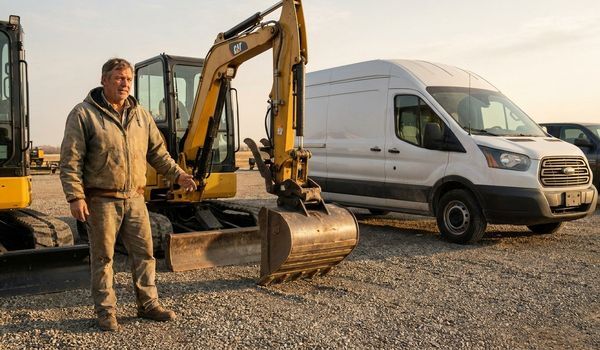
For any business that relies on physical assets to generate revenue, from construction and manufacturing to transportation and healthcare, acquiring the right equipment is a critical step toward growth. As we navigate 2026, understanding the financial landscape for these essential purchases is more important than ever. The primary tool for this acquisition is often an equipment loan, and the rate you secure on that loan can significantly impact your company's cash flow, profitability, and long-term success. Securing favorable financing is not just about buying a new machine; it's a strategic business decision that requires foresight and knowledge.
The economic environment of 2026 presents a unique set of opportunities and challenges. Following periods of interest rate adjustments, the market is showing signs of a new equilibrium. For business owners, this means that equipment loan rates are influenced by a complex interplay of central bank policies, lender competition, and individual business health. This guide is designed to be your definitive resource for understanding equipment loan rates in 2026. We will demystify the numbers, explore the key factors that lenders evaluate, and provide actionable strategies to help you secure the most competitive financing available.
Whether you're looking to upgrade an aging fleet, expand your production capacity, or invest in cutting-edge technology, this article will equip you with the information needed to make an informed decision. We'll break down typical rate ranges, compare different financing products, and explain how a trusted partner like Crestmont Capital can help you navigate the process. By the end, you will have a clear picture of what to expect and how to position your business for the best possible outcome.
In This Article
- What Are Equipment Loan Rates?
- Equipment Loan Rate Ranges in 2026
- Factors That Affect Your Equipment Loan Rate
- Types of Equipment Loans and Their Rates
- How Equipment Loan Rates Compare to Other Financing
- How to Get the Best Equipment Loan Rate
- Real-World Equipment Loan Rate Scenarios
- How Crestmont Capital Helps
- Frequently Asked Questions
- How to Get Started
- Conclusion
What Are Equipment Loan Rates?
An equipment loan rate is the cost of borrowing money to purchase business machinery or vehicles. This cost is typically expressed as an annual percentage rate (APR), which represents the yearly cost of the loan, including the interest rate and any associated fees. Understanding this rate is fundamental because it directly determines the size of your monthly payment and the total amount you will pay over the life of the loan.
Unlike unsecured loans, equipment financing is a form of asset-based lending. This means the equipment you are purchasing serves as the collateral for the loan itself. If you default on the payments, the lender has the right to repossess the equipment to recover their losses. This built-in collateral significantly reduces the lender's risk, which is why equipment loans are often more accessible and can have more competitive rates compared to other types of business financing. The self-securing nature of these loans makes them a cornerstone of capital investment for businesses of all sizes.
When evaluating equipment loan rates, it's crucial to distinguish between a simple interest rate and the APR. The interest rate is purely the percentage charged on the principal loan amount. The APR, however, provides a more complete picture of the borrowing cost. It includes the interest rate plus any lender fees, such as origination fees, documentation fees, or administrative charges. When comparing offers from different lenders, always use the APR for an accurate, apples-to-apples comparison.
Equipment loan rates can be either fixed or variable:
- Fixed Rates: A fixed rate remains the same for the entire duration of the loan term. This provides predictability and stability in your monthly payments, making it easier to budget and manage cash flow. The majority of equipment loans and leases feature fixed rates, which businesses often prefer for long-term planning.
- Variable Rates: A variable rate can fluctuate over the loan term because it is tied to a benchmark index rate, such as the Wall Street Journal Prime Rate. While a variable rate might start lower than a fixed rate, it carries the risk of increasing if the benchmark rate rises. This can lead to higher monthly payments in the future. These are less common for standard equipment financing but may be found in some lines of credit used for equipment purchases.
Ultimately, the equipment loan rate you are offered is a reflection of the lender's assessment of risk. A lower rate signifies that the lender views you as a low-risk borrower, while a higher rate indicates a higher perceived risk. The following sections will explore in detail what factors contribute to this risk assessment and how you can influence them in your favor.
Equipment Loan Rate Ranges in 2026
As we move through 2026, the lending market is characterized by a cautious but competitive environment. Following the economic shifts of recent years, the Federal Reserve's monetary policy has created a new baseline for interest rates. According to analysis from financial news outlets like Bloomberg, while rates are not at the historic lows seen in the previous decade, they have stabilized, creating a more predictable environment for business borrowing. This stability allows lenders to offer a diverse range of products tailored to different business profiles.
The equipment loan rate you can expect in 2026 will vary significantly based on your business's financial health, the type of equipment you're financing, and the lender you choose. Here’s a breakdown of the typical rate ranges you might encounter this year:
Excellent Credit (750+ FICO, Strong Financials)
Businesses with a long history of profitability, strong cash flow, and excellent personal and business credit scores are in the best position. They represent the lowest risk to lenders and can access the most competitive rates.
- Traditional Banks and Credit Unions: 6% to 10% APR
- SBA Loans (7a and 504): Rates are typically tied to the Prime Rate plus a small margin. Expect rates in the range of 7% to 11% APR, offering long terms and favorable conditions.
- Direct Lenders and Financing Companies: 5.5% to 12% APR
Good Credit (680-749 FICO, Solid Financials)
Most established small and medium-sized businesses fall into this category. They have a proven track record but may have minor blemishes on their credit profile or less consistent cash flow than top-tier applicants.
- Traditional Banks: 9% to 13% APR (often require strong collateral and financials)
- Direct Lenders and Financing Companies: 8% to 18% APR
- Online Lenders: 10% to 22% APR
Fair or Developing Credit (600-679 FICO, Newer Businesses)
This group includes newer businesses (under two years old) or those that have faced past financial challenges. Lenders perceive higher risk, which is reflected in the rates. The equipment's value and ability to be resold becomes a more critical factor.
- Direct Lenders and Financing Companies: 15% to 25% APR
- Online and Alternative Lenders: 18% to 30%+ APR
It's important to view these ranges as a general guide. The final rate is always determined on a case-by-case basis. A business with fair credit but a large down payment and financing high-value, easily liquidated equipment might secure a rate closer to the "good credit" tier. Conversely, a business with good credit seeking to finance highly specialized, custom equipment might see rates on the higher end of its range due to the collateral's lower resale value.
Key Stat: In 2026, the equipment financing market in the United States continues to be a massive driver of economic growth, with businesses financing approximately $1.1 trillion in equipment annually, according to data from the Equipment Leasing and Finance Association.
Ready to See Your Equipment Loan Rate?
Our simple application takes just a few minutes. Get a no-obligation quote and discover what your business qualifies for in 2026.
Apply Now →Factors That Affect Your Equipment Loan Rate
Lenders don't pull equipment loan rates out of thin air. They use a sophisticated risk assessment model that analyzes dozens of data points about your business and the transaction itself. Understanding these factors empowers you to strengthen your application and negotiate from a position of power. Here are the most influential factors determining your 2026 equipment loan rate.
1. Credit Score (Personal and Business)
This is arguably the most significant factor. Lenders review both your personal FICO score and your business credit profile (e.g., Dun & Bradstreet PAYDEX score). A high credit score (typically 720+) demonstrates a history of responsible debt management and a low likelihood of default, earning you the best rates. A score below 650 may limit your options to specialized lenders and will result in higher rates to compensate for the increased risk.
2. Time in Business
Lenders value stability and a proven track record. Most traditional lenders and prime financing companies prefer to work with businesses that have been in operation for at least two years. Businesses with five or more years of history often qualify for the most competitive programs. Startups and businesses under two years old can still secure financing, but they are considered higher risk and will likely face higher rates and may need to provide a larger down payment.
3. Annual Revenue and Profitability
Your company's financial health is a direct indicator of its ability to handle new debt. Lenders will analyze your bank statements, profit and loss statements, and balance sheets to assess your cash flow. Strong, consistent revenue and healthy profit margins show that you can comfortably afford the monthly loan payments. Fluctuating or low revenue can lead to higher rates or even a denial.
4. Industry
The industry you operate in plays a role in risk assessment. Industries with historically high failure rates (like restaurants or retail) may be viewed as riskier than stable industries (like healthcare or essential manufacturing). Lenders have internal data on default rates by industry, which can subtly influence the rate they offer.
5. Equipment Type and Condition
Since the equipment is the collateral, its characteristics are crucial.
- New vs. Used: New equipment typically secures a lower rate because it has a higher resale value, a longer useful life, and often comes with a manufacturer's warranty. Used equipment can be a great value, but financing rates may be slightly higher due to increased risk of breakdown and a more volatile resale market.
- Asset Class: Equipment with a broad secondary market and high resale value (like construction vehicles or standard CNC machines) is less risky for lenders than highly specialized, custom-built machinery with limited resale potential.
- Equipment Cost: The total amount being financed matters. While it might seem counterintuitive, very small loans (under $25,000) can sometimes have higher rates because the administrative costs for the lender are similar to a larger loan. Conversely, very large transactions (over $1 million) can often command lower rates due to the scale of the deal.
6. Loan Term
The loan term is the length of time you have to repay the loan. A shorter term (e.g., 2-3 years) often comes with a lower interest rate but higher monthly payments. A longer term (e.g., 5-7 years) will have lower monthly payments but a slightly higher interest rate, and you will pay more in total interest over the life of the loan. The goal is to find a term that balances an affordable monthly payment with the lowest total cost of financing.
7. Down Payment
A significant down payment (typically 10-20%) demonstrates your commitment and financial stability. It reduces the lender's risk by lowering the loan-to-value (LTV) ratio. The more skin you have in the game, the less the lender stands to lose in a default scenario. As a result, providing a larger down payment can often help you secure a lower interest rate.
8. Lender Type
Where you get your financing from has a major impact on the rate.
- Traditional Banks: Often have the lowest advertised rates but also the strictest underwriting criteria. They are best for highly qualified businesses.
- Credit Unions: Similar to banks, they can offer great rates but may have membership requirements and slower processing times.
- Direct Lenders/Financing Companies (like Crestmont Capital): These lenders specialize in equipment financing. They often have more flexible criteria than banks and can process applications much faster, offering a wide spectrum of rates to fit various credit profiles.
- Online/Alternative Lenders: Known for speed and accessibility, they are a great option for businesses with less-than-perfect credit or those needing funds immediately. This convenience comes at the cost of higher rates.
By the Numbers
Equipment Loan Rates 2026 - Key Statistics
5.5% - 22%+
Is the typical APR range for equipment loans in 2026, depending on credit, term, and lender.
80%
Of U.S. companies, from small businesses to Fortune 500s, use some form of financing to acquire equipment.
$1.1 Trillion
Is the estimated annual size of the equipment financing industry, highlighting its critical role in the economy.
48 Hours
Is the typical funding time for many direct lenders, compared to weeks or months for traditional banks.

Types of Equipment Loans and Their Rates
The term "equipment loan" is often used as a catch-all, but there are several specific financial products designed for acquiring assets. Each has a different structure, which can affect the rate and terms. Understanding these options will help you choose the best fit for your business's financial strategy.
1. Equipment Financing Agreement (EFA)
An EFA is the most straightforward type of equipment loan. It's a simple interest loan where you borrow a set amount to purchase a piece of equipment and make regular payments (usually monthly) over a fixed term. With an EFA, you are the legal owner of the equipment from day one, and the lender places a lien on the asset as collateral. Once the loan is fully paid off, the lien is removed.
- Typical Rates: 5.5% to 25% APR. Rates are highly dependent on the factors discussed previously.
- Best For: Businesses that want to own their equipment outright for long-term use and build equity in their assets.
2. $1 Buyout Lease (Capital Lease)
A $1 buyout lease, also known as a capital lease, functions very similarly to an EFA. You make monthly lease payments for a set term, and at the end of the term, you have the option to purchase the equipment for a nominal amount, typically $1. For all practical purposes, this is a financing arrangement designed for ownership.
- Typical Rates: The "rate" is often expressed as a lease rate factor, but when converted to an APR, it is very similar to an EFA, generally in the 6% to 28% range.
- Best For: Companies that want the benefits of ownership but prefer the structure of a lease agreement for accounting or budgeting reasons.
3. Fair Market Value (FMV) Lease (Operating Lease)
An FMV lease is a true lease, not a loan for ownership. You are essentially renting the equipment for a specific period. Monthly payments on an FMV lease are typically lower than on an EFA because you are only paying for the depreciation of the asset during the lease term, not its full value. At the end of the term, you can choose to return the equipment, renew the lease, or purchase it at its fair market value.
- Typical Rates: Rates are not typically quoted as an APR. Instead, the cost is built into the monthly payment. These payments are lower, but you do not build equity.
- Best For: Businesses that need equipment that quickly becomes obsolete (like technology) or companies that prefer to regularly upgrade their assets without the commitment of ownership. Learn more about equipment leasing options.
4. SBA Loans (7a and 504)
The U.S. Small Business Administration (SBA) guarantees a portion of loans made by partner lenders, making it less risky for them to lend to small businesses. These loans are not direct from the government but are highly sought after due to their excellent rates and long repayment terms.
- SBA 7(a) Loan: A versatile loan that can be used for various purposes, including equipment purchases. Terms can go up to 10 years for equipment.
- SBA 504 Loan: Specifically designed for purchasing major fixed assets like real estate and heavy machinery. It involves two lenders (a bank and a Certified Development Company) and offers long terms (10-20 years) at fixed, competitive rates.
- Typical Rates: According to the SBA, rates are pegged to the Prime Rate plus a spread (markup). In 2026, this results in highly competitive APRs, often between 7% and 11%. However, the application process is rigorous and can take several months.
- Best For: Well-established, patient businesses with strong financials who can navigate the extensive paperwork to secure the best possible terms.
5. Sale-Leaseback Agreement
If you own valuable equipment outright but need to generate working capital, a sale-leaseback is an innovative option. You sell your equipment to a financing company for a lump sum of cash and then immediately lease it back from them. This allows you to unlock the equity in your existing assets without interrupting your operations.
- Typical Rates: The cost is structured as a lease payment. The implied APR is generally higher than a standard equipment loan, often in the 15% to 35%+ range, as it's a form of working capital financing.
- Best For: Businesses with immediate cash flow needs that have significant equity tied up in their machinery.
How Equipment Loan Rates Compare to Other Financing
An equipment loan is a specialized tool, but it's just one of many financing options available to a business. Understanding how its rates and structure compare to other products can help you make the right choice for your specific need. A business might use an equipment loan for a new truck, a line of credit for payroll, and a working capital loan for a marketing campaign, all at the same time.
Here is a comparison of common business financing options:
| Financing Type | Typical 2026 APR | Typical Term | Primary Use | Collateral |
|---|---|---|---|---|
| Equipment Loan | 5.5% - 25% | 2 - 7 years | Purchase of specific machinery/vehicles | The equipment itself |
| Business Line of Credit | 8% - 30% | 1 - 5 years (Revolving) | Managing cash flow, inventory, payroll | Often a general lien on business assets |
| Working Capital Loan | 10% - 50%+ | 6 - 24 months | Short-term expenses, opportunities | Often unsecured or a general lien |
| SBA Loan | 7% - 11% | 7 - 25 years | Major purchases, expansion, real estate | Business assets, real estate, personal guarantee |
| Merchant Cash Advance | 40% - 150%+ (Factor Rate) | 4 - 18 months | Emergency cash needs, very fast funding | Future sales/receivables |
As the table shows, equipment loans occupy a favorable middle ground. Because they are secured by a hard asset, their rates are significantly lower than unsecured options like working capital loans or merchant cash advances. While a business line of credit offers more flexibility, it may come with a higher variable rate and is not ideal for a large, one-time asset purchase. SBA loans offer the best rates but come with a lengthy and complex application process that doesn't work for businesses needing equipment quickly. For the specific purpose of acquiring capital equipment, a dedicated equipment loan or lease is almost always the most efficient and cost-effective solution.
How to Get the Best Equipment Loan Rate
Securing the lowest possible equipment loan rate is not a matter of luck; it's a matter of preparation. By taking proactive steps to strengthen your business's financial profile, you can significantly improve the offers you receive from lenders. Here are the most effective strategies to get the best equipment loan rate in 2026.
1. Strengthen Your Personal and Business Credit
Before you apply, obtain copies of your credit reports. Dispute any errors you find. Focus on paying all bills on time, every time, as payment history is the largest component of your score. If you have high-balance credit cards, work on paying them down to reduce your credit utilization ratio. Establishing trade lines with suppliers who report to business credit bureaus can also build a stronger business credit file.
2. Prepare a Comprehensive Application Package
Don't wait for the lender to ask for documents. Have them ready. A well-organized package inspires confidence and speeds up the underwriting process. This should include:
- A detailed application form
- Business plan (especially for newer businesses)
- 2-3 years of business financial statements (P&L, balance sheet)
- 2-3 years of business tax returns
- 6-12 months of recent business bank statements
- A formal quote or invoice for the equipment you intend to purchase
3. Increase Your Down Payment
While 100% financing is sometimes available, it usually comes with a higher rate. Aim to provide a down payment of at least 10-20%. A larger down payment directly reduces the lender's risk, which can translate into a lower interest rate and a lower monthly payment. It shows the lender that you are financially invested in the asset's success.
4. Choose the Right Equipment and Term
Opt for equipment from reputable manufacturers with a strong resale value. This makes the collateral more attractive to lenders. Also, carefully consider the loan term. Don't automatically choose the longest term to get the lowest payment. Calculate the total interest paid over different terms (3, 5, and 7 years) to find the sweet spot that balances affordability with the lowest overall cost.
Pro Tip: Multiple credit inquiries in a short period can lower your credit score. When shopping for rates, work with a broker or a direct lender like Crestmont Capital who can access multiple funding sources with a single application and a "soft" credit pull that doesn't impact your score.
5. Highlight Your Business's Strengths
Your financial statements tell a story, but you can add context. If you had one bad quarter but have since recovered, explain it. If you've just landed a major new contract that will boost future revenue, include that information. A cover letter or executive summary that highlights your industry experience, management team strength, and future growth prospects can make a significant difference to an underwriter.
6. Work with an Equipment Financing Specialist
Navigating the world of equipment financing can be complex. A specialist, like the team at Crestmont Capital, lives and breathes this market. They understand the nuances of different lenders' appetites and underwriting guidelines. Instead of applying to multiple banks and getting rejected, a specialist can match your business profile to the lender most likely to approve your loan with the best possible rate and terms, saving you time, money, and frustration.
Real-World Equipment Loan Rate Scenarios
To bring these concepts to life, let's look at a few hypothetical scenarios for businesses seeking equipment financing in 2026. These examples illustrate how the different factors combine to produce a final loan offer.
Scenario 1: The Established Construction Company
- Business: "Bedrock Construction," 15 years in business.
- Equipment: New $250,000 Caterpillar excavator.
- Financials: $5 million in annual revenue, consistent profits, 780 personal FICO score.
- Down Payment: 20% ($50,000).
- Loan Amount: $200,000.
Expected Outcome: Bedrock Construction is a prime A-tier candidate. They have a long, successful history, strong financials, excellent credit, a significant down payment, and are financing a top-tier asset with high resale value. They can expect to receive the best rates on the market.
Estimated Rate: 6.5% APR over a 60-month term.
Monthly Payment: Approximately $3,913.
Scenario 2: The Growing Restaurant
- Business: "The Corner Bistro," 3 years in business.
- Equipment: Used commercial kitchen package (ovens, refrigerators) for $75,000.
- Financials: $600,000 in annual revenue, profitable but with tight margins. 670 personal FICO score due to some past credit card debt.
- Down Payment: 10% ($7,500).
- Loan Amount: $67,500.
Expected Outcome: The Corner Bistro is a solid B-tier candidate. While the restaurant industry is considered higher risk and the credit is fair, the business is established and profitable. The used equipment also adds a layer of risk for the lender. They will likely be approved by a direct or alternative lender rather than a large bank.
Estimated Rate: 14.0% APR over a 48-month term.
Monthly Payment: Approximately $1,844.
Scenario 3: The Startup Trucking Company
- Business: "Onward Logistics," a new LLC, 6 months in business.
- Equipment: 3-year-old Freightliner Cascadia semi-truck for $90,000.
- Financials: Limited business history, but owner has 10+ years of experience as a driver. 710 personal FICO score. Has a contract with a small local distributor.
- Down Payment: 15% ($13,500).
- Loan Amount: $76,500.
Expected Outcome: This is a classic startup scenario. The lack of business history is the biggest risk factor. However, the owner's strong personal credit, industry experience, and existing contract are significant mitigating factors. The lender is essentially betting on the owner's ability to succeed. The rate will be higher to compensate for the startup risk.
Estimated Rate: 18.5% APR over a 60-month term.
Monthly Payment: Approximately $2,042.
How Crestmont Capital Helps
In a competitive and complex lending market, having an expert partner on your side can be the difference between a good deal and a great one. Crestmont Capital is not a bank; we are a dedicated financing company that specializes in connecting businesses with the capital they need to grow. Our focus is on making the equipment financing process fast, transparent, and tailored to your unique situation.
Here’s how we help you secure the best equipment loan rates in 2026:
- Access to a Wide Lender Network: We maintain relationships with a diverse portfolio of national lending partners, from aggressive prime lenders to specialized subprime financiers. Instead of you applying to one bank at a time, our single, simple application gives you access to this entire network. We match your profile to the lenders best suited for your industry, credit, and equipment type.
- Expert Guidance and Advocacy: Our financing specialists are industry veterans. We understand what underwriters look for and how to present your application in the best possible light. We work for you, not the lender, acting as your advocate to negotiate for the lowest rates and most favorable terms possible.
- Speed and Efficiency: We know that business opportunities are time-sensitive. You can't wait weeks or months for a bank to make a decision. Our streamlined process, powered by technology and expertise, allows for approvals in hours and funding in as little as 24-48 hours. This means you can acquire your equipment and start generating revenue from it immediately.
- Solutions for All Credit Profiles: While banks often focus exclusively on A-tier credit, we believe every viable business deserves access to capital. We have programs designed for a wide spectrum of credit profiles, from pristine to challenged, as well as for startups and established companies. We find solutions where others see roadblocks.
Whether you're financing a single vehicle or an entire factory floor, Crestmont Capital provides the personalized service and market access needed to achieve your goals. We simplify the financing so you can focus on what you do best: running your business.
Partner with the Equipment Financing Experts
Let our team do the heavy lifting. We'll shop our network of lenders to find you the most competitive rate for 2026.
Get Started Now →Frequently Asked Questions
What is a good equipment loan rate in 2026?
A "good" rate is relative to your business profile. For a business with excellent credit and strong financials, a good rate would be in the 6% to 9% APR range. For a business with fair credit or less time in business, a good rate might be in the 12% to 18% APR range. The key is to secure the most competitive rate available for your specific circumstances.
What is the minimum credit score for an equipment loan?
While traditional banks often require a FICO score of 680 or higher, many direct lenders and financing companies have programs for credit scores as low as 600. Some specialized lenders may even consider scores in the high 500s, but they will look for other strengths like significant time in business, strong cash flow, or a large down payment.
Can I finance 100% of the equipment cost?
Yes, 100% financing is possible, especially for highly qualified borrowers with excellent credit. Some programs also allow you to roll in "soft costs" like delivery, installation, and training. However, providing a down payment of 10-20% is often recommended as it can help you secure a lower interest rate.
How long does it take to get an equipment loan?
The timeline varies by lender. Traditional banks and SBA loans can take several weeks to months. Direct financing companies like Crestmont Capital are much faster, with approvals often in a few hours and funding in as little as 24 to 48 hours after all documents are received.
Can I finance used equipment?
Absolutely. Most lenders will finance used equipment. The interest rate may be slightly higher compared to new equipment due to factors like a shorter remaining useful life and higher potential for maintenance issues. Lenders will typically not finance equipment that is too old or has excessive hours/miles.
Are equipment loan rates fixed or variable?
The vast majority of equipment financing agreements and capital leases come with a fixed interest rate. This provides predictable monthly payments for the entire loan term, which is ideal for business budgeting. Variable rates are more commonly associated with lines of credit.
What documents do I need to apply?
For smaller loans (typically under $150,000), many lenders offer a simple application-only process. For larger amounts, you will likely need to provide the application, an invoice for the equipment, 3-6 months of business bank statements, and possibly business tax returns or financial statements.
Will an equipment loan require a personal guarantee?
For most small and medium-sized businesses, yes. A personal guarantee from the business owner(s) is a standard requirement. This means that if the business defaults on the loan, the owner is personally responsible for repaying the debt. For very large, well-established corporations, this requirement may sometimes be waived.
Can a startup business get an equipment loan?
Yes, startups can get equipment loans, but it can be more challenging. Lenders will place a heavy emphasis on the owner's personal credit score, industry experience, a solid business plan, and often require a larger down payment (15-25% or more). Rates will typically be higher than for established businesses.
How do federal interest rate changes affect equipment loan rates?
Changes in the Federal Funds Rate influence the prime rate, which is a benchmark for many types of loans. When the Fed raises rates, the cost of borrowing for lenders goes up, and they pass that cost on in the form of higher rates for business loans, including equipment financing. However, the market is competitive, so lenders don't always pass on the full increase. This is why overall economic trends, as reported by outlets like CNBC, are important to watch.
Is there a penalty for paying off an equipment loan early?
It depends on the lender and the loan agreement. Some simple interest loans have no prepayment penalties. However, many equipment financing agreements are structured so that you are responsible for all the payments in the contract, meaning there is no financial benefit to paying it off early. It is crucial to ask about prepayment policies before signing any agreement.
What's the difference between an equipment loan and an equipment lease?
With an equipment loan (or a $1 buyout lease), the primary goal is ownership. You build equity with each payment and own the asset at the end of the term. With a true lease (like an FMV lease), you are essentially renting the equipment. Your payments are lower, but you don't own the asset at the end and must return it or buy it at its market value.
Does the type of equipment affect my loan rate?
Yes, significantly. Equipment that holds its value well and has a broad resale market (like trucks, trailers, and construction equipment) is considered lower risk and can help you get a better rate. Highly specialized or custom-built equipment with a limited secondary market is higher risk for the lender and may result in a higher rate.
Can I get an equipment loan for my business if I have a recent bankruptcy?
It is challenging but not impossible. You will not qualify for a traditional bank loan. However, some specialized alternative lenders will consider financing businesses with a prior bankruptcy, provided it has been discharged for at least 1-2 years and you have re-established good credit since. Expect to pay a much higher rate and provide a significant down payment.
What is a lease rate factor?
A lease rate factor (or lease factor) is a decimal number used to calculate the monthly payment for a lease. You multiply the total equipment cost by the lease rate factor to get your monthly payment. For example, a $50,000 piece of equipment with a lease factor of .0215 would have a monthly payment of $1,075 ($50,000 x .0215). While it's not an APR, it is directly related to the interest rate and other financing costs.
How to Get Started
Ready to take the next step and secure the equipment your business needs to thrive in 2026? The process is straightforward and begins with understanding your needs and preparing your information. Follow these three steps to begin your financing journey.
Assess Your Needs
Identify the exact equipment you need to purchase. Obtain a formal quote or invoice from the vendor, as this will be required for your application. Determine a budget for your monthly payment and how much you can comfortably provide as a down payment.
Gather Your Documents
Prepare the necessary paperwork. For most applications, this will include the vendor invoice and your last 3-6 months of business bank statements. Having these ready will significantly speed up the approval and funding process.
Apply with Crestmont Capital
Complete our simple online application, which takes only a few minutes. A dedicated financing specialist will contact you to discuss your needs, review your options, and guide you through the rest of the process to secure the best possible rate.
Conclusion
Navigating equipment loan rates in 2026 requires a clear understanding of the market, a realistic assessment of your business's financial health, and a strategic approach to the application process. Rates are not just numbers on a page; they are a critical component of your company's financial structure that will influence your cash flow and capacity for future growth for years to come. By preparing your financials, understanding the key factors lenders evaluate, and choosing the right financing partner, you can turn a necessary capital expenditure into a powerful strategic advantage.
The economic landscape may shift, but the fundamental principles of sound financing remain constant. A strong credit profile, a proven business history, and a well-prepared application will always position you to secure the most favorable terms. Whether you are a prime borrower seeking a single-digit rate from a top-tier lender or a growing business needing a flexible solution, there is a financing option available to help you achieve your goals.
Empower Your Business Growth in 2026
Don't let financing be a roadblock. Get the equipment you need with a rate that fits your budget. Start your no-obligation application today.
Apply Now →Disclaimer: The information provided in this article is for general educational purposes only and is not financial, legal, or tax advice. Funding terms, qualifications, and product availability may vary and are subject to change without notice. Crestmont Capital does not guarantee approval, rates, or specific outcomes. For personalized information about your business funding options, contact our team directly.