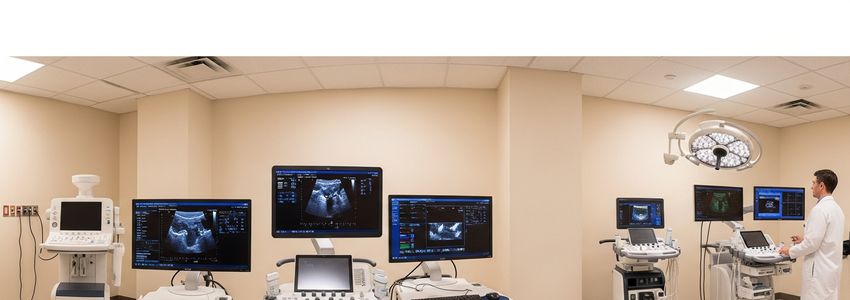
In the rapidly advancing world of healthcare, providing state-of-the-art patient care requires access to the latest medical technology. However, the high cost of this equipment can strain a practice's capital reserves. This is where equipment leasing for medical practices offers a strategic financial solution, allowing providers to acquire necessary tools while preserving vital cash flow for operations and growth.
In This Article
- What Is Equipment Leasing for Medical Practices?
- Key Benefits of Leasing Medical Equipment
- How Medical Equipment Leasing Works
- Types of Medical Equipment You Can Lease
- Who Qualifies for Medical Equipment Leasing?
- Equipment Leasing vs. Buying: Which Is Right for Your Practice?
- How Crestmont Capital Helps Medical Practices
- Real-World Scenarios: How Medical Practices Use Equipment Leasing
- How to Get Started with Medical Equipment Leasing
- Frequently Asked Questions
- Conclusion
What Is Equipment Leasing for Medical Practices?
Equipment leasing for medical practices is a financial agreement where a healthcare provider pays a lender a fixed monthly fee to use a piece of medical equipment for a specific period. Instead of purchasing the asset outright with a large capital expenditure, the practice rents it. This arrangement is similar to leasing a vehicle- you get full use of the asset without the burdens of ownership.
At the end of the lease term, the practice typically has several options. These can include purchasing the equipment at fair market value, renewing the lease, or returning the equipment and upgrading to a newer model. This flexibility is a key reason why leasing has become a popular financing strategy in the healthcare sector.
This financial tool covers a vast range of assets essential for modern healthcare delivery. Everything from high-tech diagnostic imaging machines like MRI and CT scanners to everyday items like exam tables and patient monitoring systems can be leased. Even specialized software, such as Electronic Health Record (EHR) systems, and office technology can be bundled into a lease agreement.
Key Benefits of Leasing Medical Equipment
The decision to lease rather than buy medical equipment offers numerous strategic advantages that can significantly impact a practice's financial health and competitive edge. These benefits go beyond simple cost savings and touch on operational efficiency and technological advancement. For many practices, these advantages make leasing the clear choice for acquiring critical assets.
Preserve Cash Flow and Working Capital
The most significant benefit of leasing is the preservation of capital. Instead of a massive upfront cash payment, leasing spreads the cost over time through manageable monthly payments. This frees up working capital for other critical business needs like hiring staff, marketing, expanding services, or managing day-to-day operational expenses.
Access the Latest Technology
Medical technology evolves at an astonishing pace. Leasing allows practices to stay on the cutting edge by regularly upgrading to the latest models at the end of a lease term. This prevents technological obsolescence and ensures patients receive care using the most advanced and effective tools available, which can be a major competitive differentiator.
Flexible and Customizable Terms
Lease agreements are highly flexible and can be tailored to the specific needs of a medical practice. Lenders like Crestmont Capital can customize term lengths, payment schedules, and end-of-lease options to align with your practice's budget and revenue cycles. This level of customization is rarely available with a traditional loan.
Key Insight: According to a study by the Healthcare Financial Management Association (HFMA), nearly 73% of U.S. healthcare organizations utilize equipment financing or leasing to acquire necessary technology, highlighting its critical role in the industry.
Predictable Budgeting and Payments
Leasing provides fixed monthly payments over a set term, making budgeting simple and predictable. This financial stability eliminates the uncertainty of large, unplanned capital outlays and helps practice managers forecast expenses with greater accuracy. Knowing exactly what you will pay each month for your essential equipment simplifies financial planning.
Potential Tax Advantages
In many cases, lease payments can be fully deducted as an operating expense, potentially lowering a practice's overall tax burden. An operating lease, in particular, keeps the asset and liability off the balance sheet. It is crucial to consult with a tax professional to understand the specific tax implications for your practice, as regulations can vary.
How Medical Equipment Leasing Works
The process of securing an equipment lease for your medical practice is designed to be straightforward and efficient, allowing you to get the technology you need with minimal disruption. Financial partners like Crestmont Capital have streamlined the journey from application to installation. Understanding these steps can help you prepare and make the process even smoother.
First, the practice identifies the specific equipment it needs and obtains a quote from a vendor. Next, you submit a simple lease application to the lender, which typically requires basic information about your practice, its financials, and the equipment you wish to acquire. This can often be done online in just a few minutes.
Once the application is submitted, the lender's underwriting team reviews the information to determine creditworthiness and approve the lease. This process is often much faster than a traditional bank loan, with approvals sometimes granted within the same day. Upon approval, the lender issues commitment documents outlining the terms of the lease for your review and signature.
After the lease agreement is signed, the lender pays the equipment vendor directly. The vendor then delivers and installs the equipment at your practice. Your lease payments begin only after you confirm the equipment has been received and is in good working order, ensuring you are not paying for an asset you cannot yet use.
Quick Guide
How Medical Equipment Leasing Works - At a Glance
Step 1
Apply Online
Submit a simple, one-page application with basic information about your practice and the equipment you need. The process takes only a few minutes.
Step 2
Review & Approval
Our team reviews your application quickly, often providing a decision within hours. We'll present you with clear, flexible lease terms.
Step 3
Equipment Selection & Delivery
Once you sign the documents, we pay your chosen vendor directly. They will then schedule the delivery and installation of your new equipment.
Step 4
Make Monthly Payments
Begin making your predictable monthly payments while the new equipment generates revenue and improves patient care in your practice.
Types of Medical Equipment You Can Lease
Virtually any piece of equipment that is essential to running a modern medical practice can be leased. This comprehensive coverage ensures that practices of all specialties, from dentistry to radiology, can acquire the tools they need to provide exceptional care. The flexibility of leasing applies across a wide spectrum of asset categories.
Financing is available for everything from high-value diagnostic imaging systems to specialized surgical tools and basic office furniture. This breadth allows you to bundle different assets from various vendors into a single, convenient lease agreement. Below is a breakdown of common equipment categories that are frequently leased by healthcare providers.
| Equipment Category | Examples | Common Practice Types |
|---|---|---|
| Diagnostic Imaging | MRI Machines, CT Scanners, X-Ray Systems, Ultrasound Machines, C-Arms | Radiology Centers, Hospitals, Orthopedic Clinics, Cardiology |
| Treatment & Surgical | Laser Therapy Devices, Surgical Tables, Anesthesia Machines, Electrosurgical Units | Dermatology, Physical Therapy, Ambulatory Surgery Centers, Chiropractic |
| Patient Monitoring | EKG/ECG Machines, Vital Signs Monitors, Fetal Monitors, Pulse Oximeters | Urgent Care, General Practice, Hospitals, OB/GYN Clinics |
| Dental & Orthodontic | Dental Chairs, Digital X-Ray Sensors, CEREC Systems, Autoclaves, 3D Scanners | Dental Offices, Orthodontists, Oral Surgeons |
| Laboratory Equipment | Blood Analyzers, Centrifuges, Microscopes, Incubators | Pathology Labs, Clinics with In-House Labs, Research Facilities |
| Office & IT | EHR/EMR Software, Servers, Computers, Phone Systems, Waiting Room Furniture | All Medical Practices |
Equip Your Practice with the Best
Get the diagnostic and treatment tools you need without the upfront cost. See your leasing options today.
Apply Now
Who Qualifies for Medical Equipment Leasing?
A wide range of healthcare providers are eligible for medical equipment leasing. Lenders like Crestmont Capital work with everyone from solo practitioners just starting out to large, established hospital networks. The primary goal is to support any practice that needs to acquire equipment to serve its patients effectively.
Generally, qualification criteria focus on the financial health and stability of the practice. This includes factors like time in business, personal and business credit history, and annual revenue. However, financing partners specializing in the healthcare industry understand the unique financial models of medical practices and offer more flexible requirements than traditional banks.
Common Qualification Factors:
- Practice Type: Solo practices, group practices, specialty clinics (dentistry, dermatology, chiropractic, etc.), urgent care centers, ambulatory surgery centers, and hospitals can all qualify.
- Time in Business: While established practices with two or more years of history are ideal, many programs are available for startups and new practices, often requiring a strong business plan and good personal credit from the owner.
- Credit Score: A strong personal and business credit score (typically 650+) will result in the best rates and terms. However, options exist for practices with less-than-perfect credit, as lenders also consider factors like revenue and industry experience.
- Annual Revenue: Lenders will look at your practice's revenue to ensure it can comfortably support the monthly lease payments. The specific revenue requirements vary depending on the cost of the equipment being leased.
Did You Know? Lenders often have specific programs designed for medical professionals. They recognize that doctors, dentists, and other providers are generally low-risk borrowers, which can lead to higher approval rates and more favorable terms compared to other industries.
Equipment Leasing vs. Buying: Which Is Right for Your Practice?
The choice between leasing and buying medical equipment is a critical financial decision that depends on your practice's specific circumstances, long-term goals, and financial strategy. There is no single right answer; each path has distinct advantages and disadvantages. A thorough comparison can illuminate the best option for your situation.
Buying equipment provides ownership and equity, but it requires a significant initial investment and saddles the practice with a depreciating asset. Leasing, on the other hand, conserves cash and provides flexibility, but you do not build equity in the equipment. Understanding these core differences is the first step in making an informed choice.
Consider the type of equipment in question. For technology that rapidly becomes obsolete, like high-end imaging or computer systems, leasing is often superior as it facilitates regular upgrades. For durable equipment with a long useful life, such as exam tables or basic surgical instruments, buying might make more financial sense over the long term.
| Factor | Equipment Leasing | Buying Equipment |
|---|---|---|
| Upfront Cost | Low to none. Typically requires only the first and last month's payment. | High. Requires full payment or a significant down payment (10-20%) for a loan. |
| Ownership | Lender retains ownership. Practice has the right to use the equipment. | Practice owns the equipment and builds equity in the asset. |
| Technology Obsolescence | Low risk. Easy to upgrade to newer models at the end of the lease term. | High risk. Practice is stuck with outdated equipment and responsible for its disposal. |
| Maintenance | Often can be bundled into the lease payment for predictable costs. | Practice is fully responsible for all maintenance, repairs, and associated costs. |
| Tax Implications | Operating lease payments are typically 100% tax-deductible as an expense. | Can depreciate the asset over time according to tax laws (e.g., Section 179). |
| Total Cost | May be higher over the long term if you continuously lease without purchasing. | Lower total cost over the asset's lifespan if you plan to use it for many years. |
How Crestmont Capital Helps Medical Practices
At Crestmont Capital, we understand that healthcare providers are focused on patient outcomes, not navigating complex financial paperwork. That is why we have developed a specialized approach to Medical Equipment Financing designed to be fast, flexible, and transparent. We act as a dedicated partner to help your practice acquire the tools it needs to thrive.
Our process begins with a simple, one-page application that can be completed in minutes. We provide rapid approvals, often within a few hours, because we know that opportunities to acquire critical equipment can be time-sensitive. Our financing experts have deep knowledge of the healthcare industry and can structure a lease that aligns perfectly with your practice's financial situation and goals.
We offer a wide range of Equipment Leasing options, including capital leases and operating leases with various end-of-term buyouts. This flexibility ensures you can choose the path that makes the most sense for your balance sheet and tax strategy. For a deeper dive into the nuances, you can read our guide on equipment leasing vs. financing to see which structure fits best.
Beyond standard Equipment Financing, Crestmont Capital also provides other funding solutions like working capital loans and SBA loans, making us a comprehensive financial resource for your practice's growth. Our commitment is to build long-term relationships by providing exceptional service and reliable funding. To get started, you can Apply Now and speak with one of our medical financing specialists.
Your Partner in Practice Growth
Crestmont Capital offers tailored financing solutions for healthcare providers. Let's discuss your needs.
Speak with a SpecialistReal-World Scenarios: How Medical Practices Use Equipment Leasing
To better understand the practical application of equipment leasing, let's explore several real-world scenarios across different medical specialties. These examples illustrate how leasing provides a targeted solution to specific challenges and growth opportunities. Each case highlights a different strategic advantage of this flexible financing tool.
1. The Expanding Dental Office
A successful dental practice wants to add a new operatory and upgrade to a state-of-the-art CEREC system for same-day crowns, a total investment of $150,000. By leasing the dental chair, digital X-ray, and CEREC machine, the practice avoids a large cash outlay. The new equipment immediately generates revenue that more than covers the monthly lease payment, leading to instant profitability and improved patient satisfaction without draining capital reserves.
2. The Radiology Center Staying Competitive
A radiology center needs to replace its aging 1.5T MRI machine with a newer 3T model to offer higher-resolution scans and compete with a nearby hospital. The new machine costs over $1.2 million. Leasing the MRI allows the center to acquire this cutting-edge technology with a predictable monthly payment, preserving capital for marketing the new service. At the end of the 5-year lease, they can upgrade again, ensuring they never fall behind the technological curve.
3. The New Physical Therapy Clinic
A physical therapist is opening their first private practice and needs to equip the entire facility, including treatment tables, ultrasound machines, and Class IV laser therapy devices, totaling $75,000. As a startup with limited capital, leasing is the only viable option. It allows them to get all the necessary equipment with minimal upfront cost, making the launch feasible and preserving cash for initial operating expenses like rent and payroll.
4. The Ophthalmology Practice Adding a New Service
An ophthalmology practice decides to offer in-house laser vision correction. This requires a significant investment in an excimer laser system costing $400,000. By choosing an operating lease, the practice keeps the large asset off its balance sheet and deducts the monthly payments as an operating expense. This structure improves financial ratios and provides a clear path to upgrade the laser in a few years as technology improves.
5. The Chiropractic Office Upgrading Diagnostic Tools
A chiropractic office wants to replace its analog X-ray system with a modern digital radiography (DR) panel and software, costing $50,000. Leasing the equipment allows for a seamless transition with no upfront cost. The improved efficiency of the digital system- no film, faster image acquisition- allows the chiropractor to see more patients per day, and the increased revenue easily covers the lease payment while improving diagnostic accuracy.
How to Get Started with Medical Equipment Leasing
Taking the next step toward acquiring the equipment your practice needs is a simple and direct process. We have designed our system to be as efficient as possible, so you can focus on what matters most: your patients. Here is how you can begin the journey with Crestmont Capital.
Apply Online in Minutes
Fill out our secure, one-page online application. It requires only basic information about your practice and the equipment you're interested in, with no obligation.
Speak with a Specialist
A dedicated medical financing expert will contact you to discuss your needs, review your options, and answer any questions you have about the process or terms.
Get Funded & Receive Your Equipment
Once you approve the terms and sign the documents, we pay your vendor directly. They deliver your equipment, and you can put it to work for your practice.
Ready to Upgrade Your Medical Equipment?
Our simple application takes just minutes. Get a no-obligation quote and see how affordable leasing can be.
Get a Free QuoteFrequently Asked Questions About Equipment Leasing for Medical Practices
1. What is equipment leasing for medical practices?
Equipment leasing for medical practices is a financial agreement that allows a healthcare provider to use a piece of medical equipment for a set period in exchange for regular monthly payments. It is essentially a long-term rental that gives the practice full use of the asset without having to purchase it outright, thereby preserving capital and providing flexibility to upgrade technology as it evolves.
2. What types of medical equipment can be leased?
Almost any type of medical equipment can be leased. This includes high-cost diagnostic imaging machines (MRI, CT, X-ray), surgical and treatment equipment (lasers, anesthesia machines), patient monitoring systems, dental chairs and CEREC systems, laboratory analyzers, and even office technology like computers, servers, and EHR software.
3. How much does it cost to lease medical equipment?
The cost of a lease, or the monthly payment, depends on several factors: the total cost of the equipment, the length of the lease term, the type of lease, and the creditworthiness of the practice. Longer terms generally result in lower monthly payments but a higher total cost over time. A financing specialist can provide a precise quote based on your specific needs.
4. What credit score do I need to lease medical equipment?
While a personal credit score of 650 or higher is generally preferred to secure the best rates, many lenders have programs for a wide range of credit profiles. Lenders who specialize in healthcare financing often consider other factors, such as time in business, practice revenue, and the type of equipment, which means options are often available even for those with less-than-perfect credit.
5. How long does the approval process take?
The approval process for an equipment lease is typically much faster than for a traditional bank loan. With a streamlined online application, many lenders like Crestmont Capital can provide a credit decision within a few hours to 2 business days. The entire process from application to funding can often be completed in less than a week.
6. What happens at the end of a medical equipment lease?
At the end of the lease term, you typically have several options. The most common are: 1) Purchase the equipment for a predetermined price (such as $1) or its fair market value. 2) Renew the lease, often at a lower monthly payment. 3) Return the equipment to the lender and walk away. 4) Return the equipment and lease a brand-new, updated model.
7. Can a new medical practice lease equipment?
Yes, many lenders offer programs specifically for startup medical practices. While an established practice with a history of revenue is easier to finance, lenders understand that all practices were new at one point. For startups, lenders will typically place more weight on the owner's personal credit score, industry experience, and a solid business plan.
8. Can I lease equipment with bad credit?
It can be more challenging, but it is often possible to lease equipment with bad credit. Lenders may require a larger down payment, a security deposit, or offer a higher interest rate to offset the increased risk. They will also look at other factors like the practice's cash flow and how long it has been in business. According to SBA.gov, having a strong business plan can significantly help when credit is a concern.
9. What are the typical lease terms for medical equipment?
Lease terms are flexible but typically range from 24 to 60 months (2 to 5 years). Shorter terms are available for equipment that becomes obsolete quickly, while longer terms up to 84 months (7 years) may be available for more durable, high-value assets. The best term length depends on balancing a manageable monthly payment with the useful life of the equipment.
10. How does leasing compare to buying medical equipment outright?
Leasing requires little to no upfront cost, preserving your cash for other business needs. It also protects you from technology obsolescence. Buying requires a large upfront investment but results in ownership and equity in the asset, and may have a lower total cost of ownership if you plan to use the equipment for its entire lifespan.
11. What is the difference between a capital lease and an operating lease?
An operating lease is a true rental; the lender retains ownership, and the practice can return the equipment at the end of the term. Payments are treated as an operating expense. A capital lease (or finance lease) is more like a loan; it transfers ownership to the practice by the end of the term (e.g., with a $1 buyout) and is treated as an asset and a liability on the balance sheet.
12. Can I cancel a medical equipment lease early?
Most lease agreements are non-cancelable for the specified term. However, there are often options for an early buyout, where you can pay the remaining balance to end the contract and own the equipment. Some lenders may also allow you to upgrade to new equipment before the term ends by rolling the remaining balance into a new lease agreement.
13. Does leasing medical equipment count as a tax deduction?
Yes, in many cases lease payments can be tax-deductible. With an operating lease, the full monthly payment can often be deducted as a business operating expense. With a capital lease, you may be able to depreciate the asset under Section 179 of the IRS code. It is essential to consult with your tax advisor to determine the best strategy for your specific financial situation.
14. How much can I borrow for a medical equipment lease?
Lease amounts can range from as little as $5,000 for smaller items to well over $2 million for major diagnostic equipment like MRI or CT scanners. The amount you can qualify for depends on the financial strength of your practice, your credit history, and the value of the equipment being leased. Crestmont Capital offers financing up to $500,000 with a simple application and can fund multi-million dollar projects with additional documentation.
15. Why should I choose Crestmont Capital for medical equipment leasing?
Crestmont Capital is the #1 rated business lender in the U.S. because we specialize in providing fast, flexible, and transparent financing solutions. We have dedicated programs for medical professionals, offering quick approvals, competitive rates, and customized terms. Our team understands the unique needs of healthcare practices and is committed to being a reliable financial partner for your growth.
Conclusion
For modern healthcare providers, maintaining a competitive edge and delivering superior patient care is directly linked to the quality of their medical equipment. Equipment leasing for medical practices stands out as a powerful financial strategy that addresses this need head-on. It provides a practical and affordable path to acquiring state-of-the-art technology without compromising the financial stability of the practice.
By preserving precious working capital, offering protection against technological obsolescence, and providing predictable, budget-friendly payments, leasing empowers practices of all sizes to grow and thrive. Whether you are a solo practitioner opening your first clinic or an established hospital upgrading a major diagnostic suite, leasing offers the flexibility to meet your objectives. As the healthcare landscape continues its rapid evolution, driven by technological innovation, the strategic use of equipment leasing will remain an indispensable tool for success.
If you are ready to explore how leasing can benefit your medical practice, the experts at Crestmont Capital are here to help. We provide tailored solutions and a streamlined process so you can focus on what you do best: caring for your patients.
Disclaimer: The information provided in this article is for general educational purposes only and is not financial, legal, or tax advice. Funding terms, qualifications, and product availability may vary and are subject to change without notice. Crestmont Capital does not guarantee approval, rates, or specific outcomes. For personalized information about your business funding options, contact our team directly.