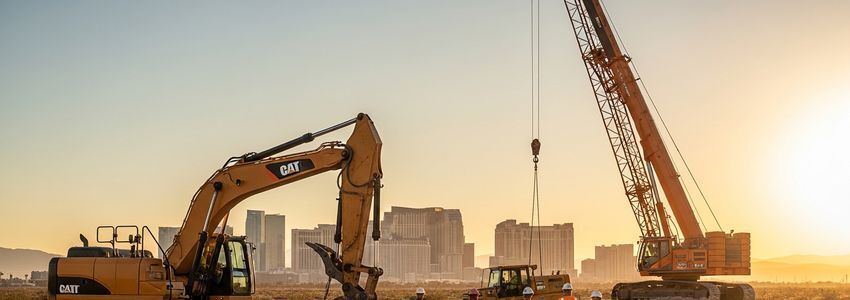
Nevada's construction industry is one of the fastest-growing in the country. From Las Vegas mega-projects to Reno's tech-driven expansion and Henderson's suburban boom, contractors across the Silver State are under constant pressure to field the right equipment at the right time. For most construction businesses, that means one thing: financing. Nevada construction equipment financing has become a core strategic tool, allowing contractors to acquire excavators, bulldozers, concrete mixers, and specialized machinery without draining working capital or waiting months to save up.
This guide covers everything Nevada construction businesses need to know about equipment financing in 2026 - from the types of loans available to qualification requirements, comparison tables, and real-world strategies that keep projects moving and cash flow intact.
In This Article
- What Is Equipment Financing for Nevada Construction?
- Why Nevada Construction Businesses Need Equipment Financing
- Types of Equipment Financing Available
- How the Financing Process Works
- How to Qualify for Construction Equipment Financing
- Financing vs. Leasing vs. Paying Cash
- How Crestmont Capital Helps Nevada Contractors
- Real-World Scenarios
- Frequently Asked Questions
- How to Get Started
What Is Equipment Financing for Nevada Construction Businesses?
Equipment financing is a type of business loan specifically used to purchase or lease construction machinery, tools, vehicles, and related equipment. The equipment itself serves as collateral for the loan, which typically means lower interest rates than unsecured financing and faster approval times than traditional bank loans.
For Nevada construction businesses, this financing covers a wide range of machinery: excavators, skid steers, dump trucks, compactors, concrete pumps, cranes, bulldozers, aerial lifts, and even specialized tools like trench diggers and pavers. Rather than paying $200,000 or more upfront for a single piece of equipment, contractors spread that cost over 24-72 months in predictable monthly payments - preserving working capital for payroll, materials, and project overhead.
Under Nevada law and standard IRS rules, equipment loan payments can often be deducted as business expenses, which adds further financial efficiency. Many Nevada contractors use equipment financing not as a last resort, but as a deliberate cash flow strategy that lets them take on more projects simultaneously.
Nevada Construction Market Fact: According to the Nevada Governor's Office of Economic Development, construction accounts for over 8% of Nevada's total employment - making it one of the top three industry sectors in the state. Las Vegas alone issues tens of thousands of building permits annually.
Why Nevada Construction Businesses Need Equipment Financing
The Nevada construction market has unique dynamics that make equipment financing especially critical. Several factors drive demand for financing in the Silver State:
- Boom-bust project cycles: Las Vegas in particular sees rapid swings between construction surges and slowdowns. Having financed equipment allows contractors to scale up quickly without committing all capital upfront.
- Extreme desert operating conditions: Nevada's heat (regularly exceeding 115°F in summer) accelerates equipment wear. Contractors need to replace machinery more frequently than in cooler climates.
- Large project scale: Commercial and casino construction projects in Nevada are often massive. Contractors need multiple pieces of heavy equipment simultaneously, which requires coordinated financing strategies.
- Competitive bidding environment: Nevada contractors who can quickly mobilize the right equipment win more bids. Equipment financing enables faster response without waiting for capital accumulation.
- Supply chain pressures: Equipment costs have risen substantially since 2020. A Cat 320 excavator that once cost $150,000 now commands $200,000 or more. Financing spreads those increased costs over time.
By the Numbers
Nevada Construction Equipment Financing - Key Statistics
$2.4B+
Annual construction equipment financed in Nevada
72%
Of Nevada contractors use some form of equipment financing
2-5 Days
Typical funding timeline for approved applications
$250K+
Average equipment value financed per Nevada contractor
Types of Equipment Financing Available to Nevada Contractors
Nevada construction businesses have several financing structures to choose from. Each has different implications for ownership, cash flow, and flexibility:
Equipment Loans (Traditional Financing)
With a traditional equipment loan, the lender advances funds to purchase the equipment, and the contractor repays the loan over a set term (typically 24-84 months) with interest. Upon payoff, the contractor owns the equipment outright. This is ideal for machinery you plan to use for many years - excavators, dump trucks, and other core fleet assets. Interest rates typically range from 5% to 15% depending on credit profile and loan term.
Equipment Leasing
Leasing allows contractors to use equipment for a set period without owning it. Monthly payments are typically lower than loan payments. At the end of the lease, you can return the equipment, renew, or purchase it at fair market value. Leasing is popular for technology-heavy equipment (GPS grade control systems, laser leveling) that becomes outdated quickly. Operating leases keep equipment off your balance sheet, which can help with bid bonding capacity.
SBA 7(a) and SBA 504 Loans
Small Business Administration loans can be used for equipment purchases and offer government-backed guarantees that reduce lender risk. SBA 504 loans are specifically designed for major fixed assets including heavy equipment, with terms up to 20 years and competitive fixed rates. SBA 7(a) loans offer more flexibility but require more documentation. Nevada contractors with strong credit and established business history are often good candidates.
Equipment Lines of Credit
An equipment line of credit provides a revolving pool of funds that can be drawn as needed to purchase equipment. This is particularly useful for contractors who regularly need to add or replace equipment throughout the year. Rather than applying for a new loan each time, you draw from the line and repay as projects generate revenue.
Sale-Leaseback
If you own equipment outright, sale-leaseback allows you to sell the equipment to a financier and then lease it back. This frees up the equity locked in your equipment while allowing you to continue using it. For Nevada contractors who own aging fleets, this can be a smart way to access capital without disrupting operations.
Need Equipment to Win Your Next Nevada Contract?
Crestmont Capital funds Nevada construction equipment in as little as 2-5 business days. No obligation - apply in minutes.
Apply Now →How the Equipment Financing Process Works
Understanding the step-by-step financing process helps Nevada contractors prepare effectively and move quickly when a project opportunity arises.
Quick Guide
How Nevada Construction Equipment Financing Works - At a Glance
Determine what equipment you need, whether new or used, and get a quote or invoice from the dealer.
Apply online with basic business information, 3-6 months of bank statements, and equipment details.
The lender reviews your credit, cash flow, and equipment value. Most decisions come within 24-48 hours.
Upon approval, funds are sent directly to the equipment vendor or dealer. Equipment is delivered to your site.
Make fixed monthly payments. At loan payoff, you own the equipment free and clear.
Most reputable lenders can complete the entire process from application to funding in as little as 2-5 business days for straightforward equipment loans under $500,000. For larger amounts or more complex equipment (aircraft, specialized mining equipment, custom machinery), the timeline may extend to 1-3 weeks while additional documentation and appraisals are completed.
How to Qualify for Construction Equipment Financing in Nevada
Understanding qualification requirements helps Nevada contractors apply with confidence and optimize their approval odds.
Credit Score Requirements
Most equipment lenders look for a personal credit score of 620 or higher. The higher your score, the better the rate you'll receive. Business credit (through Dun & Bradstreet or Equifax Business) also matters for larger loans. Contractors with scores below 620 may still qualify through specialized lenders who place greater weight on cash flow and equipment value.
Time in Business
Most traditional lenders want to see at least 2 years in business. Newer contractors (6 months to 2 years) can often qualify with specialty lenders or by offering a larger down payment (10-20%). Startup construction businesses may need to provide a personal guarantee and potentially a lease guarantee if they haven't established a business credit profile.
Revenue and Cash Flow
Lenders typically look for annual revenues of at least 1.5-2x the loan amount requested. Your business bank statements are key evidence here. Three to six months of statements showing consistent deposits and positive cash flow will strengthen your application significantly. Seasonal revenue patterns are common in construction and most experienced lenders accommodate this.
Equipment Age and Type
Lenders are most comfortable financing new equipment or equipment under 7 years old. Older equipment is harder to finance because its collateral value declines faster. However, specialty lenders and some equipment dealers offer programs for used and older equipment. If you're looking to finance a 10-15 year old excavator, expect higher rates and possibly a larger down payment requirement.
Down Payment
Many equipment loans require no down payment for borrowers with strong credit. Others may ask for 10-20% down, especially for larger purchases, used equipment, or borrowers with credit challenges. A down payment reduces the lender's risk and can also reduce your monthly payment and total interest paid.
Pro Tip: Nevada contractors who maintain separate business banking accounts and keep clean, organized financials typically qualify faster and receive better rates. Lenders value businesses that can demonstrate disciplined financial management.
Comparison: Equipment Financing vs. Leasing vs. Paying Cash
Choosing the right financing structure depends on your business goals, tax situation, and cash flow patterns. Here is a head-to-head comparison of the three primary options Nevada construction contractors use:
| Factor | Equipment Loan | Equipment Lease | Paying Cash |
|---|---|---|---|
| Ownership | Yes, after payoff | No (option at end) | Yes, immediately |
| Monthly Cash Out | Fixed payment | Lower fixed payment | None |
| Cash Flow Impact | Preserves capital | Best cash preservation | Large upfront drain |
| Balance Sheet | Asset + liability | Operating expense | Asset only |
| Interest/Cost | Yes (5-15%) | Implicit cost in payment | None |
| Equipment Updates | Keep until sold | Upgrade at lease end | Keep until sold |
| Best For | Long-term core equipment | Fast-changing tech gear | Specialty small tools |
For most Nevada construction businesses, equipment loans offer the best balance - you build equity in the machinery, preserve working capital, and can plan around fixed monthly payments. Leasing works well for technology equipment or when you want to upgrade frequently. Paying cash is typically reserved for small tools under $10,000 where financing overhead isn't worth it.
How Crestmont Capital Helps Nevada Construction Businesses
Crestmont Capital is a U.S. business lender rated #1 in the country, and we specialize in helping construction businesses throughout Nevada access the equipment financing they need to grow and compete.
Whether you're a general contractor in Las Vegas bidding on commercial projects, a specialty subcontractor in Reno looking to expand your fleet, or a growing construction firm in Henderson taking on larger residential developments, Crestmont Capital offers tailored solutions.
Our construction equipment financing programs include loans from $25,000 to over $5 million for all categories of construction machinery. We also offer equipment leasing options for contractors who prefer the flexibility of returning equipment at the end of the term.
For contractors needing fast working capital to cover payroll, materials, or overhead between project payments, our working capital loans provide fast access to funds without requiring equipment as collateral. We also offer business lines of credit for Nevada contractors who need revolving access to funds throughout the year.
Crestmont Capital understands the specific dynamics of Nevada's construction market - the seasonal patterns, the scale of Las Vegas projects, and the unique cash flow challenges that come with contract-based work. Our team provides personalized guidance from application to funding, with approvals as fast as 24-48 hours and funding in 2-5 business days.
Get Equipment Financing for Your Nevada Construction Business
Crestmont Capital is the #1 business lender in the U.S. Flexible terms, fast approvals, and no obligation to apply.
Apply Now →Real-World Scenarios: Nevada Construction Businesses Using Equipment Financing
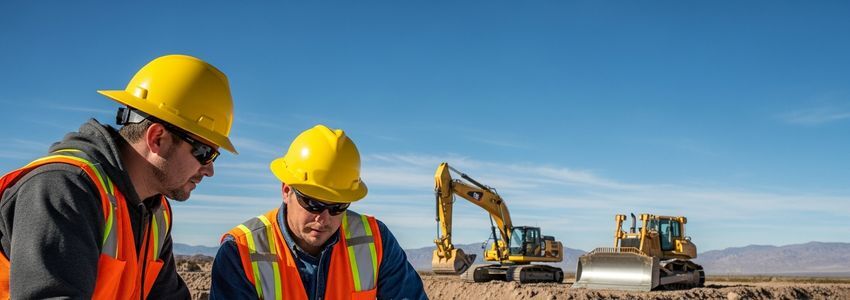
Scenario 1: Las Vegas General Contractor Wins Casino Expansion Bid
A Las Vegas-based general contractor wins a $4.2 million casino renovation project. The job requires two 20-ton excavators and a concrete pump that the contractor doesn't currently own. Rather than losing the bid or renting equipment at $8,000/week each, the contractor finances all three pieces through Crestmont Capital at a combined value of $680,000 over 60 months. The monthly payment is built into the project budget. When the project completes, the contractor owns three pieces of equipment that will support future projects for years.
Scenario 2: Reno Specialty Contractor Upgrades GPS Grade Control System
A Reno grading contractor wants to upgrade to machine-controlled GPS grade control across their entire fleet. The system costs $95,000 installed. Rather than paying cash and depleting emergency reserves, the contractor uses an equipment lease over 36 months. At the end of the lease, they can upgrade to the next-generation system - staying competitive without large capital outlays every few years.
Scenario 3: Henderson Residential Developer Expands Fleet for Subdivision
A residential developer in Henderson wins a contract to grade and prepare 200 lots in a new subdivision. They need two additional skid steers and a vibratory compactor. Using a combination of an equipment loan for the compactor (which will see long-term use) and a short-term lease for one of the skid steers (project-specific), they optimize costs across a 24-month timeline without buying more than they'll need long-term.
Scenario 4: Small Plumbing Contractor Expands Service Area
A small commercial plumbing contractor based in North Las Vegas wants to expand into Henderson and Summerlin. They need a new service van, pipe fusion machine, and diagnostic camera system totaling $75,000. They qualify for a 48-month equipment loan with no down payment, spreading costs into a manageable $1,800/month payment that their expanded service area easily supports within the first year.
Scenario 5: Electrical Contractor Upgrades to Meet Code Requirements
A commercial electrical contractor learns that new Nevada building codes require upgraded testing equipment for large commercial installations. The new testing rigs cost $45,000. Unable to fund the purchase from cash flow, they use Crestmont Capital's equipment financing to cover the purchase over 36 months, stay compliant, and continue qualifying for commercial electrical contracts statewide.
Scenario 6: Roofing Company Adds Solar Installation Division
A Las Vegas roofing company wants to add a solar installation division to capitalize on Nevada's booming solar market. The new division requires $185,000 in specialized equipment - installation rigs, testing equipment, and service vehicles. Using a combination of equipment loans and a business line of credit, the company launches the new division without disrupting existing roofing operations.
Industry Insight: According to the Associated General Contractors of Nevada, equipment costs represent 25-35% of total project costs on typical commercial construction projects in the state. Smart equipment financing strategies can directly impact a contractor's ability to win bids and maintain healthy margins.
Frequently Asked Questions
What types of construction equipment can be financed in Nevada?
Virtually any commercial construction equipment can be financed, including excavators, bulldozers, cranes, concrete pumps, dump trucks, compactors, loaders, backhoes, graders, aerial lifts, paving equipment, and specialized tools. Both new and used equipment qualify, though terms may vary for older machinery.
What credit score do I need for Nevada construction equipment financing?
Most traditional lenders require a minimum personal credit score of 620-640. However, specialty lenders like Crestmont Capital work with contractors across a wide credit spectrum. Contractors with scores below 620 may qualify with strong cash flow documentation, a larger down payment, or a co-signer. Higher scores unlock better rates and terms.
How long does it take to get approved for equipment financing?
With Crestmont Capital, most equipment financing applications receive an initial decision within 24-48 hours. Funding typically occurs within 2-5 business days after approval. Larger loans over $500,000 may take slightly longer due to additional documentation requirements, but even these often close within 1-2 weeks.
Can new construction businesses in Nevada get equipment financing?
Yes. While most lenders prefer 2+ years in business, startup and newer construction businesses (6+ months) can qualify through specialty lenders. Startup equipment financing typically requires stronger personal credit (680+), a down payment, and documentation of industry experience. Crestmont Capital offers startup equipment financing programs specifically designed for newer contractors.
What interest rates should I expect on Nevada construction equipment loans?
Interest rates on construction equipment loans in Nevada typically range from 5% to 15% APR depending on credit score, time in business, loan amount, and equipment type. Businesses with strong credit (720+) and solid financials can often qualify for rates in the 5-8% range. Specialty or challenged-credit programs may carry rates of 10-20%.
Is a down payment required for construction equipment financing?
Many equipment loans can be structured with zero down payment for borrowers with good credit and established business history. Some lenders or loan programs require 10-20% down, particularly for used equipment, larger loans, or borrowers with credit challenges. A down payment reduces your monthly payment and total interest cost.
What documents are required to apply for equipment financing?
Typical documentation includes: completed loan application, 3-6 months of business bank statements, equipment invoice or quote, proof of business ownership (articles of organization, etc.), and personal identification. For larger loans, lenders may also request 1-2 years of tax returns and a business profit/loss statement. Crestmont Capital streamlines documentation requirements for faster processing.
Can I finance used construction equipment in Nevada?
Yes, used equipment can be financed. Most lenders finance equipment up to 7-10 years old, though some specialty programs cover older machinery. Rates are typically slightly higher for used equipment due to increased collateral risk. An equipment appraisal may be required for older or high-value used machinery. Crestmont Capital has specific used equipment financing programs.
What is the difference between equipment financing and an equipment lease?
With equipment financing (a loan), you own the equipment at the end of the term. With a lease, you use the equipment during the term but return it at the end (or purchase it at fair market value). Loans are better for long-term core equipment; leases are better for equipment you plan to upgrade frequently. Monthly payments are typically lower on leases but you build no equity.
Are there equipment financing options for contractors with bad credit?
Yes. While traditional bank loans require strong credit, specialty lenders offer bad credit equipment financing programs that focus more on cash flow, business performance, and equipment value than on credit score alone. These programs typically carry higher interest rates (12-25%) and may require a down payment, but they allow contractors to access needed equipment while rebuilding credit.
How does equipment financing affect my business credit?
Equipment financing can positively impact business credit when managed responsibly. On-time payments build your business credit profile over time, improving your future borrowing ability. Many equipment lenders report to business credit bureaus (Dun & Bradstreet, Experian Business, Equifax Business). Building a strong equipment financing history can reduce rates on future loans.
Can I finance multiple pieces of equipment under one loan?
Yes. Many lenders offer "fleet financing" or "blanket" equipment loans that cover multiple pieces of equipment under a single loan agreement. This simplifies paperwork and monthly payments. Lenders typically require a complete list of all equipment being financed along with individual invoices or quotes. Fleet financing is common among growing Nevada contractors who need to equip multiple crews simultaneously.
What happens if I need to sell financed equipment?
If you need to sell financed equipment before the loan is paid off, you must pay off the remaining loan balance from the sale proceeds. The lender holds a security interest in the equipment (usually through a UCC filing) until the loan is fully repaid. In most cases, construction equipment holds its value well enough that the sale price covers the loan payoff plus some profit.
Do I need insurance on financed construction equipment?
Yes. All lenders require that financed equipment be covered by commercial property or inland marine insurance for the duration of the loan. The lender is typically named as an additional insured or loss payee on the policy. This protects both your business and the lender's interest in the equipment. Insurance requirements are part of the loan closing process.
What is an equipment line of credit and how does it differ from a loan?
An equipment line of credit is a revolving credit facility dedicated to equipment purchases. Unlike a term loan (which provides a lump sum for a specific purchase), a line of credit lets you draw funds as needed up to a set limit, repay them, and draw again. This is ideal for Nevada contractors who regularly need to purchase or replace equipment throughout the year without going through a new loan application each time.
How to Get Started with Nevada Construction Equipment Financing
Know what equipment you need, its approximate cost (get a dealer quote if possible), and how it will be used in your business. This helps us match you with the right financing structure.
Complete our quick application at offers.crestmontcapital.com/apply-now - takes just a few minutes. You'll need basic business information and access to your bank statements.
A Crestmont Capital advisor will review your needs and match you with the right financing structure - loan, lease, line of credit, or SBA program based on your goals and profile.
Upon approval, funds are wired directly to the equipment vendor. Most Nevada contractors are funded within 2-5 business days - ready to deploy equipment on their next project.
Conclusion
Nevada's construction sector is thriving, and the businesses that succeed are those who field the right equipment at the right time without compromising their cash position. Nevada construction equipment financing is the strategic tool that makes this possible - transforming large capital expenditures into predictable monthly costs that align with project revenue cycles.
Whether you're in Las Vegas, Reno, Henderson, North Las Vegas, or anywhere else in the Silver State, Crestmont Capital is here to help. Our nationwide reputation as the #1 U.S. business lender is backed by thousands of contractors who rely on us for fast, flexible, and transparent equipment financing solutions.
Don't let equipment gaps cost you contracts. Apply today and let's get your Nevada construction business the machinery it needs to grow.
Disclaimer: The information provided in this article is for general educational purposes only and is not financial, legal, or tax advice. Funding terms, qualifications, and product availability may vary and are subject to change without notice. Crestmont Capital does not guarantee approval, rates, or specific outcomes. For personalized information about your business funding options, contact our team directly.